Halloween works when a character reads in one glance, not when an outfit has merely accumulated dark clothes and a few props. Best halloween costume ideas for 2026 are most satisfying when they commit to a recognizable world – a horror villain, a gothic film couple, a childhood favorite, or a creature with a silhouette that tells the story before anyone has to explain it.
Start with the character’s non-negotiable marker: Pennywise needs the red hair and clown ruffles, Wednesday needs the collar and braids, and Jack Skellington needs the skeletal face and pinstripes. Everything else should support that marker while still letting the wearer walk, sit, see, and enjoy the night without wrestling with the costume.
Pennywise Family From It
This is Pennywise from It translated into a coordinated family costume, with each person using the clown’s pale ruffles, red pom-poms, white face makeup, and unmistakable orange-red hair. The point is not that everyone wears the same suit; it is that the red buttons and washed-out gray shapes make the group look like they all belong to the same unsettling Derry carnival.
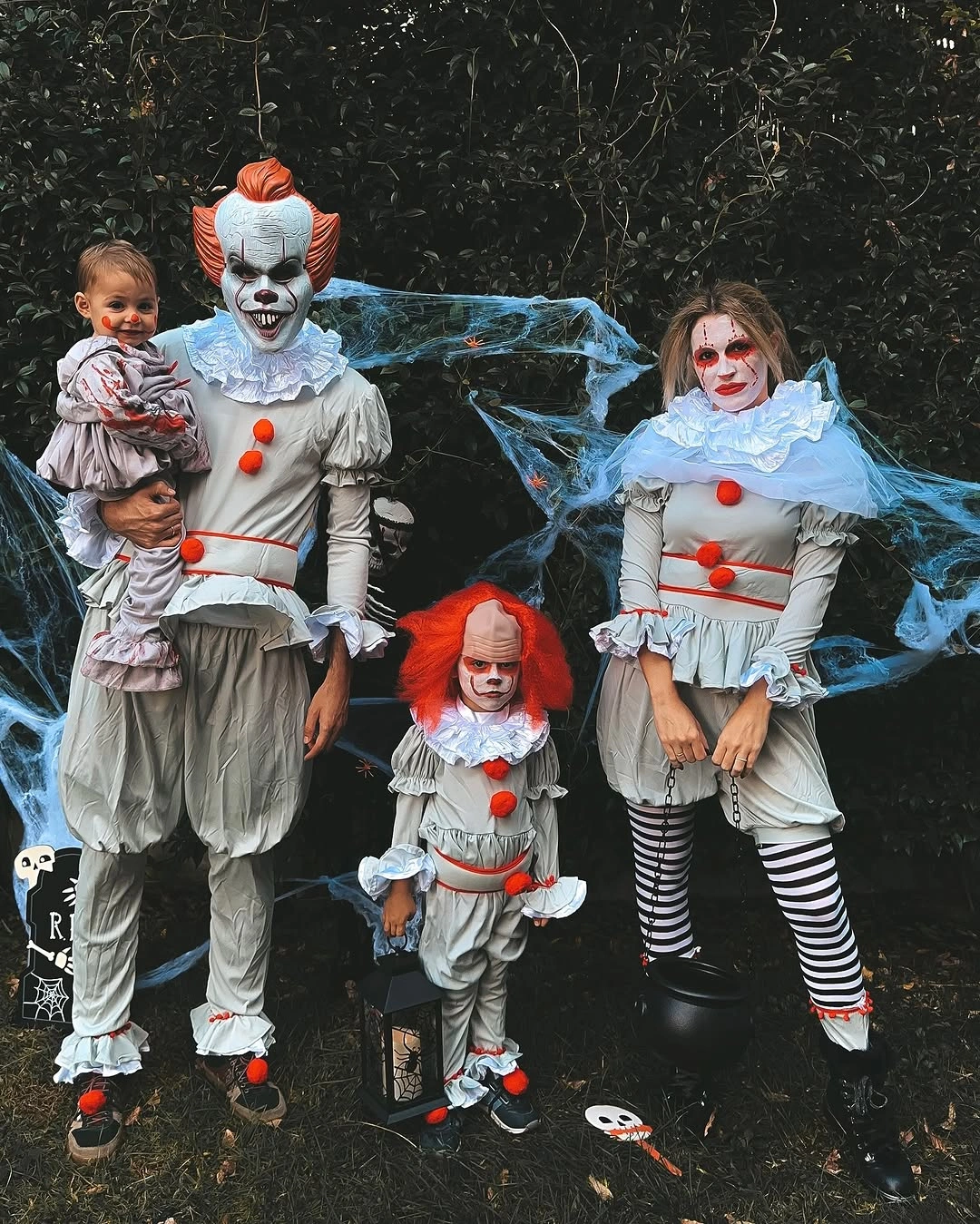
For a Pennywise group, give each wearer one consistent visual code – a red wig, red pom-poms, striped socks, or a white-painted face – and vary the proportions around it. That keeps a toddler, teen, and adult from looking like poorly sized copies while preserving the creepy repetition that makes the character work so well in a family Halloween photo.
The ruffles and makeup should be planned around comfort, especially for children who may not tolerate a stiff collar or full face paint for long. A softer gray base layer, washable makeup, and secure red accessories will communicate Pennywise far more effectively than elaborate details that start slipping before the first trick-or-treat stop.
Horned Demon Halloween Makeup Look
This is a horned demon character rather than a generic black outfit: the curved ram horns, red-and-black face paint, yellow eye effect, and long dark hair create the whole supernatural identity. The black top is intentionally quiet because the face and headpiece are carrying the narrative, giving the look the feeling of a creature who has stepped out of a dark fantasy or horror scene.
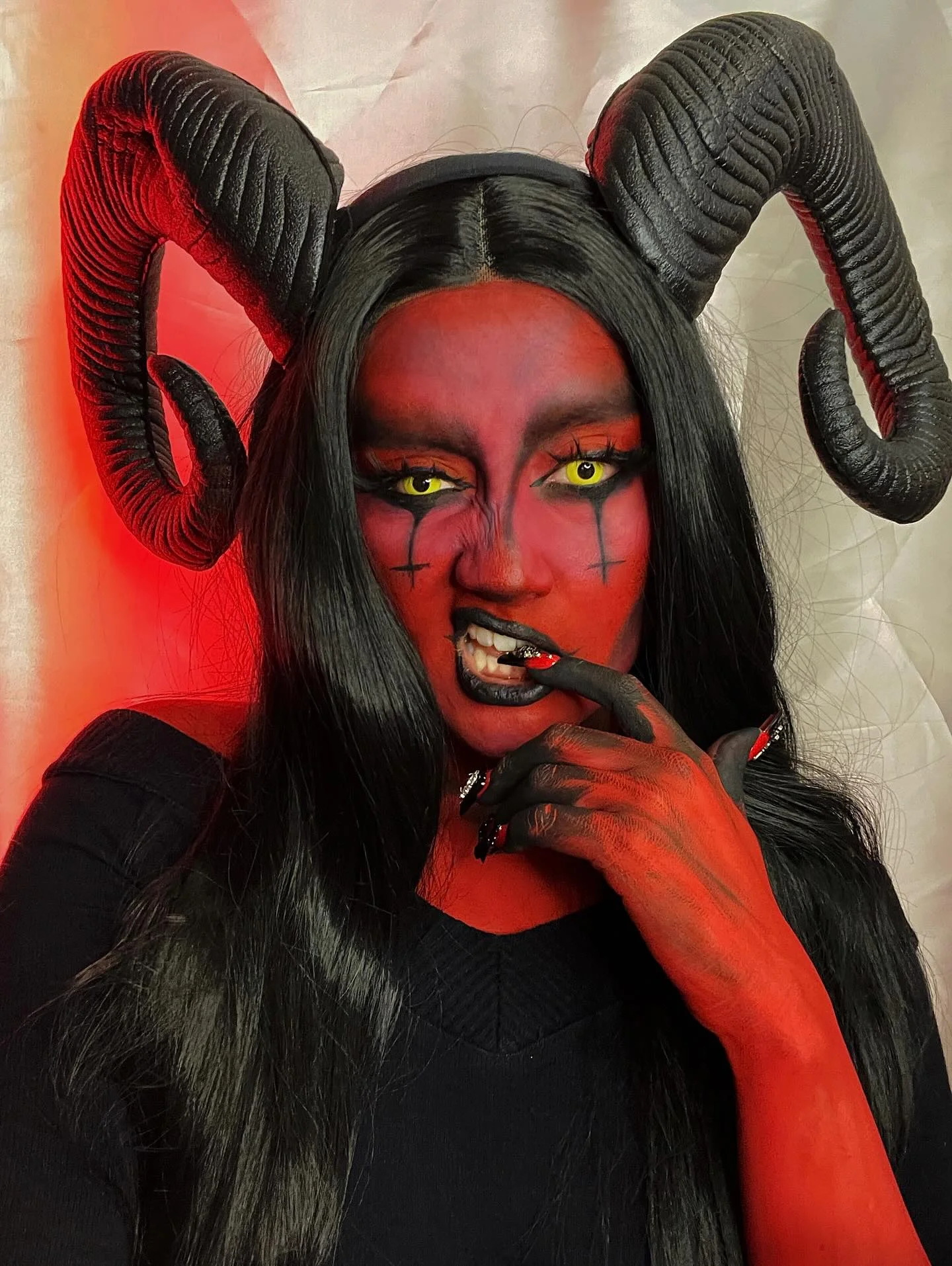
Recreate this demon by choosing the horns first, then matching the makeup colors to their shape instead of adding unrelated costume pieces. Red around the eyes, black contour lines, and a deep black clothing base are enough to make the character legible; a patterned dress or colorful jewelry would weaken the severe, otherworldly focus.
Large horns need a secure headband and a realistic movement test before a party, since they change the wearer’s width in doorways, cars, and crowded rooms. Keep the clothing close to the body and carry a small makeup repair kit, because the character’s power comes from a sharply defined face rather than from complicated layers below it.
Bloody Ronald McDonald Couple Costume
This duo turns Ronald McDonald into a horror-movie pair, using the familiar yellow, red, and striped sleeves but adding pale clown faces and blood-splattered details. The reference is immediately recognizable because the red wig, yellow uniform blocks, oversized red buttons, and striped elements stay visible, while the horror treatment gives the characters a darker Halloween purpose.
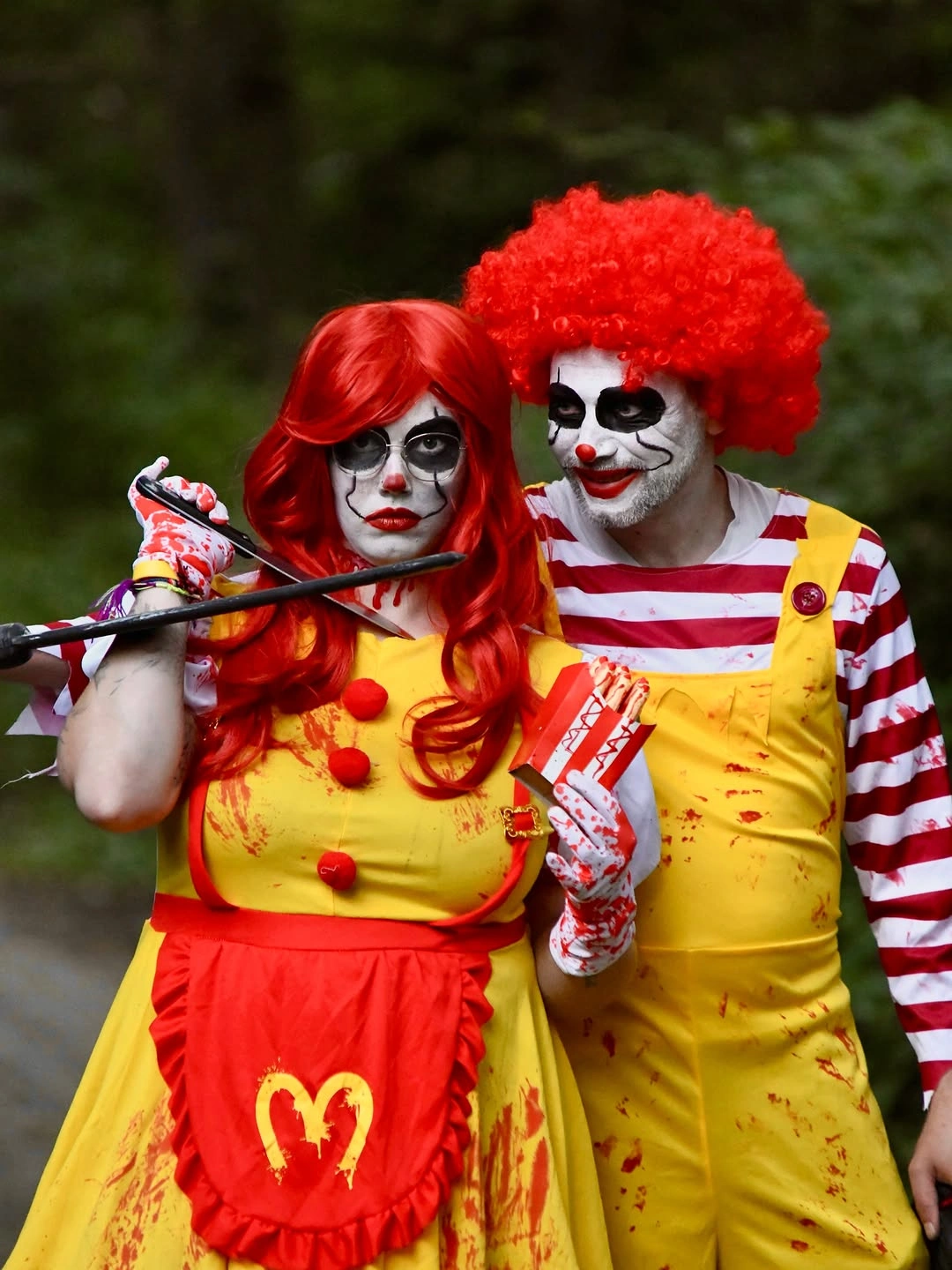
A successful Ronald McDonald couple costume needs the fast visual shorthand first: yellow, red, stripes, and a bright red wig. Split the roles between a pinafore silhouette and a straighter uniform shape so the pair feels like two characters from the same twisted restaurant nightmare instead of two people who bought identical novelty costumes.
Use washable costume blood and avoid applying it to anything that cannot be cleaned easily, especially on pale yellow or white areas. The exaggerated makeup should be finished after the clothes are on, and the pair should keep their props simple, because the recognizable clown colors already do enough storytelling without adding unrelated gore.
Corpse Bride Meets the Mad Hatter
This couple brings together Emily from Corpse Bride and the Mad Hatter from Alice in Wonderland, making the contrast between faded bridal romance and theatrical tea-party chaos feel deliberate. Emily’s pale ruffled gown and dark hair sit opposite the Hatter’s orange curls, tall hat, dark coat, and checkerboard scarf, so both characters remain clear without sharing the same palette.
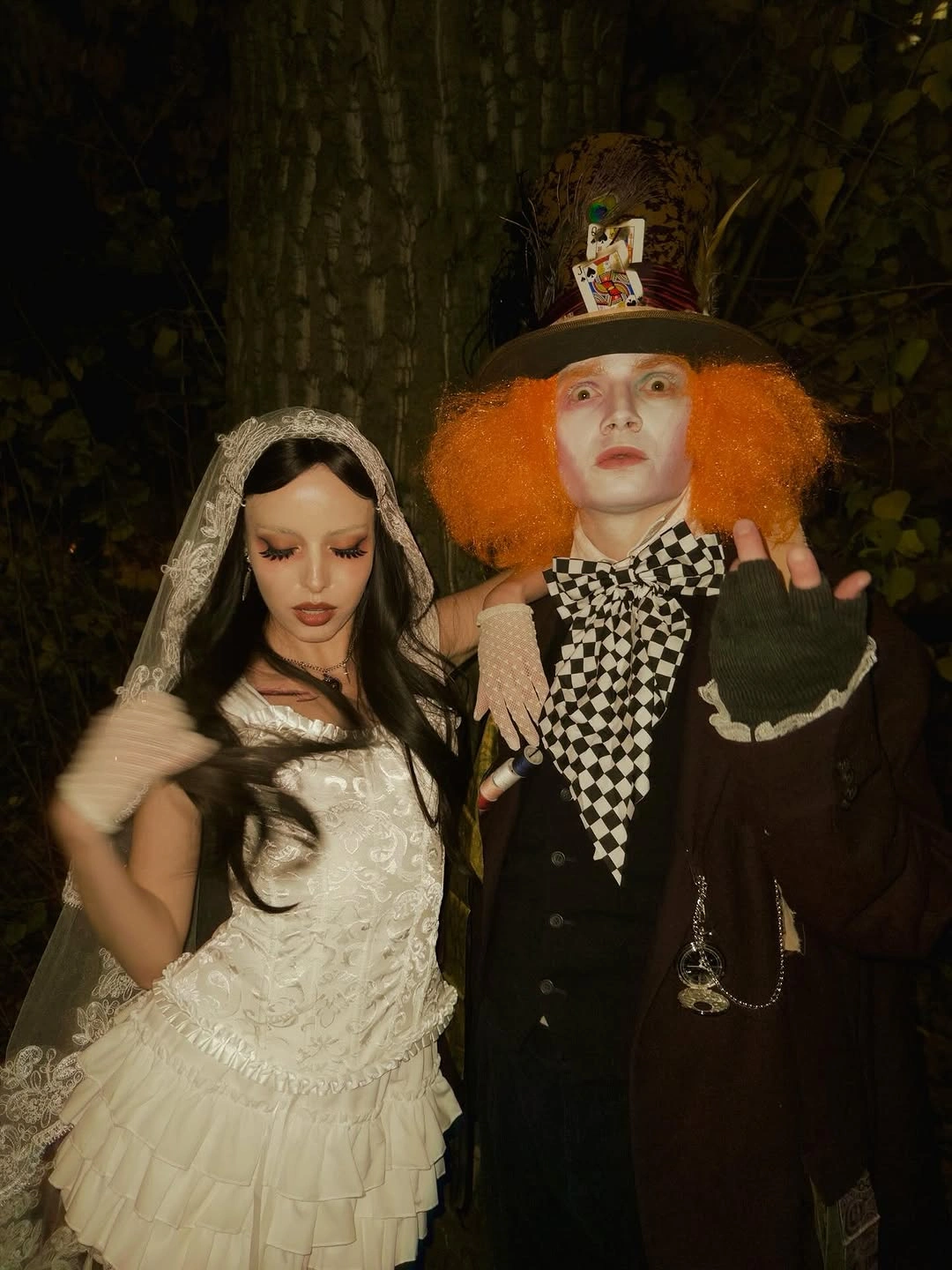
For this pairing, do not try to make Emily and the Hatter match too closely; their disagreement is the appeal. Keep Emily’s silhouette soft, pale, and draped, then give the Hatter a strong hat and one graphic accessory, allowing Tim Burton’s mix of fragile romance and eccentric menace to lead the scene.
A full bridal skirt and a tall top hat are both high-maintenance pieces, so secure the hem and test the hat while sitting down before going out. Pale blue-gray makeup, an orange wig, and the checkerboard scarf can do most of the character work, letting the rest of the costume stay mobile enough for an actual Halloween evening.
Sally and Jack Skellington Couple
Sally and Jack Skellington are one of Halloween’s clearest couples because their character designs are opposites that fit together: Sally is patchwork, stitched, and softly colored, while Jack is skeletal, pinstriped, and graphic. The long red hair, patchwork dress, stitched makeup, white face, and black-and-white suit identify them before any extra prop is needed.
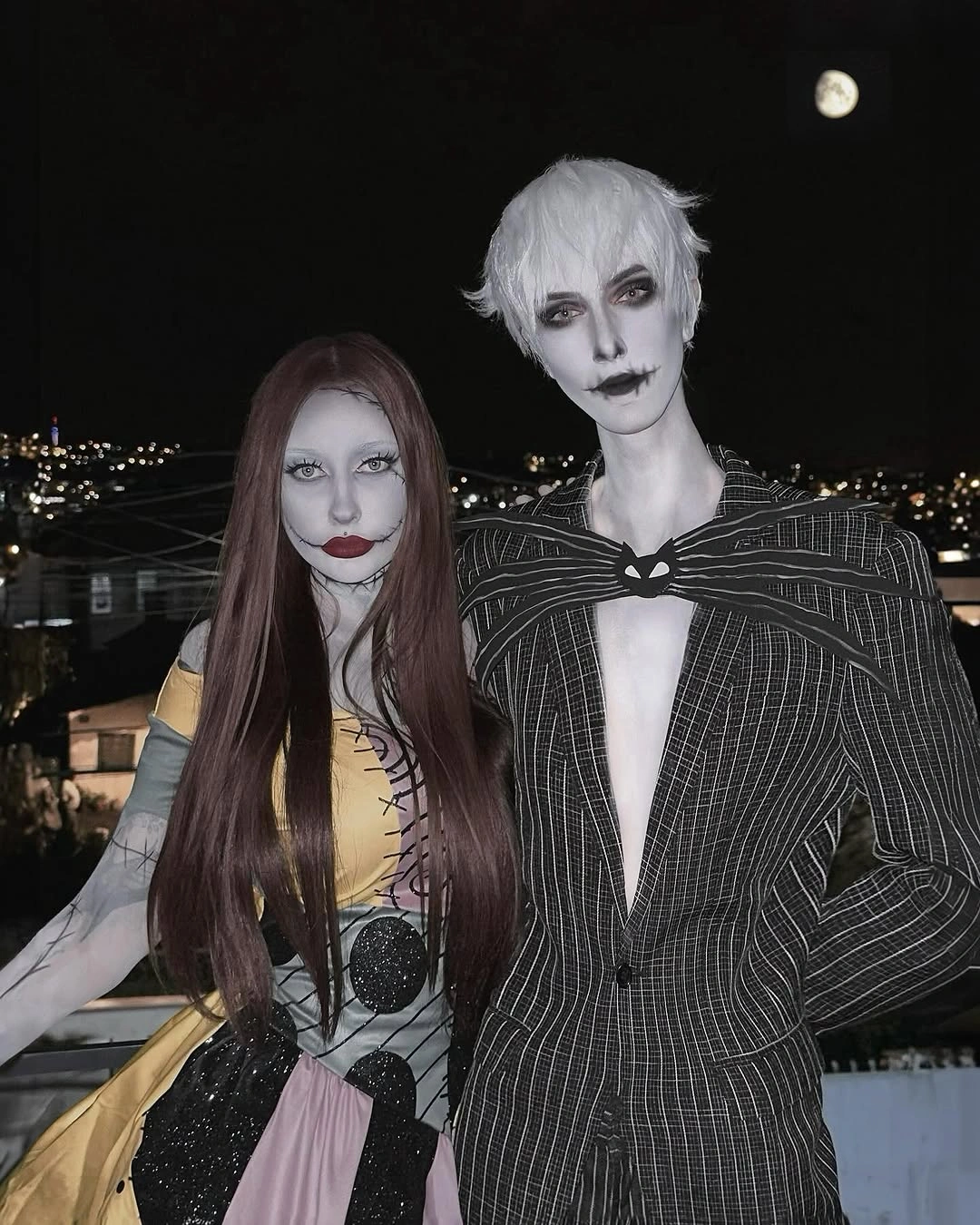
Build Sally around the patchwork dress and long red wig, then treat the stitches as a face-paint detail rather than covering every exposed area. Jack needs the elongated pinstripe silhouette and skull-like face more than he needs a huge mask, which makes this a practical choice for couples who want to speak, eat, and take photos easily.
These costumes reward preparation because Sally’s patchwork colors and Jack’s crisp stripes can become messy if the fit is rushed. Keep the dress hem clear of shoes, use comfortable black footwear under the suit, and let the two characters’ opposing textures stay visible instead of burying them beneath jackets or bulky props.
Art the Clown Duo Costume
This is Art the Clown from Terrifier recreated as a black-and-white duo, using the killer clown’s split-color costume, ruffled collar, pointed mini hat, dark pom-poms, and stark pale face. The mirrored black-and-white placement gives both wearers a shared horror identity while still making the pair feel intentionally designed rather than like matching pajamas.
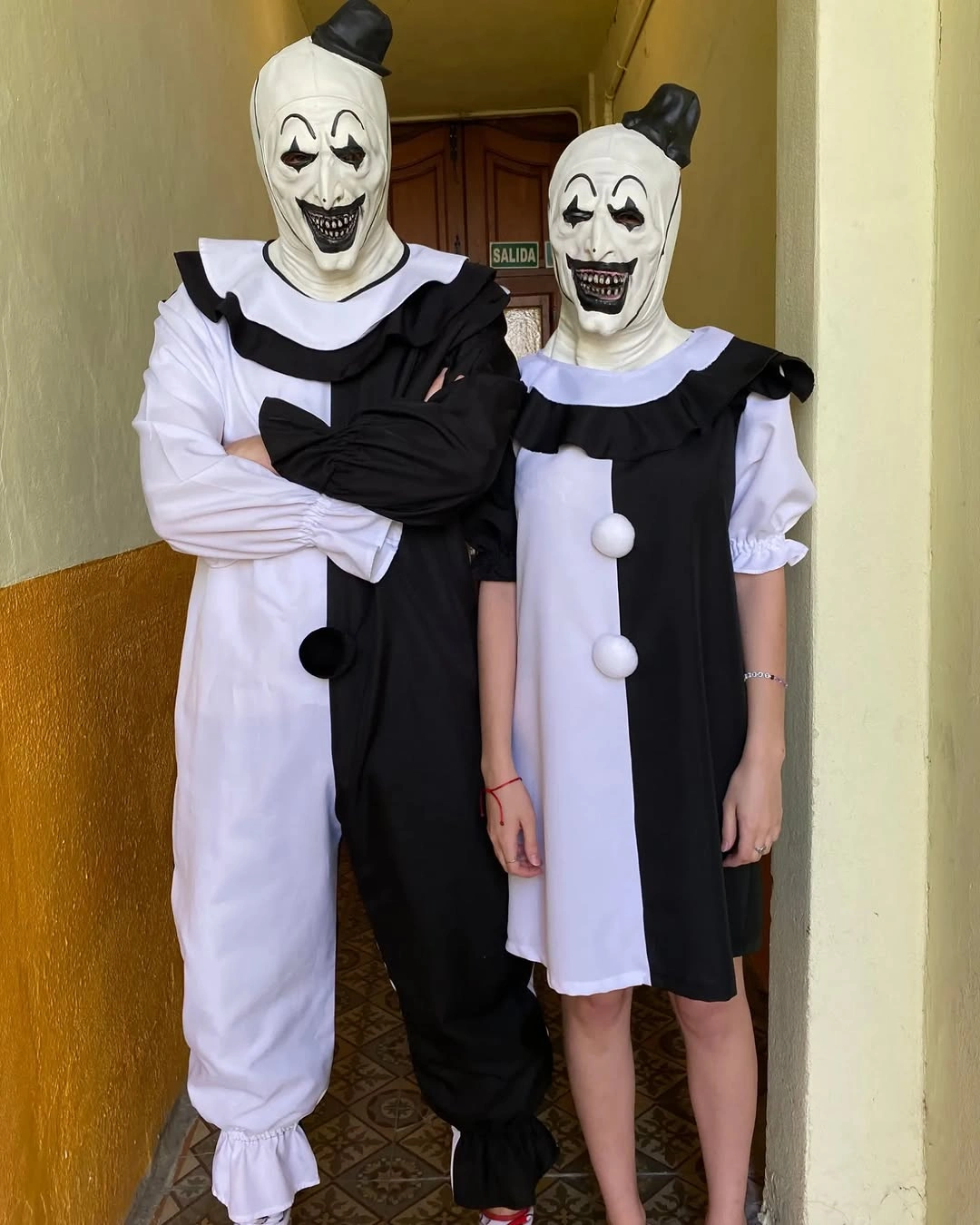
Art the Clown works best when the costume stays almost entirely monochrome, because the unsettling effect comes from the harsh division of black, white, and the exaggerated ruffle shapes. Reverse which side is dark for the second wearer if you want a duo, then keep the face treatment simple enough to preserve the character’s blank, sinister expression.
Masks may be more accurate at a distance, but they reduce visibility and make a long party harder to enjoy. White face paint with dark eyes is a more practical alternative, and soft collars, flexible shoes, and light hat attachments will keep the Terrifier reference readable without turning the costume into a safety problem.
Classic Pirate With a Corset
This is a classic pirate character built around the recognizable storybook markers: a billowy shirt, lace-up corset, dark trousers, red headwear, and small hair ornaments. It does not need a specific movie name to work, because the red beret, waist-cinching corset, and off-white sleeves already place the wearer in the world of treasure maps, ships, and Halloween adventure.
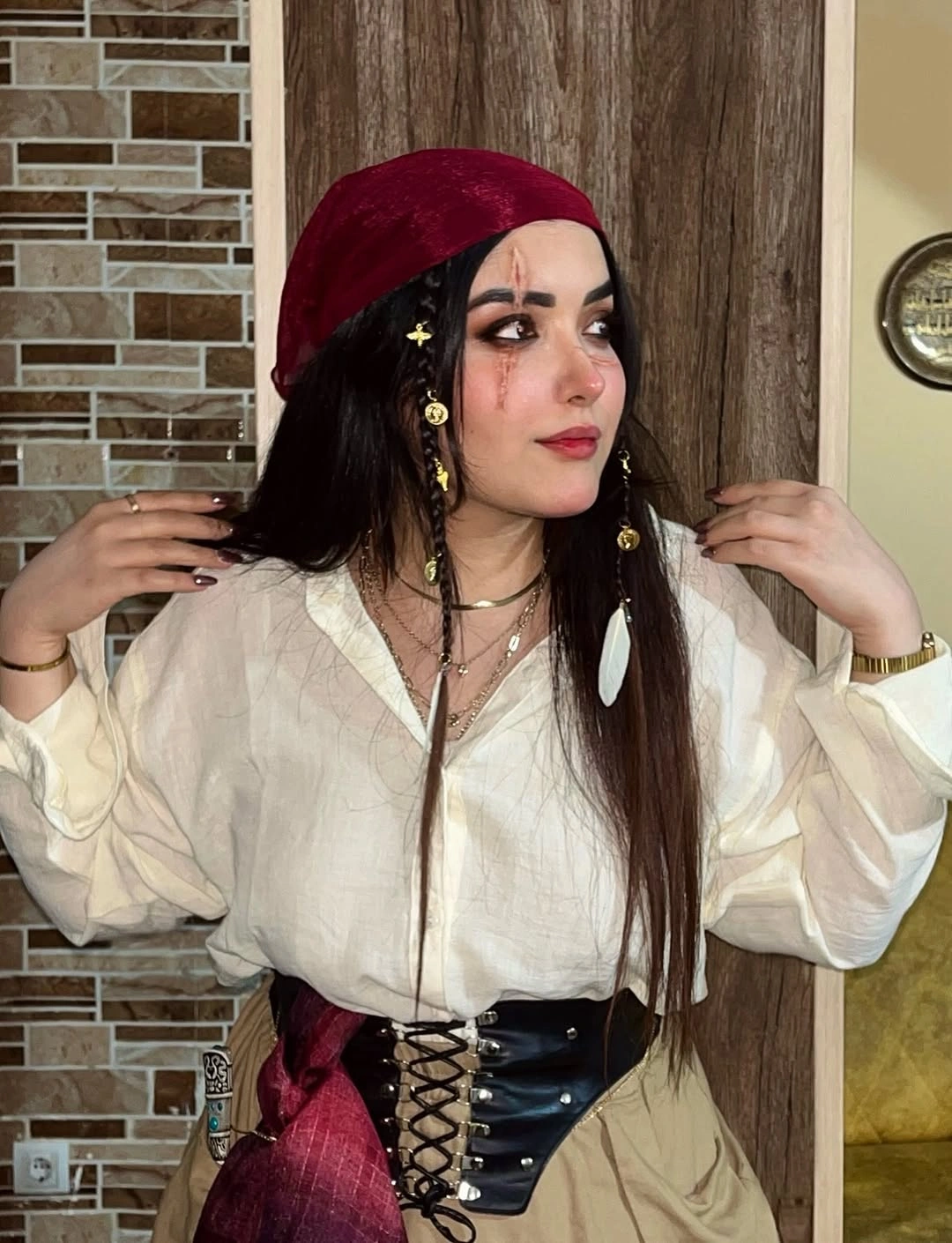
Keep a pirate costume centered on one believable role rather than adding every available accessory at once. A red head scarf or beret, dark waist piece, and light blouse are more effective than a plastic sword, oversized hat, eye patch, and striped socks all competing together; the character should feel ready for a crew, not a costume aisle.
The corset should be decorative and comfortable, not tightly laced, particularly if the party involves sitting or eating. Secure the headwear, choose shoes that allow walking, and use one small prop only if it does not block the sleeve shape, because the blouse and waist contrast are the visual clues that carry the pirate story.
Black Cat Halloween Character
This is the classic black cat character stripped down to its most charming essentials: dark clothes, pointed ears, a high ponytail, whiskers, a painted nose, and a playful feline pose. It succeeds because the costume does not pretend to be something more complicated; the ears and face are enough to turn an ordinary black base into a familiar Halloween creature.
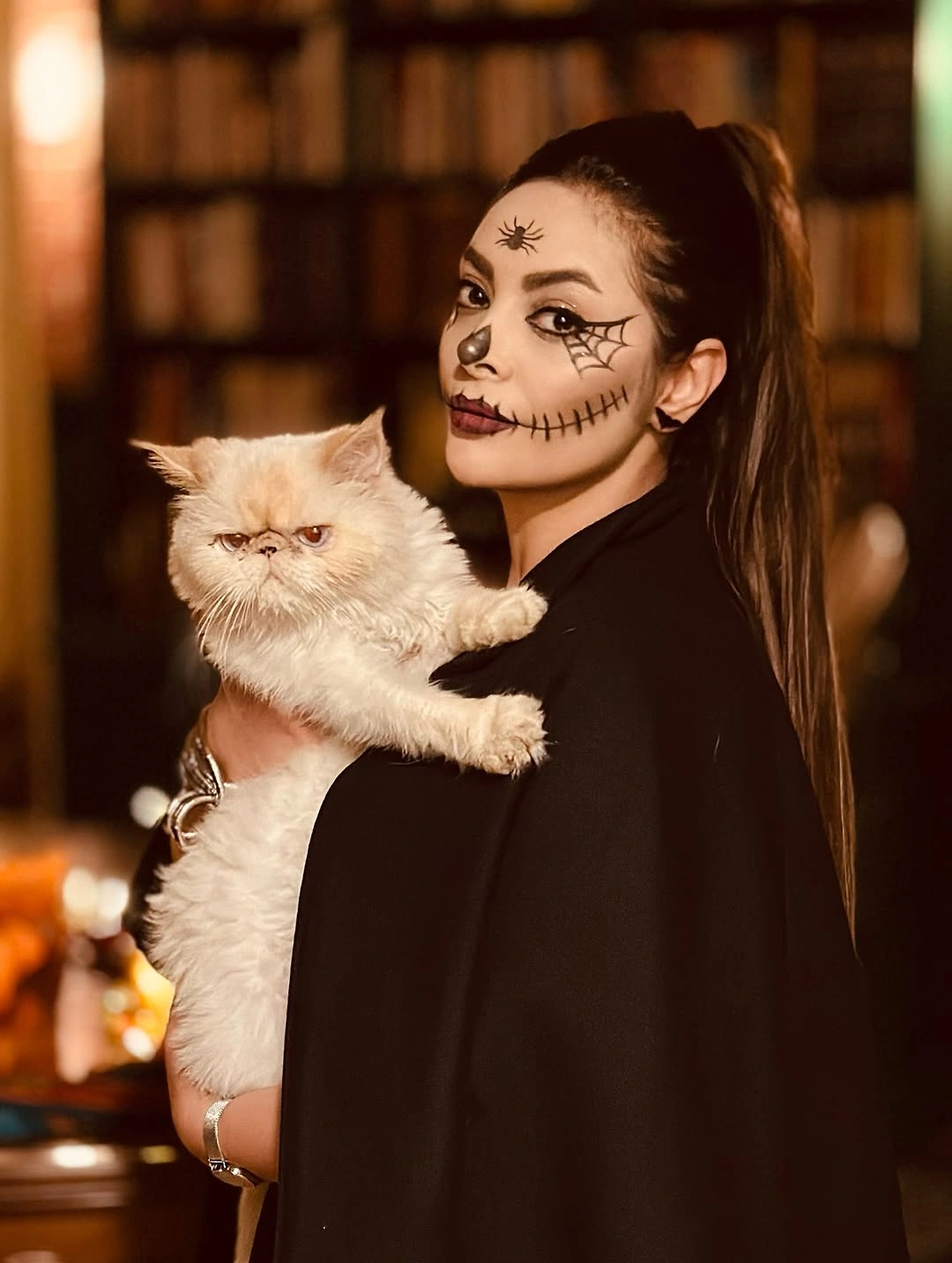
For a black cat, focus on the face and head first, then choose a simple black outfit that the wearer already knows is comfortable. A neat ponytail makes the ears sit naturally, and a small black eyeliner whisker pattern reads faster than a full painted mask, especially in the warm, crowded conditions of a Halloween party.
Set the nose and whiskers with products that can tolerate talking, drinking, and accidental touching, since that is where cat makeup tends to fade first. If a tail or gloves are added, keep them lightweight and optional; the cat character remains recognizable without any accessory that might interfere with real movement.
Wednesday Addams With Her Umbrella
Wednesday Addams is unmistakable here through the dark striped suit, white collar, black braids, deadpan makeup, and black umbrella. The character does not depend on a full costume dress alone; the collar and controlled monochrome mood instantly point to Wednesday, making this a strong choice for someone who wants a gothic Halloween reference without heavy prosthetics or a giant prop.
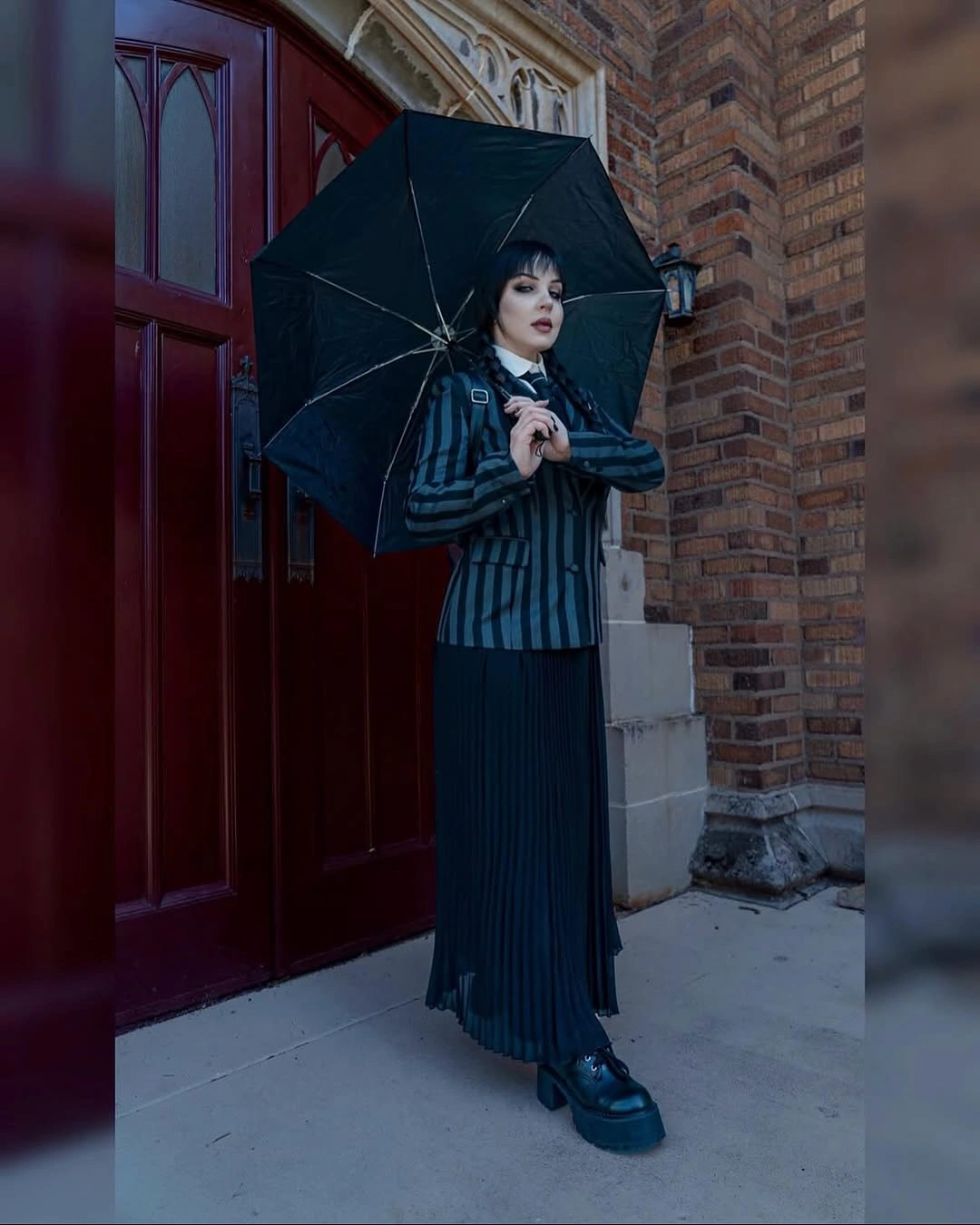
To make Wednesday read correctly, keep the palette narrow and let the white collar interrupt the dark outfit at the face. Braids are essential because they are a visual signature even when the rest of the costume is adapted into a blazer, skirt, trousers, or long dress, allowing the wearer to choose a version they can move in comfortably.
An umbrella is a fun Wednesday detail but not a requirement, particularly indoors where it becomes awkward fast. If you use one, keep it closed for movement and photos that do not need the full prop; the collar, braids, and unsmiling face are more durable character cues than anything carried in the hand.
Catwoman and a Werewolf Couple
This pairing uses Catwoman’s fitted black suit, cat ears, and sleek silhouette beside a shaggy werewolf character in a hat and textured gray layers. The contrast gives the couple a clear horror-comic rhythm: one character is sharply controlled and feline, the other is loose, furry, and animalistic, so neither needs to be explained through a long costume description.
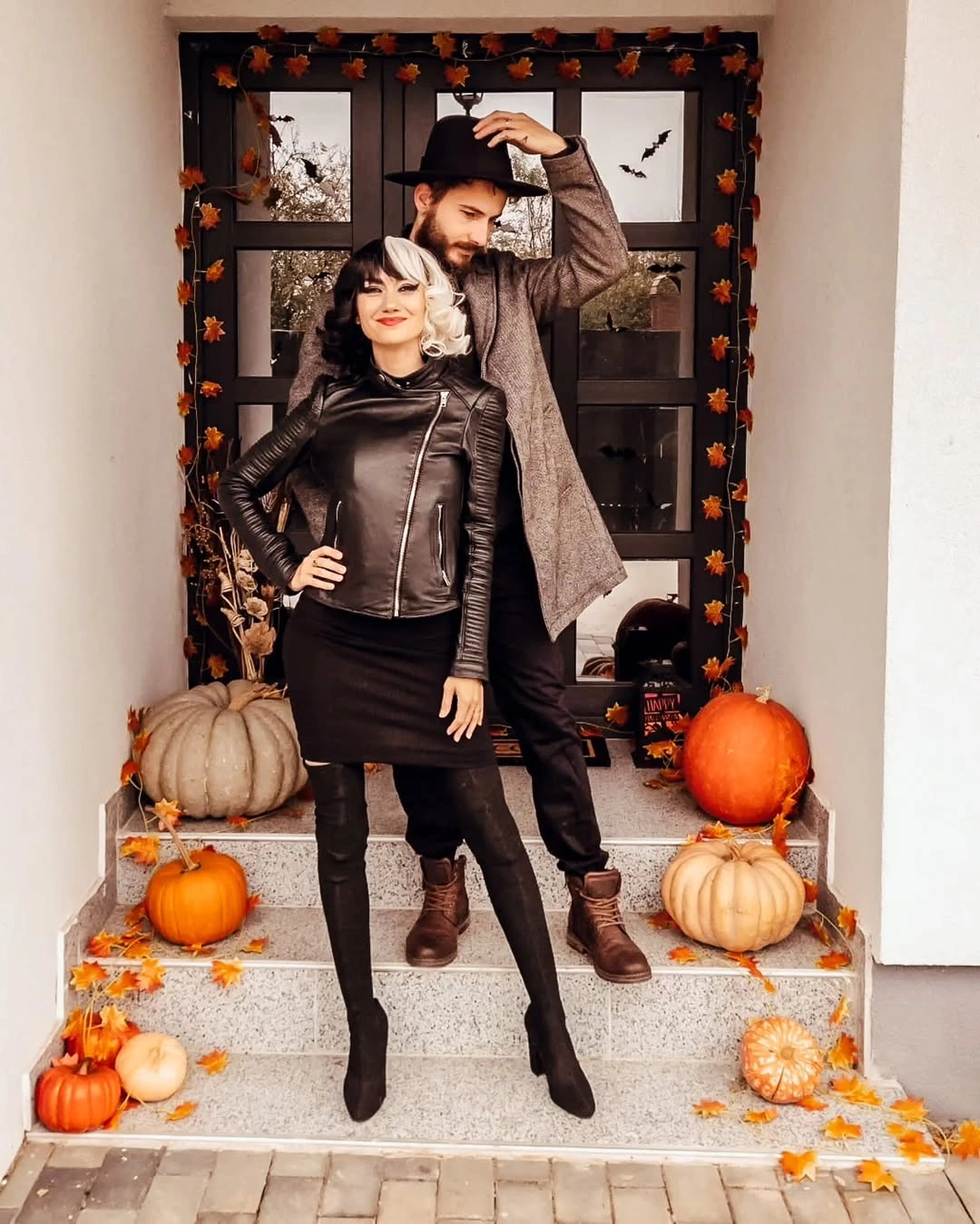
Catwoman needs the ears and a clean all-black base more than an overbuilt leather costume, while the werewolf needs visible texture around the head or shoulders to separate him from an ordinary dark outfit. Keep both characters recognizable through their animal cues, then let the pair’s contrast – sleek cat versus shaggy wolf – do the rest of the storytelling.
Comfort matters differently for each side of this duo: Catwoman’s tall boots need to be walkable, and the werewolf’s textured layer needs airflow indoors. Avoid adding too many animal props, because ears, fur, and a clear black feline line already explain the characters without a tail, claws, fangs, and every other accessory competing at once.
Hogwarts and Beauxbatons Costume Pair
This pair combines a Hogwarts student in Gryffindor colors with a Beauxbatons student in pale blue, then uses a baby Mandrake prop to make the Harry Potter universe unmistakable. The dark robe, red-and-gold tie, blue cape-style dress, and blue hat create two school identities that fans can recognize immediately without both people needing the same house colors.
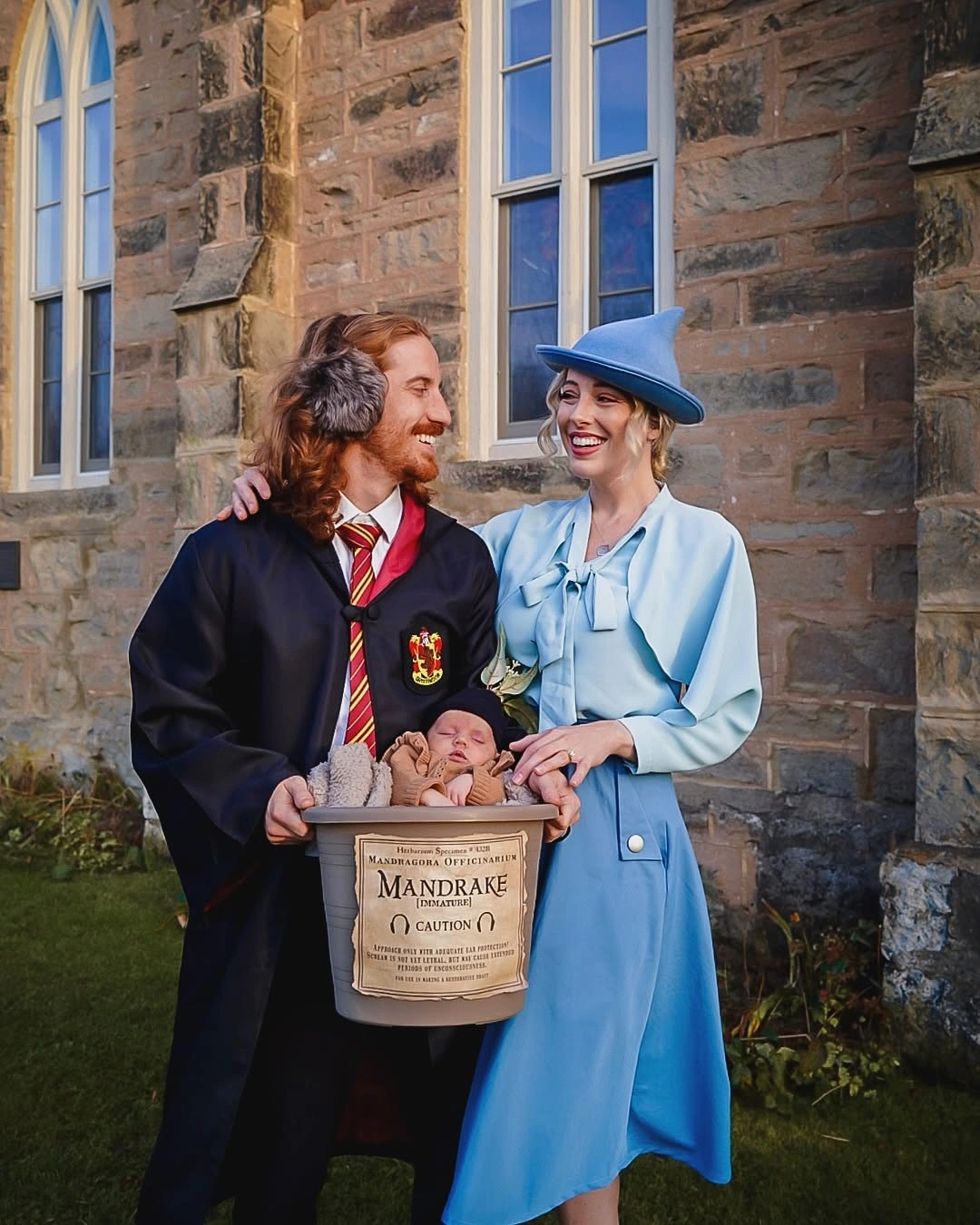
For a Harry Potter couple costume, choose two different corners of the wizarding world instead of dressing as matching students. A Gryffindor robe and a Beauxbatons uniform create a much more specific reference, while a small Mandrake prop adds a playful cue that rewards fans without becoming too large or complicated to carry.
Robes, capes, and props can quickly become cumbersome, so keep the Mandrake light and the hems high enough for steps and uneven paths. The hats and ties should stay secure, but comfort matters more than perfect screen accuracy; the contrasting school colors already make this pair feel magical at a glance.
Minnie Mouse Red Polka Dot Dress
Minnie Mouse is identified by the bright red-and-white polka dots, black ears, red bow, black tights, and rounded skirt shape. This is not simply a red dress with dots; the bow and ears transform the familiar pattern into Disney’s enduring mouse character, making it a cheerful Halloween option that is instantly readable by children and adults alike.
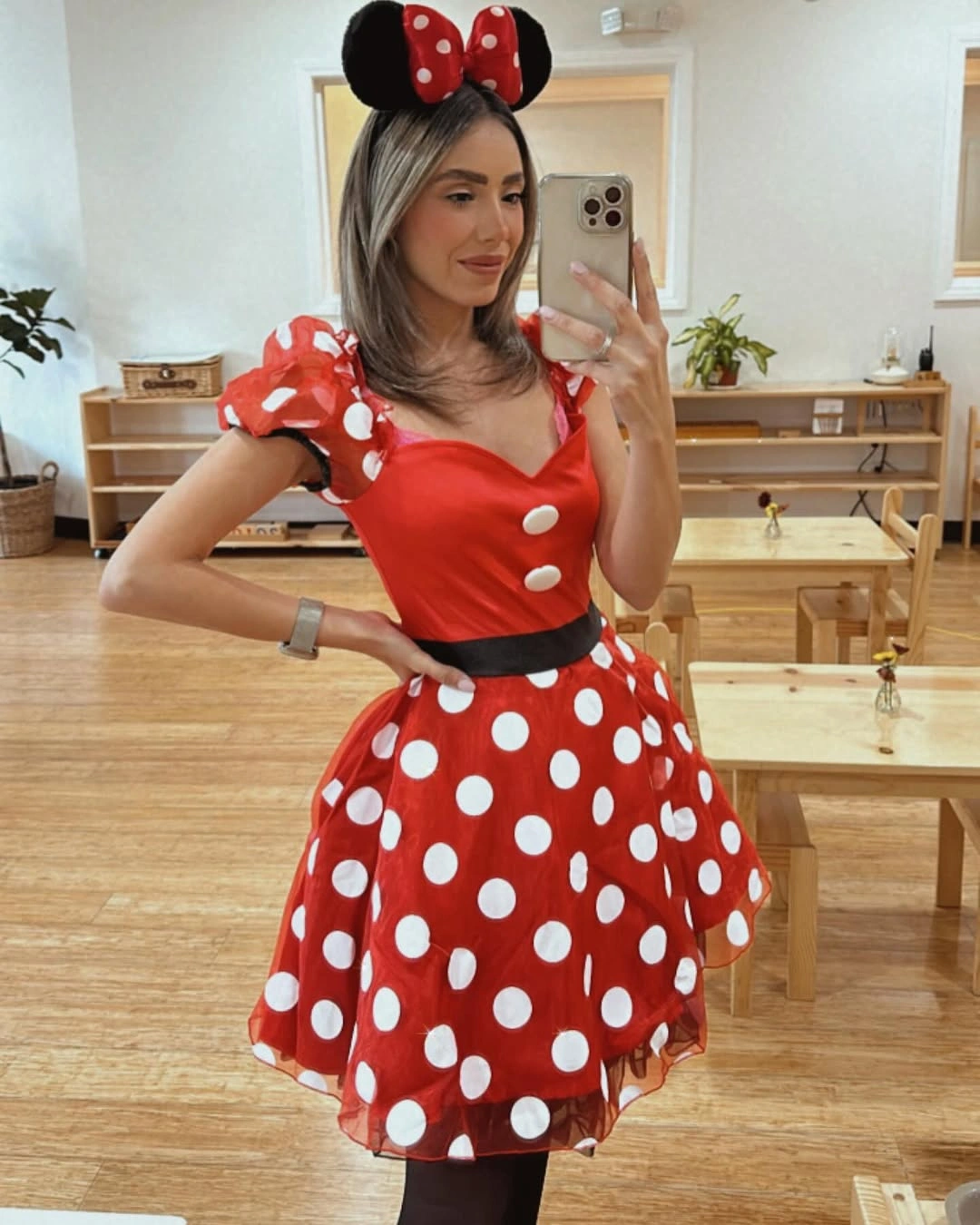
To keep Minnie Mouse recognizable, make the ears and bow proportionate to the wearer’s head and let the polka-dot dress be the central garment. A black waistband, tights, and simple shoes finish the character without extra costume clutter, and they preserve the crisp red, black, and white color code that Minnie has carried for generations.
A headband can be more comfortable than a heavy ear hat, especially for long parties or younger wearers. Choose a skirt length that moves easily, and keep the bow secure enough to survive hugs, dancing, and photos; if the ears and dots remain visible, the Minnie character will still read perfectly without gloves or a large prop.
Ringmaster From a Gothic Circus
This is a gothic ringmaster character, built from a wide black hat, red sleeves, black corset-like bodice, gold frog closures, dark gloves, and theatrical blue hair. The image evokes a dark circus host rather than a vague costume, with the gold details acting like the uniform’s command line and the red framing the character’s confident, performance-ready presence.
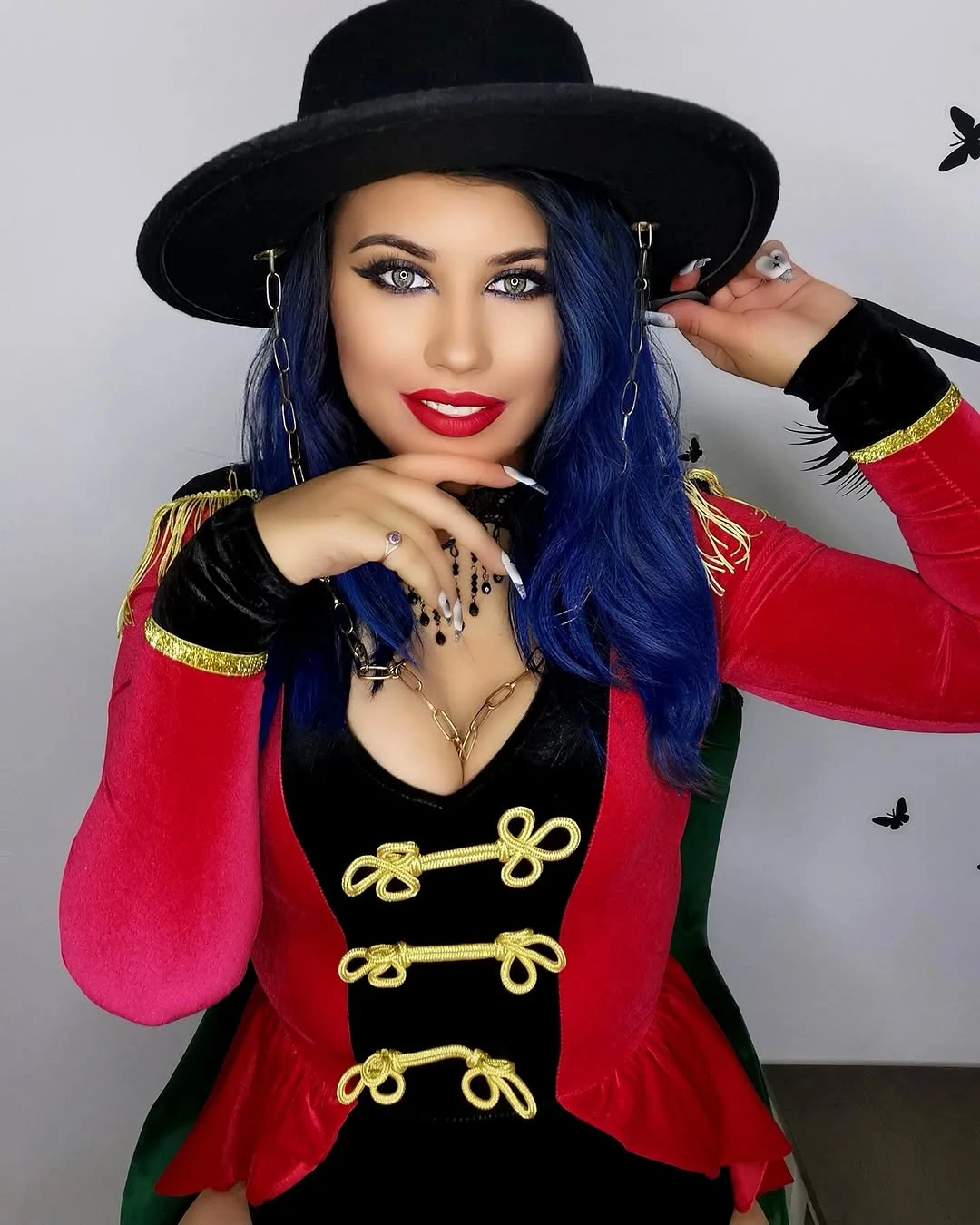
A ringmaster needs one strong central detail, and here the gold closures deliver it far better than a pile of carnival props would. Keep the hat, gloves, and lower layers dark, then let red sleeves and metallic trim imply the circus world; adding stripes, clown makeup, or a whip would blur the role into several unrelated Halloween ideas.
The wide brim needs a fit test under party lighting because it can hide the eyes and make makeup disappear in photos. Secure the hat with clips or a comb, keep the closure line straight, and choose sleeves that allow arm movement, because a ringmaster should look able to command the room rather than constantly manage their costume.
Valak the Nun Horror Costume
This is Valak, the demon nun from The Conjuring universe, recognized through the black habit, white wimple, pale face, hollowed black eye makeup, and dark skeletal mouth. The power of the costume is its severe religious silhouette turned frightening, so the small cross and stark face framing are much more important than adding random horror accessories.
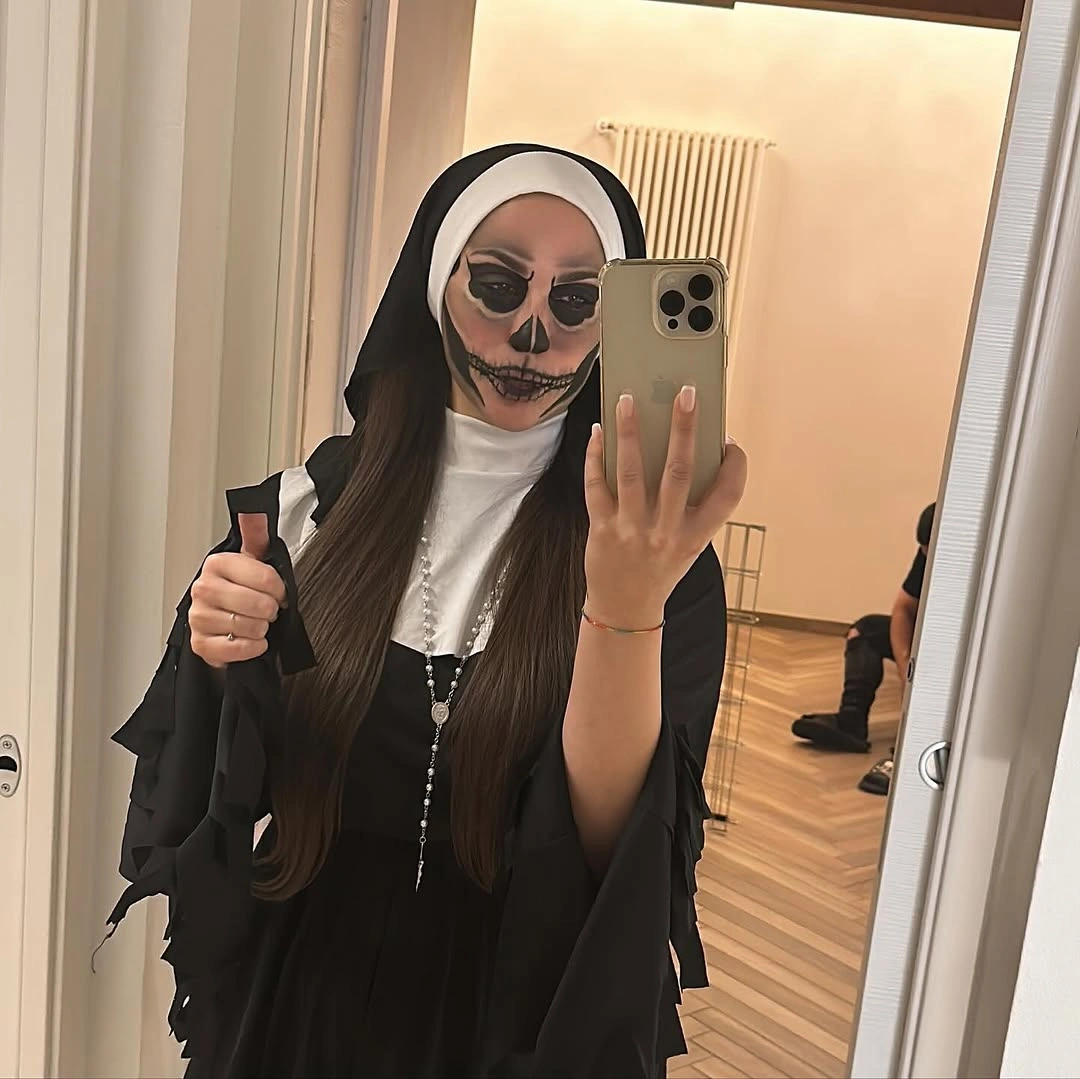
For Valak, keep the habit long and dark, then concentrate the character work at the face with white base makeup and deep black eye and mouth shapes. A wimple that frames the face correctly makes the reference much clearer than extra jewelry or gore, because fans recognize the unnerving contrast between the nun’s silhouette and the demon expression.
Long fabric needs safe hem clearance, and face makeup should be breathable enough for an evening of talking and eating. Skip a heavy mask if it limits visibility; the white wimple and black eye sockets will communicate Valak more effectively in person, and they allow the wearer to keep their expression alive in photos.
Victorian Ghost Bride and Groom
This is a Victorian ghost bride and groom pairing, with pale makeup, a ruffled white bridal dress and wig, an ornate light suit, and a tall gray hat. The characters feel like they have stepped out of a haunted manor or old séance photograph, and the shared washed-out palette gives the pair a supernatural unity without making their silhouettes identical.
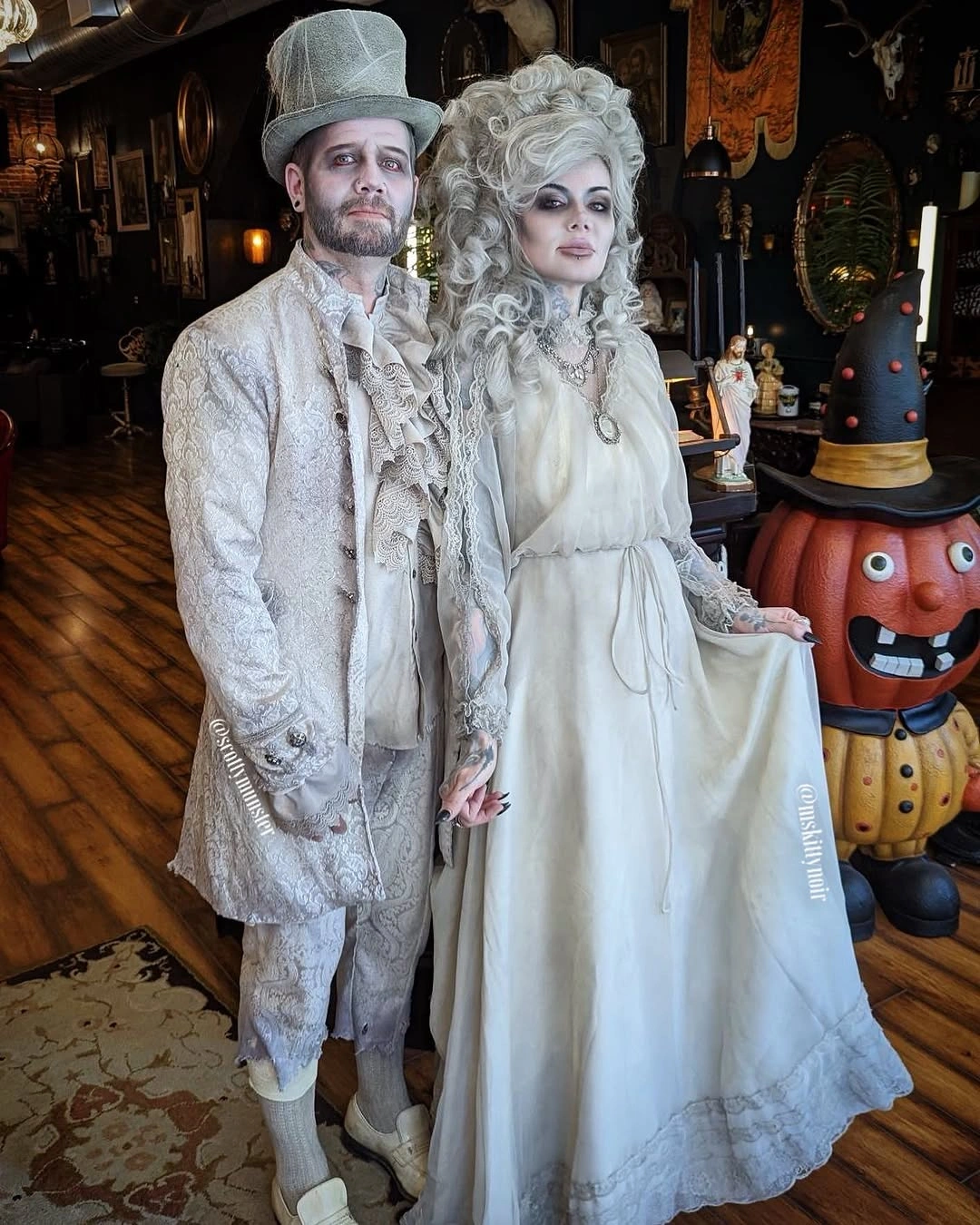
Build this ghostly couple around faded color and period-inspired shape, not around fake blood or noisy props. The bride’s veil and wig bring soft movement, while the groom’s hat and tailored layers create structure; that tension between draped and formal pieces is what makes the pair look like a story rather than two unrelated pale costumes.
Wigs, veils, and top hats need secure pins and enough ventilation for indoor events, particularly when makeup is also part of the look. Keep the bridal hem clear of the floor and make sure the suit allows a full stride; graceful movement will sell the haunted Victorian mood better than any extra accessory.
Spotted Fawn Forest Creature Costume
This fawn character uses a brown base, white chest panel, small ears, white spots across the face and body, and two neat buns that support the animal silhouette. It is a woodland creature costume with a clear visual language, not just a brown onesie, because the repeated spots and ears turn the wearer into a gentle forest fawn from head to toe.
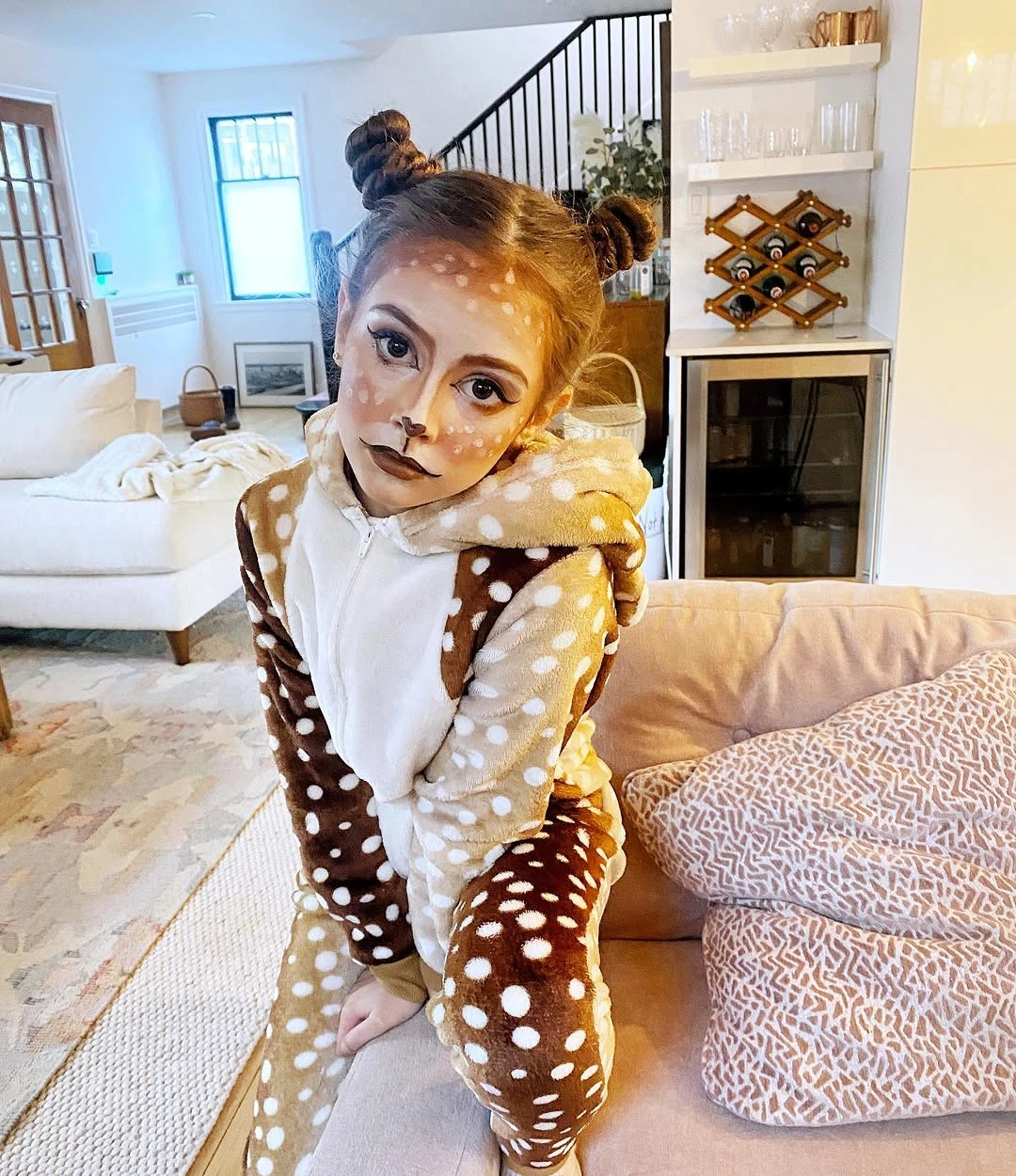
To recreate a fawn, repeat the white spot pattern in at least two places, such as face makeup and the chest or sleeves, so the animal reference feels intentional. Keep the palette soft and natural, then let the ears and small buns finish the character; antlers, glitter, and unrelated floral accessories are not necessary for the idea to read.
Face dots can smudge against hair and collars, so apply them after the costume is settled and use products that are comfortable on sensitive skin. Secure the ears lightly, choose easy shoes, and keep the chest panel smooth, because the creature effect depends on small repeated marks staying visible through active Halloween play.
Creepy Porcelain Doll Costume
This is a creepy porcelain doll character, made clear by the pale ruffled blouse, high pigtails, exaggerated dark eyes, painted nose, and doll-like mouth. The contrast between innocent vintage clothing and unnerving makeup is the entire Halloween story, giving the wearer a figure that could belong in a haunted nursery without relying on a recognizable franchise name.
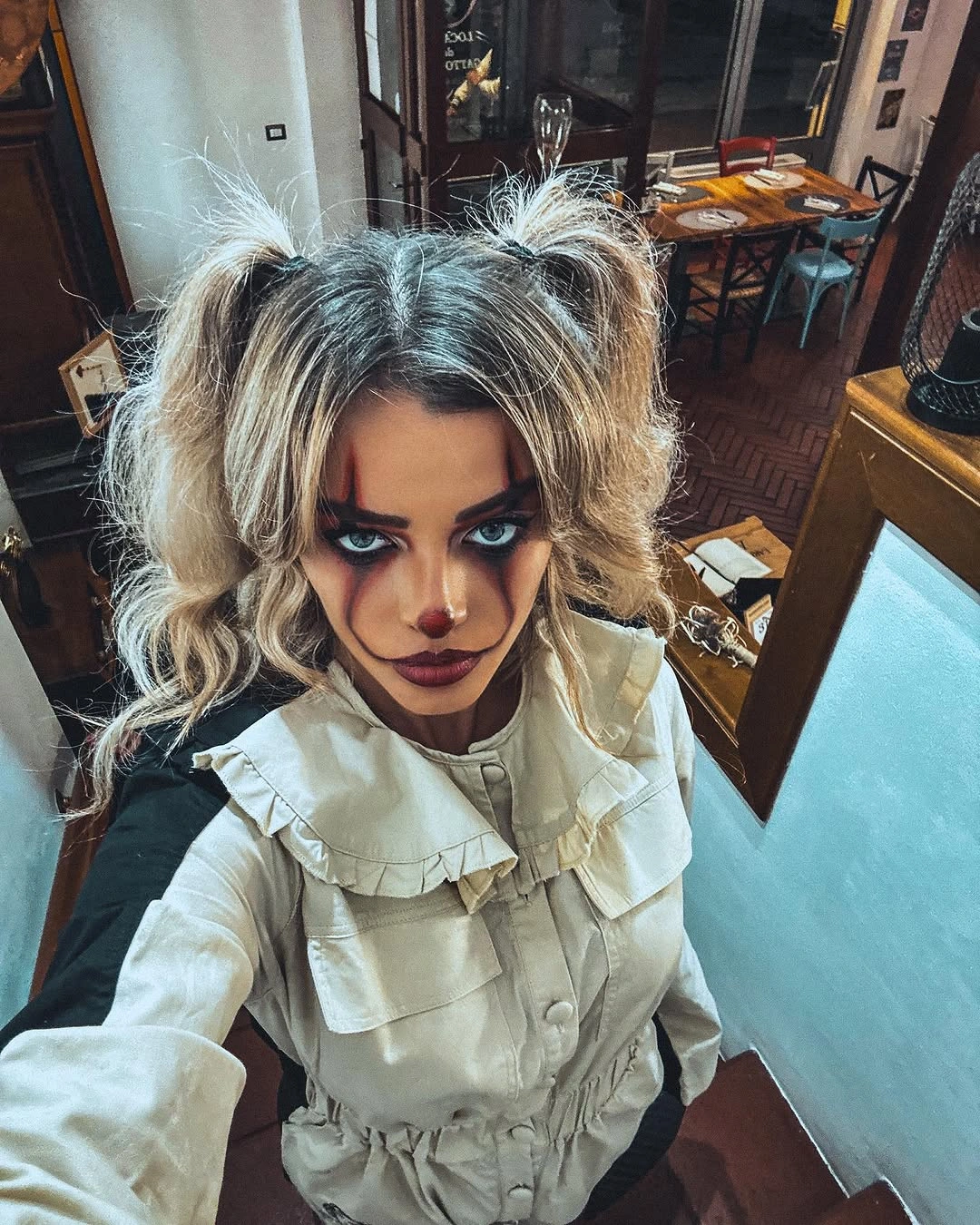
For a convincing haunted doll, keep the clothing old-fashioned and soft, then make the face more precise rather than more violent. Round cheeks, dark eyes, a small painted mouth, and symmetrical pigtails create the toy-like effect, while a simple ruffled blouse gives the character an era without adding too many fussy costume pieces.
Dark makeup near a pale collar can transfer quickly, so leave a little space at the neckline and set the face before putting on the blouse. The pigtails should be secure but not tight, and any prop should remain small; the porcelain doll concept is strongest when the unsettling expression remains the first thing people notice.
Sally and Beetlejuice Halloween Duo
Sally from The Nightmare Before Christmas stands beside Beetlejuice in his striped suit, creating a Tim Burton duo that fans recognize instantly through patchwork color, blue-toned face makeup, and sharp black-and-white stripes. Their characters are different but perfectly compatible for Halloween, pairing Sally’s handmade softness with Beetlejuice’s loud, chaotic afterlife energy.
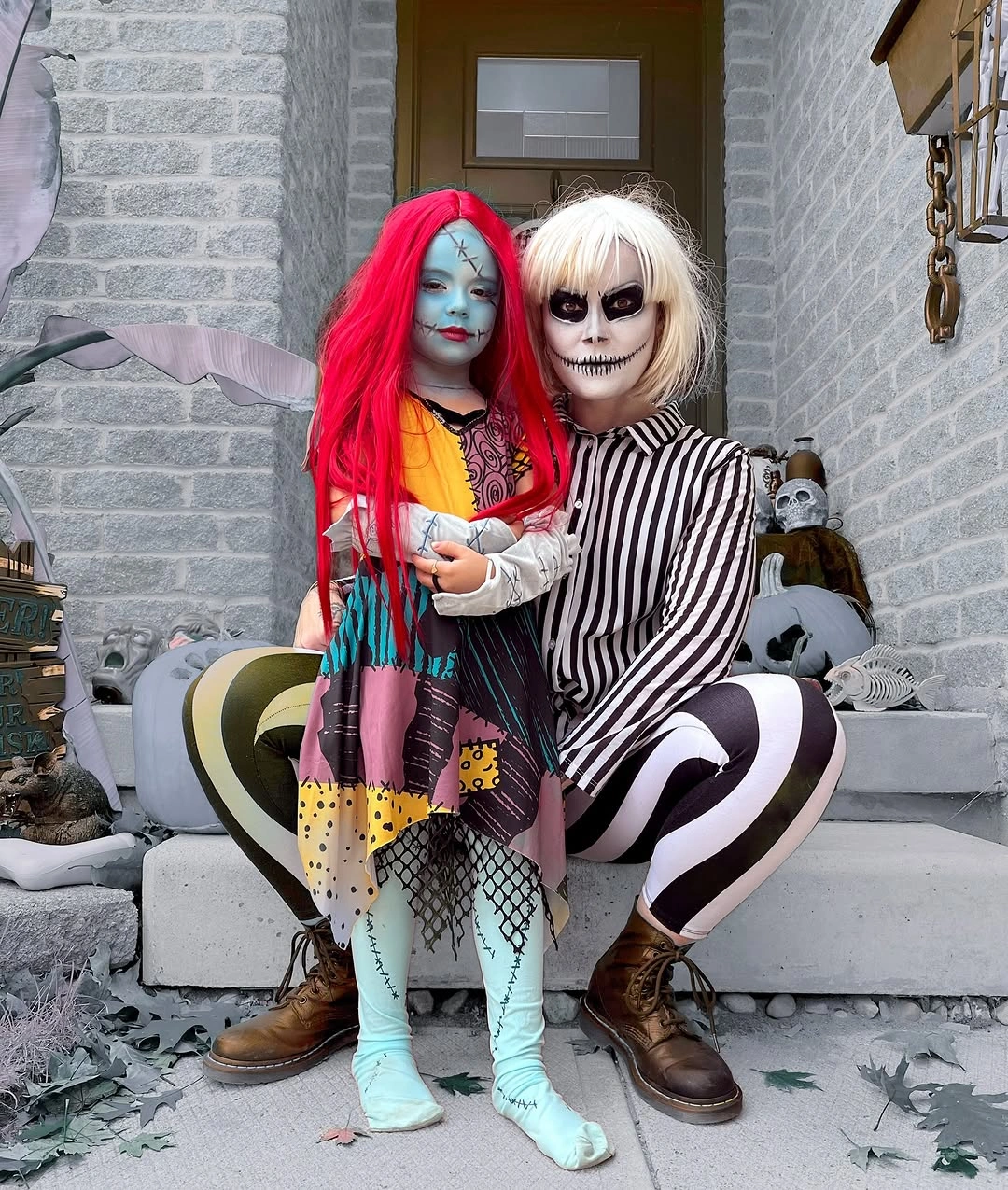
Sally needs a patchwork dress, long hair, and stitched facial details, while Beetlejuice needs stripes, dark eye makeup, and a slightly disheveled silhouette. Do not add a third major print or a bright unrelated prop, because the patchwork-versus-stripe contrast already tells the entire story and makes the pair legible even in a crowded room.
Both costumes have detailed makeup, so give yourself enough time to apply it after the main layers are fitted. Keep Sally’s skirt easy to walk in and Beetlejuice’s jacket comfortable through the shoulders; the characters should feel playful and animated, not like the wearers are trapped inside rigid costume pieces.
Jack-o’-Lantern Head Gothic Character
This is a jack-o’-lantern-headed gothic creature, with the glowing orange pumpkin head acting as the character’s entire identity above a black ruffled skirt, patterned tights, and lace-up boots. The look belongs to Halloween folklore rather than a single franchise, which makes it powerful: the bright carved pumpkin face turns a dark outfit into a living October night figure.
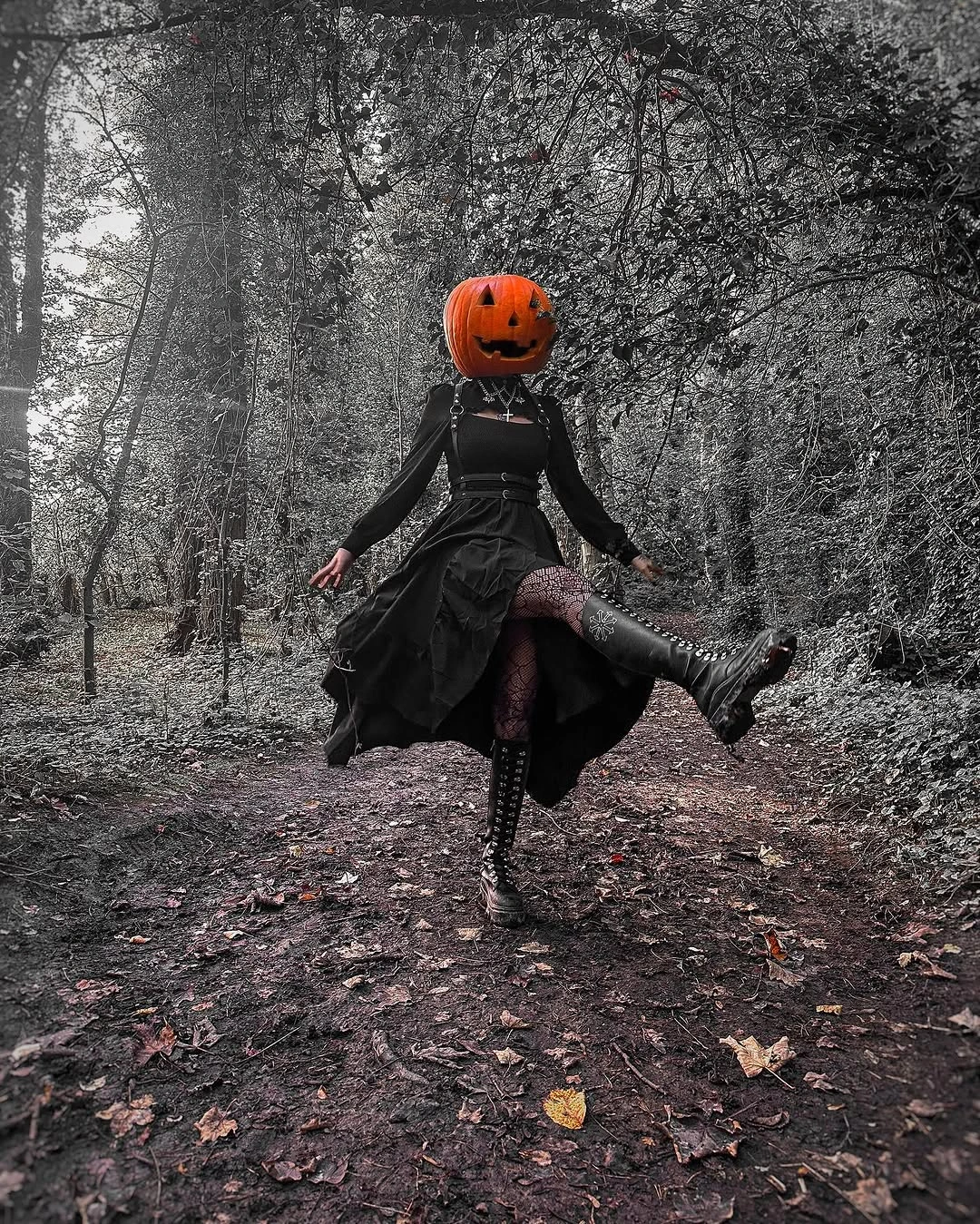
Keep a pumpkin-head costume dark below the neck so the orange face remains the only bright focus. Black boots, tights, and a ruffled skirt add movement and texture without competing with the carved grin, while a simple black top lets the headpiece look enormous and supernatural instead of being diluted by another color story.
Pumpkin headpieces reduce peripheral vision and trap heat, so they need breaks, ventilation, and a safe route with no stairs or dense crowds. The dark clothing should still work when the head comes off, because the wearer may need a practical pause; the boots and skirt can keep the gothic character mood intact.
Prairie Couple From American Gothic
This couple references the recognizable American Gothic prairie aesthetic, using a long small-print dress, white apron, bonnet, white shirt, dark suspenders, trousers, and straw hat. It is a character-driven duo because the clothes create a specific old-fashioned household pair, inviting a deadpan Halloween interpretation rather than simply reading as random vintage outfits.
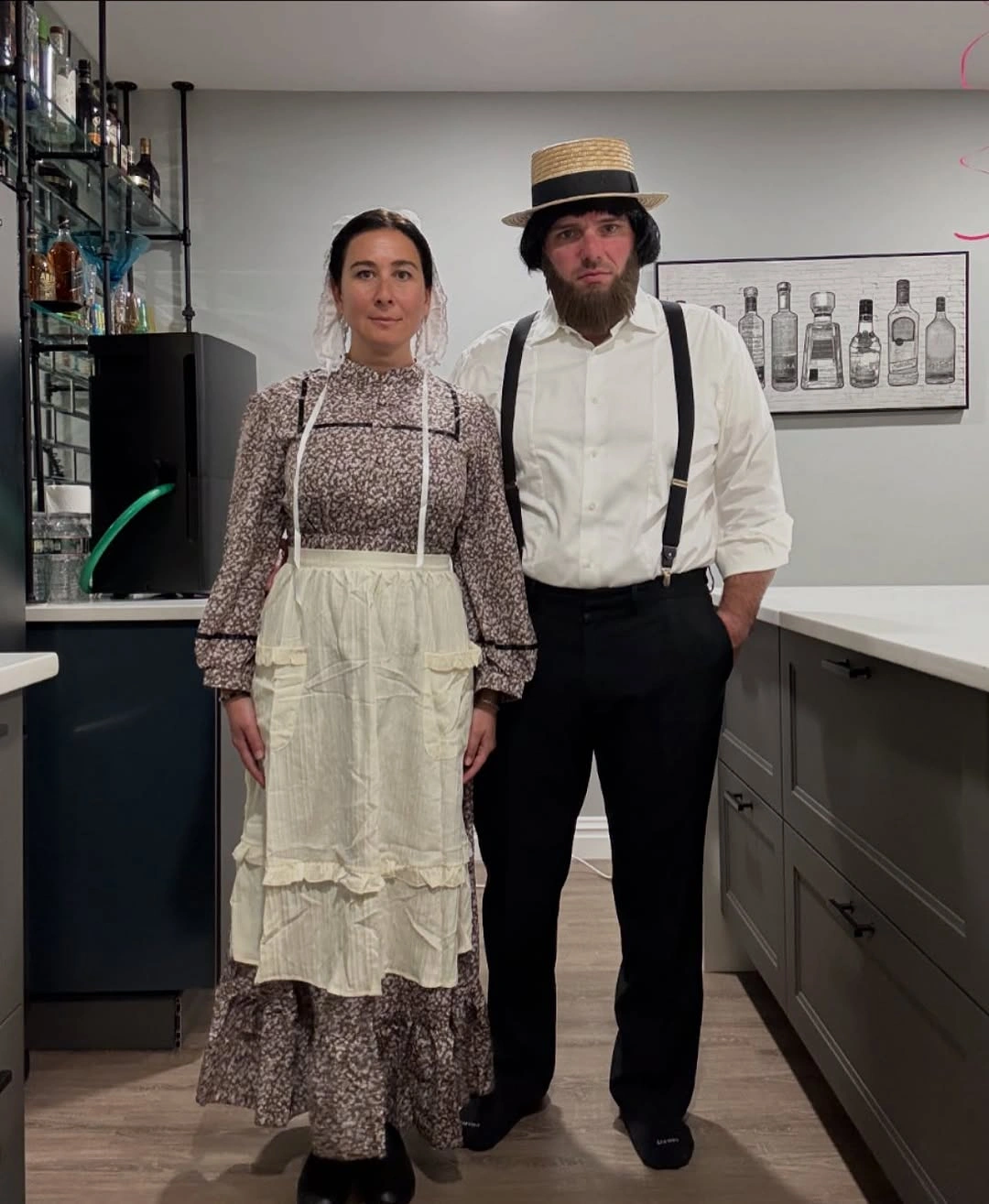
To make an American Gothic-inspired couple work, focus on the apron, suspenders, bonnet, and straw hat before worrying about tiny period details. The shared white at the chest links the two people, while the long dress and straight trousers create separate roles; a small pitchfork prop could help, but the characters should already read without it.
Long skirts and brimmed hats can be awkward during travel, so test the outfit in the car and on stairs before the party. Keep apron ties firm, choose shoes that can actually be walked in, and do not overload the look with fake farm props, because the restrained, stern mood is what makes this Halloween pair funny and recognizable.