Getting dressed for work during the colder part of the year can make even a favorite outfit feel overly careful. The instinct is to add another layer and another safe answer until the whole thing loses its point of view. A better mood arrives when one deliberate decision is allowed to stay visible and the rest of the outfit learns to support it without trying to be the main event.
The best winter outfits for work are not about looking more serious; they are about choosing where the eye should land and letting proportion keep that answer believable. Decide which part needs lightness or weight before adding anything else, then repeat a tone only when it helps the silhouette hold together. That small discipline leaves room for color and texture without making the day feel dressed up for its own sake.
Cream Coat Over a Dark Vertical Base
A long off-white coat sits over wide dark trousers, black shoes, a small dark bag, and sunglasses, creating a clean light-over-dark arrangement. The coat length echoes the trouser line instead of cutting it off at the hip, so the contrast stays vertical and calm. For a workday version, keep the underlayers similarly dark and let the coat be the only bright field.
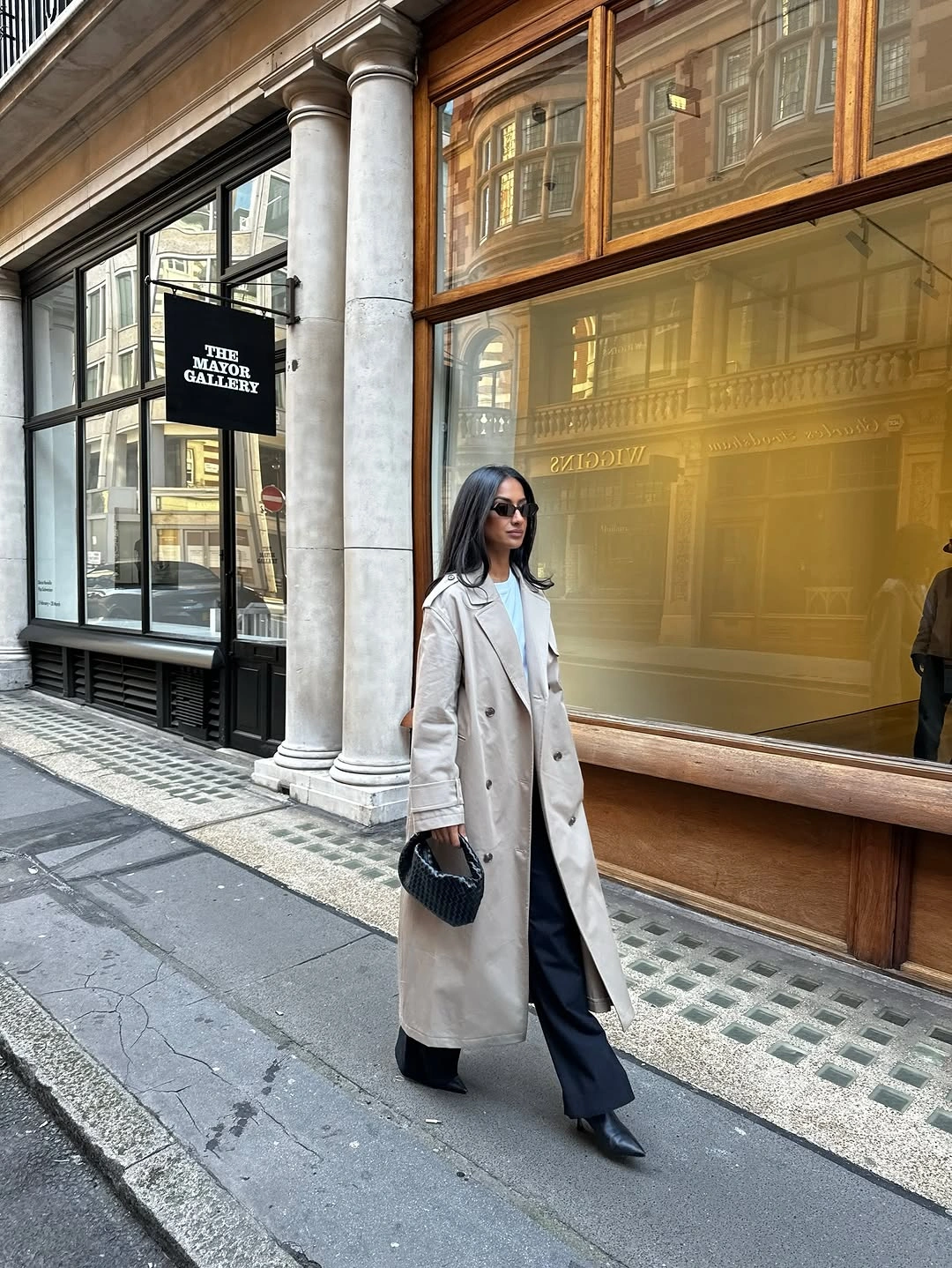
The strength here is not simply the cream color but the amount of quiet space it creates around the darker pieces. Black footwear and bag handles anchor the lower half, which keeps the pale coat from seeming disconnected. If a full light coat feels like too much, a cream scarf or knit worn near the face can deliver a smaller version of the same contrast.
Wide trousers bring movement and softness beneath the straighter coat, while the compact bag prevents the silhouette from becoming overly loose. That balance makes the outfit read more polished than a large tote would. The only detail worth watching is trouser length: a clean hem near the shoe keeps the long layers from looking crowded.
Camel Coat With a Burgundy Center
A camel long coat frames a burgundy sweater and matching scarf, with dark boots and a dark bag keeping the base grounded. Burgundy sits naturally beside camel because both shades carry warmth, yet the knit and scarf create a deeper center point rather than blending away. This is a useful color moment for anyone who finds black-and-brown combinations a little too severe.
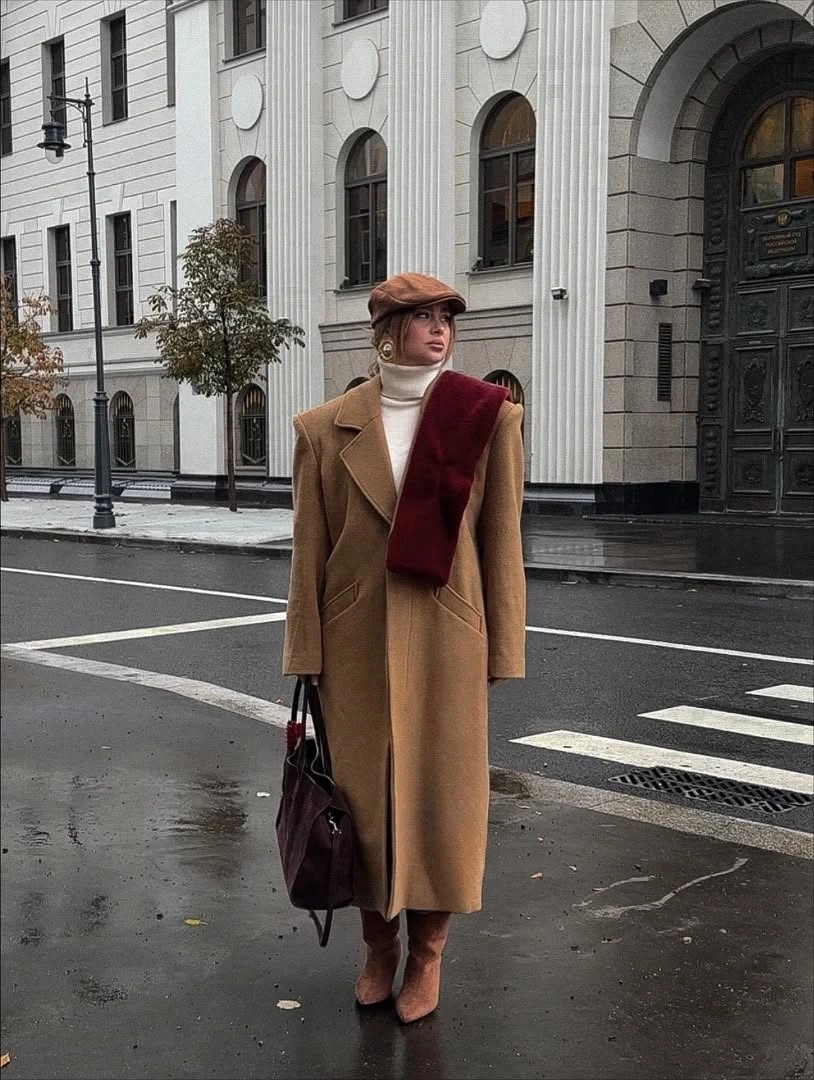
The scarf repeats the sweater instead of introducing another unrelated accent, which makes the layered neckline feel organized. That repetition matters when the coat is open and several pieces are visible at once. To make the idea quieter, choose a wine-toned top with a camel coat and leave the scarf neutral, or reverse it with a burgundy scarf over a simple knit.
Dark boots and bag pull the eye downward and give the warm upper half some weight. A similarly colored shoe would make the outfit softer, but the darker finish shown here adds definition around the hem. Keep the bag structured if the scarf is substantial, since two very relaxed accessories can make the middle of the outfit feel bulky.
Belted Brown Coat With Precise Boots
A long dark brown coat is drawn in at the waist and finished with knee boots, a structured cream bag, and sunglasses. The belt creates a focal point midway down the body, while the tall boots continue the narrow dark line below it. That combination gives a large outer layer enough shape to work as the main piece of a work-ready outfit.
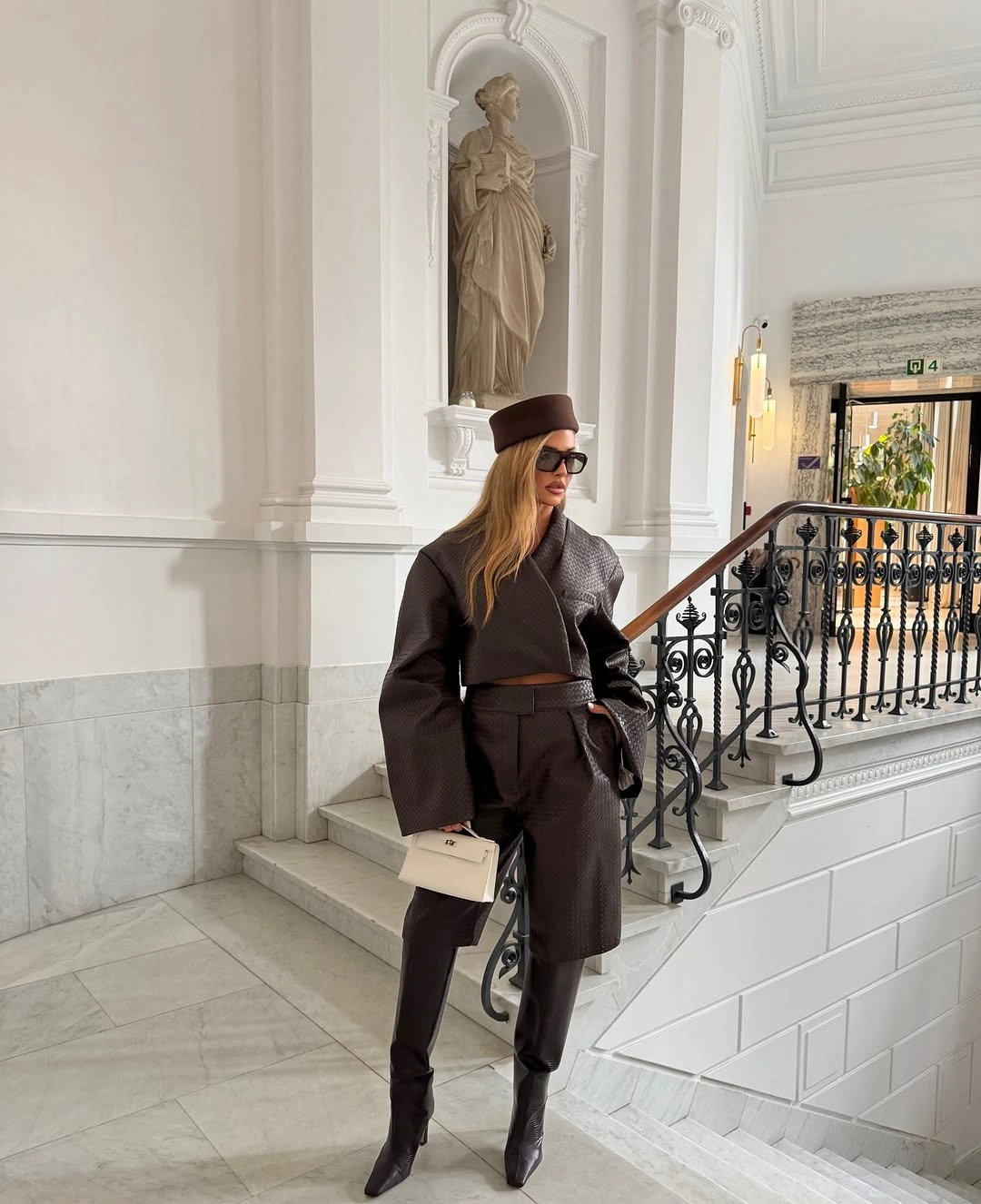
The cream bag is especially effective because it breaks up the brown-and-black palette without competing with it. Its firm shape also mirrors the controlled waist created by the belt. A practical adaptation is to leave a similar coat open over a fine-gauge top and trousers on indoor-heavy days, then use the belt only when the full outer silhouette needs definition.
There is a slightly dressier feel to the long coat and pointed boot pairing, but it remains grounded by the dark colors and modest bag size. A slouchy boot would soften the effect, while a low block heel would make the outline more relaxed. The key is keeping one of those elements crisp so the coat does not become a single undifferentiated brown layer.
Black Layers Broken by Gray Trousers
A black beanie, long black coat, soft black torso layer, gray wide trousers, and black boots make texture do most of the work. The gray trousers create a visual pause between the dark upper layers and footwear, so the outfit has depth even with almost no bright color. It is proof that a restrained palette can still feel lively when the surface changes are noticeable.
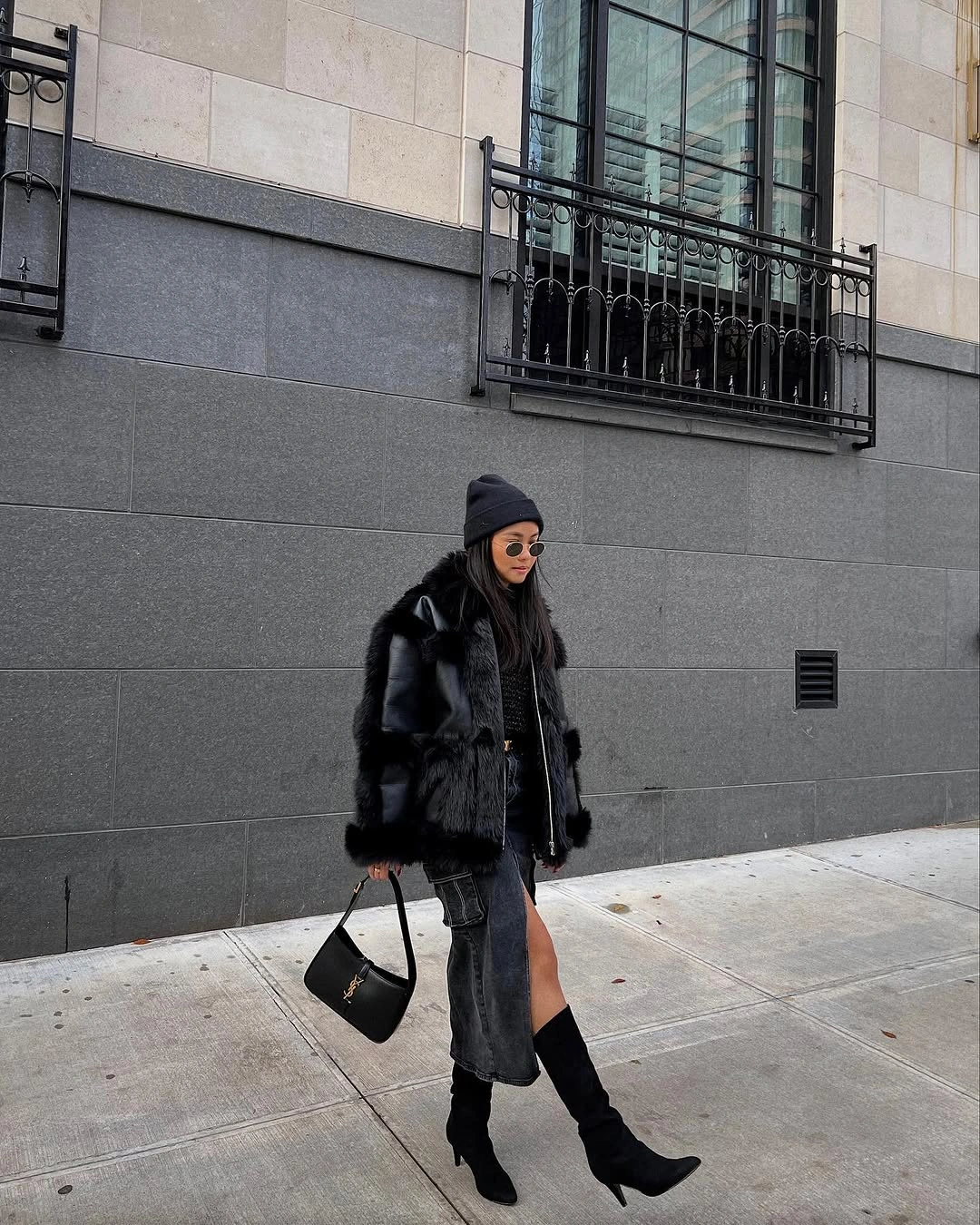
The soft-looking layer at the torso keeps the structured coat from reading too rigid, while the trousers add a looser horizontal sweep at the bottom. For an office setting with a relaxed dress code, a knit vest or brushed cardigan can play the same role over a sharper shirt. Choose just one fuzzy or tactile piece, though, so the silhouette keeps its tailored direction.
Gray is doing quiet corrective work here: it lightens the outfit without the hard contrast of white and gives the black accessories a clear frame. Charcoal trousers would make the transition more subtle, whereas pale gray would make it more graphic. If you add a larger bag, keep it black or gray so a new color does not interrupt the deliberate dark progression.
White Boots Against a Black Midi Skirt
A gray wrap-like outer layer falls over a black midi skirt, while a white fur-look hat and white pointed boots give the outfit two bright punctuation marks. Repeating white at the top and bottom stops the boots from looking accidental. The result is a stronger contrast than a head-to-toe dark outfit, yet the soft gray middle keeps that contrast from feeling abrupt.
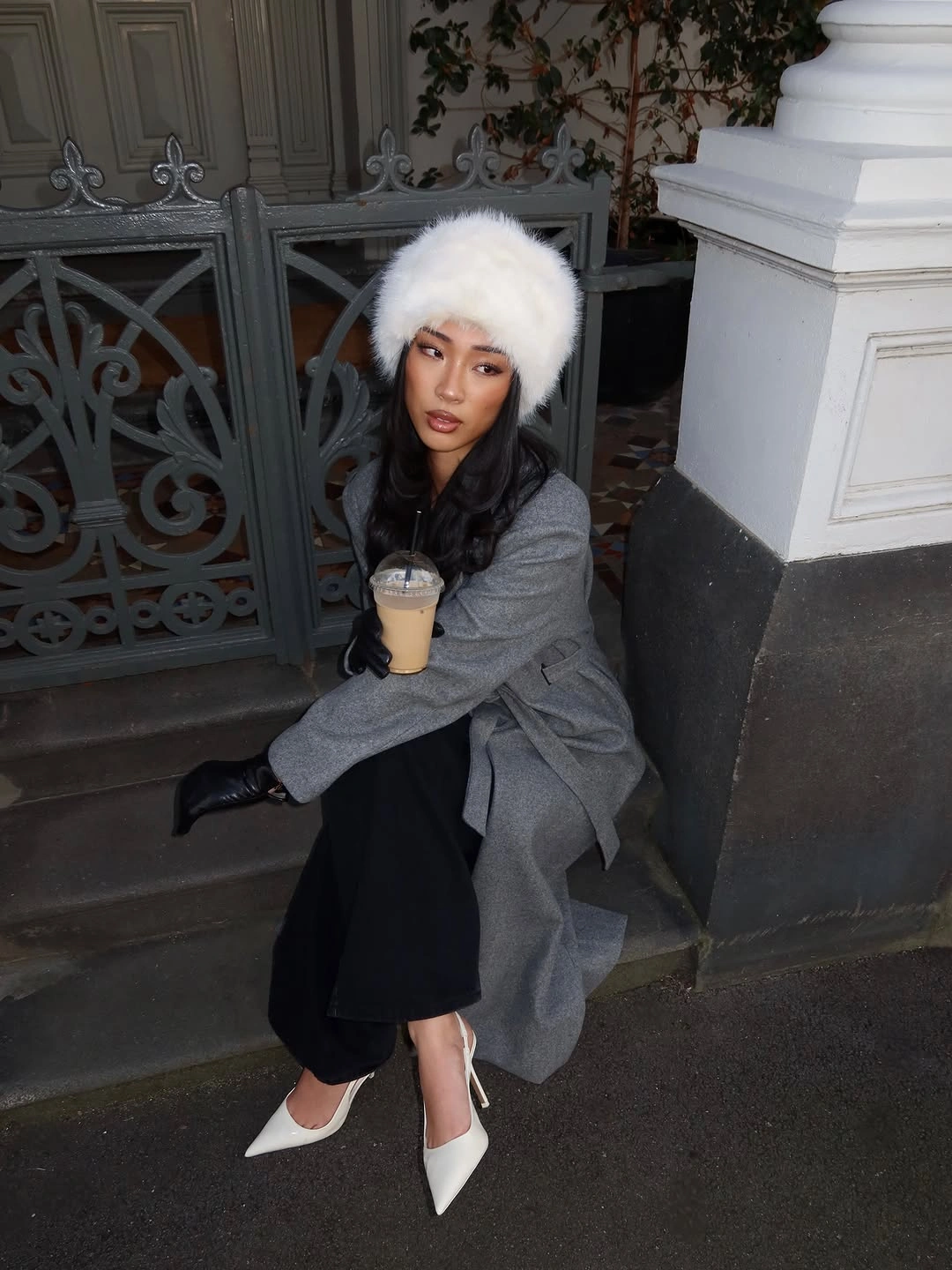
The pointed boot shape is important because it adds a refined finish to a skirt that otherwise has a heavier dark presence. If pointed toes are not practical, a slim almond toe can preserve the same visual lift. Keep the rest of the accessories dark or gray, since another bright bag would compete with the carefully spaced white details.
A long skirt paired with a substantial outer layer can become visually dense, so the exposed boot shaft and pale toe create welcome separation near the hem. That is the useful takeaway, not a rule about wearing white. Even a light gray boot, a pale bag, or a cream scarf can provide a similar break when the rest of the outfit is mostly charcoal and black.
Tonal Cream Layers With a Wide Scarf
A generous cream scarf, long cream coat, pale wide trousers, and a light handbag build one soft tonal story from shoulder to shoe. Because the shades sit close together, the different volumes matter more: the scarf is broad and close to the face, the coat is long, and the trousers add width below. That coordination makes pale layers look intentional rather than faded into one another.
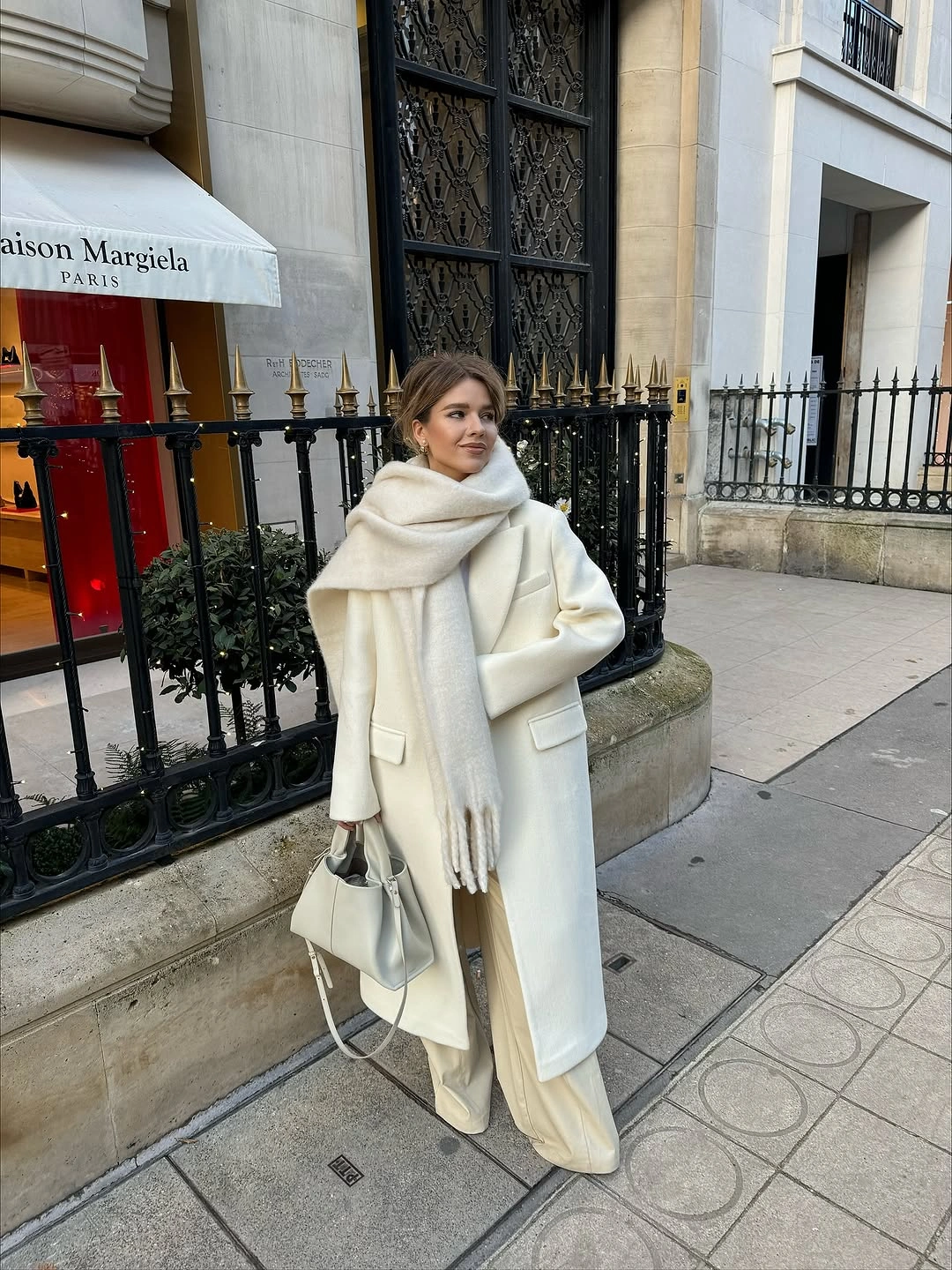
The handbag remains light enough to support the palette but small enough not to add another large pale block. A deeper beige or taupe shoe would be an easy way to give this formula more grounding without breaking the tonal effect. When choosing similar pieces, vary one element through texture or shape so the outfit retains definition in regular indoor light.
For a winter work outfit, this approach benefits from crisp edges: a trouser crease, a structured bag, or a defined coat lapel can keep the softness from drifting into lounge territory. The scarf already supplies volume, so a finer knit under the coat will usually feel more balanced than another oversized layer. Tonal dressing works best when its proportions have a clear hierarchy.
Brown Texture With a Burgundy Accent
An oversized textured brown coat sits over dark trousers, while a burgundy inner layer and burgundy bag create a repeated jewel-toned accent. The color appears twice but in small, separated areas, giving the rich brown outer layer a clear companion instead of asking it to carry the whole outfit. This is the fun option when neutrals need a little more pulse.
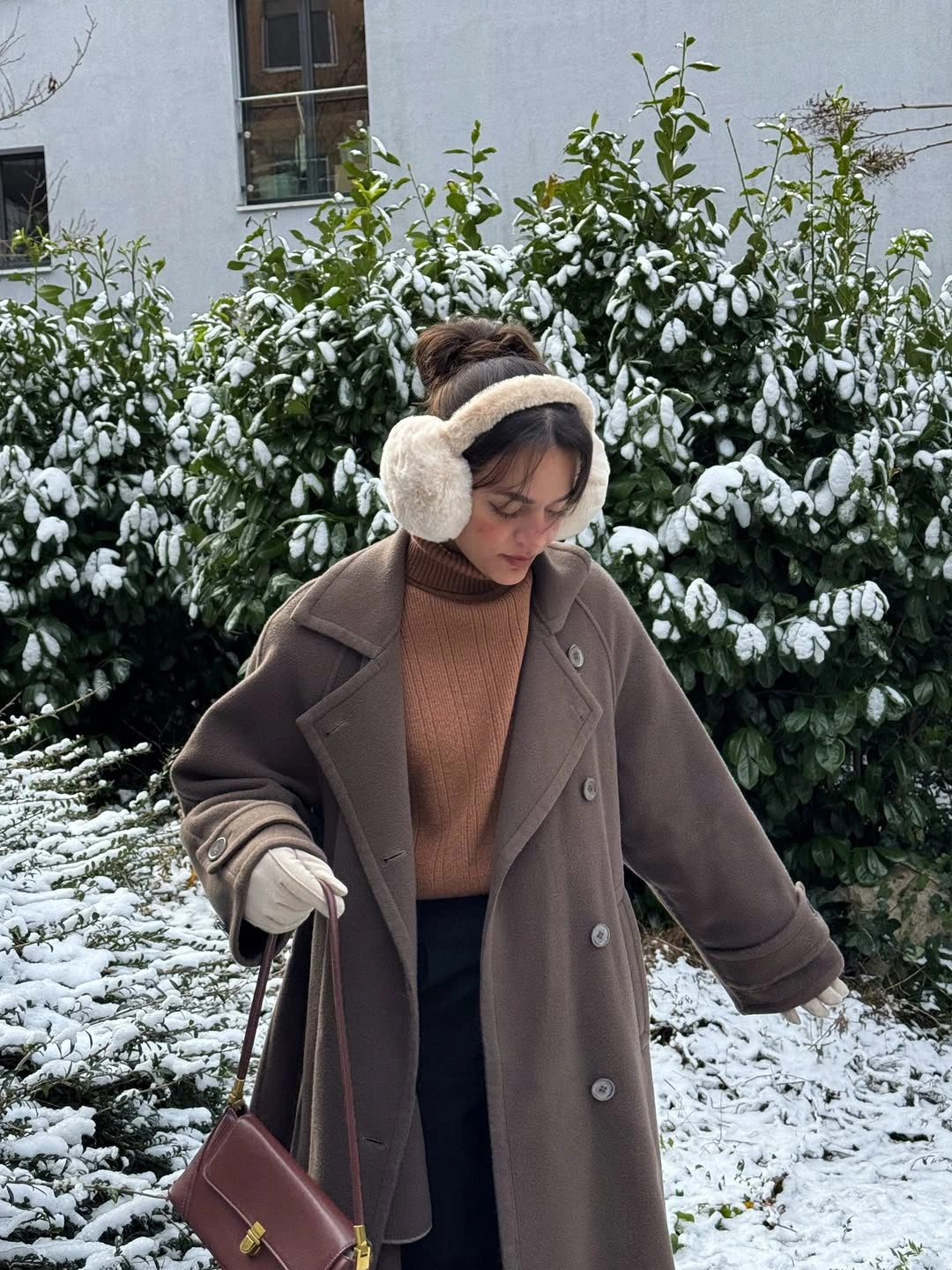
The burgundy bag works because it echoes the inner layer rather than launching an unrelated accessory color. That kind of repetition is especially helpful around a large textured coat, which already brings plenty of visual information. For a toned-down version, use a burgundy knit with a dark brown bag, or let a scarf be the only accent against the coat.
The oversized cut keeps the look relaxed, while the darker trousers create a narrower base beneath the fuller coat. A very wide trouser in the same brown family could make the silhouette feel too uniform, so contrast in value is useful here. If the outer layer is the most textured item, choose smooth leather-look or matte accessories to give the eye somewhere calmer to rest.
Pale Blue Scarf Over Cream and Brown
A cream shearling-look jacket, pale blue scarf, brown trousers, and a large brown tote use cool and warm shades in a calm proportion. The blue is concentrated close to the face, where it separates the cream outer layer from the warmer trousers without overwhelming either. That small cool note makes the brown-and-cream pairing feel fresher and more deliberate.
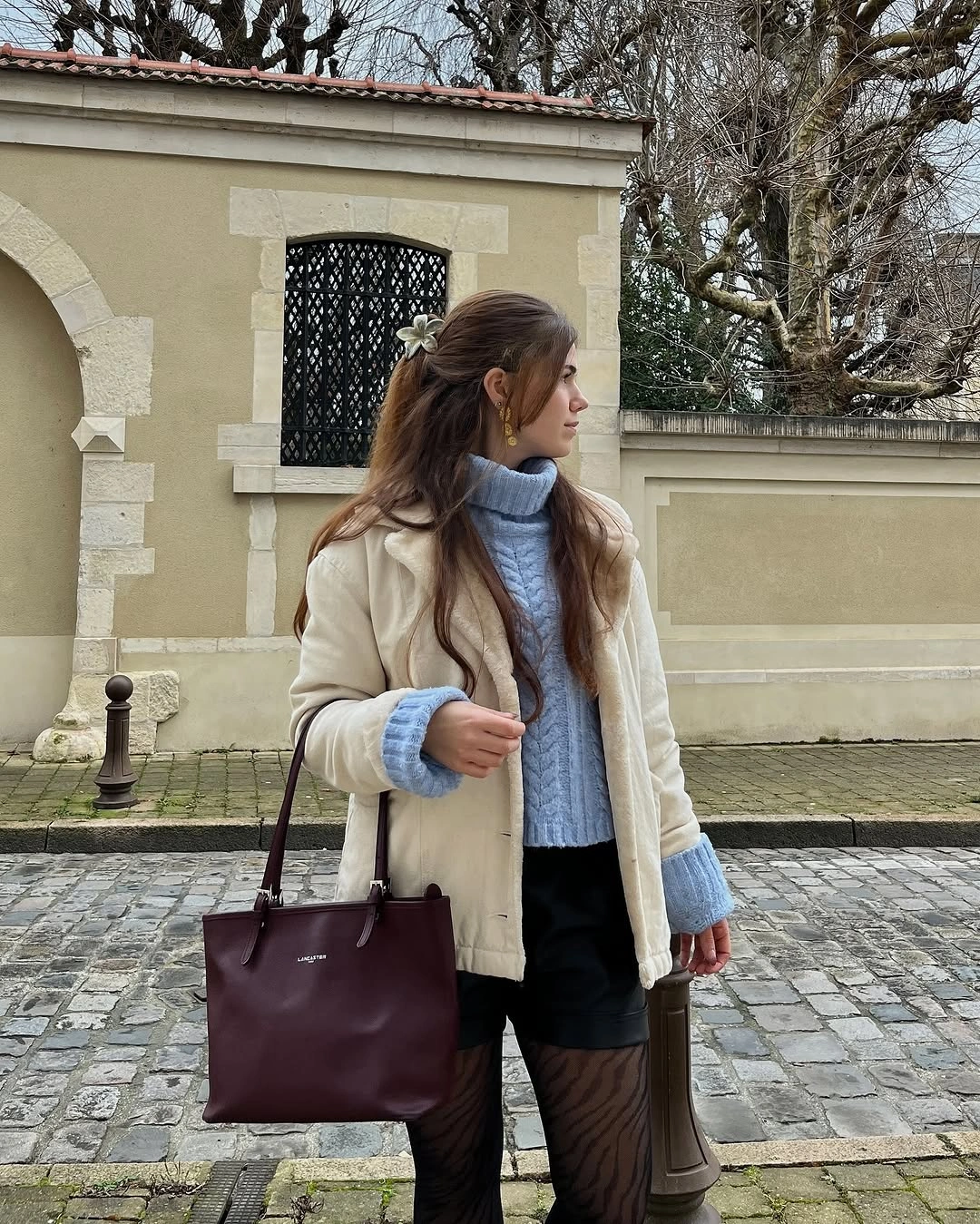
The tote repeats the trouser color family, which keeps the lower half connected even though the scarf shifts cooler. If you prefer less contrast, trade the blue scarf for muted gray-blue or soft slate. The detail to preserve is the placement: an accent near the neckline works well when the rest of the outfit relies on large, uncomplicated blocks.
The jacket appears shorter and fuller than the trousers, so the roomy tote should stay close to the body rather than hang far out at the side. That avoids adding width to every part of the frame. A boot in dark brown, tan, or even cream could work here, but black would introduce a sharper boundary that the gentle color story does not need.
Brown Stole Giving Black Layers Depth
A long black coat, black boots, a small black bag, and an oversized brown textured stole create a nearly monochrome base with one substantial warm interruption. The stole is large enough to change the read of the coat rather than acting like a tiny decorative accent. It gives the eye texture, warmth of color, and a clear point of focus all at once.
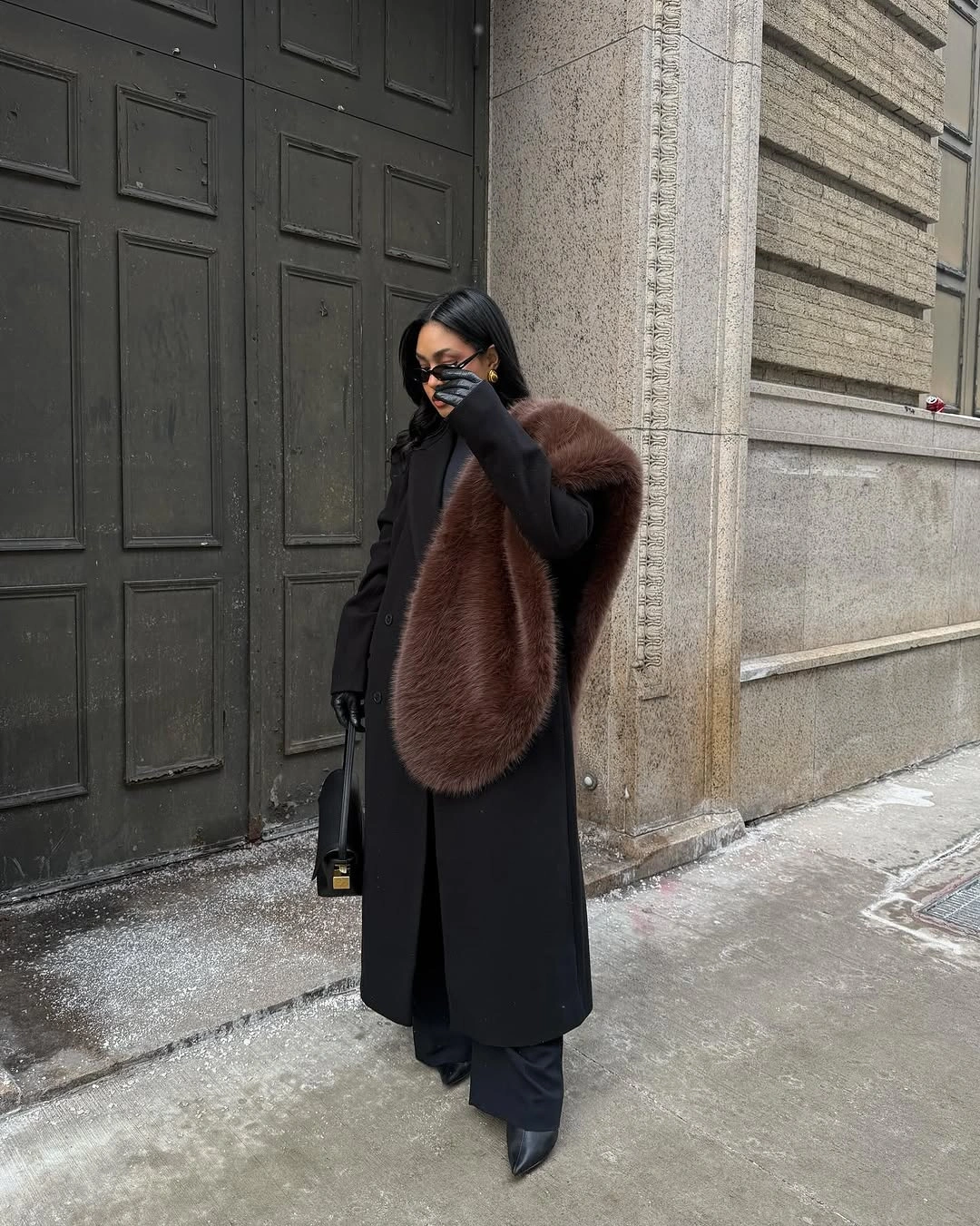
What makes this combination convincing is the contrast in surface as much as the brown against black. The smooth dark accessories stay quiet while the textured wrap carries the drama. A smaller scarf in the same position could feel lost, so scale matters: if the outerwear is long and dark, choose a wrap with enough width to be visible from the front.
There is a practical tradeoff with a voluminous neck layer: it can obscure a tailored lapel or crowd a structured bag strap. Let the coat remain simple underneath and avoid adding statement jewelry at the neckline. When the stole is the color decision, repeating brown only in a subtle belt or watch strap is usually plenty.
Camel Coat Framing a Black Base
A camel double-breasted coat is worn over a short black dress or skirt, with knee boots and a small dark bag continuing the inner color. The camel outer layer provides warmth in color while the black base creates a compact central column. Together they give the outfit a clear workwear structure without relying on a bright accent.
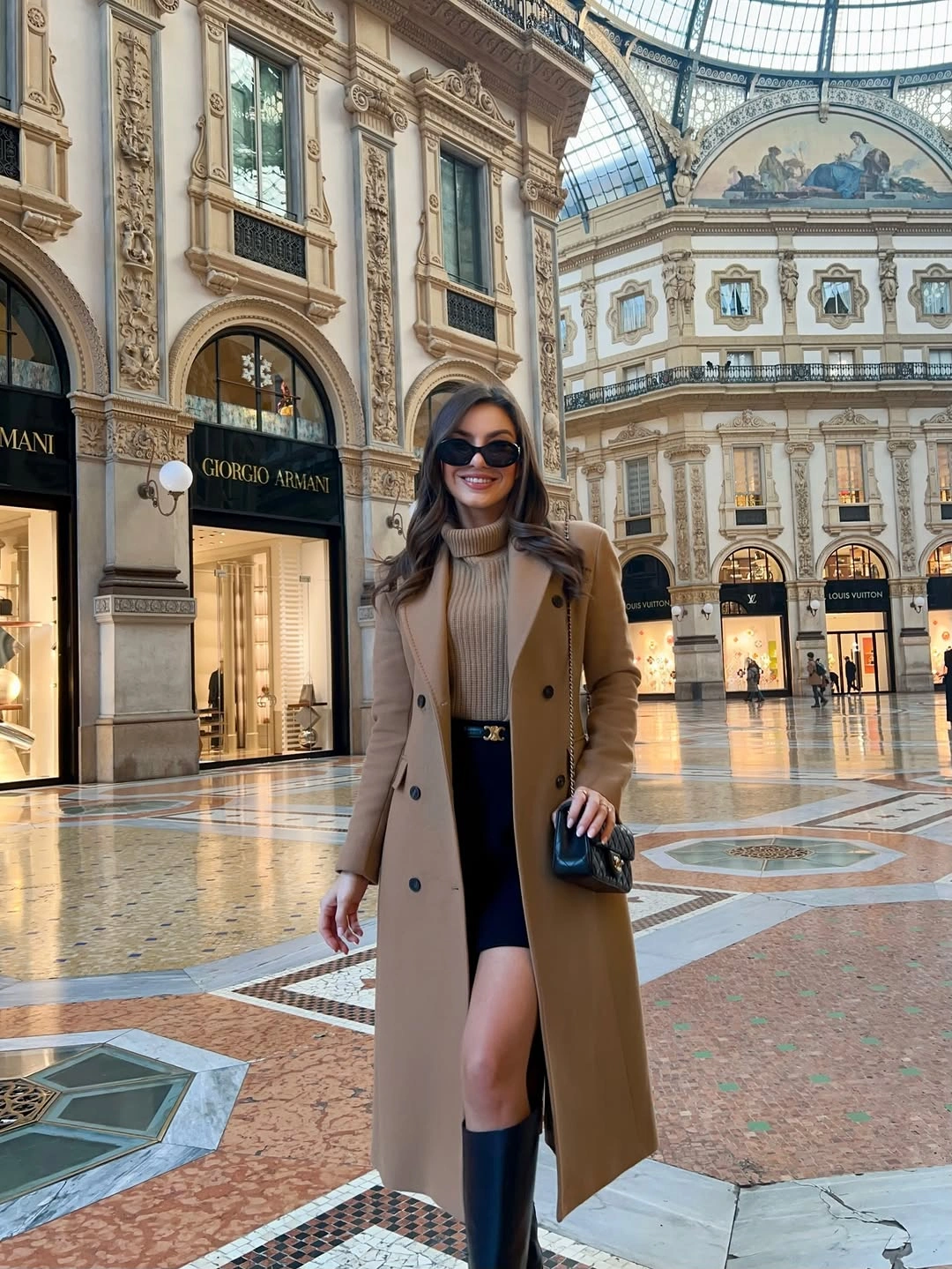
Double-breasted buttons add a formal note, so the shorter black hem feels more intentional than it would beneath a softer cardigan. To adapt the formula for more coverage, replace the short base with a black midi skirt or straight trousers and keep the boots equally dark. The point is the framing effect of the coat, not the exact hem length.
A small bag suits the proportion because it does not hide the dark column created by the boots and skirt. A large pale tote would shift the focal point sideways and soften that neat contrast. If a camel coat has a warmer orange cast, choose black rather than cool gray underneath to keep the temperature relationship clear and avoid a muted mismatch.
Quilted Jacket With Tall Boot Definition
A black quilted jacket, dark sweater, short black skirt, earmuffs, and tall black boots create volume at the top and a clean vertical finish below. The jacket has more surface than the skirt, so the tall boots are useful for reconnecting the dark pieces across the exposed leg area. The overall effect is compact, graphic, and more considered than an all-black outfit with unrelated textures.
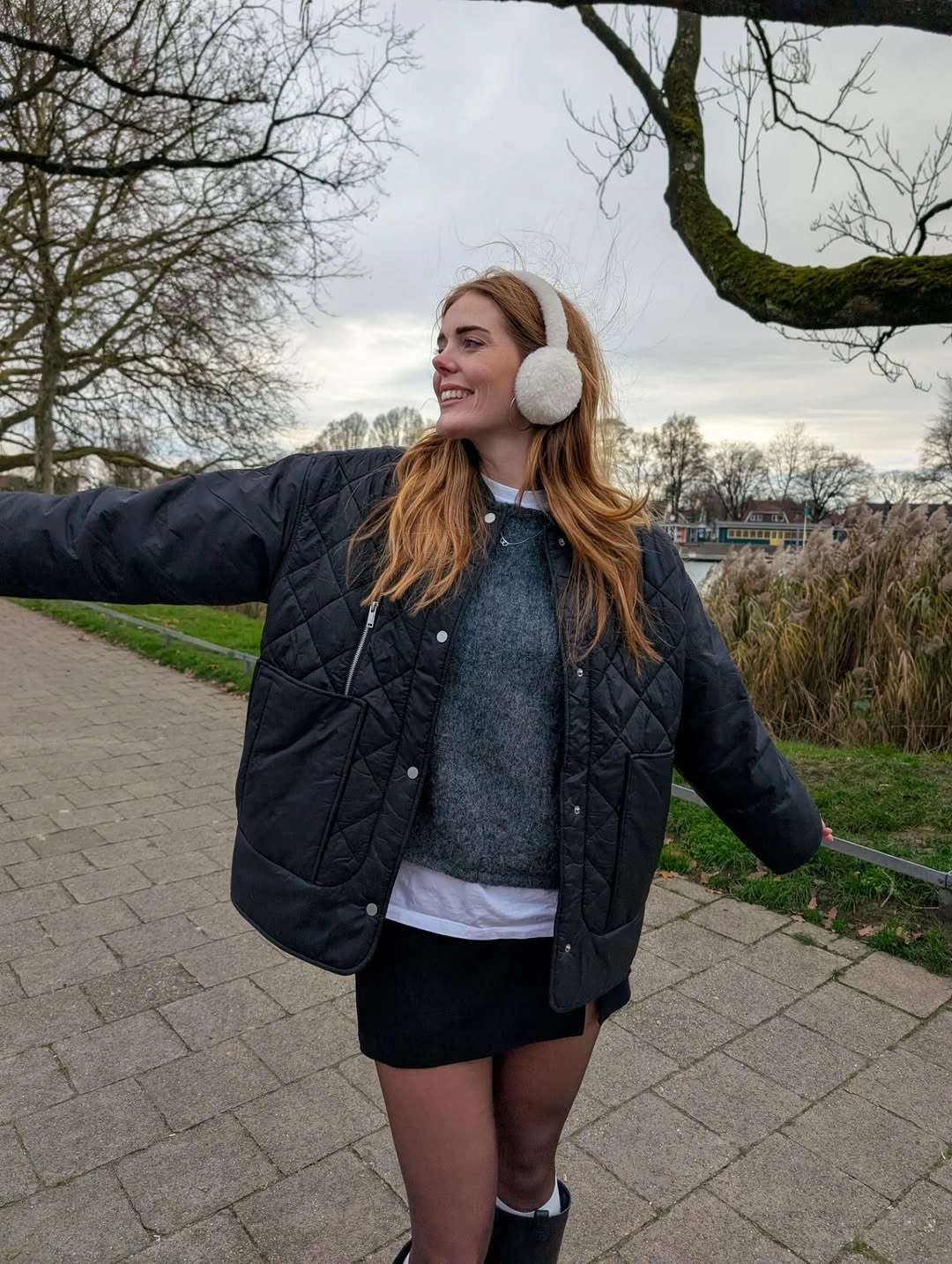
The earmuffs soften the outfit’s sharper lines and make the upper silhouette feel deliberately layered rather than merely practical. For a less playful version, a narrow knit headband or simple black scarf would keep the same color continuity. Avoid adding a busy printed bag here, since the quilted pattern already provides enough surface interest near the torso.
A short skirt and a padded outer layer can pull the eye in opposite directions, so tall boots make the transition more composed. A knee-length skirt would reduce that contrast but would also change the brisk, compact proportion. Keeping the sweater dark prevents a horizontal color stripe from interrupting the long boot line, which is the visual anchor of the outfit.
Textured Brown Vest Over White Trousers
A dark brown fuzzy-looking vest or long gilet is layered over a white top and wide white trousers, putting texture at the center of an otherwise pale base. The brown piece acts almost like a vertical panel, giving the trousers a strong center of gravity without breaking their long line. It is a smart way to make light separates feel grounded for a workday.
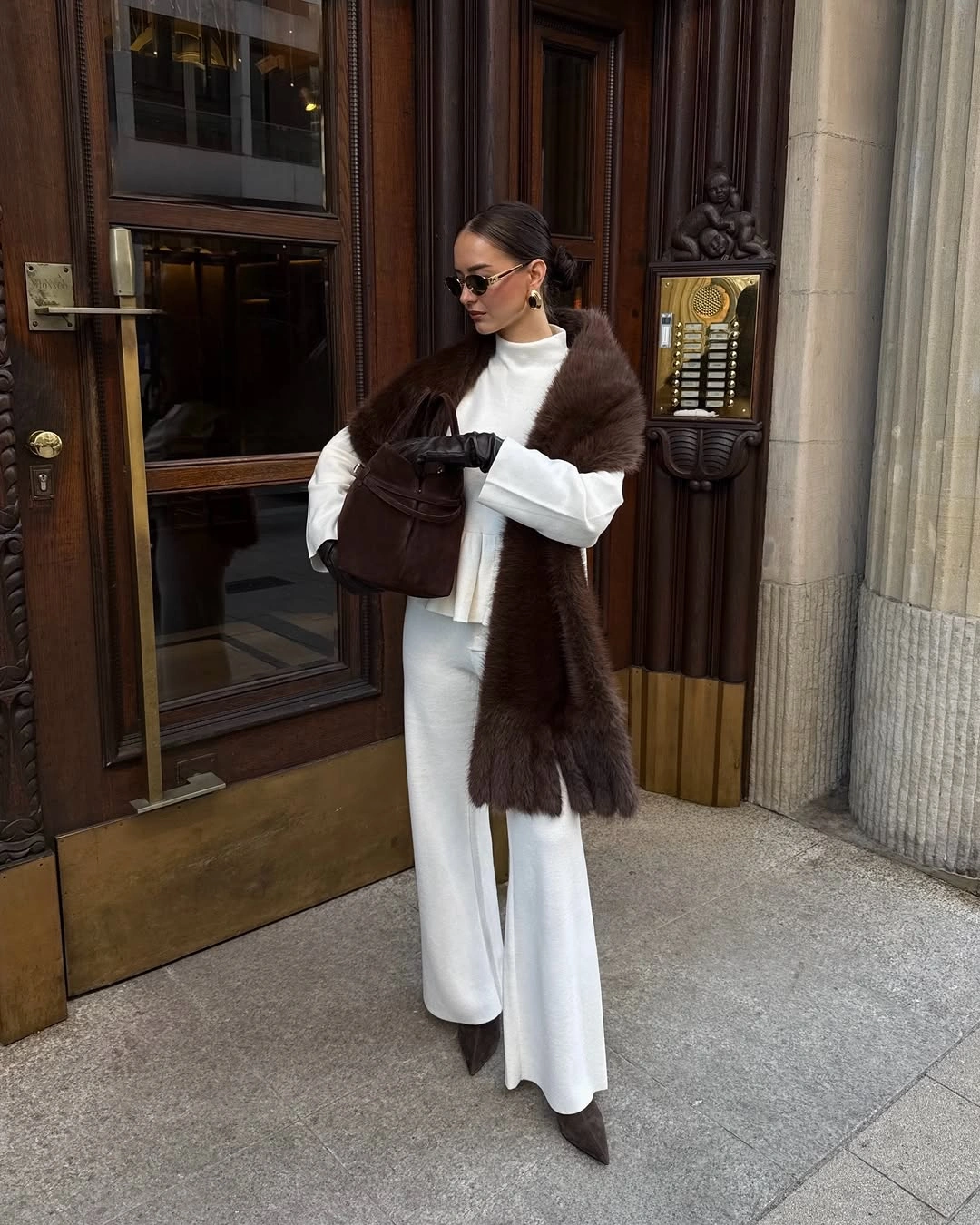
Because the vest is darker and more tactile, the white shirt and trousers can stay remarkably simple. That restraint makes the contrast feel precise instead of overly styled. A long knit vest, a smooth brown waistcoat, or a dark sleeveless blazer could translate the same idea with different amounts of texture and structure.
The wide white trousers create a strong light field, so footwear should be chosen with care. A dark shoe will echo the vest and make the lower half firmer, while a cream shoe will preserve the longer pale line. Either route works, but introducing a third bold color at the foot would weaken the clean brown-and-white conversation already doing the work.
Dark Brown Column With Gloves and Boots
A long dark brown coat, dark gloves, knee boots, and a small dark bag form a nearly continuous deep column with very few competing details. The gloves matter because they repeat the lower accessories at the hands, making the whole outfit look resolved from top to bottom. This is a quieter form of color coordination, built from near-matching values rather than obvious contrast.
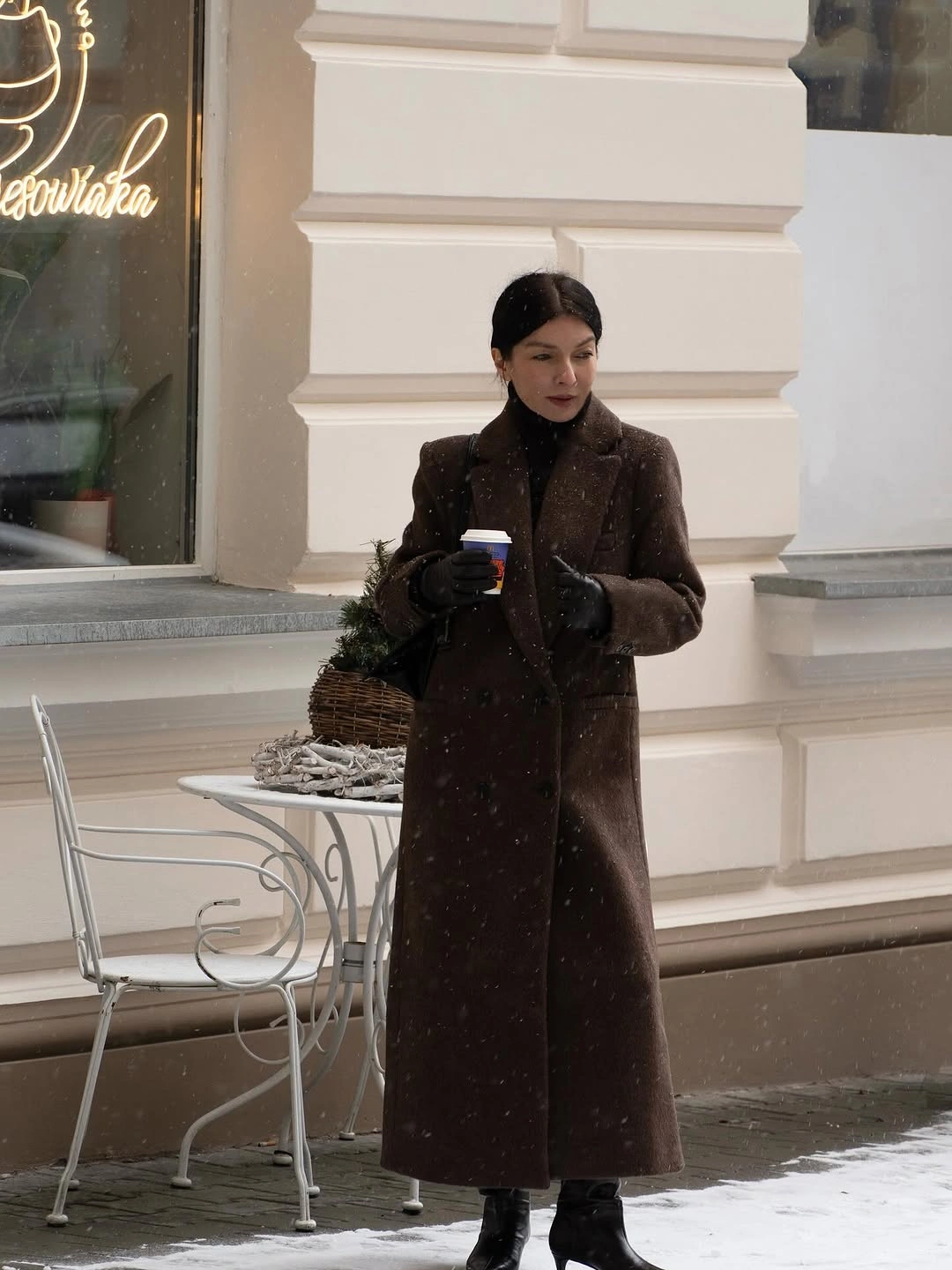
The narrow boot shape adds precision beneath the fuller coat and stops the darker palette from feeling heavy. If the coat is oversized, a defined shoe or bag is even more useful because it gives the outfit a firm edge. For an easier office variation, switch to a dark trouser and ankle boot while keeping gloves or a bag in the same deep family.
Monochrome brown can look flat when every surface has the same finish, so mix a smooth bag with a matte coat or a subtle knit layer at the neckline. The visible accessories here are compact, which protects the column effect. A large contrasting tote might be useful for function, but it would become the new focal point and change the entire mood.
Olive Bag Against Charcoal Tailoring
A charcoal blazer, black trousers, gray knit head covering, and structured olive-green bag show how one subdued accessory can carry a whole color idea. Olive works because it is close enough to the gray-black base to feel intentional, yet different enough to register as a distinct note. The bag becomes interesting precisely because the surrounding pieces leave it room.
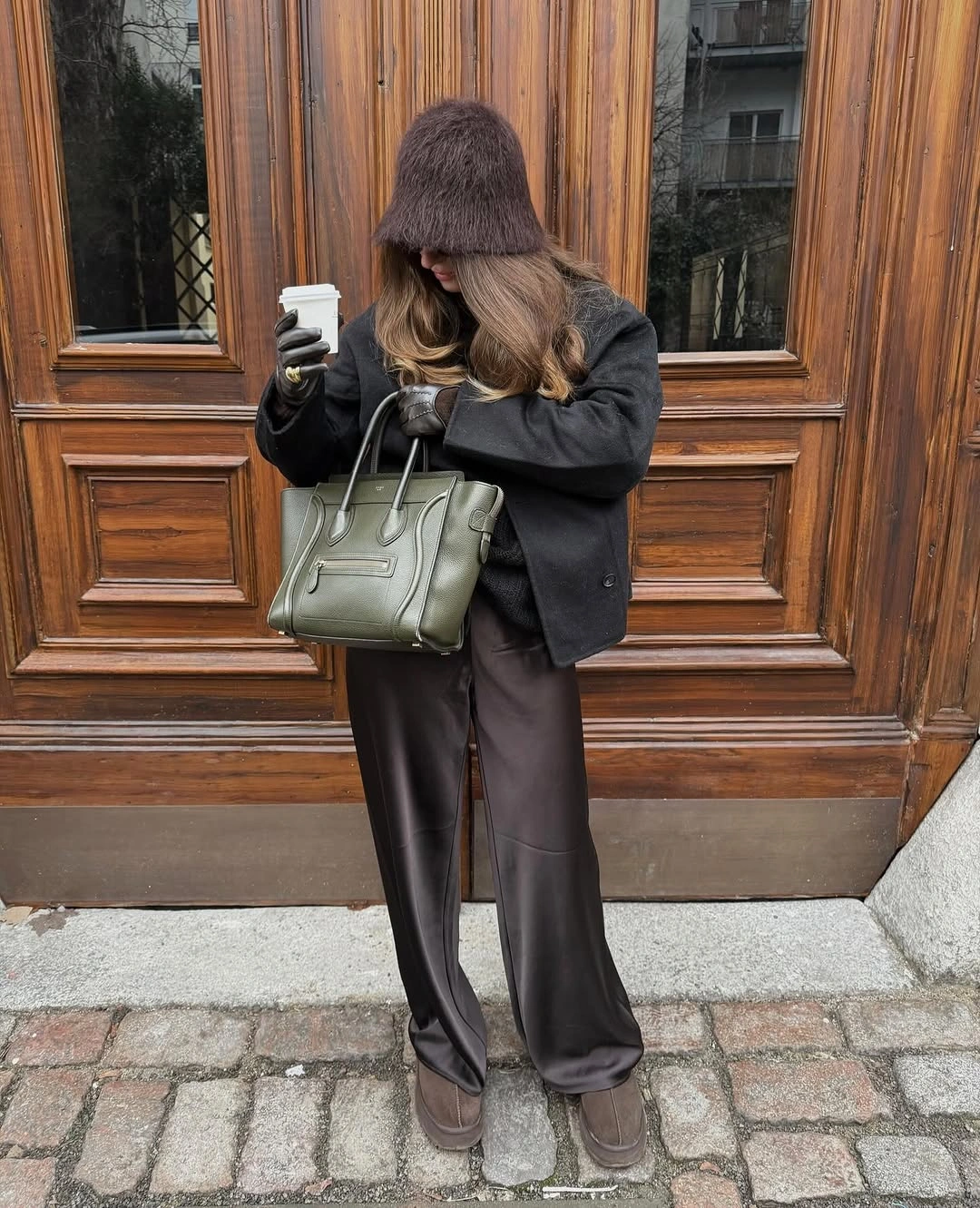
The blazer supplies work structure, while the knit head covering softens the top edge without adding another strong color. If olive is not your shade, deep forest, muted burgundy, or dark navy can perform a similar role against charcoal. Choose a structured accessory, though, because a slouchy shape would make the color read less clearly against the tailored jacket.
Black trousers keep the lower half discreet and allow the bag to stay the only contrast. This is useful when you want a color shift but do not want to coordinate shoes, coat, and jewelry around it. One caution: a very bright green would change the mood entirely, so the success of this formula depends on choosing a softened, low-saturation shade.
Tonal Brown Jacket and Wide Trousers
A dark brown leather-look jacket, dark top, wide matching trousers, and a black handbag form a tonal set with a crisp dark accessory at the side. The similar jacket and trouser colors create a long line, while the black bag keeps the outfit from becoming one unbroken brown surface. It feels intentional because the contrast is concentrated rather than scattered across every piece.
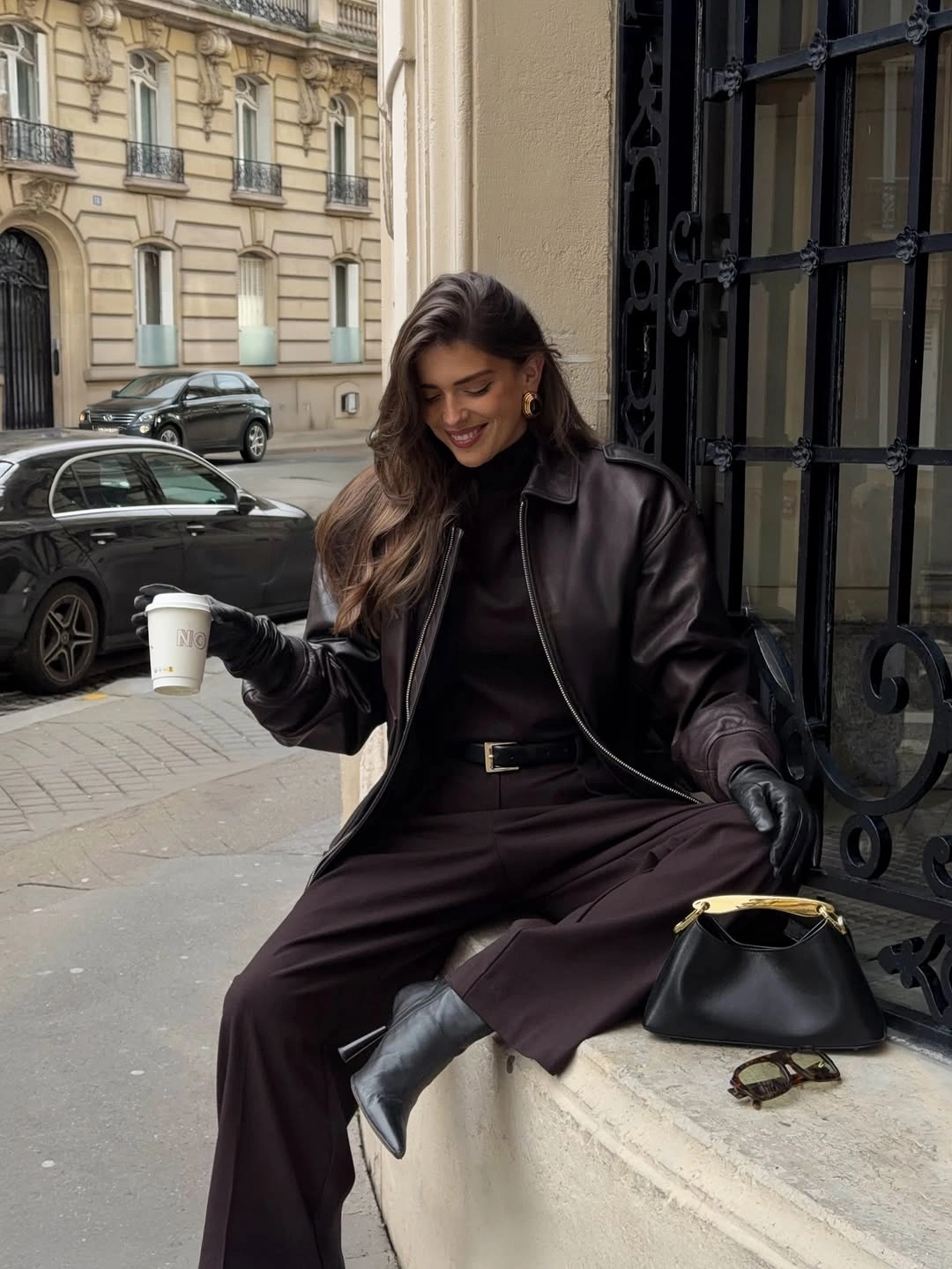
The jacket’s smoother finish gives the wide trousers a stronger counterpart, making the proportion feel more tailored than a soft cardigan would. For a more understated version, use a matte brown jacket and trousers in nearby shades rather than an exact match. The key is maintaining a clear top-to-bottom relationship, not forcing a uniform material appearance.
A black handbag is practical here because it repeats the deep top and gives the brown pieces a clear boundary. Brown footwear would extend the long tonal line, while black footwear would echo the bag and make the base firmer. Pick one direction and avoid adding cream accessories, which would create a second contrast point with no visible partner.
Navy Blazer Over a Short Black Base
An oversized navy blazer, short black skirt, opaque tights, black ankle boots, and a small bag use navy as a softer alternative to head-to-toe black. The blazer is roomy and structured, which gives the compact skirt a workwear reference without making the outfit look overly formal. Navy is the small but meaningful shift that keeps the dark pieces from reading as one solid block.
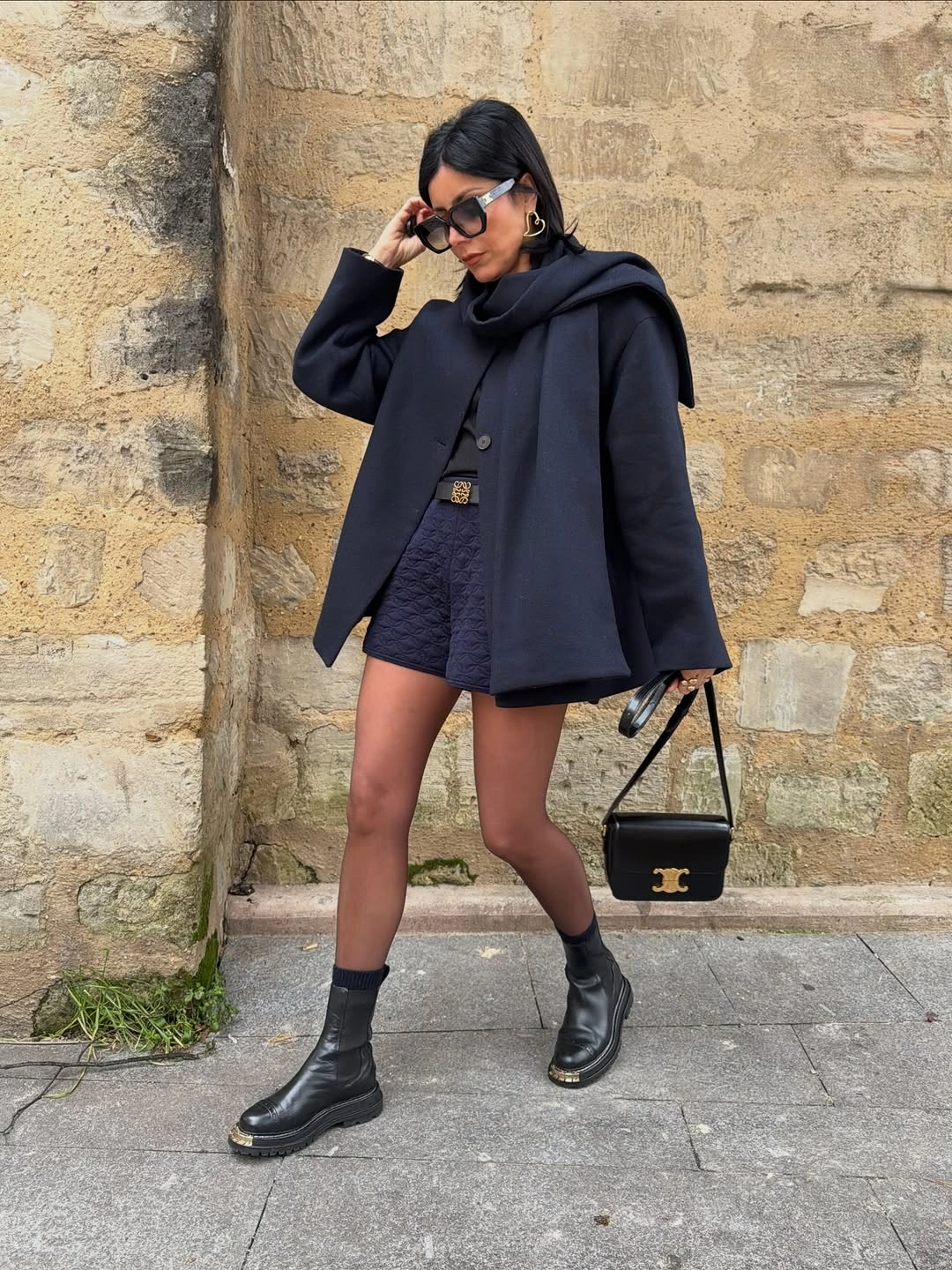
Opaque tights and ankle boots create a continuous dark line below the skirt, so the blazer can be the visual focus rather than the hem. If a short skirt is not your preference, black straight-leg pants would preserve the same navy-on-black idea. The useful proportion is a structured, slightly generous jacket over a narrow dark base.
The small bag keeps the outfit balanced because a large shoulder bag could add too much width under the oversized blazer. A navy bag would make the color story quieter, while black keeps the lower half cohesive. Either works, but limit the palette to those two deep tones so the contrast remains as clean as it appears here.
Burgundy Texture Above Slim Black Layers
A burgundy textured short jacket, black leggings, a white knit hat, and dark boots use one rich color to give slim black layers more presence. The jacket is cropped and visually substantial, so it becomes the main source of proportion as well as color. Burgundy feels especially effective here because it has enough depth to sit beside black without looking pasted on.
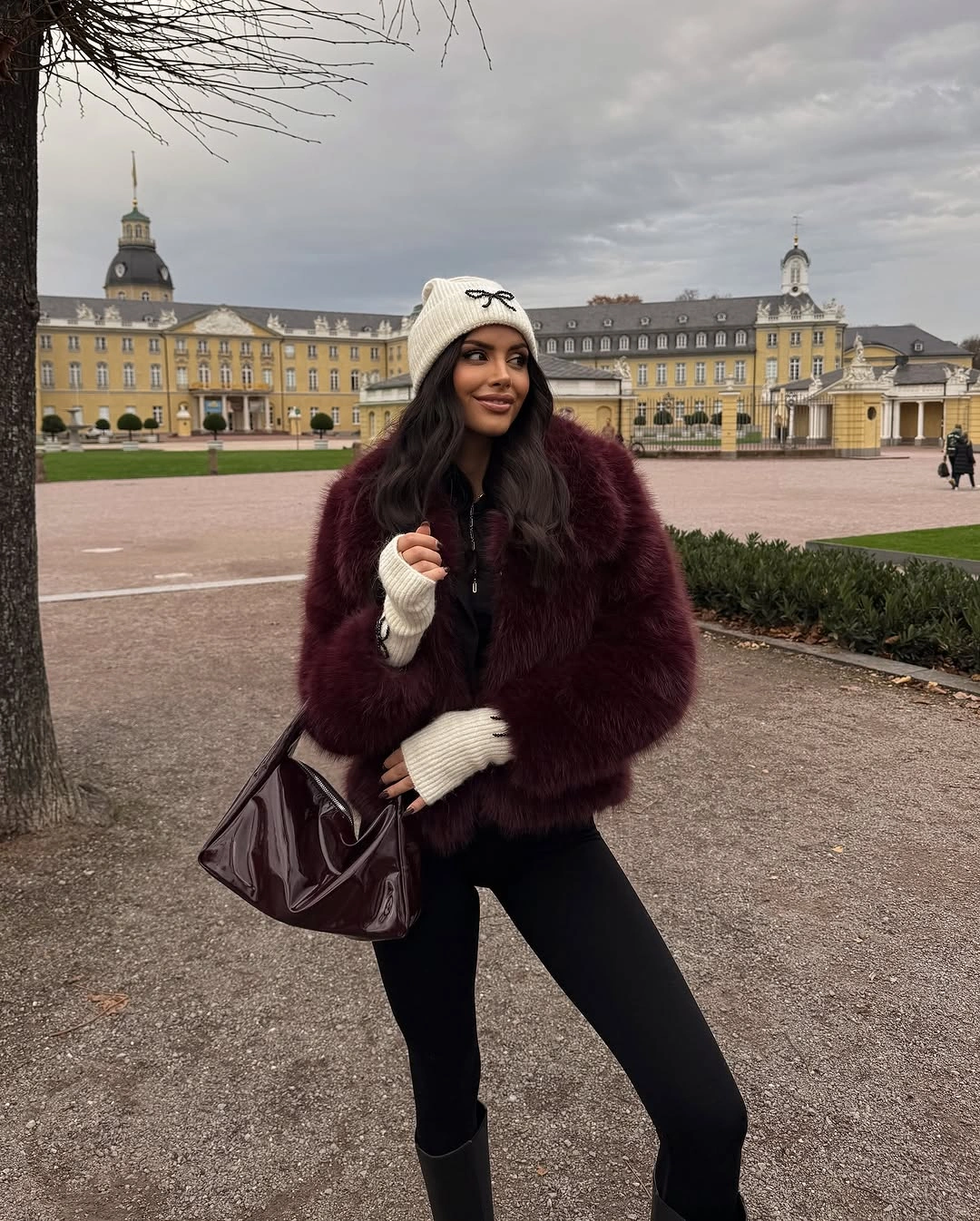
The white hat creates a second light point, but it stays small enough not to challenge the burgundy jacket. If you want less contrast, choose a soft gray or oatmeal hat instead. The jacket already has texture, so keep the leggings and boots smooth and simple to let the upper layer retain its role as the focal piece.
Slim black bottoms make the short jacket look more substantial, which can be helpful when a textured outer layer has volume at the shoulders or torso. A wider trouser would make the outfit more relaxed but would need a longer jacket or a sharper shoe to restore balance. The outfit works because the color is concentrated where the silhouette needs emphasis.
White Neckline Break in an All-Black Column
A long black coat, wide black trousers, black structured bag, and a small white shirt or scarf detail at the neckline make a dark column feel more open. That light flash sits high in the outfit, drawing attention toward the face and separating the coat from the lower layers. It is a minimal color decision with a surprisingly clear effect on the overall proportion.
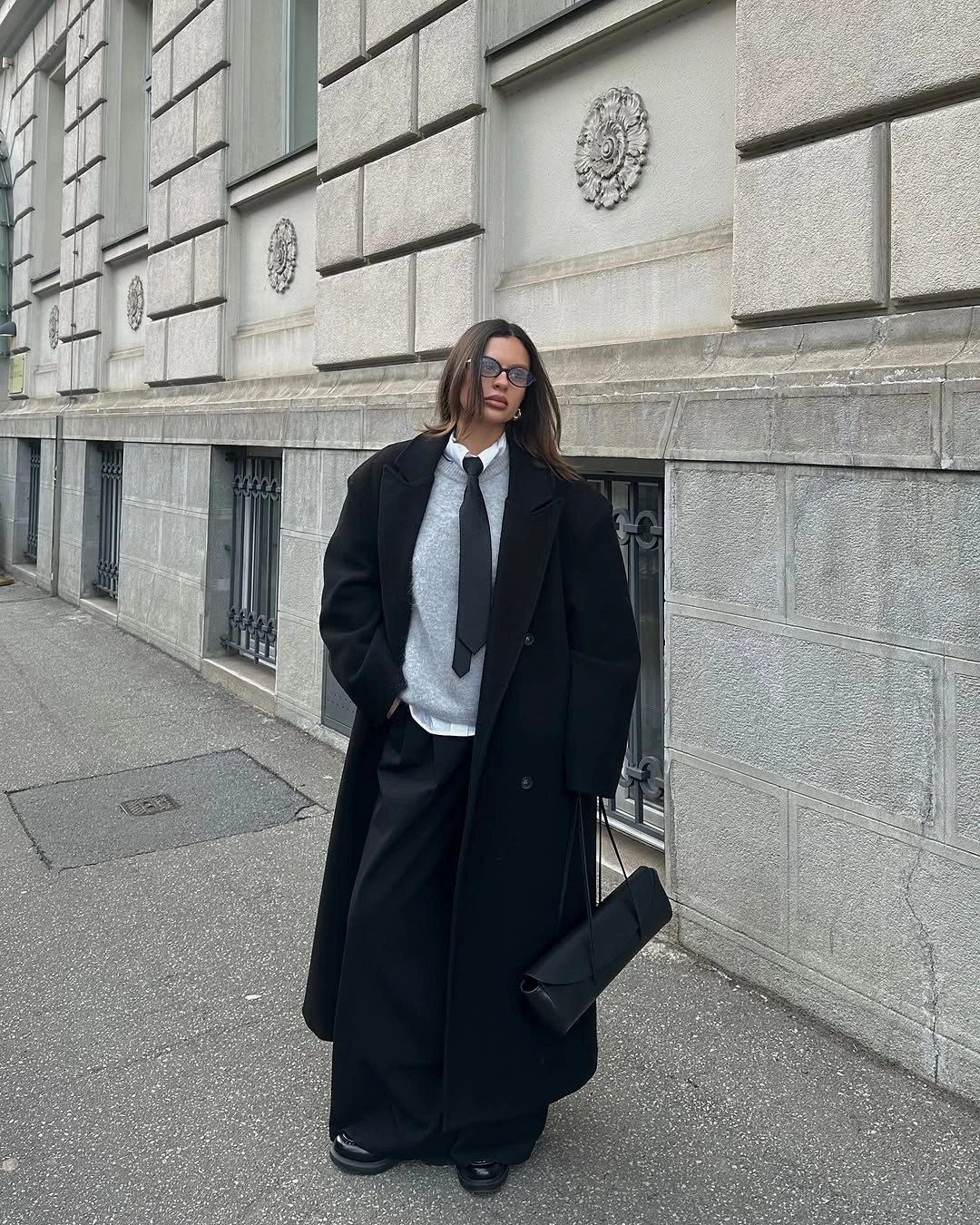
The structured bag keeps the black pieces looking intentional rather than anonymous, especially beside wider trousers and a long coat. If white feels too sharp, pale gray, cream, or muted blue at the collar can create a gentler version. Keep the accent compact: a large light scarf would shift the idea from a neckline break to a dominant outerwear feature.
Wide trousers add movement to this otherwise tailored arrangement, so a firm shoe shape helps keep the hem controlled. The monochrome base is also a useful backdrop for subtle texture, such as ribbing or a matte bag, without needing another hue. Here, the light neckline is enough; adding bright jewelry or a colorful bag would scatter the focus.
Gray Blazer With Tall Black Boots
A gray blazer, black beanie, dark short skirt, tall black boots, and black handbag combine tailored structure with winter-ready accessories. Gray makes the upper half lighter than the black lower pieces, while the boots extend the dark line upward and stabilize the shorter hem. That distribution gives a compact outfit a more grounded, work-appropriate balance.
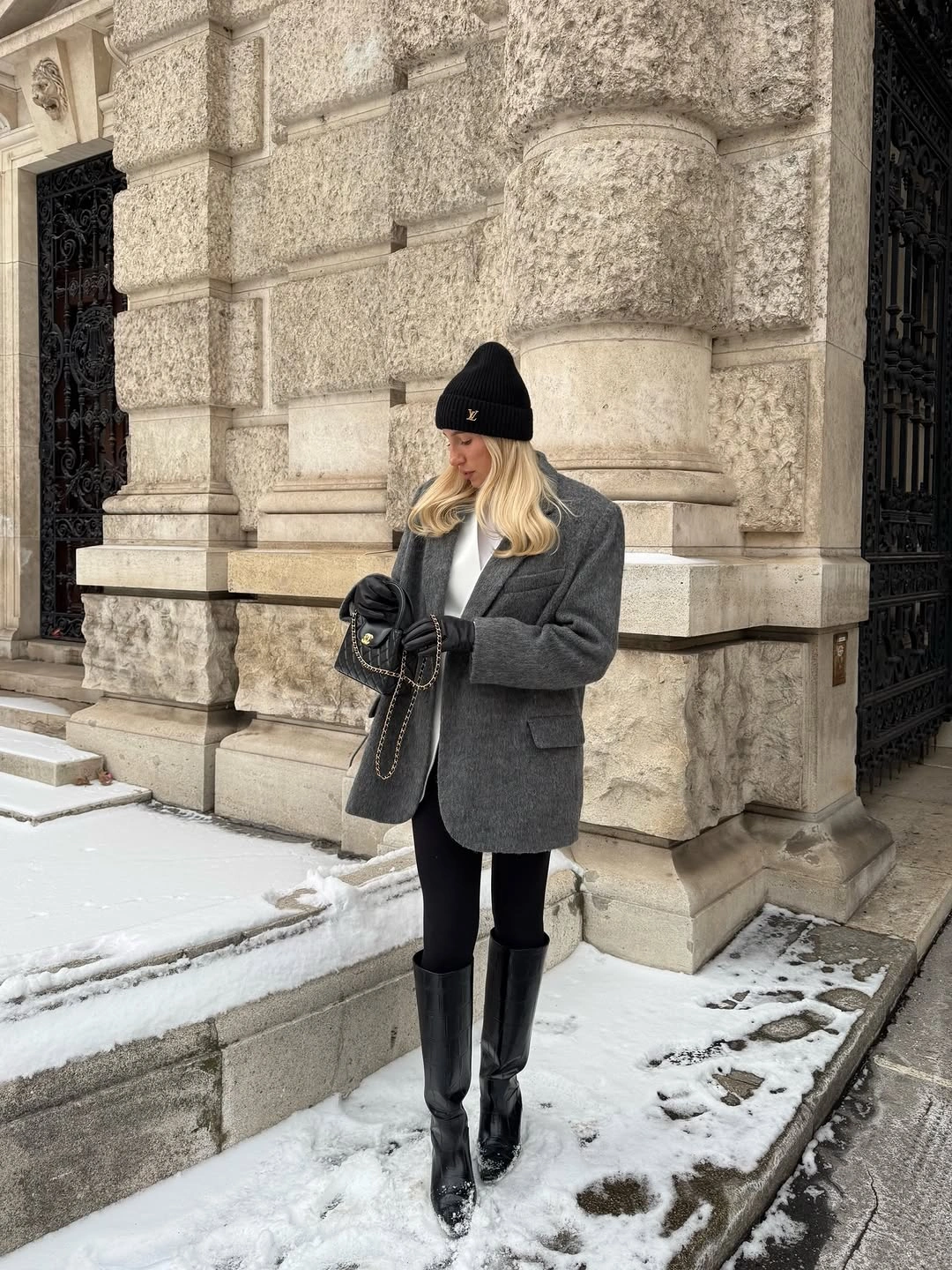
The beanie repeats the boots and bag, which stops it from feeling like a separate casual add-on. A gray knit hat could make the top half quieter, but black creates a stronger frame around the face and links back to the footwear. This formula is easiest to adapt when the blazer remains the one medium-tone piece and everything else stays within a deep base.
Tall boots bring more coverage and visual weight than ankle boots, so they are useful beside a shorter skirt and a boxier blazer. A midi skirt would offer a different, less graphic proportion and might call for a slimmer boot shaft. Keep the bag close to the body if possible, since the blazer already supplies width through the shoulders.
Plaid Scarf Softening Gray and Black Separates
A gray sweater, black wide trousers, green-gray plaid scarf, white sneakers, and a dark woven bag show a relaxed way to add pattern to work separates. The scarf carries several muted shades, so it connects to both the sweater and trousers instead of demanding a separate color system. That makes pattern feel like a bridge between neutrals rather than a distraction.
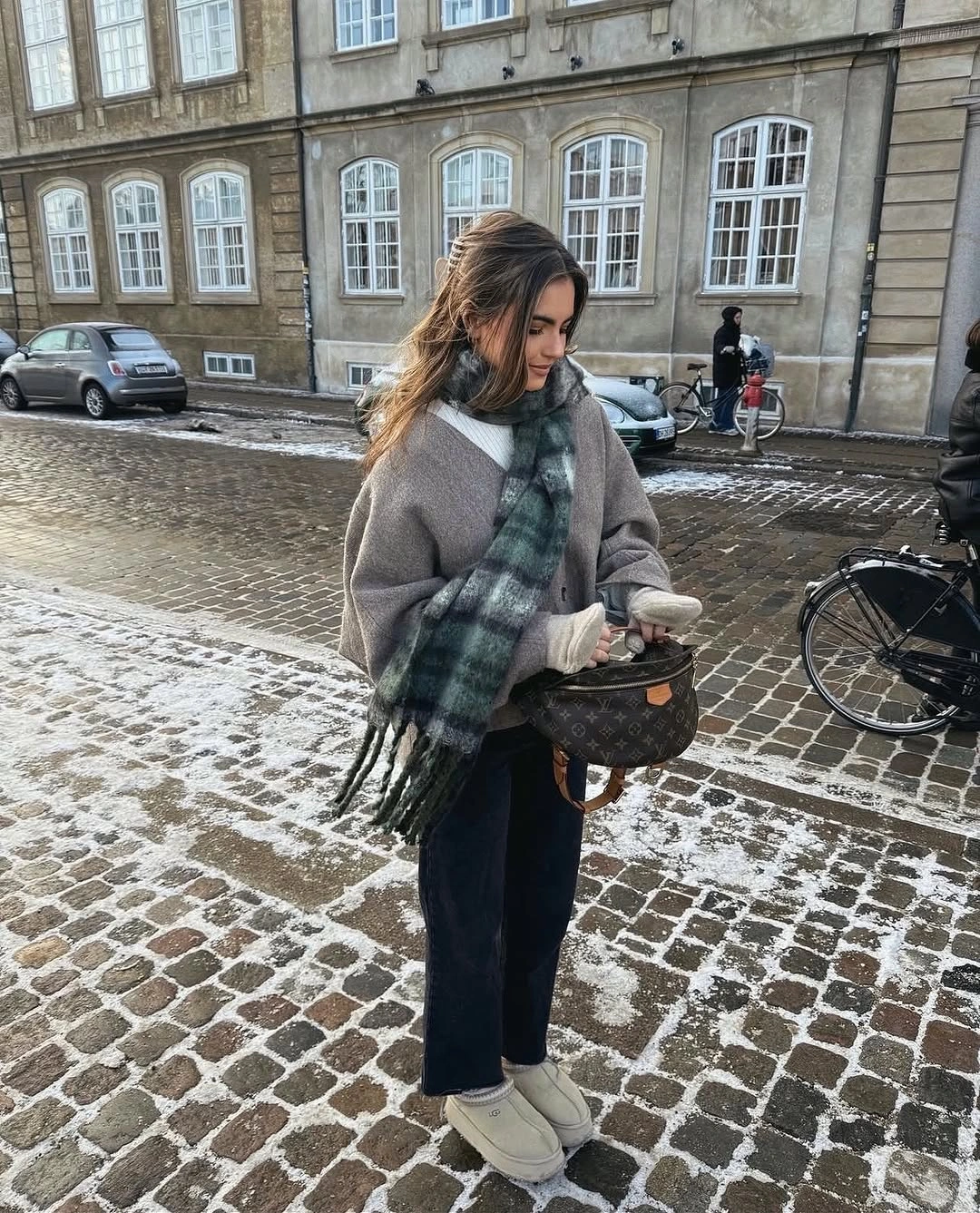
White sneakers repeat none of the scarf’s colors exactly, yet their brightness gives the lower half a clean break from the dark trouser hem. If sneakers are not suitable for your setting, a light gray loafer or cream ankle boot can keep that same small lift. The bag stays dark, wisely leaving the scarf as the only busy surface.
Wide trousers and a broad scarf are both generous shapes, so the simpler sweater keeps the middle from becoming overloaded. A fine knit tucked or half-tucked at the waist would add a little more definition without disturbing the easy mood. The color decision that holds everything together is the scarf’s muted green-gray note, not the white shoe alone.