Brown fall nails 2026 can be much broader than a single chocolate polish. The color moves from sheer caramel and warm chestnut to reflective bronze, deep burgundy, almost-black plum, soft taupe, and pale nude with a brown edge. Shape changes the message too: an almond makes the palette feel elongated and elegant, a square adds structure, and a short rounded tip keeps even the deepest shade practical.
Think of the ideas below as a menu of brown details. Some designs use a full solid surface, while others leave nude space, add a small accent, or let the light create the variation. The most useful choice is usually the one that matches how much length and upkeep you actually want, so each section points out an adaptation as well as the reason the visible colors and placement work together.
Sheer almond nails framed by layered browns
Long almond nails begin the collection with translucent nude centers and curved sections of caramel, deep brown, and chocolate. The color is placed around the sides and tips rather than covering the whole nail, which allows the elongated outline to remain visible. Because the brown sections sweep in different directions, the design feels graphic and dimensional while the sheer middle keeps the overall weight under control.
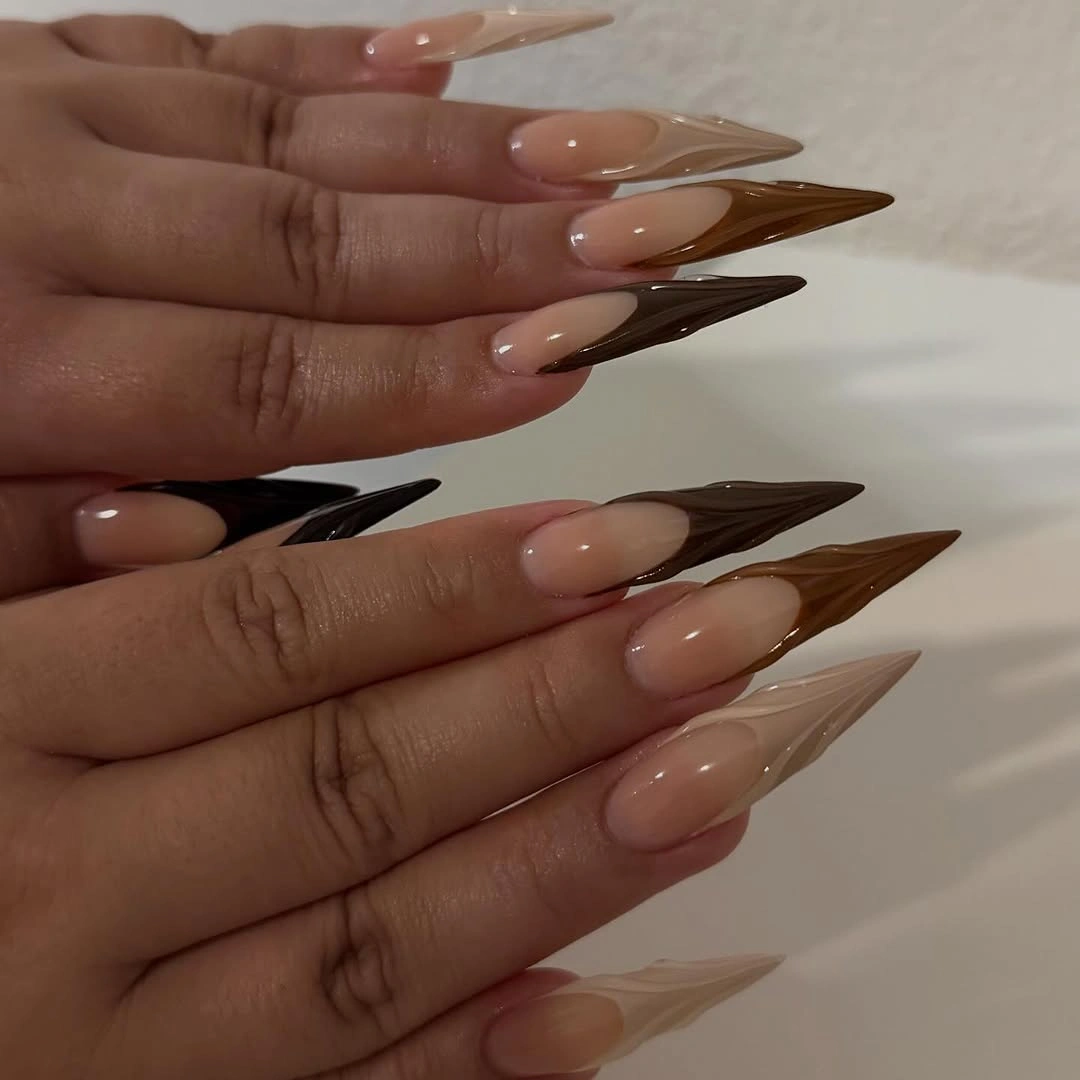
A medium almond or oval can keep the same framing idea with less length. Leave the center open, choose two browns instead of three, and place the darkest tone on only a few tips so the set does not become too dense. The sheer base is useful with cream, denim, camel, or black clothing because it gives the manicure a warm accent without asking every accessory to match the exact brown.
Long pointed tips make the sweeping sections look especially sleek, but they also bring the familiar comfort tradeoff of extra length. The negative space can make grow-out less obvious than a full solid, yet the curved borders will show if they lose their rhythm. Keep the lines deliberate and let the open center do some of the editing; adding more brown would not necessarily make the design stronger.
Clouded marbled brown as a single accent
A close view of one long almond thumb shows a softly marbled mixture of brown, mauve, and pale cream. The colors form cloudy layers rather than sharp veins, so the nail resembles a shifting natural surface without needing a literal motif. The surrounding nails recede, making the accent useful as an example of how much visual depth one finger can add to an otherwise calmer brown manicure.
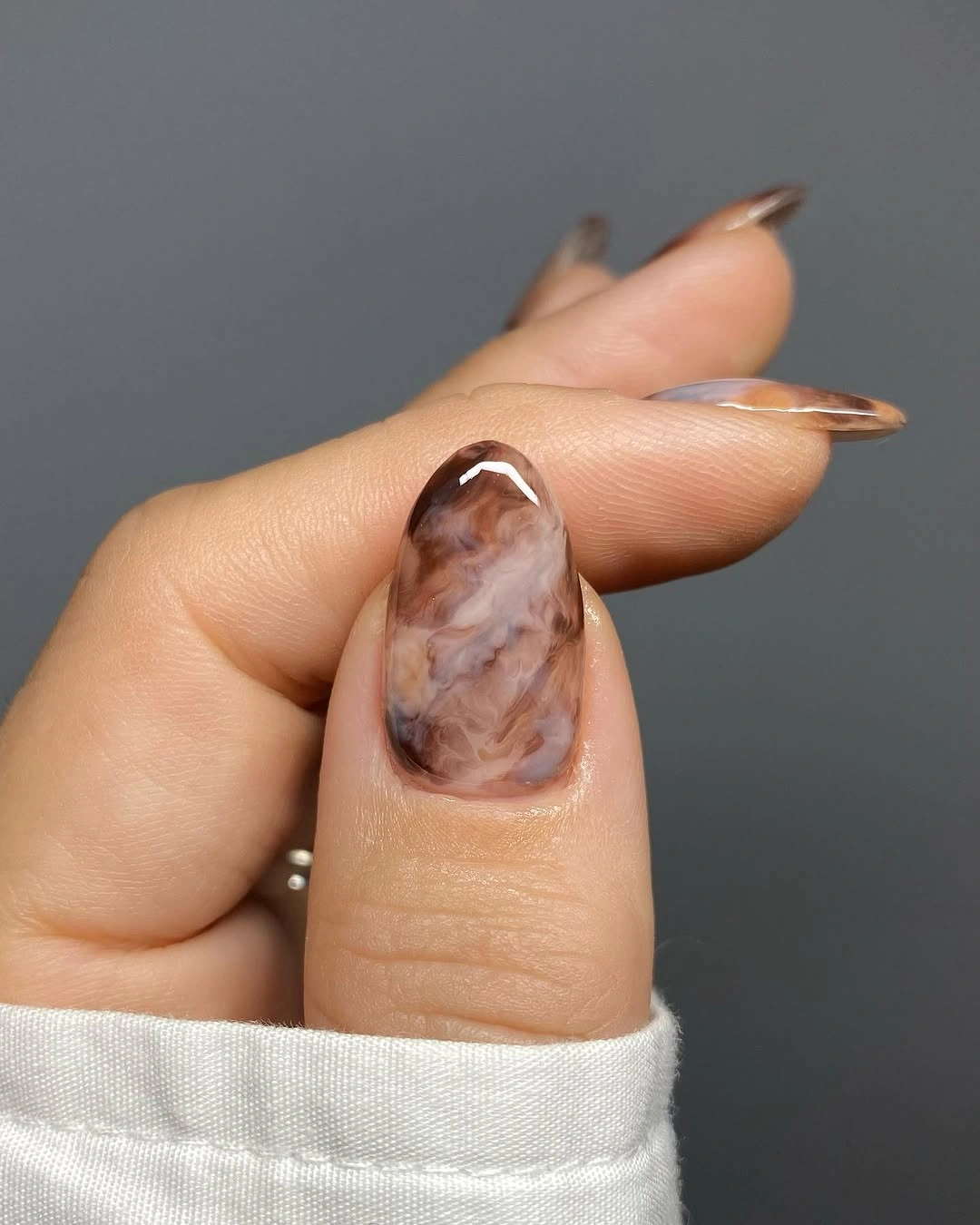
For an everyday interpretation, keep the marbling on one or two nails and use a sheer beige or medium chestnut on the rest. The pattern does not need to be identical on both hands; its appeal comes from soft movement and related undertones. A shorter oval can carry the same cloudy color story, while a rounded square would make the fluid pattern feel more deliberately contrasted.
The main limitation is that a complex marbled accent can lose its impact if it is repeated too often. Give it space beside solids, and avoid naming the surface more specifically than the visible brown and mauve movement supports. A single detailed nail is also easier to refresh than a full set, which makes this a sensible way to test a richer brown direction before committing to more pattern.
Chestnut solids mixed with tiny brown marks
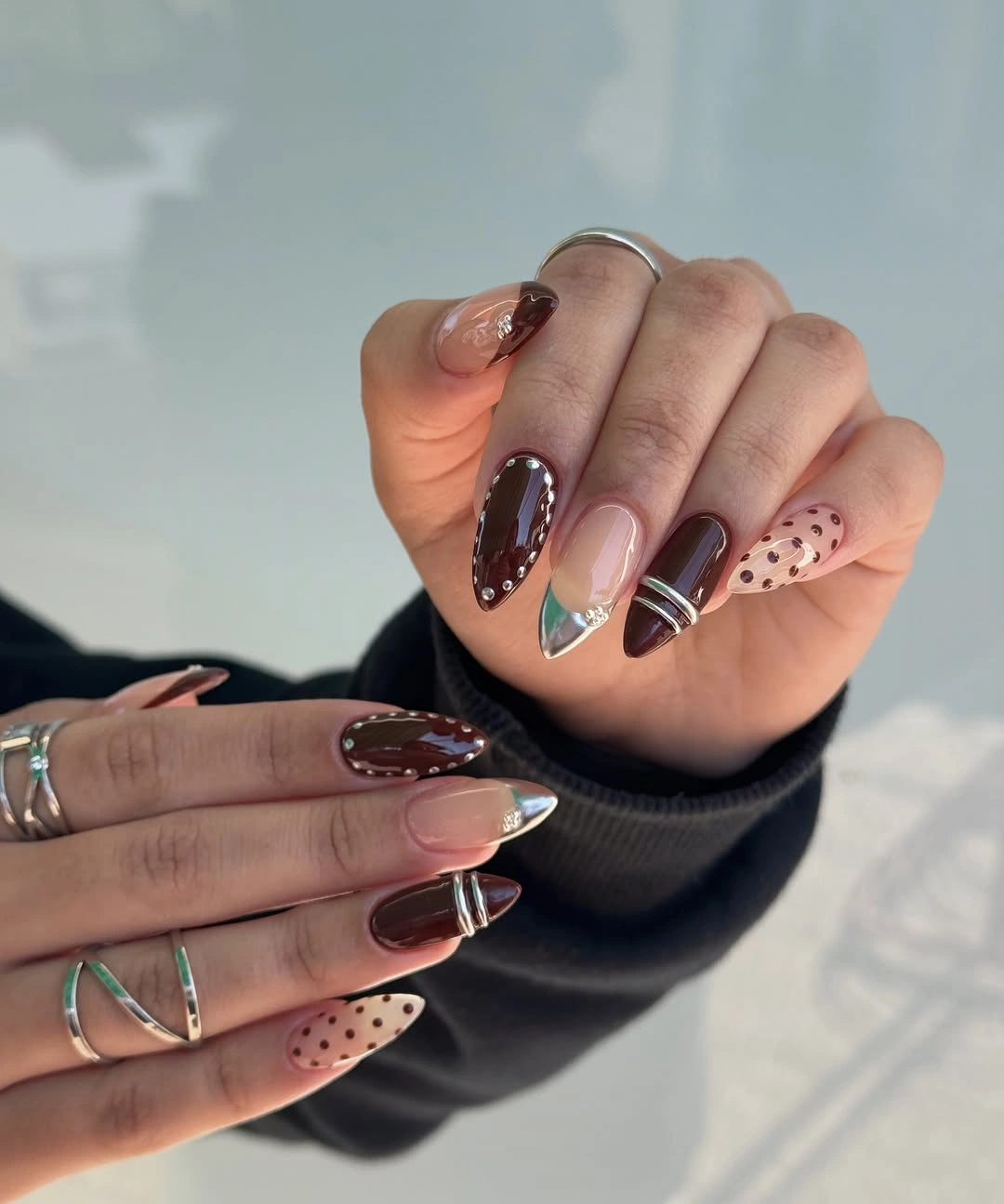
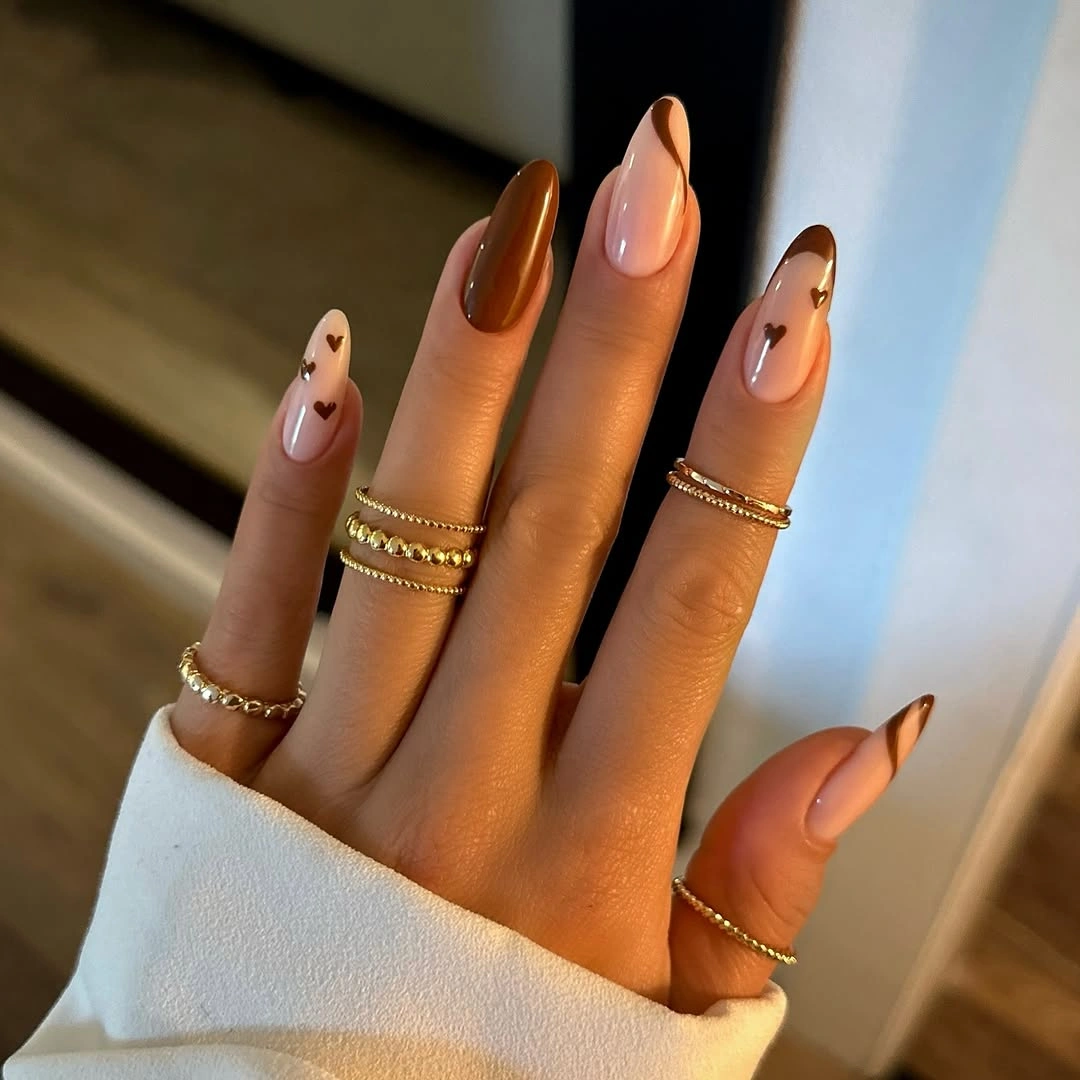
Long almond nails combine glossy chestnut, sheer nude, dark brown, and small dot-like accents in a varied but warm arrangement. Some fingers receive full color, while others show a transparent base with a narrow tip or a few marks. The palette repeats the same brown family at different scales, which creates cohesion even though the manicure does not give every nail the same treatment.
To reduce the commitment, keep the chestnut on most nails and choose just one nude accent with a few dark marks. A medium almond will preserve the elongated feel without the most extreme length, and a short square can make the same warm palette look more graphic. The important decision is not to introduce too many unrelated colors; the repeated brown relationship is what makes the mix feel intentional.
Varied placement gives the set personality, but it also makes balance important. If every nail carries a separate accent, the eye may lose the calm base, especially on a smaller canvas. Let the full-color nails act as pauses between the dotted or outlined fingers, and keep the tiny marks sparse enough that they read as punctuation rather than a competing print.
Compact chocolate squares with subtle panels
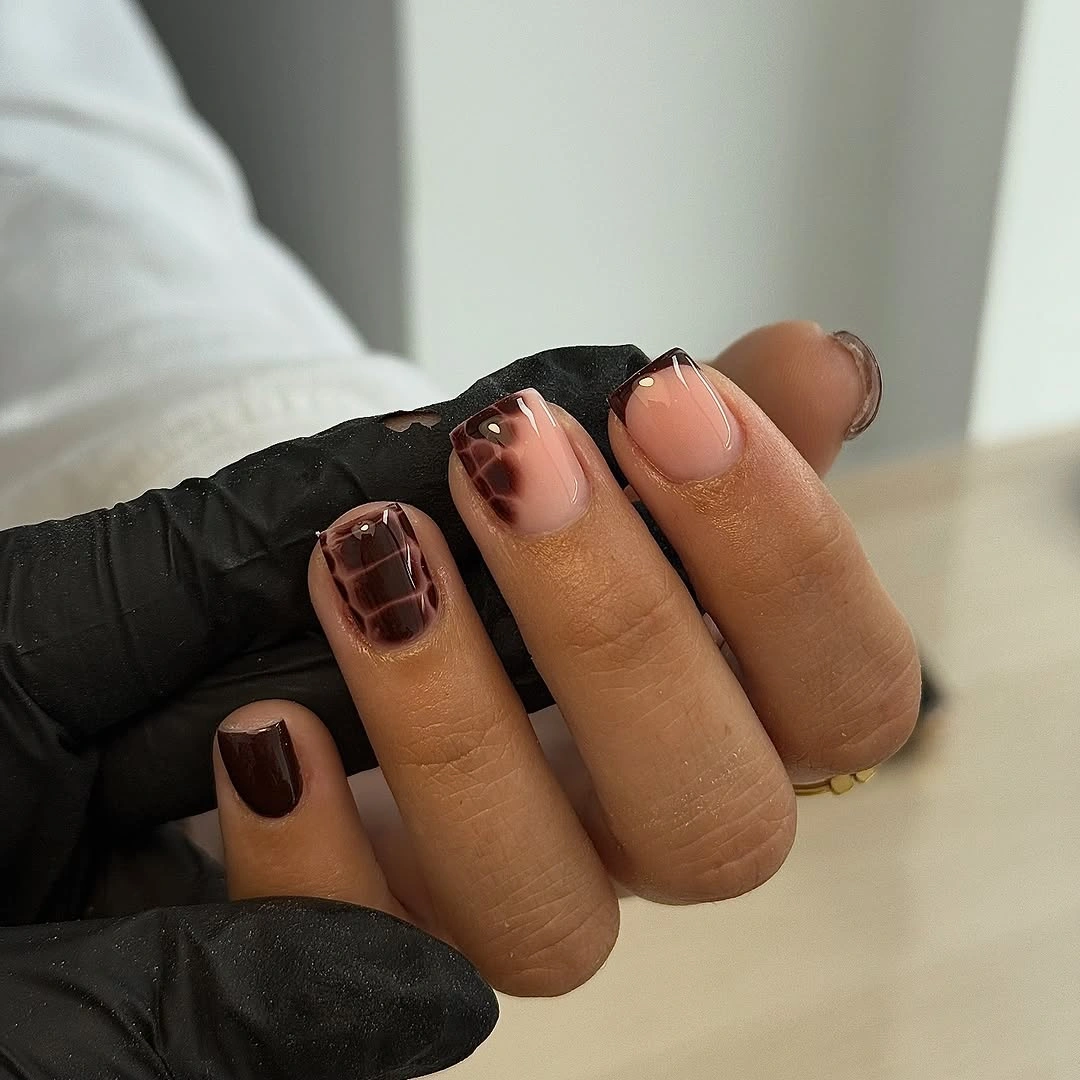
Short rounded-square nails keep the fourth idea practical while deep chocolate brown supplies most of the impact. A few nails show lighter brown sections with thin crossing lines or windowpane-like panels, but the compact shape and dark base remain dominant. The small canvas makes the pattern look tight and graphic, which is a different mood from the flowing almond designs earlier in the collection.
If your nails are very short, use the deep brown as the main color and keep the lighter panel on one accent finger. The square shape does not need to be long for the idea to work, and a rounded corner will keep the dark block from feeling too severe. A sheer nude accent can also open the set if you want more contrast without adding another strong color.
Dark polish is often easiest to style but least forgiving at the edges. The small panel lines can blur if they are packed too tightly, so a simpler crossing detail will age better than a crowded grid. Keep the surface clean and the proportions compact; the appeal is the confident brown block with one measured interruption, not a full pattern on every nail.
Glossy dark brown on balanced almonds
Medium almond nails in a single glossy dark brown offer a reset after the mixed patterns. The surface is uninterrupted, the length is neither very short nor dramatically extended, and the rounded taper lets the color feel polished without looking severe. Strong curved highlights show that the manicure depends on an even shape and smooth surface, not on extra accents or a complicated placement plan.
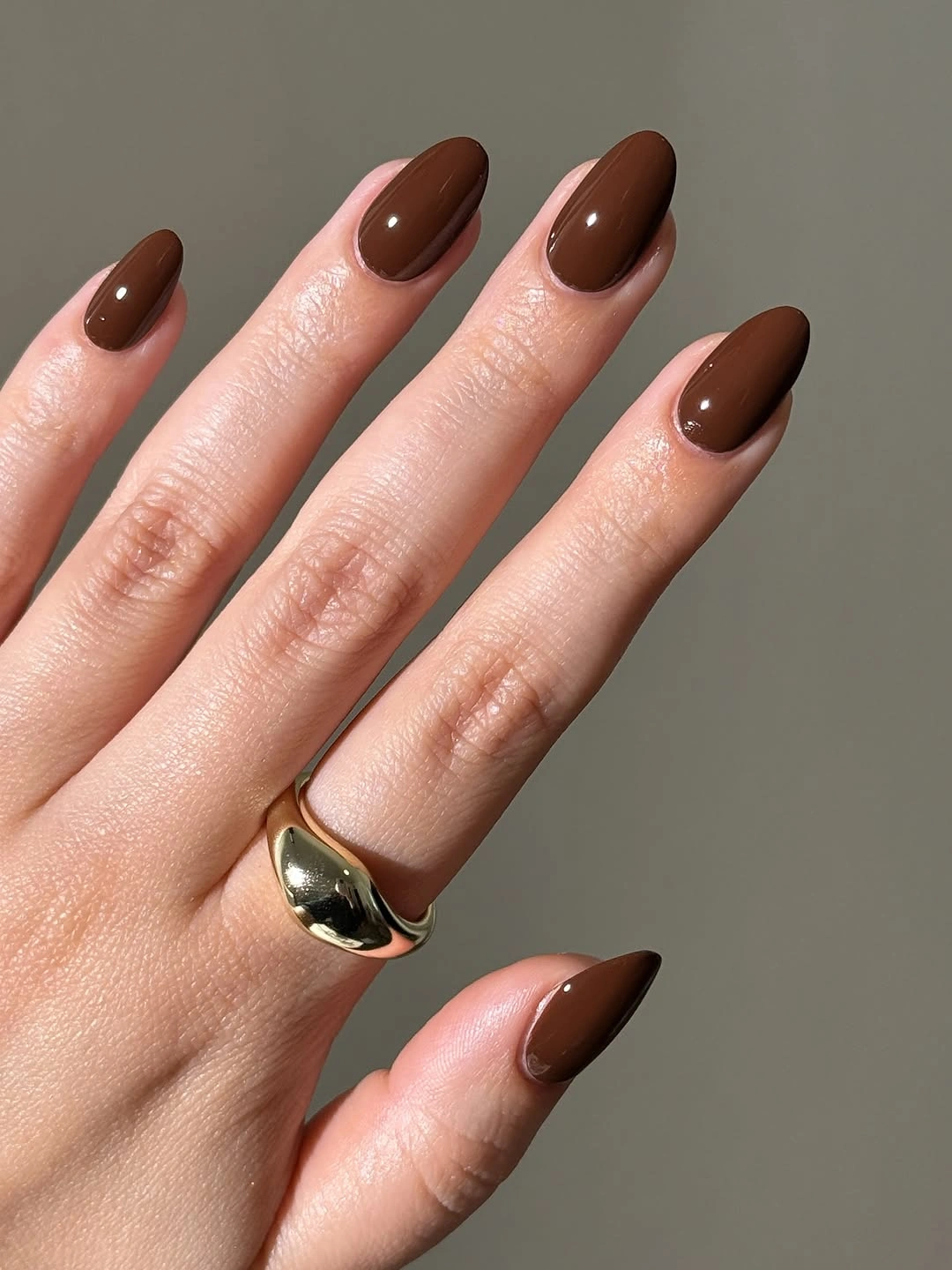
This is one of the easiest brown fall nails ideas to translate into daily wear. Keep the almond at a medium length, move to a short oval if you prefer less projection, or pair the brown with one sheer neutral nail for a little contrast. Since the color is doing all the visual work, it can sit beside patterned clothes without competing with them.
The simple surface makes small inconsistencies visible, so the outline and the area around the cuticle deserve attention. That is balanced by the low design complexity: there are no dots or lines to recreate if one finger needs a refresh. A rich brown solid is useful precisely because it gives seasonal depth while leaving room for the rest of the look to stay uncomplicated.
Bronze-brown reflection on long almond tips
These long almond nails stay monochrome but use a reflective brown that shifts toward bronze and muted rose in the light. The surface looks darker in shadow and warmer where the highlight moves across the taper, so the finish supplies the variation that a pattern would normally provide. A textured sleeve in the background reinforces the autumn mood without changing the clear focus on the nails.
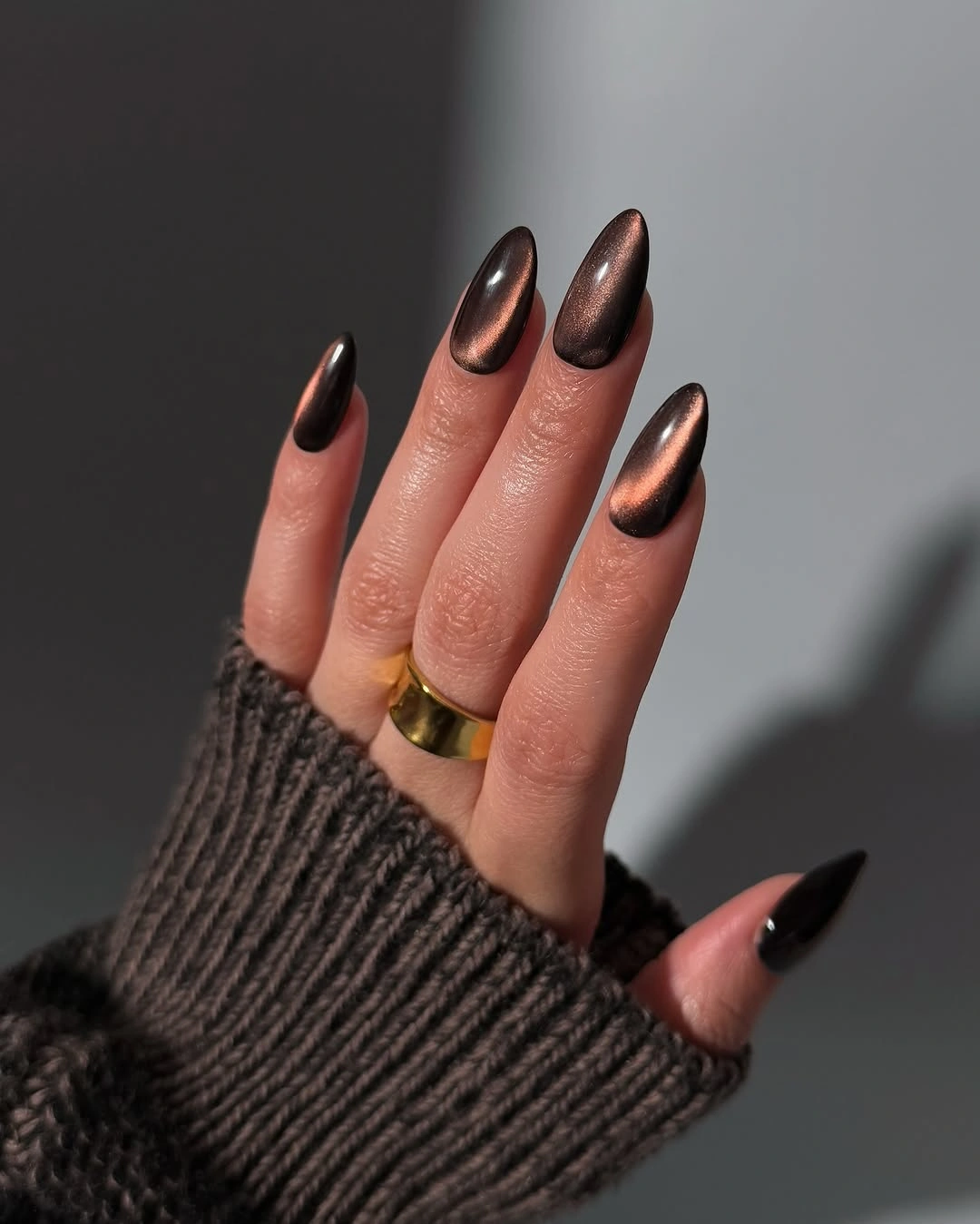
For a more comfortable adaptation, keep the reflective brown on a medium almond or rounded oval. The shade has enough movement to stand alone, so there is no need to add a separate accent color; alternatively, use it on two nails beside a flat chocolate or sheer nude. The lighter response will still appear when the hand moves, even on a shorter surface.
The long point makes every shift in the brown look dramatic, but it also makes the manicure more demanding during ordinary tasks. Reflective color can draw attention to the edge and to small marks, so a shorter version may age more gracefully. If you keep the length, the best support is restraint elsewhere: one finish, one palette, and a clean almond contour.
Deep wine brown with a glossy point
Long almond nails in a dark burgundy-brown shade sit close to black in the shadows and open into a wine tone where the light touches them. The color is solid, but the pointed shape gives it a dramatic line that would not appear on a short square. Its richness comes from the relationship between the red-brown undertone and the high gloss rather than from any painted detail.
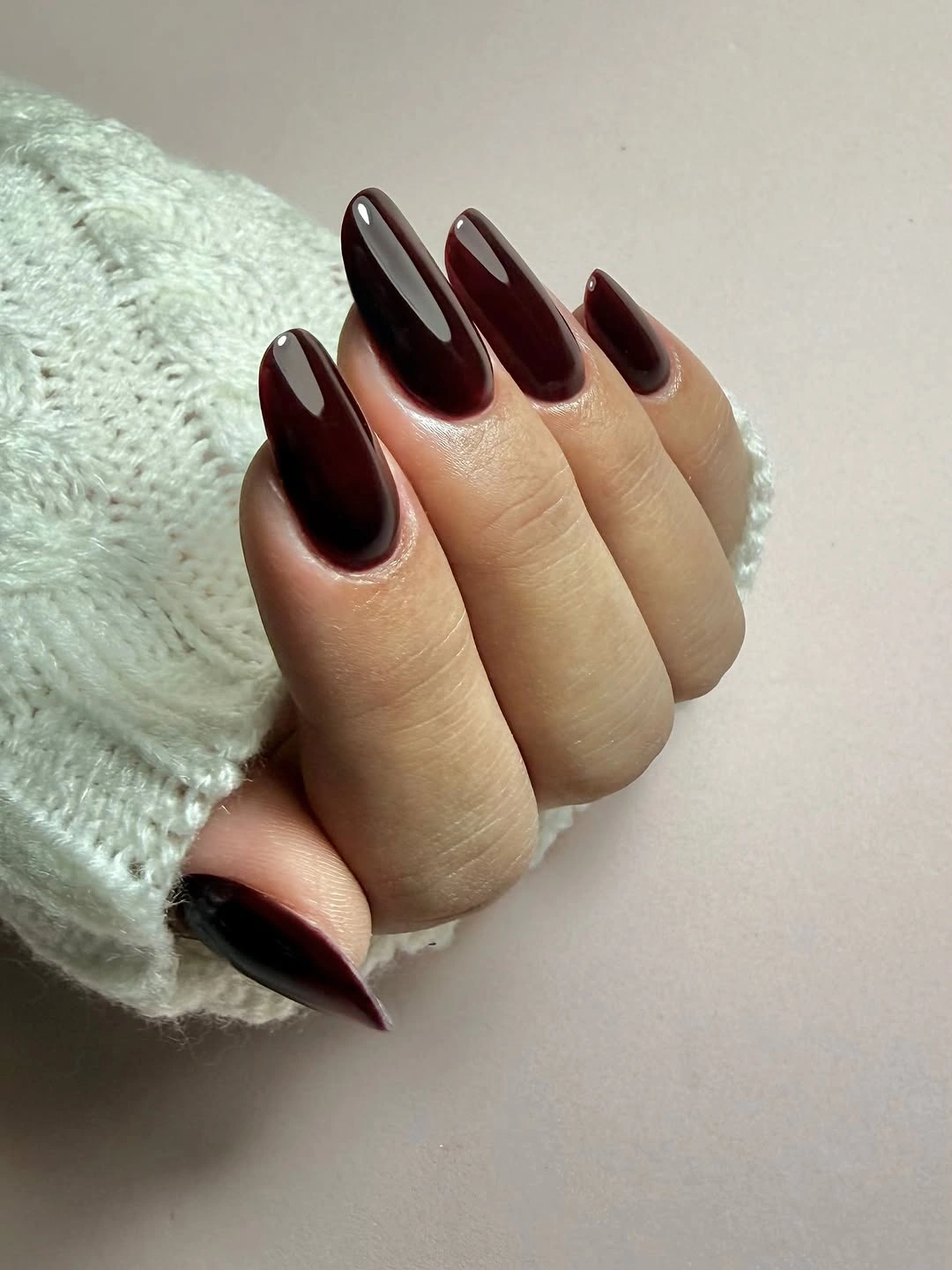
A medium almond is a useful compromise when you like the depth but do not want the full pointed effect. Keep the shade alone for a strong monochrome finish, or place it beside a sheer pink accent to make the wine undertone easier to see. The dark color works naturally with cream, gray, denim, and black, so it does not need an overtly autumnal outfit.
Very dark polish can make the length feel more intense, and a pointed tip can be less comfortable during close hand work. The gloss also makes growth and edge wear visible, although the absence of art keeps maintenance straightforward. Choose this direction when you want the silhouette and the shade to lead; adding multiple motifs would dilute the deep wine effect.
Warm chestnut for an everyday almond
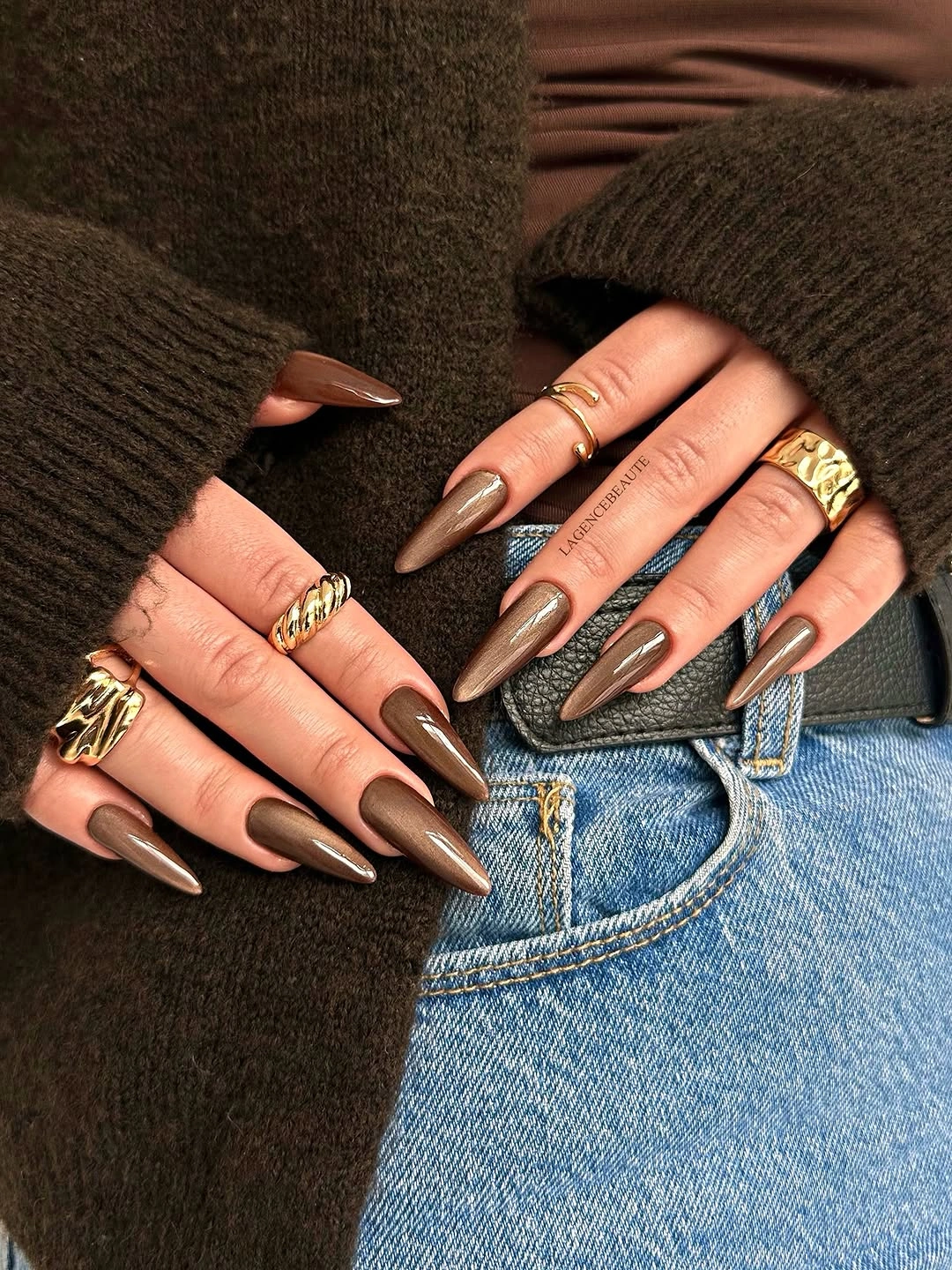
Medium almond nails in glossy chestnut brown create one of the most approachable solid options in the collection. The color is warm without appearing nearly black, the taper is visible but not extreme, and the background styling of denim, knit texture, and jewelry supports the seasonal mood. Nothing else competes with the chestnut surface, which makes consistency across the fingers especially important.
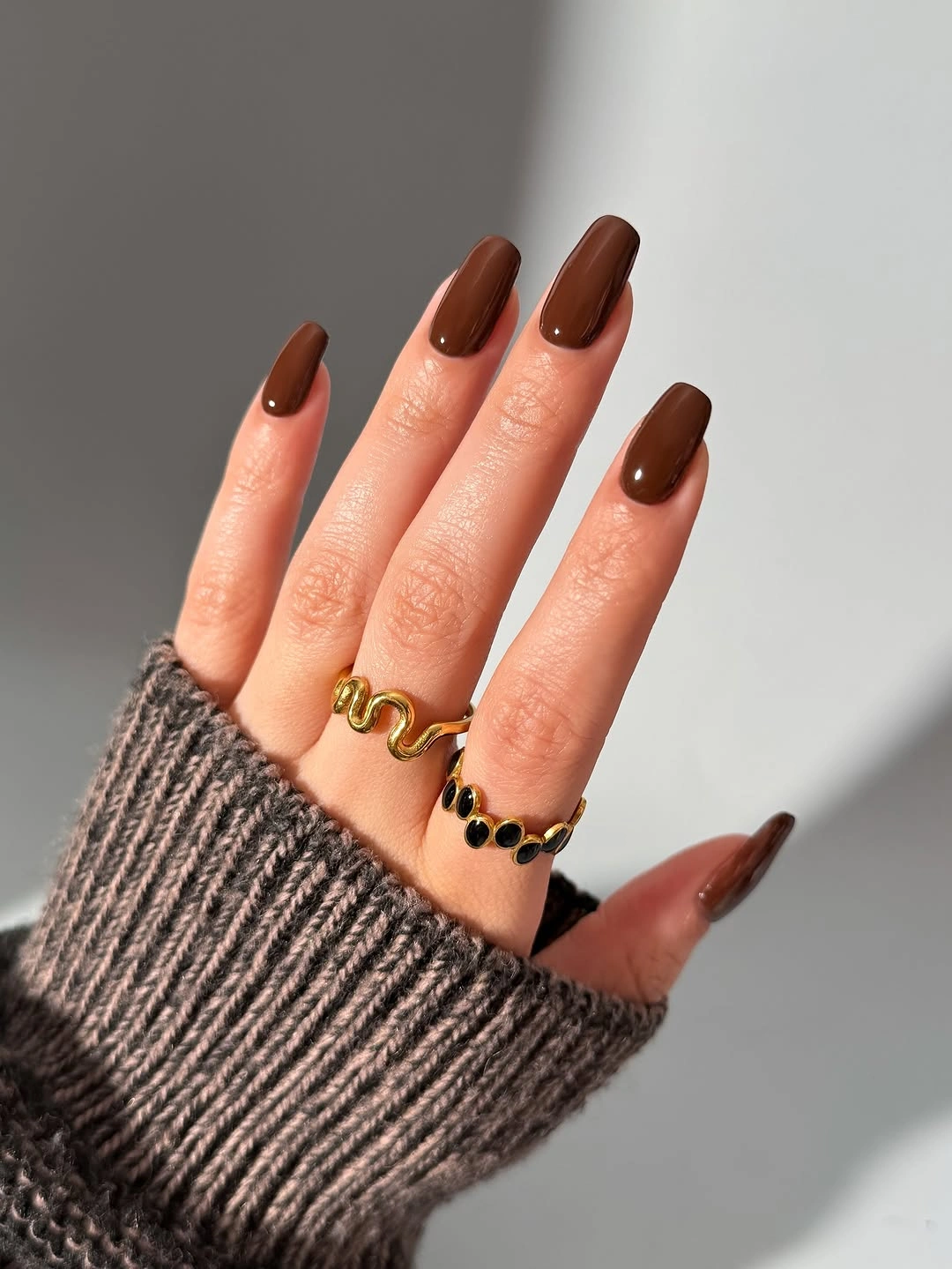
Use a short almond or rounded oval if you want the same color with less length, or keep the medium shape as a bridge between a compact square and a dramatic point. Chestnut is forgiving beside cream, tan, olive, burgundy, and blue denim, and it can serve as a base for one later accent nail. The uncomplicated palette also works beyond the fall season.
Because the manicure is solid, the side edges and the curve at the base remain visible from every angle. That makes careful shaping more valuable than adding decoration. If you prefer an easier routine, choose the shorter version and retain the glossy brown; the warmth will still read clearly, while the reduced length lowers the visual and practical pressure of the almond outline.
Chocolate squares with a pale outlined accent
Long squared nails use glossy chocolate brown on most fingers and reserve one pale nail for a brown outline that follows its edge. The contrast is simple but effective: the dark solids create a stable block, while the lighter accent breaks the set without adding a separate print. The straight ends make the brown surfaces look architectural, especially beside the softer outlined nail.
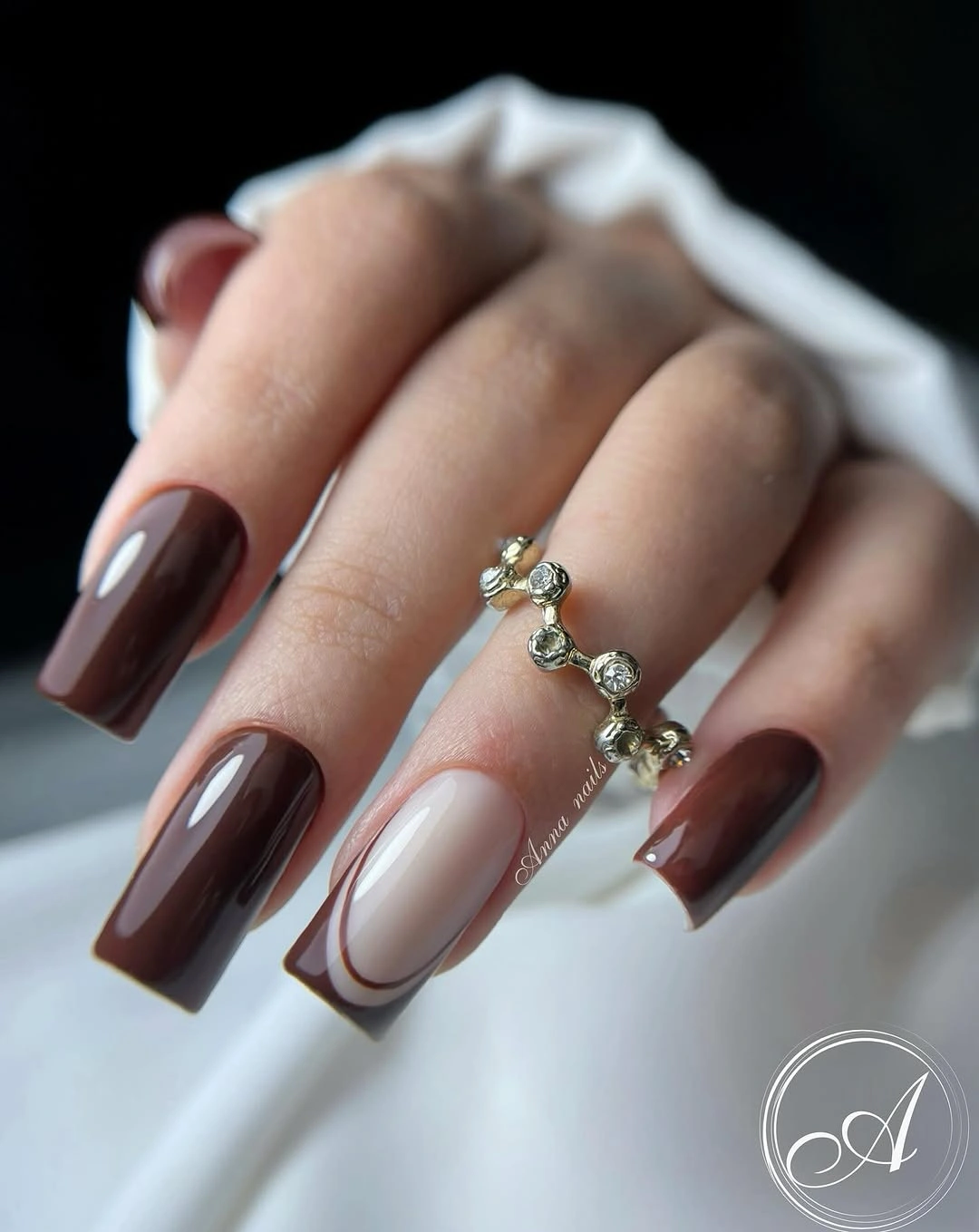
To make the idea more wearable, shorten the square and keep the outlined nude accent on one finger. You can also use the brown border only along the tip instead of tracing the sides, which preserves the contrast while reducing the amount of linework. A rounded square will soften the geometry, but the key relationship remains the same: dark chocolate around one lighter interruption.
Long square corners require comfort and careful upkeep, so the lighter accent is a useful way to keep the design interesting after reducing the length. A very broad brown block can visually shorten a small nail, while a narrow outline keeps the pale space open. Let the contrast remain clean rather than adding more colors; the strength of the idea is its clear two-part composition.
Short brown polish with a confetti accent
Short rounded-square nails in glossy brown are interrupted by one pale accent covered with tiny orange, gold, and red-looking flecks. The chocolate base gives the set a grounded center, while the flecked nail adds a small burst of color that feels more festive than a plain solid. The compact length keeps the accent from becoming too loud and makes the idea useful for everyday brown fall nails.
Keep the flecks on one nail if you want the brown to remain the main story, or repeat a few of the warm colors on a second accent for more balance. A short oval will make the set gentler, but the rounded square suits the crisp contrast between the dark base and the pale detail. The accent can be simplified to a few small marks if a fully scattered surface feels too busy.
Tiny bright flecks are visually charming but can become indistinct when the nail is small or the pattern is too dense. Concentrating them on one finger makes the detail easier to read and easier to refresh. The dark brown companions are low-complexity, so they create practical pauses between the more involved accent nail and the surrounding wardrobe colors.
Fine shimmer inside a short chocolate manicure
Short square nails carry a deep brown surface with a restrained fine shimmer that appears mainly in the highlights. The base remains dark and solid-looking, but small reflective particles prevent it from reading as completely flat. Because the shape is compact and no motif interrupts the color, the shimmer behaves like a quiet change in finish rather than a decorative pattern.
This version is easy to adapt because the color can stay on every nail. Choose a rounded square for a softer outline, use the shimmer on two accent fingers beside flat chocolate, or shift to a medium almond if you want more movement. The subtle sparkle works with simple jewelry and textured clothing without competing with a printed garment.
A fine shimmer may reveal surface texture more than a completely flat color, so a smooth base remains important. It is still less demanding than dots, lines, or a full print, and the short square keeps the dark tone controlled. If you want the finish to stay understated, keep the particles fine and the brown deep; adding a brighter accent would change the entire balance.
Mixed burgundy details on elongated almonds
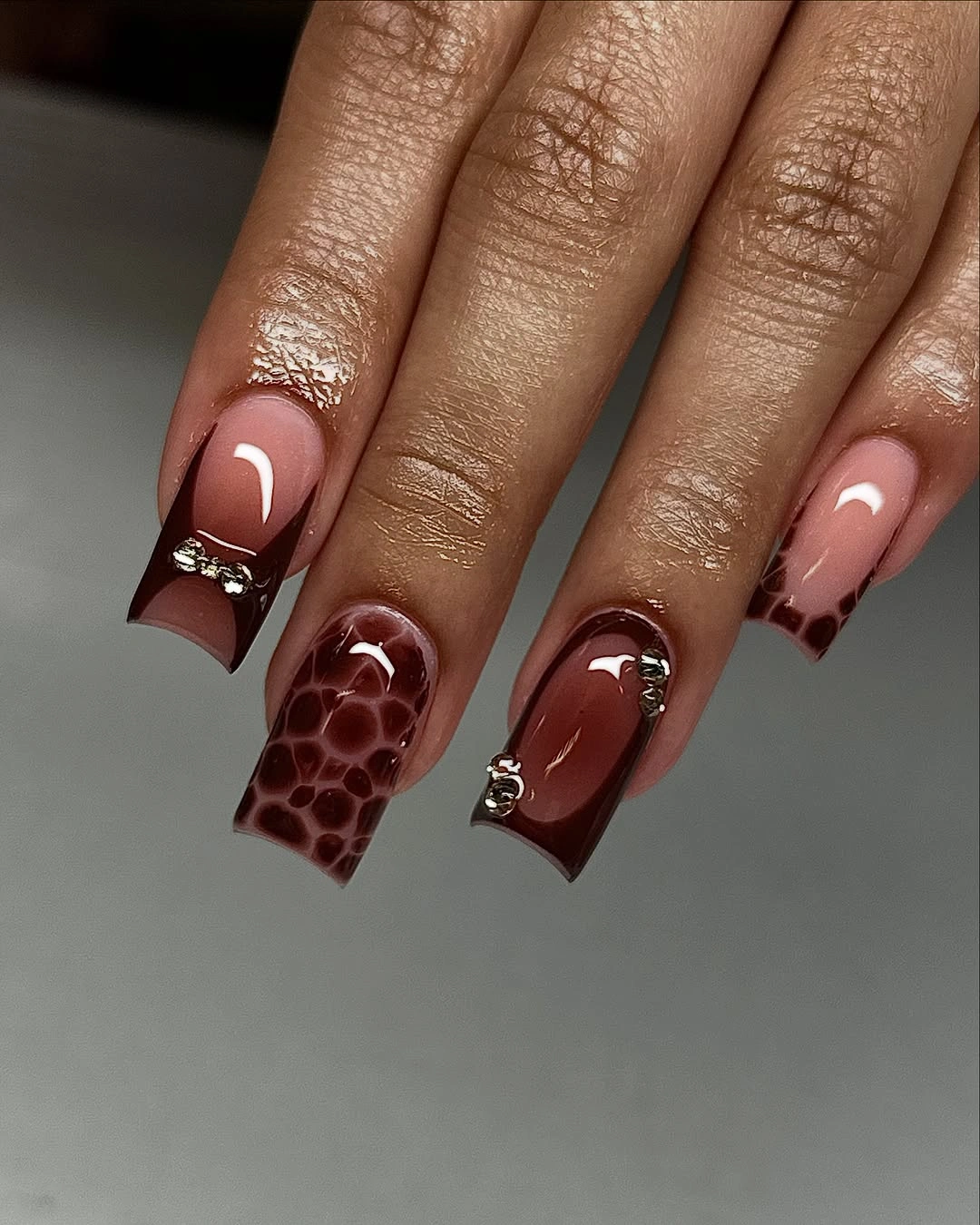
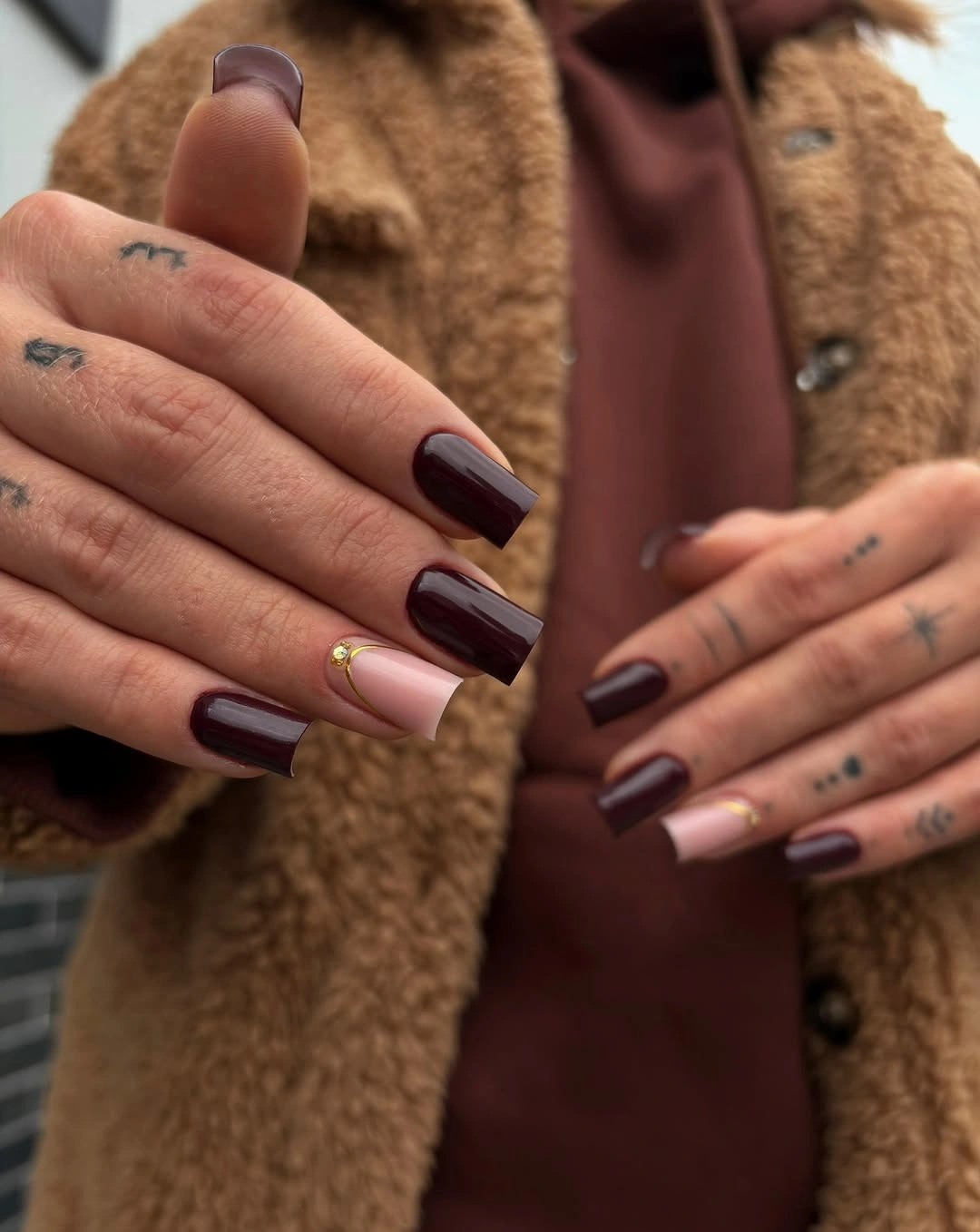
Long almond nails combine deep burgundy, sheer pink, brown, narrow lines, and small decorative accents in a deliberately editorial arrangement. Some nails are dark and glossy, others leave nude space, and several use thin linear details or contrasting sections. The set feels complex because the motifs vary, but the repeated pointed silhouette and warm palette provide a clear thread through the different fingers.
Borrow the direction without copying every detail by choosing a burgundy base, one nude accent, and a single line or dot motif. A medium almond will retain the vertical movement, while a shorter shape should keep the decorative zone nearer the tip. Repeating one dark tone across the set is more important than retaining every small accent; it is what makes the edited version feel related.
A high-detail manicure asks for more time and makes wear visible on more than one feature. The long almond also changes how the hands move through ordinary tasks, so consider the silhouette before focusing on the art. If the goal is a special occasion, the layered arrangement offers plenty of visual interest; for routine wear, simplify the interior and let burgundy carry the mood.
Framed taupe centers with darker tips
Long almond nails place a muted taupe-brown area inside a sharper dark tip, with thin bright-looking borders tracing parts of the shape. The result is more structured than a plain solid because each nail has a center, a pointed edge, and a narrow line separating the tones. The contrast between the quieter middle and darker tip gives the manicure a refined, almost framed appearance.
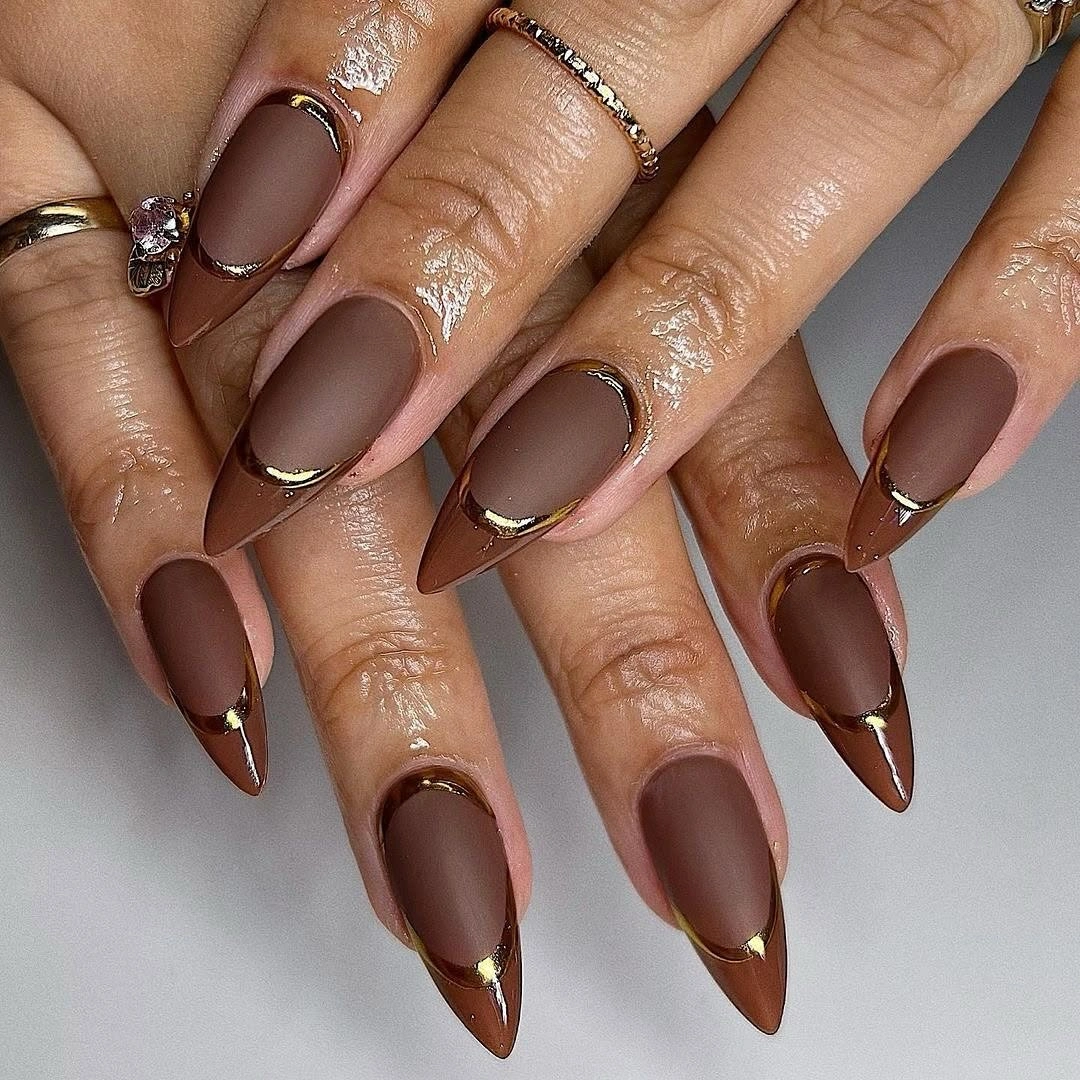
For a shorter translation, use a medium almond and keep the dark color only on the tip, leaving out the extra border on alternate nails. A rounded shape will make the framing softer, but the same muted center and deeper edge can still guide the eye. Because the palette is close in tone, the design also works when paired with neutral clothing rather than only with brown accessories.
The narrow border is the detail most likely to lose clarity as the manicure grows or when the nail canvas is small. Keep the line thin but visible, and avoid adding separate motifs that would compete with the framed structure. The long almond gives the effect its strongest presence, while a medium version offers a better balance if the goal is polished rather than dramatic.
Chocolate solids with tiny bright punctuation
Long almond nails use deep chocolate brown as the anchor and add small bright accents or nude openings to selected fingers. The dark blocks remain visually dominant, while the little points of light prevent the set from becoming a single heavy surface. The design feels decorative without relying on a large central motif, because the interest is spread through small changes in placement.
Reduce the length to a medium almond and keep one bright accent nail if you want a calmer result. The brown base can remain solid, while the small decorative detail is used as a focal punctuation mark rather than repeated across every finger. A sheer nude accent also works well if you prefer contrast without a bright-looking embellishment.
The more tiny details a set contains, the more important it is to give them negative space. Crowding them around the dark base would make the surface look busy, while leaving a few fingers plain preserves the visual hierarchy. The long almond supports the decorative scale, but the shorter adaptation is more realistic for daily movement and will keep the chocolate color as the main statement.
Glossy brown with casual styling
Medium-to-long almond nails in glossy brown show a cleaner route through the collection. The warm color is uninterrupted, the contour stays consistent, and casual denim and knitwear make the manicure feel less formal than the reflective or heavily detailed examples. A few subtle tonal changes may appear between fingers, but the main visual decision is the relationship between the polished brown surface and the elongated shape.
This is an easy idea to scale because it needs no special accent placement. Keep the almond medium for a practical everyday proportion, or move to a short rounded shape if you want the brown to feel more minimal. The color pairs with both warm and cool neutrals, and its glossy finish can provide enough interest when the rest of the outfit is deliberately casual.
Longer almond tips can look elegant but may feel visually demanding even when the color is simple. A shorter version will make the manicure easier to live with and will also reduce the prominence of grow-out at the tip. The clean brown surface is the point, so avoid adding detail simply to make it feel more elaborate; restraint is what distinguishes this option from the mixed sets.
Everyday dark chocolate on a medium almond
Medium almond nails in glossy dark chocolate bring the palette back to a balanced everyday proportion. The tone is deep, the surface is smooth, and the shape has enough taper to feel refined without reaching the longest points in the collection. There is no pattern to distract from the outline, so the visual success depends on even length and a steady curve from base to tip.
Keep the length medium if you want the clearest compromise between drama and comfort, or shorten the tip to create a soft oval effect. A sheer pink accent could lighten the set, but the solid version is more useful when you need a dependable color that can accompany patterned clothing. Dark chocolate also gives a warmer alternative to black without looking overly decorative.
The solid surface asks for a tidy edge, yet the maintenance plan is uncomplicated because there are no motifs to rebuild. Medium almond is also less likely to dominate hand movement than a long point, although comfort always depends on the wearer. Let the color remain rich and uninterrupted; the value comes from making a dark neutral feel deliberate, not from adding unnecessary contrast.
Bronze highlights following an almond curve
Long almond nails shift from deep brown into a warm bronze highlight that follows the curve of the tip. The reflective surface looks almost metallic in the light, but the palette stays close to brown and the design remains free of painted motifs. The eye follows the bright edge along each almond, which makes the shape feel more sculptural than a flat solid would.
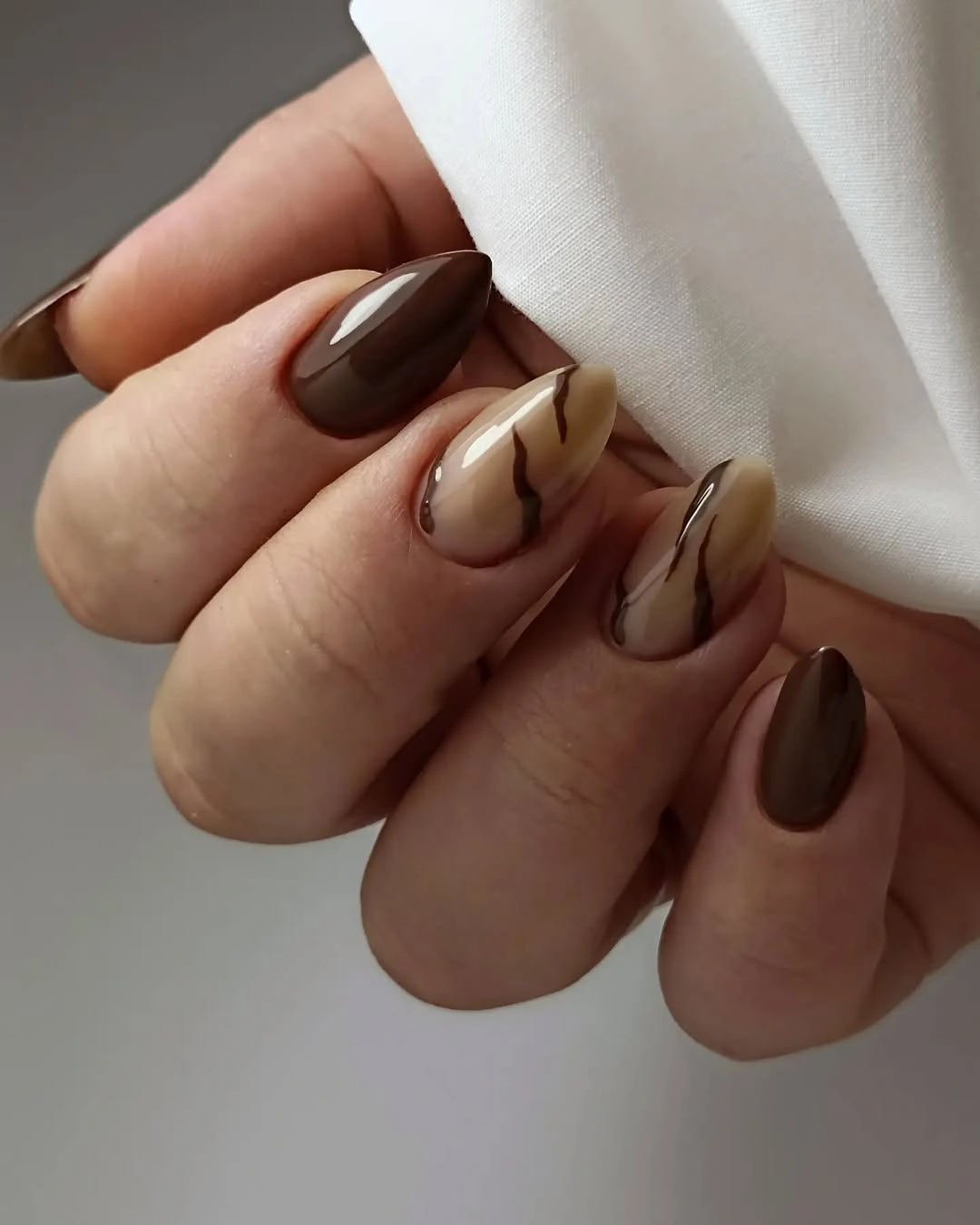
A medium oval can keep the same light response with a softer outline, while a shorter almond preserves more of the original taper. There is no need to add a contrasting accent because the brown-to-bronze shift already changes as the hand moves. Pairing the color with gray, cream, black, or a textured knit will let the reflective edge remain the most visible detail.
The finish is dependent on lighting, so the manicure may appear deeper and less luminous in a dim room. That variation is natural for a reflective surface and does not weaken the idea. The practical caution is the long length: if it feels inconvenient, shorten the tips before changing the color, because the light-catching brown is the part that gives this design its character.
Deep burgundy brown for a pointed silhouette
This long almond set leans toward deep burgundy-brown with a very glossy surface and a pointed outline. In shadow the color can look almost black, while the highlights reveal the wine undertone and keep the manicure from becoming flat. The design has no extra art, so the contrast between dark color and tapered shape creates the entire mood.
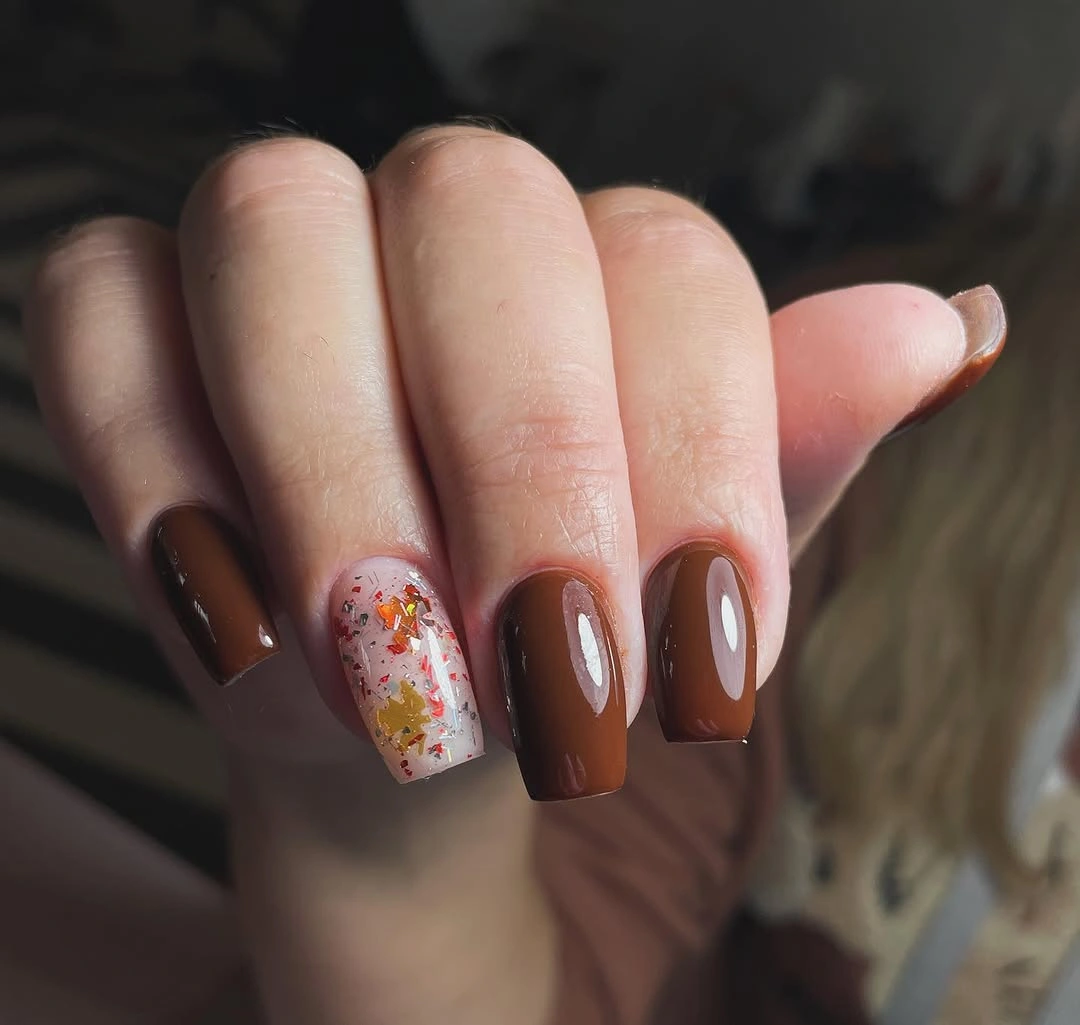
Shorten the almond to medium length if you want the same wine-brown depth in a more manageable proportion. A single sheer nude finger can open the set, but keeping all nails dark makes the silhouette more decisive. The shade works with pale sweaters, gray layers, denim, and neutral jewelry, so it can look seasonal without relying on literal autumn motifs.
Dark burgundy-brown is visually strong, and the pointed length intensifies that effect, which may not suit every setting or routine. The gloss will also reveal edge wear, although the lack of detail makes a refresh fairly direct. Choose this idea when you want the color and length to be the focus, and reduce one of them if the overall presence feels too heavy.
Warm brown with knitwear-friendly proportions
Medium almond nails in warm glossy brown bring the focus back to a comfortable shape and a clear seasonal shade. The hand styling includes soft knit texture and jewelry, but the manicure itself remains solid, evenly curved, and free of distracting accents. The color is lighter and warmer than the deepest burgundy examples, so it reads as inviting rather than intense.
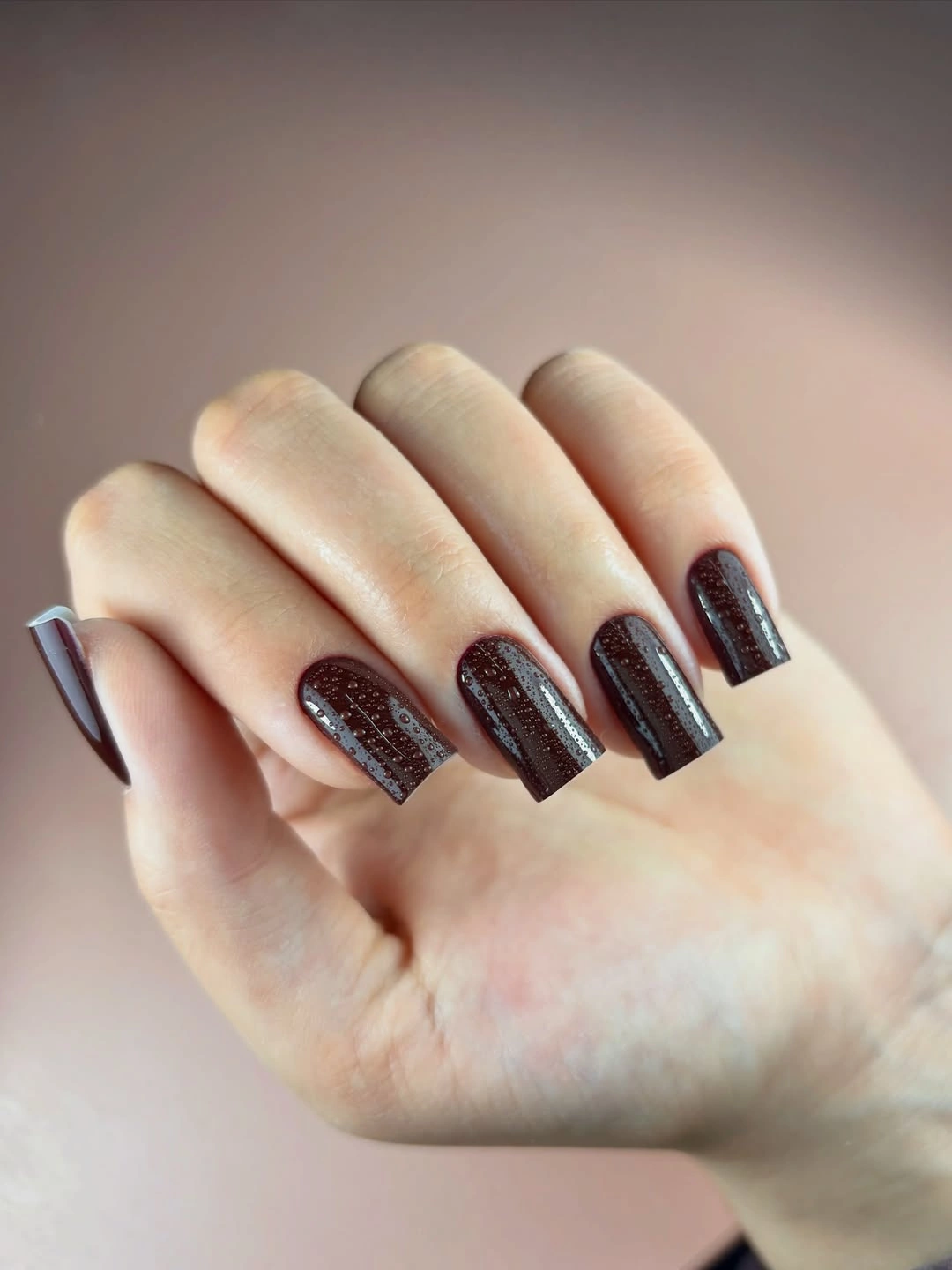
Use this as a base shade when you want one reliable brown look, or add a pale nude tip to one nail for a small contrast. A short almond will make the result more understated, while the medium length gives the warm color enough presence to be seen beside a sweater sleeve. The palette remains easy to combine with cream, olive, tan, and blue denim.
The set is uncomplicated, but that means the balance of the almond shape remains visible from every angle. Keep the side edges smooth and avoid making one tip dramatically longer than the others. The practical benefit is that a medium length can deliver the elongated look without the strongest inconvenience of a long point, making warm brown a flexible everyday choice.
Brown French edges on soft square nails
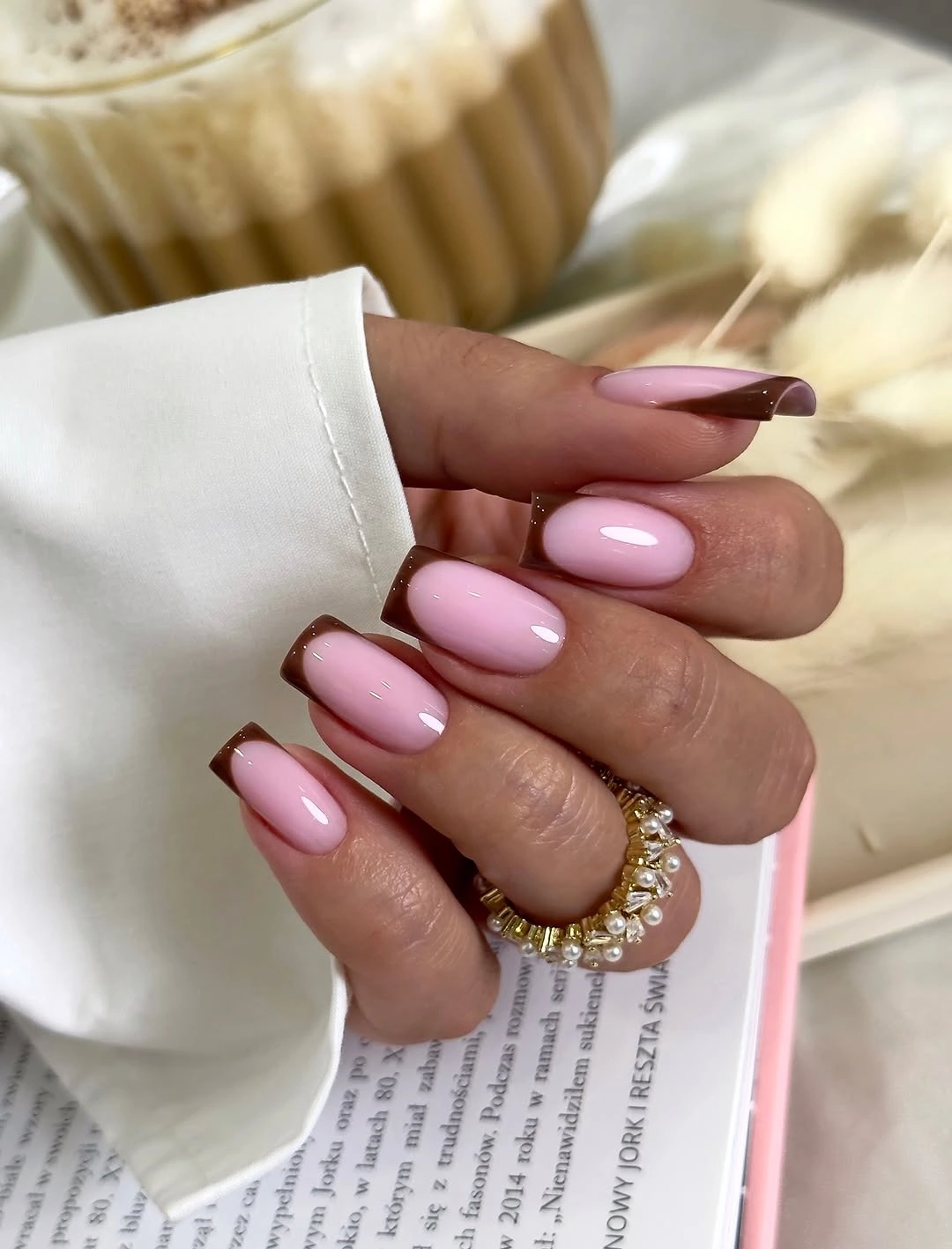
Medium square nails finish the collection with a sheer pink base and warm bronze-brown French tips. The colored edge is clear enough to define each straight end, while the pale center keeps the manicure light and shows more of the natural-looking space between the base and tip. A subtle reflective response near the brown line adds interest without requiring additional motifs.
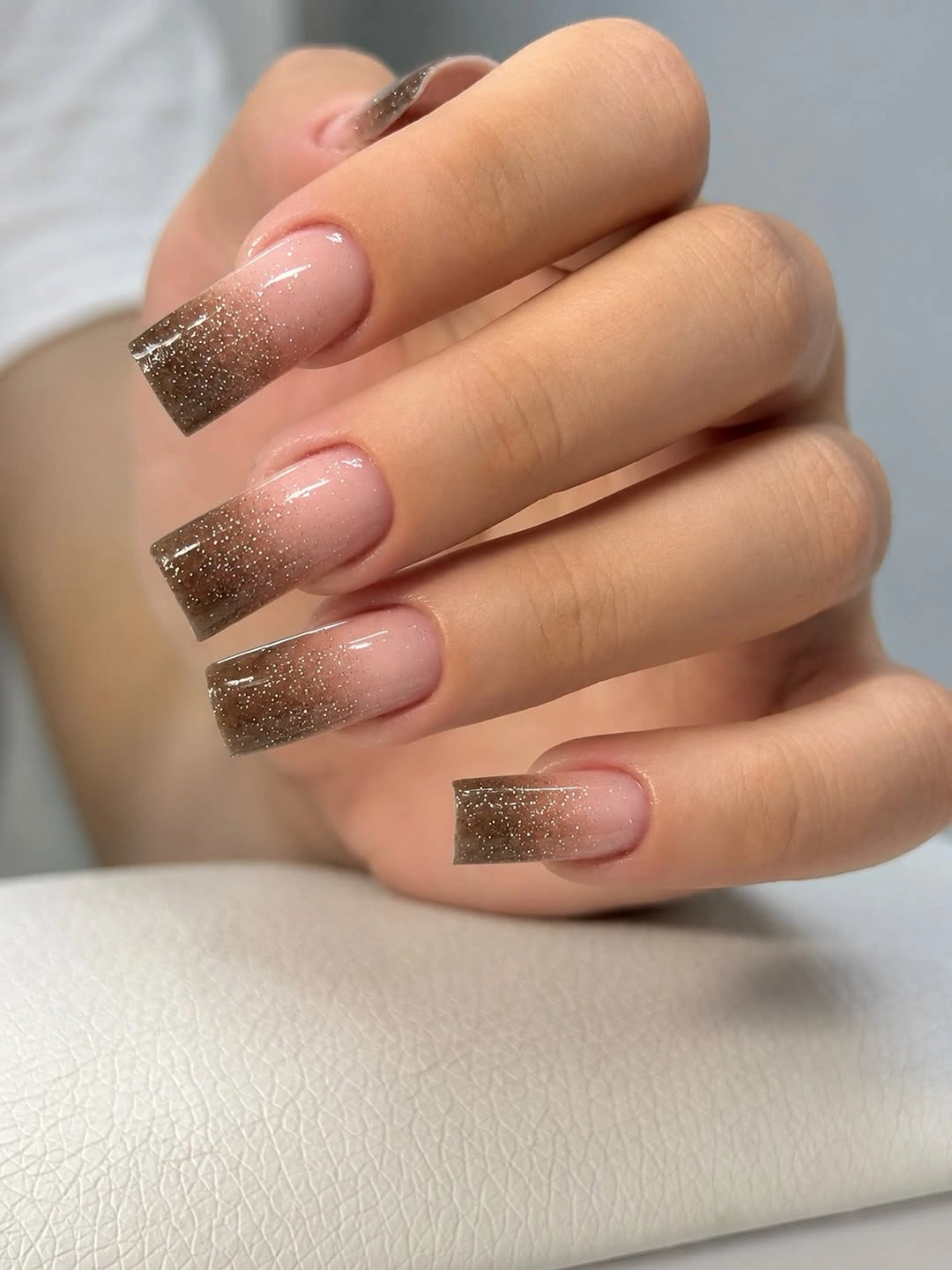
For shorter squares, narrow the brown band so the tip does not visually take over the nail. A rounded-square edge will soften the geometry, while a medium almond can turn the same brown French into a more tapered direction. The pale base makes the design easy to wear with chocolate, cream, taupe, black, or denim, and the restrained color keeps it suitable for ordinary days.
French borders are simple in concept but depend on an even curve or straight line, so irregular width is the main issue to watch. The open base gives the look breathing room and makes it less heavy than full brown polish, yet it will show grow-out around the cuticle. Keep the tip deliberate and let the brown edge close the article with a clean, low-detail finish.