Fall nail trends 2026 do not have to mean one predictable brown manicure. The strongest ideas in this collection move between muted olive, glossy plum, bright red, milky pink, reflective neutrals, playful dots, plaid, tortoiseshell, and small graphic accents. Shape matters just as much as color: short rounded squares feel direct, medium almonds soften a deeper shade, and longer silhouettes give patterned details more room to breathe.
Use the designs as starting points rather than fixed instructions. A vivid color can be reduced to one accent nail, a long almond can become a medium oval, and a detailed tip can be narrowed for a compact square shape. Each idea below focuses on the visible balance of color, finish, placement, and length, so you can choose what suits your wardrobe, schedule, and comfort with upkeep.
Muted green gingham tips on a sheer base
Short rounded-square nails make the first look feel friendly and easy to wear, while the translucent pink base leaves most of each nail visually open. Muted olive-green appears as a solid tip on some fingers and as tiny green-and-white gingham on others, so the manicure has a pattern without becoming a full print. The repeated tip placement is what keeps the mismatched details connected.
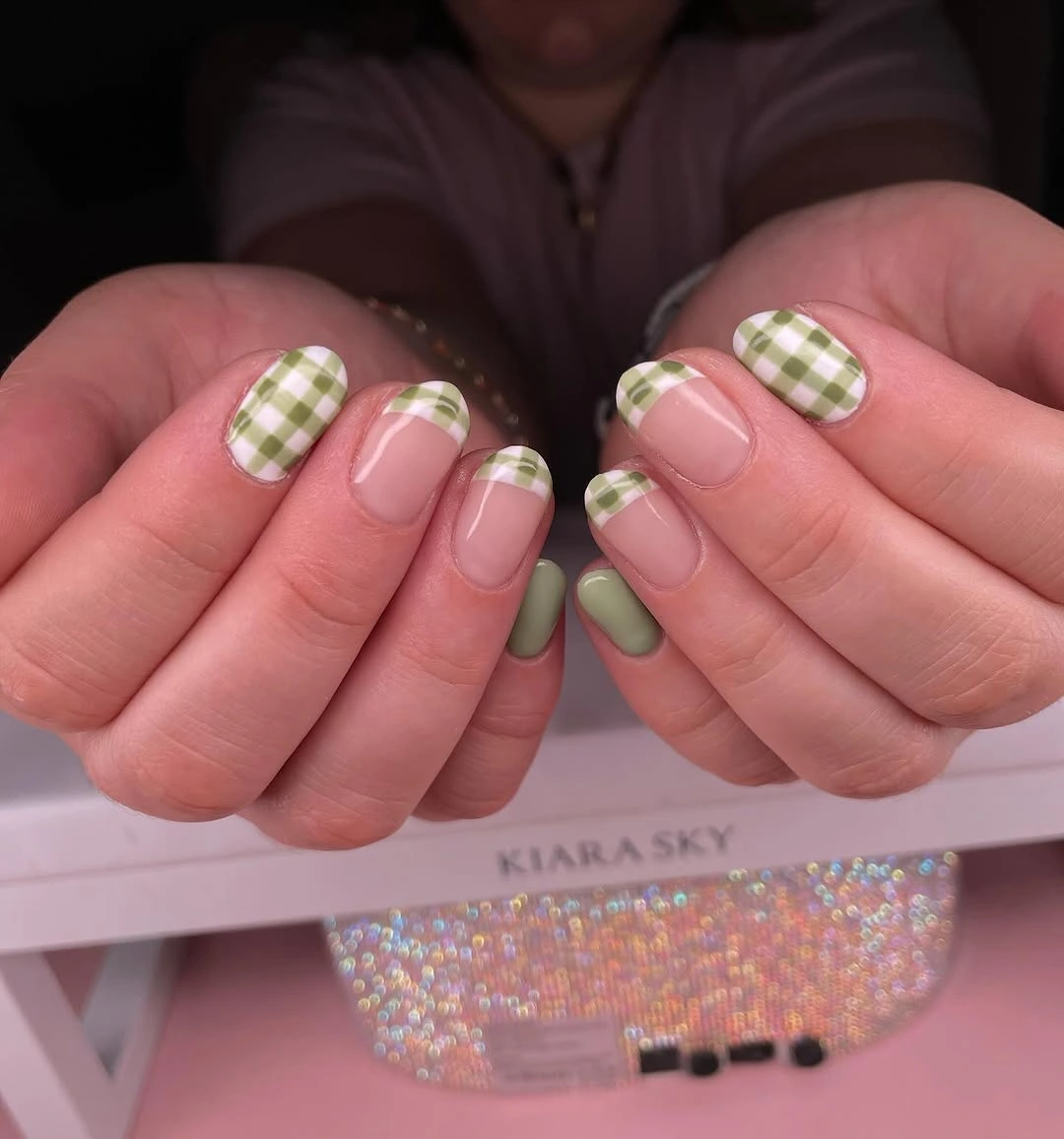
For a shorter version, keep the sheer pink base and use the checked pattern on only one or two nails, with solid green on the rest. The small scale of the gingham is useful because it adds a seasonal note without demanding a long canvas, and the soft green works beside cream knits, denim, or warm gray layers. A narrow tip will also preserve more of the nail visually.
The tradeoff is precision: tiny checks can blur when the lines are too close together or when the tip is made overly wide. Let the solid olive accents do some of the visual work, and pay attention to the edge as the manicure grows out because a pale base makes any uneven curve easy to notice. The result is gentle fall color with a playful detail rather than a heavy seasonal motif.
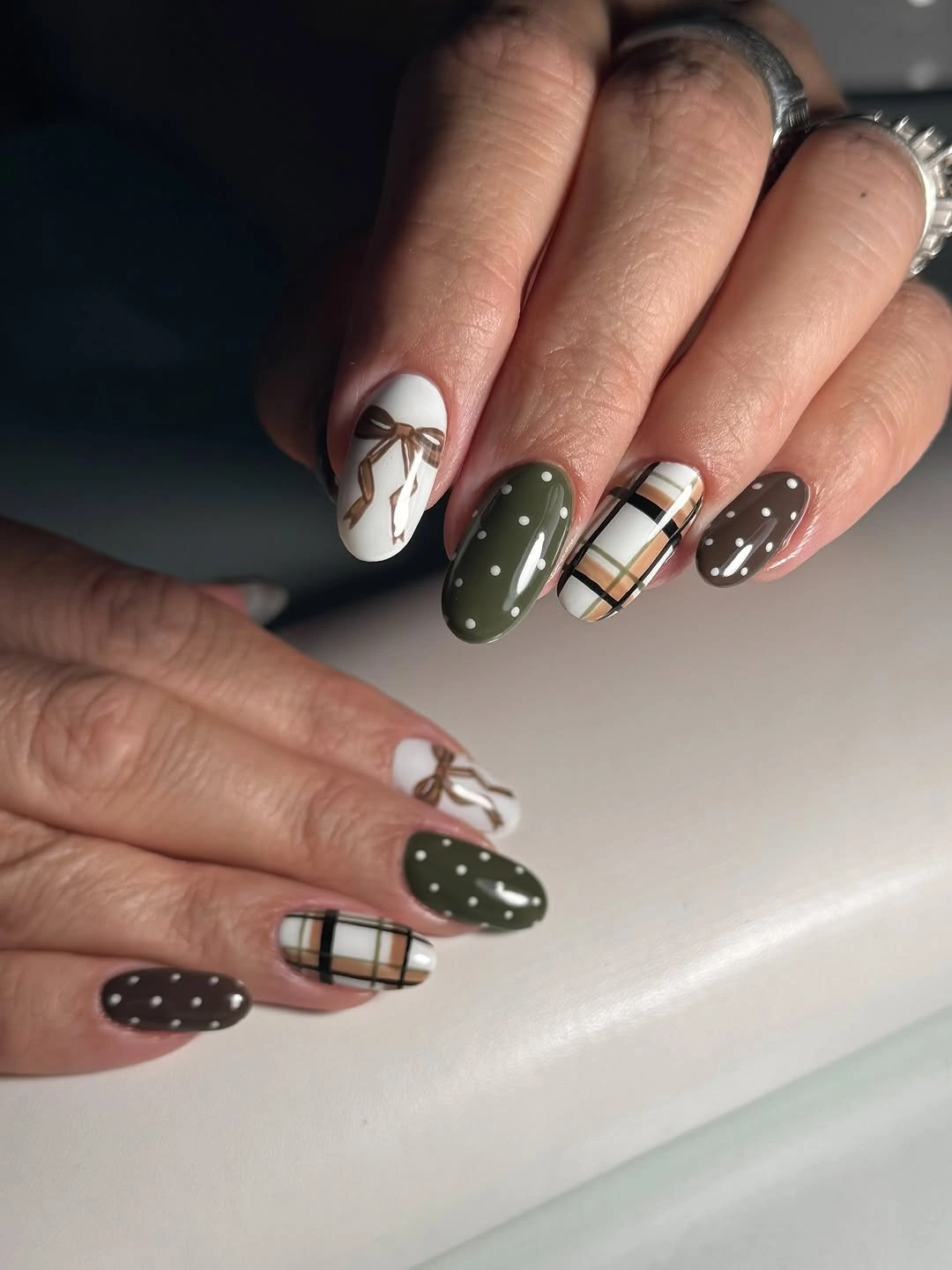
Olive, plaid, and dots in one balanced set
Medium almond nails give this combination a softer outline, which helps the dark olive solids, white-and-brown plaid, scattered dots, and loose brown linework sit together. The eye moves from the light plaid nail to the deep olive blocks, then lands on the small white dots, so the design has a clear rhythm rather than a pile of unrelated decorations. The light accent prevents the darker palette from closing in.
When adapting the idea, choose one anchor color first and let it appear on at least half of the nails. A white nail with a few brown crossing lines can replace the full plaid, while dots can be limited to one finger for a quieter version. The almond shape is not essential to the color story, so a rounded square can carry the same olive-and-white contrast with a more compact feel.
Several motifs create interest, but they also create a maintenance question: lines and dots look intentional only when their spacing stays clean. If you prefer low upkeep, keep the olive solids glossy and use one patterned accent rather than repeating every detail. The deeper color may feel especially rich with autumn clothing, while the pale plaid gives enough contrast for the set to remain readable in everyday light.
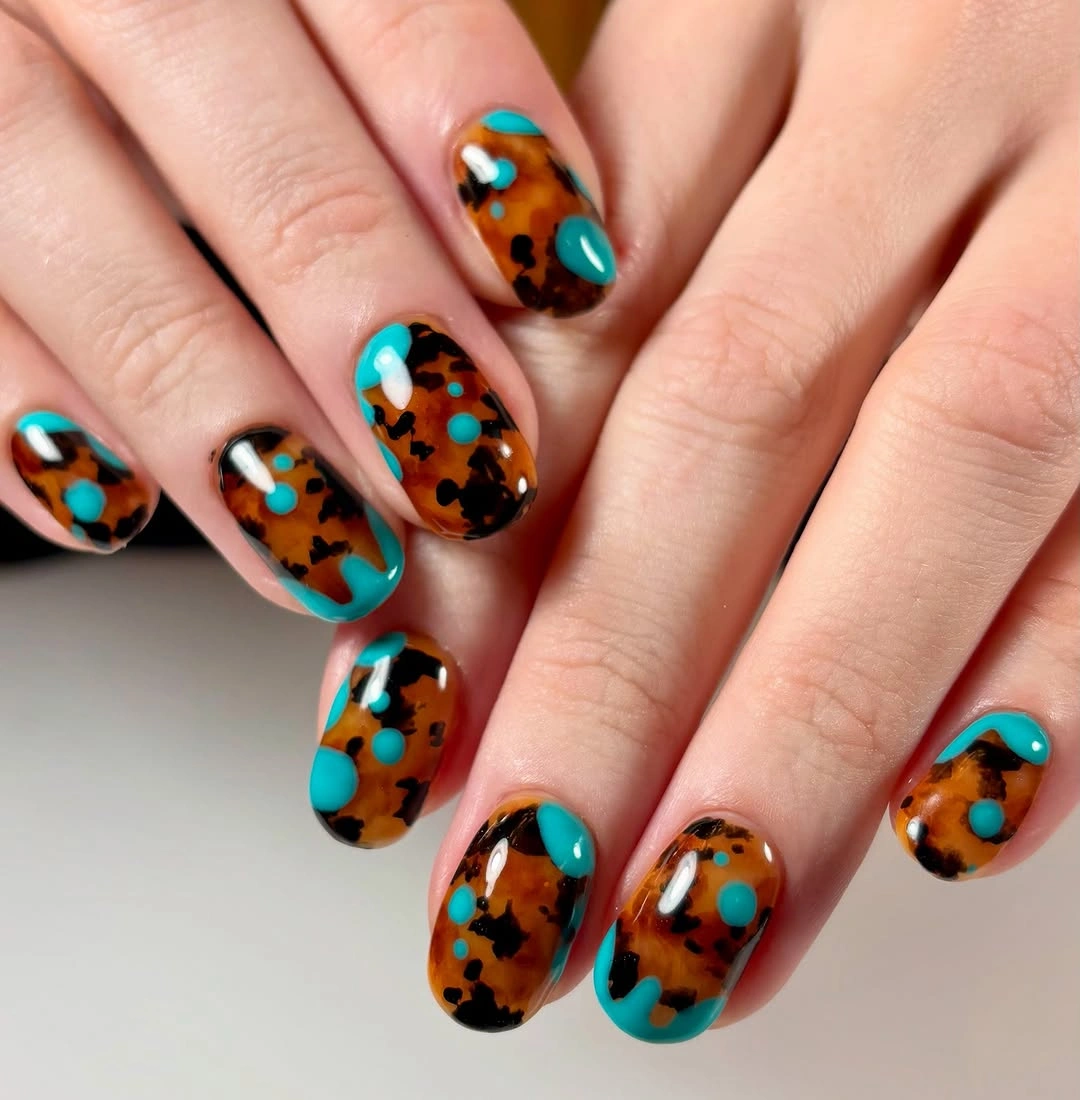
Tortoiseshell warmth cut by turquoise
These medium oval nails build their personality from a warm amber-brown tortoiseshell field and bright turquoise curves or dots. The brown and orange patches are irregular, with dark flecks breaking up the translucent-looking warmth, while the cool accent appears along edges and in small pockets of color. That temperature contrast makes the manicure feel sharper and more modern than a fully warm tortoiseshell set.
To make the idea easier to wear, keep the tortoiseshell on most nails and reduce turquoise to a curved edge on two fingers. The accent does not need to be large to work; its value comes from interrupting the warm palette. A shorter oval or rounded shape can preserve the same color relationship, and a simple brown base with one turquoise detail will still read as the same concept.
The visual tradeoff is density. Layered brown patches, dark flecks, and a vivid cool color all compete for attention, so repeating every element on every nail would make the set feel crowded. Keep the turquoise placement slightly varied but not random, and remember that a busy pattern can make grow-out less obvious than a solid color while making small surface inconsistencies more noticeable at close range.
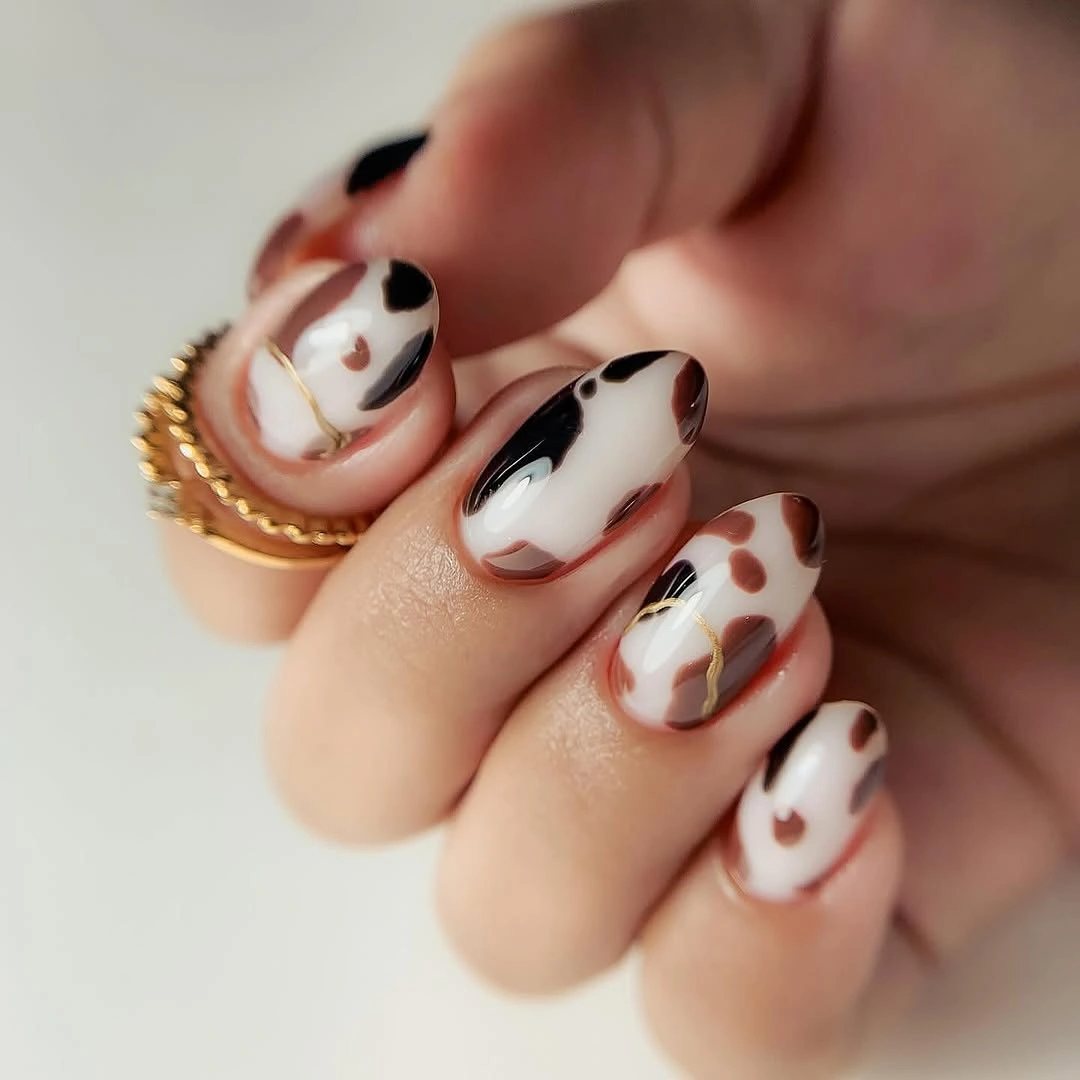
Milky white nails with coffee-toned patches
A pale milky base gives this rounded manicure plenty of breathing room, while coffee-brown organic patches introduce the fall connection. Thin warm lines appear beside some of the larger shapes, adding a delicate glint without turning the design into a dense print. Because the spots are uneven and the accents are not identical on every finger, the set feels hand-drawn and relaxed rather than rigidly repeated.
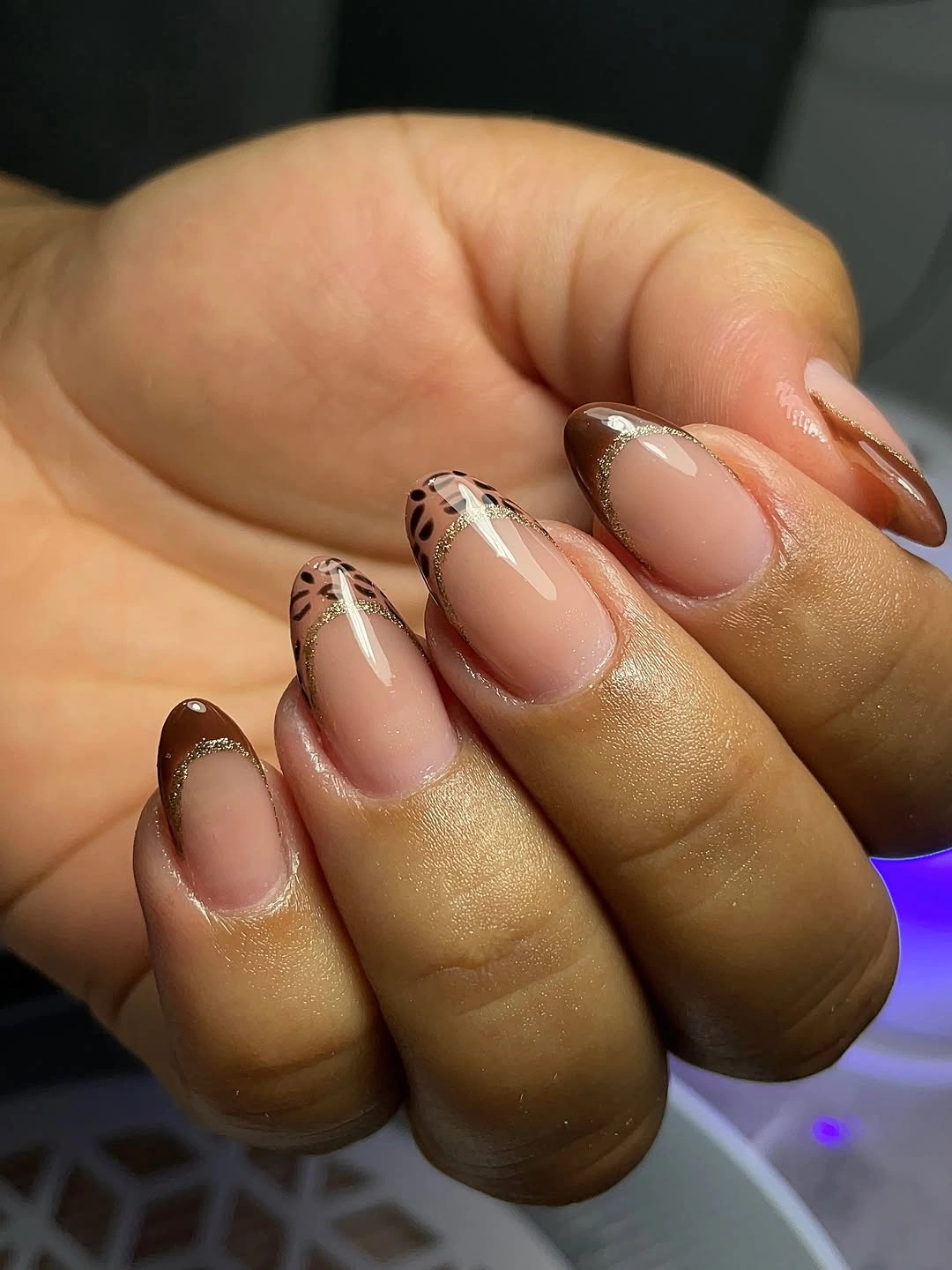
This color plan is easy to adapt to short nails because the pale base remains dominant. Use larger brown shapes on one or two accent nails and keep the other fingers nearly bare, or replace the narrow lines with a single brown edge. The neutral base can sit comfortably beside black, cream, camel, or denim, making it useful when you want seasonal detail without committing to a dark manicure.
The honest limitation is that a light ground makes the balance of the patchwork important. If the brown areas become too large, the manicure can look heavier than intended; if they are too tiny, they may lose their character. Keep the shapes separated, let the rounded outline remain visible, and treat the thin warm accents as optional punctuation rather than a requirement on every nail.
Long almond nails with selective tortoiseshell
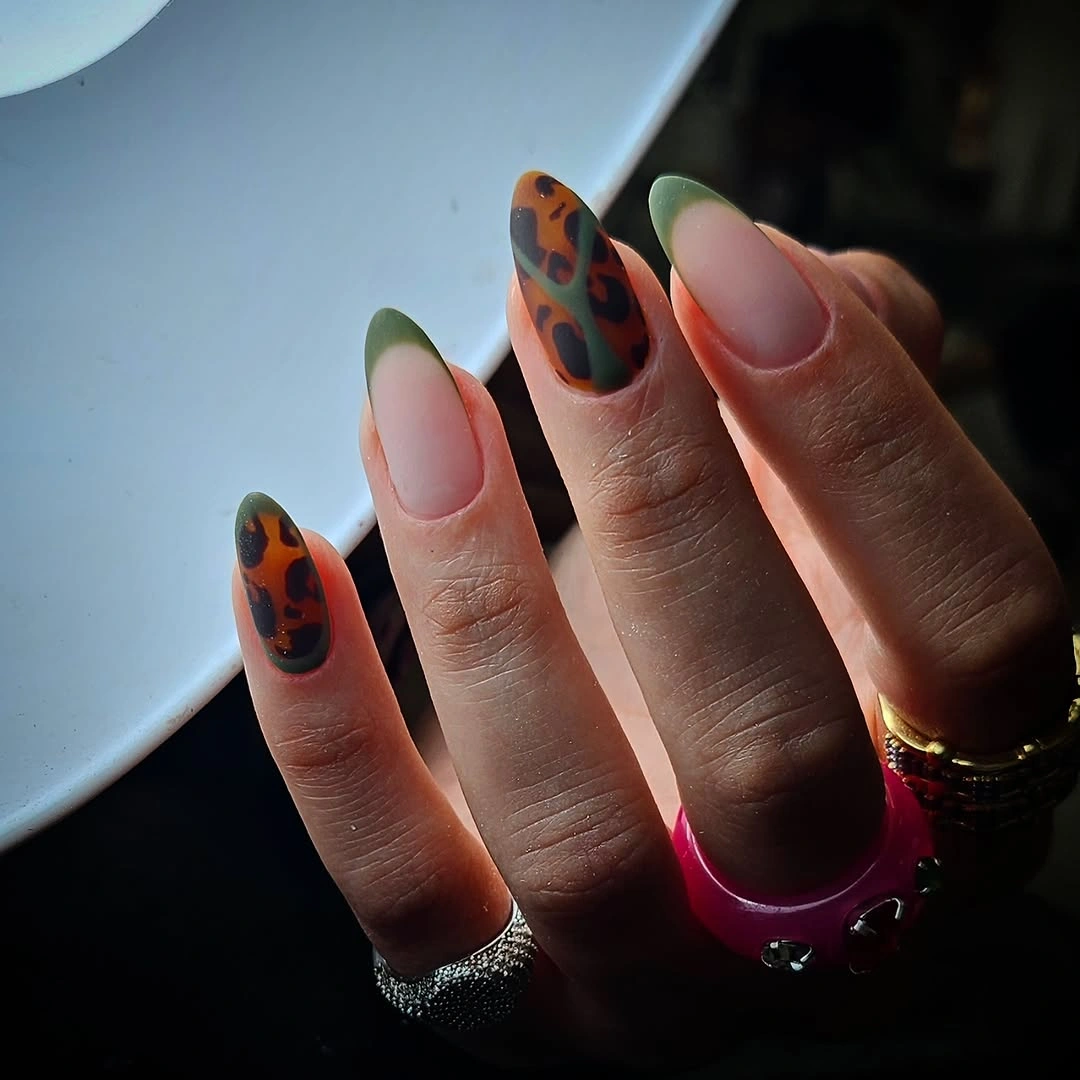
The elongated almond shape is the main visual decision here, with a sheer nude base allowing selected tortoiseshell and warm brown panels to stand out. Dark amber, brown, and black mottling appears on only some nails, while the remaining space stays translucent enough to make the length look lighter. That selective placement gives the pattern a sleek frame instead of covering the entire silhouette.
If you like the palette but not the length, move the same tortoiseshell accents onto a medium almond or oval and keep the nude sections generous. The design still works when the patterned nails are limited to two fingers, especially if the brown accents are placed near the tip or along one side. A neutral base also makes it easier to pair the manicure with both soft knits and darker outerwear.
Long pointed shapes bring a clear tradeoff: they create drama and room for pattern, but they can feel demanding during typing, cooking, or other close hand work. The patterned areas can hide small changes in color as the manicure grows, yet the taper and edge remain prominent. Keep the visual description focused on the design, and choose a shorter silhouette if comfort matters more than maximum length.
Reflective olive gold on crisp squares
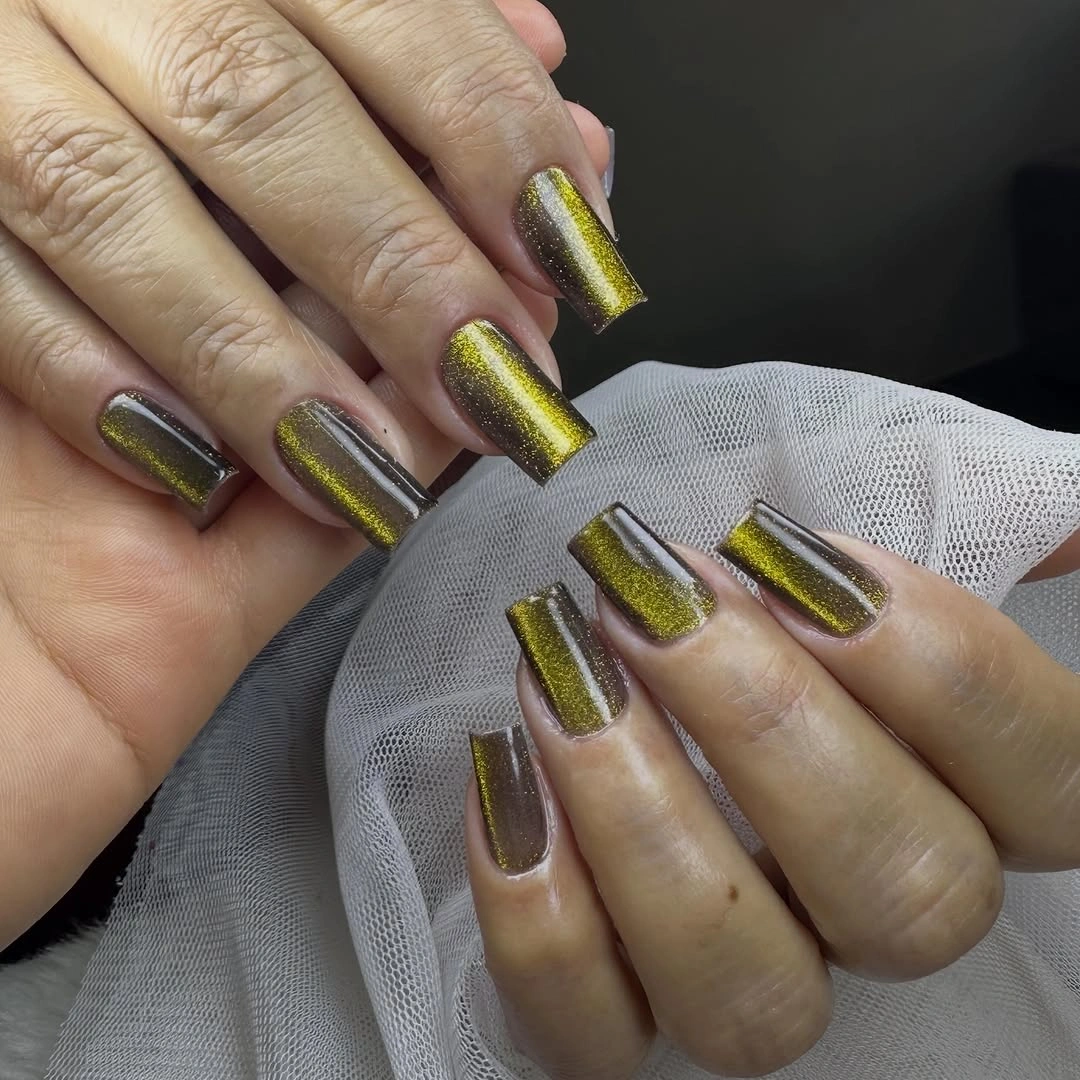
Long square nails become the decoration in this finish-led manicure. The surface shifts between muted olive, gold, and bronze as the light moves, while the squared ends give the reflective color a firm, graphic boundary. There is no competing motif, so the eye notices the relationship between the straight tip, the darker edge, and the changing metallic-looking glow across each nail.
To soften the statement, keep the reflective olive color but reduce the length to a medium square or rounded square. The finish can also be used on two accent nails while the others stay in a quiet brown or sheer nude, giving the same light-catching idea a calmer proportion. Because the color already has movement, extra linework would not add much and could obscure the clean outline.
A reflective surface is honest about every edge, mark, and uneven curve, which is the main upkeep consideration here. The long square silhouette also draws attention to corners, so a shorter version may be easier for daily wear. Still, the simplicity is useful: when the polish is smooth and the shape is consistent, the manicure feels detailed through light alone rather than through layers of decoration.
Glossy olive almond nails kept monochrome
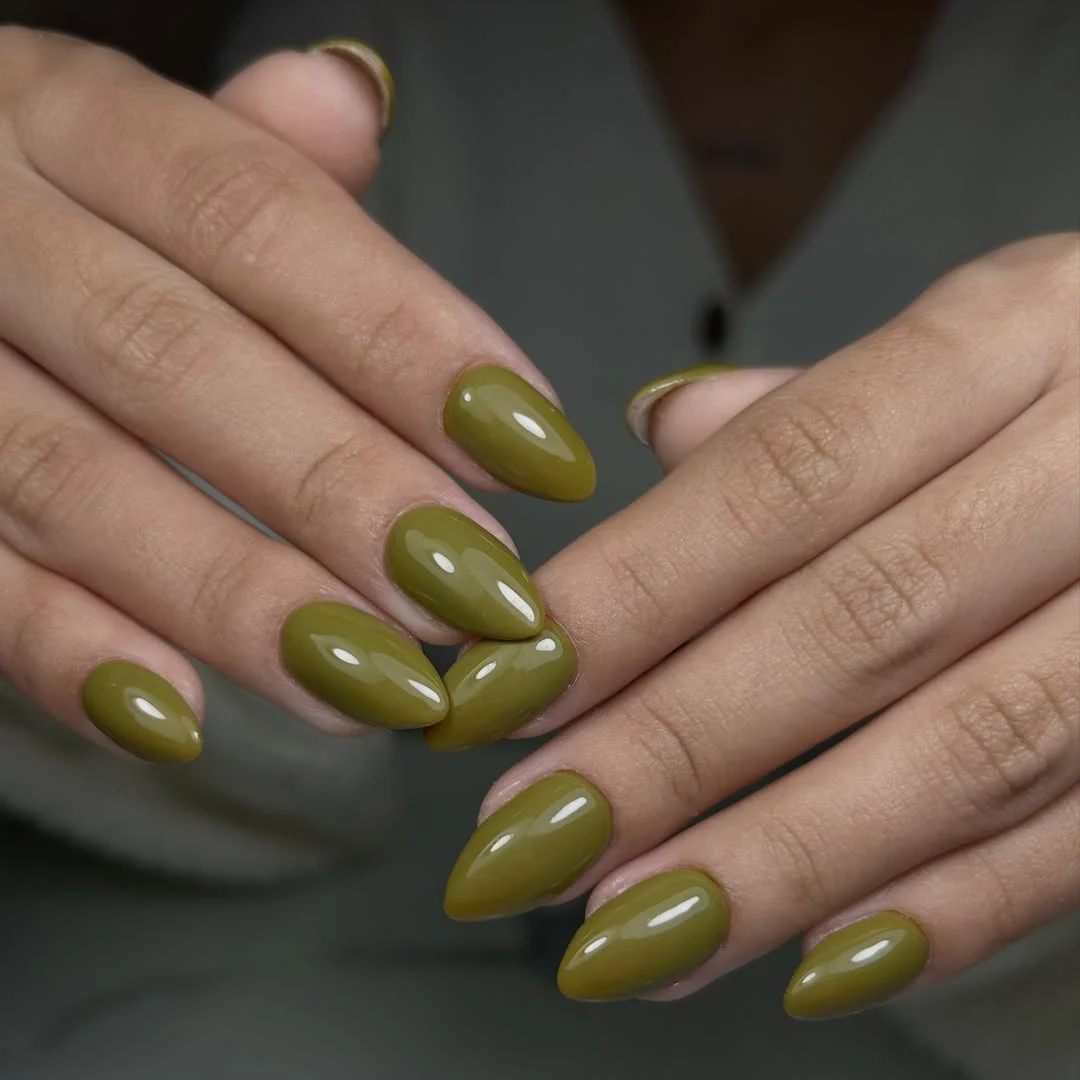
This medium almond set relies on one glossy olive-green shade and a consistent outline across the visible fingers. Without dots, lines, or accent nails, the color becomes the focal point, and the rounded taper keeps the look softer than a long point or a hard square. Bright curved reflections show how much the finish contributes to the sense of polish when the palette stays deliberately simple.
Monochrome color is especially easy to adapt because the idea does not depend on a particular art placement. Choose a short oval, a rounded square, or a medium almond according to comfort, and let the olive shade remain uninterrupted. It pairs naturally with cream, brown, black, and denim, while a single patterned accent can be added later without changing the basic direction.
The lack of decoration is also the main limitation: a solid color leaves the shape, cuticle line, and surface smoothness fully exposed. That is not a reason to avoid it, but it does mean that the outline should be kept balanced from finger to finger. If you want less visual pressure, a softer muted green or shorter length will keep the same seasonal mood with a gentler presence.
Taupe reflective color on elongated almonds
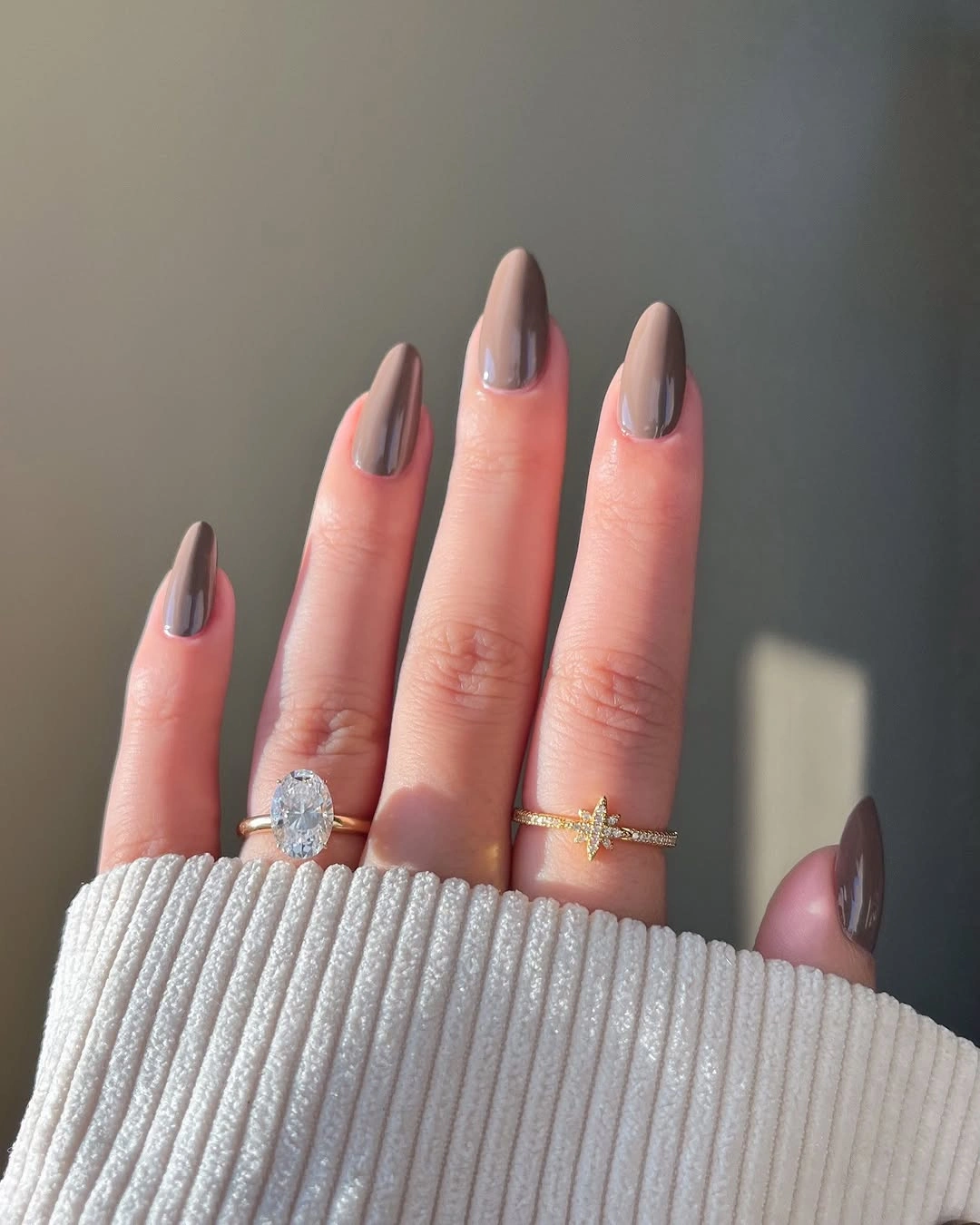
These long almond nails use a quiet taupe-gray reflective shade rather than a loud color or painted motif. The surface catches a muted vertical highlight, so the nail looks neutral at one angle and more luminous at another. The pointed outline supplies the drama, while the restrained palette keeps the manicure from competing with a textured sweater, jewelry, or other visible styling.
A medium oval or shorter almond would make this idea easier for everyday movement while preserving the color and light response. You can also keep the taupe finish on every nail because the surface already varies subtly; adding a contrasting accent is optional rather than necessary. The neutral tone will sit beside warm beige, gray, brown, or black without demanding a matching outfit.
The pointed length is the clear tradeoff, especially for anyone who prefers a low-maintenance shape. The reflective finish can make the tips look especially sharp, and any change in the edge may show as the manicure grows. If you keep the length, let the color remain simple and focus on a clean contour; if you shorten it, the same taupe light shift becomes more understated and practical.
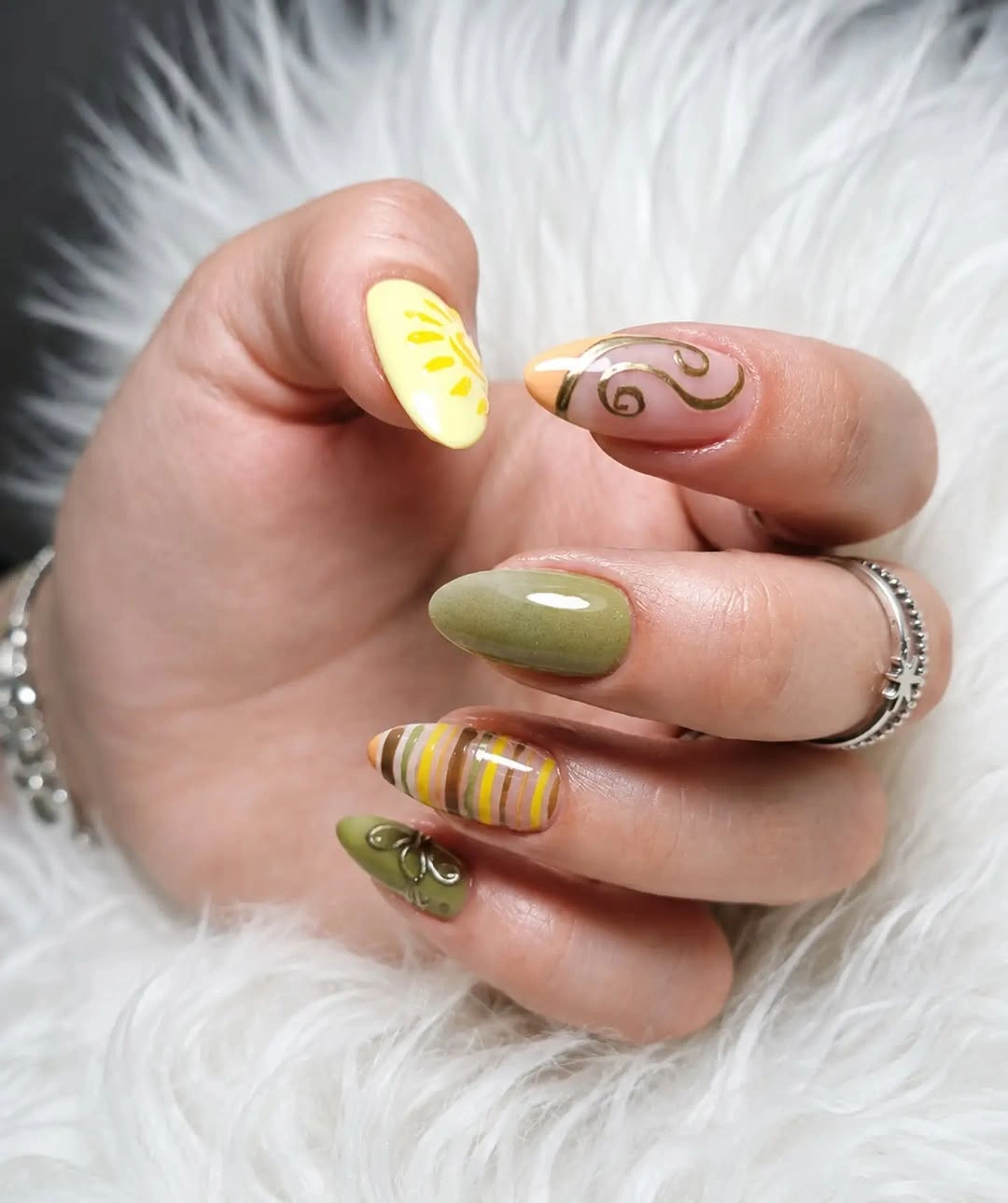
Olive and yellow mismatched nail accents
This medium oval set takes a different route by giving each nail a small role within the same olive-and-yellow palette. One finger is a muted green solid, another carries pale yellow strokes, a third uses warm horizontal bands, and a smaller green nail has a delicate looped accent. The colors repeat even when the motifs change, which is why the mismatched arrangement still feels designed.
For a calmer version, keep the olive solid on several nails and choose either the striped accent or the pale yellow detail, not both. A short oval can carry the same idea if the lines are widened slightly and the smallest marks are reduced. The color relationship works with cream, brown, and muted gold accessories, while the varied placement adds personality without needing a large statement nail.
Mixed motifs are fun, but they can become noisy when each nail introduces a new color or scale. Repeating olive and yellow is the stabilizing choice, so keep those two tones present even if you remove the tiny botanical-looking mark. Small linework also needs occasional attention as the edge grows out; solid nails can stay simple while the accent fingers receive the most care.
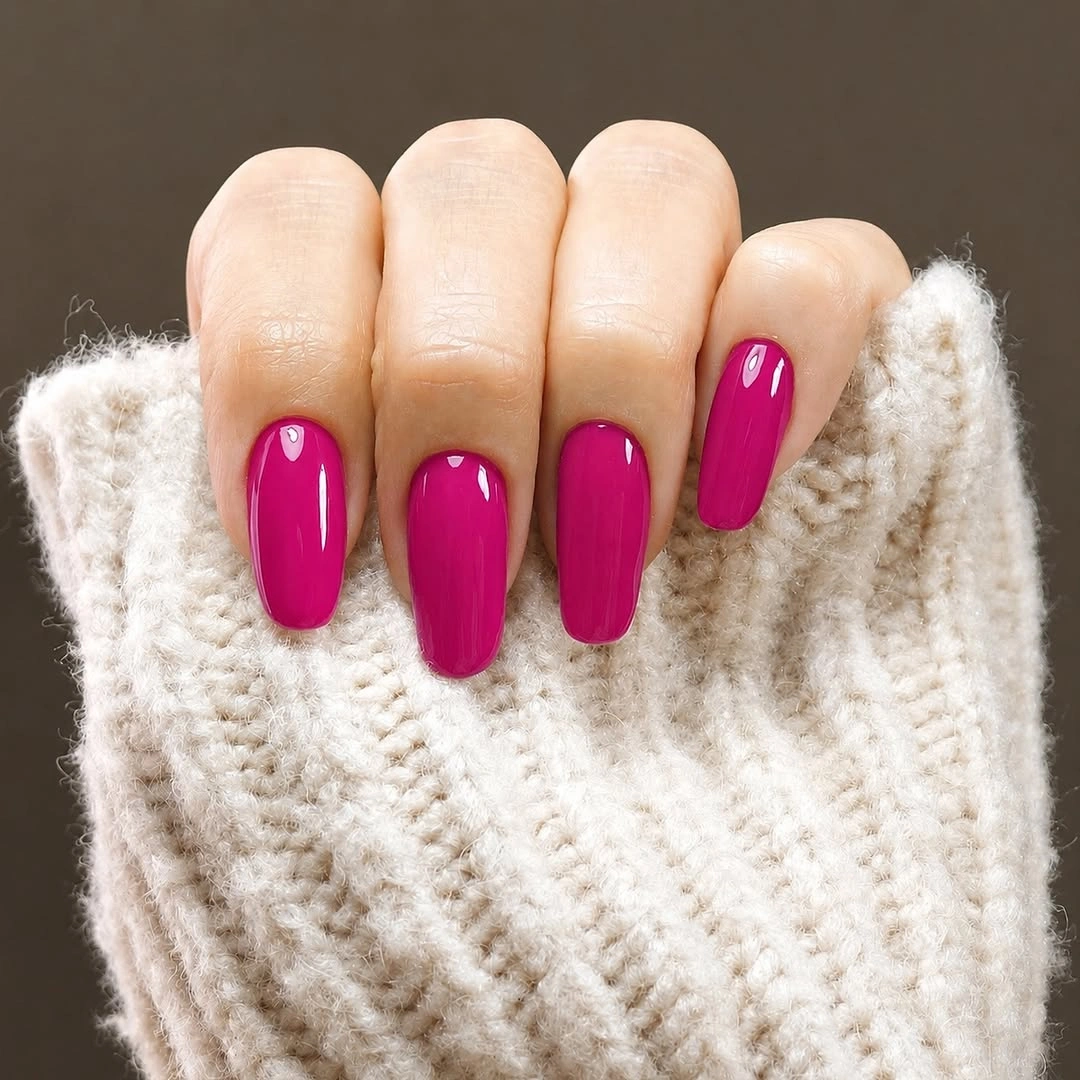
Vivid fuchsia on compact rounded squares
Short rounded-square nails make the saturated fuchsia-pink color feel direct rather than overextended. Every visible nail is glossy and solid, with no art to interrupt the bright surface, so the manicure reads as a confident color choice against the neutral knit around the hand. The compact shape is important because it gives the vivid shade a clear boundary and keeps the overall proportion approachable.
If you want the color but prefer less intensity, use the fuchsia on two accent nails and place a softer pink or milky neutral on the rest. A short oval would make it rounder, while a crisp square would give the shade a more graphic edge. The saturated tone can also work with black, cream, denim, or warm brown without needing a coordinated print or additional decoration.
Solid vivid polish leaves little room for uneven edges, so the finish and outline deserve attention during wear. On the other hand, the lack of art makes small repairs less complicated than a multi-motif design. The result is a useful reminder that fall nail trends can include a bright accent when the length stays compact and the surrounding styling lets the color stand on its own.
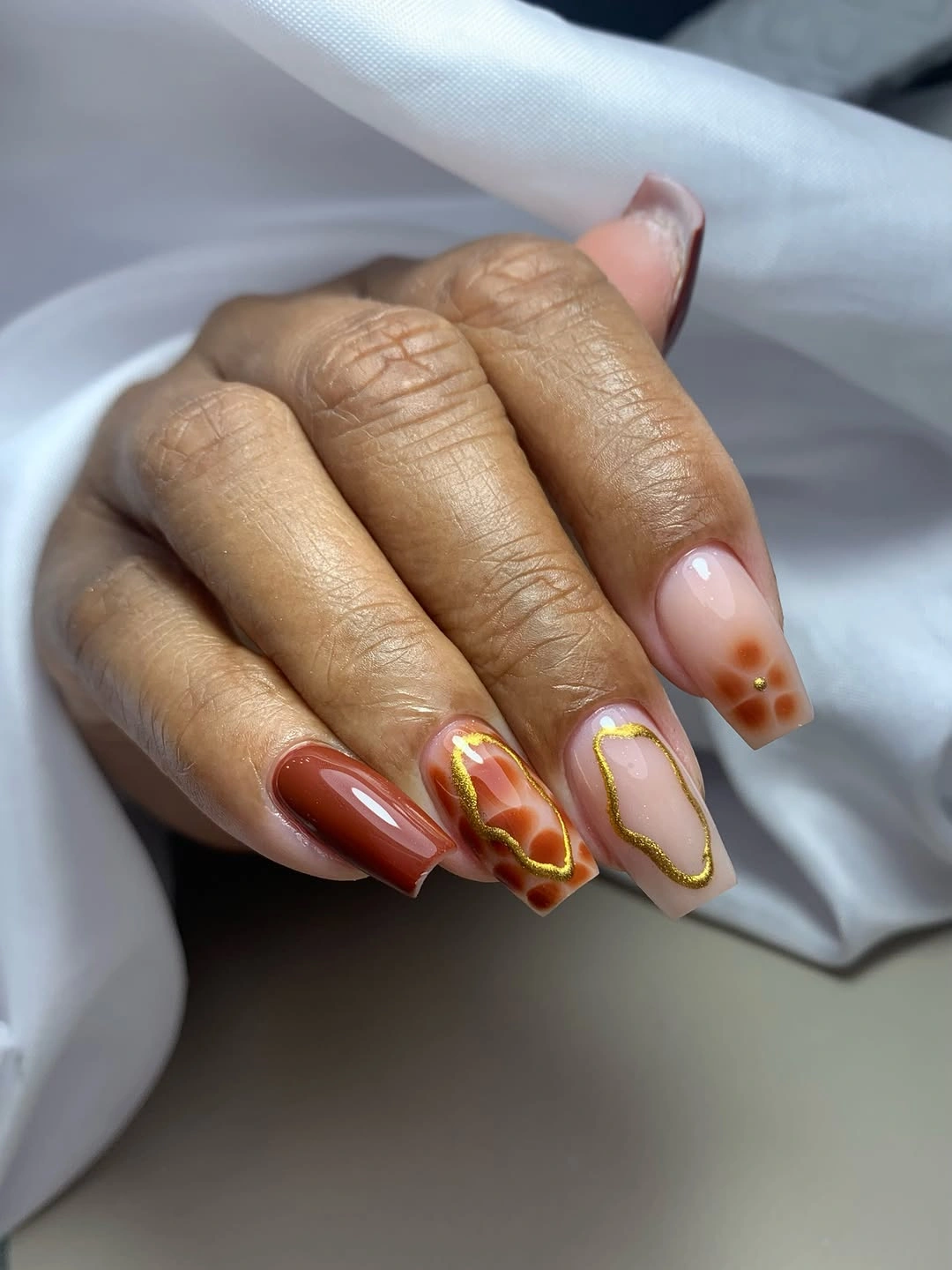
Rust polish with one framed focal nail
Warm rust-brown solids establish the palette here, while one pale nail uses a dark and bright outlined frame to create a center of interest. A smaller spotted accent appears nearby, but most fingers stay simple, so the decorative nail reads as punctuation rather than the entire story. The medium square shape gives the frame a stable canvas and lets the solid rust color carry the seasonal weight.
To adapt the look, keep the rust color on most nails and reserve the outlined detail for one finger. The pale accent can be left open in the middle, bordered with one warm line, or replaced by a few small dots if intricate framing feels too demanding. A rounded square would soften the geometry, while a medium almond would make the same rust-and-neutral contrast feel more fluid.
The focal nail requires more precision than the solid companions, and a complex border can become harder to read as it grows out. Keeping the color family narrow helps the set stay cohesive even if the accent is simplified. The practical advantage is that the most involved work is concentrated in one place, so the manicure can still feel special without making every finger equally high-maintenance.
Deep plum gloss on short rounded squares
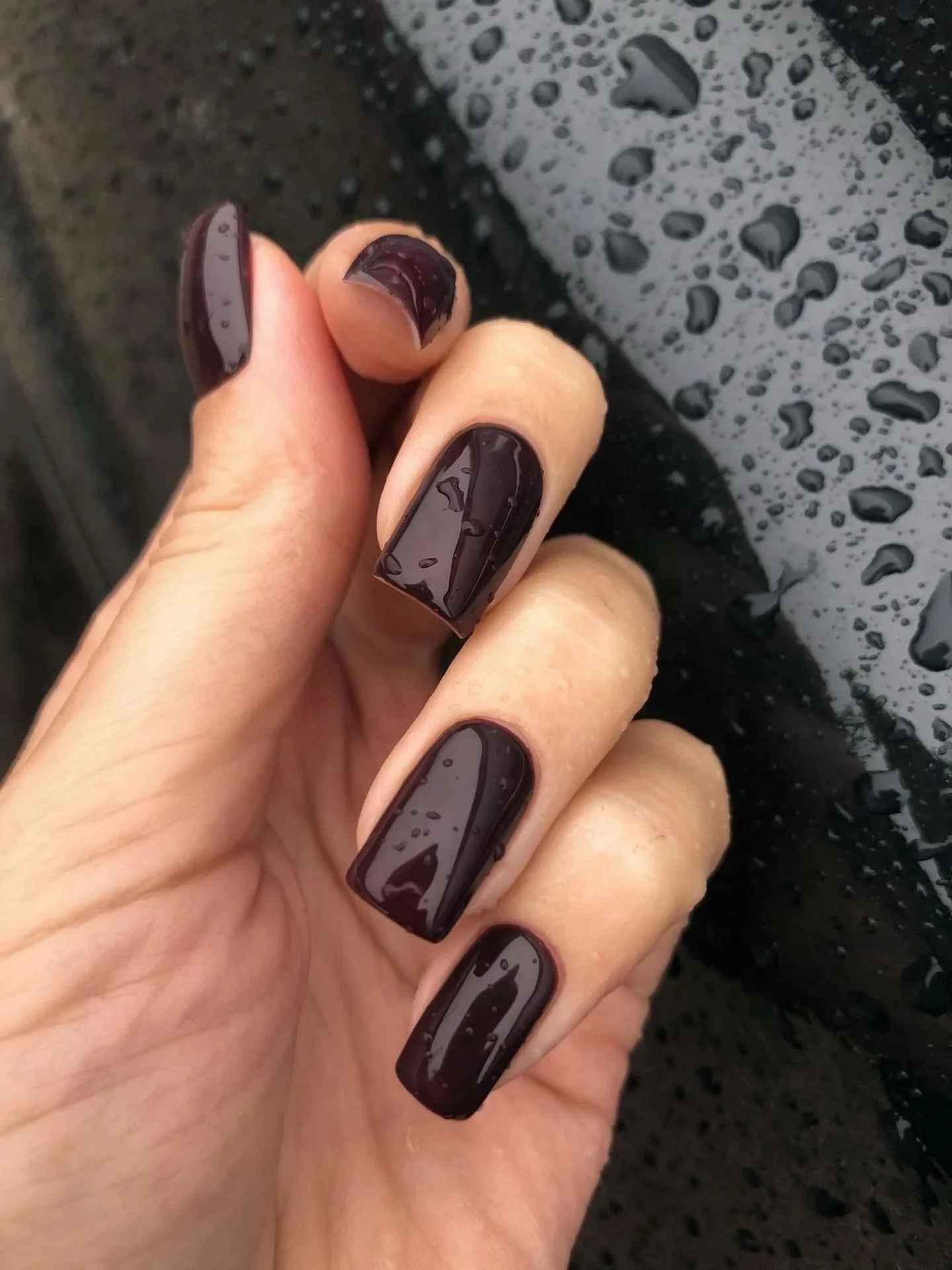
This compact manicure is built from a very dark plum-brown glossy color that can look nearly black in shadow and warmer where the highlights catch. The rounded-square outline keeps the depth of the shade controlled, while the uninterrupted surface makes the undertone more noticeable than it would be under busy art. The wet-looking surroundings intensify the shine, but the manicure itself remains a simple solid.
A short square is the easiest way to wear the color if you want a dark neutral without a dramatic silhouette. Move toward a muted plum or warm espresso if near-black shades feel too strong, or add one sheer nude accent to open the set. The color can sit beside charcoal, cream, rust, olive, and denim, making it flexible even though the finish is visually bold.
Dark gloss tends to show surface marks and the line of grow-out clearly, so the clean outline matters more than extra decoration. The benefit is that short length reduces the intensity and makes the shade practical for daily routines. If you want the same depth with less maintenance pressure, a softly rounded shape and one consistent layer of color will keep the look calm and intentional.
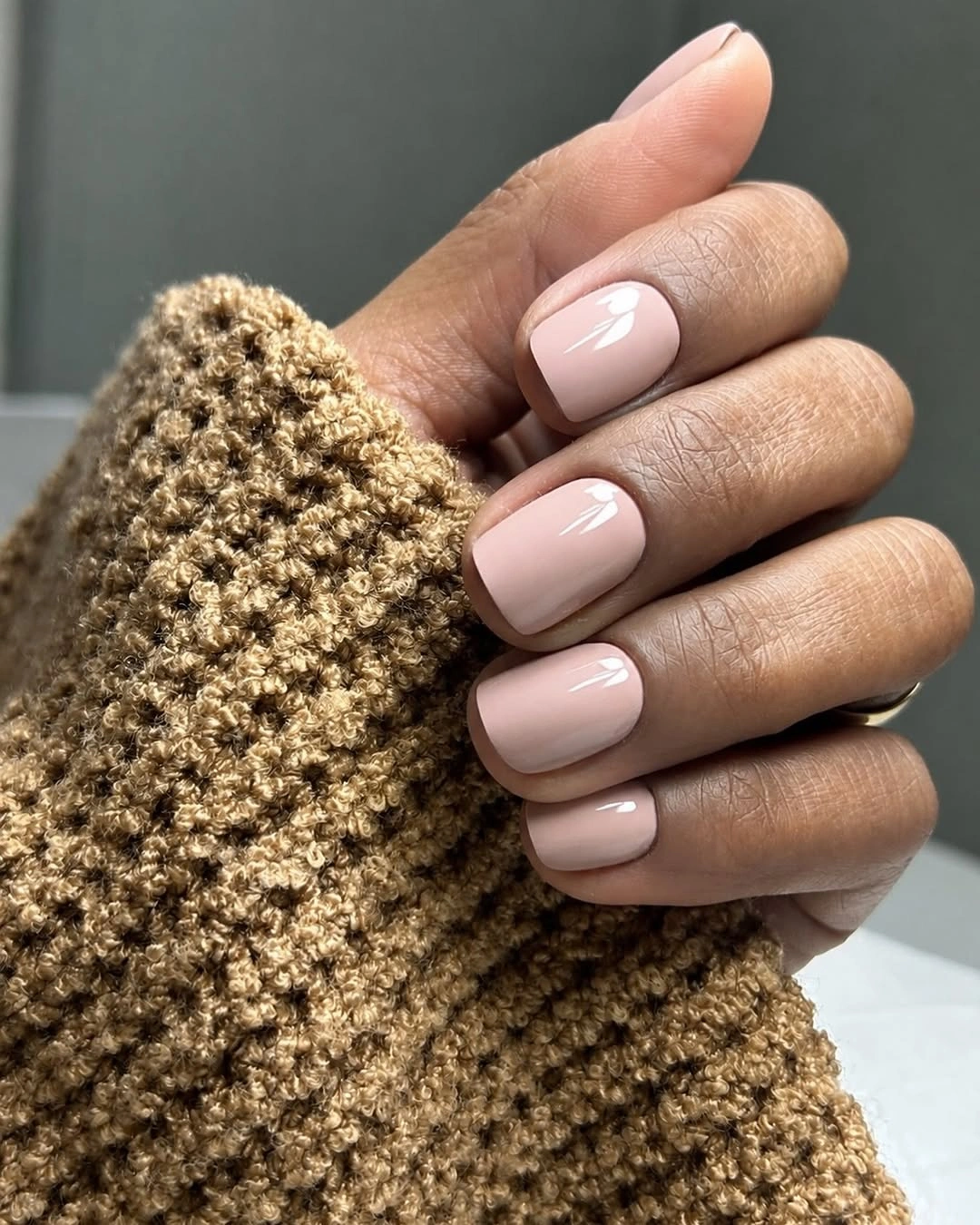
Milky pink gloss with cozy texture
Short rounded-square nails in pale milky pink offer the quietest solid color in this collection. The gloss is soft rather than reflective, and the warm knit background gives the light shade a seasonal context without adding any nail art. Because every visible nail follows the same compact outline, the manicure feels clean and considered even though the color remains close to a neutral.
This idea is easy to personalize through proportion instead of decoration. Keep the short rounded square for the most practical version, move to a short oval for a softer line, or add one muted brown tip if you want a clearer fall reference. Milky pink works beside cream, camel, chocolate, gray, and black, so it can remain in rotation beyond one particular outfit or occasion.
The pale surface puts attention on the cuticle line and any unevenness, which is the main realistic limitation. It also makes the manicure a useful reset between richer colors or detailed patterns. Choose the shade for its gentle contrast against the skin and clothing rather than trying to force drama; the value of this look is the quiet, light-catching finish on a comfortable length.
Cobalt and yellow geometry over nude
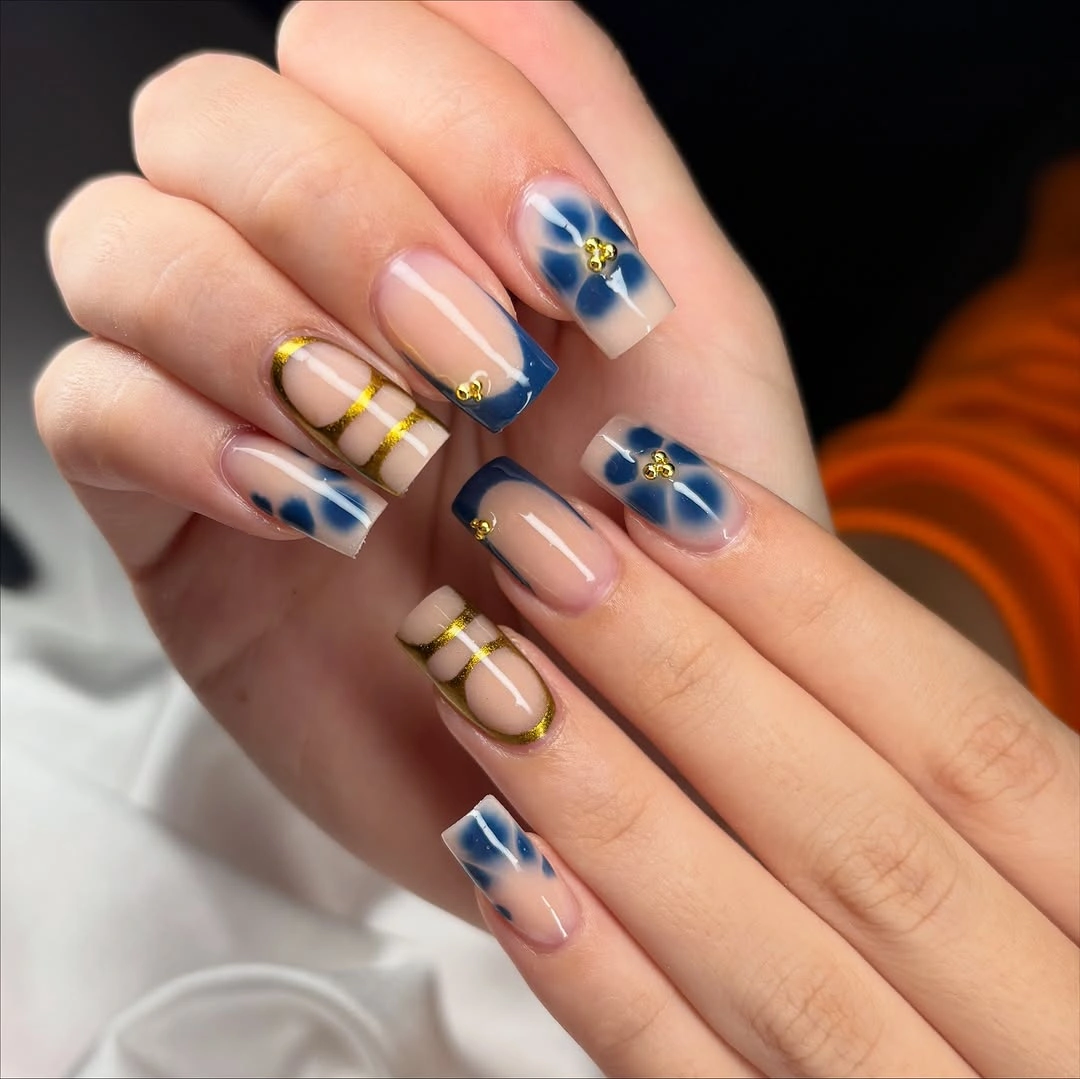
Medium square nails give this design a clear graphic structure: translucent nude sections sit beside deep cobalt-blue blocks, narrow yellow stripes, and small blue accent shapes. The cooler palette stands apart from the browns and olives in the collection, but the open base prevents it from feeling fully covered. Each color has a job, with blue providing weight and yellow creating small points of energy.
For a shorter adaptation, keep the nude base and use blue on two tips or one side panel, then reduce the yellow to a single narrow line. A rounded square would soften the strict geometry without changing the color relationship, while a simple blue accent nail can preserve the contrast if the smaller canvas cannot support several sections. The design is strongest when the spacing stays intentional.
Graphic panels are visually clear but less forgiving when lines drift or when several small accents compete. The nude space is therefore more than a background; it gives the eye a place to pause and keeps the blue from dominating every finger. If you want a lower-maintenance version, repeat one blue shape and leave the yellow for only one or two nails rather than removing the entire concept.
Bright red-pink on medium almond nails
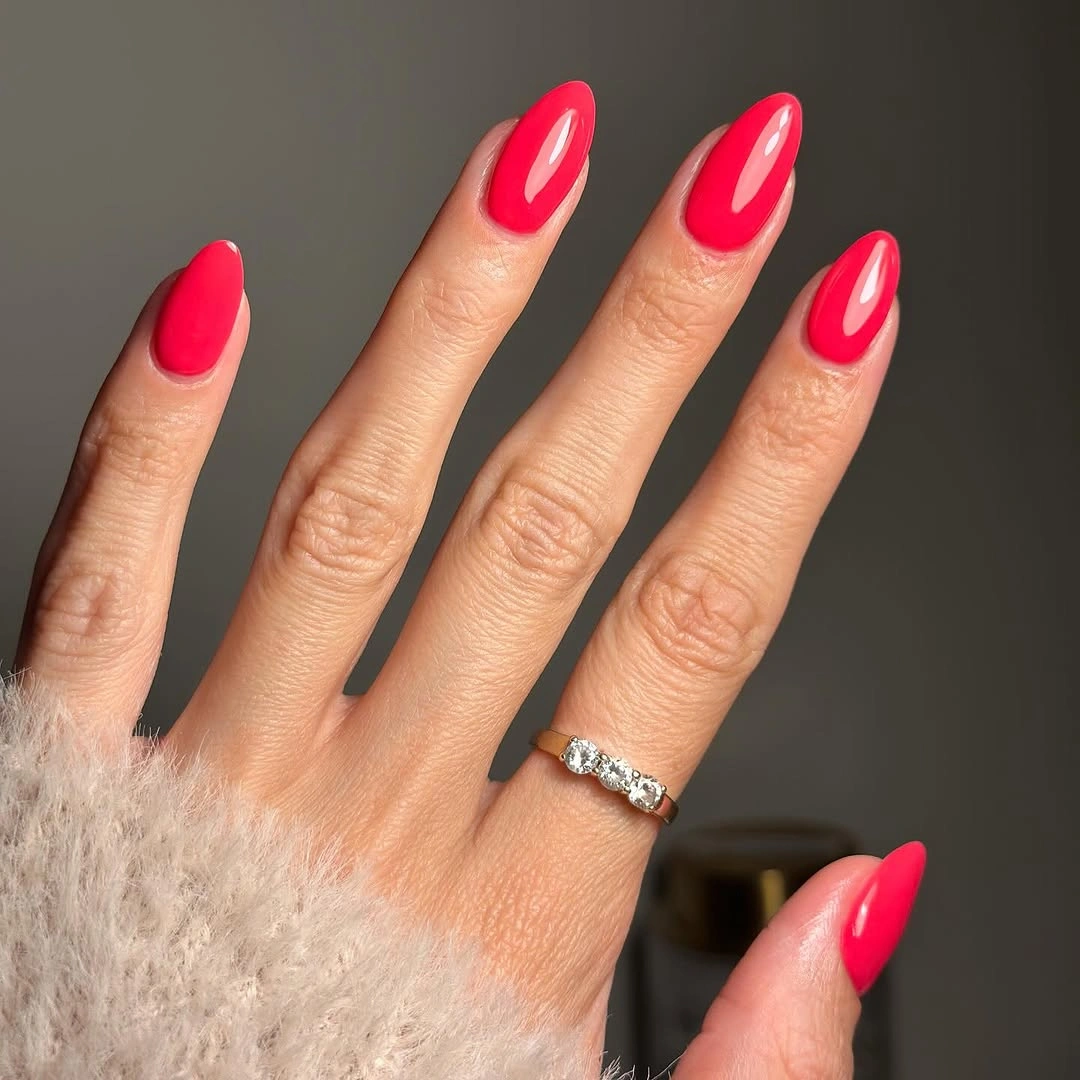
This medium almond set is a full-color statement in vivid red-pink, with the same glossy shade covering each visible nail. The almond outline softens the intensity slightly, while the saturated color keeps the manicure unmistakably bold. There are no accents to compete with the surface, so the smooth reflection and even taper create the visual rhythm from finger to finger.
Use a short oval or rounded almond if you want a friendlier proportion, or keep the medium length when the goal is a stronger silhouette. The color can be worn alone because it already provides contrast, but one sheer pink accent would make it quieter without changing the overall direction. It pairs easily with neutrals, black, denim, and warm brown, so the bright shade does not require a themed outfit.
High-saturation gloss makes chips, uneven side edges, and grow-out visible, which is the practical cost of a simple statement manicure. The advantage is that there is no complicated pattern to protect or recreate. Keep the shape consistent and let the color remain uninterrupted; a clean, shorter version can deliver the same energy with less day-to-day friction.
Brown micro-French on a pale base
Short-to-medium nails combine a sheer nude base with narrow dark brown tips and tiny brown marks near selected edges. The pale center remains the dominant area, so the dark detail reads as a modern seasonal outline rather than full coverage. Rounded-square proportions keep the idea approachable, and the slim tip follows the edge closely enough to preserve the feeling of length.
For an even simpler version, use the brown micro-French on every nail and remove the tiny marks, or keep the marks on one accent finger only. The concept also translates to a short almond, although the square edge makes the brown border look more graphic. Because the base is light, the manicure can sit beside both warm fall colors and cooler gray or black clothing without visual conflict.
The narrow tip rewards careful placement, but it is less demanding than a full patterned surface. As the manicure grows, the nude gap near the cuticle will become more obvious, so a balanced outline and consistent width matter. If your nails are very short, slightly reduce the dark band rather than widening it; preserving the pale center is what keeps the design light.
Maximal burgundy accents on long almonds
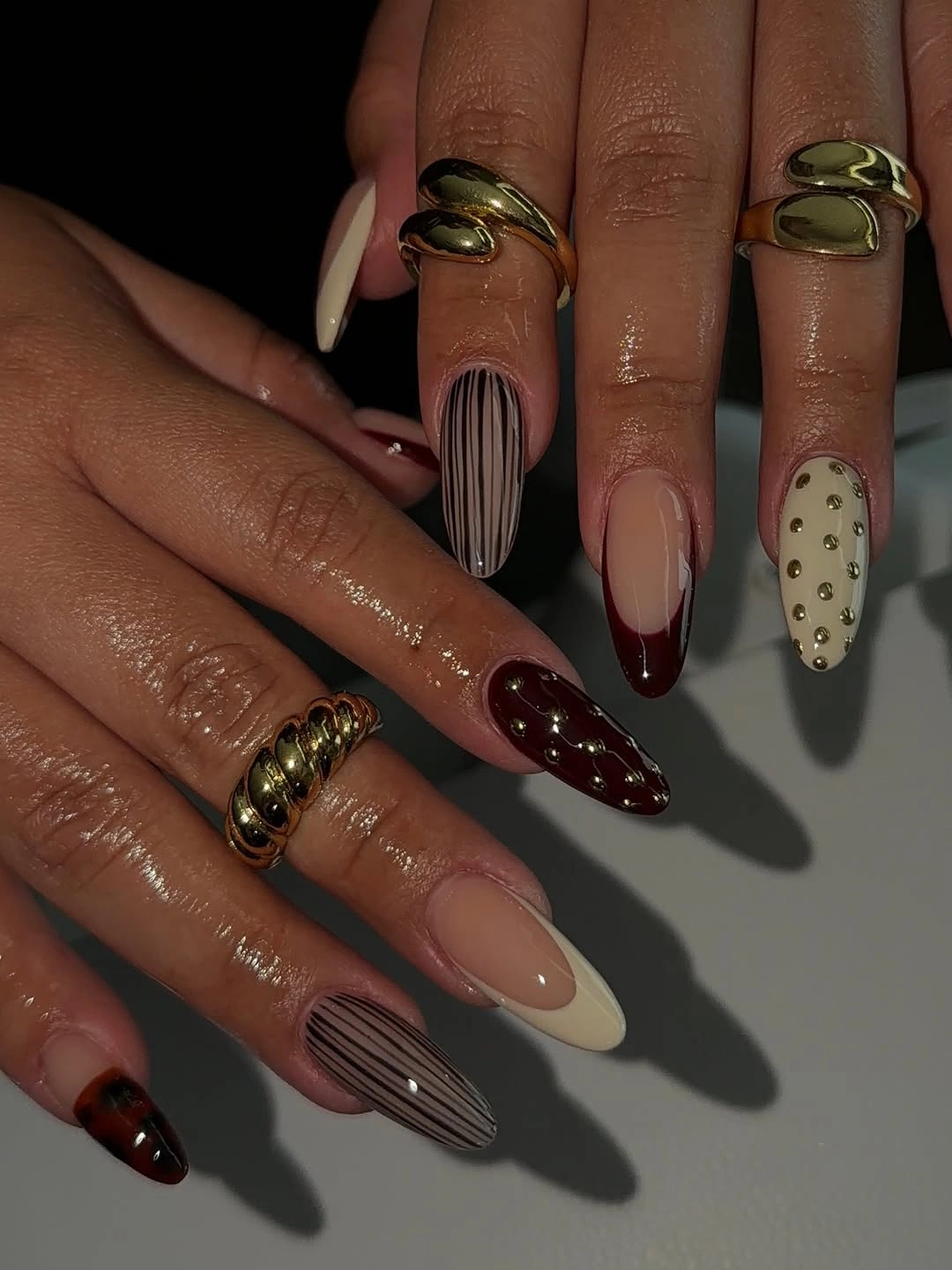
Long almond nails support the most layered design in the collection, mixing burgundy, brown, nude, stripes, dots, narrow bright lines, and small gold-like accents. The details change from finger to finger, yet the repeated length and related dark palette prevent the set from looking completely scattered. Some nails are nearly solid, while others use negative space and thin linear elements to create pauses.
The easiest way to borrow the idea is to choose one solid burgundy base, one nude accent, and one detail such as stripes or dots. Limiting the strongest motifs to two nails gives a similar editorial mood on a medium almond, and the dark palette still feels rich when the pointed length is reduced. Let one color repeat across the set so the edited version keeps the same visual link.
Maximal nail art has a clear upkeep tradeoff because every small line and accent adds another place where wear can be noticed. The long almond also requires comfort with an extended tip, especially during close hand tasks. If you love the layered effect, treat it as a focal manicure for a particular season or event; if you need practicality, keep the outline and simplify the interior.
Short glossy red with an outdoor finish
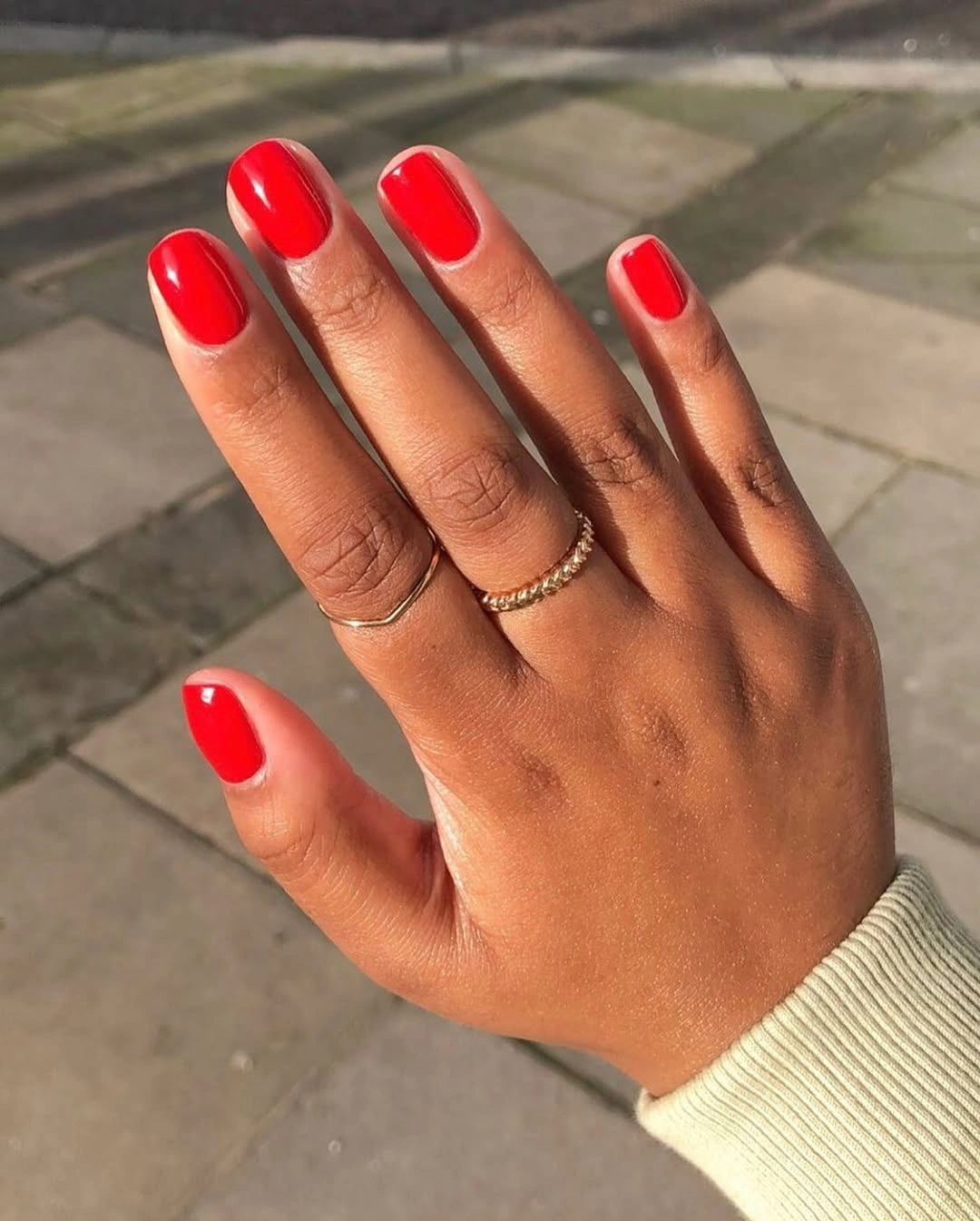
Compact square nails in glossy bright red show how a simple manicure can still feel current when the proportion is deliberate. The color is even across the visible hand, the corners are softly squared, and the outdoor light makes the red look especially vivid. Nothing competes with the shade, so the clean outline and smooth reflection become the details worth noticing.
A short square is the practical default for this color, but a rounded square can make the edges gentler if you prefer less graphic definition. You can also use the red on a few accent nails and pair it with milky pink or sheer nude, although the full-color version is the clearest expression. It works with neutrals, denim, and darker fall layers without needing extra pattern.
The main limitation is the visibility of surface and edge changes: bright red does not hide uneven coverage or a chipped corner. That is also what makes the look easy to refresh, because there are no small motifs to match. Keep the length compact, preserve the crisp square line, and allow the red to act as the seasonal accent rather than adding unnecessary decoration.
Chocolate French borders on square nails
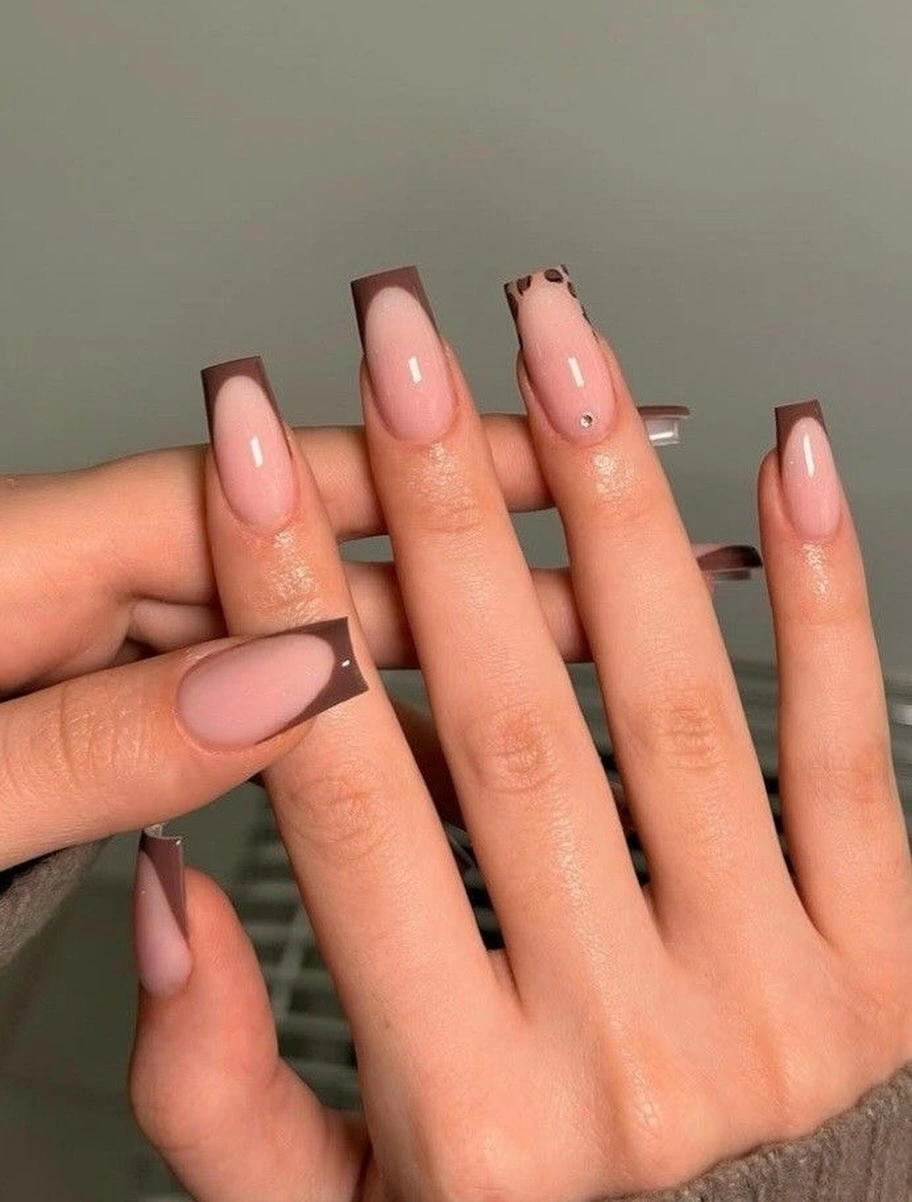
Medium square nails use a sheer nude center and a broad chocolate-brown French edge, with a few small spotted accents placed near the border. The dark color follows the straight tip and gives the manicure an architectural frame, while the nude middle keeps it lighter than a full chocolate coating. The square shape and the strong tip width are equally important to the design’s character.
For smaller nails, narrow the brown edge and leave the tiny spots on one accent finger. A rounded-square shape can soften the hard border, while a medium almond would turn the same idea into a more flowing brown French. The neutral center makes this color easy to pair with cream, camel, burgundy, or black, so the manicure can move between casual and dressier styling.
A broad dark tip can visually shorten a small square, which is the main proportion issue to watch. Keeping the center open and the band even prevents the design from becoming blocky, while the spotted marks should remain sparse enough to read as accents. The payoff is a clear seasonal outline that feels more distinctive than a plain French without relying on a dense art pattern.
Chocolate brown with cool blue dots
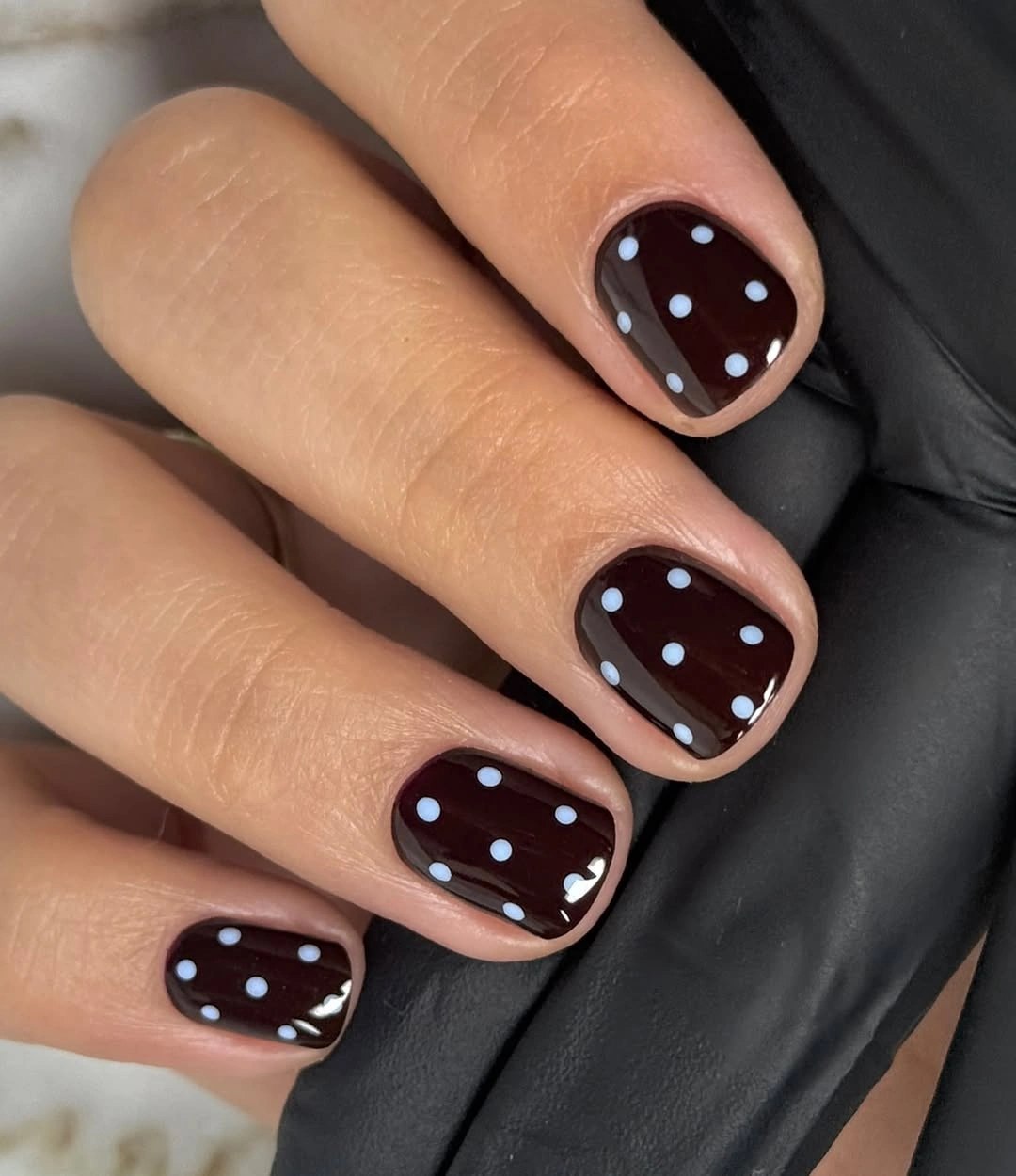
Short rounded-square nails are coated in deep chocolate brown and punctuated by evenly spaced pale blue dots. The warm base remains dominant, while the cooler dots introduce a small surprise that changes the mood without adding a second large color block. Generous negative space between the dots keeps the compact nails readable and prevents the playful accent from becoming a crowded pattern.
To adapt the look, keep the blue dots on one or two nails and wear the chocolate shade solid on the rest. You can use fewer larger dots for a stronger graphic effect or smaller dots for a quieter detail, but the spacing should stay deliberate. A short oval will make the set softer, while the rounded square preserves the tidy, slightly retro character of the visible manicure.
The design is relatively easy to maintain because the motif is simple, although dark brown will reveal chips and the pale dots may need refreshing if they lose their edges. The cool accent works best when the base still occupies most of the nail, so avoid covering the surface with too many marks. The result is a warm neutral with a small color twist that feels personal rather than overworked.
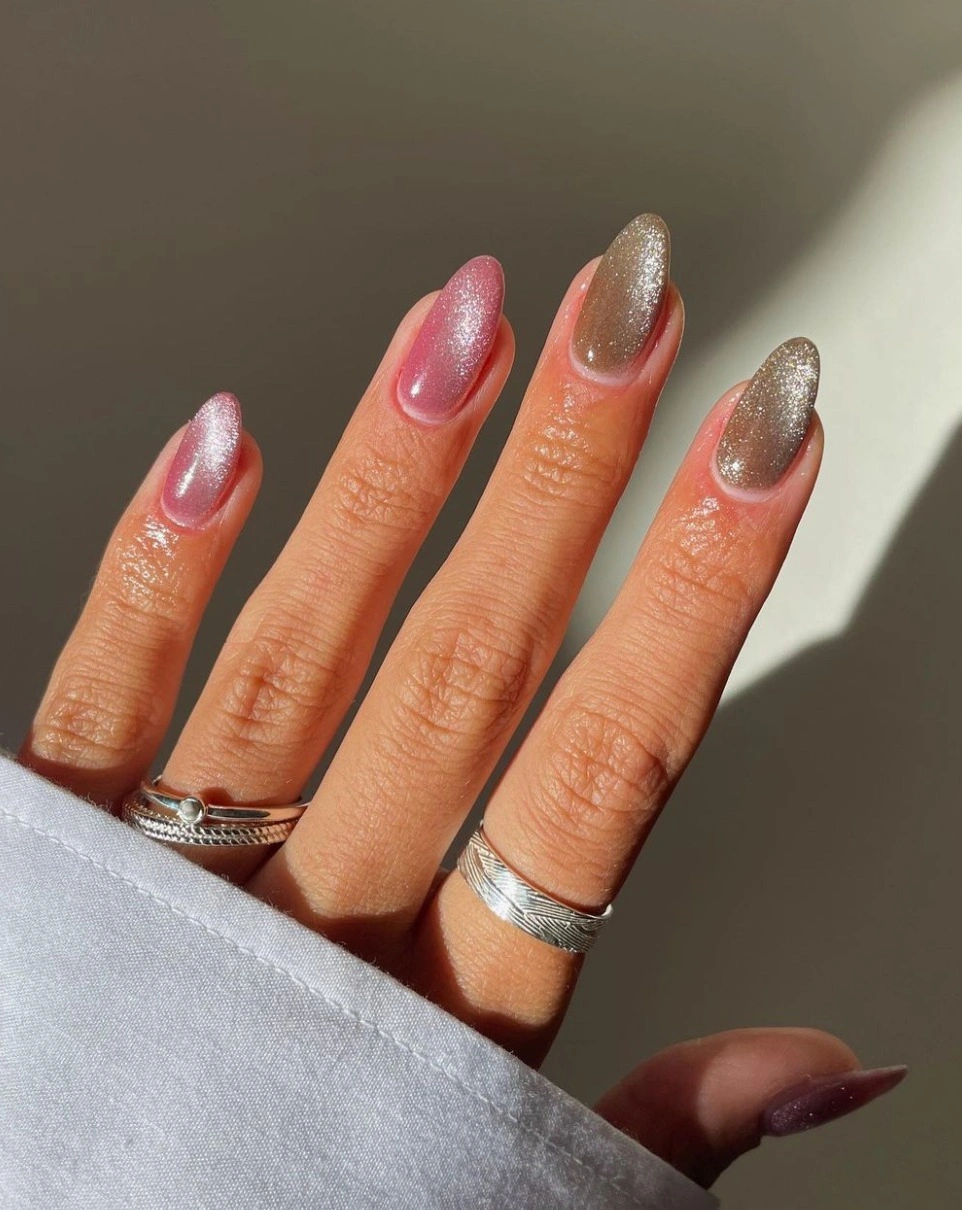
Rosy taupe shimmer on almond tips
Medium almond nails close the collection with a soft reflective shift between rosy pink, taupe, and silvery highlights. The color changes gently across the fingers as the light moves, while the elongated outline gives the shimmer a graceful direction without any painted motif. It is a quieter type of statement than vivid red or dark plum because the interest appears through surface movement rather than contrast.
A shorter oval can keep the same rosy-taupe light play if you prefer less length, and the finish does not need accent art to feel complete. The color sits comfortably beside white, gray, chocolate, muted olive, or pale pink, making it a useful bridge between the more graphic designs in the collection. If you want one detail, add it to a single nail and keep the rest reflective and clean.
Reflective color is strongest in directional light, so it may look more subdued indoors or under flat lighting. That natural variation is part of the appeal, but it also means the manicure will not appear identical in every setting. Keep the shape balanced and the surface smooth, and let the gentle shift between pink and taupe provide the finish rather than adding a competing pattern.