Toe color has a small canvas but a surprisingly loud effect: a glimpse between a sandal and the ground can change the temperature of an otherwise ordinary outfit. The challenge is not finding a shade that attracts attention; it is giving that shade enough support that the foot still looks composed when the light, shoe, or background changes.
Decide first whether the big toe should carry the visual weight or whether repetition will make the result cleaner. Keep the smaller nails subordinate when detail is concentrated, and let a uniform surface stay genuinely uniform when color alone is doing enough. This scale check makes a pedicure easier to maintain and easier to wear with denim, leather, cream, and other fall textures.
Luminous Lime Green on the Big Toe
A glossy lime-green color turns the squared big toenail into the whole visual focus, with tiny reflective particles making the surface look bright from the center outward. The shade is vivid enough to feel unexpected for fall, but its clean single-color treatment keeps it from looking messy. Nothing competes with the green, so the neat edge and smooth highlight matter as much as the hue.
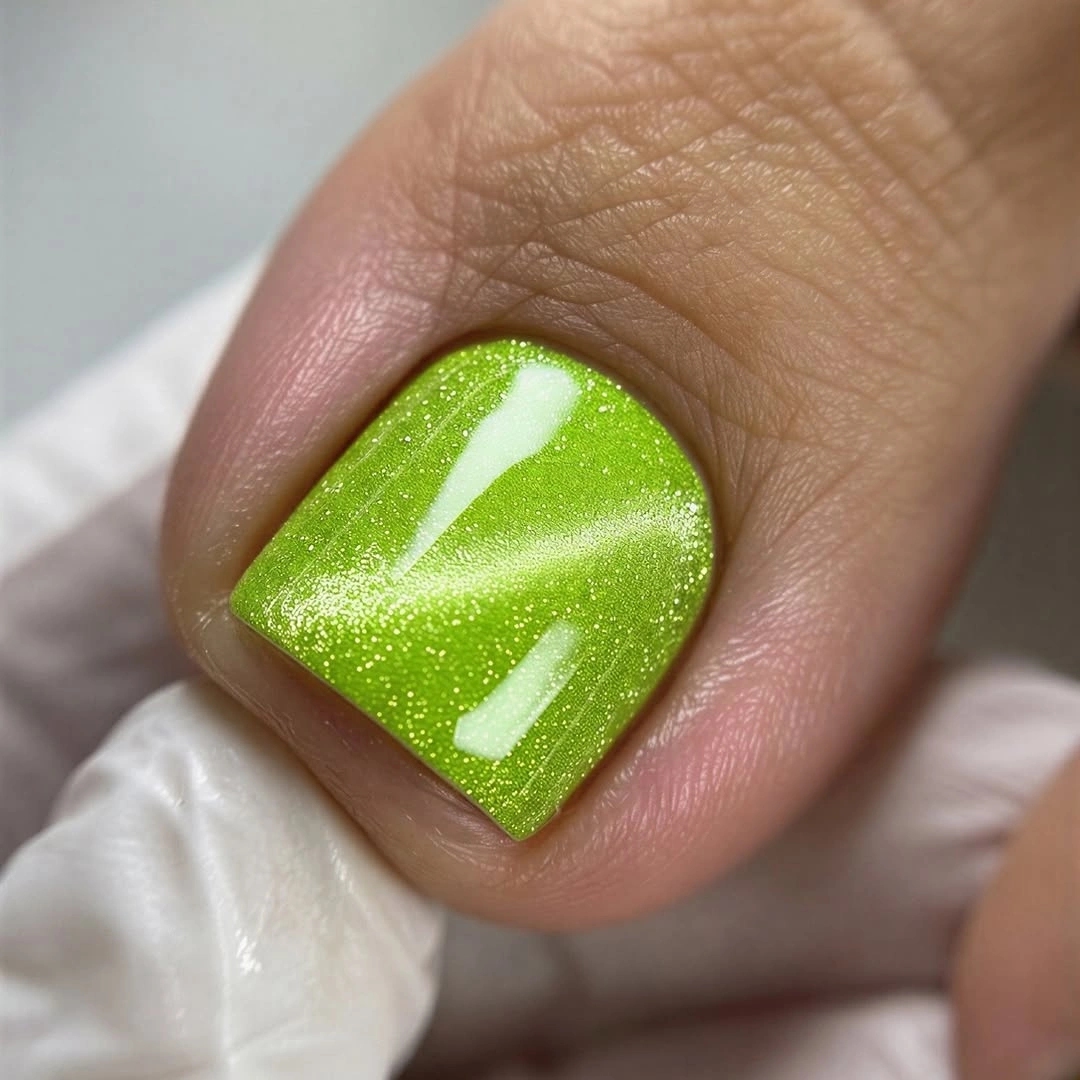
Use this color on every toe if you want a full statement, or keep it on the big toe and choose a softer green for the smaller nails if you prefer a more graduated effect. Brown leather, cream fabric, and dark denim can make the lime feel deliberate rather than purely summery. The compact square edge gives the bright shade a polished frame.
High saturation makes uneven sidewalls easy to notice, so cleanup is part of the look rather than a finishing detail. Fine shimmer may also read differently in shade, which means the color should still appeal when the reflective flash is quiet. Keep the rest of the styling simple if the lime is meant to be the cheerful surprise.
Hot Pink with a Berry-Burgundy Edge
These rounded toes combine vivid hot pink with a deeper berry-burgundy tone along the big-toe edge and on smaller nails. The bright pink brings energy, while the darker color gives it a seasonal anchor that keeps the pedicure from feeling like a leftover summer choice. Because the contrast stays within the red-pink family, the two colors look related rather than random.
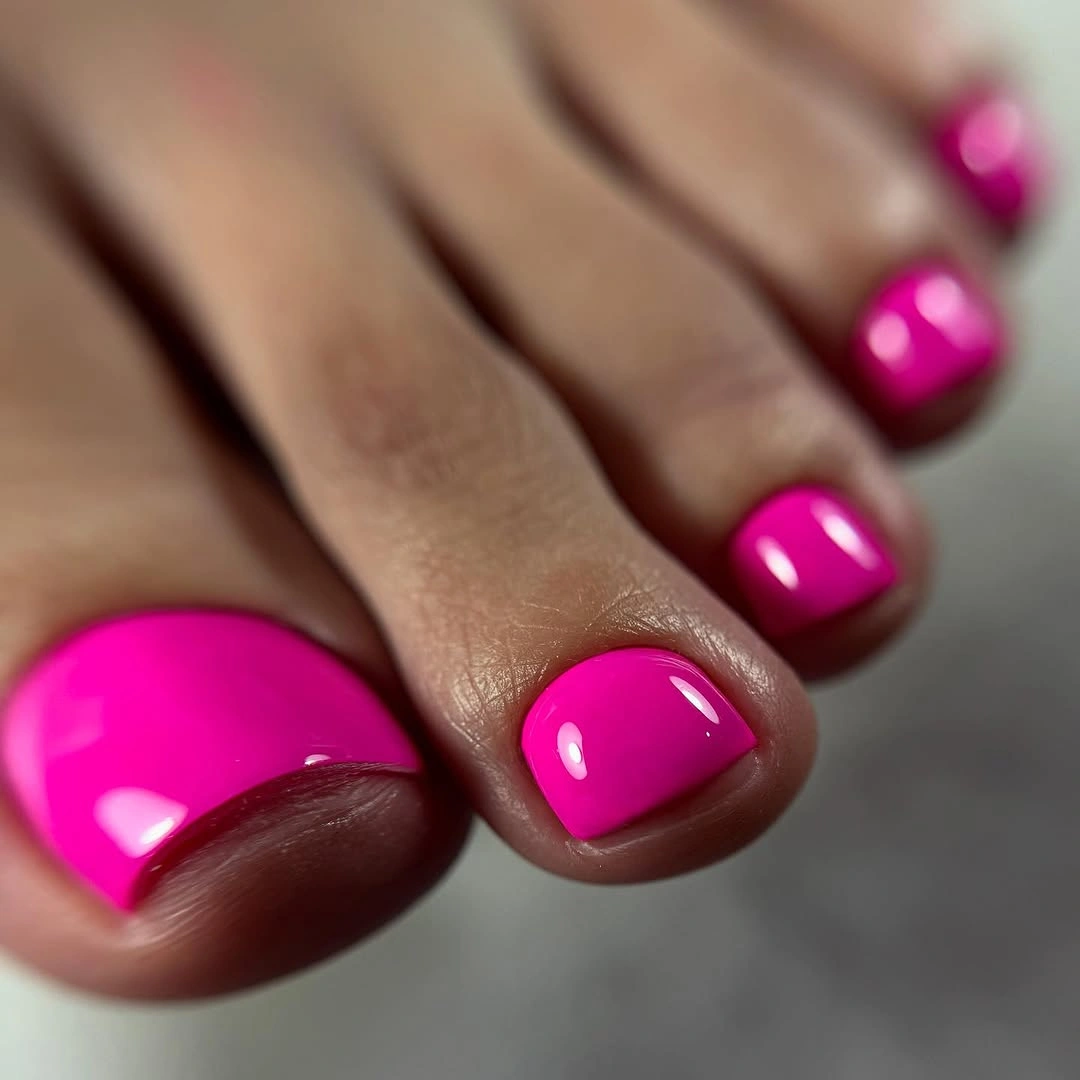
Let hot pink lead and use berry as the supporting shade on the big toe edge or alternating toes. That placement keeps the bright color visible while giving the eye a darker line to follow, and it works well with denim, burgundy clothing, or warm neutral sandals. A fully solid berry big toe would be the quietest adaptation of the same relationship.
Saturated colors show edge wear clearly, especially when two shades meet, so the side boundary needs to stay clean. The rounded shape helps because it keeps the contrast compact and friendly. If the pink begins to feel too loud, deepen the berry rather than adding another color; the existing relationship already has enough movement.
Sheer Nude Toes with One Dark Abstract Mark
A translucent nude-pink base keeps these short rounded toes quiet, while one small dark abstract mark on the big toe gives the pedicure a point of focus. The rest of the nails stay close to the natural color family, so the black or deep brown line looks intentional rather than heavy. This is detail used as punctuation, not as a repeated print.
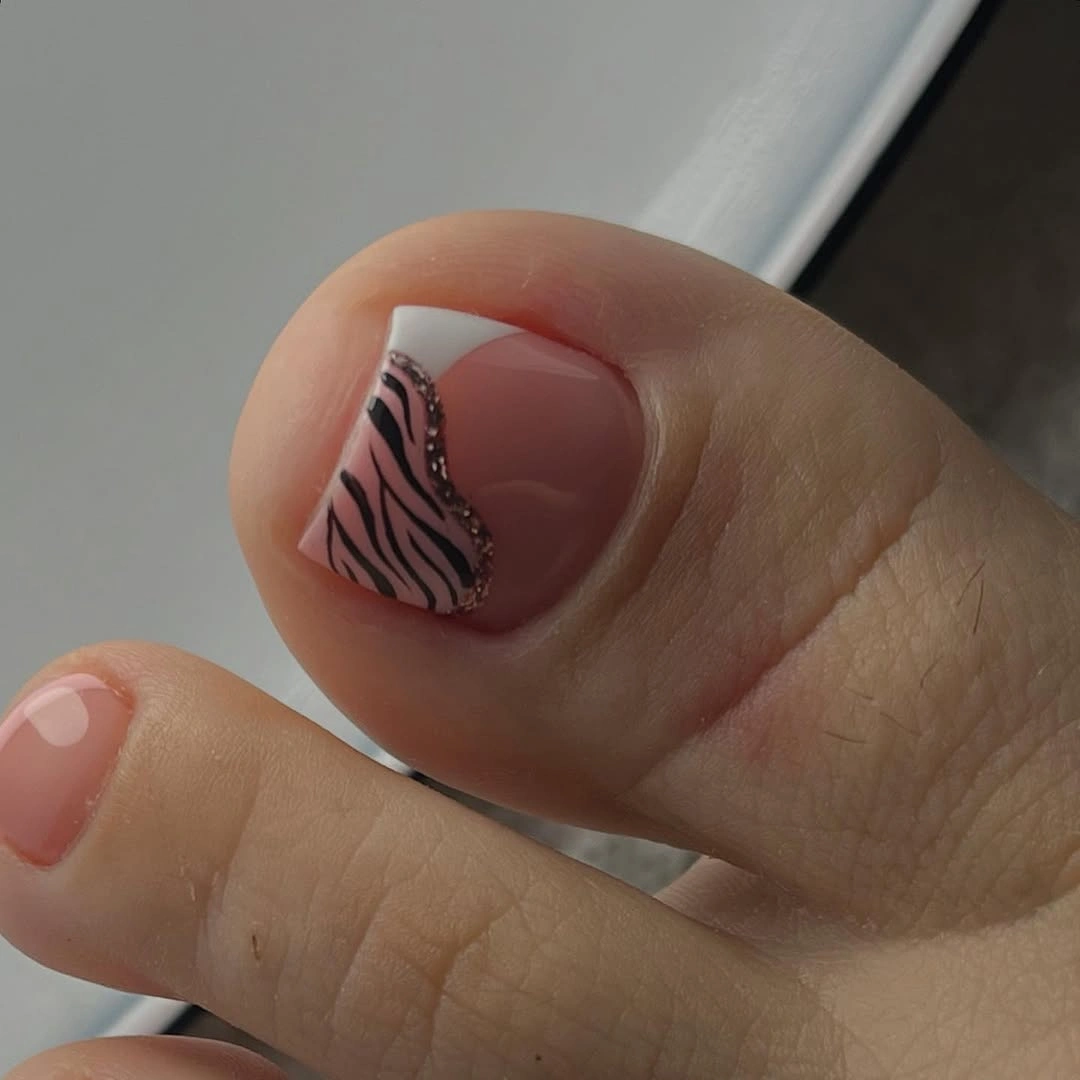
Keep the accent isolated on the big toe and let the smaller nails remain sheer if you want the design to stay understated. A single curved line, narrow striped patch, or tiny dark shape will be easier to read than several miniature marks crowded together. The pale base also lets the pedicure pair with both bright sandals and darker fall footwear.
The tradeoff is scale: small artwork can lose its definition as the nail grows or when the foot is viewed from a distance. That is why the accent should have a clear silhouette and enough contrast against the base. If the design feels too delicate, deepen the nude slightly before enlarging the mark.
Pale Silver Toes with a Jewelry-Like Shine
Compact squared toes are coated in a pale silver or pearl metallic that reflects light smoothly across the big and second toes. The finish makes a simple shape feel dressed up without adding a motif, and the cool color sits naturally beside the small pearl-like accessory near the foot without depending on it. The result is bright, clean, and more polished than a plain white.
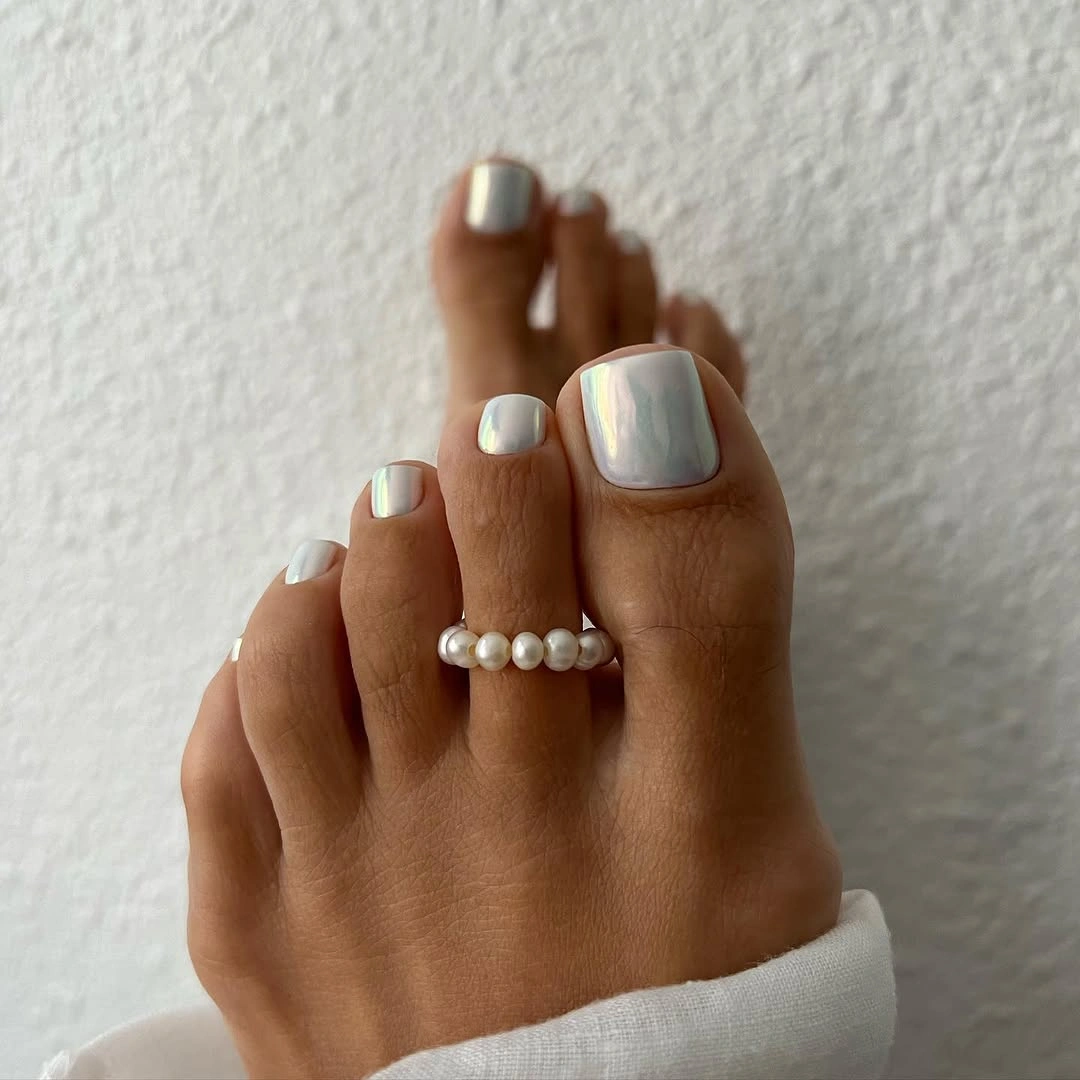
A soft silver works when you want a pedicure that can move from open shoes to an evening setting without a color change. Use it across all the toes for a uniform reflective field, or keep the smaller nails in a milky white if the metallic big toe should lead. Cool silver also gives warm brown clothing a crisp point of contrast.
Metallic surfaces reveal texture and edge wear, so the base should be even and the cuticle line tidy. The reflected light may make the color appear nearly white in one setting and more gray in another, which is normal for this kind of finish. Let the shine be the decoration and avoid adding extra glitter that would blur the clean effect.
Glossy Burgundy for a Simple Fall Pedicure
Short rounded-square toes carry an even glossy burgundy, with the deep wine color doing all the seasonal work. There is no art or sparkle to distract from the rich surface, which makes the pedicure feel confident through consistency. The big toe and smaller nails read as one compact block of color rather than a collection of separate accents.
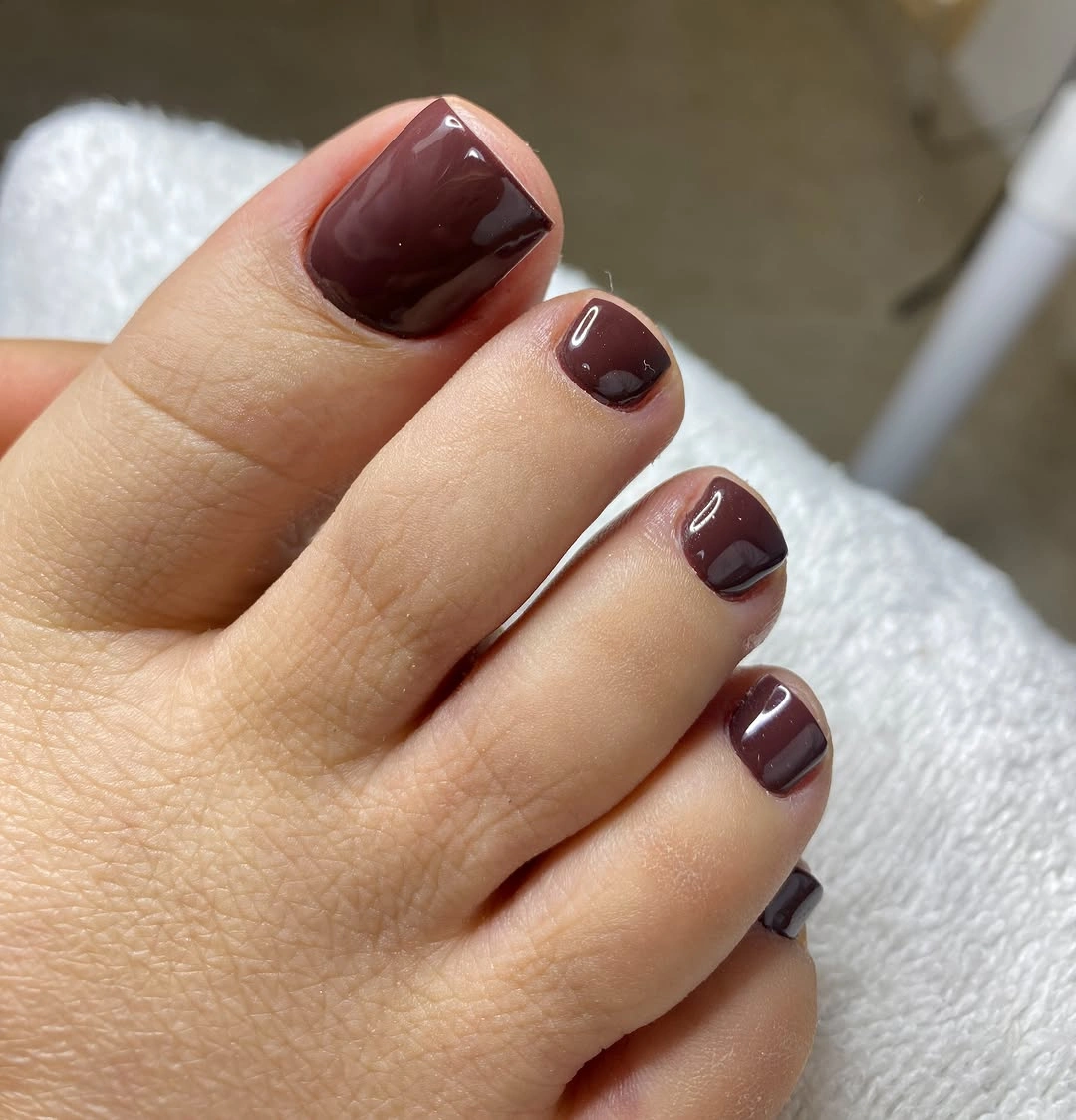
Choose a wine tone with enough red to stay warm, then let the neat shape keep it from looking too heavy. Burgundy works especially well with cream, denim, camel, and black because it adds depth without demanding a matching outfit. If you want a small change, make only the big toe slightly more reflective rather than introducing a new color, as in these fall pedicure ideas.
Dark polish shows chips at the free edge, so the simple finish rewards regular attention to the outline. That maintenance cost is balanced by how easily the color transitions between seasons and occasions. Keep the coverage even and the shape softly squared; the restraint is what makes the shade feel finished.
Buttery Yellow with a Soft Denim Contrast
These short rounded toes use a creamy buttery yellow that looks gentle rather than neon, and the nearby denim makes the pale color feel grounded. The shade brightens the foot without creating a hard contrast against skin, while the compact shape keeps the pedicure casual. It is a light color choice that can move into early fall when paired with blue, brown, or oatmeal textures.
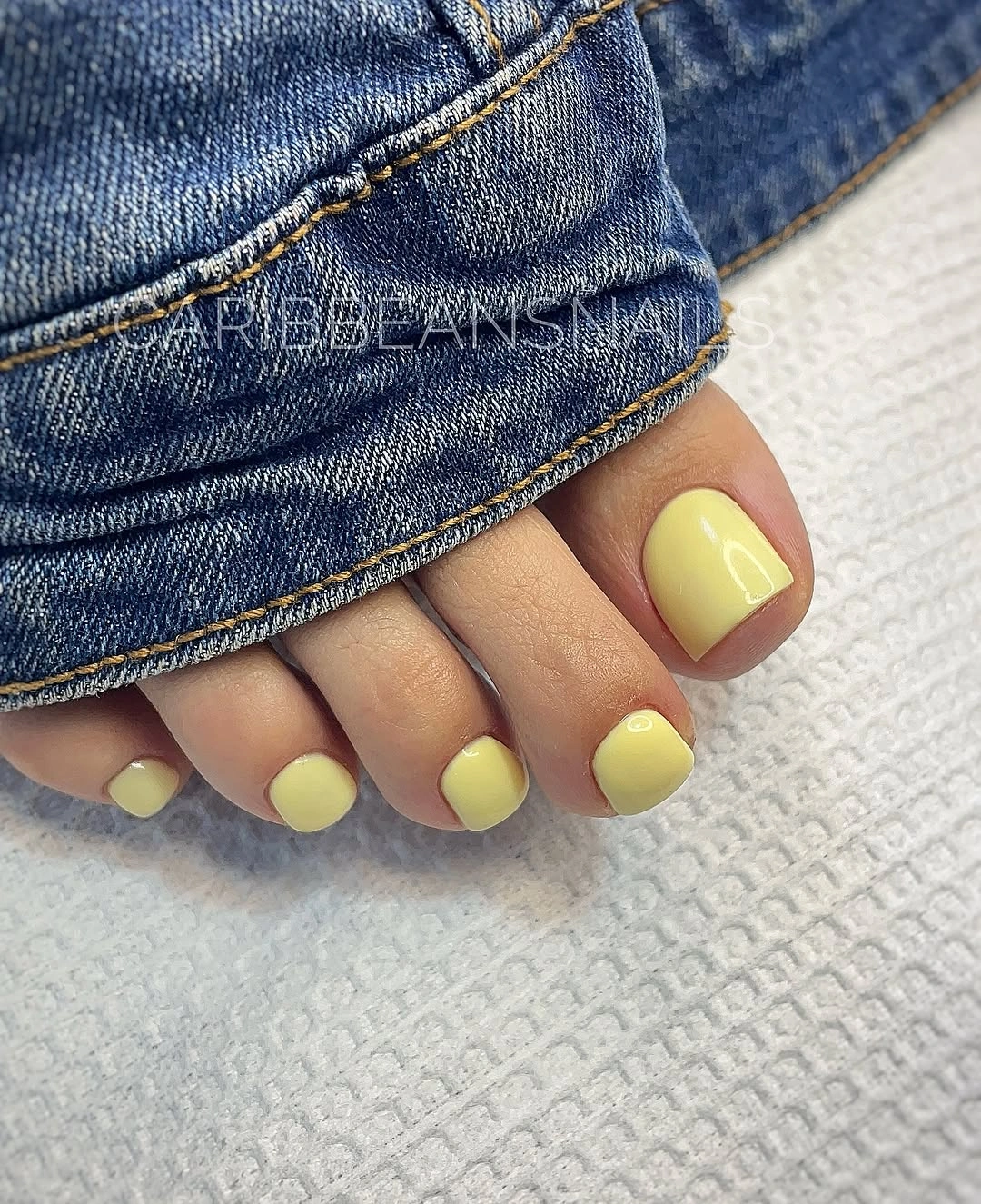
Use buttery yellow across all the toes if you want a friendly color block, or place it on the big toe and choose a creamy neutral for the smaller nails. The denim relationship is especially useful because the blue gives the yellow a cooler frame without changing its warmth. Keep the finish smooth so the soft tone looks deliberate instead of sheer and uneven.
Pale yellow can reveal patchiness more quickly than burgundy, so an even base matters. It also needs enough saturation to stay visible under indoor light; otherwise it may blend into the skin. If you want a stronger fall direction, pair the shade with brown accessories rather than deepening it into a completely different color.
Glossy Cobalt Blue for a Crisp Color Block
Saturated cobalt-blue toes create a clean single-color statement with rounded-square edges and a smooth reflective finish. The deep blue feels strong but not as severe as black, and the pale fabric around the foot makes its clarity easy to see. Because there is no decoration, the even shape and consistent coverage become the design.
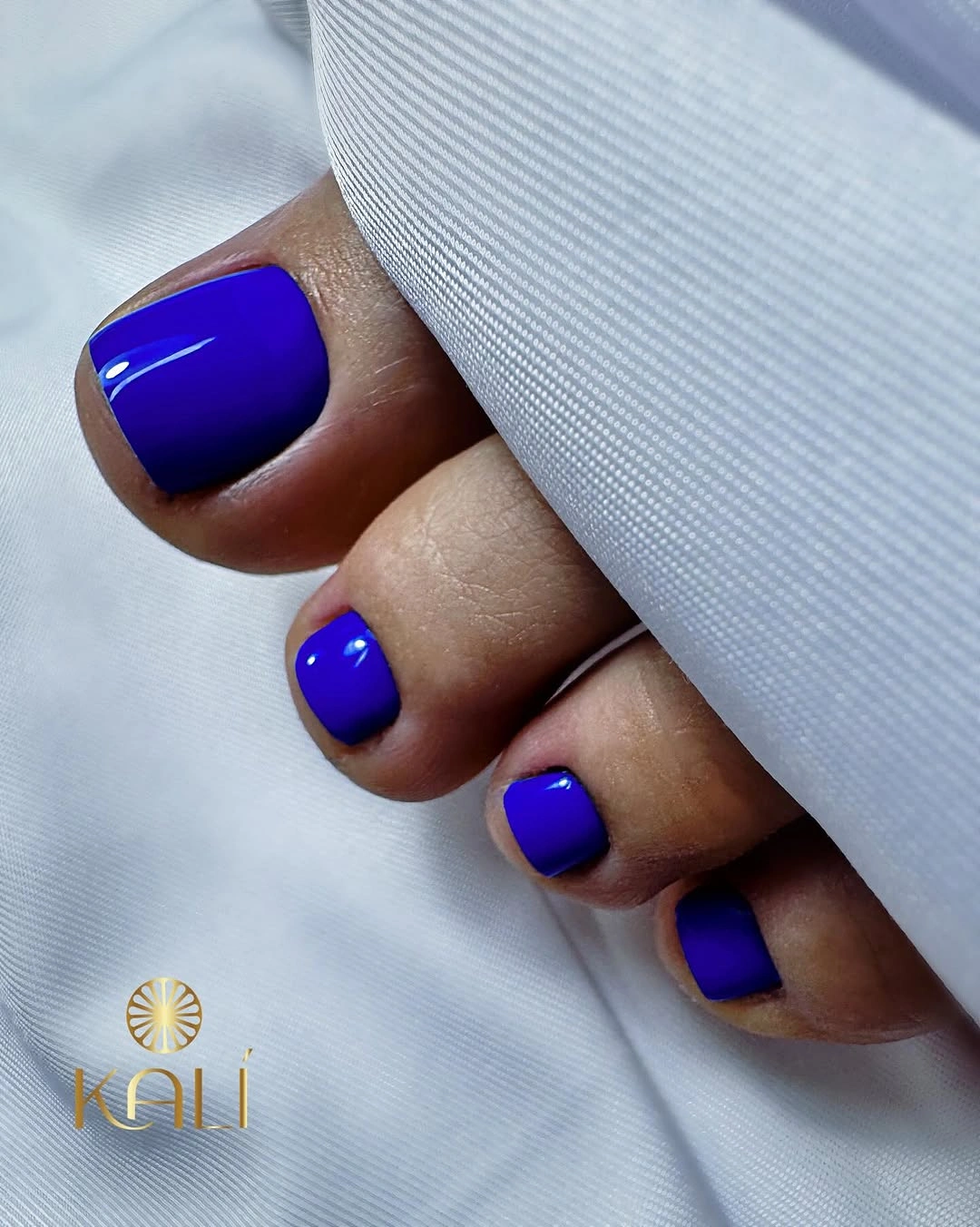
Cobalt pairs naturally with denim, white, gray, and warm camel, so it can feel seasonal without using a traditional burgundy or brown. Apply it uniformly when you want the color to read like a deliberate accessory, or use a softer blue on the smaller toes for a less graphic gradient. The big toe should remain the strongest blue if it is the focal point.
Deep blue needs a clean edge because the contrast is high against the skin, and its shine can exaggerate small ridges. That is a realistic maintenance note, not a reason to avoid the shade. Let the color remain unbroken; adding art would remove the crisp quality that makes cobalt effective here, especially when the toes are visible between simple sandals.
Blush Toes with Lime Tips and a White Fan
A pale blush base gives these toes a soft center, while neon-lime edges add a bright border and the big toe carries white lines that open like a small fan. The lime is narrow enough to act as an accent rather than a full color block, and the white detail creates a second focal point without darkening the design. This is playful color organized through spacing.
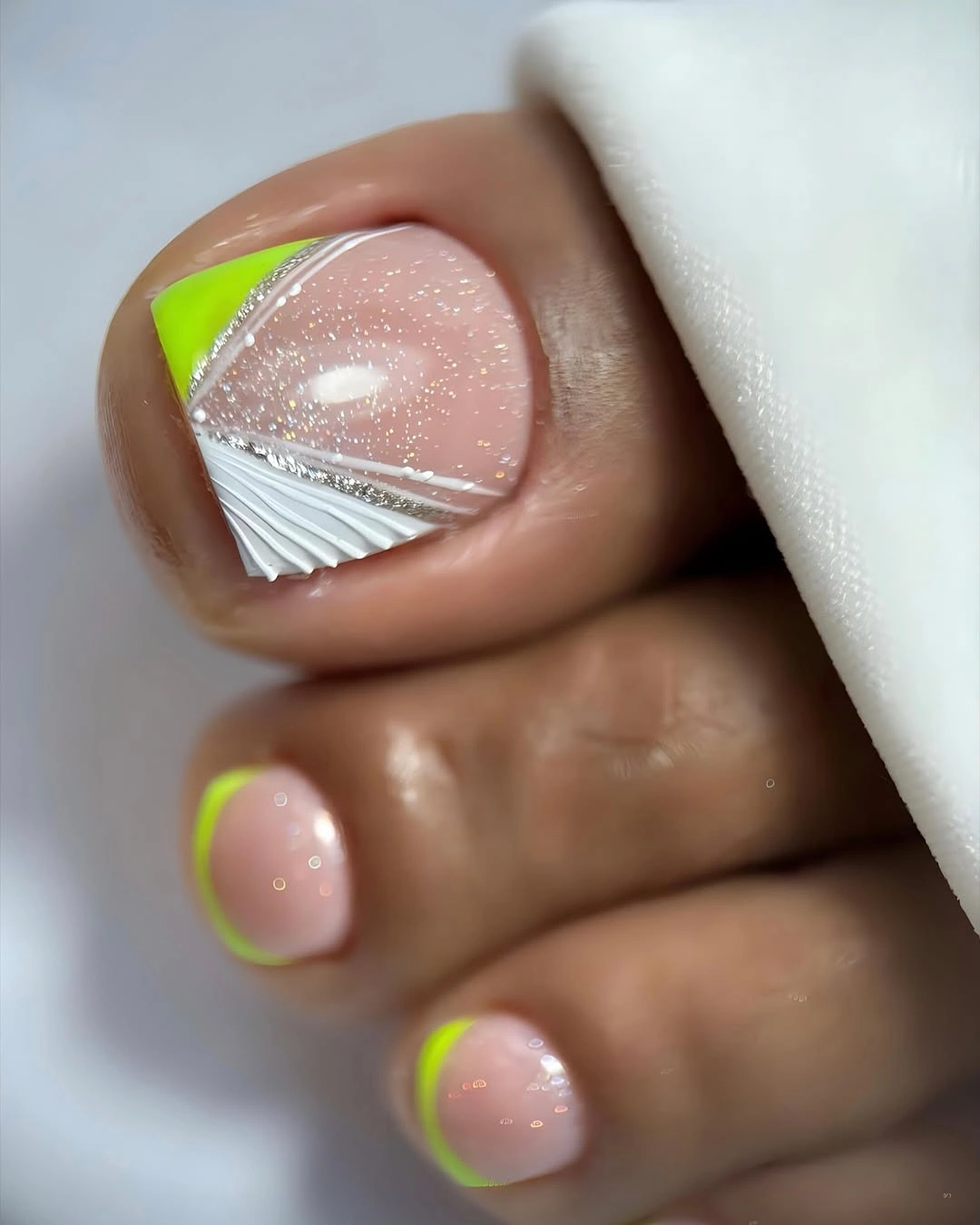
Keep the lime on the big toe and one or two smaller nails if you want the design to feel lighter. The white fan should remain open, with visible space between its lines, because packed strokes would turn the accent into a gray patch at toe scale. A sheer blush base is useful here because it keeps the bright edge from feeling too solid.
Fine lines require enough room to stay readable, so a shorter toe may need fewer rays rather than thinner ones. The vivid edge will also show chips against the pale center, making clean finishing important. If the whole design feels too energetic, remove the lime from the smaller nails and let the big-toe fan do the talking, a useful adjustment alongside other August toe nail color ideas.
Shimmering Burgundy with a Low Glow
Deep burgundy-red toes carry a subtle reflective or fine glitter surface that catches light inside the dark color rather than sitting on top as a separate accent. The short rounded shape keeps the finish compact, while the low glow gives the wine tone more movement than a plain solid would have. It remains recognizably autumnal even when the sparkle is quiet.
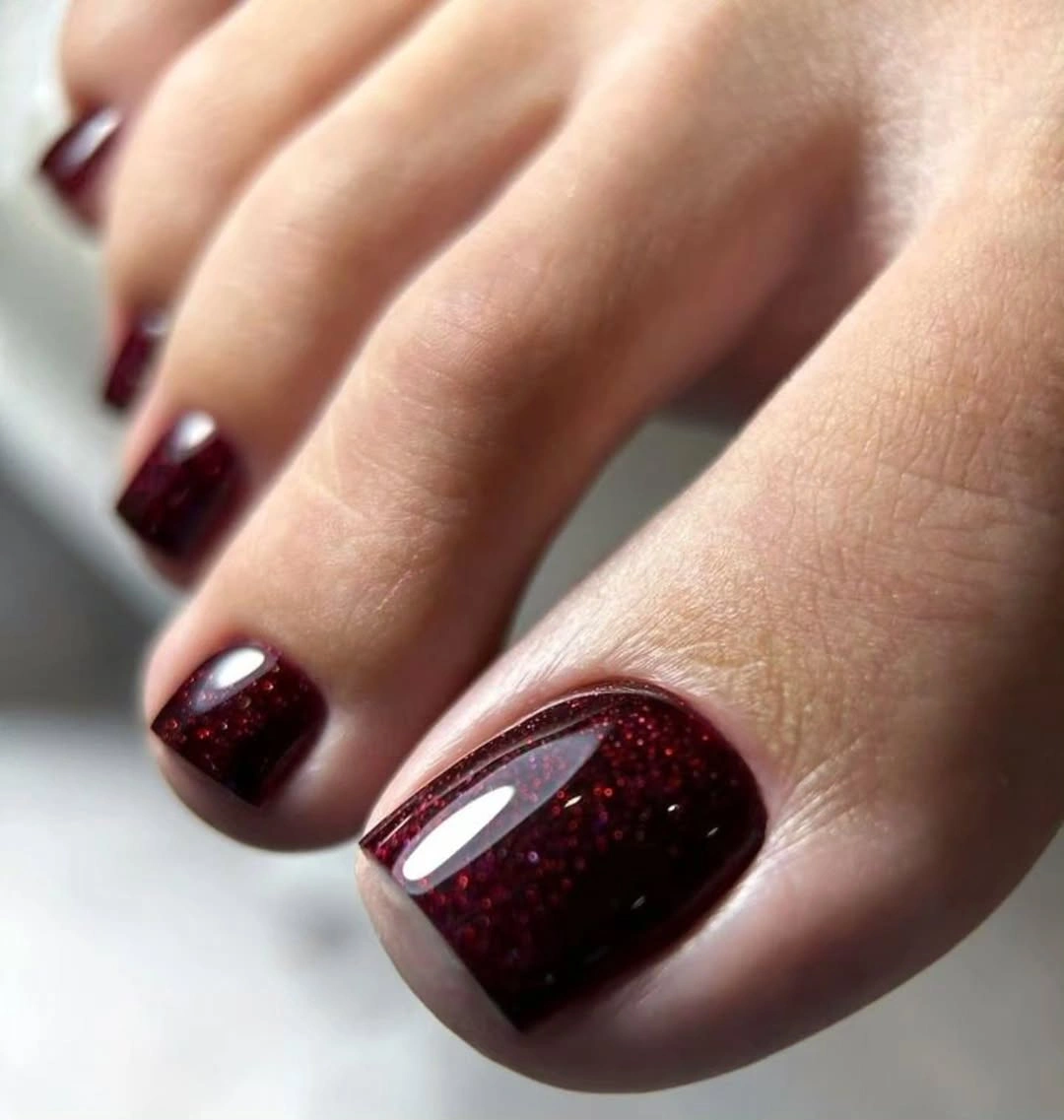
Choose a fine shimmer when you want the pedicure to change slightly between indoor and outdoor light. Keep the base deep and the sparkle restrained, then let the big toe show the strongest reflection while the smaller nails repeat the color more softly. That approach makes the finish feel special without turning the toes into glitter accessories.
The reflective particles may emphasize surface unevenness if the base is not smooth, and the exact amount of sparkle will depend on the light. Those limits are part of the appeal because the color does not look identical in every setting. Pair it with matte brown, cream, or denim so the low glow has a calm frame.
Milky Pink Toes with a Tiny Flower
Soft milky-pink toes stay almost completely plain except for a small pink flower-like accent on the big toe. The pale base gives the foot a clean, quiet appearance, while the tiny detail adds just enough softness to make the pedicure feel considered. Because the accent is small, the color and rounded-square shape remain the main visual facts.
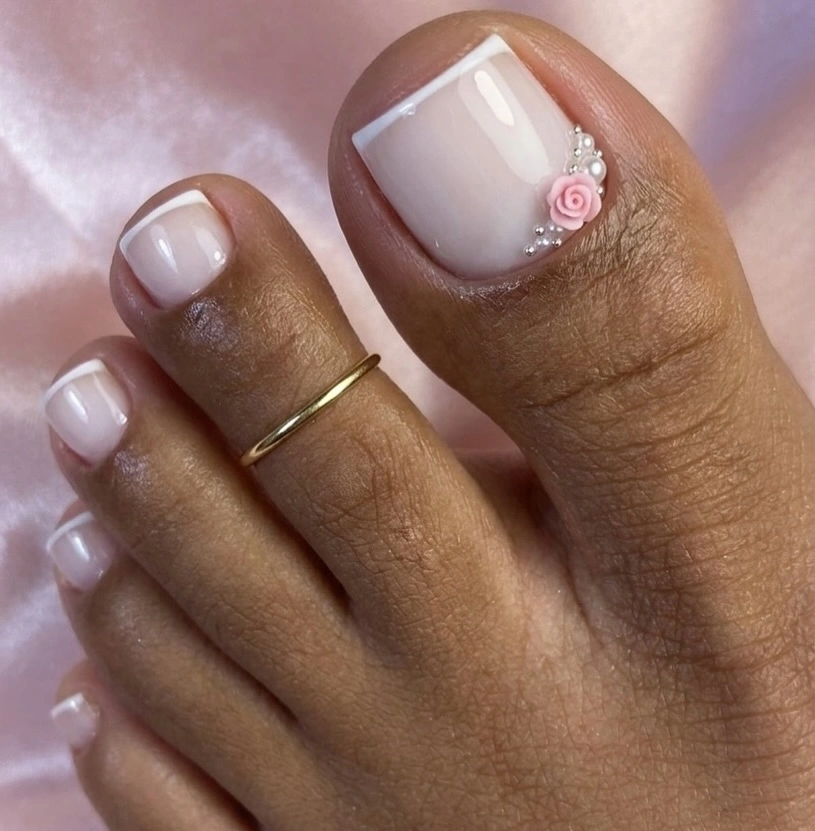
Keep the flower on the big toe and let the smaller nails repeat the milky base if you want the easiest version to wear. A flat pink dot or simple curved petal can replace the raised-looking detail while preserving the focal placement. This works nicely with light sandals, cream clothing, and small jewelry because nothing is competing for attention.
A raised-looking accent may be more exposed to shoe friction than a flat mark, so practicality favors a low-profile interpretation. The pale base can also show uneven coverage, which makes a smooth finish important. Let the little flower remain a close-up discovery rather than enlarging it until it becomes the entire pedicure.
Espresso-Black Gloss with a Warm Undertone
Short rounded toes are painted an extremely deep brown-black with a smooth glossy highlight, creating a minimalist pedicure that looks almost black until the light reveals warmth. The separate gold toe ring adds context, but the manicure itself needs no accessory to feel finished. Its impact comes from a dense color and a clean outline.
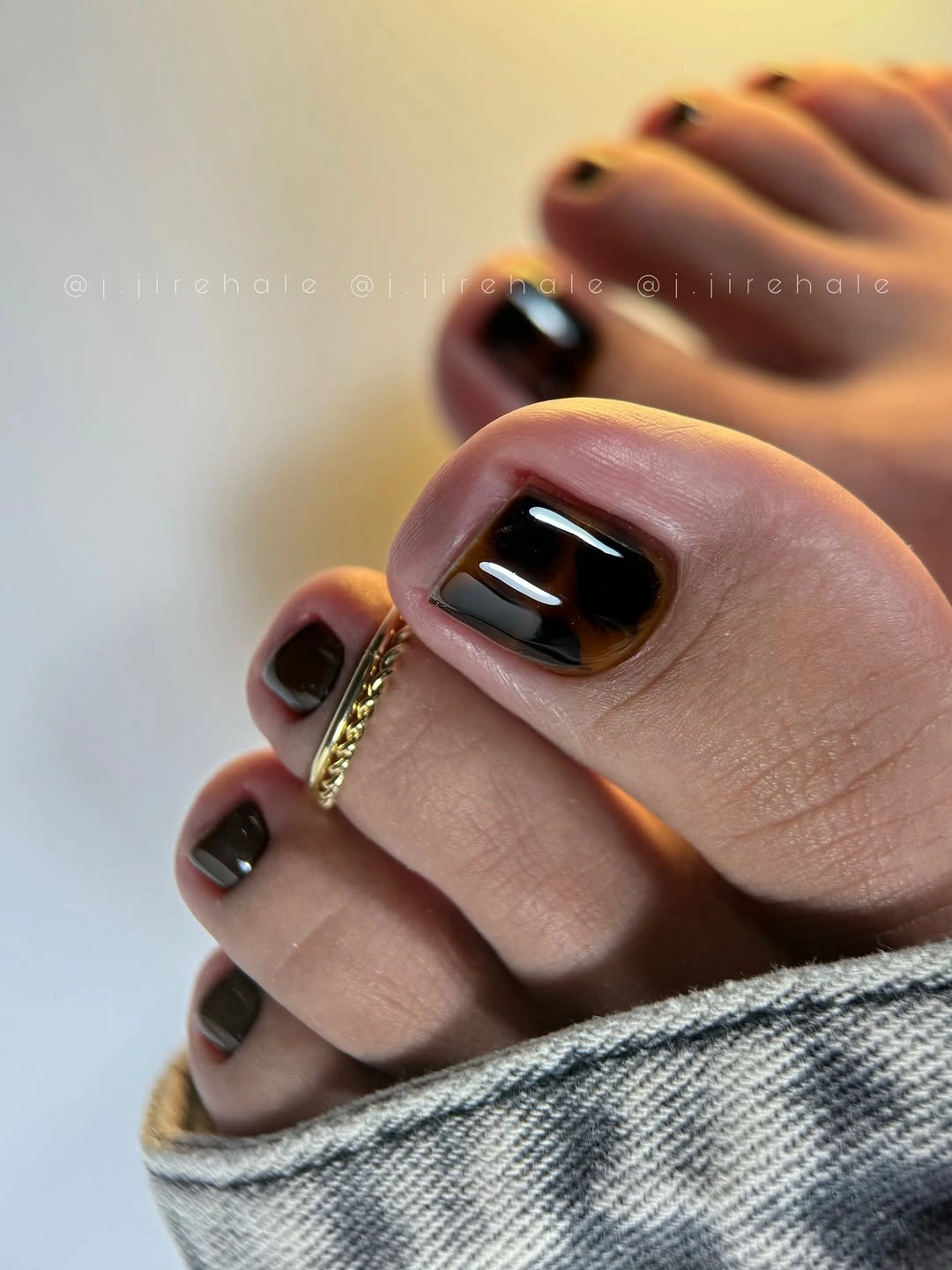
An espresso-black shade is useful when pure black feels too hard but a medium brown does not feel deep enough. Keep the color uniform and let brown leather, gold jewelry, or cream fabric bring out the warmth without adding art to the nails. The short shape keeps the dark surface neat and prevents it from feeling overly dramatic.
Very dark color makes any edge irregularity visible, so the smallest toe can set the quality impression for the whole pedicure. The finish also needs enough shine to avoid looking dull in shadow. If you prefer less contrast, choose a softer chocolate brown while keeping the same simple, rounded construction.
Bright Mint Green for an Unexpected Fall Accent
Short rounded toes use an even bright mint-green color with a smooth highlight across the big toe. The shade is fresh and light, but its saturation keeps it from disappearing, which makes it an unexpected alternative to olive or burgundy. The absence of art lets the unusual color stay cheerful without becoming visually complicated.
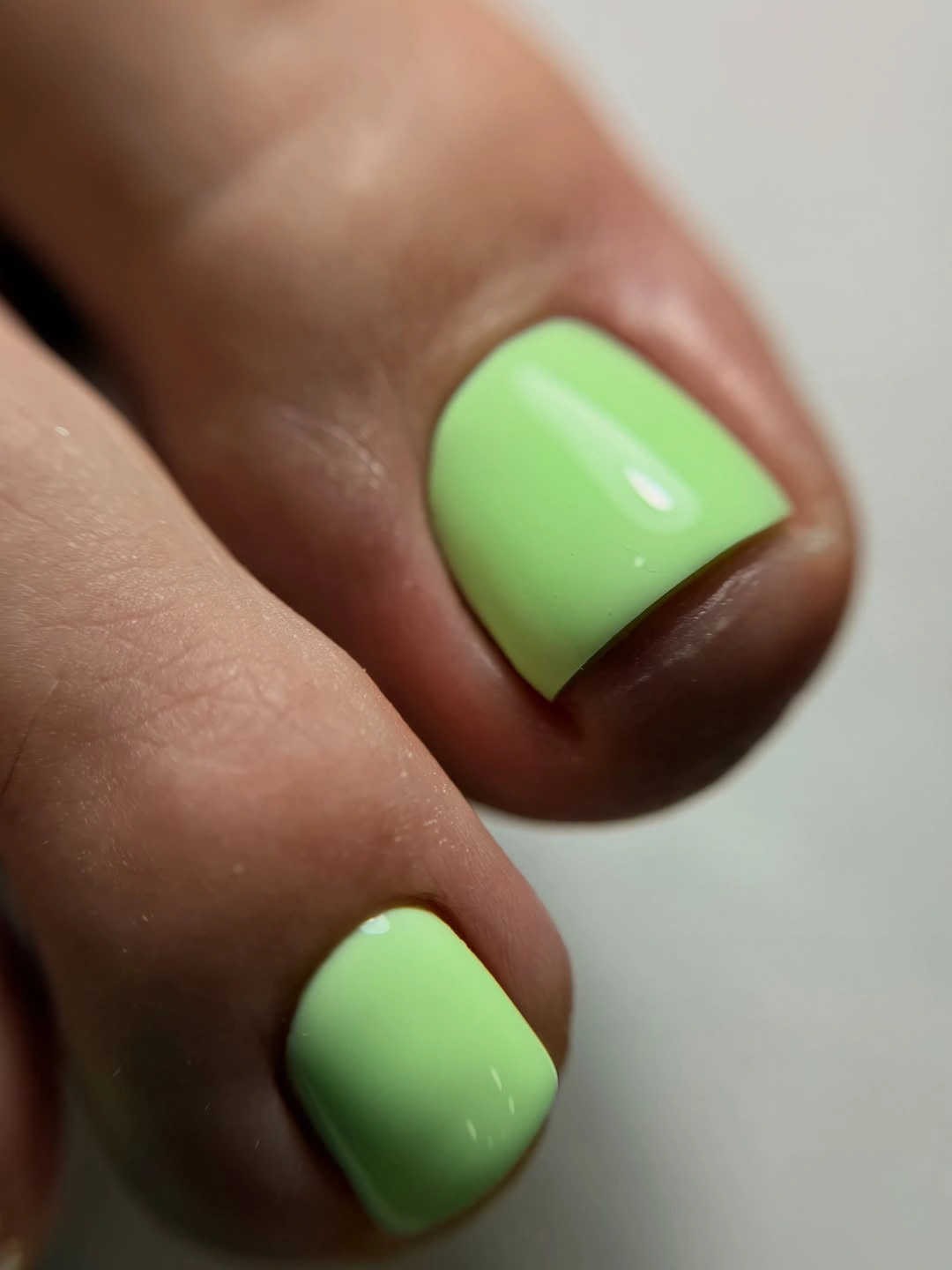
Mint looks more seasonal when it is paired with brown leather, dark denim, cream, or warm metal accessories. Use it across the full pedicure for a clear color block, or combine it with a pale neutral on the smaller toes if the big toe should carry the surprise. Keep the finish glossy so the green reads as intentional rather than chalky.
The cool shade may feel less obviously autumnal than deep green, but that is precisely why it can refresh a familiar fall wardrobe. Bright coverage makes the edge and surface evenness important, especially on a compact nail. If you want more depth without adding art, shift the mint slightly darker on the smaller toes.
Classic Cherry Red with Clean Rounded Edges
Glossy cherry-red toes use a short rounded-square shape and even coverage from the big toe through the smaller nails. The color is bright enough to feel confident but familiar enough to work across seasons, making the pedicure practical rather than tied to one trend. Its simplicity puts all the emphasis on a clean red surface and a tidy edge.
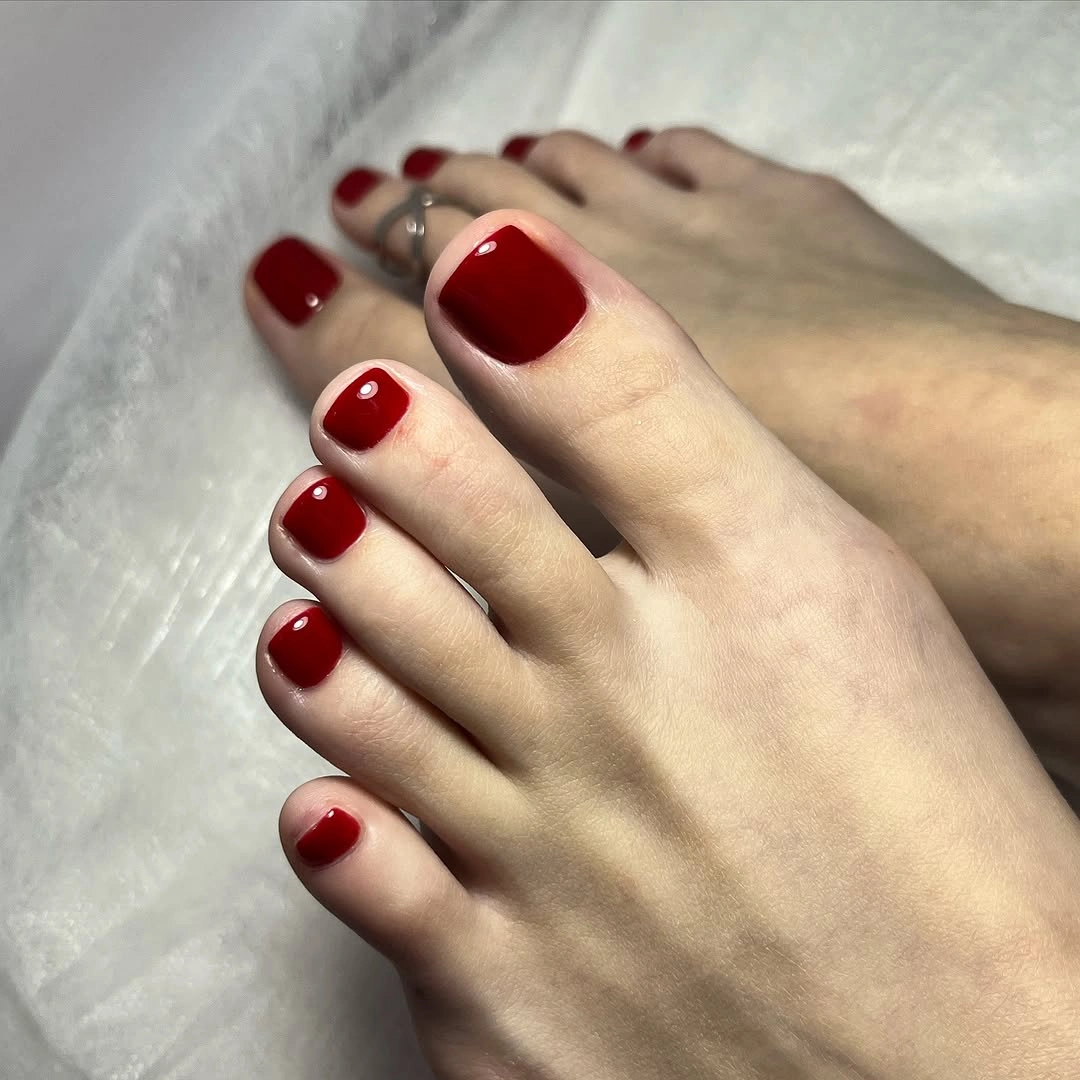
Choose a red that stays clear in both warm and cool lighting, then let the big toe and smaller nails repeat it without added sparkle. Cherry red looks especially effective with cream, denim, black, and brown footwear because it provides one strong accent without requiring a matching outfit. A softly squared edge keeps the color current and easy to maintain visually.
The honest downside is that red chips announce themselves quickly against the clean base. That makes the design rewarding when the finish is fresh but less forgiving between touch-ups. If you want more fall depth, choose a slightly wine-leaning red rather than adding a second color or motif, so the same clean block remains easy to style.
Plum Gold Reflection on the Big Toe
A rounded-square big toenail shifts between deep plum, berry, gold, yellow, and pink reflections, creating a color-changing effect that is more dimensional than a flat polish. The smaller visible toes remain quiet, which gives the reflective big toe a clear stage. Because the shift is built into the surface, no motif is needed to make the pedicure feel special.
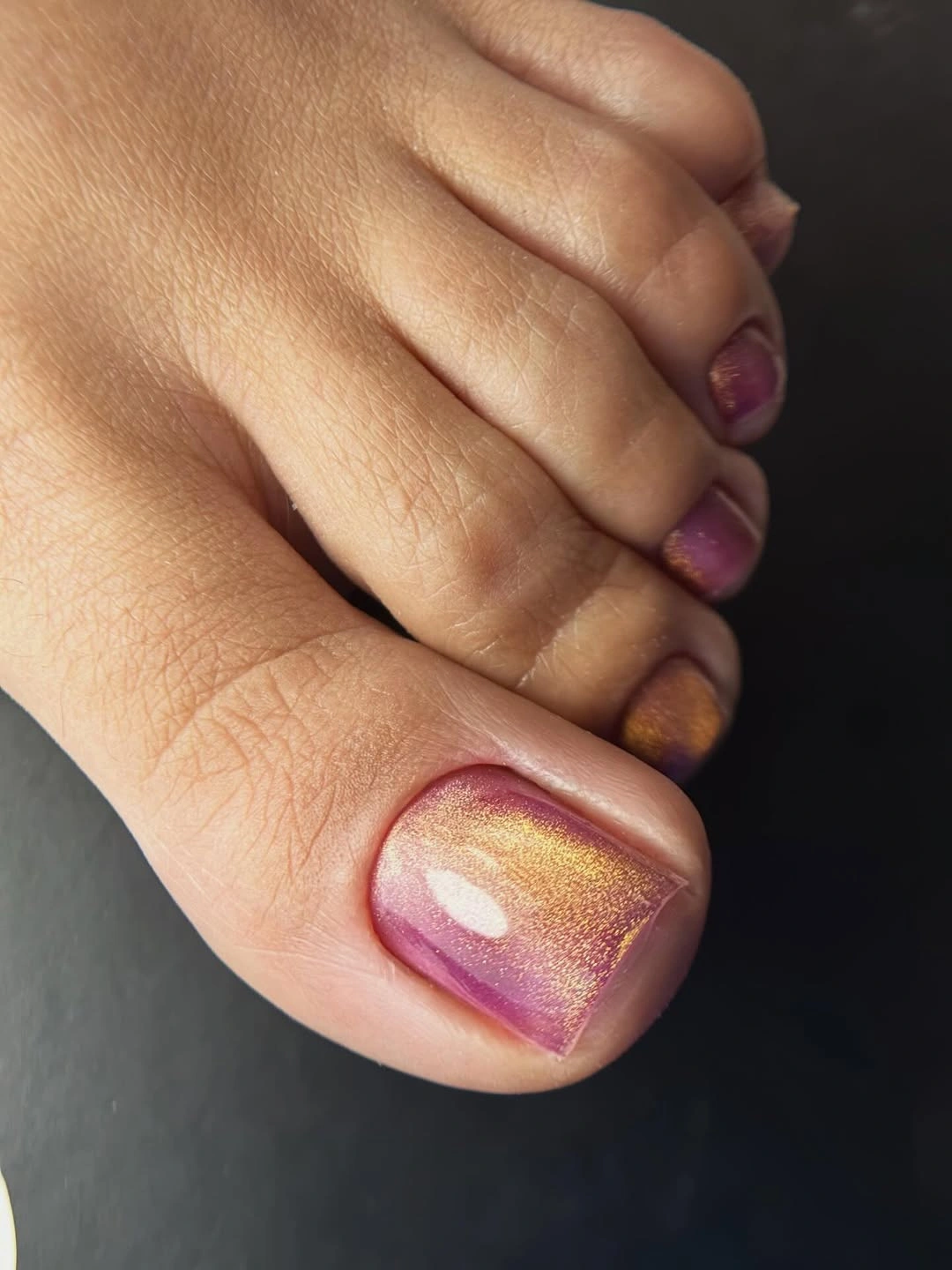
Use the shifting color on the big toe and a plain plum on the smaller nails if you want the color story to stay consistent in changing light. The warm reflections will be stronger from some angles, so the supporting toes should not rely on an exact match. This is a good choice when you want evening interest but still prefer a compact pedicure.
Reflective color can surprise you under different bulbs, and the base may read more berry or more gold depending on the setting. Let that variability be part of the design rather than trying to force one fixed shade. Keep the shape neat and the other toes quiet so the color shift remains the feature.
Bright Red on Every Toe
Short rounded-square toes are covered in a vivid glossy red with no art, shimmer, or color break. The even repetition makes the pedicure feel confident and finished, while the compact shape keeps the brightness from becoming too formal. It is a simple color block that can move from sandals into early fall without needing a new idea.
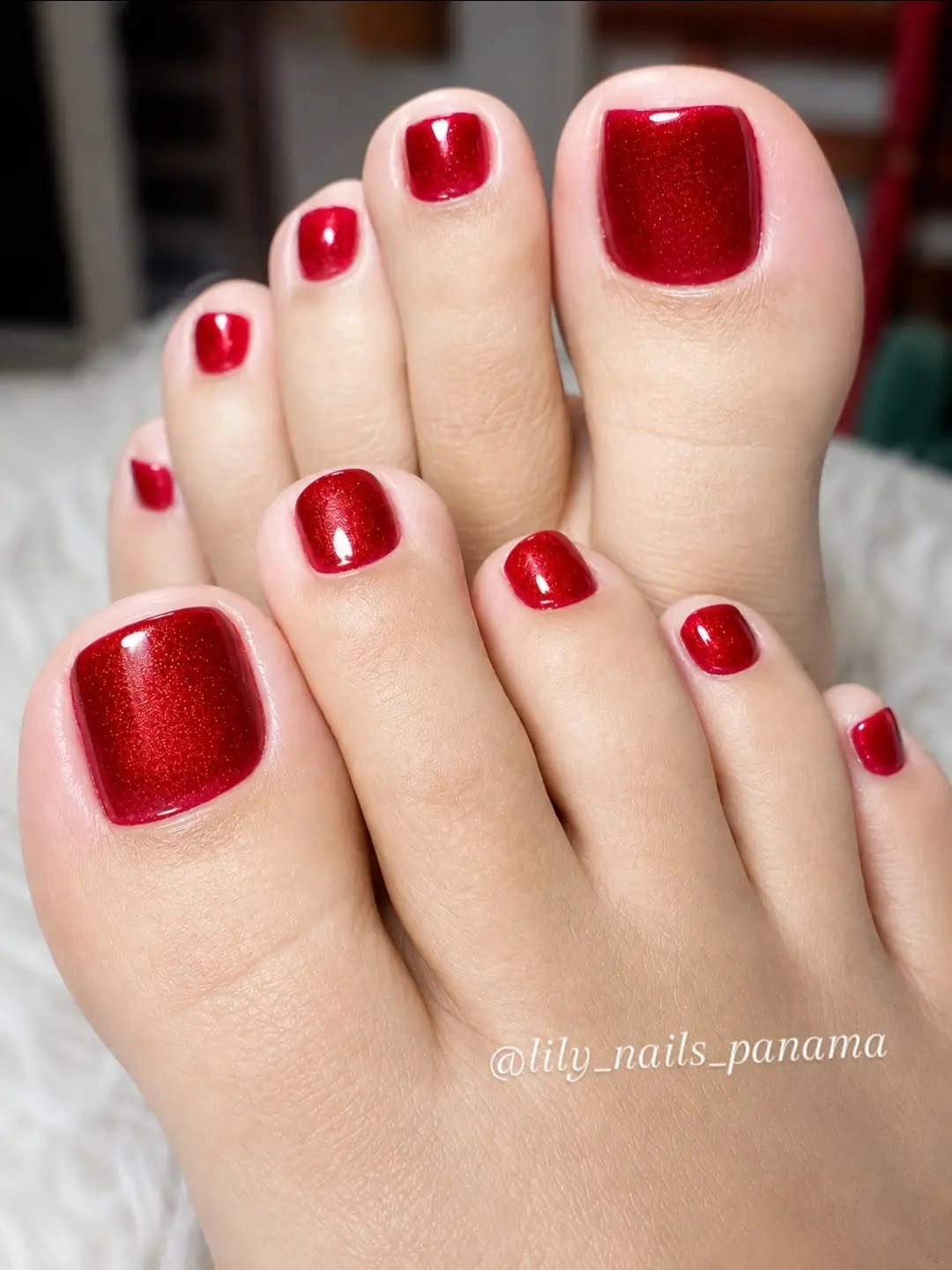
A clear bright red is useful when you want a dependable accent that works with both neutral shoes and richer fall clothes. Keep the big toe and smaller nails identical if you want the cleanest result, or use a deeper red only on the big toe to add a subtle point of hierarchy. The overall effect remains color-led and easy to coordinate.
Uniform red makes the outline important, particularly where the polish meets the skin on smaller nails. The lack of decoration means there is no place to hide an uneven edge, but it also makes refreshes straightforward. Choose the shade for its clarity and let the consistent shape carry the polish.
Blue-Black Navy for a Darker Neutral
Short compact toes carry a glossy navy that looks almost black in shadow but reveals a blue cast in the highlight. The deep color has more softness than pure black, and the rounded-square shape keeps it grounded rather than severe. A separate silver-toned ring adds styling context, while the toes themselves stay deliberately plain.
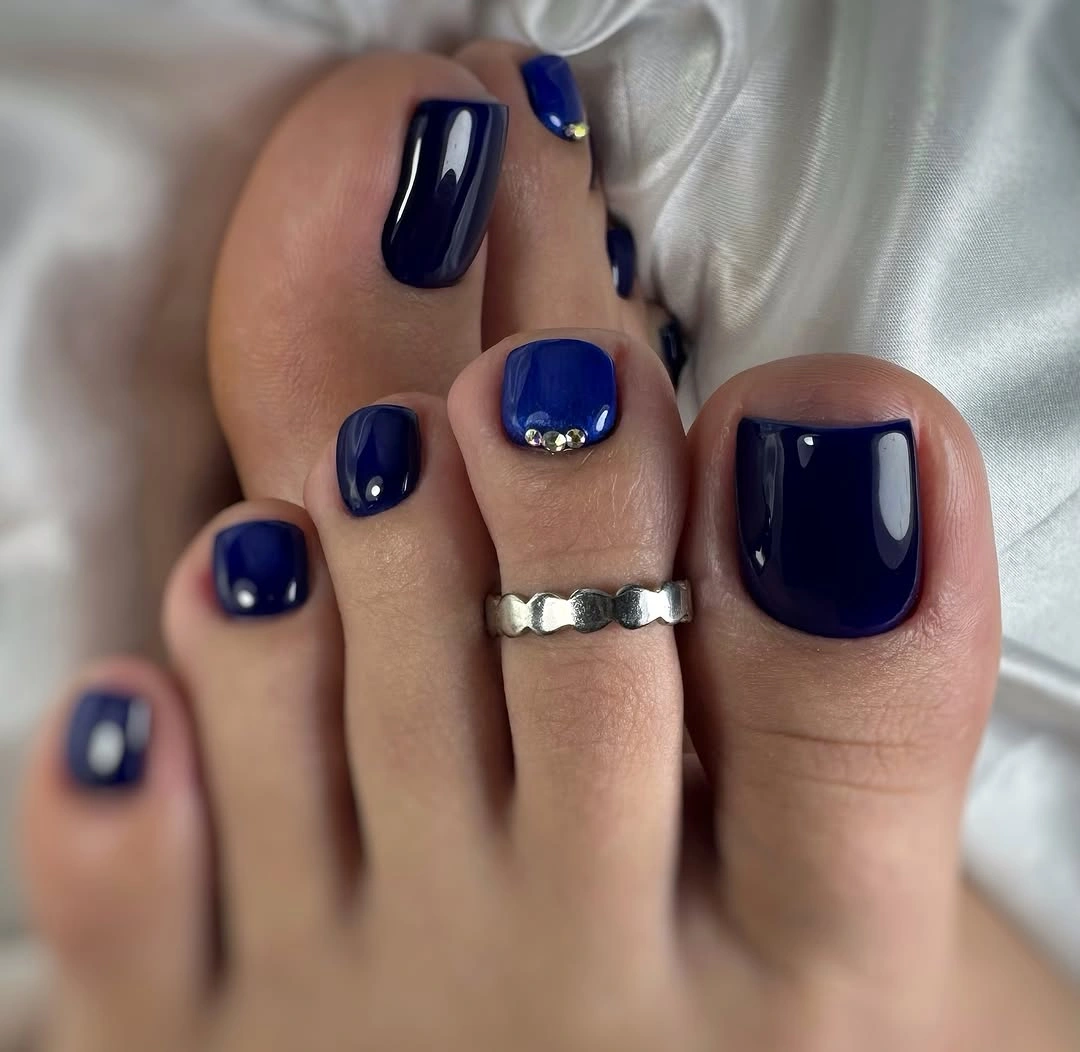
Navy is a useful bridge between denim and darker fall neutrals, so it can work with gray, camel, cream, or black footwear. Use the same shade across all toes for a clean block, or keep the smaller nails slightly softer if the big toe should be the strongest point. The blue cast will show more clearly in natural light.
Dark navy has the same edge-cleaning demands as black, but its undertone makes small changes in light less severe. The glossy surface also gives the compact shape a neat finish without needing art. If you want a warmer direction, move toward espresso while keeping the same short, rounded structure.
Hot Pink Solids with a Graphic Big Toe
Most toes are vivid hot pink, while the big toe carries a darker outlined panel with pale pink, white, and circular or floral-like details. The solid nails establish a bright rhythm, and the decorated big toe acts as the one place where the eye slows down. This is a strong example of using one complex surface instead of spreading small art across every nail.
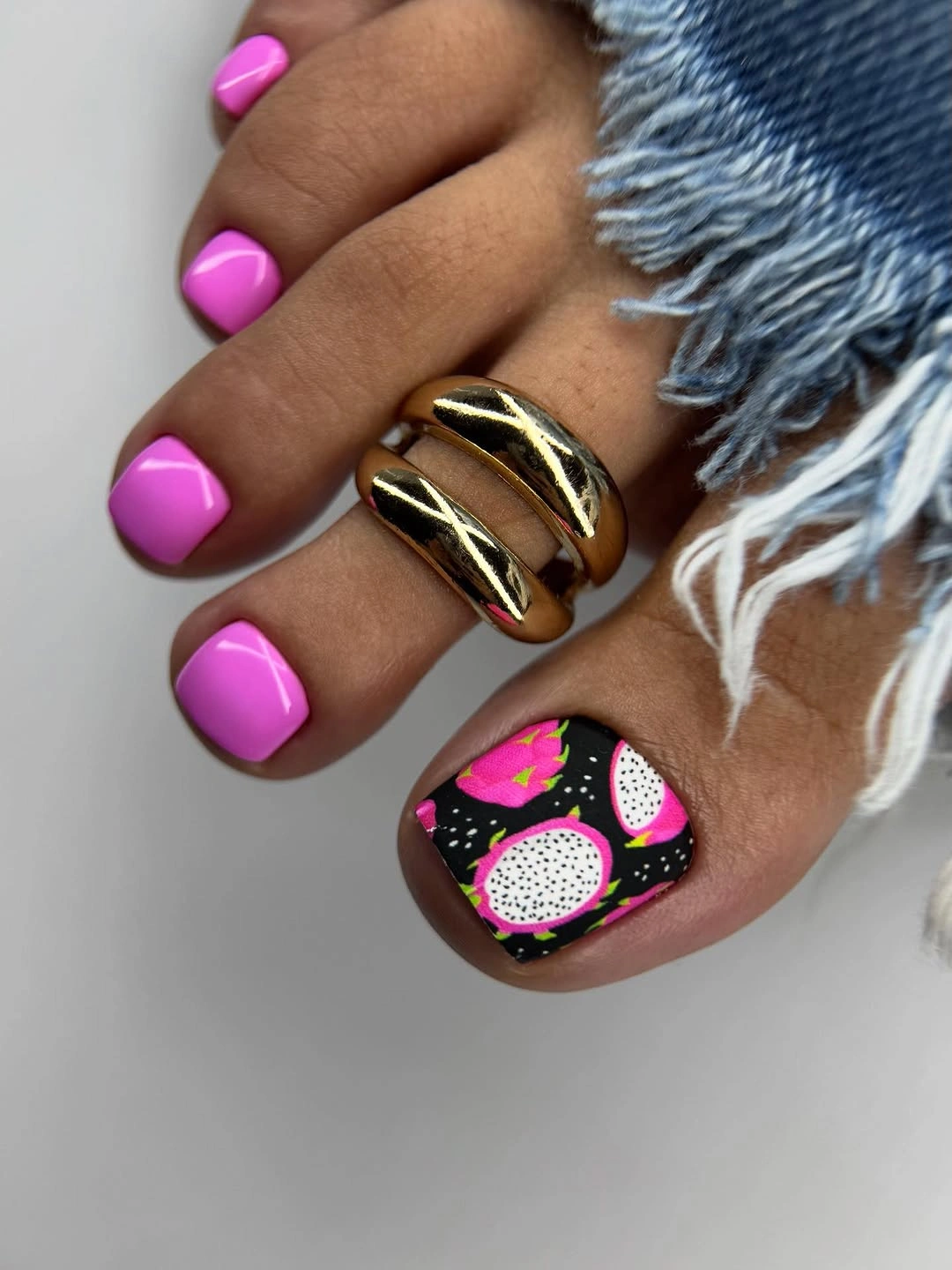
Keep the hot pink consistent across the smaller toes so the graphic big toe has a clear color frame. The accent can be simplified to one dark outline and one pale shape if the original level of detail feels too busy at toe scale. A gold accessory can support the warmth, but the nails already have enough color to stand on their own.
The big toe is the practical place for detail because it gives the artwork the most space, yet that also means wear on it will be especially visible. A flat interpretation is easier inside shoes than a raised one. Let the smaller toes stay simple so the pedicure remains legible when the foot is moving.
Pale Toes with Aqua and Green Color Blocks
This short pedicure uses a pale nude or pink base with a bright turquoise-blue band on the big toe and small green or yellow accents on other nails. The colors appear as little blocks rather than a full solid coat, creating a playful composition that depends on placement. The pale ground keeps the vivid details from spreading into visual noise.
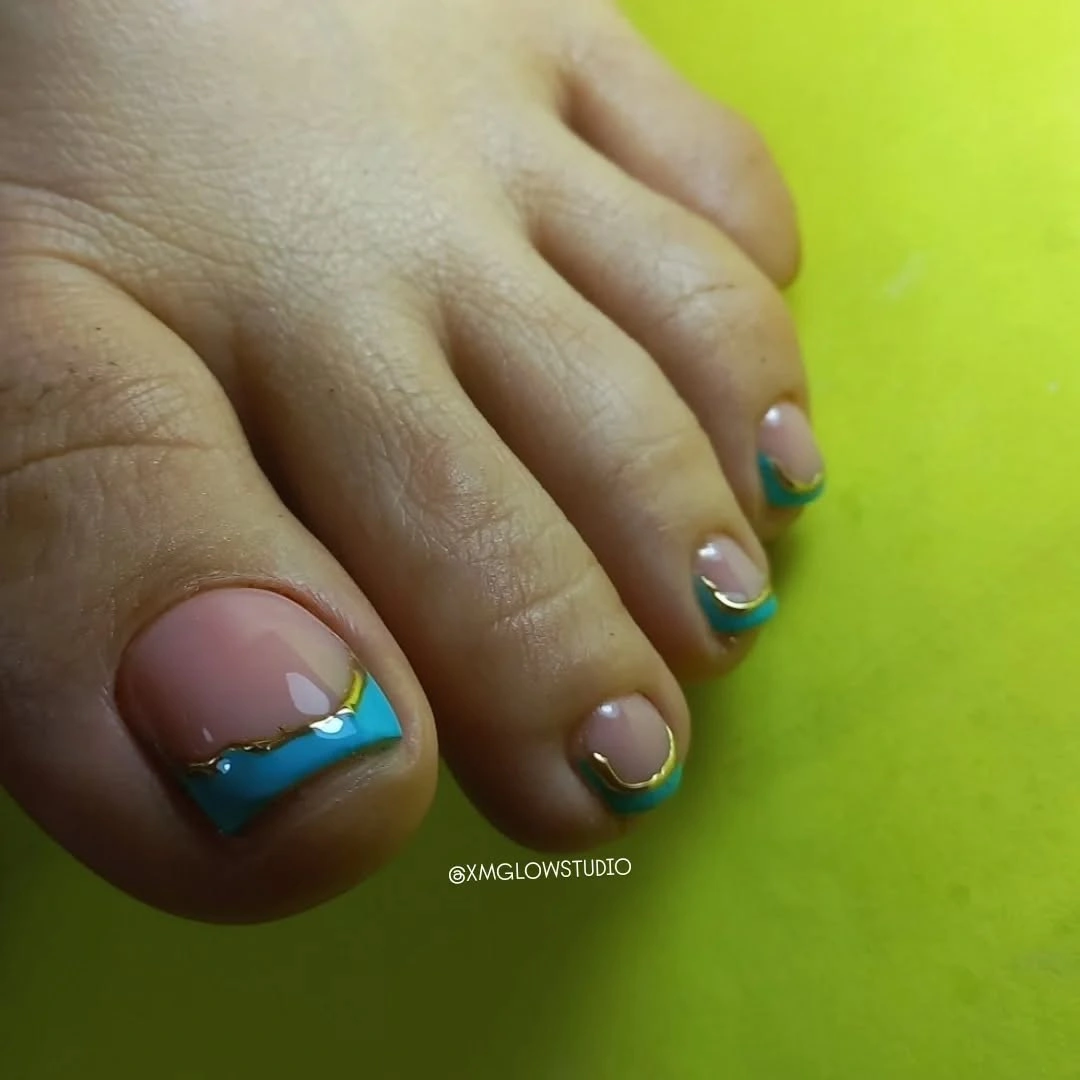
Keep the big-toe band as the primary accent and repeat only one small color on the remaining toes if you want a cleaner version. Aqua can feel especially bright against a warm or lime background, so neutral sandals and denim will give it more breathing room. The design works best when each color has a visible patch of pale space around it.
Small blocks are vulnerable to losing clarity as the nails grow, and too many colors can merge on the smallest toes. Simplify the palette before enlarging the shapes, because the charm comes from their little scale. A pale base, one aqua band, and one green note are enough to preserve the playful logic.
Berry Magenta with a Rich Fall Undertone
Short softly squared toes are painted a saturated berry-magenta that sits between bright pink and deep wine. The smooth finish keeps the color clean, while the darker undertone gives it more seasonal depth than a pure hot pink. No art is needed because the shade itself creates the transition from lively to rich.
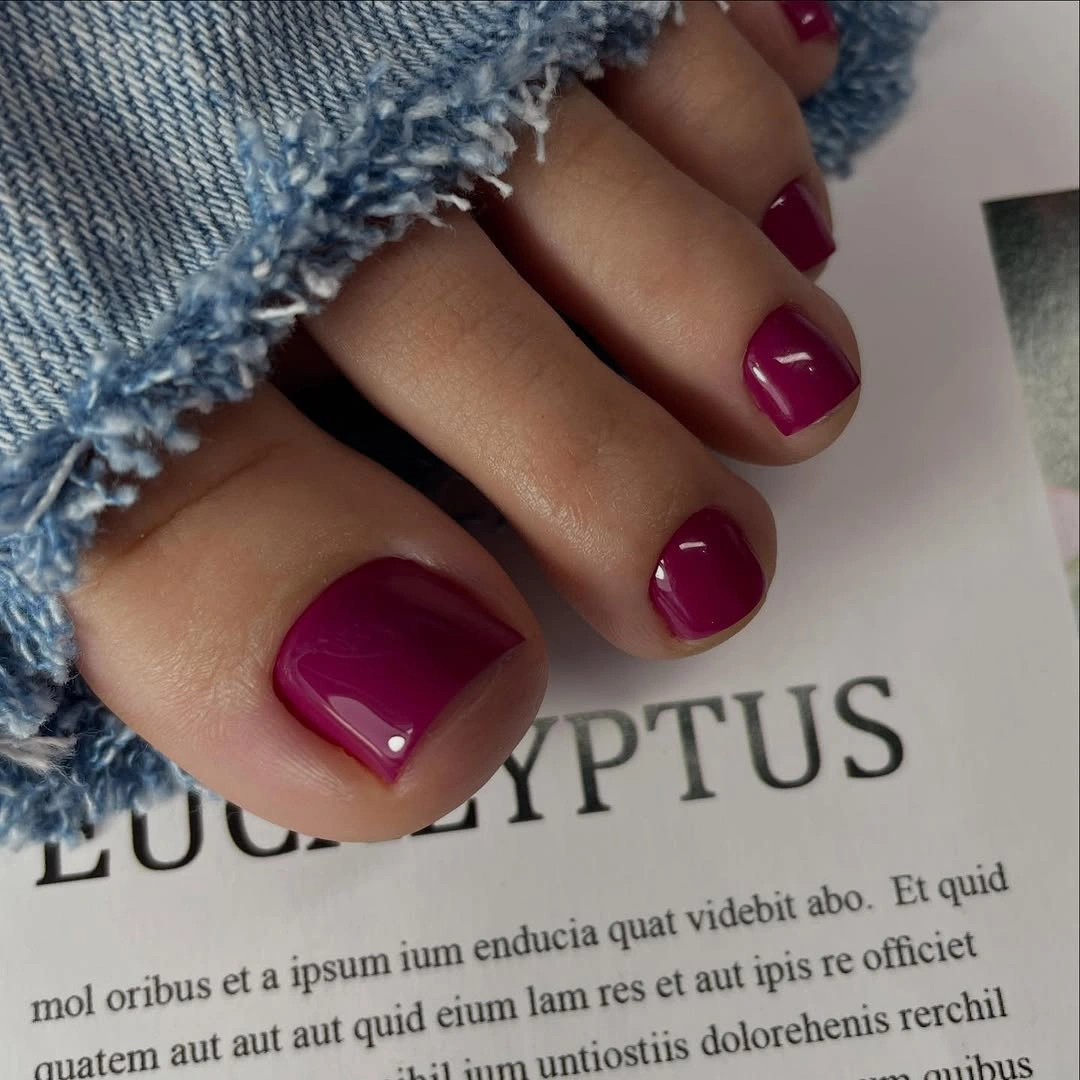
Choose berry magenta when red feels too expected but a pale pink feels too light for fall. It works with denim, chocolate brown, cream, and dark plum because the color carries both warmth and energy. Repeat it evenly across the toes for a clean effect, or use a deeper berry on the big toe if you want a subtle hierarchy that still feels natural with everyday footwear.
The saturated surface will show edge wear, but the darker undertone makes small changes less stark than a neon pink would. That balance is what makes the color easy to live with. Keep the shape soft and the shine even so the shade remains the reason the pedicure feels finished, polished, and ready for open shoes.
Powder Blue with a Clean Glossy Finish
Short rounded toes use a pale powder-blue color with an even glossy highlight and no separate design. The cool shade feels crisp against warm brown or denim styling, while the compact rounded-square shape keeps it from looking too delicate. Its simplicity makes the color relationship with the rest of the outfit more important than the nails themselves.
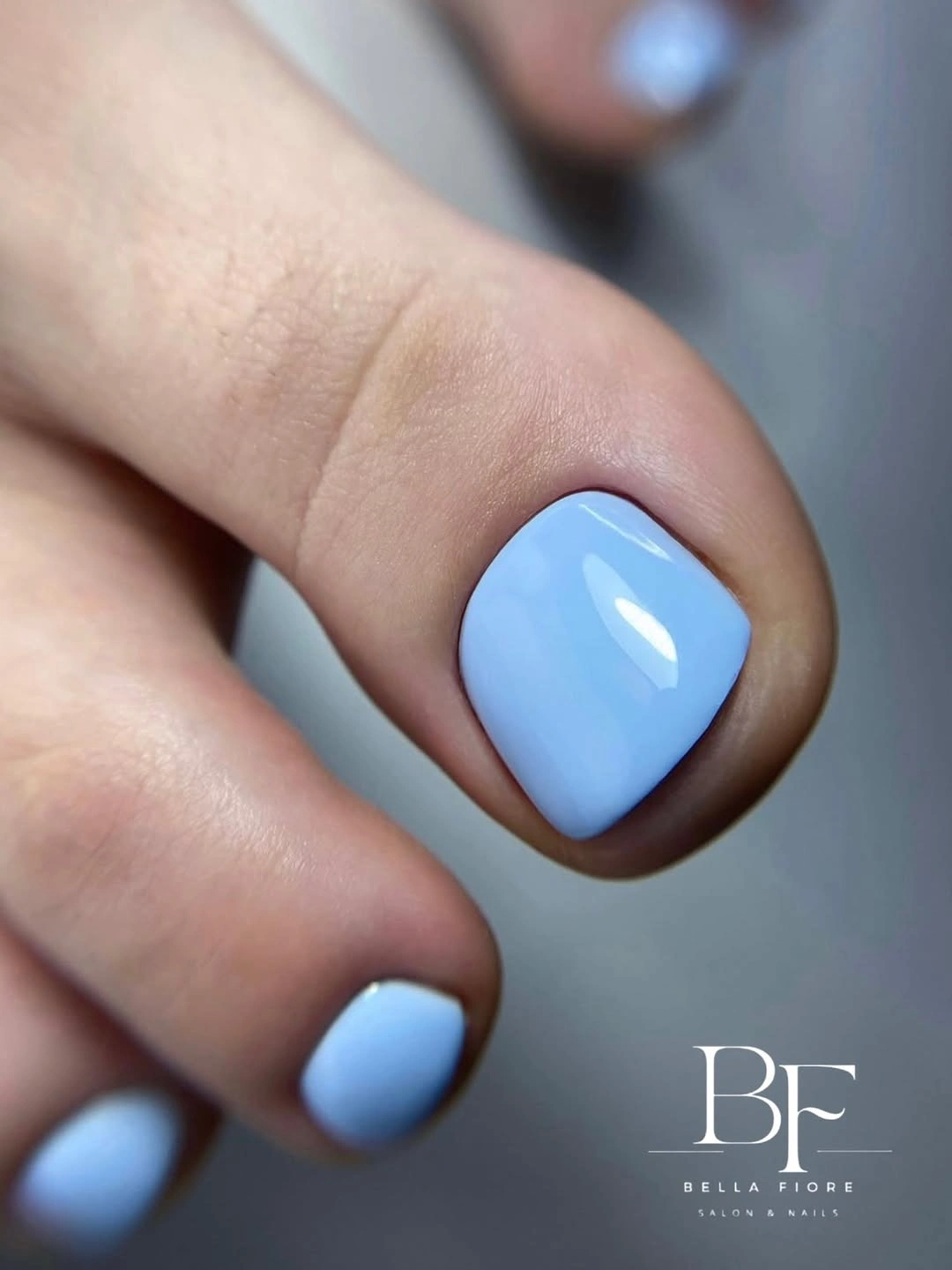
Powder blue works well when you want a lighter alternative to cobalt but still need a visible color accent. Pair it with denim, gray, cream, or warm brown, and let the smaller toes repeat the big-toe shade for a clean field. If you want a little more fall depth, use a muted blue-gray without adding a motif.
Light blue reveals uneven coverage and can look washed out under certain lighting, so the surface should be smooth and opaque enough to hold its color. That is the main tradeoff of the pale palette. Keep the styling around it warm or textured if you want the pedicure to feel seasonal rather than purely summery.
Muted Sage Green for a Calm Finish
Short rounded-square toes close with a muted sage-green color and a broad soft highlight across the big toe. The green is dusty rather than bright, so it sits comfortably beside cream, denim, and brown without asking for extra decoration. The clean repetition makes the pedicure feel calm, while the undertone gives it a clear fall direction.
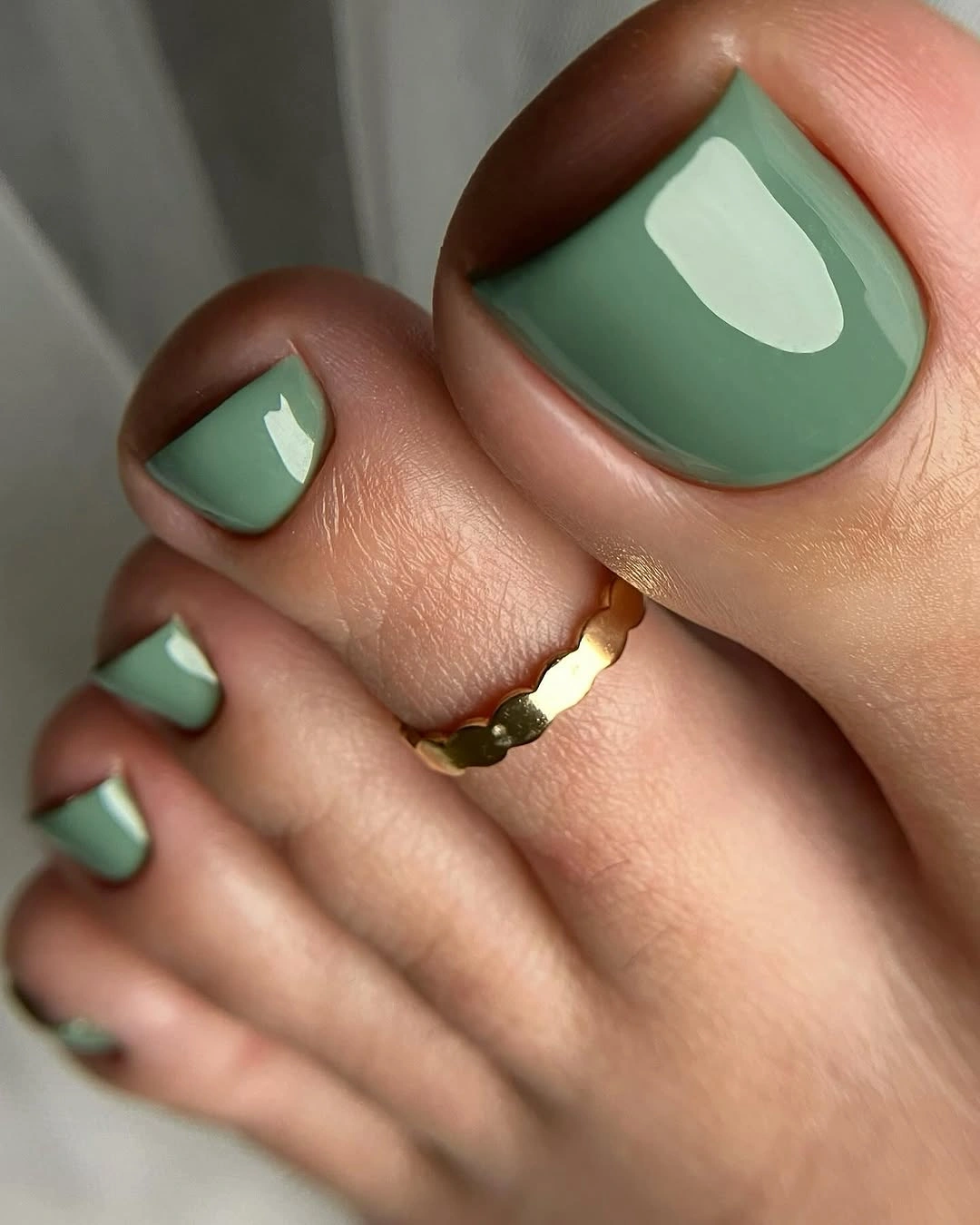
Sage is a useful bridge between fresh green and deeper olive: it keeps some lightness but feels grounded enough for cooler weather. Wear it across all the toes for a quiet color block, or place the strongest sage on the big toe and soften the smaller nails with a pale neutral. The rounded shape supports the color by keeping the look neat and unforced, much as the best summer pedicure colors rely on one clear shade relationship.
A muted shade can appear lighter or grayer depending on the background, so warm accessories may help it keep its green character. The lack of art means the edges need to stay clean, but the low contrast makes small changes less dramatic than with black or red. End with the simplest color decision intact: let sage be the calm anchor rather than adding detail that it does not need.