Kids’ Halloween costumes should feel like characters, not like complicated outfits adults keep adjusting all night. A child knows when they are Pennywise, Snow White, Chucky, Maleficent, an astronaut, or a tiny pirate, and that feeling of stepping into a story is much more valuable than adding decorative details that make the costume uncomfortable or impossible to play in.
Choose the one or two signals that a child can actually wear with confidence: a cape, a wig, a bright overall, a recognizable hat, a simple mask, or a prop that does not get in the way. If the child can move, see, use the bathroom, and still feel unmistakably like the character, the Halloween costume has done exactly what it should.
Little Skeleton With a Skull Mask
This is a classic little skeleton character, with white bones printed across a black one-piece and a removable skull mask for extra Halloween drama. The bones are large enough to read from a distance, which makes the costume clear without needing a cape, a wig, or lots of loose pieces that could distract from the simple spooky idea.
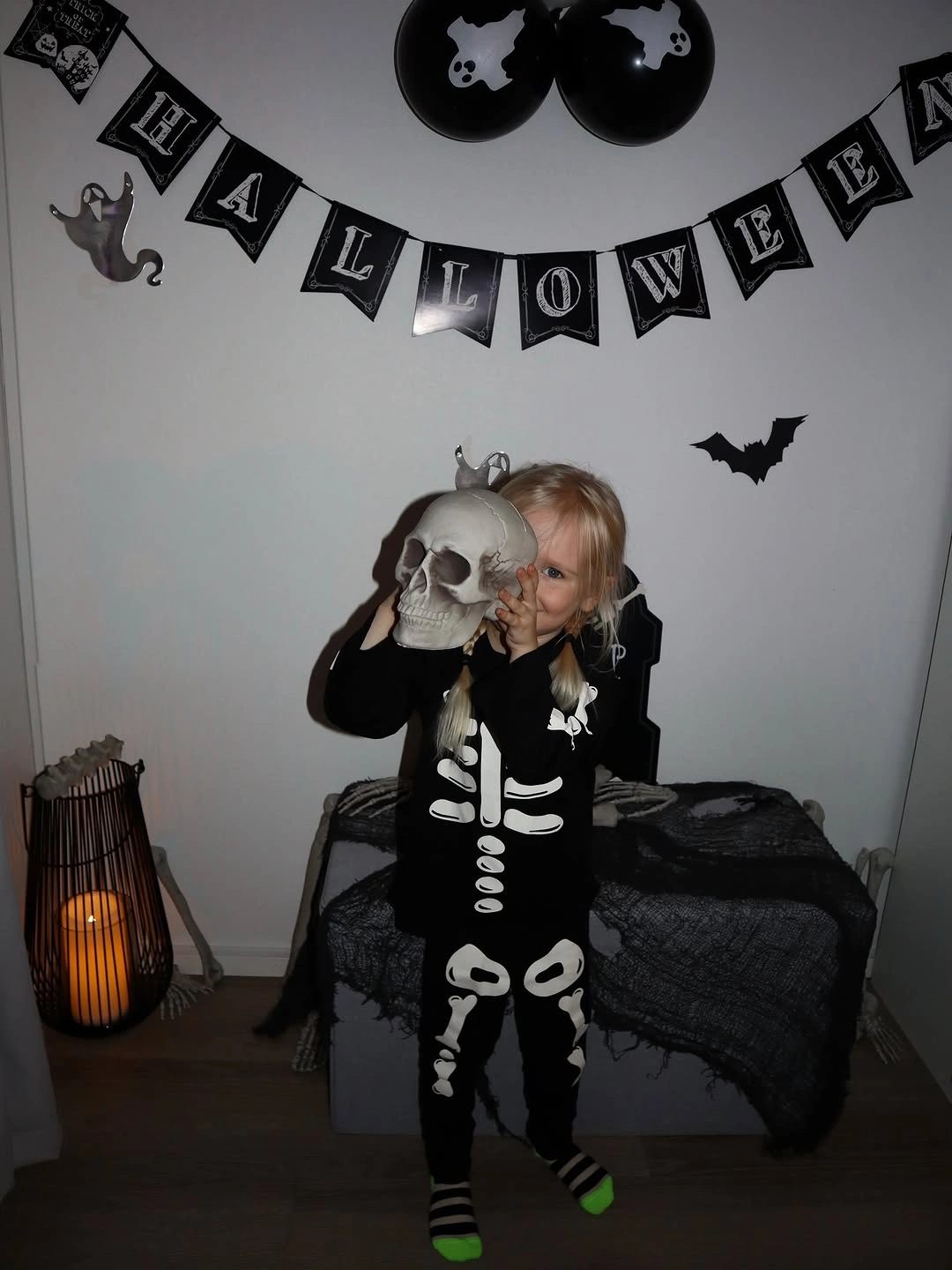
A skeleton is one of the easiest Halloween costume ideas for kids because the black-and-white code needs almost no explanation. Use a one-piece that is soft and easy to move in, then treat the mask as optional; the bone print itself still tells everyone who the child is when the mask comes off for snacks or a break.
Check the ankles and wrists for extra fabric, since a skeleton suit that bunches can hide the printed bones or become a tripping problem. A soft mask with good visibility is safer than a rigid one, and dark comfortable shoes will keep the character looking complete without making the child struggle during an active evening.
Pennywise With a Red Balloon
This little Pennywise from It has the character’s pale ruffled clown suit, red pom-pom, white face makeup, red balloon, and haunted-carnival mood in a child-friendly scale. The balloon is the instantly creepy clue, but the white ruffles and small red accents make sure the costume still reads as Pennywise even if the prop needs to be set down.
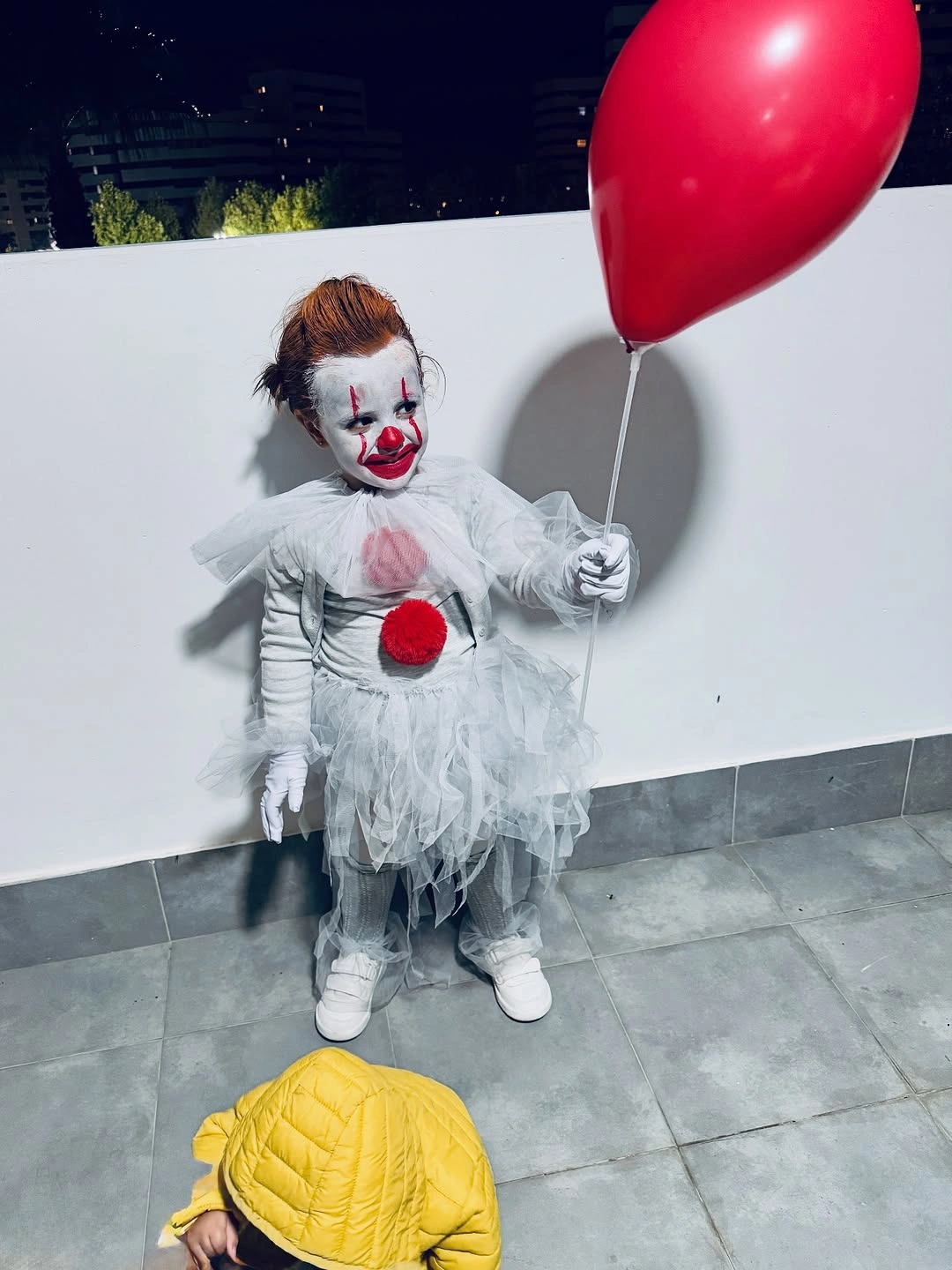
For a child Pennywise costume, focus on soft ruffles, red pom-poms, and a light version of the face paint rather than trying to create an adult horror look. The red balloon and orange-red hair color can do the scary reference gently, while comfortable white shoes and simple makeup keep the costume practical for real trick-or-treating.
Keep the balloon string secure and supervise it closely, especially outdoors or near crowded doorways. Ruffles should not scratch the neck or drag near shoes, and face paint needs to be easy to remove; the goal is a recognizable Stephen King clown character that stays fun for the child instead of becoming too frightening or hard to wear.
Chucky and Bride of Chucky Siblings
These siblings are Chucky and Tiffany from Bride of Chucky, with one child in striped sleeves and blue overalls and the other in a white ruffled bridal dress with red bow details. The orange hair, stripes, tulle, and contrasting heights create a clear horror-doll pair that fans can recognize immediately without needing complicated masks or oversized props.
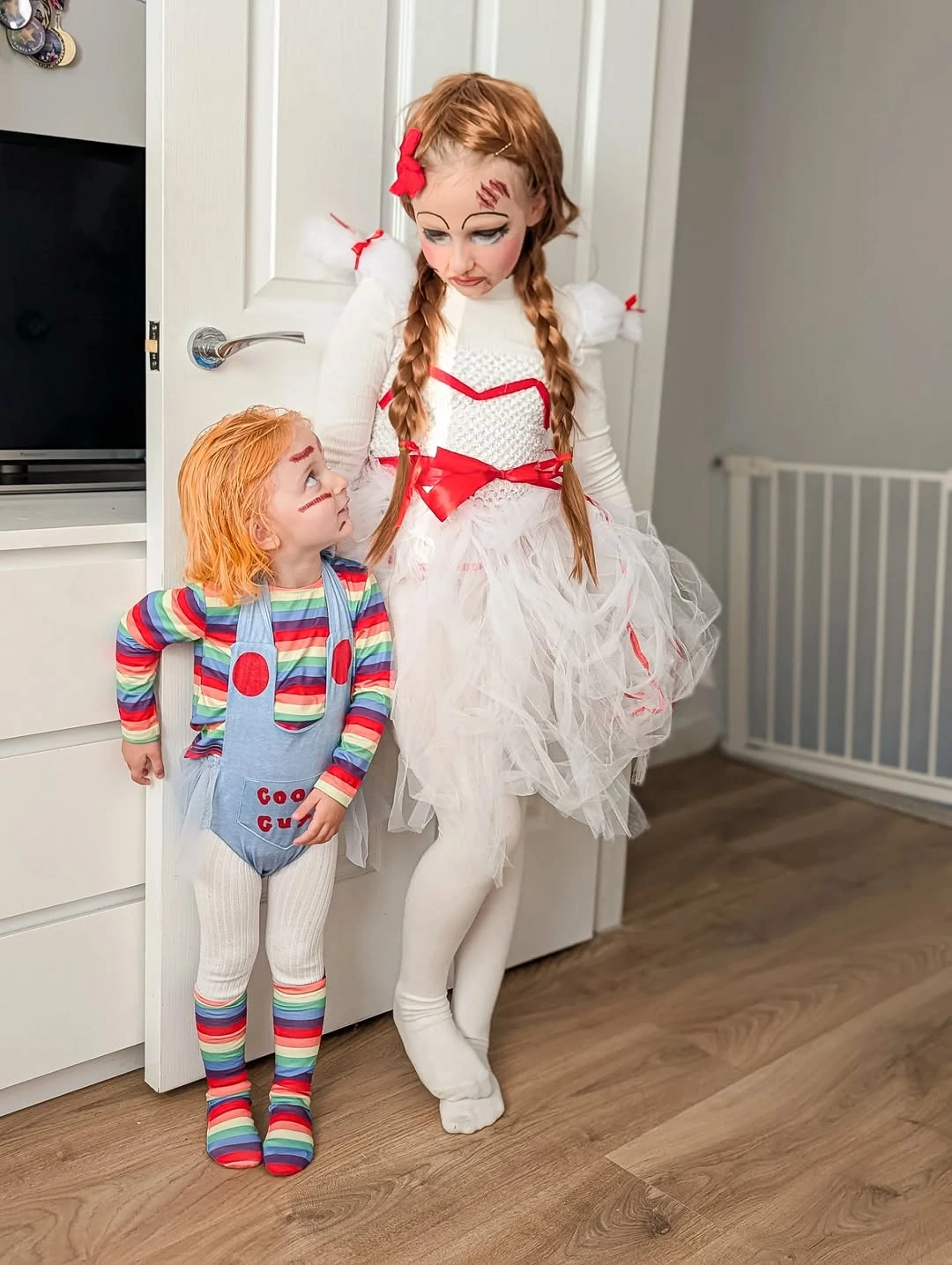
Chucky needs the striped shirt, bright overalls, and orange hair, while Tiffany needs bridal white, dark or dramatic makeup, and one red accent to echo the doll-horror world. Keeping the characters different is the whole appeal: Chucky is compact and mischievous, while Tiffany is bridal, eerie, and full of pale ruffle volume.
Overalls should sit comfortably at the shoulders and tulle should stay away from shoes and play areas. Choose soft toy props only if the adults are comfortable with them, and let the clothing do the main work; the recognizable Chucky-and-Tiffany colors already tell the story without adding objects that younger children may drop or carry unsafely.
Zombie Snow White With an Apple
This is Snow White with a zombie-horror twist, still recognizable through the blue bodice, red puff sleeves, long yellow skirt, dark bob, and apple in hand. The darker makeup turns the fairytale princess into an undead Halloween character, but the primary colors remain clear enough that the costume reads as Snow White before the spooky details are even noticed.
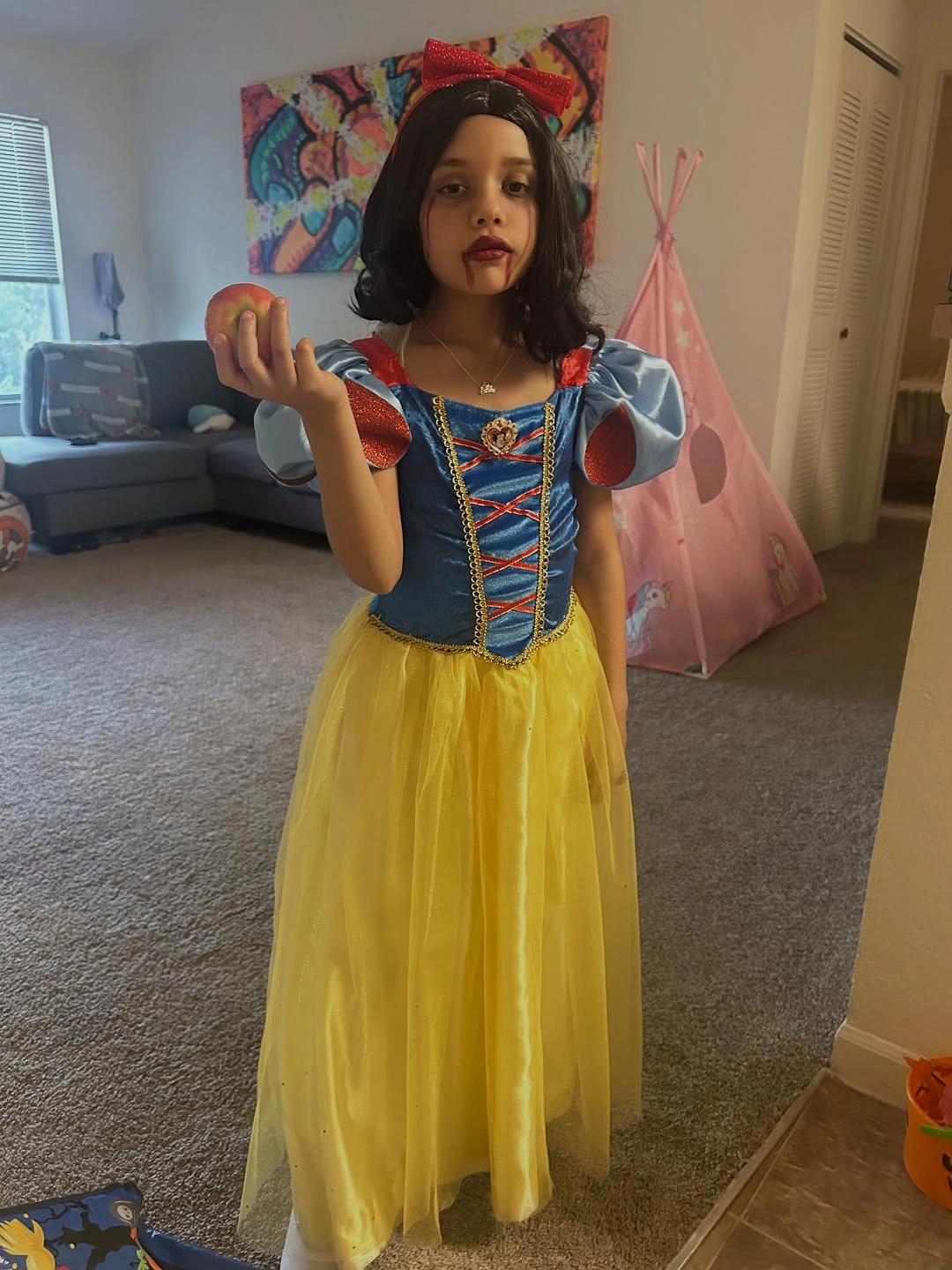
To make zombie Snow White work, keep the Disney color blocks clean and add the horror details lightly around the face or apple. Too much fake blood would bury the princess reference, while the blue, red, and yellow dress is already doing the important storytelling; the Halloween twist should feel like a dark version of the character, not a different costume entirely.
Use a lightweight apple prop that can be set down, and make sure the skirt is short enough for easy walking and stairs. Puff sleeves and bodices can get warm indoors, so plan a comfortable underlayer; children should be able to play as Snow White without feeling trapped inside a heavy princess dress all evening.
Wednesday Addams in a Black Dress
This is Wednesday Addams in a small black tiered dress, dark bob, black shoes, and a serious gothic mood that fits the character perfectly. Wednesday does not always need her full white collar or school uniform to be recognizable; the dark hair, expression, and all-black silhouette already connect the child to the Addams Family’s most famously unbothered daughter.
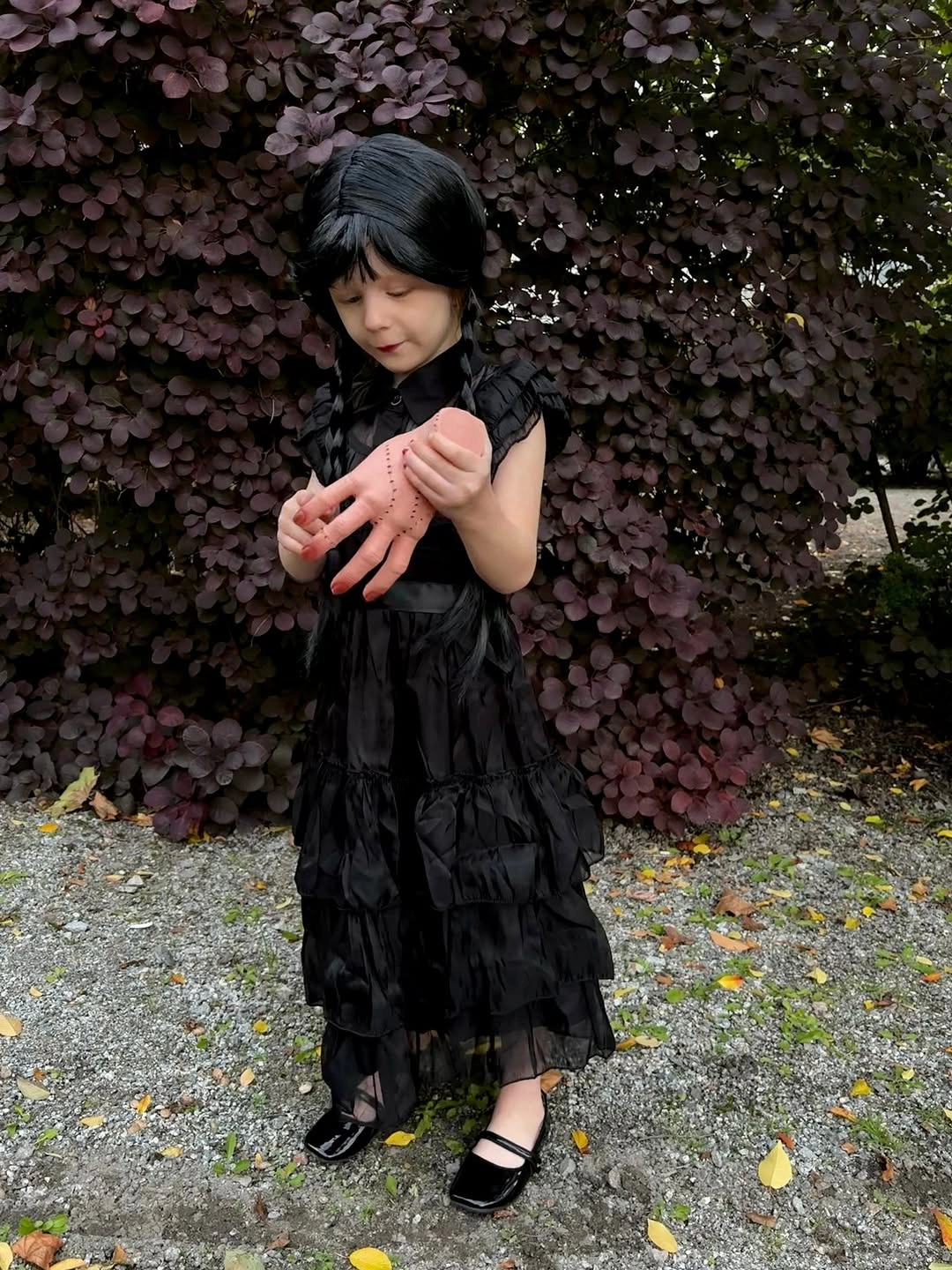
For Wednesday, keep the clothing black, let the hair frame the face, and avoid adding cheerful glitter, bright tights, or colorful accessories. The character’s humor comes from restraint, so a simple dark dress and a deadpan pose work better than piling on spiders, fake blood, or a huge hat that belongs to another Halloween idea altogether.
Choose a soft dress with movement in the skirt and shoes the child can run in, because Wednesday should still be comfortable enough for games and candy collecting. If a collar or braids are added, keep them optional and secure; the child will read as Wednesday through the dark, composed character mood even without every screen detail.
Queen of Hearts With Card Crown
This is the Queen of Hearts from Alice in Wonderland, using a red-and-black dress, dramatic card crown, dark sleeves, and a bold fairytale-villain stance. The crown is the key character marker because it turns the red dress into Wonderland royalty, making the child feel like the loud, demanding queen rather than simply someone wearing a heart-themed outfit.
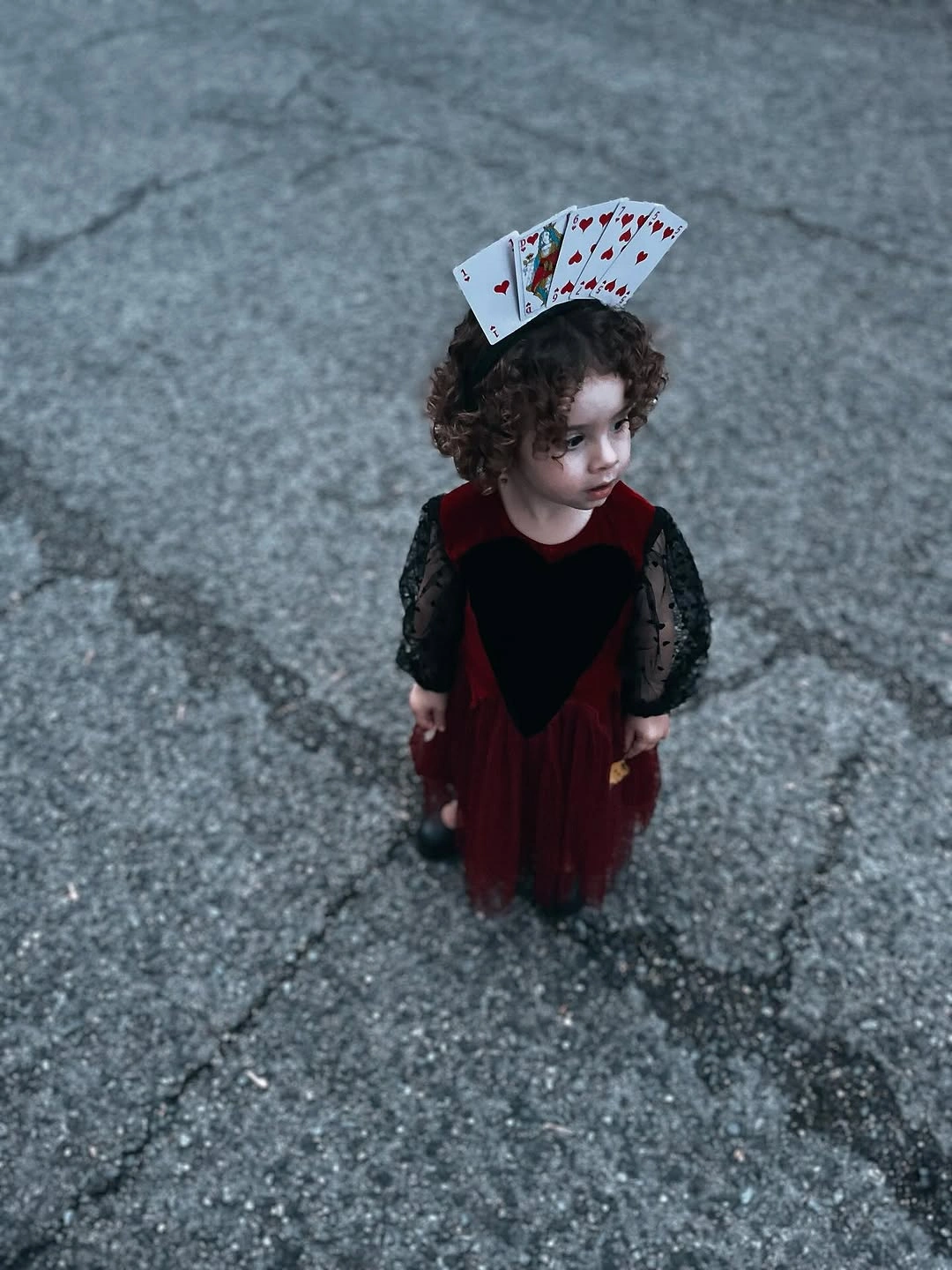
Keep the Queen of Hearts costume centered on red, black, and cards, then let the child choose how theatrical the makeup should be. A lightweight crown, heart detail, and strong skirt shape are enough; adding Alice, Cheshire Cat, or Mad Hatter elements to the same outfit would weaken the clear villain role that makes the character fun.
The crown needs to sit comfortably and remain secure during movement, particularly if it has real card-like edges. Use soft sleeves and a skirt that allows sitting, and keep any toy scepter small; the character works because of the queenly colors and crown, not because the child is carrying every Wonderland prop at once.
Pierrot Clown Sibling Duo
These children are Pierrot clowns, with ruffled collars, pointed hats, pom-poms, and two opposite black-and-white costume variations. Pierrot is a specific old theatrical clown character, softer and more melancholy than a circus clown, which is why the collar and conical hat matter so much more than adding bright rainbow colors or cartoonish novelty pieces.
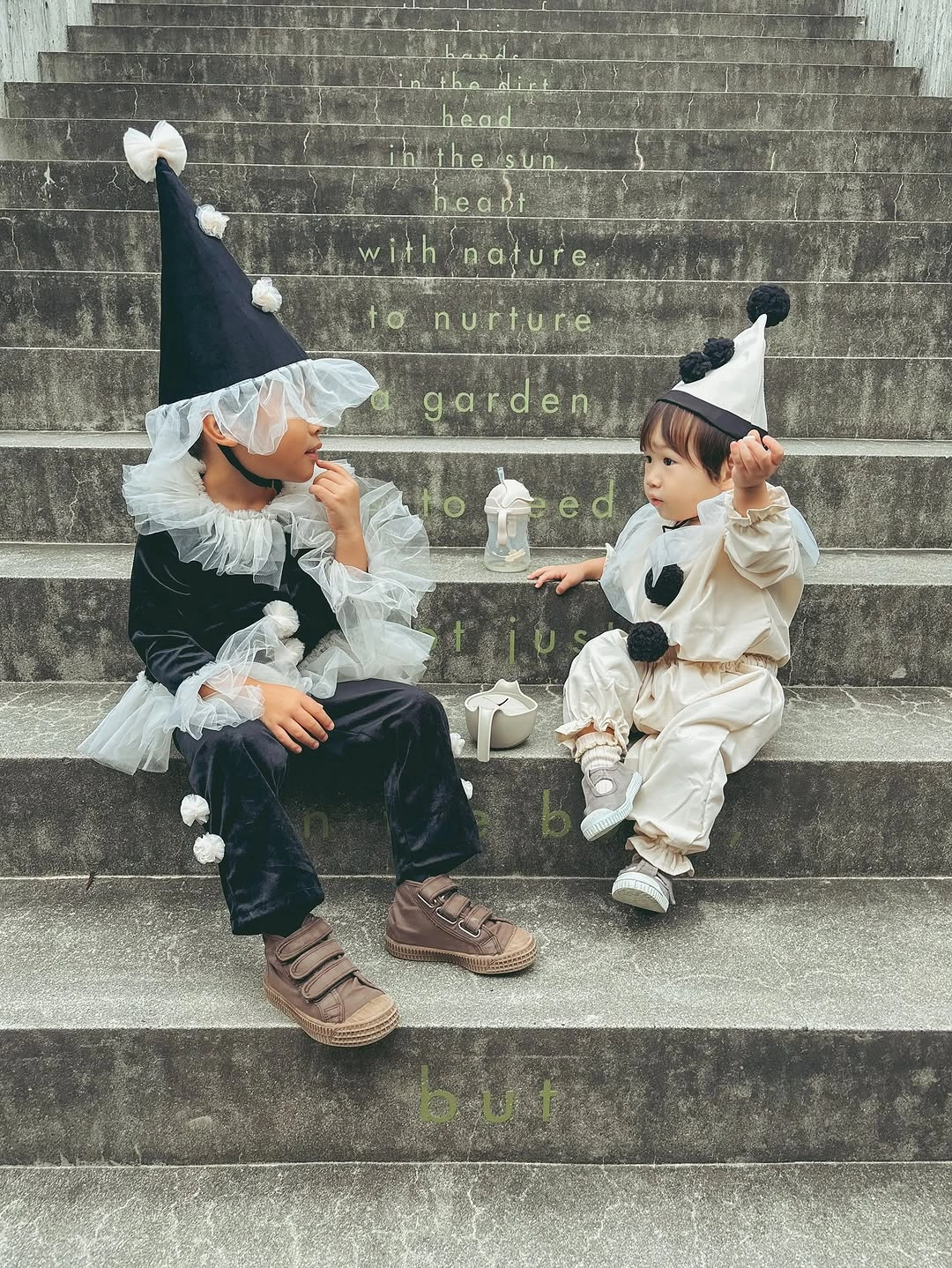
For a Pierrot duo, repeat the ruffle collar and small hat, then reverse the main colors so each child has a separate role in the shared theatrical world. Keep the face makeup gentle and the pom-poms secure, because the charm comes from the old-fashioned black-and-white pantomime look, not from turning the pair into generic party clowns.
Pointed hats should be light enough to remove during play, and collars should not scratch the neck or interfere with eating. Soft shoes and flexible fabrics will help the children stay comfortable, while the repeated white, black, and pom-pom details will still make the Pierrot characters recognizable even if a hat comes off later in the night.
Pennywise Tutu Costume for Kids
This is Pennywise from It adapted into a child-sized tutu costume, using the clown’s gray ruffles, red pom-poms, orange-red hair, pale tights, and bright red boots. The tutu makes the character more playful, but the red accents and white-gray base preserve the Pennywise reference clearly enough that it still feels like a Halloween horror clown rather than a random party outfit.
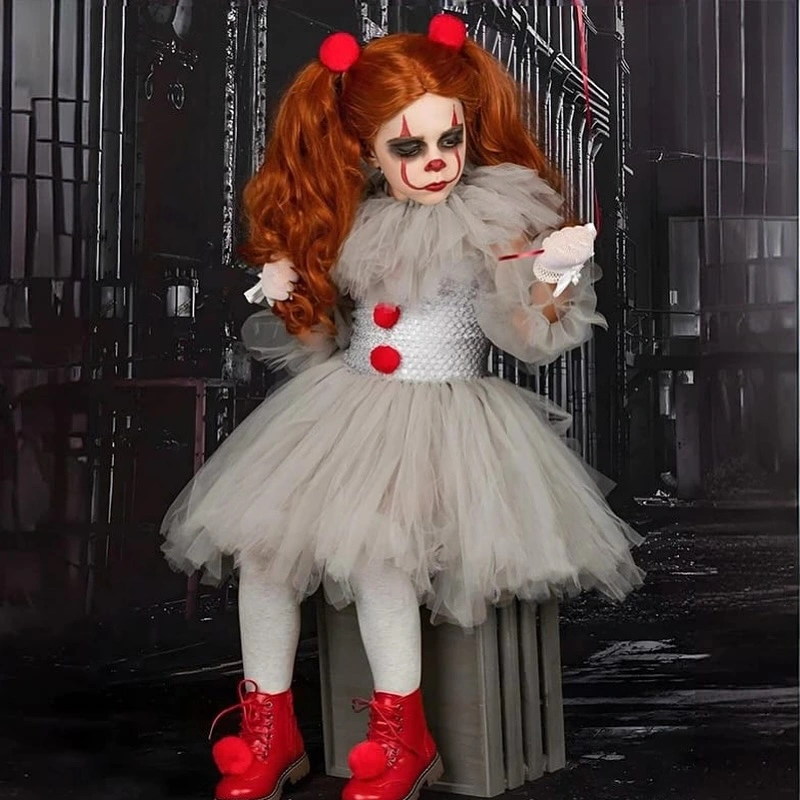
Keep the Pennywise details focused on the red wig, pom-poms, and pale ruffle shapes, then let the tutu be the child’s comfortable interpretation of the character. You do not need an intense face paint design for this version; a small red nose or gentle lip detail can be enough to signal the clown while keeping the costume age-appropriate and easygoing.
Make sure the tutu has a soft lining, the boots have grip, and the wig can be removed if it becomes warm or itchy. The character should remain clear when a child is dancing, sitting, or wearing a jacket, so avoid extra bulky props; Pennywise’s red-and-gray color code tells the story on its own. A red nose can be skipped entirely if it distracts from the child’s comfort.
Orange Witch With a Black Hat
This is a classic Halloween witch, built around a black lace-up bodice, bright orange skirt, black-and-orange witch hat, and a playful storybook silhouette. The costume is not an abstract color combination; the hat, corset-like front, and full skirt place the child directly in the familiar world of trick-or-treat witches and October magic.
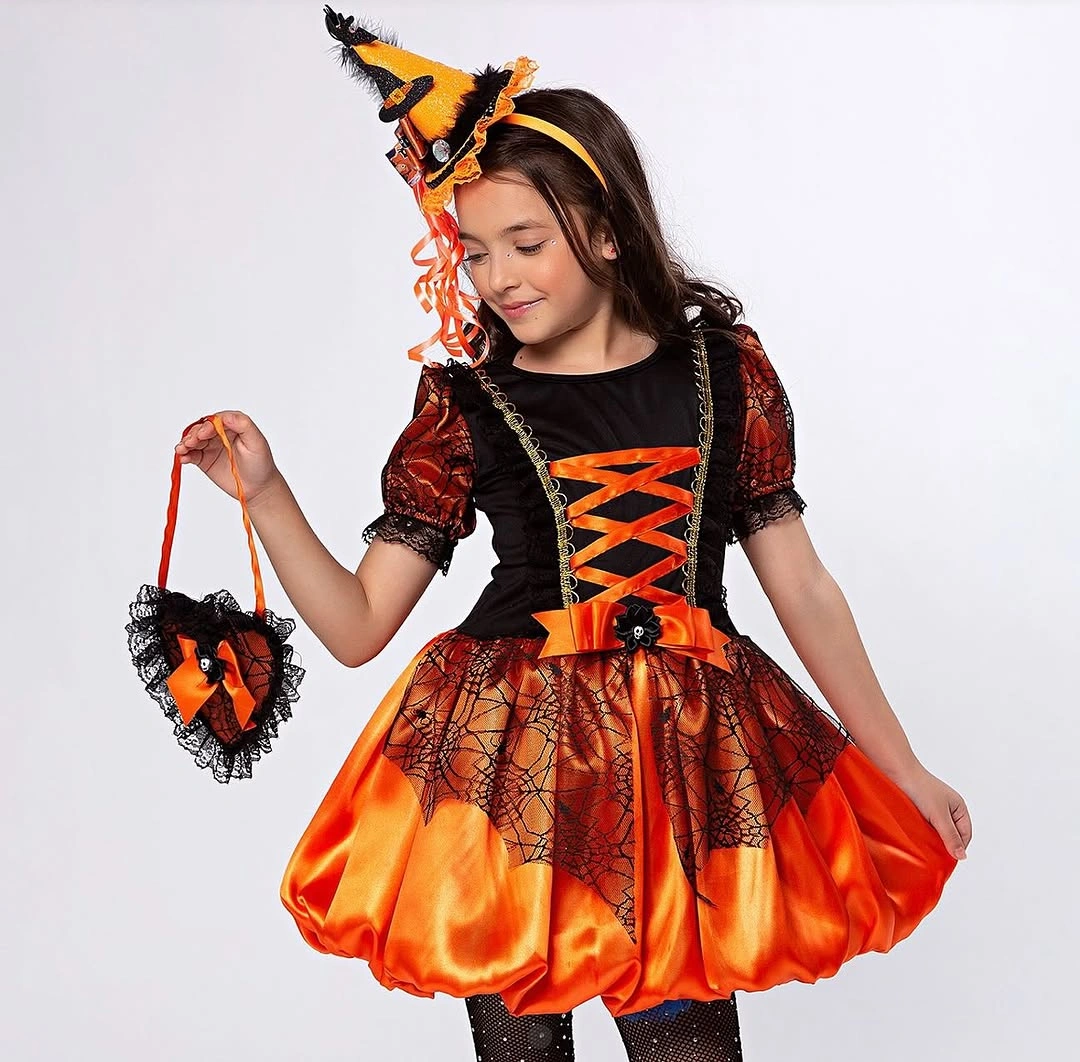
For a witch costume, choose one clear hat and one orange-and-black dress before adding broomsticks, spiders, or capes. The pointed hat creates the character in an instant, while the orange skirt makes the look feel festive rather than overly dark; keep other details restrained so the witch stays readable in a quick family photo.
Use a headband hat if a full cone hat feels too heavy, and make sure the skirt clears the shoes for safe walking. Decorative lacing should never feel tight, and a small broom is enough if the child wants a prop; the witch costume remains complete through the hat and colors alone. Keep the broom at home if the route involves many stairs or a crowded school event.
Little Dracula in a Cape
This is Dracula in classic child-friendly form, with a black cape, white shirt, black vest, red neck scarf, dark trousers, and pale vampire face. The red at the throat is the dramatic cue that turns formal clothing into the Count’s look, while the cape gives the child the theatrical silhouette every tiny vampire wants for Halloween.
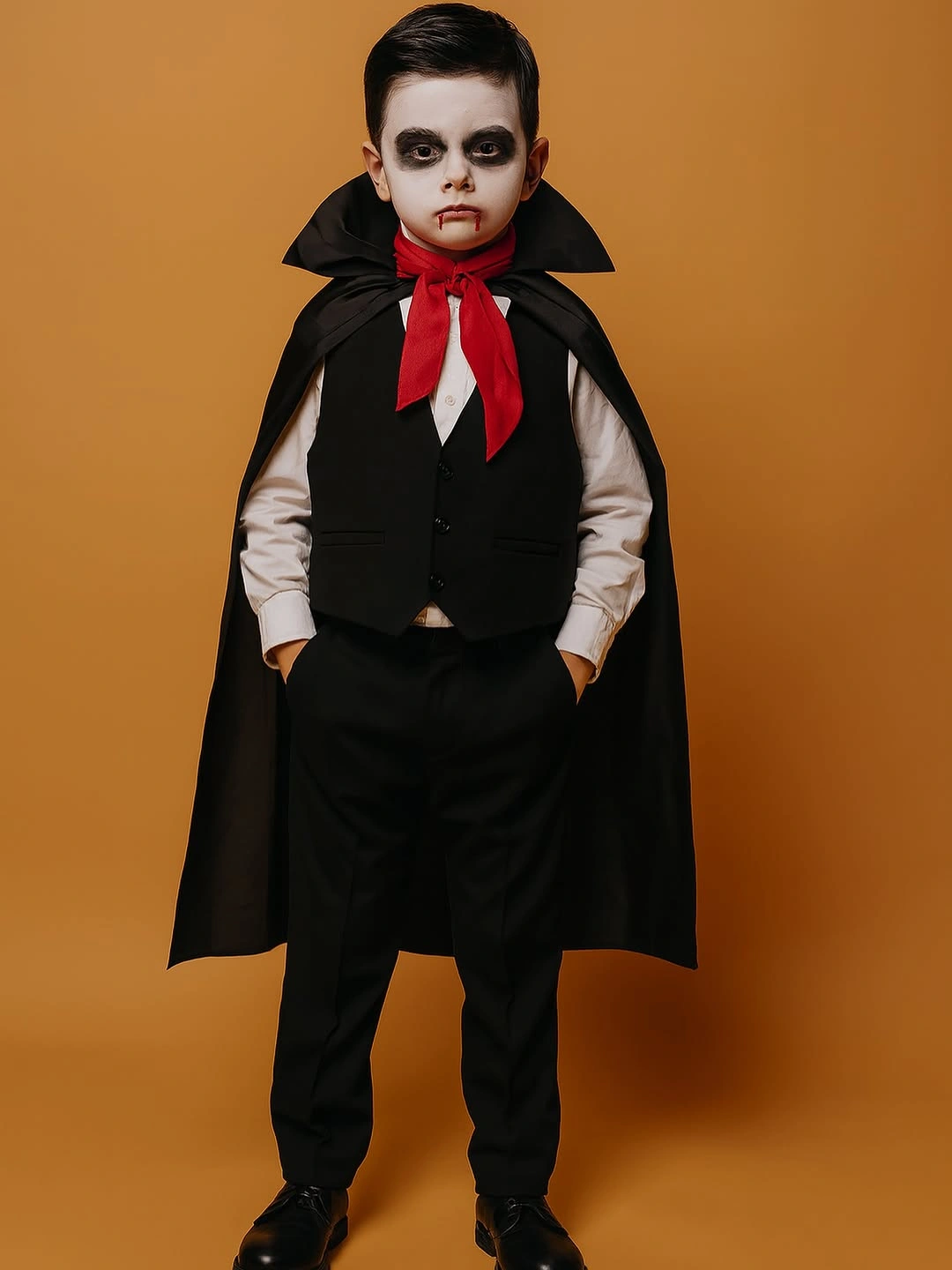
Dracula does not need fake fangs, a plastic coffin, or a complicated tuxedo to work; a short cape, white shirt, dark vest, and red scarf tell the vampire story immediately. Let the child practice swishing the cape and posing like a tiny Count, then keep the makeup simple so the character remains playful instead of becoming uncomfortable or frightening.
Choose a cape clasp that releases easily if it catches, and make sure the scarf sits loosely enough for comfort. Trousers and shoes should allow running, because children rarely stay still for long; the cape and red accent will still make Dracula recognizable after the prop is set down and the candy bag comes out.
Pink Witch With a Cone Hat
This is a pink witch character, with a cone hat, lace-up dark bodice, layered pink skirt, and black boots that keep the fairytale Halloween idea grounded. The unusual pink palette makes the witch feel personal and playful, but the hat and bodice preserve the core character so nobody mistakes the costume for an ordinary party dress.
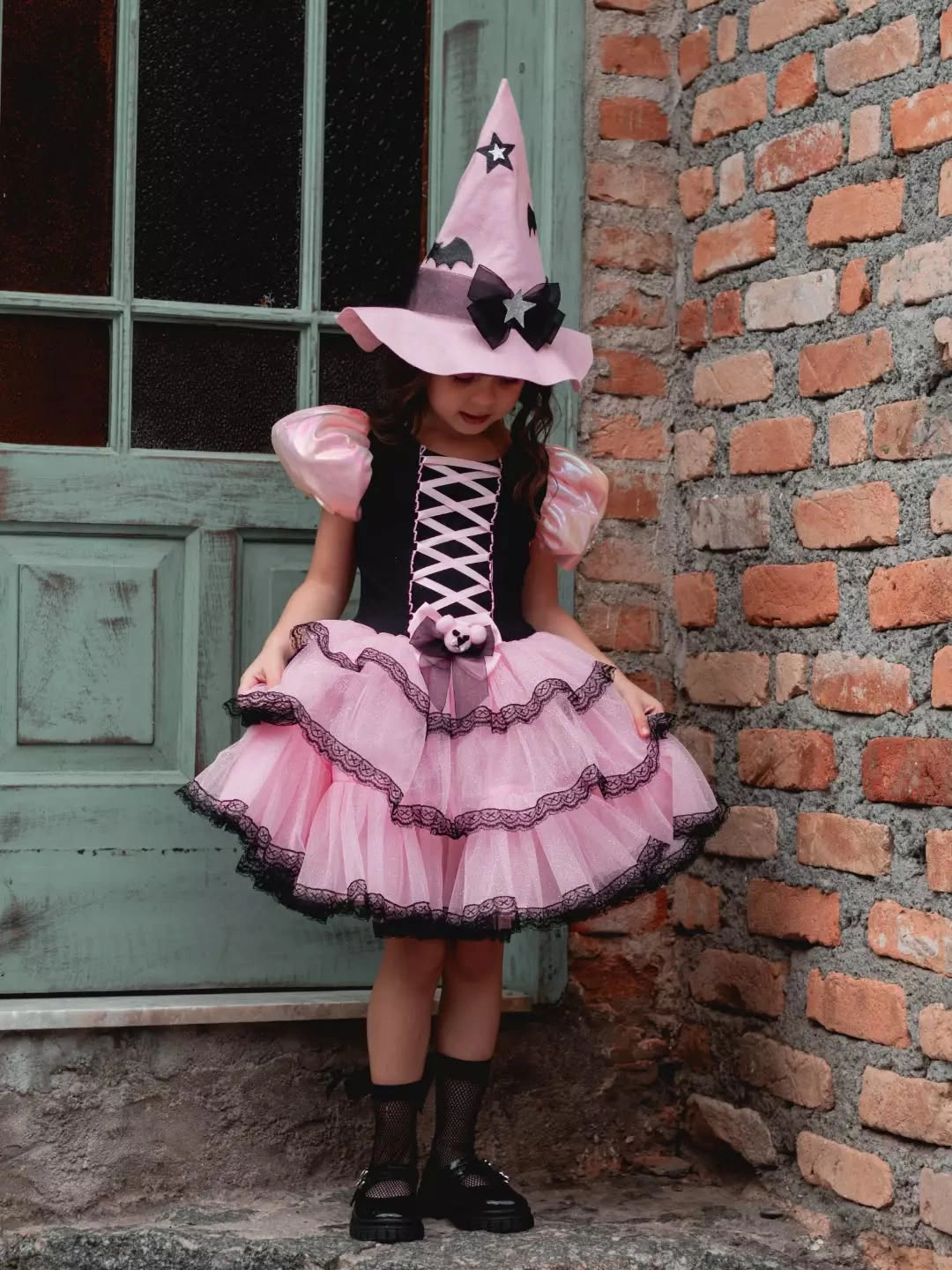
A pink witch works best when the silhouette stays unmistakably witchy, which means protecting the hat, the dark center, and one full skirt shape. Avoid mixing in unicorn horns, fairy wings, or princess crowns, because the fun is seeing a familiar Halloween witch rewritten in pink rather than losing the character beneath several unrelated costumes.
Keep the hat clipped securely but comfortably, and choose boots that are easy for the child to walk in. A plain black cardigan can provide warmth without hiding the bodice, while a small wand or broom can be optional; the pink-and-black witch identity already works without making the child carry too much.
Long-Robe Skeleton Reaper
This is a skeletal reaper character, with a long black robe, white bones, and cape-like sleeves that make the child look like a tiny figure from a Halloween graveyard. The large bone print identifies the character at once, while the robe creates the dramatic ghostly movement that a simple skeleton jumpsuit does not have.
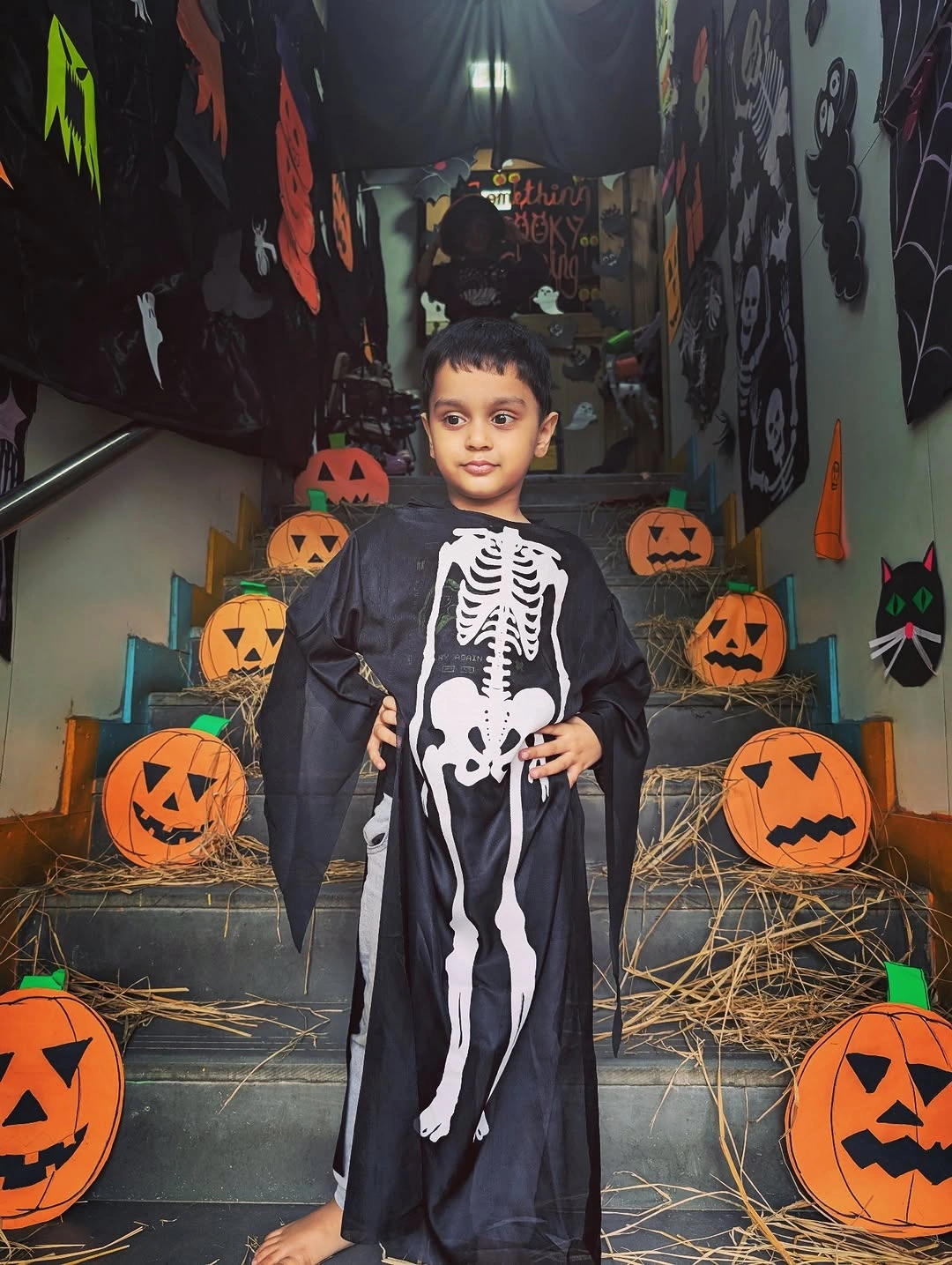
To make a reaper costume clear, keep the robe dark and long enough to move, then let the white bones or a small hood supply the spooky detail. There is no need for a massive scythe or a full face mask; a child can be a convincing little reaper through the robe’s shape and the contrast of white bones on black.
The hem must stay above the ground, and the sleeves should not hang into food, candy bags, or craft tables. Use a soft hood and comfortable shoes, then let the robe remain the primary element; a reaper costume loses its clean, ghostly silhouette if too many bright accessories or heavy props interrupt the black-and-white story.
Red Pirate Girl From Storybooks
This is a storybook pirate girl, recognized through the red head scarf, red sleeves, black corset front, fishnets, boots, and a ready-for-adventure pose. The costume creates a real pirate character rather than merely using stripes and a toy sword, because the scarf and waist details give the child the role of a young captain or treasure hunter.
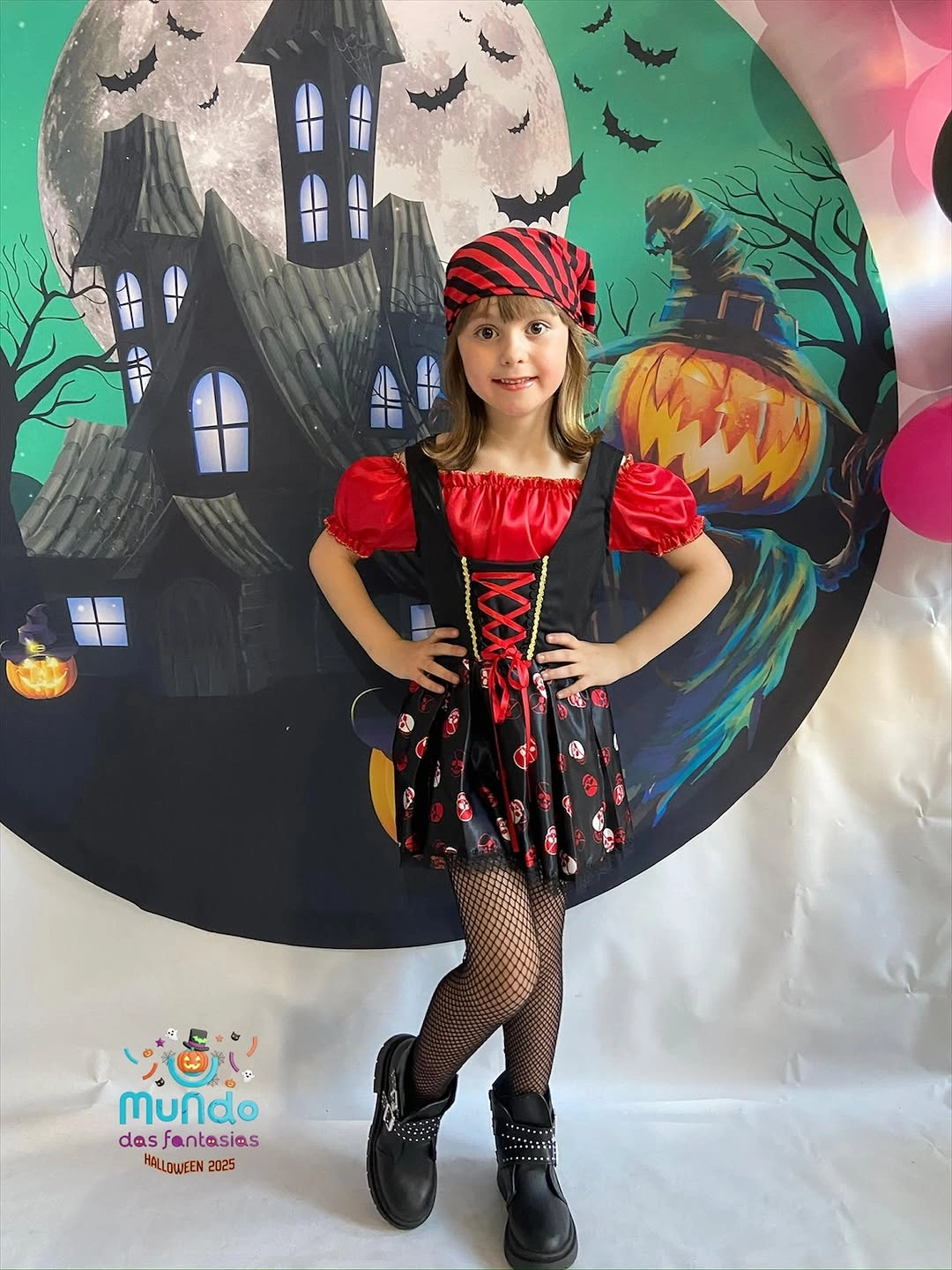
For a pirate costume, begin with the head scarf and waist piece, then choose a comfortable skirt or trousers that lets the child move. The red and black palette is enough to establish the character, while a small toy telescope, coin pouch, or soft sword can be added only if it does not make the costume harder to manage.
Keep scarf ends short, make decorative lacing loose, and check that tights or fishnets do not catch on boots. A pirate should be able to run, climb, and collect candy, so soft fabrics and stable footwear matter more than adding every imaginable ship accessory to a costume that already has a clear adventure story.
Miguel From Coco With Guitar
This is Miguel from Coco, with a red hoodie, skull face makeup, jeans, and a guitar prop that points directly to the young musician’s Día de Muertos journey. The character is specific because the red hood and guitar work together; without that musical cue, the costume would be a generic skeleton, but together they immediately evoke Pixar’s beloved family story.
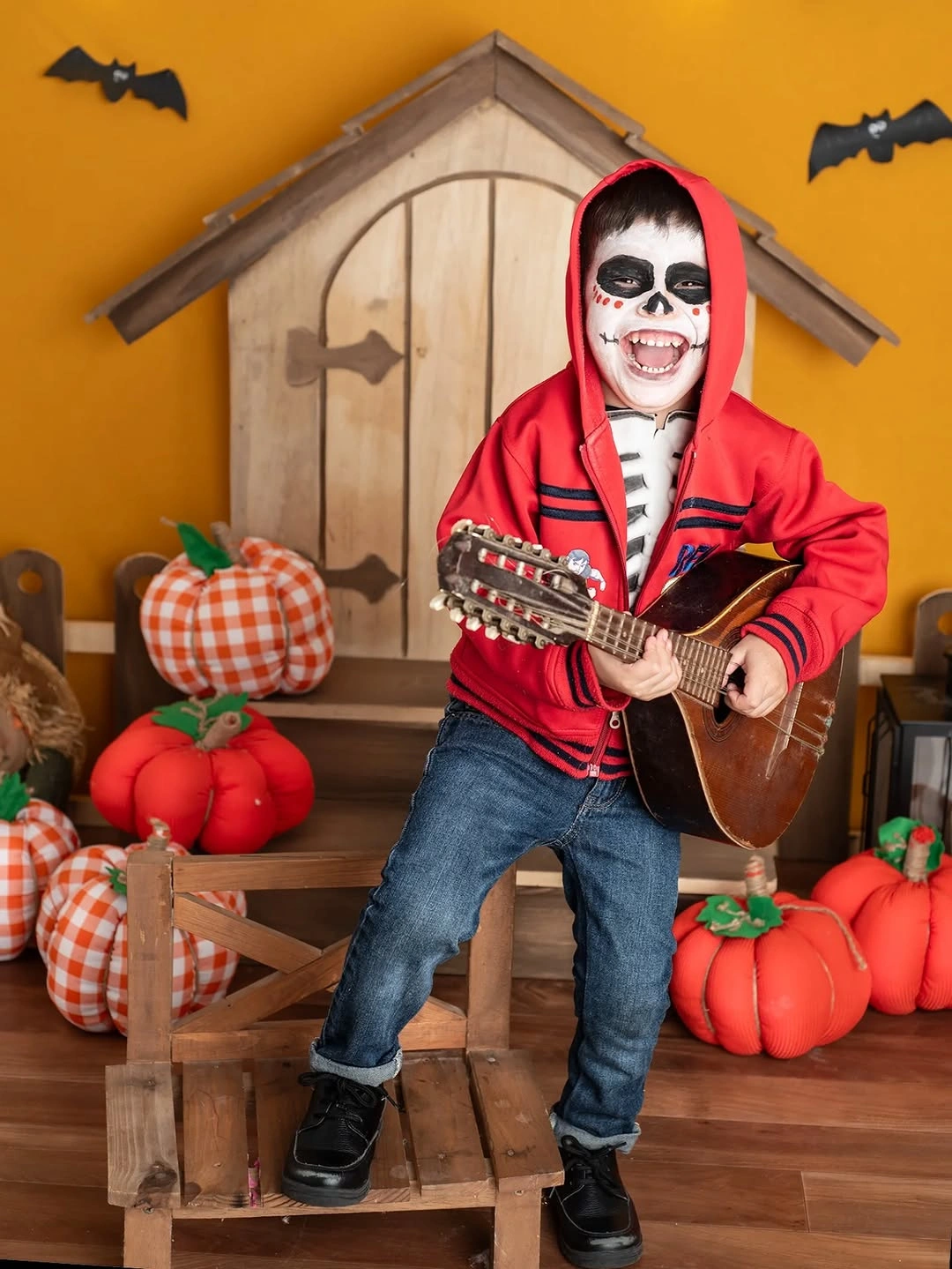
Miguel’s costume should keep the red hoodie visible and use a lightweight guitar that a child can actually hold comfortably. The skull makeup can be simplified into dark eye shapes and a small mouth detail, allowing the Coco reference to stay joyful and musical rather than turning into a heavy, frightening mask for a young wearer.
Make sure the guitar prop has no sharp edges and can be set aside quickly for treats or games. Jeans and sneakers are perfect for mobility, while the hoodie makes the character practical for a cool night; Miguel works because of the music and family-story feeling, not because every face detail is copied exactly.
Pink Cape Witch With a Broom
This is a cheerful pink cape witch, with a purple-pink hat, printed cape, striped dress, pink boots, and broom that complete a friendly Halloween spellcaster character. The cape is the main fantasy layer, while the hat tells the story immediately; together they make the child look ready to fly off to a costume party rather than simply wearing a patterned dress.
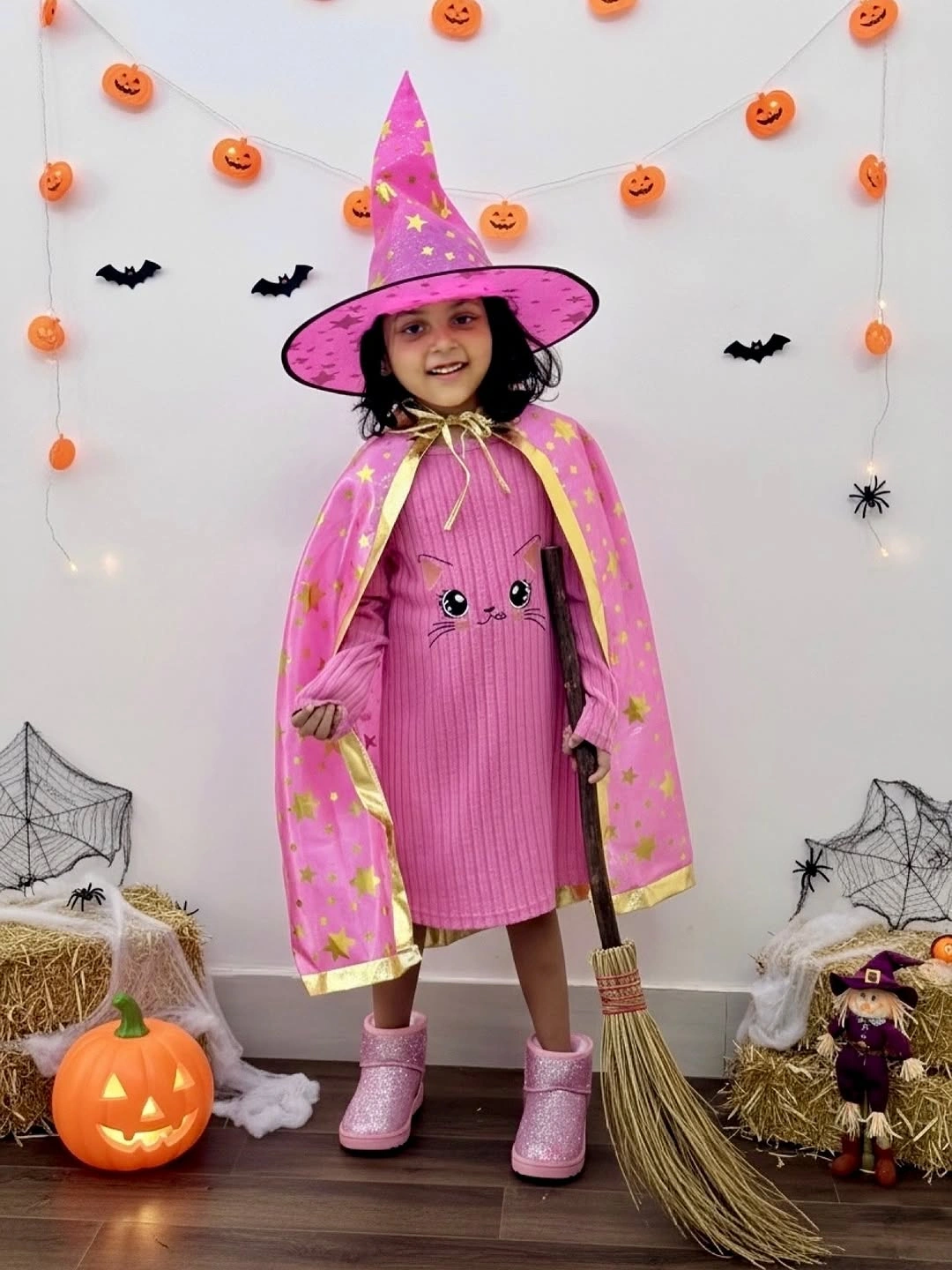
Keep the hat and cape as the core of this witch character, then let the striped dress stay as a supporting layer beneath them. A broom is a charming prop but should be light and short enough to carry, and there is no need to add another large print; the cape already contains the playful Halloween world the costume needs.
Test the cape clasp and broom handle before leaving, because both can get caught when a child moves quickly. Pink boots should have good grip, and the hat should remain removable if it becomes uncomfortable; the costume stays a witch even during a break because the cape and Halloween colors already establish the role.
Little Red Riding Hood Toddler
This is Little Red Riding Hood, with a bright red cape, red-and-white gingham skirt, tiny basket, and shoes that keep the toddler ready for a storybook Halloween walk. The cape is the essential character marker, turning a simple dress into the familiar fairytale child who is on her way through the woods to visit Grandma.
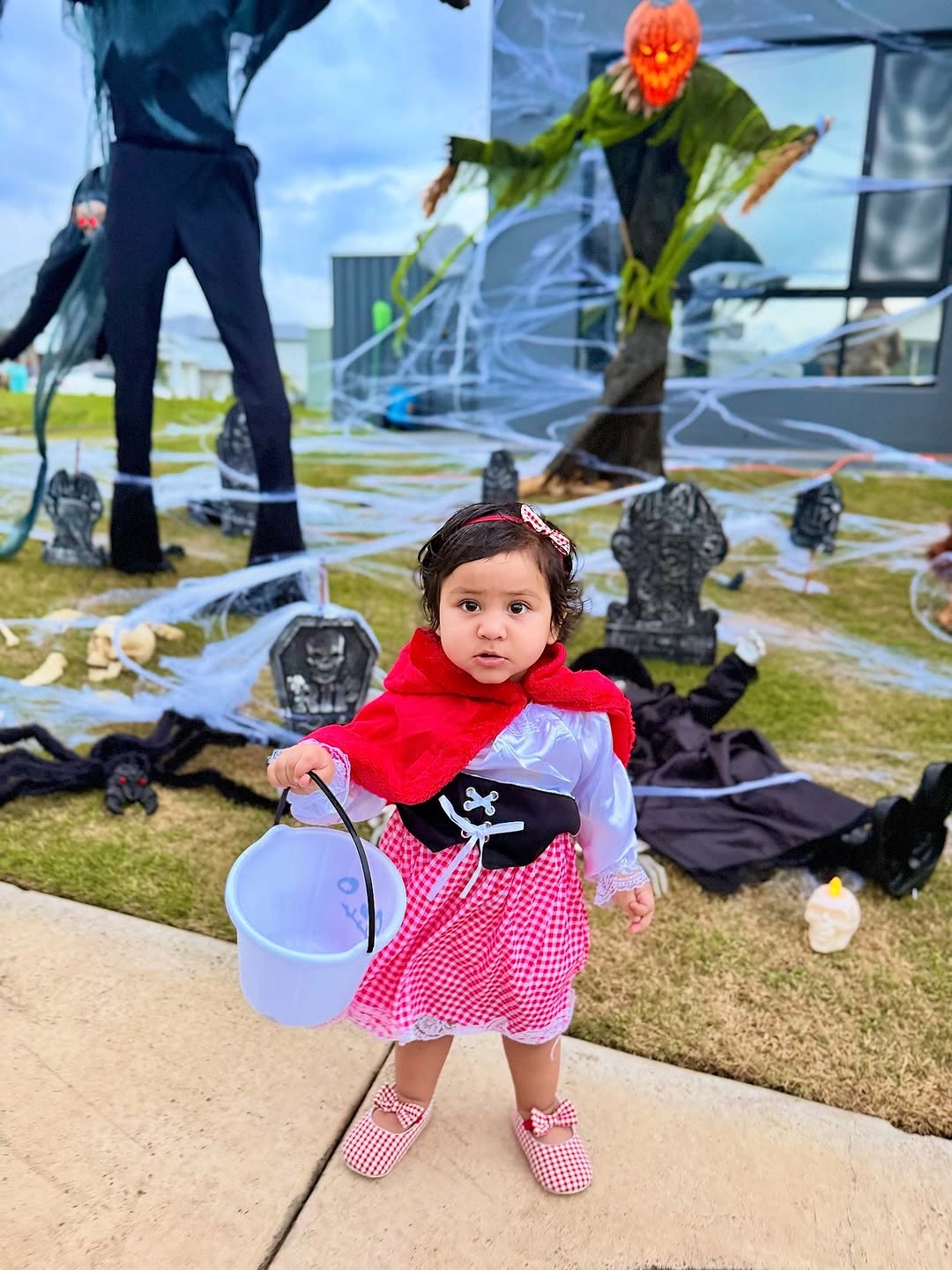
For Little Red Riding Hood, choose a short soft cape, a small basket, and one gingham or red dress detail, then stop there. A wolf mask, fake blood, or oversized grandmother prop would move the idea into another costume entirely; the charm comes from letting the toddler look like the innocent storybook heroine in a clear red hood.
Use a cape clasp that releases easily, make the basket soft and light, and choose shoes suitable for uneven paths or stairs. Toddlers change direction constantly, so the costume needs to work without a grown-up holding the hem; the red cape will keep Little Red recognizable even when the basket is set down.
Three Little Pirates on a Quest
These three children are a pirate crew, linked through brown-and-white clothes, head scarves, boots, a small sword, and a skull prop that give each child a role in the same treasure-hunting world. The group works because the costumes share a story but not identical cuts, allowing a captain, crew member, and little adventurer to look distinct together.
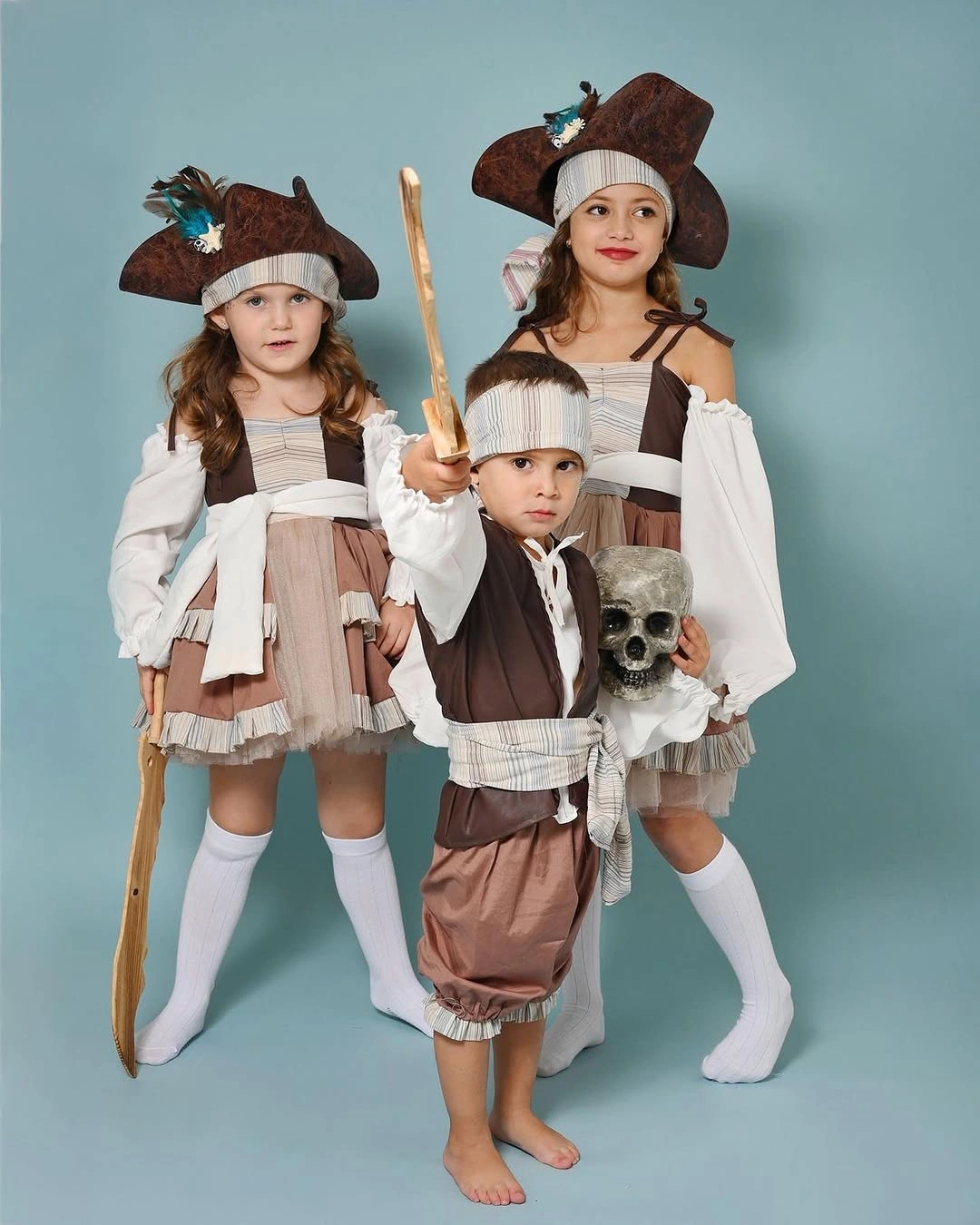
For pirate siblings, choose a shared palette and two or three repeat markers such as scarves, belts, and worn-looking brown layers, then let each child have their own silhouette. One can wear a dress, another trousers, another a small hat, and the group will still read as a coherent crew without forcing anyone into an uncomfortable matching costume.
Keep swords and skull props light and supervised, especially around younger siblings and crowded entryways. The boots should be practical for walking, and head scarves need secure short ties; a pirate crew looks better when the children are happily moving through their adventure than when every accessory is slipping or being carried by adults.
Maleficent With Horns and Staff
This is Maleficent, recognized through the dramatic curved black horns, dark tulle skirt, black wings, and staff that create the Disney villain’s imposing silhouette. The horns are the character’s immediate signal, while the staff gives the child a magical focal point; together they make the dark costume unmistakably Maleficent rather than a generic black fairy.
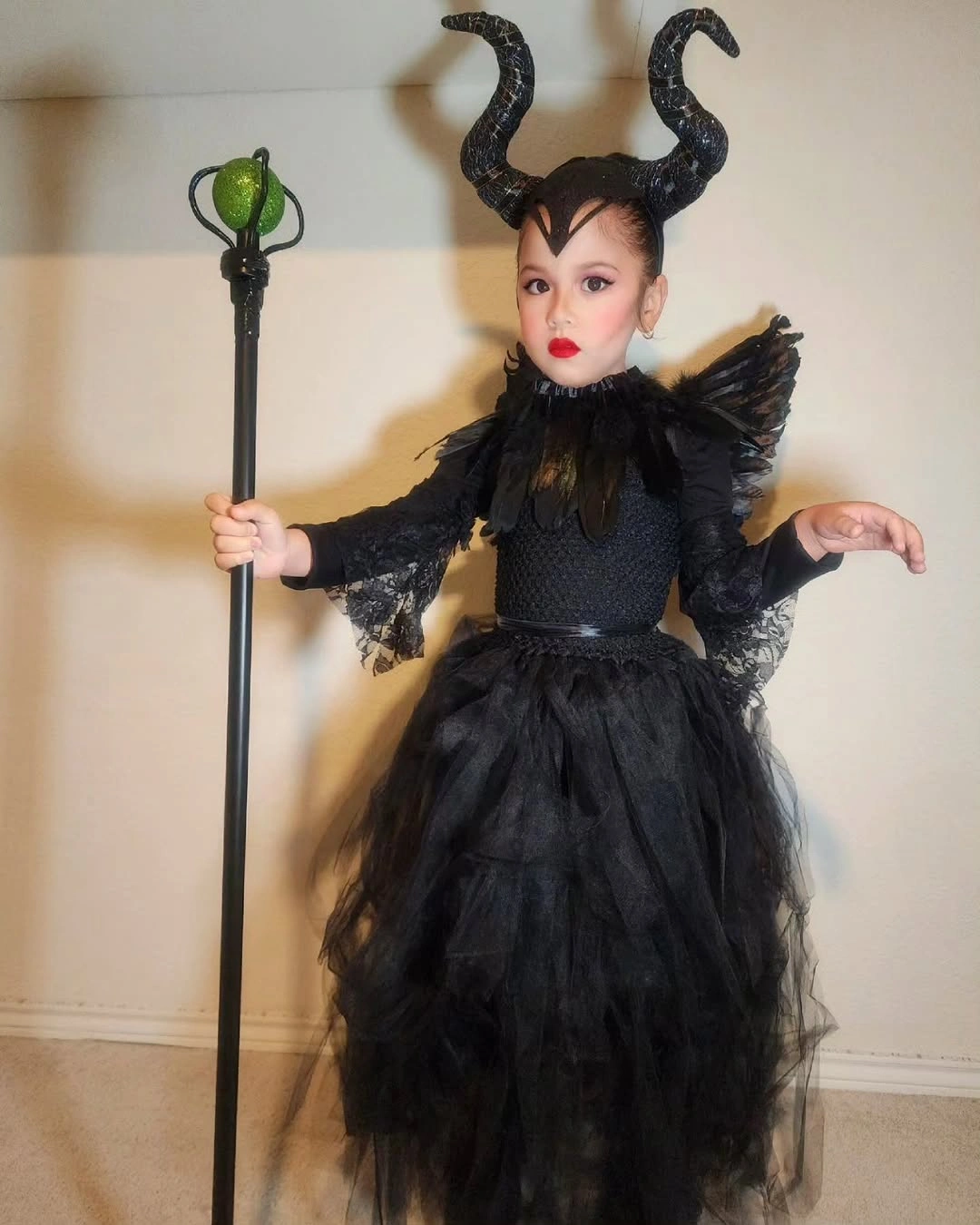
Maleficent needs the horns first, then wings or a staff can reinforce her role as the powerful Sleeping Beauty villain. Keep the clothing nearly monochrome and avoid adding bright fairy colors, because the contrast between black horns, dark wings, and a little green or pale face makeup is what makes the character dramatic and easy to recognize.
Horns and wings need a doorway, car-seat, and visibility test before the party, while the staff should have a soft safe end. Tulle must clear the shoes, and the child should be able to remove the headpiece for breaks; the Maleficent identity will remain intact through the dark clothing and staff even when comfort requires an adjustment.
Sheet Ghost With a Beanie
This is a classic sheet ghost with a personal twist, using two black oval eyes, a brown beanie, dark jeans, and sneakers to turn the old Halloween costume into a specific friendly ghost character. The beanie gives the child personality, while the simple white sheet keeps the ghost idea clear without relying on a mask, a cape, or a complicated costume kit.
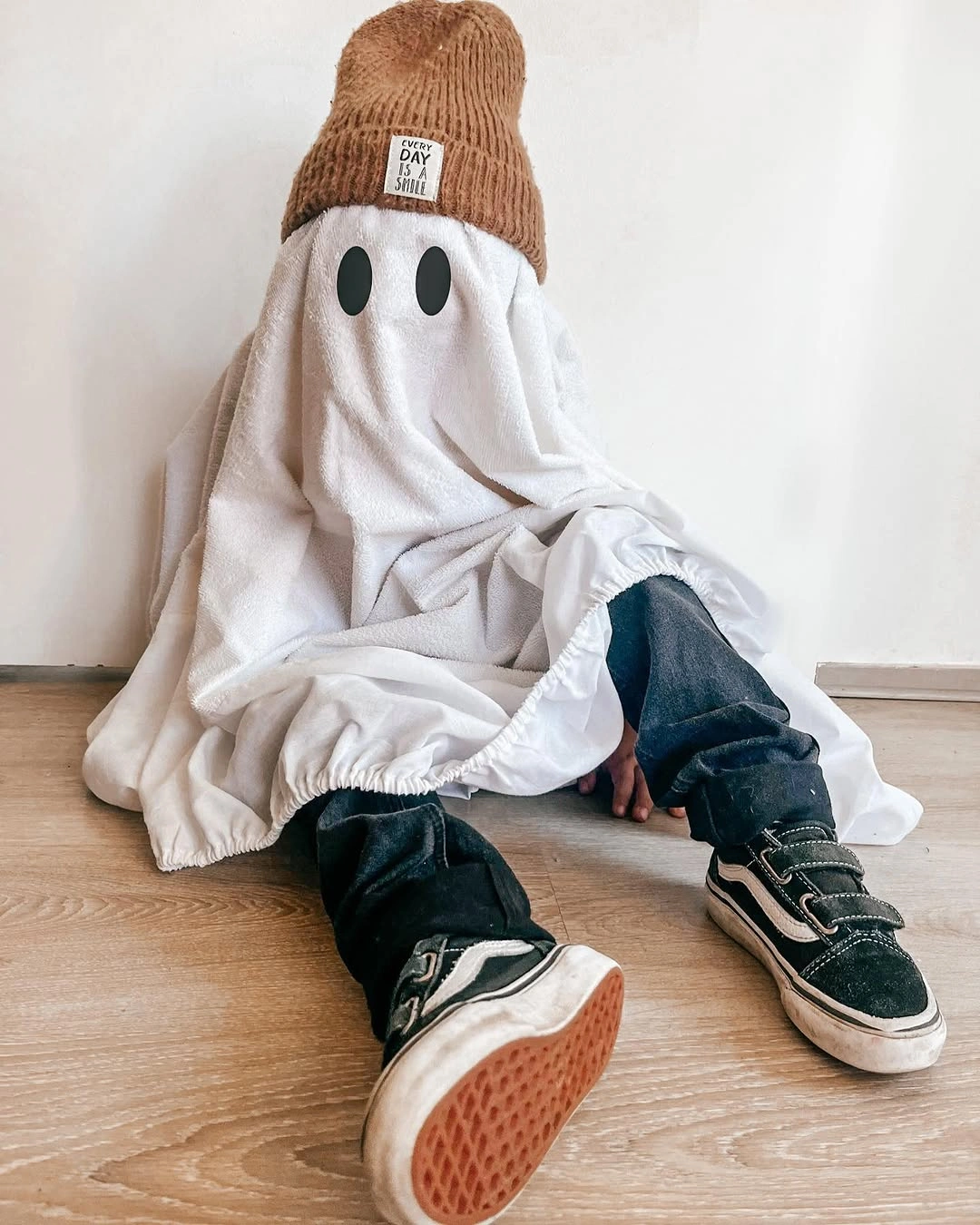
A sheet ghost works best when the eyes are large, the hem is safe, and one everyday accessory makes the character feel like the child rather than a blank costume. The beanie is enough here; do not add a second big prop or a loud print, because the humor comes from the ghost being simple, familiar, and slightly unexpected.
Cut vision holes carefully, keep the fabric breathable, and make sure the sheet does not drag under sneakers. The child should be able to lift the costume easily for stairs and bathroom breaks, because a ghost that can move freely will be much happier than one whose clever Halloween look needs constant adult help.
Young Astronaut Ready for Launch
This is a young astronaut, using a white NASA-style jumpsuit, mission patches, white sneakers, and a small rocket or space-equipment prop. The one-piece suit supplies the character immediately, making the child look ready for a mission rather than like someone in plain white clothes; the patches and prop simply add the final space-story details.
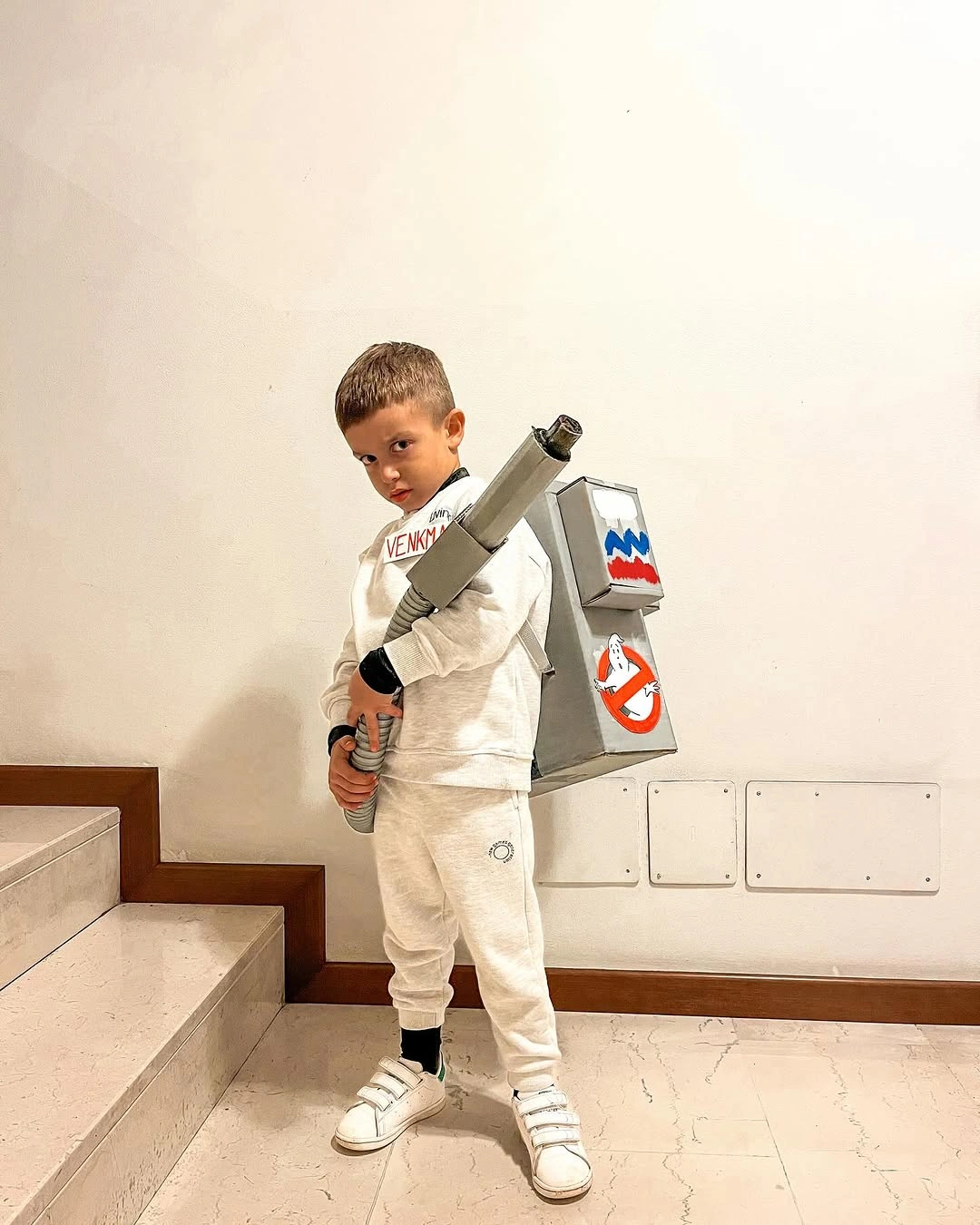
For an astronaut costume, keep the jumpsuit comfortable and let the patches, flag, or small rocket do the specific character work. A bulky helmet is not necessary if it affects visibility, and a lightweight prop is better than a hard toy; the clean white suit and mission-style details already make the child look ready to launch into Halloween.
Check zippers, cuffs, and shoe fit before leaving so bathroom breaks and running around stay easy. The prop should be light enough to set down, and the suit should remain comfortable under a jacket; a child can still look like an astronaut when the coat comes off because the patches and white jumpsuit carry the entire idea.
Chucky Toddler With a Toy Knife
This is Chucky from Child’s Play, recognized by the orange hair, red-and-white striped shirt, blue overalls, small face marks, and toy knife. The character is instantly clear because the striped sleeves and overalls are his signature combination, turning a toddler into the famously mischievous horror doll without relying on a stiff mask or an uncomfortable full costume.
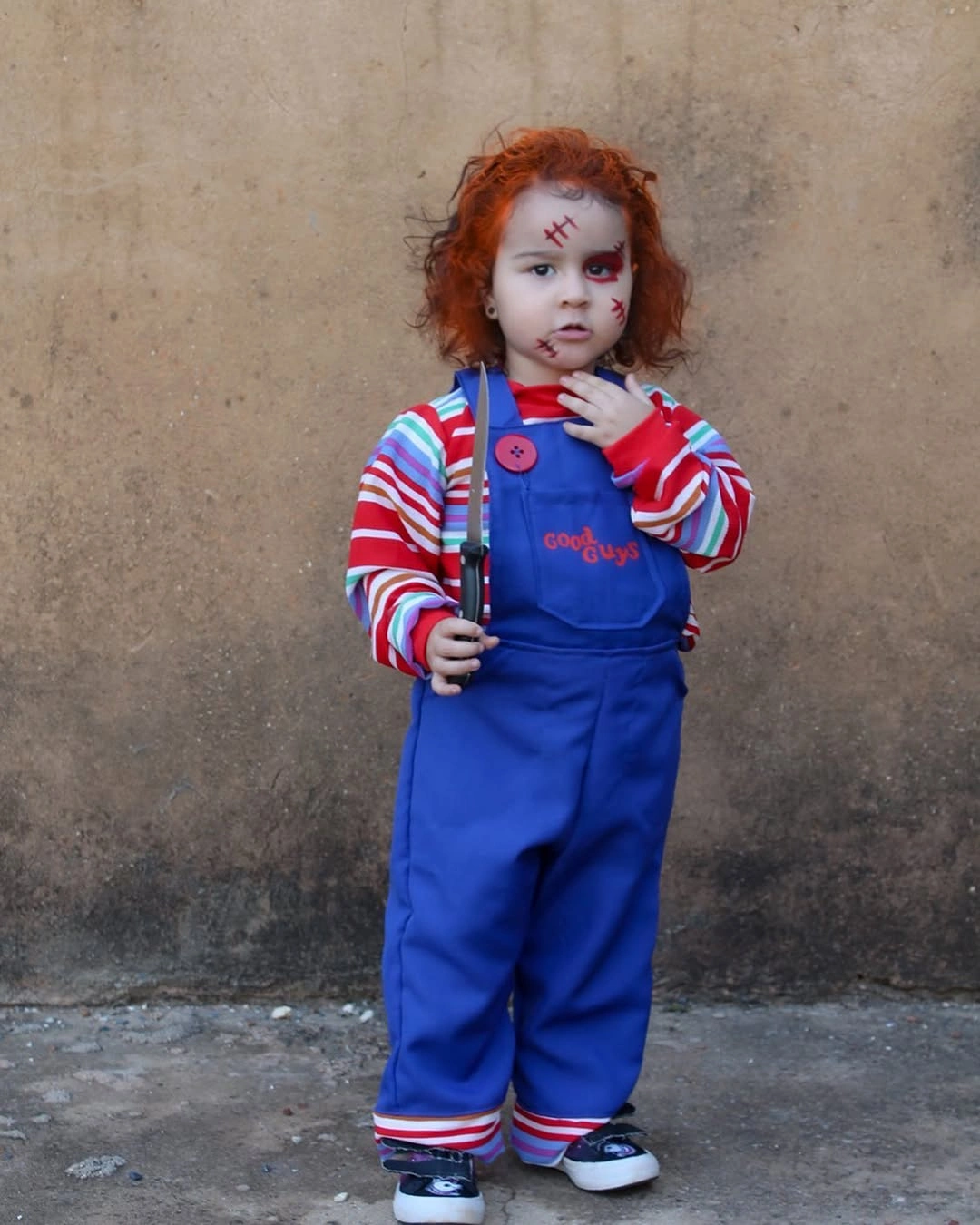
Chucky needs the stripes, blue overalls, and orange hair before anything else, so make those elements comfortable and age-appropriate. Use a clearly soft, toy-like prop only if the setting is suitable, and keep the face marks light; the clothing combination already delivers the Child’s Play character without pushing the costume into something too intense for a young child.
The overalls should allow squatting, running, and easy diaper or bathroom changes, while the wig or hair color should stay gentle on the scalp. If the toy knife is inconvenient, put it away without worry; Chucky remains unmistakable through the striped shirt and blue overalls, which are the pieces children and adults recognize first.