Late-fall dressing can become visually heavy when every layer claims the same amount of attention. The answer is not a fixed formula but a hierarchy of visual load: let one shape, color, or surface lead, then give the other elements enough quiet space to clarify that decision. This keeps a layered outfit expressive without making its outline feel crowded.
The strongest combinations are held together by relationships that remain legible at a glance. A repeated tone can travel across separate pieces, a change in scale can mark the center, and a controlled contrast can keep adjacent surfaces from merging. Thinking in those terms leaves room for different silhouettes and personal choices without turning the styling into a checklist or a claim about the wearer.
Long Brown Layers Frame Wide Blue Denim
A long brown outer layer sets the main vertical frame, while the wide blue jeans create a broad lower block that has its own clear presence. Because those two shapes differ in both color and direction, neither needs to overpower the other; the outer layer reads as a long border around the body, while the denim keeps the lower half visibly expansive rather than disappearing beneath it.
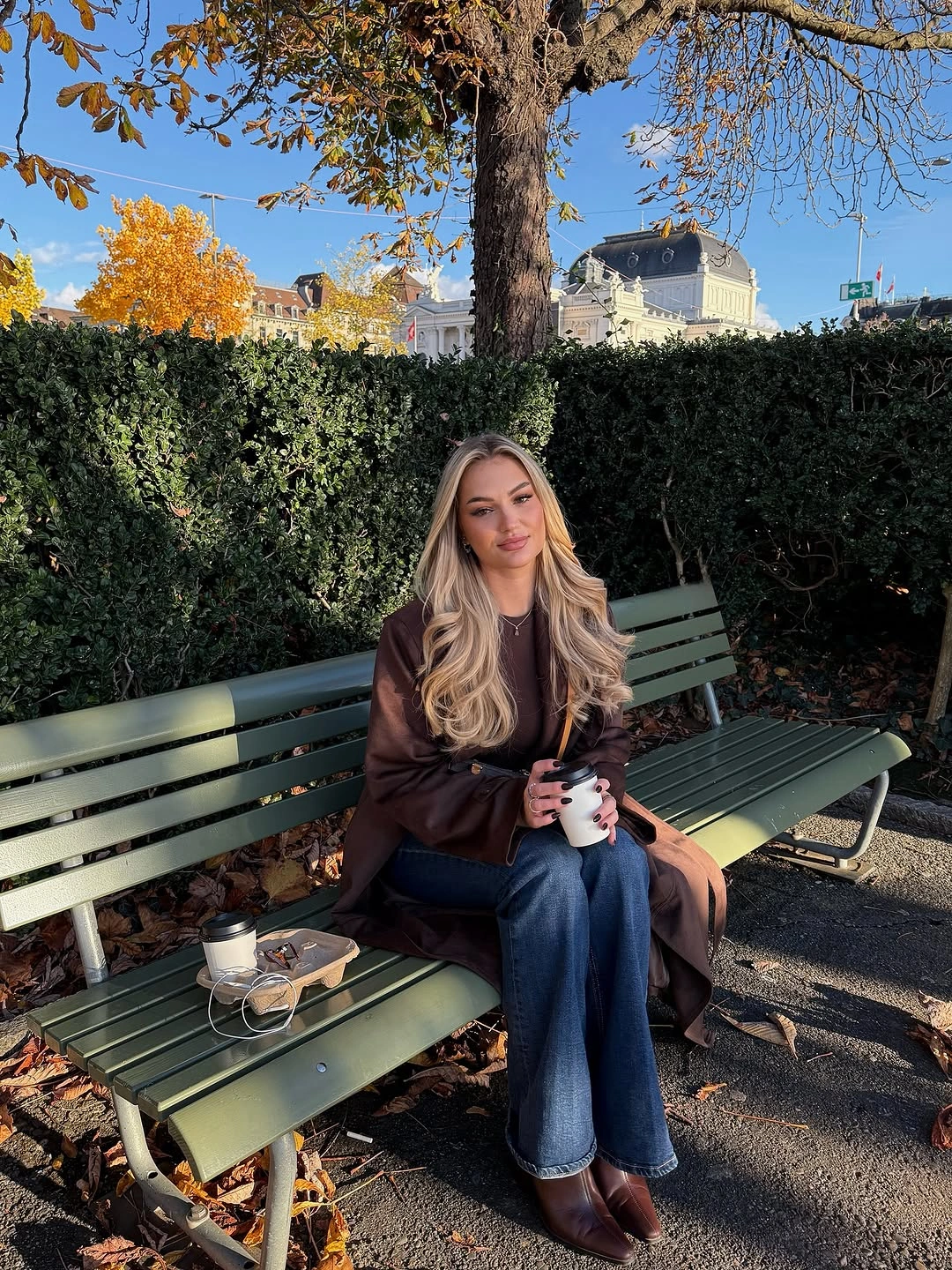
Photo via Instagram
The separation becomes clearer where the brown edges fall beside the blue denim instead of covering it completely. That visible gap allows the long outer shape and the wide jeans to register as two distinct masses, which is important in women's late fall outfits where several substantial pieces can otherwise merge into one heavy outline with little visual breathing room.
Brown returns again at the pointed ankle footwear, but the repetition is intentionally distant from the outer layer rather than stacked in the same area. That spacing turns color repetition into a subtle echo, giving the outfit continuity while leaving the blue denim as a strong independent block between the two brown points.
Short Dark Jacket With Cropped Brown Trousers
The dark leather-look jacket creates the broadest part of the silhouette through its expanded shoulders and roomy sleeves, yet its shorter length keeps that volume concentrated above the trousers. Because the jacket stops well before the cropped taupe-brown pants end, the eye can separate upper width from lower length instead of reading the whole outfit as one continuous oversized shape.
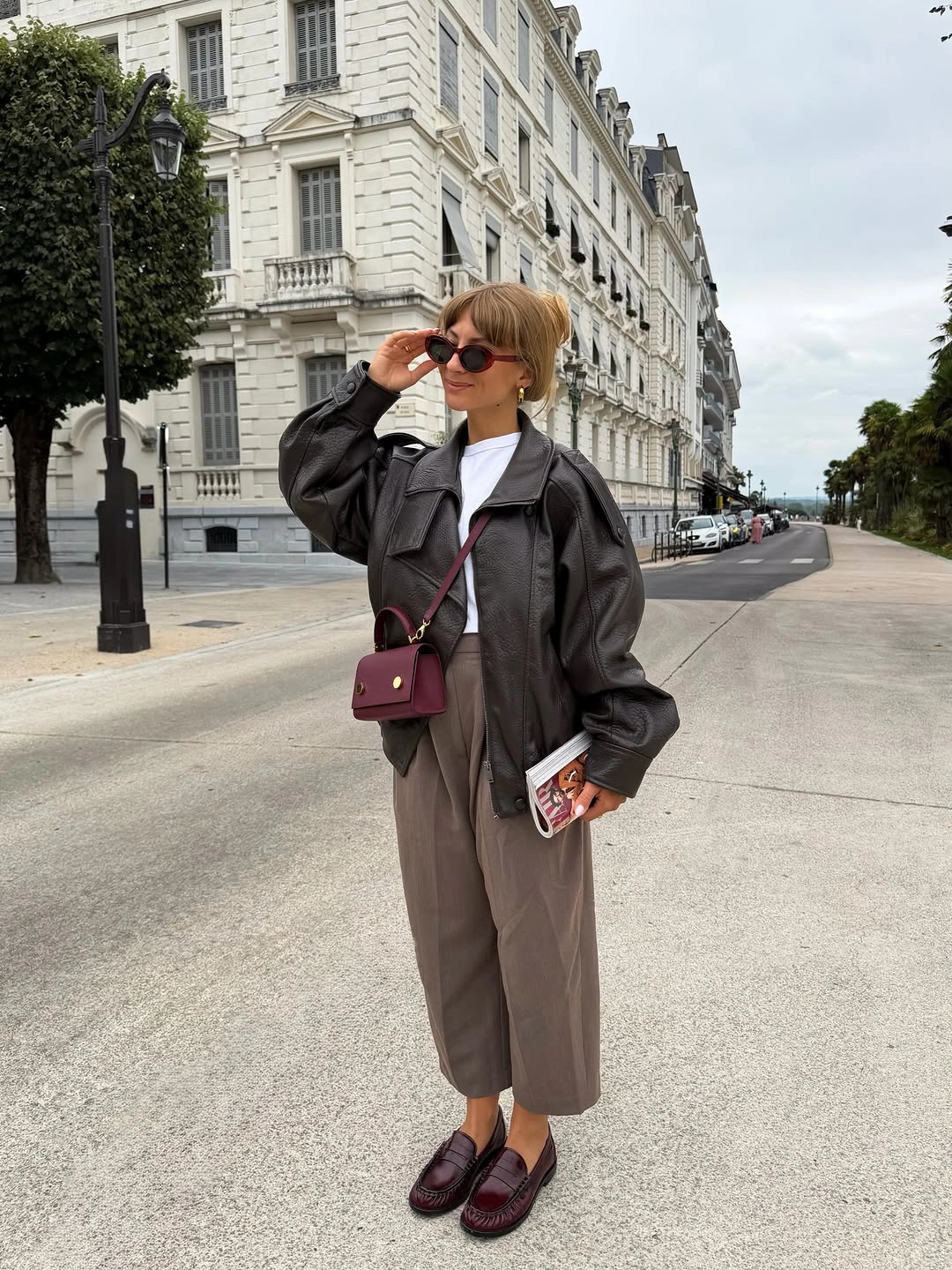
Photo via Instagram
The white crew-neck top works as a narrow interruption between the dark jacket and the softer brown of the trousers. Only a limited area is exposed, but that lighter strip is enough to keep the two muted outer blocks from touching visually, which gives the outfit a sharper internal boundary without requiring another large contrast or an additional layer.
Burgundy appears at both the small crossbody bag and the loafers, placing the same color at the torso and near the ground. Those compact repeats bracket the quieter neutrals in between, so the color connection feels deliberate without competing with the jacket's broad shape or the trousers' cropped line.
Belted Cape Shape Over Wide Black Trousers
The brown cape-like top carries noticeable width through its draped sides, but the belt draws that volume inward at the center and prevents the upper half from becoming a single unchecked sweep. That contrast between broad outer edges and a defined middle gives the silhouette structure, allowing the dramatic shoulder-to-side span to remain visible without losing a clear central point.
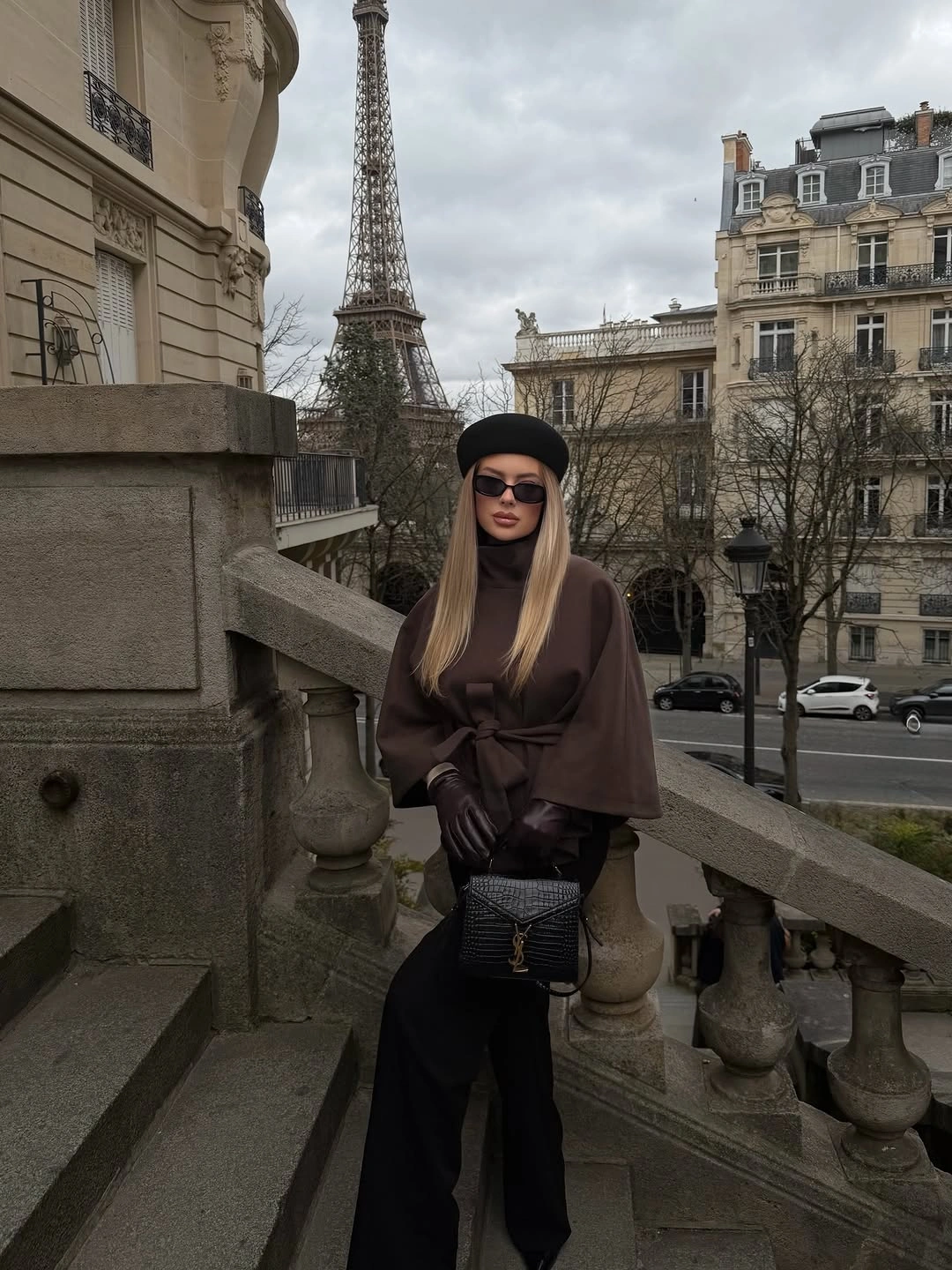
Photo via Instagram
Below the belt, the black wide-leg trousers create an uninterrupted dark base that does not introduce another competing color relationship. Their width matters, but the consistent black surface makes the lower half read more quietly than the brown drape above, so the eye stays aware of the cape-like outline and the controlled narrowing at the waist.
The black beret, sunglasses, gloves, and structured handbag extend that dark base upward in small, separate placements. Because these accessories repeat the lower color rather than introduce new tones, they reinforce the black foundation while leaving the brown upper shape as the main source of volume and contrast.
Oversized Scarf Builds a Burgundy Color Rhythm
The oversized scarf is the proportional centerpiece because its broad cream, burgundy, and brown blocks occupy more visual space than any other accessory and extend well below the neckline. Against the dark sweater and short burgundy skirt, that long scarf creates a vertical mass through the center, making scale itself the first thing the eye reads before the smaller repeated details.
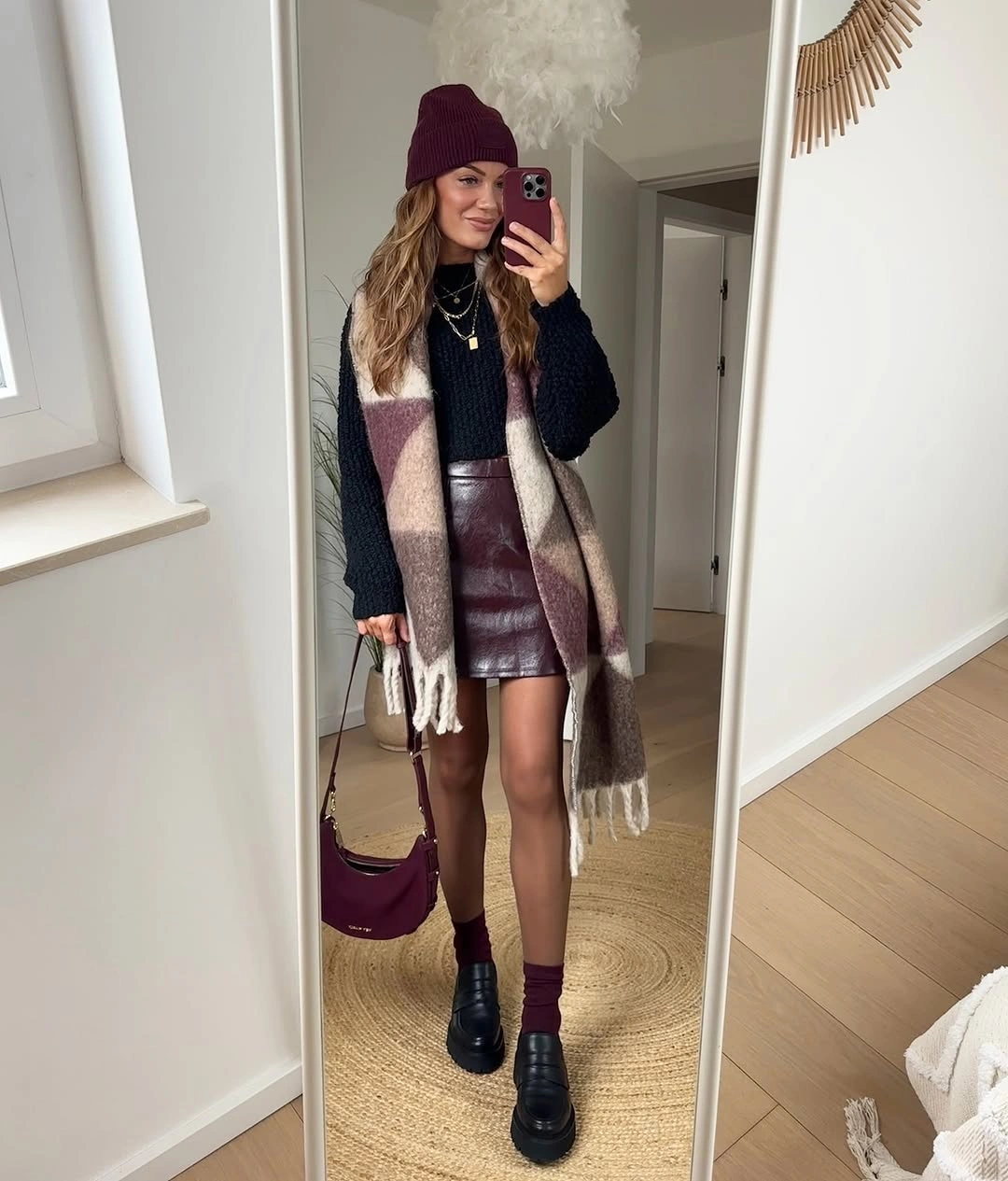
Photo via Instagram
Burgundy is distributed across the beanie, skirt, socks, and bag rather than concentrated in one continuous area. Darker interruptions from the sweater and chunky loafers keep those burgundy zones from blending together, so the repetition feels rhythmic: the same family of color reappears at different heights while black breaks prevent it from becoming a single uninterrupted column.
The short skirt and visible leg create open space between the oversized scarf above and the substantial loafers below. That interval matters because it interrupts two heavier-looking elements, keeping the silhouette from becoming densely packed from neckline to shoe and giving the repeated burgundy accents room to register separately.
Striped Top Meets Extra-Wide Dark Denim
The striped long-sleeve top introduces strong horizontal rhythm across a relatively compact upper area, while the extremely wide dark-blue jeans create a much larger uninterrupted field below. The contrast is not simply fitted versus loose; it is also patterned density versus broad solid area, which makes the two halves feel distinct even though both carry noticeable visual width.
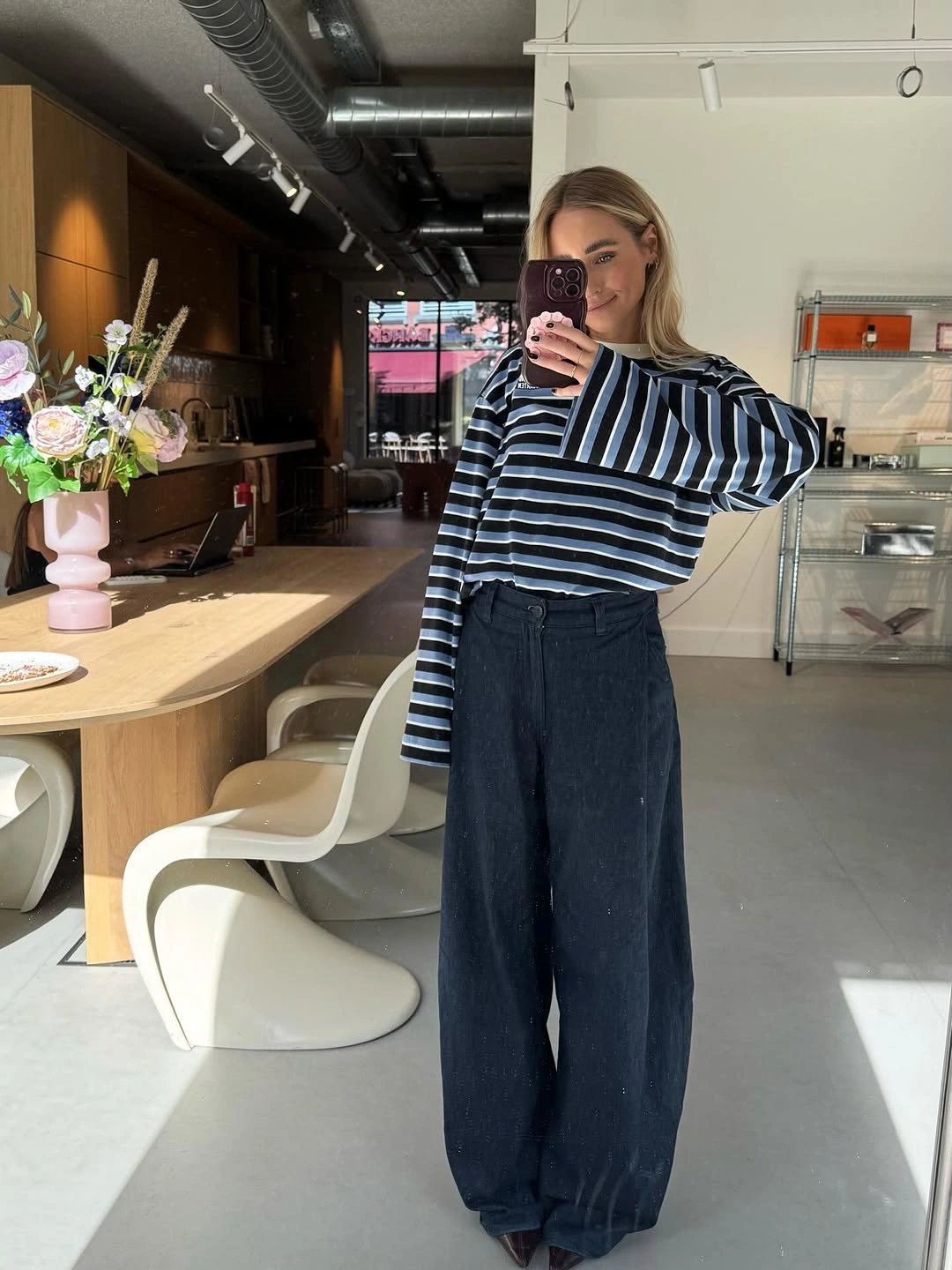
Photo via Instagram
The defined waistband acts as a firm dividing line between the stripe pattern and the expansive denim shape. Because the top is tucked in, the boundary stays visible instead of being softened by an overlapping hem, allowing the eye to read exactly where the busy horizontal rhythm stops and where the calmer, wider lower silhouette begins.
This simple two-part look shows that visual interest does not depend on stacking multiple layers or accessories. Pattern density supplies energy above, while trouser scale supplies volume below, so each half contributes a different kind of emphasis without requiring extra color repetition or decorative detail.
Dark Brown Layers Meet a Bright Lower Half
The very large brown scarf carries almost as much visual authority as the boxy dark jacket because it builds additional depth around the neck and continues downward across the torso. Instead of acting as a minor finishing detail, it becomes a second substantial upper element, so the outfit's strongest concentration of scale and dark color sits clearly above the waist.
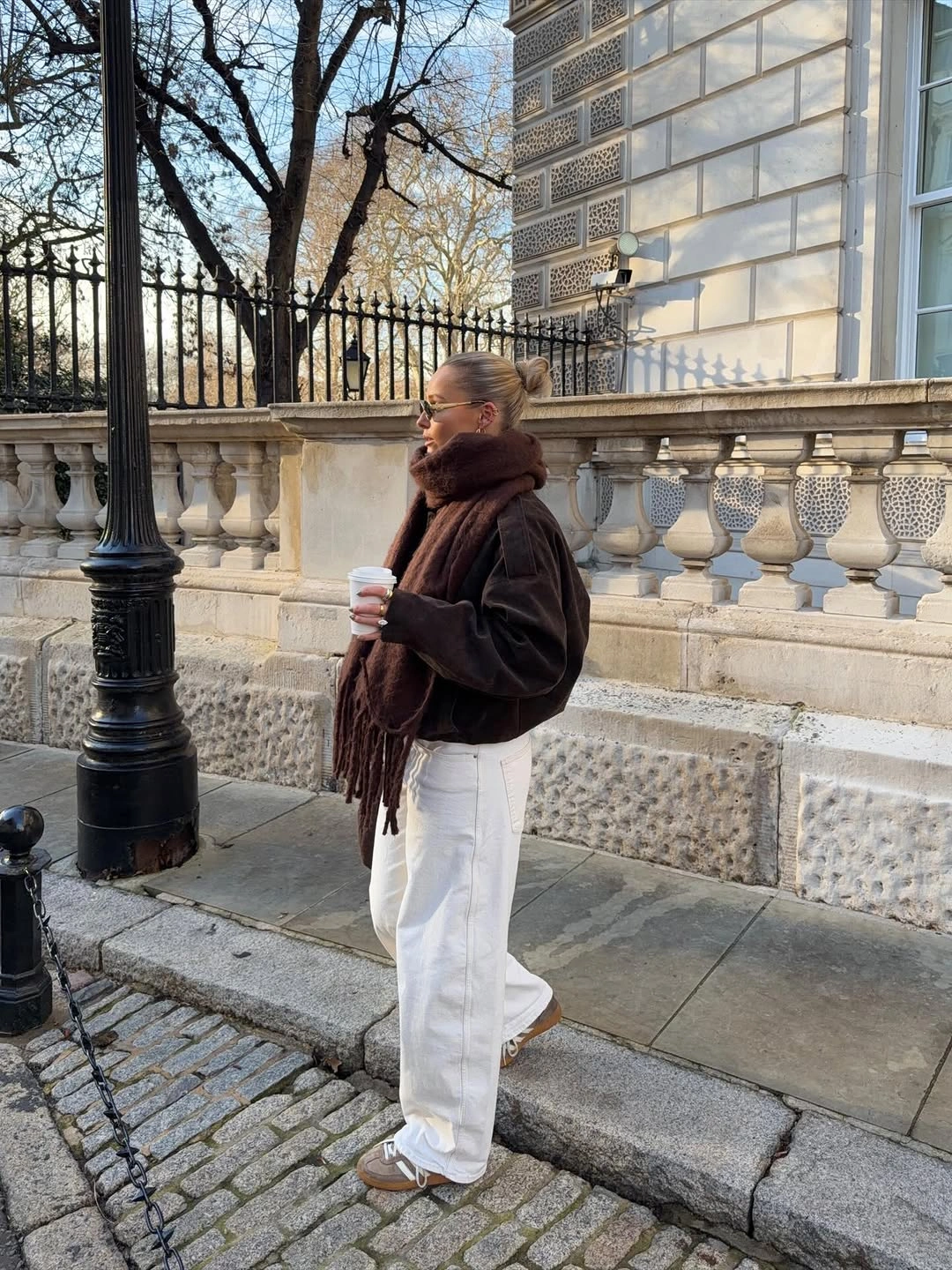
Photo via Instagram
The wide white trousers create a decisive reset beneath that concentrated brown upper half, replacing clustered dark shapes with one broad, pale field. Their generous width means the lower half still has presence, but the sharp value change keeps it from competing in the same visual language as the jacket and scarf, giving the silhouette an obvious transition point.
The tan-brown sneakers soften the jump between the white trousers and darker pieces above by returning a muted version of the upper palette near the ground. Because that brown note is smaller and lighter in effect, it works as a bridge rather than creating another dense endpoint.
A Long Scarf Extends a Short Jacket
The dark brown leather-look jacket establishes a relatively short, compact outer shape, while the scarf changes the direction of the outfit by falling well below the jacket hem. That vertical extension matters because it adds length without requiring the jacket itself to be longer, creating a layered silhouette in which one upper element stays cropped while another continues toward the lower half.
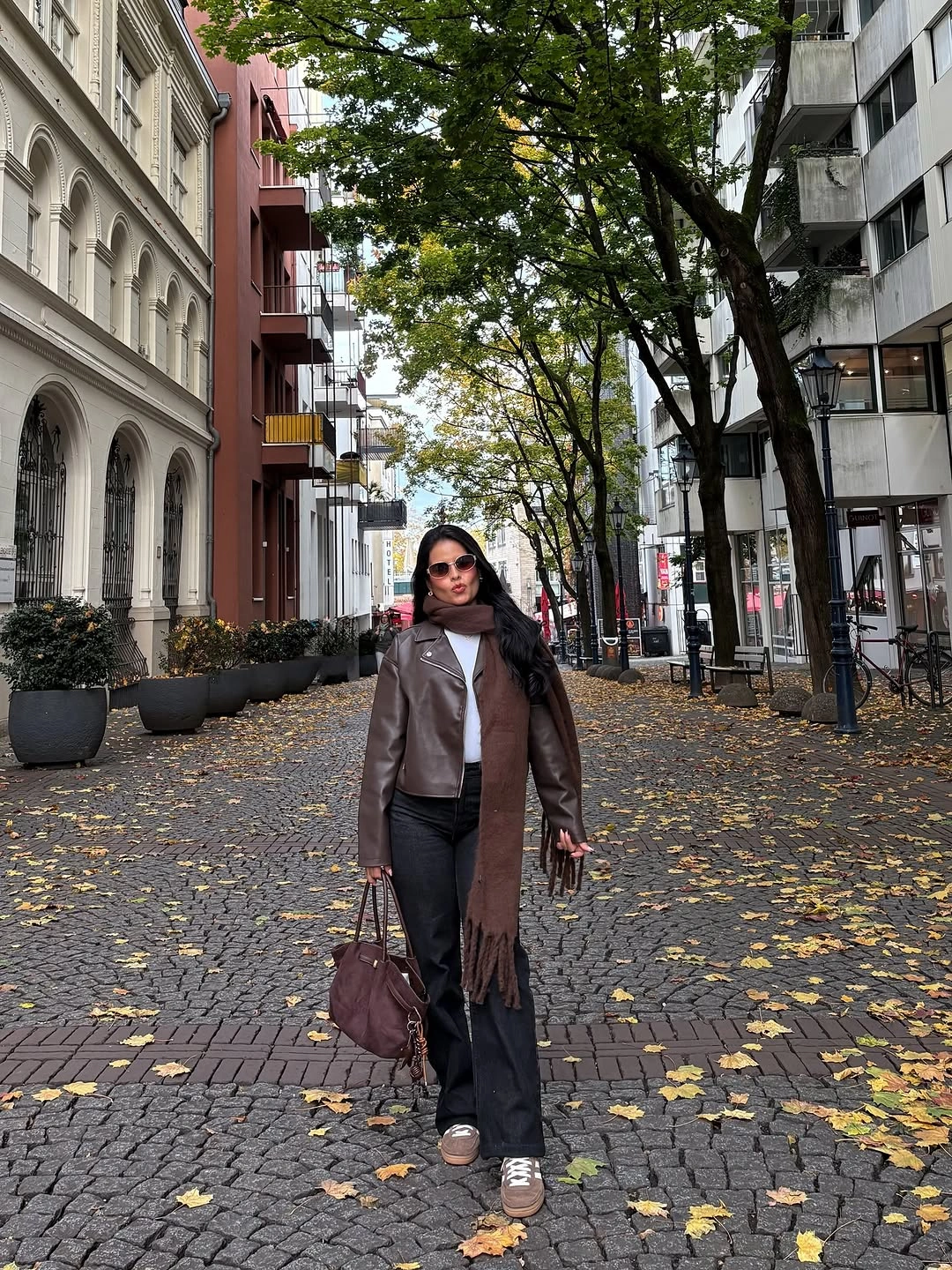
Photo via Instagram
A small area of white remains visible near the neckline and center, giving the closely related dark tones a narrow point of separation without becoming a major color block. The dark jeans then continue the quieter lower palette, allowing the eye to follow the scarf's descending line rather than shifting toward another strongly contrasting garment below.
The brown handbag repeats the upper color family at hip level, but its compact shape does something different from the scarf's long drop. One creates a contained side accent while the other stretches vertically, showing how repeated color can connect separate areas without repeating the same scale or outline.
Brown Accents Gather Around a Pale Center
The light beige jacket ends in a gathered lower edge that gives its silhouette a rounded, contained boundary rather than a straight drop. Below it, the wide white trousers continue the pale palette on a much longer scale, so the upper and lower pieces feel related in value while their different outlines keep the transition from looking visually flat.
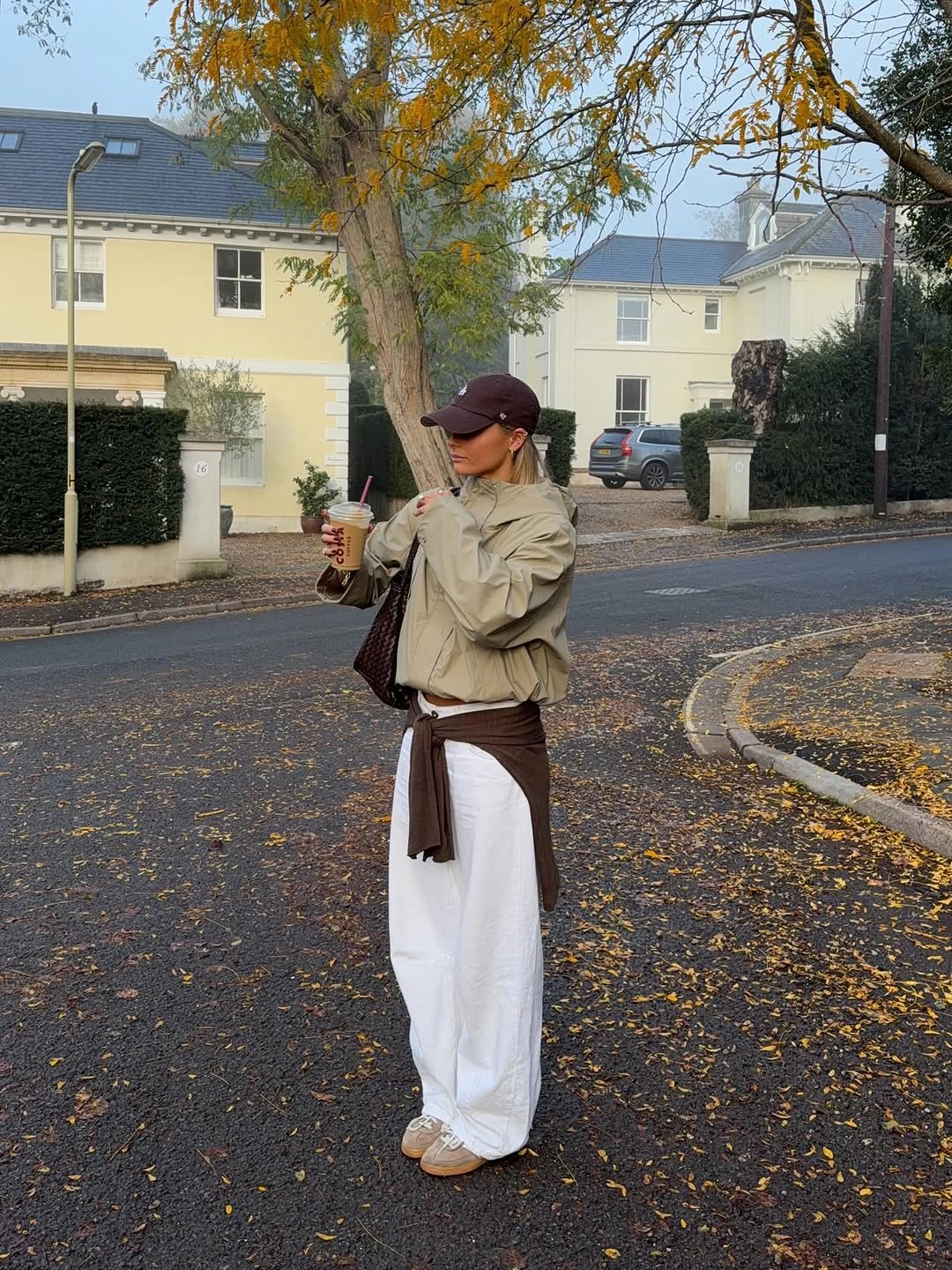
Photo via Instagram
The brown sweater tied around the hips introduces the strongest horizontal color placement across that pale center. Because it sits between the jacket and trousers rather than covering either one completely, it marks the waist area with a darker band and changes how the longer white lower half is read, giving the eye a clear middle point within an otherwise light silhouette.
Brown appears again in the cap, darker bag, and tan footwear, but each accent occupies a different scale and height. Their distribution creates continuity from top to bottom while the tied layer remains the most noticeable brown placement because it crosses the center of the outfit.
Black Outer Layers Surround a Blue Center
The long black coat and black ribbed high-neck top read almost as one continuous upper and outer structure because their similar depth minimizes the boundary between them. Rather than relying on several competing colors, the outfit concentrates darkness around the torso and sides, giving the coat's length a strong presence while keeping the internal layering comparatively restrained.
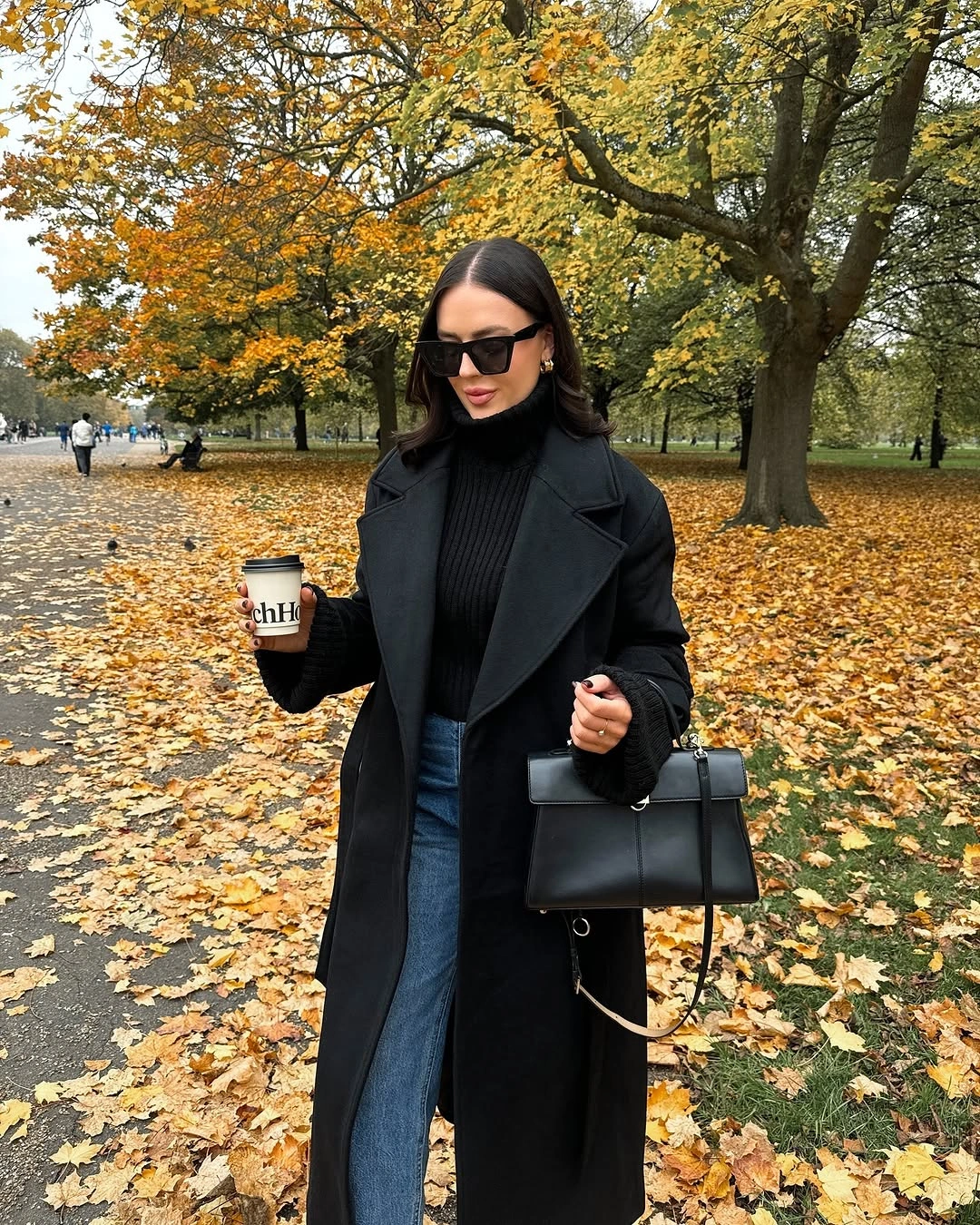
Photo via Instagram
Blue jeans interrupt that near-continuous black field through the center and lower half, creating the main change in both color and visual density. The denim prevents the coat and top from forming an uninterrupted dark column, so the long outer silhouette remains clear at the sides while the blue center establishes a separate lower zone with its own shape.
The structured black handbag introduces compact geometry against the coat's much longer outline, adding definition without altering the limited palette. Its firm rectangular shape contrasts with the extended vertical fall of the outer layer, showing how accessory structure can create variation even when the color remains unchanged.
Exposed White Edges Extend a Burgundy Sweater
The burgundy sweater forms the main colored block across the upper body, but the white shirt extends beyond it at several edges rather than disappearing underneath. White at the collar, cuffs, and lower hem makes the layered construction legible from multiple directions, visually stretching the sweater's boundaries without increasing its actual size or turning the upper half into one uninterrupted color field.
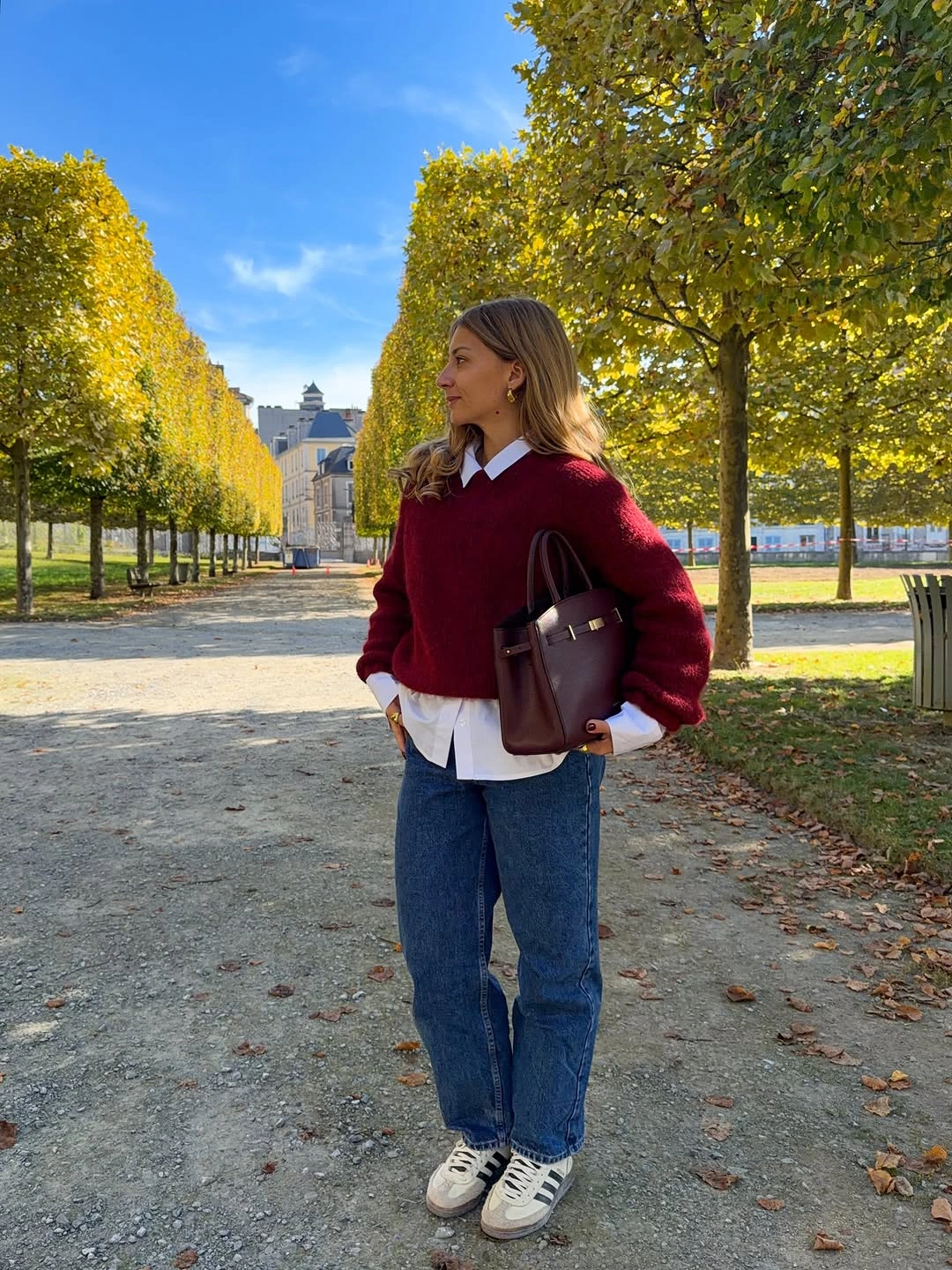
Photo via Instagram
Straight blue jeans create a comparatively uncomplicated lower section beneath those overlapping upper edges, giving the layered shirt and sweater room to remain the main structural interest. The transition is especially clear because the white shirt hem sits between burgundy and blue, creating a visible intermediate level rather than moving directly from sweater to denim.
The structured burgundy tote returns the sweater color at a larger accessory scale and farther to the side, so the repetition feels connected without becoming perfectly symmetrical. Light sneakers keep the bottom edge visually separate from that burgundy pairing, leaving the color relationship concentrated higher in the silhouette.
Charcoal Coat Sets the Longest Silhouette Line
The oversized charcoal-gray coat establishes the farthest vertical reach in the outfit, while the short white top creates a much higher internal stopping point inside that larger silhouette. Those two lengths make the layering easy to read without relying on multiple decorative details, because the coat continues well past the place where the lighter inner piece ends and the jeans begin.
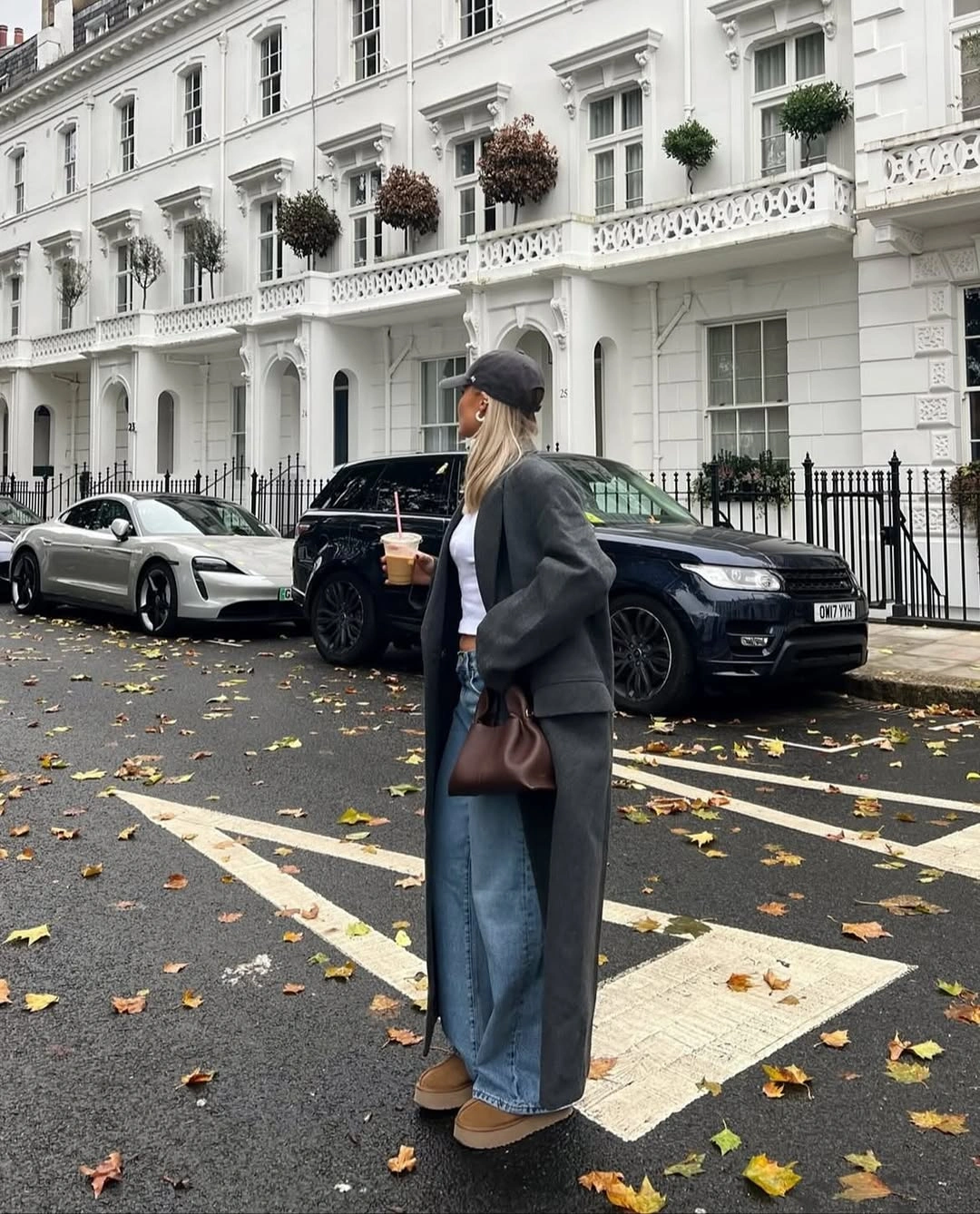
Photo via Instagram
The very wide blue jeans occupy substantial space of their own, yet their distinct blue field prevents that width from being absorbed into the charcoal coat. This gives the lower half a separate visual identity while preserving the coat as the longest element, so length and width operate on different axes rather than competing for exactly the same kind of emphasis.
The small brown bag and tan platform-style footwear introduce warmer notes at two compact points against the much larger gray and blue areas. Their limited scale keeps them secondary, but the shift in color gives the eye smaller endpoints after moving through the coat and expansive denim.
Padded Vest Concentrates Volume at the Torso
The dark olive-gray padded vest places nearly all of the outfit's added volume around the torso while leaving the arms visibly narrower in the black long-sleeve top. That restriction of bulk to one central zone creates a clear beginning and ending point for the fuller shape, making the silhouette feel deliberately segmented instead of equally substantial from shoulder to ankle.
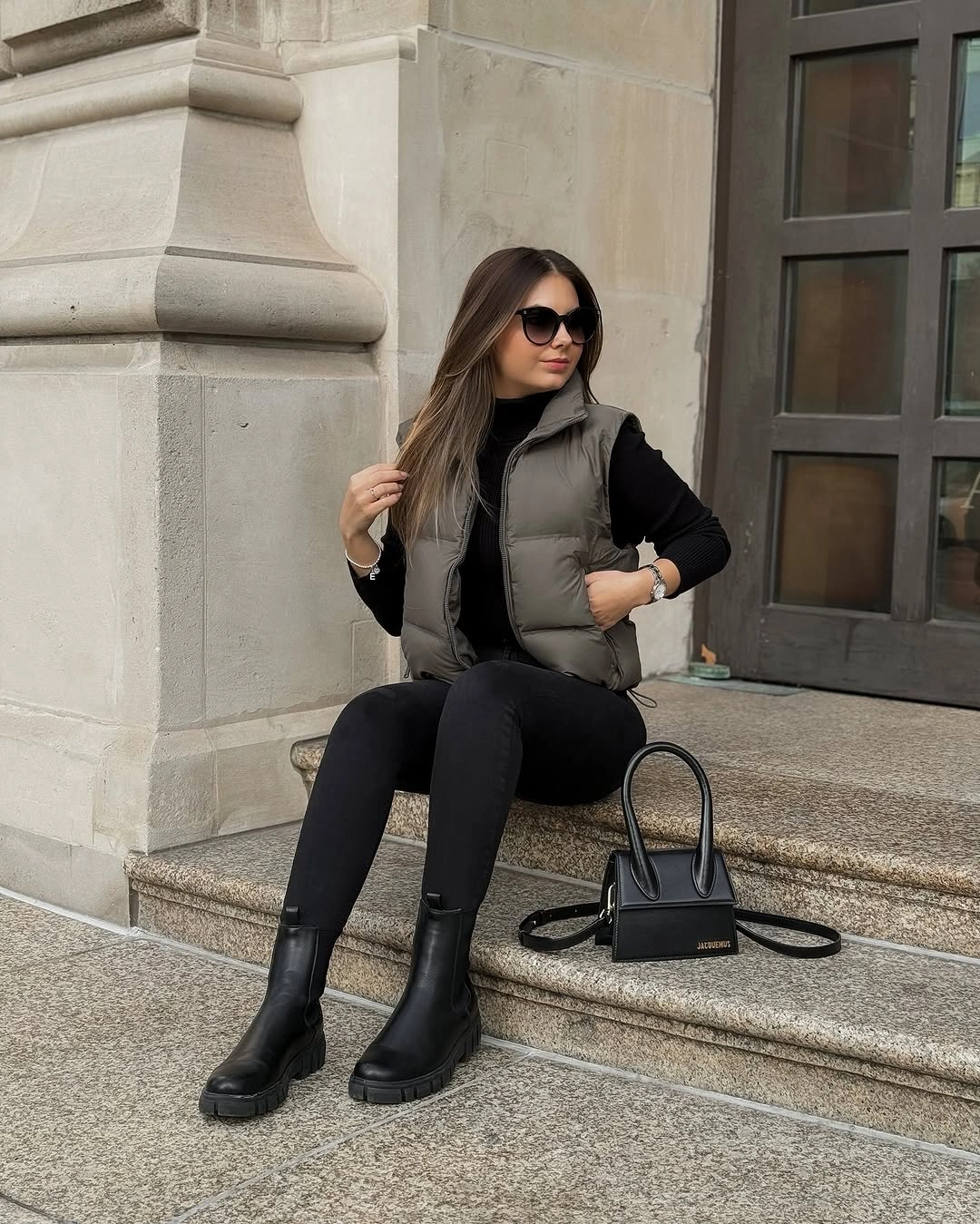
Photo via Instagram
Black continues through the sleeves, fitted lower half, tall boots, and structured handbag, creating a consistent surrounding field for the olive-gray vest. Because those darker elements remain comparatively narrow and visually unified, the vest can project outward at the center without needing another contrasting piece to announce where its shape sits.
The practical distinction here is placement rather than garment count: the fuller form is confined to the torso instead of extending through sleeves or legs. That makes the change in proportion immediately legible, with the center carrying dimension while the rest of the outline stays comparatively controlled.
Plush Surface Gives a Long Coat Extra Weight
The camel-brown coat gains much of its visual presence from its visibly plush surface, not simply from its length or color. The raised-looking texture catches attention across a large area, so the outer layer feels substantial even though the remaining palette stays restrained, making surface character the main source of emphasis rather than added pattern or complex layering.
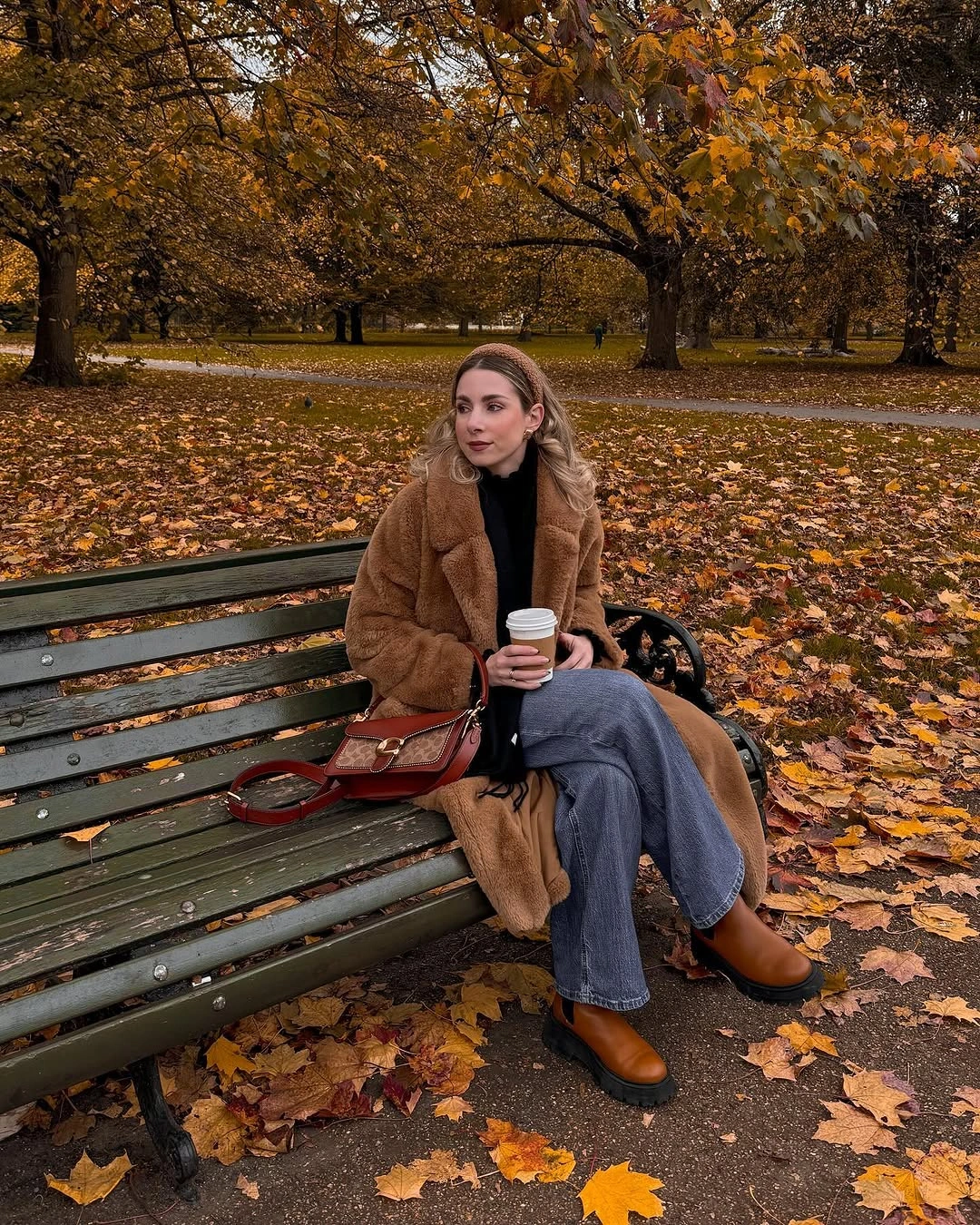
Photo via Instagram
A black high-neck layer forms a crisp, dark boundary at the center of the coat, giving the softer-looking brown surface a sharper point of contrast near the face and neckline. Blue jeans then shift the lower half into a smoother, quieter field, allowing the coat's texture to remain the dominant visual quality without needing to continue through every piece.
Brown returns in the cognac-toned platform footwear and reddish-brown bag, but neither appears to match the coat exactly. Those related shades create tonal continuity through variation, showing how a color family can recur at different depths while texture remains concentrated in the largest piece.
Cropped Quilting Shifts Emphasis Toward Deep Trousers
The cropped light beige jacket keeps its quilted surface contained within a relatively compact upper zone, allowing the burgundy-brown wide-leg trousers to command most of the outfit's vertical area. Because the darker lower color continues for much greater length, the silhouette reverses the expectation that the outer layer must carry the strongest visual weight simply because it has more surface detail.
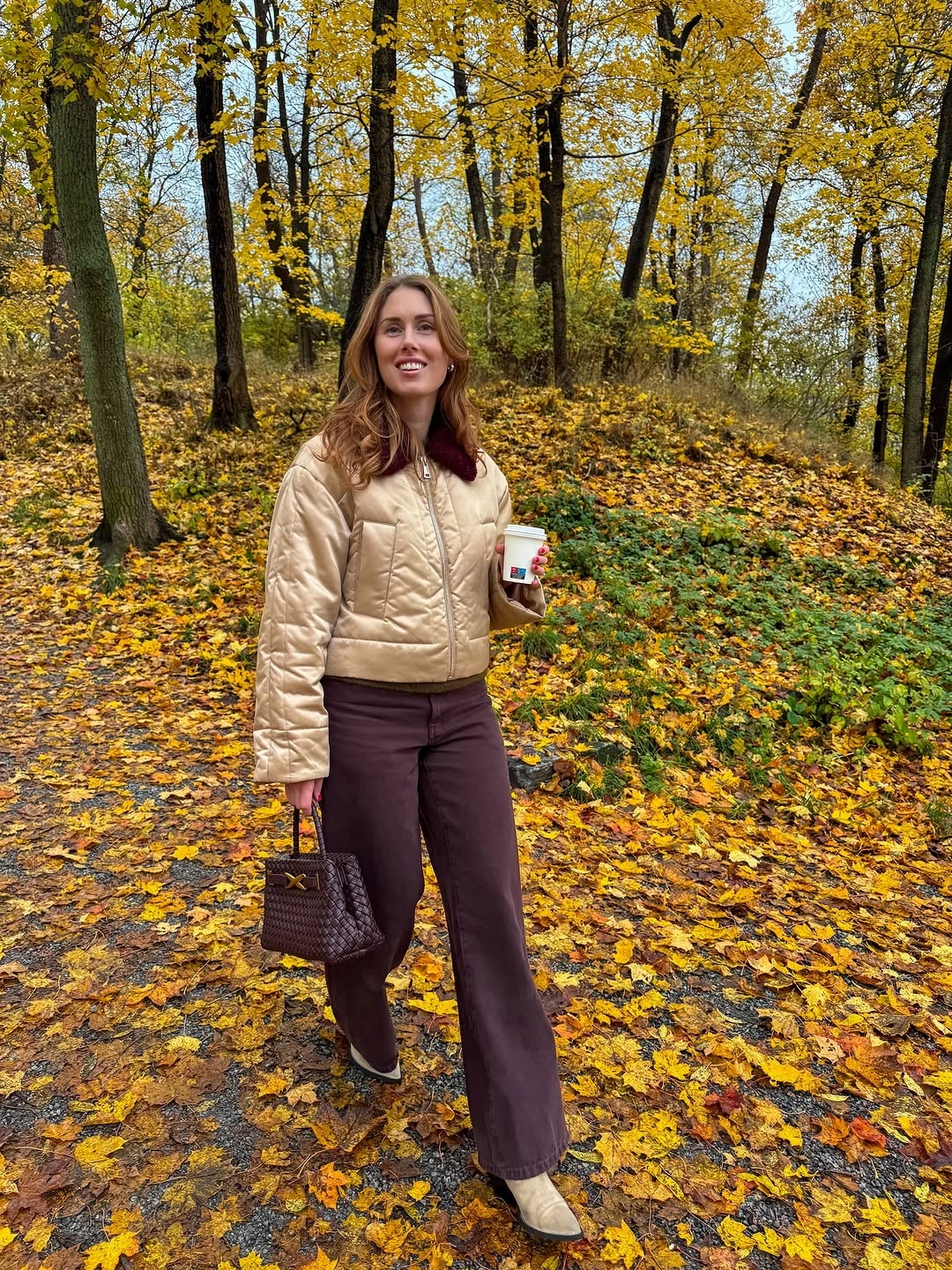
Photo via Instagram
Light pointed boots bring a pale tone back at the bottom without extending the jacket color through the entire outfit. That distant echo creates two lighter endpoints separated by the deep trouser field, so the eye registers a deliberate return of value rather than a continuous light column from shoulder to shoe.
The dark brown handbag contributes another layer of contrast through its visibly woven-looking surface and smaller scale. It sits between the pale jacket and deeper trousers in both value and visual intensity, adding detail at the side without challenging either of the two larger color blocks.
Large Tote Extends the Weight of a Roomy Top
The oversized dark brown top creates the primary upper volume through its roomy sleeves and relaxed width, while the straight blue jeans move downward in a more contained line. Instead of repeating the same degree of fullness below, the outfit lets the upper shape spread outward and then narrows the visual conversation through a simpler denim silhouette.
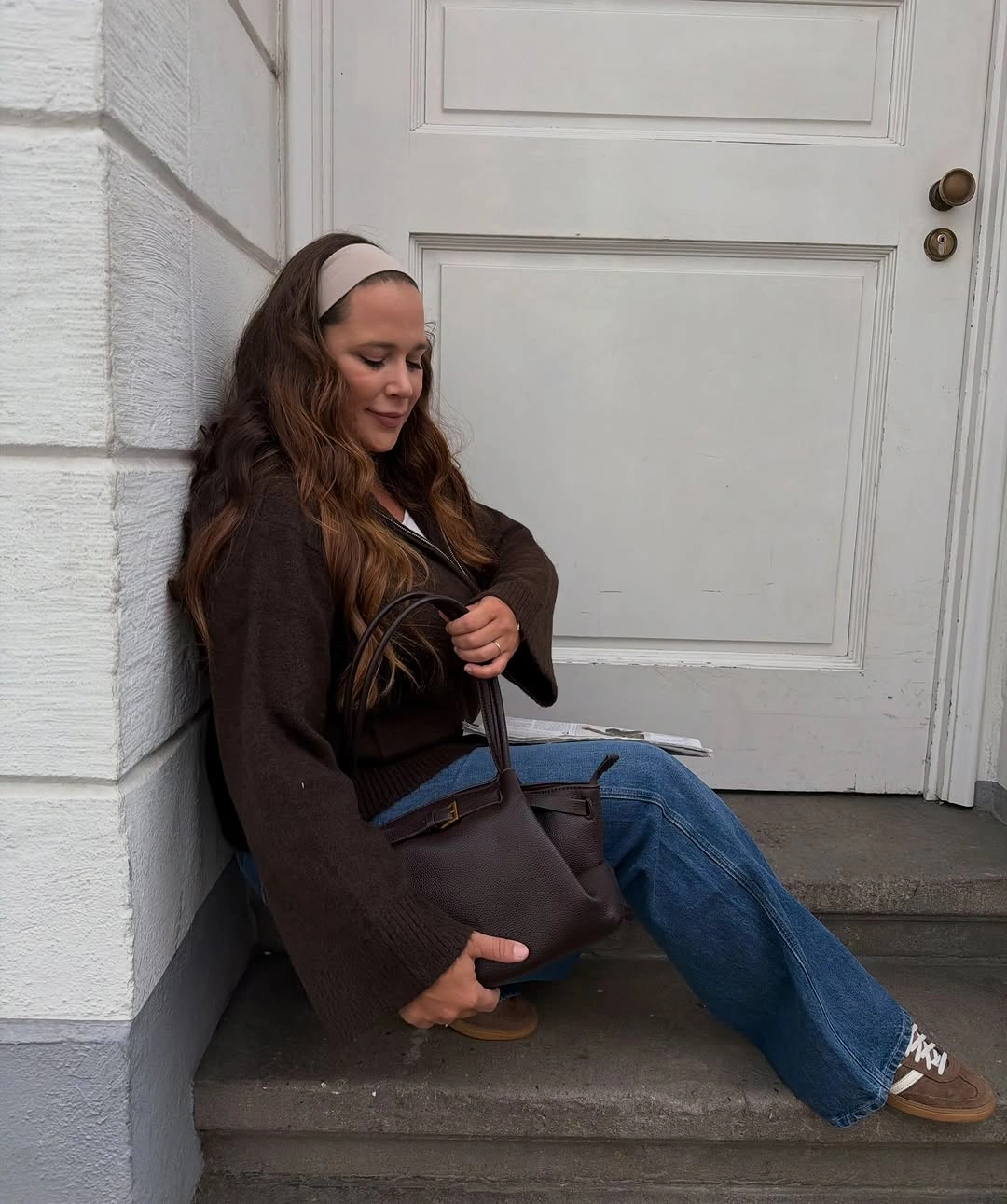
Photo via Instagram
The large dark brown tote adds a second substantial shape at the side, effectively extending the visual territory of the upper color beyond the torso itself. Its scale matters because a smaller bag would function mainly as a detail, whereas this one becomes part of the proportion, creating an additional block of brown that shifts the outfit's balance laterally.
The wide beige headband and lighter details around the brown sneakers introduce small breaks against the darker brown and blue areas. Their limited size keeps them from becoming focal points, but they prevent the palette from closing into two uninterrupted dark zones and give the larger shapes a little more separation.
Tonal Brown Separates Through Structural Lines
The coordinated medium-brown top and wide-leg pants create a nearly continuous tonal field from shoulder to hem, with little contrasting color to divide the two pieces at first glance. Instead of relying on outerwear, denim, or prominent accessories to organize the outfit, the silhouette gets its definition from the change between the shorter upper shape and the longer, broader sweep of the pants.
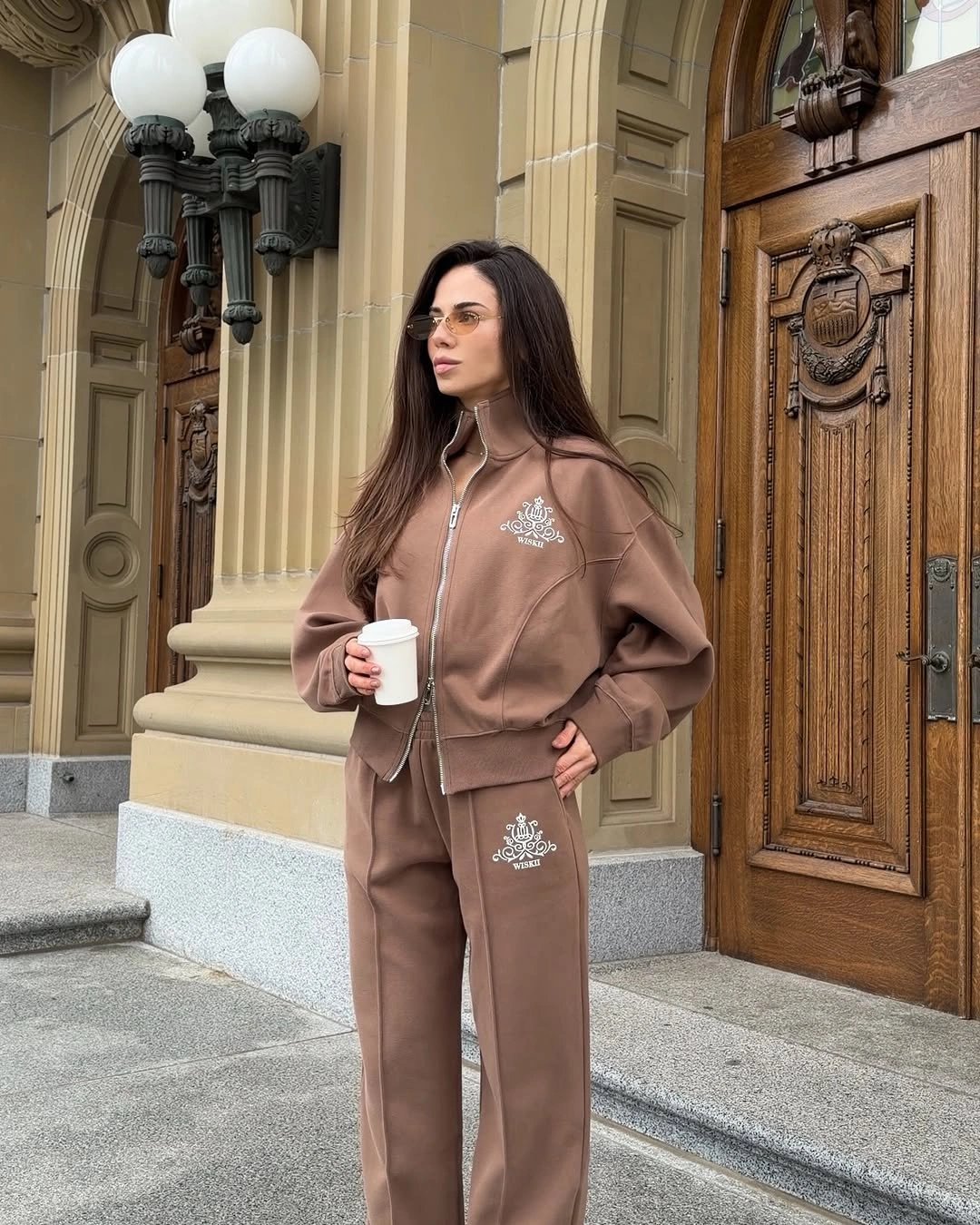
Photo via Instagram
The center zipper and visible waistband become especially important because they introduce clear structural lines within that consistent brown palette. One runs vertically through the upper half while the other marks a horizontal division at the middle, giving the eye enough architecture to distinguish the coordinated pieces even though their colors remain closely aligned.
Small pale graphics add localized detail without spreading across enough area to disrupt the overall tonal effect. Their limited placement gives the brown surface a few visual pauses while keeping continuity, proportion, and construction as the stronger ideas.
Accessories Become Part of the Main Silhouette
The long cream scarf functions as more than a finishing detail because its pale drop occupies a substantial vertical area against the taupe outer layer. Its length creates a second visible contour through the center and side of the outfit, so the silhouette is shaped partly by an accessory rather than being defined only by the garment underneath it.
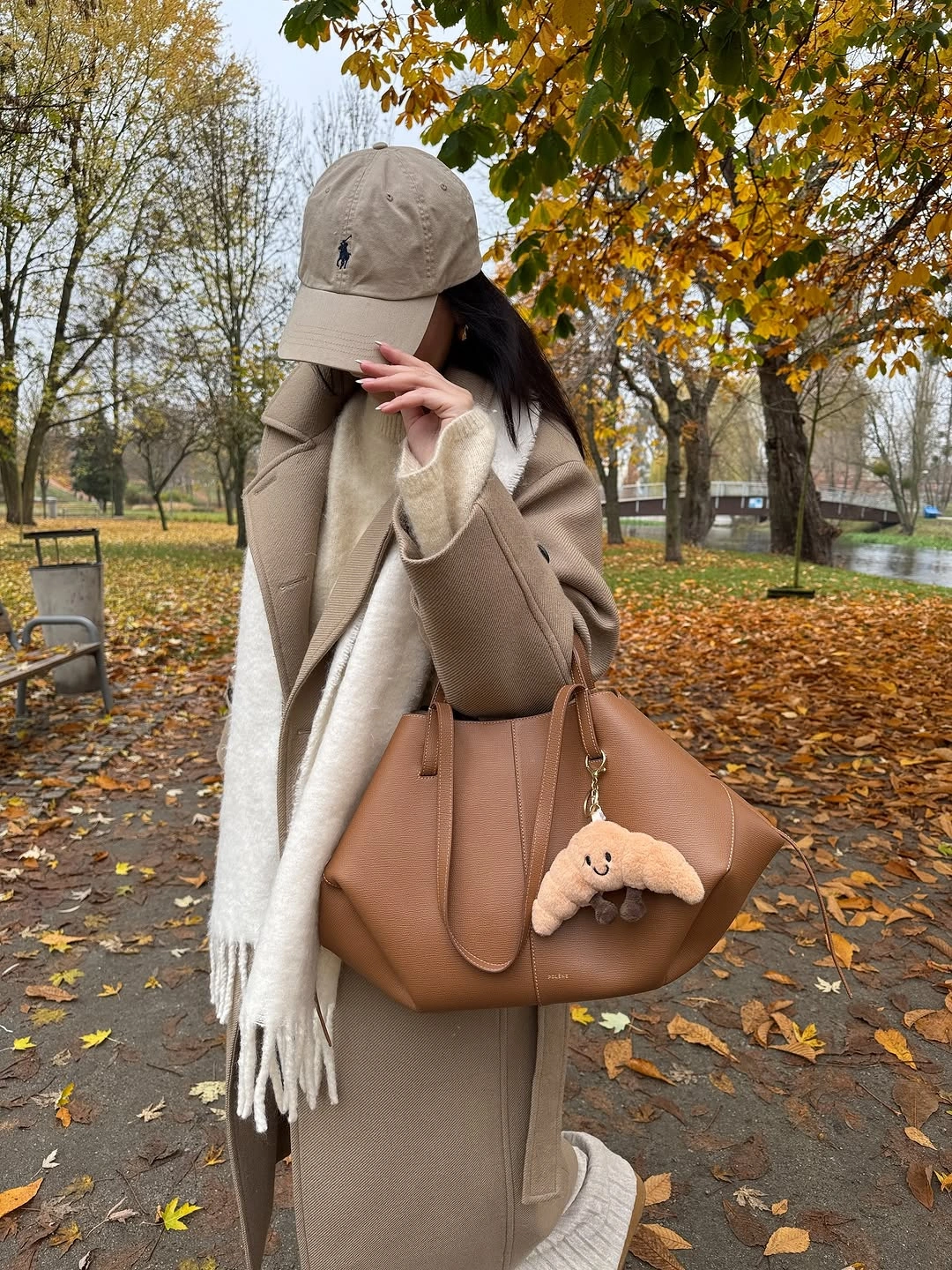
Photo via Instagram
The large tan tote establishes another major shape away from the body, producing a broad side presence that remains visually distinct from the scarf's narrow downward direction. A small plush charm adds detail within that larger bag area, but the more important consequence is how the tote changes the overall outline by extending it outward at a lower point than the scarf.
Beige at the cap, cream through the scarf, taupe across the outer layer, tan at the bag, and the pale ribbed area near the hem stay related without collapsing into one flat neutral field. Differences in value, scale, and position let each element remain legible even when the color transitions are restrained.
Tonal Dressing Gains Definition Through Construction
The long beige coat keeps the palette highly concentrated, yet its cape-like upper overlay introduces additional boundaries across the same tonal surface. The layered construction creates visible shifts in direction around the shoulders and upper torso, proving that a restrained color scheme can still carry considerable structure through seams, overlaps, and changes in line.
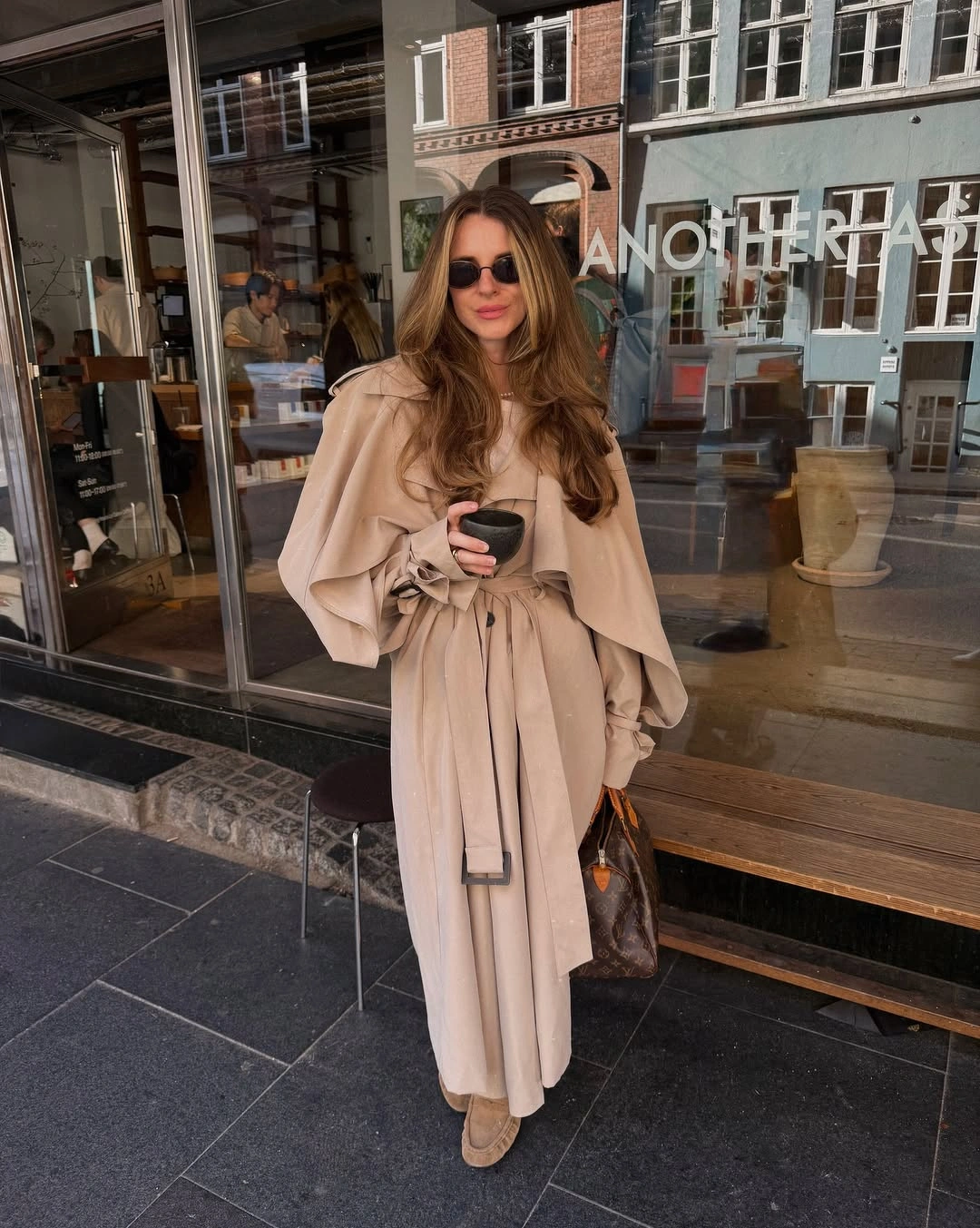
Photo via Instagram
The belt establishes a clear central checkpoint within the long silhouette, separating the upper construction from the extended lower portion without depending on contrasting color. That division gives the eye an organized midpoint from which the coat can continue downward, making the shape readable through placement and construction rather than through multiple competing tones.
The dark patterned brown tote and tan footwear provide restrained changes at the side and bottom of the composition. Neither interrupts the beige field aggressively, but both create enough variation in depth and detail to give the long tonal silhouette distinct outer endpoints.
Rounded Bomber Volume Leads a Dark Palette
The oversized dark brown leather-look bomber carries a rounded, substantial outline through its broad sleeves and generous body, making curvature and width the dominant features of the upper half. Instead of extending that fullness downward, the silhouette concentrates its strongest shape around the jacket, allowing its outer contour to remain the clearest visual event.
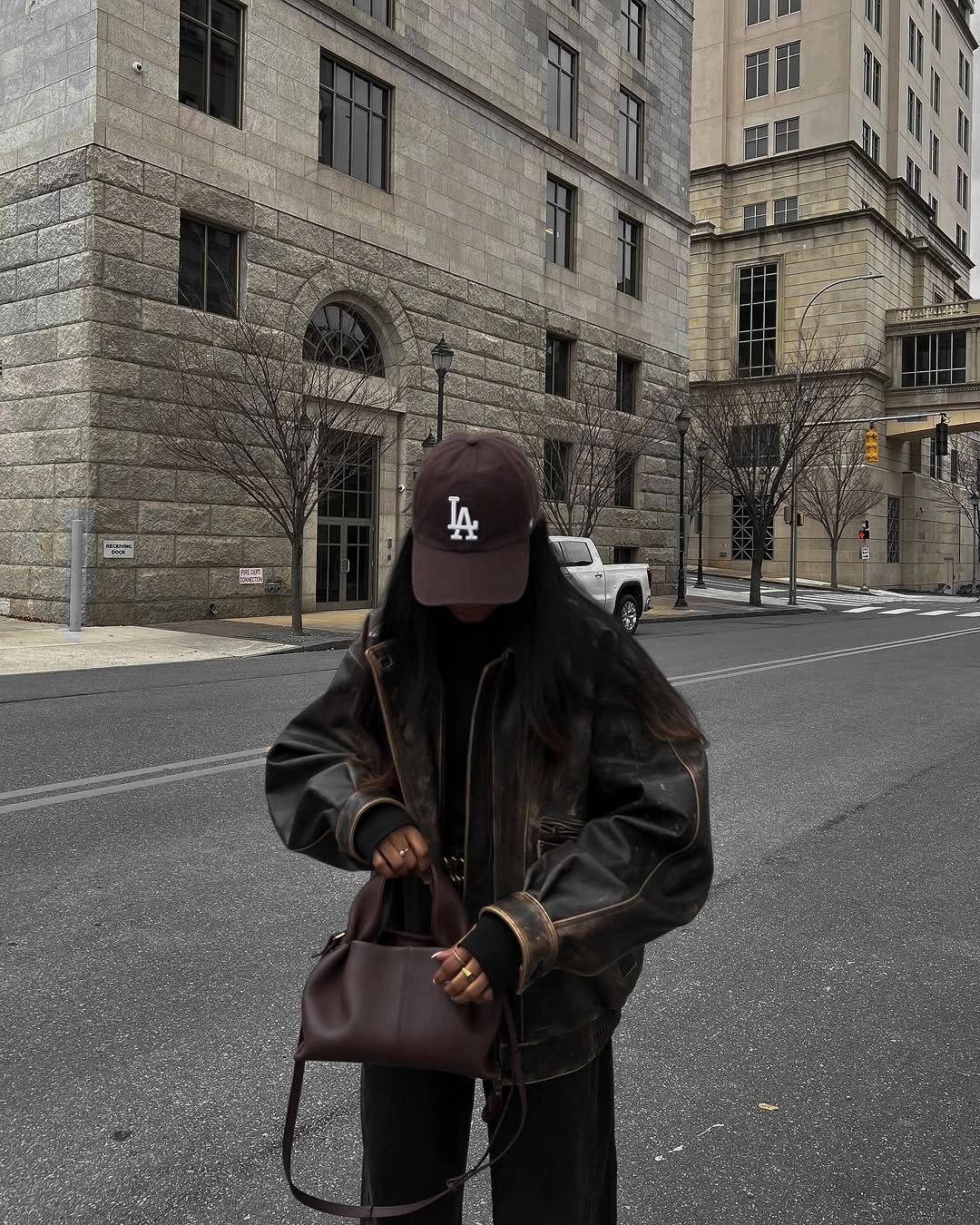
Photo via Instagram
The black lower half recedes relative to the brown jacket because it introduces little additional color variation or outward expansion. That quieter continuation beneath the bomber gives the upper silhouette room to stand apart, so the viewer reads a pronounced change from a fuller brown shape above to a darker, less assertive base below.
The brown baseball cap and small dark brown handbag repeat the jacket's color family from opposite positions, one above the main volume and one below it. Their smaller proportions make them echoes rather than extensions, creating continuity around the bomber without duplicating its rounded scale.
Short Brown Blazer Tops a Long Black Column
The oversized brown blazer establishes a comparatively short tailored frame across the upper body, while the black dress or skirt-based silhouette continues much farther toward the shoes. That difference in vertical reach creates a clear hierarchy between the outer layer and the dark lower form, with the blazer acting as a defined upper boundary rather than controlling the full length of the outfit.
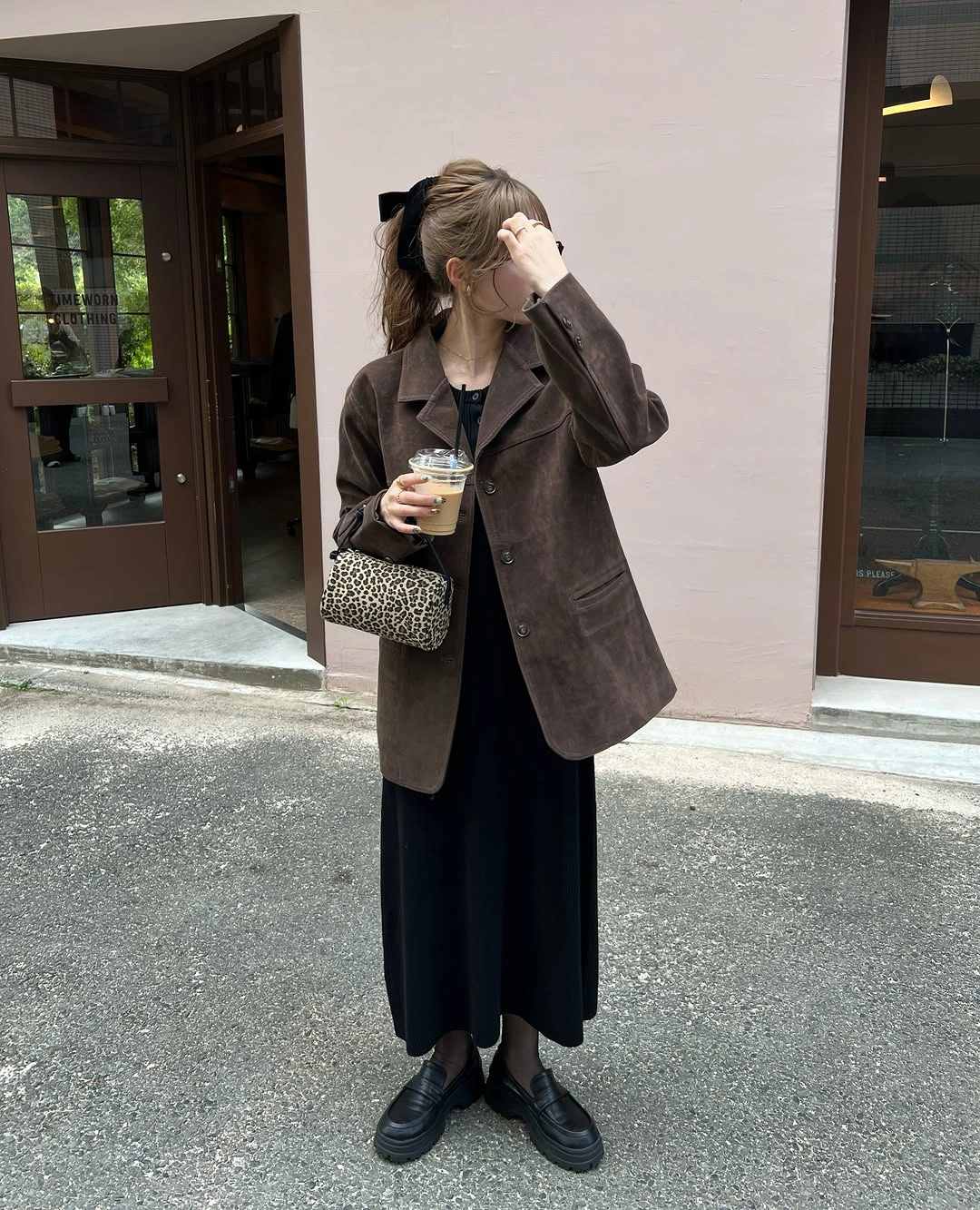
Photo via Instagram
Black returns at the hair bow and loafers, placing matching dark notes near the top and bottom of the silhouette while the long central black area connects them visually. Because these elements share the same broad color direction but differ sharply in size, they strengthen the continuity of the darker portion without adding another competing shape.
The small leopard-pattern shoulder bag keeps print confined to one compact area beside the otherwise solid brown-and-black arrangement. Its limited scale allows the pattern to register clearly as detail while leaving the stronger proportion between the shorter blazer and extended black line intact.
Fine Pattern Stays Focused on the Jacket
The oversized tan-brown jacket carries the outfit's strongest surface detail through a small-scale checked or finely patterned design spread across its relaxed, boxy shape. Because that pattern remains confined to one substantial upper piece, the eye can register both the jacket's width and its surface activity without needing additional prints or dense detailing elsewhere.
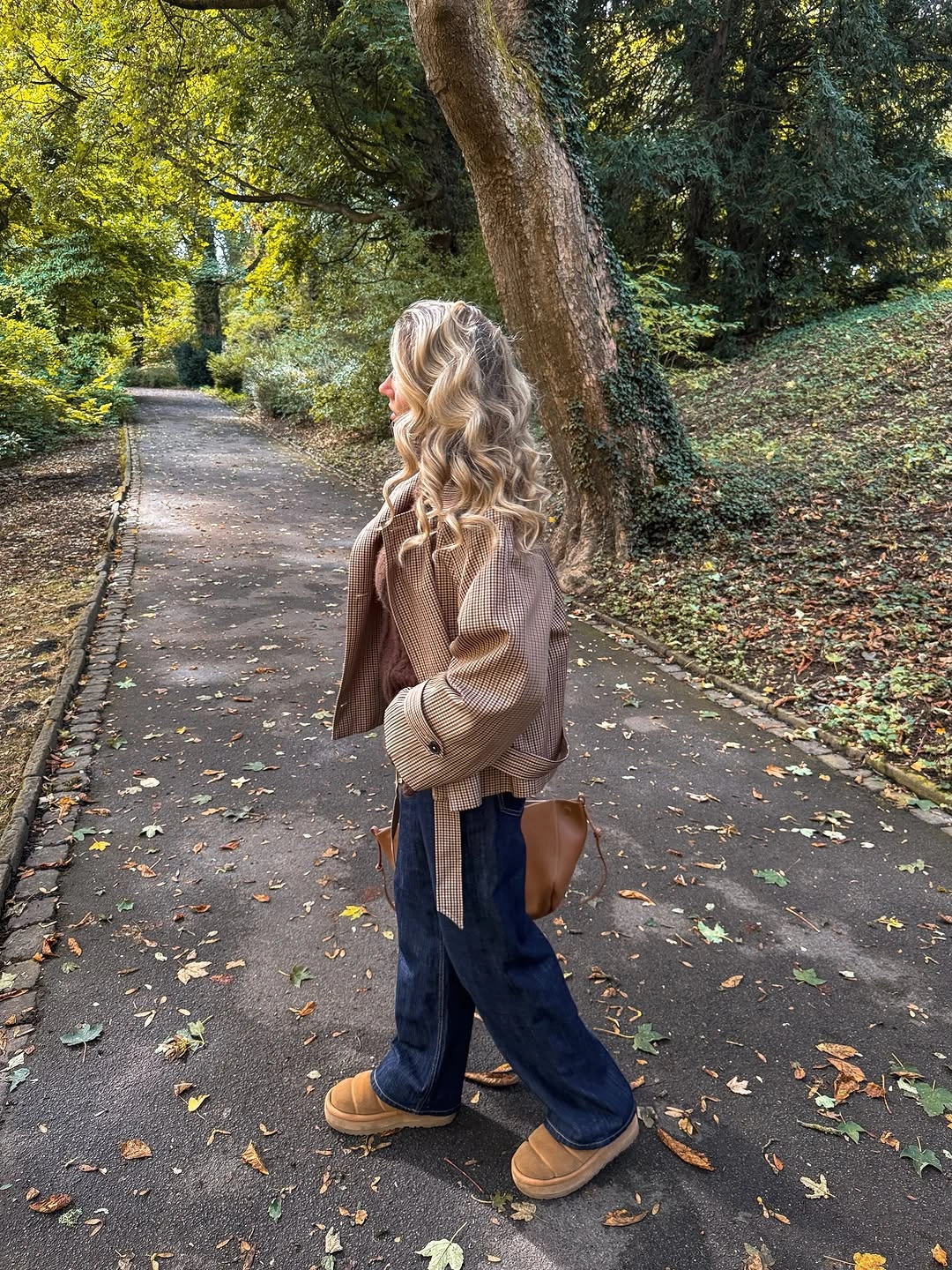
Photo via Instagram
Dark wide-leg jeans occupy a large area below the jacket, but their comparatively uniform surface gives that width a calmer visual role. The lower half therefore provides breadth without adding another layer of pattern, allowing the more intricate jacket surface to remain distinct while the silhouette still carries noticeable scale from top to bottom.
Tan rounded platform-style footwear, the brown neck layer or scarf, and the brown shoulder bag introduce related earthy tones in smaller, simpler placements. Their restraint keeps the outfit from multiplying competing details, so the patterned jacket can remain the most intricate element while the surrounding pieces contribute through shape and color rather than added surface complexity.