Middle parting hairstyles often look quiet at first, yet the center line controls the whole feeling of the shape. It decides where the hair opens, how much room the face receives, and whether the ends read polished, airy, or relaxed. Across these ideas, the same part moves through dark bobs, long waves, warm color, pale blonde layers, and softer textured cuts, so the small decision never has to look repetitive.
The most useful way to compare them is to notice what happens around the part rather than treating it as a rule on its own. Smooth lengths make the line feel precise, while curls and broken layers let it become the beginning of movement. A shorter outline can feel crisp and practical, a longer one can feel enveloping, and a little warmth in the color can soften the transition between an everyday shape and a more dressed finish.
Dark Waves Open Into A Soft Shoulder Shape
Long dark brown hair begins with a clear middle part and falls into gentle bends that gather near the shoulders. The top remains fairly smooth, while the lower lengths curve outward and inward in soft sections, giving the shape movement without turning it into a rigid curl pattern. Subtle pieces near the face keep the center line from looking severe and make the dark color feel approachable.
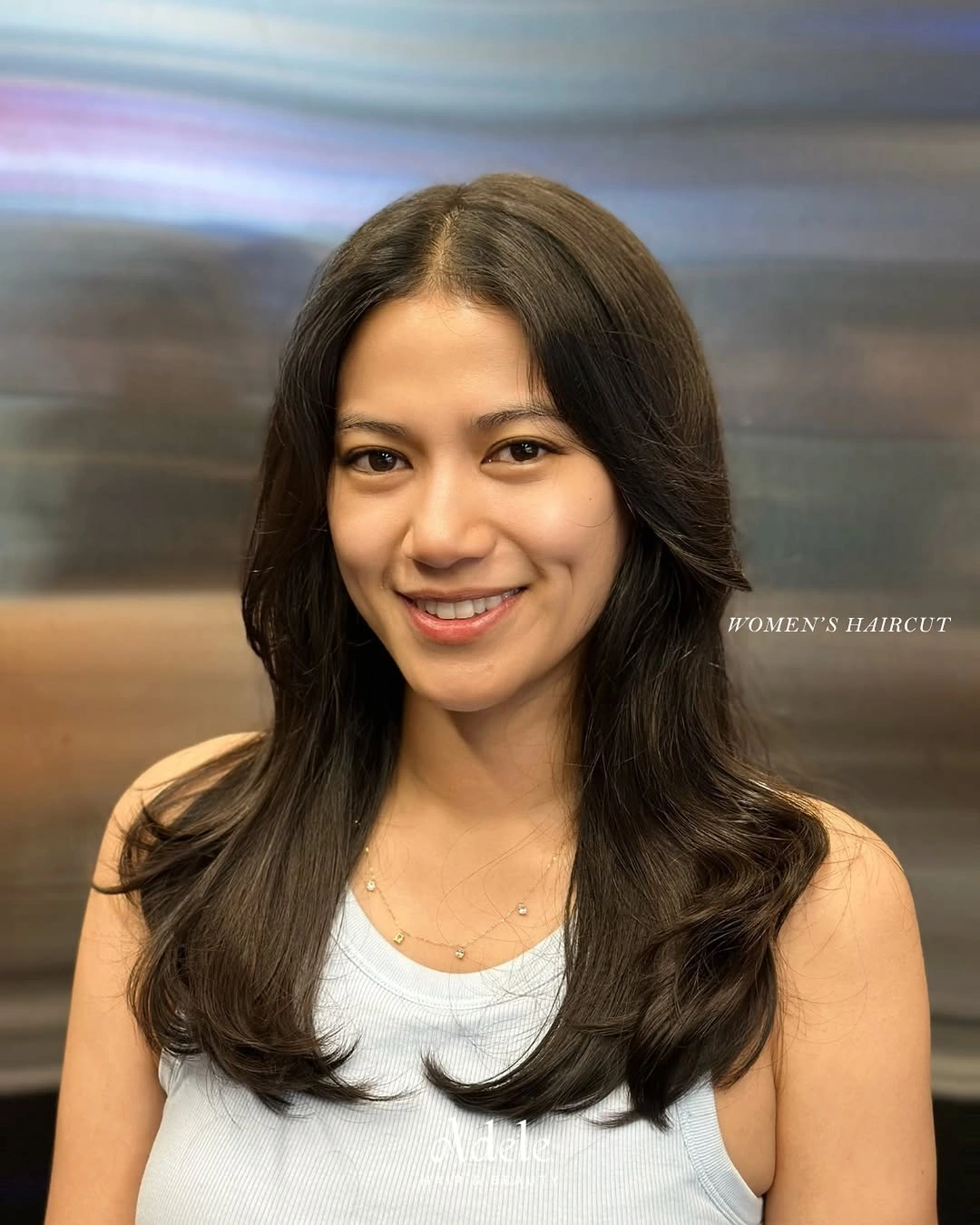
The balance works because the part stays orderly while the ends introduce a little looseness. If you want a similar idea on a shorter cut, keep the center line clean and ask for only a few pieces around the cheek, then let the ends bend rather than building a full wave. The tradeoff is that the softness depends on separation, so brushing everything into one smooth curtain would remove the texture that gives this style its warmth.
This direction sits comfortably between straight hair and a formal wave set, which makes it easy to read with a simple top or an open neckline. The deep tone carries enough visual weight that the cut does not need dramatic accessories, while the curved lower edge prevents it from feeling flat. For everyday wear, the practical point is to keep the front pieces distinct and let the lower bends stay irregular instead of chasing perfect symmetry.
Blonde Curtain Layers Carry The Center Part
Long blonde hair uses a middle part as the starting point for large, brushed curtain layers. The roots look deeper than the lengths, and the light color moves through broad waves that grow fuller below the cheek and then settle toward the chest. Rather than relying on one solid block of blonde, the shape uses the contrast between the center line, the lighter lengths, and the sweeping front pieces to create depth.
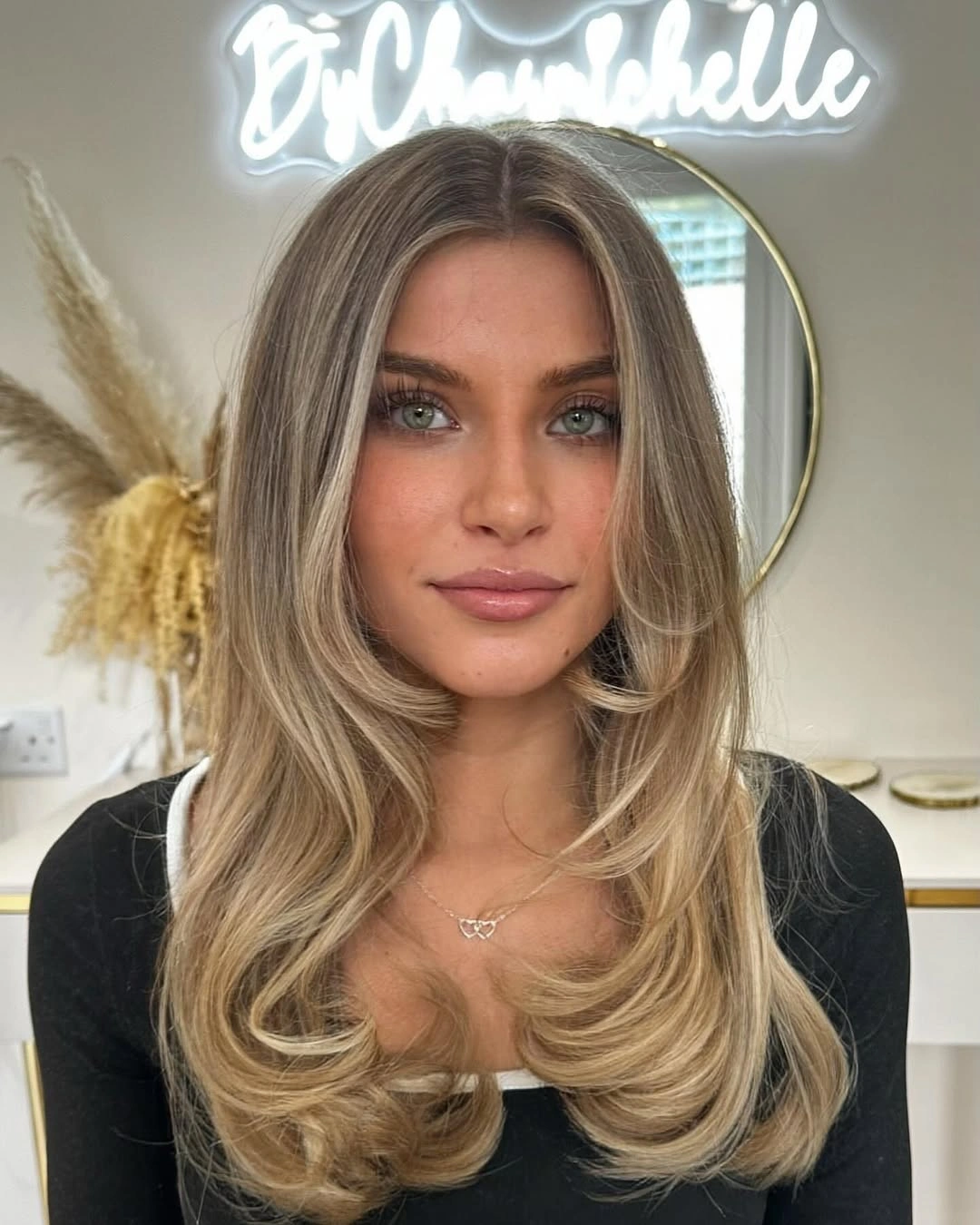
The shape feels dressed because the wave groups are broad and organized, but it does not become stiff because the ends keep a soft bend. A wearable adaptation would keep the same front framing on medium-length hair and reduce the wave width so the part remains visible. The longer length gives more room for movement, however it also carries more weight, so a reader choosing a shorter version may find it easier to preserve lift near the face.
This is a good reference when the goal is a gentle event-ready finish rather than a tight curl pattern. The lighter color makes every curve easy to see, while the darker-looking roots ground the upper section and keep the center part from disappearing. Keep the styling conversation focused on the relationship between smooth roots and moving lengths, because adding extra detail would compete with the soft curtain already doing the work.
Shoulder Waves Keep A Center Line Relaxed
A shoulder-skimming dark brown cut opens at the center and then breaks into loose waves with feathered ends. The front sections drift toward the cheeks instead of forming a sharply defined fringe, and the lower edge looks slightly irregular rather than perfectly curled. That small amount of unevenness gives the middle part a relaxed quality, especially beside the simple black neckline.
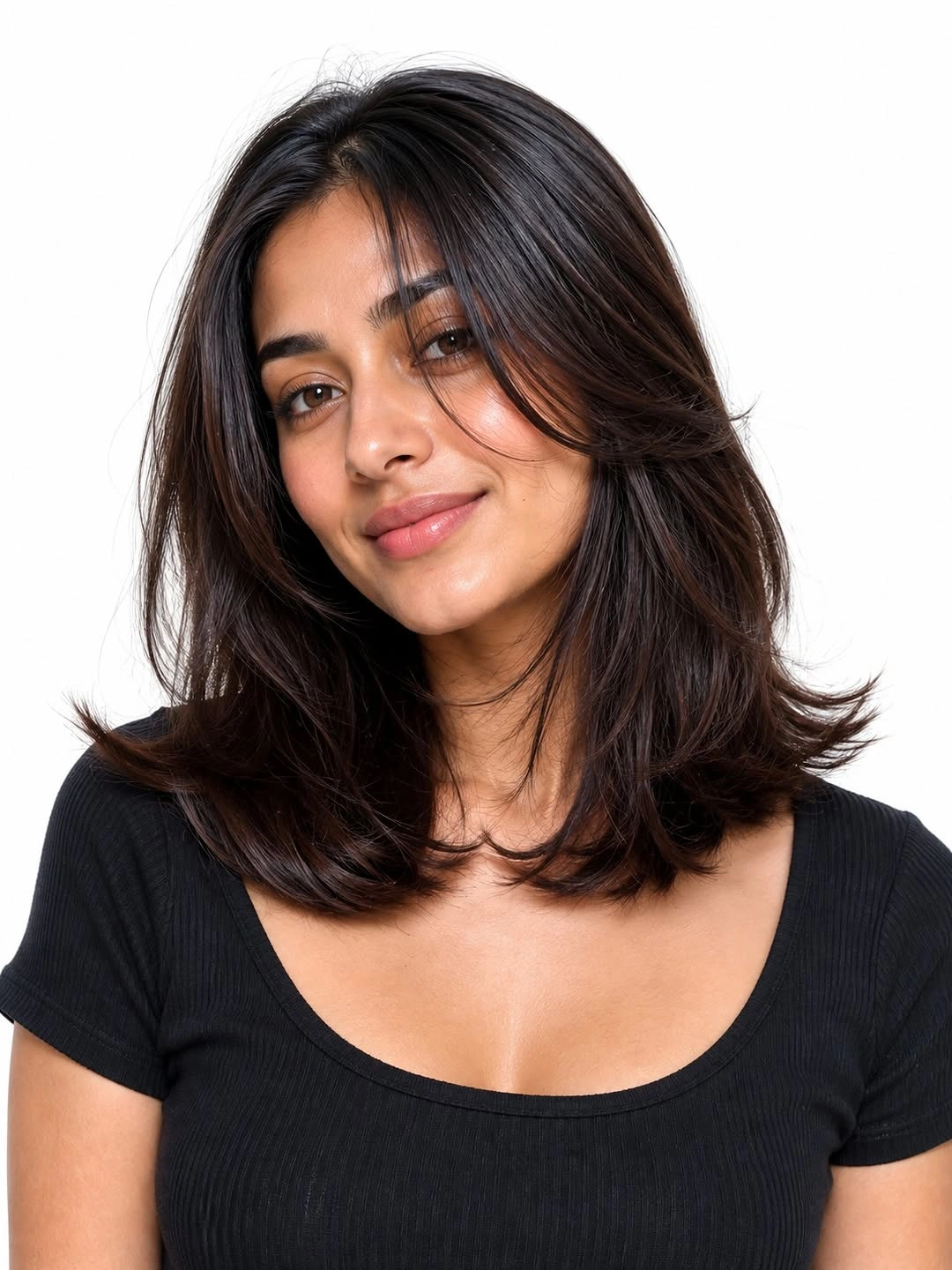
The style works through contrast between a tidy starting point and a lived-in finish. To adapt it, keep the crown close to the head and vary the direction of the front bends so the shape does not become too round, especially on a shorter shoulder cut. Its limitation is also its charm: the loose pieces may fall forward during wear, so anyone wanting a fixed outline would need a more controlled finish than this soft version suggests.
There is enough movement here to make a center part feel friendly rather than formal, but not so much volume that the cut loses its compact scale. The dark color lets the outline stay clear, while the white top creates a quiet background that makes the texture easier to read. This is the kind of middle-parted style that can move from a casual day to a more finished setting simply by smoothing the top and leaving the ends softly separated.
Airy Brown Bob Turns Ends Away From The Face
This short medium-brown bob places the middle part above a jaw-to-neck silhouette with light curtain pieces around the face. The ends turn gently away from the cheeks, so the cut feels airy instead of tucked into a strict rounded bowl. The compact length keeps attention near the face, while the warm brown tone adds softness to the clean division at the crown.
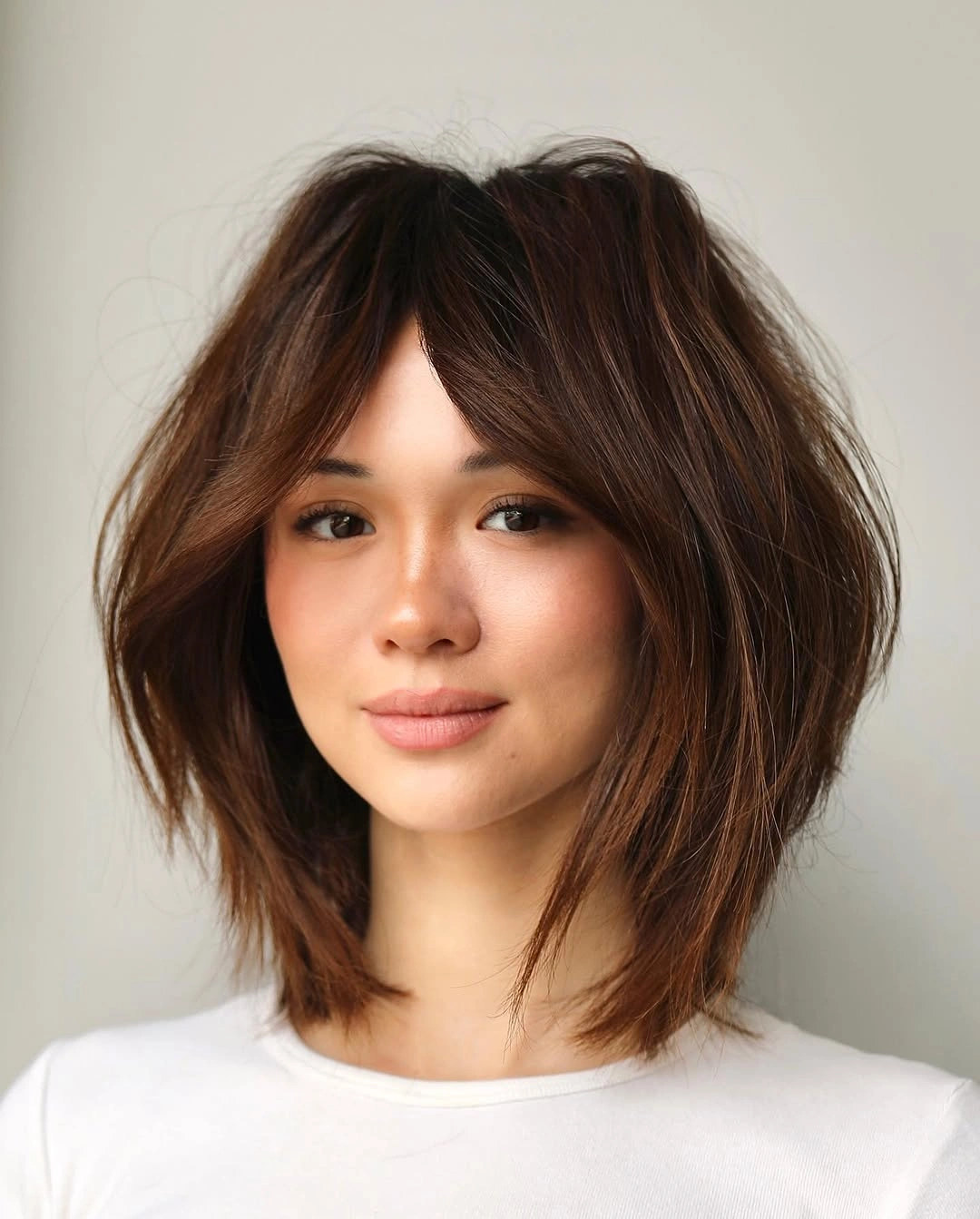
The outward bend creates width at the sides without needing a large amount of volume on top. A practical variation would keep the same center line and move the bend only through the front two sections, leaving the back closer to the neck for an easier everyday outline. Because the cut is short, small changes in growth or direction will show quickly, so the style rewards someone who likes a visible shape rather than a forgiving long perimeter.
This bob offers a softer answer to the question of how to make a middle part feel intentional at short length. The warm color and open neckline keep it from looking overly graphic, while the front pieces provide just enough movement to avoid a helmet-like finish. If you prefer less styling, let the ends sit closer to the jaw; if you want more lift, concentrate it at the curtain pieces instead of disturbing the center line.
Extra-Long Straight Length Makes The Part Precise
Very long dark brown hair falls almost straight from a centered part, with a smooth surface and only a slight bend near the lower ends. The visual impact comes from continuity: the eye can follow the part down into an uninterrupted curtain before meeting the restrained movement at the bottom. A few front pieces soften the face, but the overall outline remains elongated and calm.
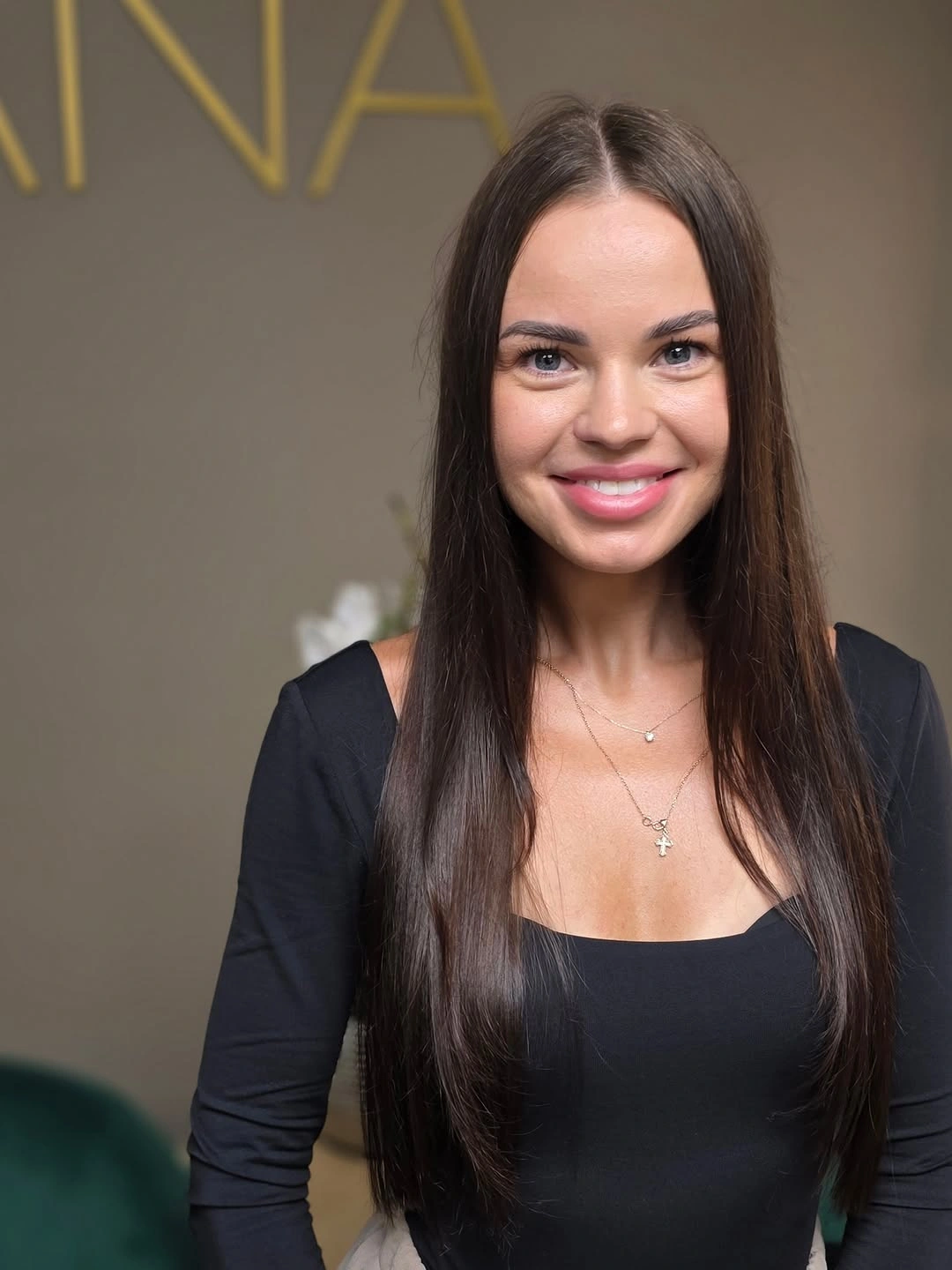
The style works when the center line is allowed to stay visible and the lengths are not broken up by too many layers. To borrow the idea on medium hair, preserve the smooth top and add a gentle bend only below the shoulders, keeping the lower edge simple. The long version does ask for patience with detangling and weight, so a shorter adaptation may be more realistic for someone who wants the same precision without the full length.
This is a useful counterpoint to the wavier examples because it proves that middle parting hairstyles do not need obvious texture to have character. The dark color gives the surface depth, and the near-straight fall makes the center division feel almost architectural. A low-detail finish like this also leaves more room for earrings or a strong neckline, since the hair itself is supplying a long, quiet frame.
Warm Face-Framing Pieces Break Up Dark Waves
Medium-length dark brown hair opens at the center and moves into loose waves with warmer lighter pieces around the face. The roots stay deep and smooth, while the front sections catch the light and repeat through the lower lengths, giving the shape a little more dimension than a single dark tone. The cut remains around the shoulders, so the contrast is easy to see without becoming a large color statement.
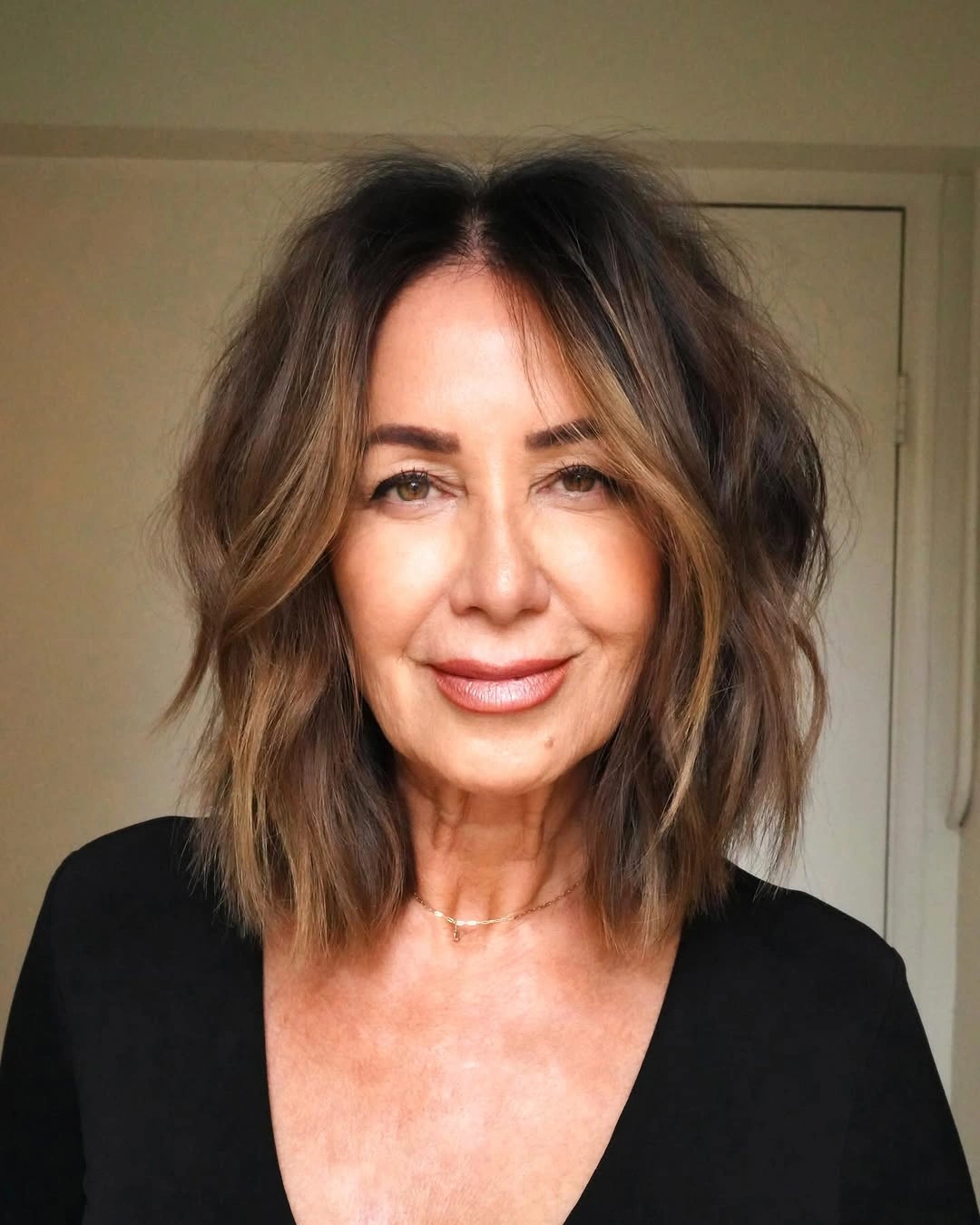
The color placement works because it follows the movement instead of competing with it. For a quieter version, keep the lighter pieces narrow and let the waves stay broad, or use the same face-framing idea on a straight shoulder cut. The honest tradeoff is upkeep: visible contrast near the front can make uneven growth more apparent, while a closer-toned variation will be easier to let soften over time.
This style feels warmer than a uniform dark bob but more grounded than a bright blonde wave. The middle part gives the lighter front sections a clear place to begin, and the shoulder length keeps the overall impression balanced. If your clothes already carry a strong color, the simpler version is likely to be easier to pair; if your outfit is neutral, the warm pieces can act as the small seasonal shift that makes the look feel newly considered.
A Smooth Profile Bob Keeps The Shape Compact
A short dark brown bob is shown from the side, yet the middle part remains clear because the top is smooth and the sides follow an even jaw-level outline. The ends curve gently under rather than flipping outward, which gives the cut a controlled, compact quality. With little visible volume at the sides, the silhouette reads as deliberate and neat rather than fluffy or layered.
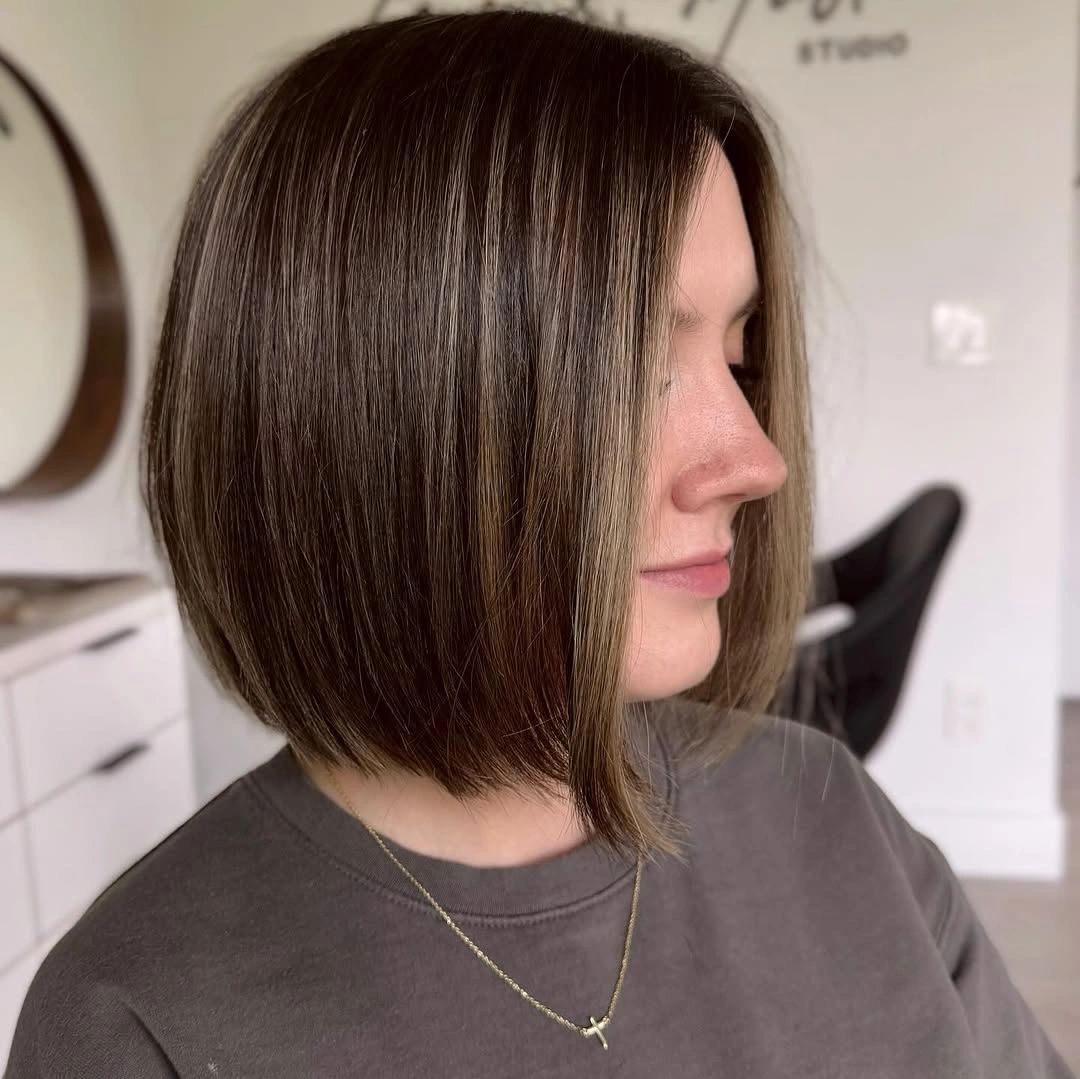
The appeal comes from proportion: the clean top, short perimeter, and inward ends all support one focused shape. If you want a softer interpretation, allow only the front pieces to turn away while keeping the back tucked close, or extend the length by a few inches so small growth changes are less obvious. This is not the most forgiving choice between trims, but it is effective for anyone who likes a strong outline that does not need decoration.
Compared with longer middle-parted styles, this bob puts the part and the lower edge on equal footing. The dark color reinforces the graphic quality, while the simple clothing keeps attention on the cut rather than on an added mood. A light smoothing finish will preserve the clean surface, but too much product or too much volume would blur the compact relationship that makes this shape work.
Long Brown Waves Build A Soft Curtain
Long brown hair is divided at the center and shaped into broad waves that open away from the face before falling toward the chest. The top stays relatively smooth, while the lower half carries enough separation to create a wide, soft curtain. The movement is fuller than a simple bend but less uniform than a formal curl, which keeps the long length from looking heavy.
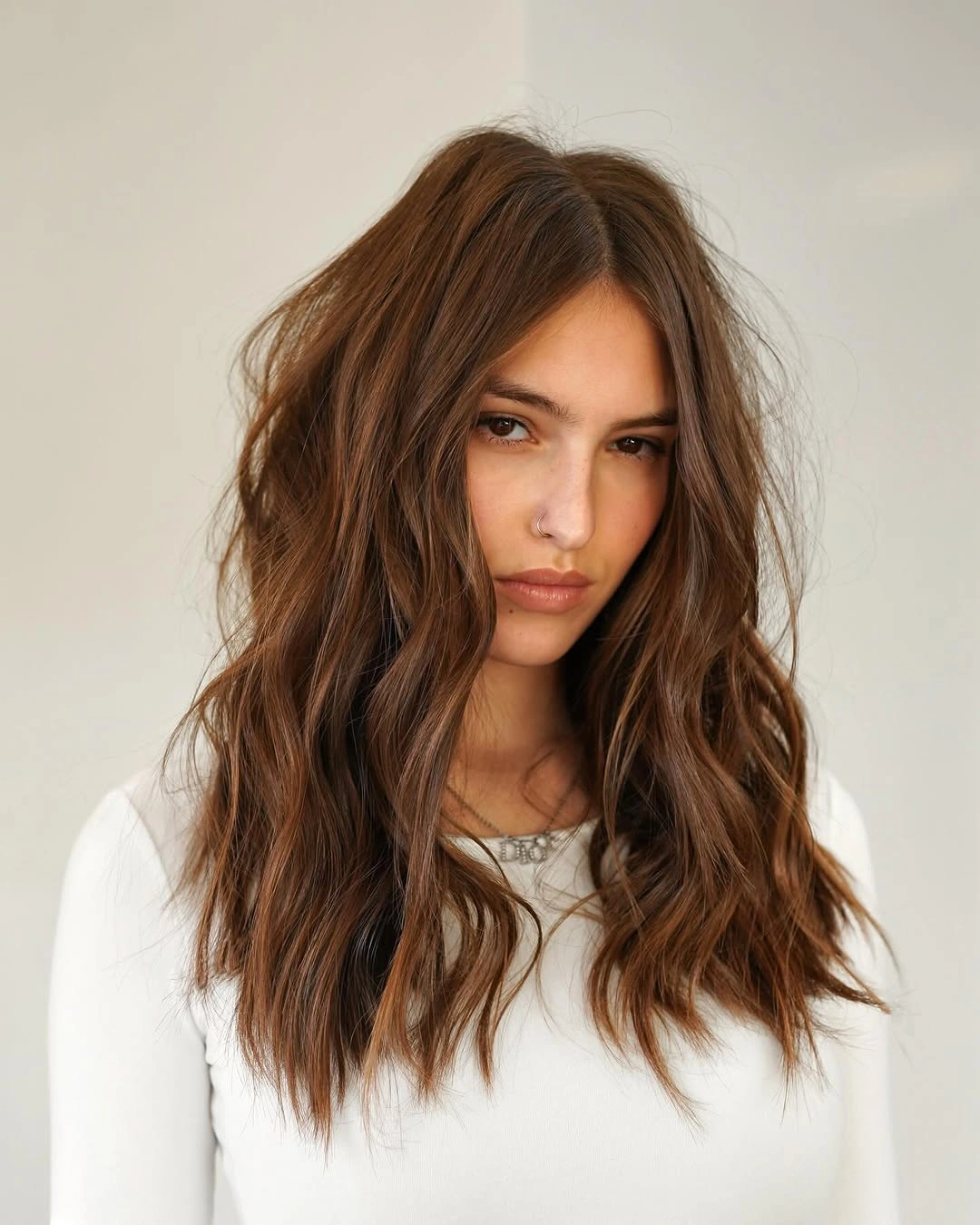
The middle part gives the volume a clear anchor, so the waves can spread without making the front look random. To adapt the idea, keep the first bend below the cheek and shorten the lower curtain to the shoulders, where the same balance will feel lighter. Longer hair supports the broadest shape, but it also means the ends need separation; if they merge into one dense mass, the airy quality will disappear.
This is a comfortable middle ground between sleek length and full curls. The brown tone adds a grounded feeling, the open neckline leaves the movement visible, and the face-framing pieces create a gentle transition from the center to the sides. It would suit a reader who wants a noticeable change in silhouette while keeping the color and overall finish familiar enough for everyday wear.
Platinum Bob Uses Lift Instead Of Length
A short pale blonde bob uses a centered part, rounded sides, and a lifted crown to create shape without relying on long movement. The ends curve softly around the jaw, and the clean neckline lets the compact outline stand out. Because the color is light and the sides have controlled volume, the style reads fresh and precise even though it has no visible braid or elaborate detail.
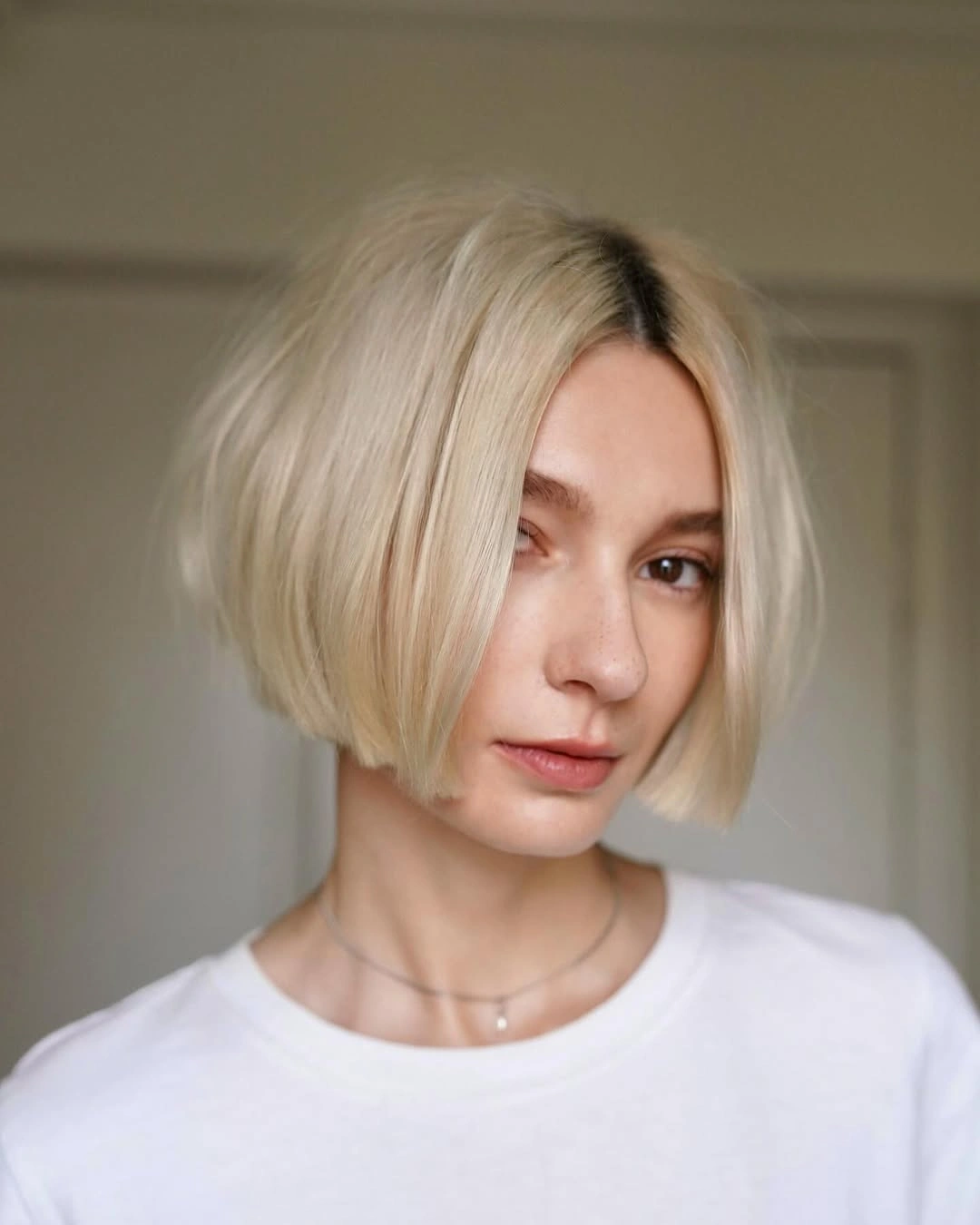
The proportion is clear: the height sits near the top and the width stays close to the jaw, so the silhouette feels contained rather than sprawling. A lower-maintenance adaptation would keep the same part and rounded ends in a slightly longer bob, giving the shape more room to soften between appointments. The shorter version offers a sharper statement, but the cropped perimeter leaves less flexibility when the ends begin to grow unevenly.
This look shows how a middle part can stay visible even when the hair is short enough that there is little length to drape. The pale color makes the outline easy to follow, while the simple white top lets the shape carry the mood. If you want the idea to feel less polished, loosen the front bend and let one side sit slightly more open, but keep enough lift at the crown to preserve the centered architecture.
Blonde Waves Keep The Finish Light And Loose
Medium-to-long blonde hair opens from a center part and falls in loose, broken waves with airy curtain pieces around the cheeks. Darker-looking roots add a little depth at the top, while the lighter lengths keep the lower half bright and soft. The texture is relaxed rather than tightly defined, which makes the shape feel easy even though the hair has clear movement.
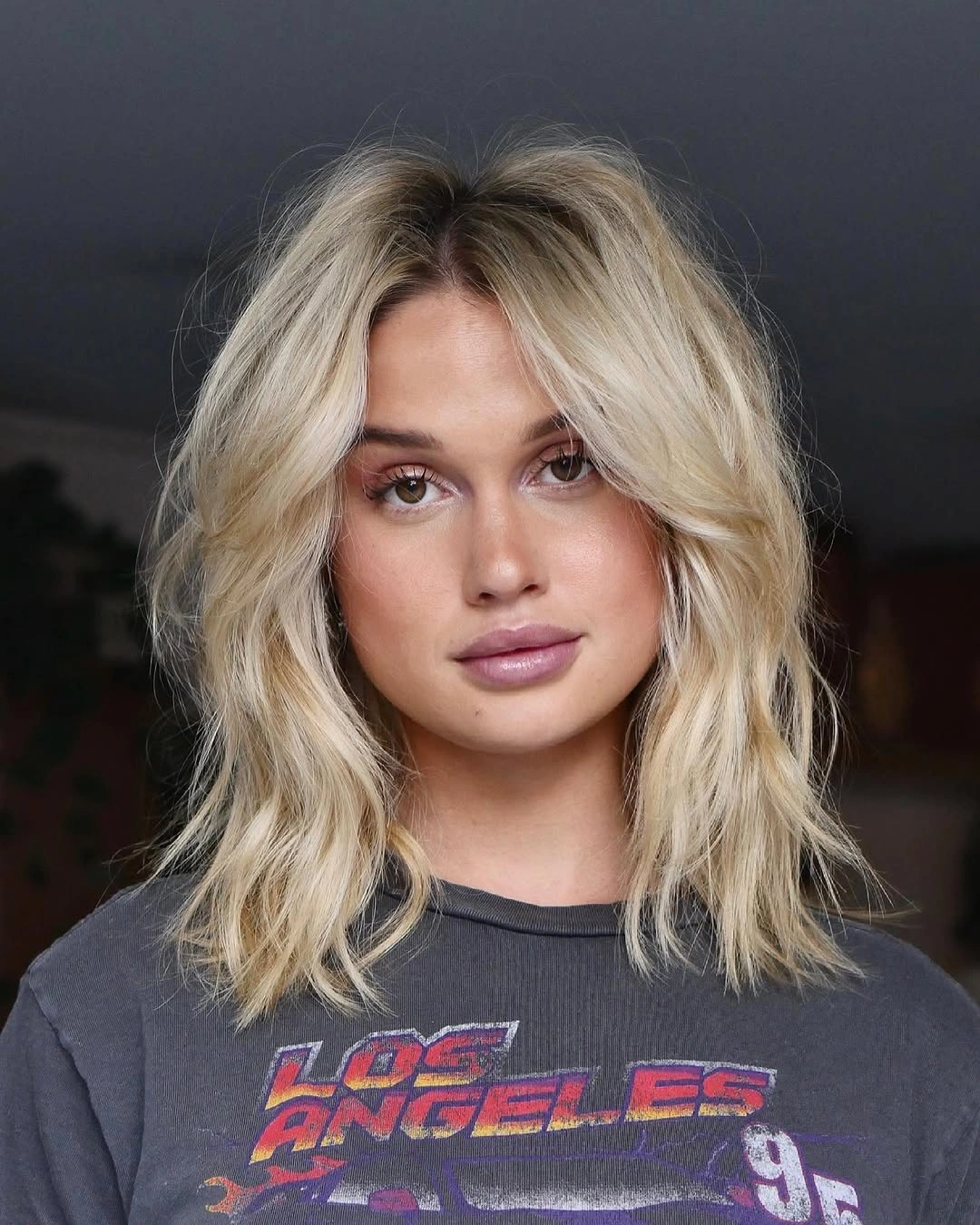
The contrast between a smooth part and irregular bends is what keeps this style from looking flat or overly formal. For a shorter version, keep the front pieces around the jaw and allow the ends to move in different directions instead of forcing a matching wave on every section. The lighter color shows separation well, so brushing the waves together or adding too much shine could make the texture look less dimensional.
This is one of the more relaxed middle parting hairstyles in the collection, with enough brightness for a fresh change and enough root depth to keep it grounded. It pairs naturally with a casual top, but the curtain pieces can be smoothed when the occasion calls for a cleaner finish. The main lesson is simple: let the center line stay orderly, then allow the lengths to look a little less managed.
Straight Copper Length Lets Color Lead
Long copper-brown hair is seen from the side with a centered top line, a mostly straight fall, and a clean lower edge. The warm color carries much of the visual interest, while the restrained shape keeps the silhouette calm and easy to follow. A few pieces near the cheek prevent the long length from feeling like one unbroken sheet, but the style stays more linear than wavy.
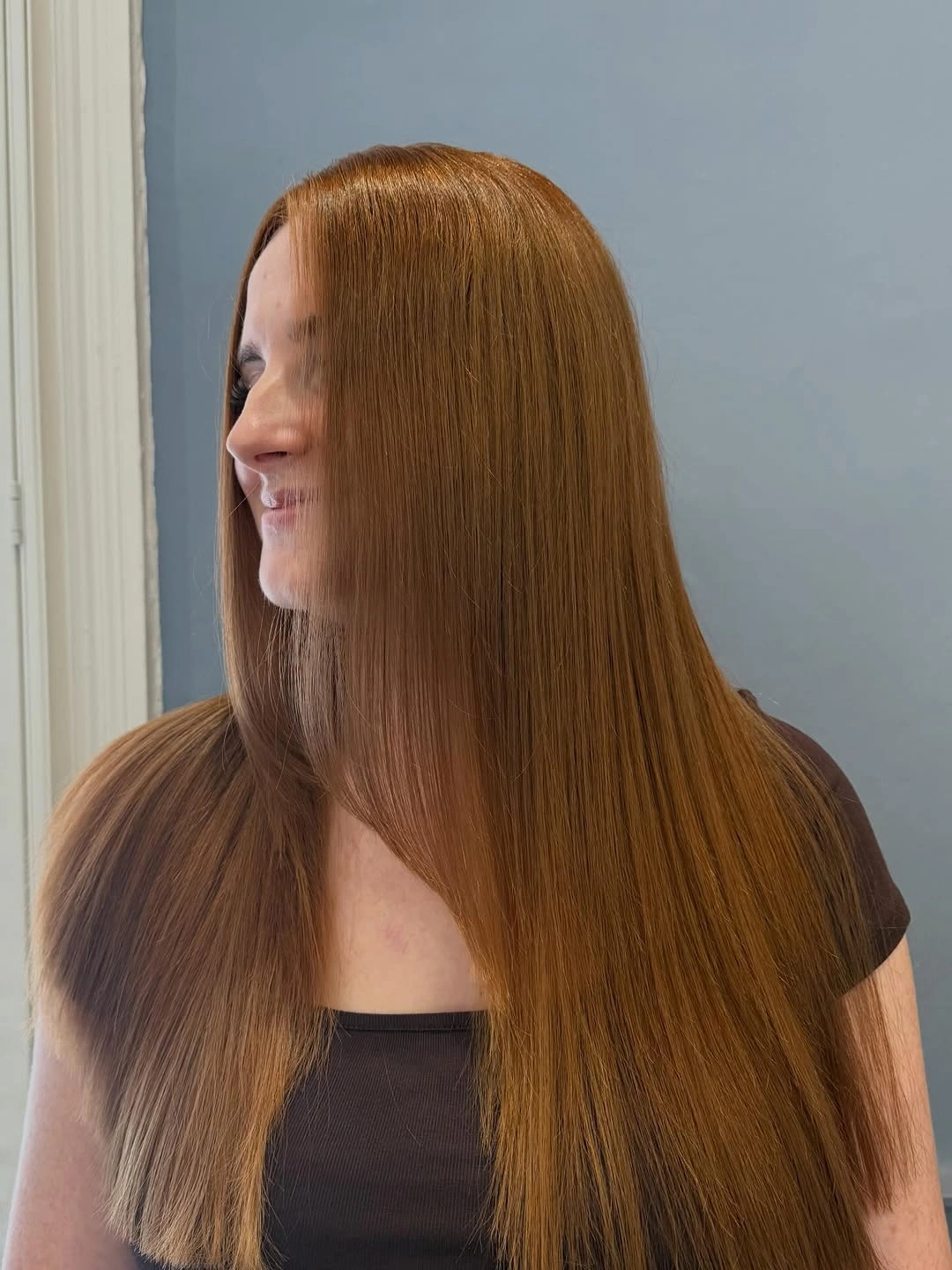
The balance works because the strong color is given a simple frame. If you like the tone but want more movement, keep the center part and add only a soft bend below the shoulders, or use a slightly layered front that does not interrupt the long line. The warm shade may make changes in tone noticeable as it shifts, so the lower-detail shape is helpful when the goal is to keep attention on color rather than on styling complexity.
This look is quieter in construction than the layered examples, yet it does not feel plain because the copper surface changes the reading of the length. It would pair well with neutral clothing and simple jewelry, where the warm color can remain the focal point. Keep the ends clean and the top smooth if you want the same calm effect; adding many disconnected pieces would move the style into a different visual language.
Heavy Curtain Layers Create Soft Volume
Long dark hair uses a centered part with substantial curtain layers that lift around the cheeks and then fall into soft curls through the lower lengths. The front sections are fuller than the ends, so the shape opens outward near the face before narrowing again. This gives the style a layered, enveloping quality while keeping the middle line clear at the crown.
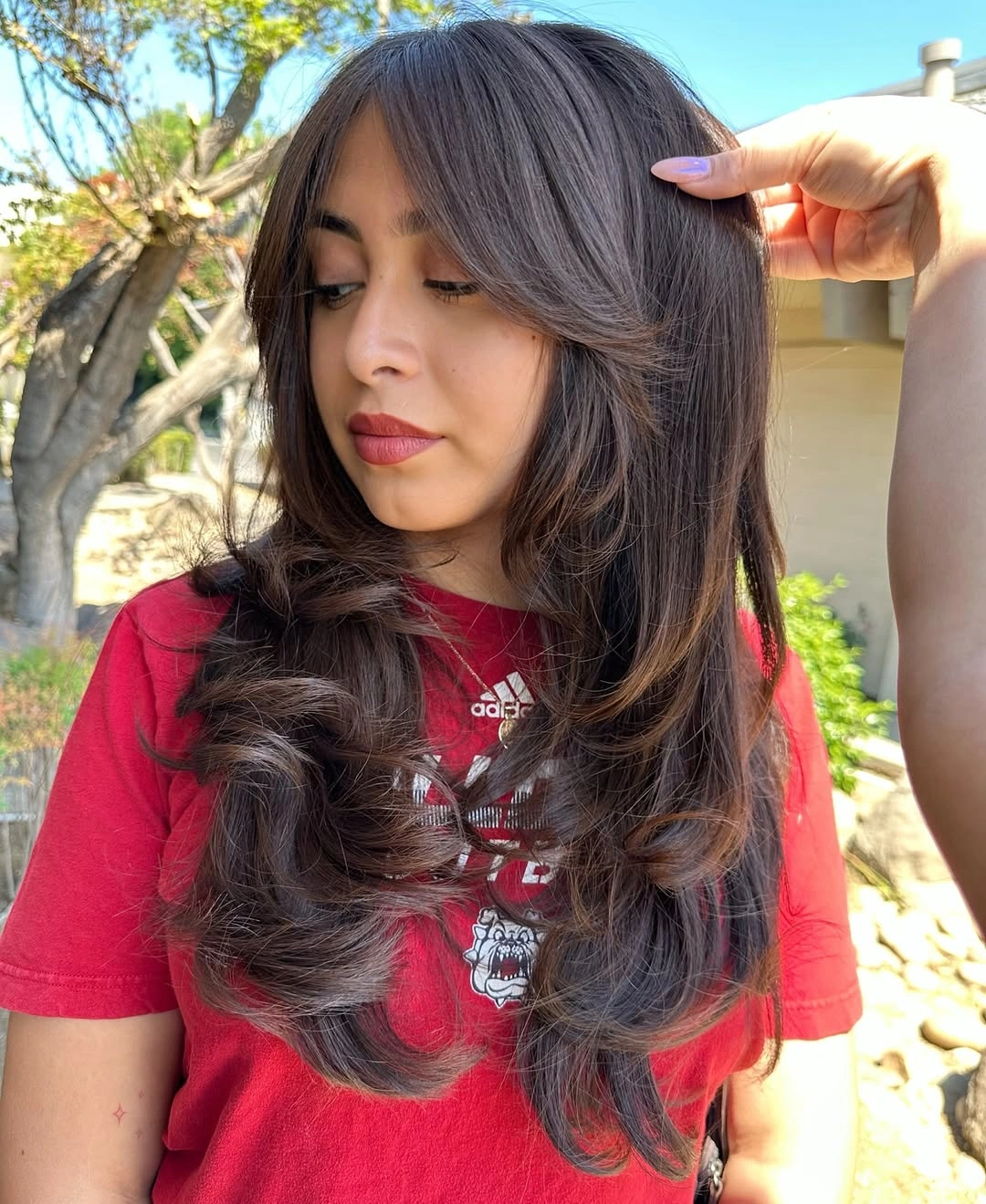
The volume works through placement rather than through one uniform curl, with the strongest movement sitting where the part meets the face. A more manageable adaptation would keep the curtain pieces but reduce the lower length to the shoulders, allowing the front shape to remain visible without carrying as much weight. The fuller version needs separation to stay airy, and overbrushing could merge the curls into a heavier block.
This style brings a richer, more enveloping feeling than the straight copper example, but it still has a clear center because the top is controlled. The red shirt adds warmth around the dark hair, showing how clothing can support the palette without becoming part of the hairstyle itself. If you prefer a gentler result, loosen the curl groups and keep the side pieces longer; if you want more structure, sharpen only the part and first layer.
Feathered Blonde Layers Make Length Feel Airy
Long pale blonde hair is parted in the middle and shaped into large feathered waves that sweep away from the face. The layers begin high enough to create visible lift near the cheeks, then continue through the lower lengths in broad curved sections. The result is bright and spacious rather than dense, with the center line acting as the calm beginning of a wide frame.
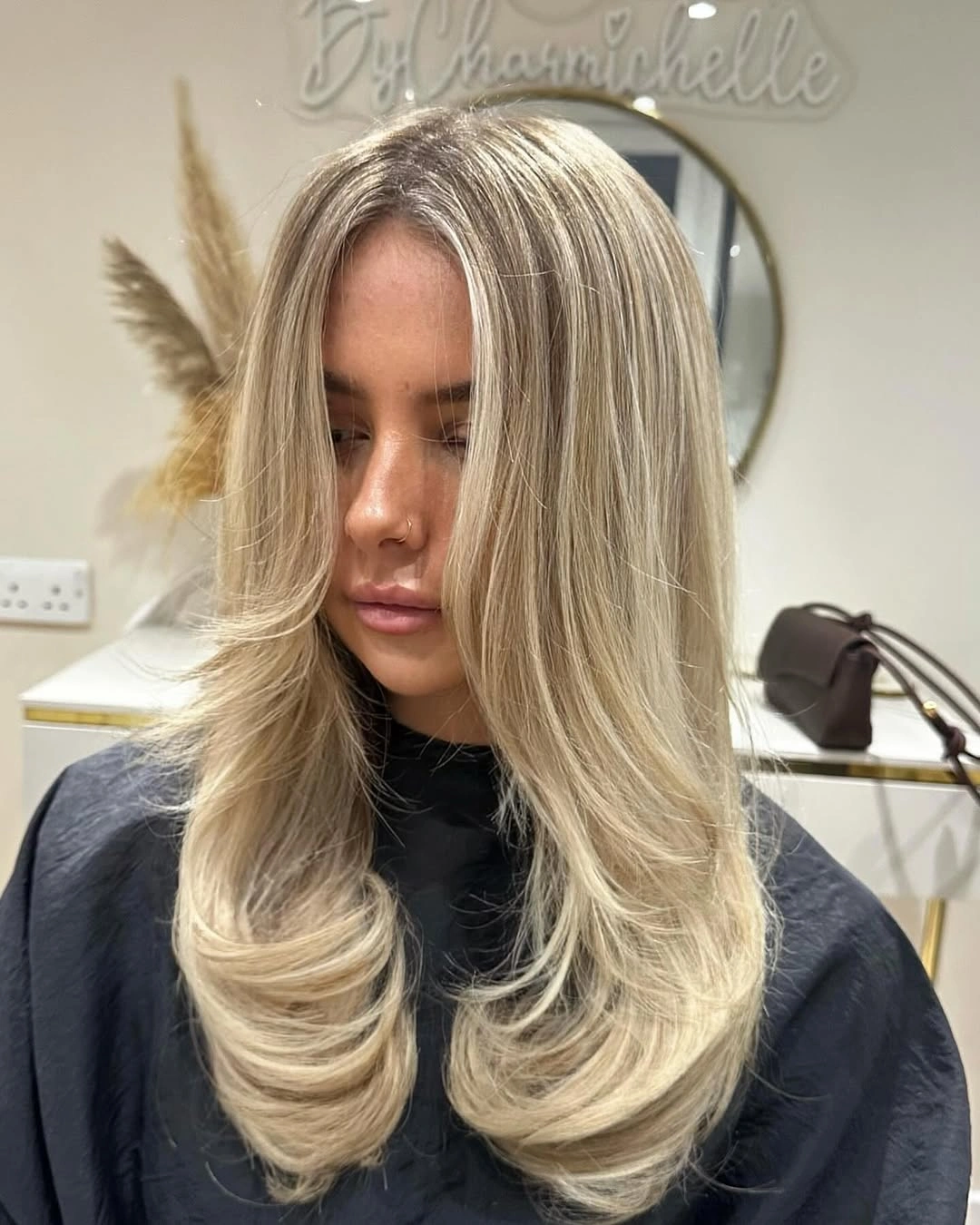
The feathered arrangement keeps substantial length from looking too heavy because the front pieces move outward before the ends gather. A shorter interpretation could preserve the first two layers around the jaw and collarbone, then let the rest finish closer to the shoulders. The longer version gives the fullest sweep, but it also demands more attention to keeping each layer separate enough to read as movement rather than one large curl.
There is a gentle seasonal warmth in the pale color and soft texture, even without a literal accessory or motif. The dark top gives the lighter hair a clear outline, while the open waves keep the middle part from seeming severe. This is a good reference for readers who want a polished change that still feels touchable, provided they are comfortable maintaining the volume and shape through the lower half.
Ash Blonde Layers Frame A Soft Blowout
Long ash-blonde hair begins with a clean center part and moves through smooth face-framing layers into soft bends at the ends. The color stays light and cool-looking, while the shape remains controlled enough to show the part from the crown to the upper lengths. It has less dramatic curl than the feathered blonde idea, so the overall impression is polished without becoming rigid.
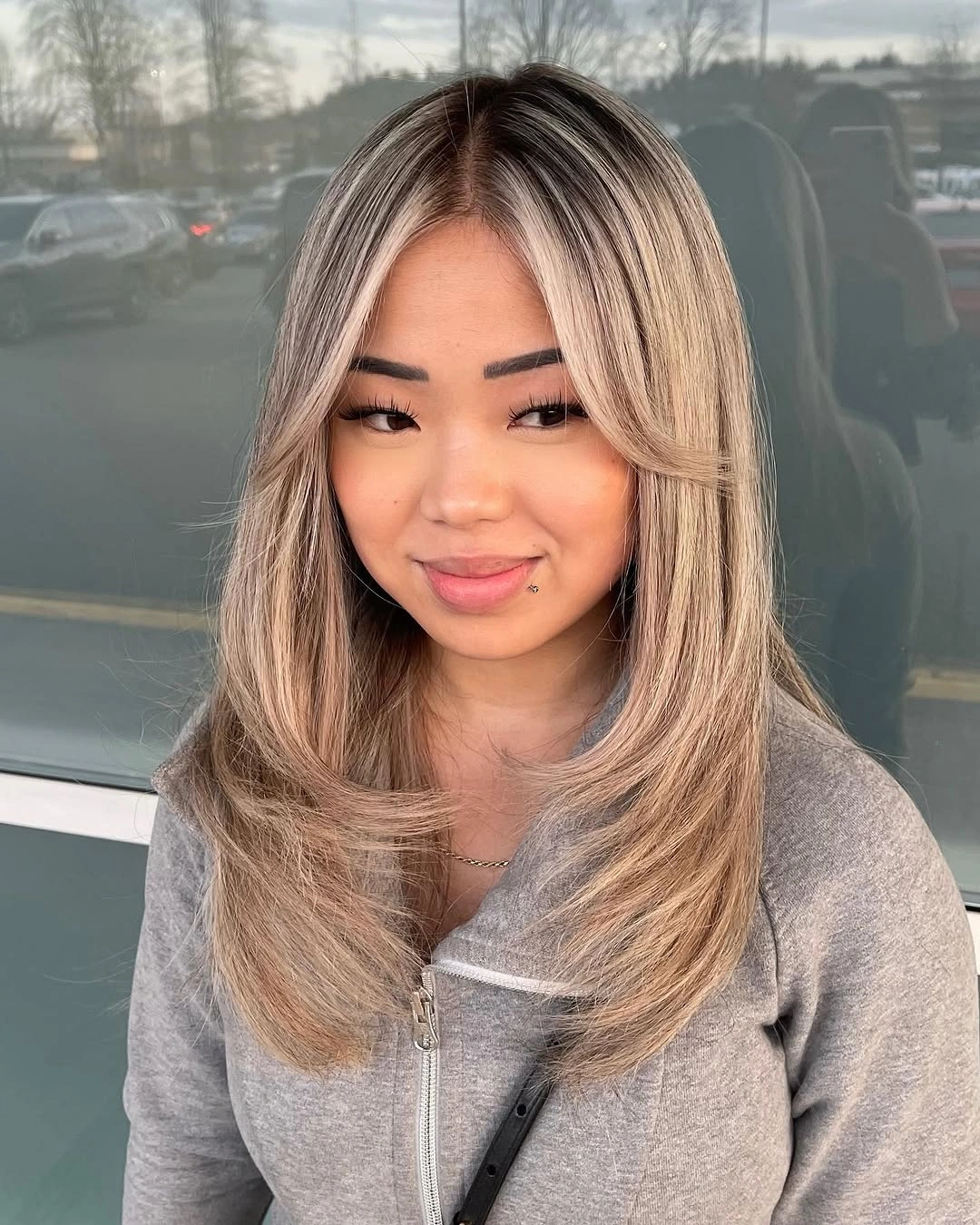
The strength of this shape is restraint: the front layers create direction, but the lower lengths do not compete for attention. To adapt it to medium hair, keep one longer piece near each cheek and let the ends curve inward or outward according to the neckline you wear most. A smooth blowout makes the proportions obvious, though it can also show flatness at the root if the center part is left without any lift.
This is a calm option when you want the lightness of blonde without a highly textured finish. The gray clothing supports the cool palette and leaves the hair to carry the movement, while the soft ends keep the look from feeling too sharp. Think of the style as a controlled transition between sleek and waved: the closer the top stays to the head, the more intentional the layers will appear.
Light Front Streaks Give Dark Waves Direction
Long dark hair is centered and shaped with layered curls, but the first feature that changes the reading is the pair of pale front streaks. They sit inside the face-framing sections and contrast strongly with the darker base, making the middle part and the direction of the waves easier to follow. The lower lengths remain dark and curved, so the light pieces act as a guide rather than covering the whole shape.
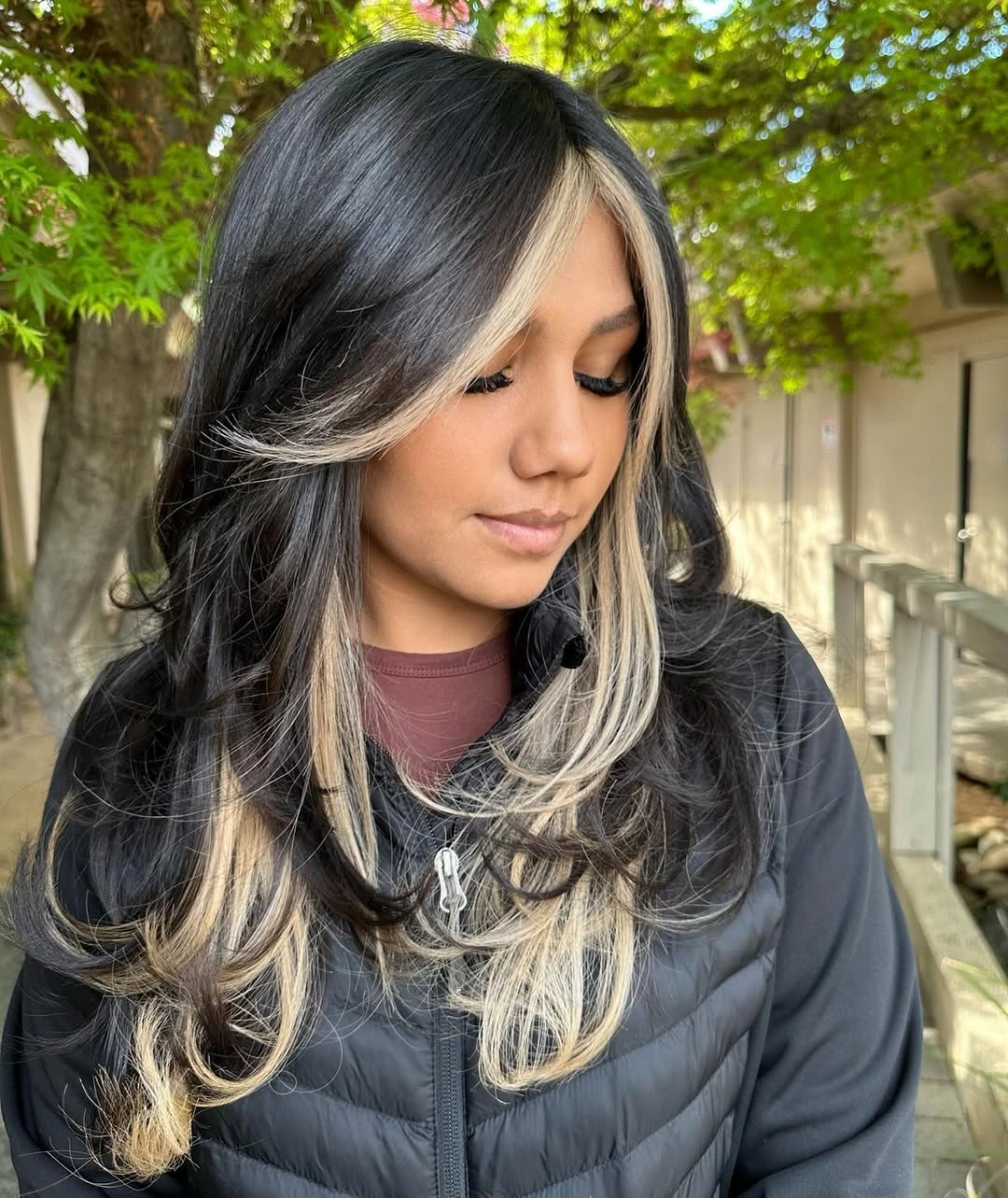
The color placement works because it follows the front movement and gives the eye a place to pause near the face. A quieter version would use a narrower tonal shift or repeat the lighter pieces only through the top layer, while a shorter cut could keep the streaks around the cheek and let the ends stay dark. High contrast is visually clear, but it will also draw attention to growth and placement, so the decision should feel deliberate rather than accidental.
This style feels more directional than a single-color wave because the pale pieces tell us where the layers begin. The dark jacket keeps the contrast strong, yet the overall silhouette remains soft enough for everyday wear. If you are considering a similar change, decide first whether you want color to frame the face or to decorate the lengths; here, the restrained placement makes the center part feel more purposeful.
Short Dark Bob Gains Bright Face Framing
A short dark bob is centered at the crown and rounded through the ends, with a pale blonde section placed prominently around the front. The darker base creates a compact frame, while the lighter piece opens one side of the face and adds contrast without requiring long length. The ends curl softly, so the shape feels rounded and expressive rather than sharply blunt.
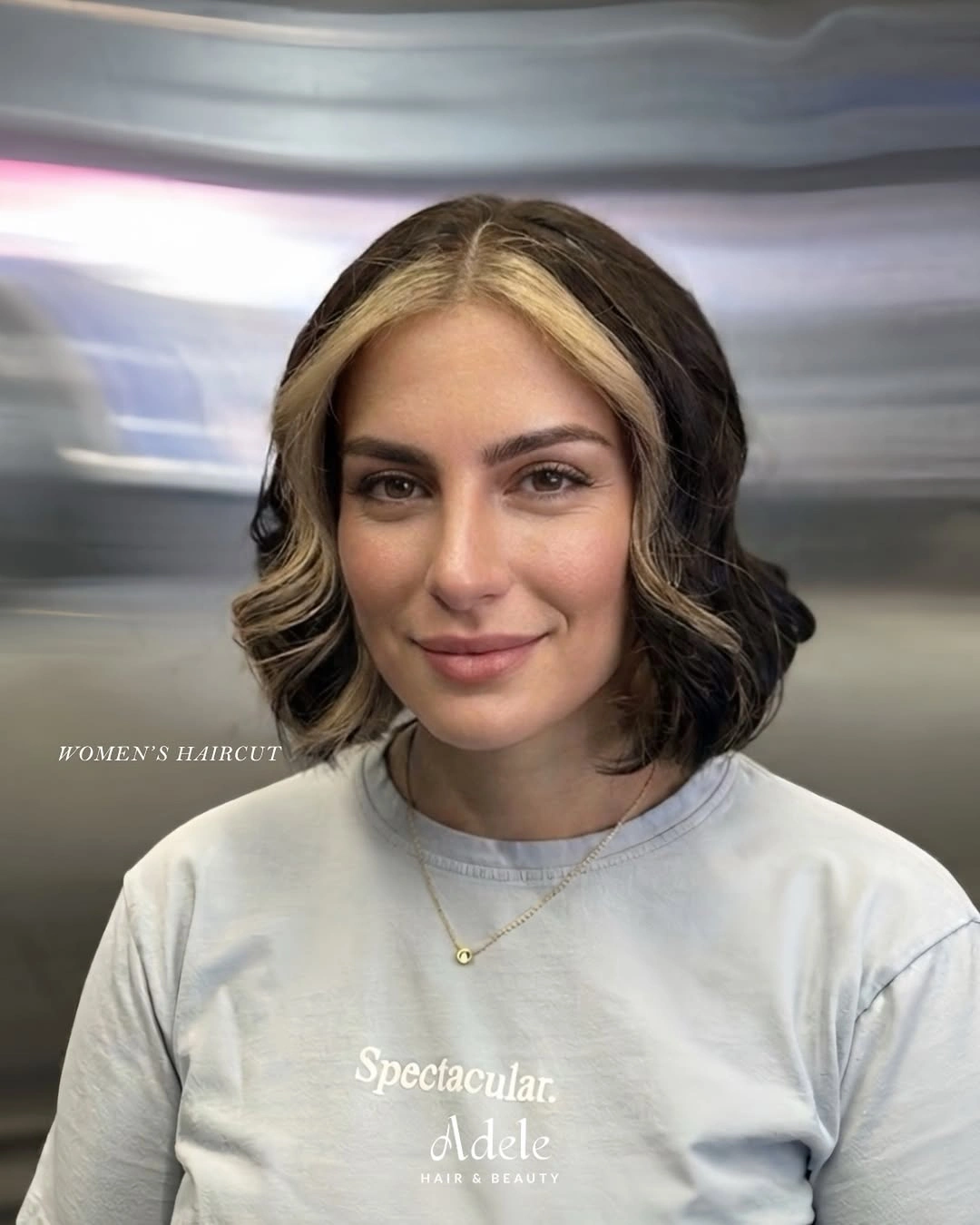
The visual weight is concentrated near the front, which makes the color placement and the part work together. To adapt it, keep the lighter area narrower and let it follow the first layer, or carry the same contrast into a longer bob where the ends have more room to move. The short outline is easy to understand, but it leaves little space to hide uneven growth or a color transition that no longer sits exactly where intended.
This is a lively alternative to the quiet single-color bobs because one bright section changes the balance of the whole head. The light shirt keeps the lower silhouette visible, while the dark base gives the pale piece enough contrast to feel intentional. When styling it, smooth the darker side first and then let the light section keep a slight bend, so the two tones remain connected through shape rather than competing as separate blocks.
Long Light Brown Layers Curve Around The Neckline
Long light-brown hair opens at the middle and falls in smooth, broad layers that curve around the chest. The front pieces begin near the cheeks and blend into the longer lengths, creating a soft frame without a sharp break. The color is warm and even-looking, while the movement stays controlled enough to show the underlying center line.
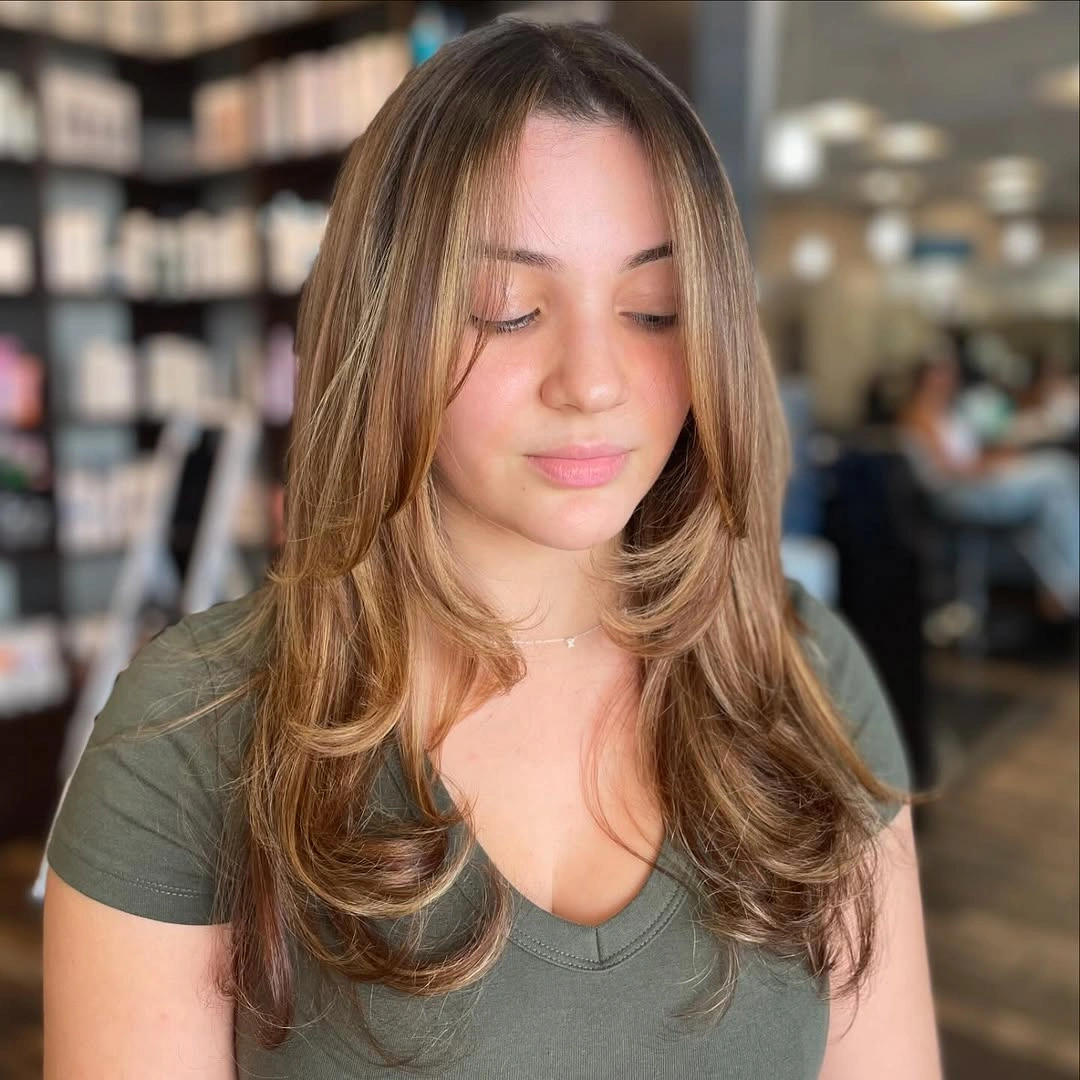
The shape feels balanced because the layers add width near the face and then taper into a calmer lower edge. A shorter version could keep the first face-framing layer and finish near the collarbone, which would preserve the movement while reducing the weight of the longer curtain. The smooth finish is easy to read, but it also means the ends need regular attention if you want the curved outline to remain distinct.
This is a warm, comfortable take on middle parting hairstyles, less dramatic than a high-contrast streak and softer than a sharp bob. The muted green top supports the natural-looking palette without distracting from the hair, and the open center keeps the face area light. It is a useful reference for someone who wants layers that feel visible in motion but still tidy when the hair is allowed to settle.
Relaxed Dark Ends Keep The Center Part Easy
Medium dark brown hair is centered and falls to the shoulders with relaxed bends, light layering around the face, and ends that turn softly instead of forming a fixed curl. The silhouette stays close to the body, so the middle part remains easy to see even as the lower sections move. Its strength is subtle rhythm: there is enough direction to keep the cut alive, but not enough structure to make it look ceremonial.
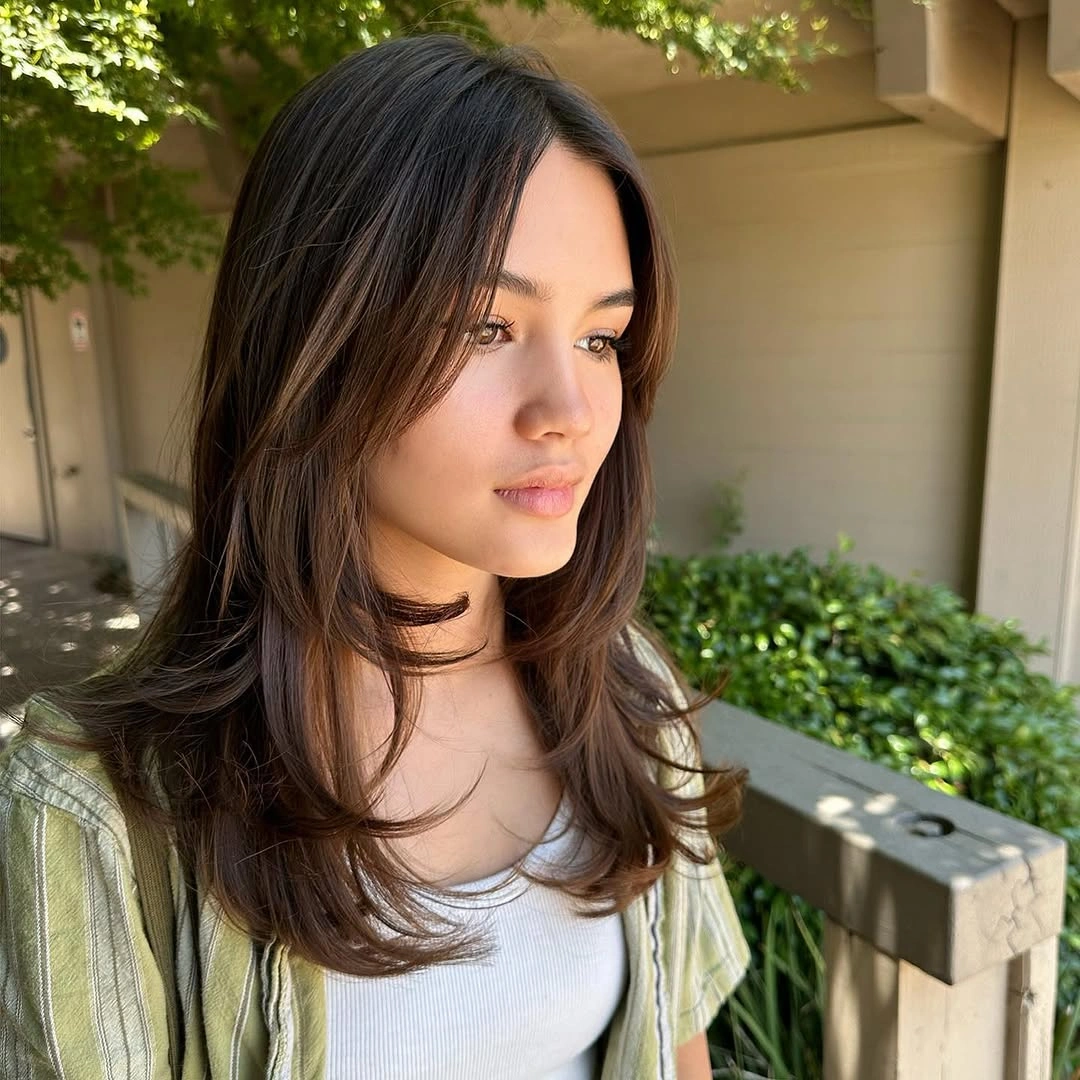
The proportion makes this a practical bridge between a straight bob and a long wave because the length is present but manageable. Keep the front pieces slightly longer if you want the face to feel framed, or reduce the bend and let the ends sit nearer to the shoulder for an even quieter version. The relaxed finish can lose shape if brushed too aggressively, so the most useful maintenance thought is to preserve the separation rather than forcing uniformity.
Outdoor light brings out the deep tone and the gentle curve, showing how a middle part can feel polished without a glossy surface or large volume. The white top and muted background leave the silhouette clear, while the soft ends keep it approachable. This option suits someone who likes hair to have a little movement when it settles naturally, with enough structure to keep the center line from drifting away.
Very Long Copper Hair Keeps Movement Minimal
Very long copper hair falls from a centered part in a smooth, mostly straight line, with only small bends near the lower lengths and around the face. The warm color is the main event, while the simple shape gives it room to look continuous rather than busy. Because the length is so visible, even a small front section can change the way the center opening connects to the shoulders.
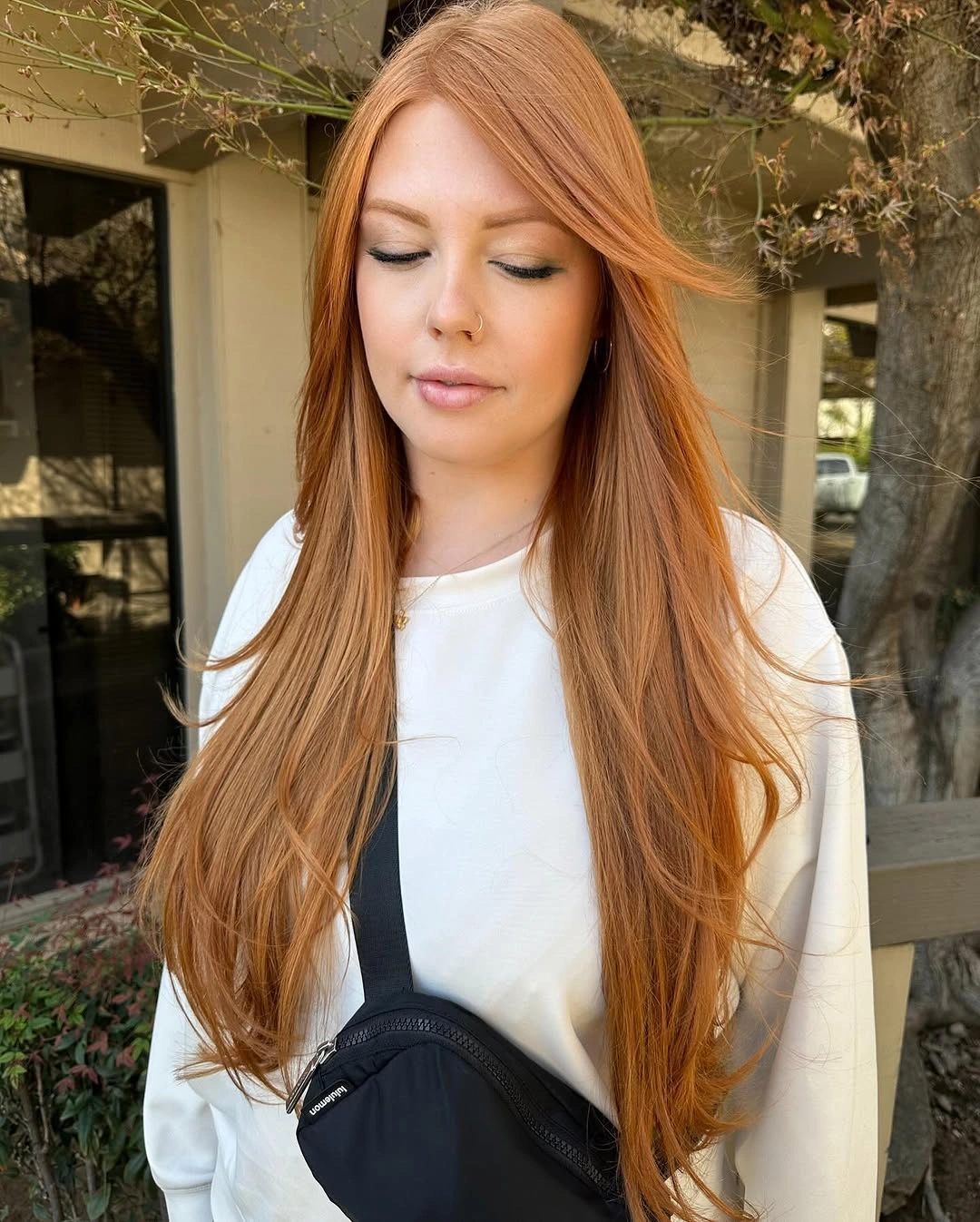
This proportion works for someone who wants color and length to feel intentional without adding obvious texture. To adapt it for a shorter cut, keep the warm tone even and introduce one soft face-framing layer rather than building many, or allow a loose bend only at the ends. The long version has drama, but the weight can make styling and detangling more demanding than the calm surface first suggests.
The white top and outdoor setting keep the warm hair easy to read, and the restrained finish creates a quiet seasonal feeling without relying on a literal autumn motif. Compared with the feathered examples, this one is more about continuity than lift. If you want the same mood with less maintenance, reduce the length before reducing the color, because the copper tone is what gives the simple center line its character.
Auburn Waves Add Warmth To A Rounded Shape
A shoulder-length auburn style opens at the middle and gathers into rounded waves through the lower half. Shorter pieces sit around the face, and the ends curve inward and outward in a soft, layered rhythm rather than one repeated wave. The warm red-brown color reinforces the cozy feeling, while the glasses and simple top make the medium length and rounded outline easy to compare.
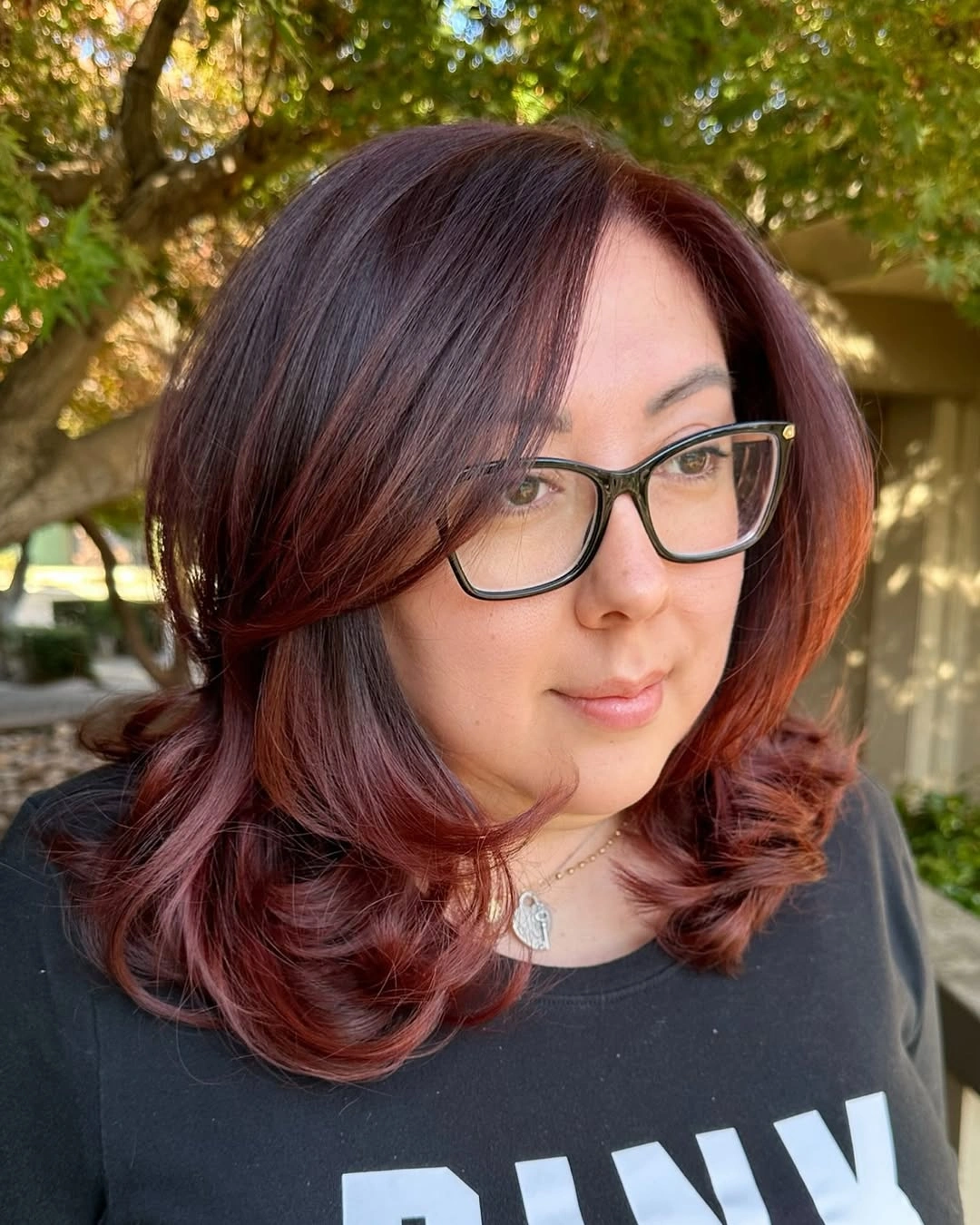
The style works because the color and the shape support the same sense of warmth without becoming heavy. A shorter adaptation could keep the face-framing layers and let the back end near the jaw, while a longer version would allow the waves to stretch into a more vertical line. The rounded volume is flattering only if the ends stay separated, so a heavy brush-through could turn the lively bends into a dense, indistinct mass.
This closing idea returns to a middle length but keeps more warmth and texture than the earlier dark bob. The center part provides structure, the auburn tone supplies depth, and the soft curls make the silhouette feel personal rather than purely graphic. If you are choosing among these middle parting hairstyles, ask whether your priority is a clear perimeter, visible movement, or color-led warmth; this one makes all three share the attention without letting any single detail dominate.