The most convincing fashion update is often the one that clears space around a familiar piece. A look feels current when its strongest line is easy to read, the color has a reason to be there, and the styling leaves room for movement. That kind of reset is more useful than chasing novelty because it changes how the outfit works, not just how quickly it catches attention, and it gives personal taste somewhere to lead.
Before adding a new accent, test the outfit from several steps away and identify the first place your eye lands. If the answer is unclear, remove one competing element, adjust the length relationship, or repeat a quiet shade so the silhouette can settle. This keeps a fresh outfit from feeling like a costume built around a single impulse and gives the strongest detail room to do its job.
Broad Stripes Keep Blue Denim Easy
The navy-and-cream striped sweater is the first decision here, and the relaxed blue jeans give it enough visual breathing room to remain the focus. Simple shoes keep the lower edge quiet, so the broad horizontal pattern does not have to compete with another strong shape. The outfit feels current through clarity, the same editing principle behind September fashion trends: one graphic surface, one familiar base, and plenty of open space between them.
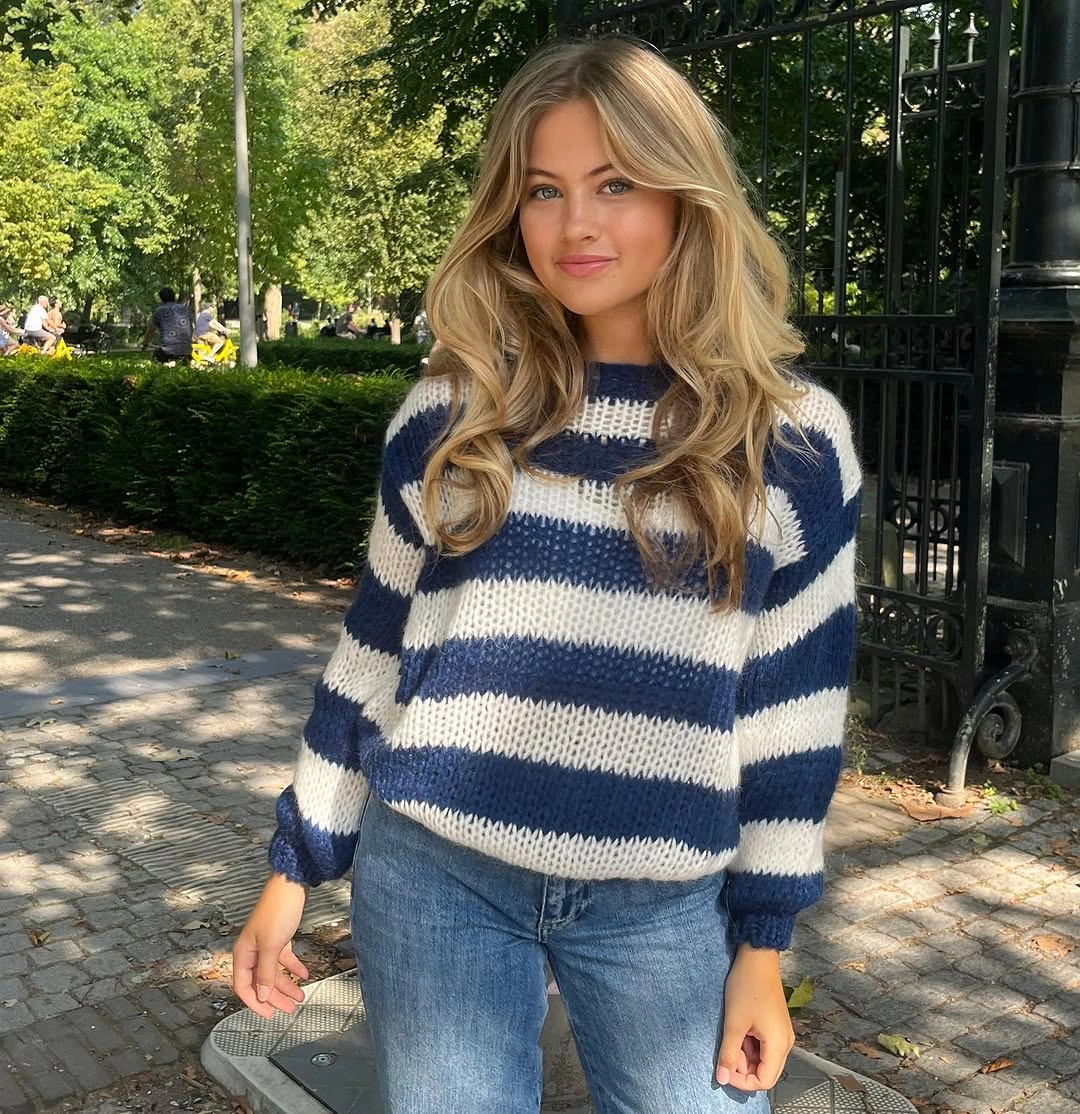
The stripe works because its colors are repeated in the denim without matching exactly. That relationship makes the sweater noticeable but not isolated, while the straight jean line gives the eye somewhere calm to land. A small accessory can join the look, but it should support the clean reset rather than add another pattern.
A narrow belt or compact shoulder bag would give the relaxed base a little structure if the outfit feels too open. Keep the accessory close in shape and color, because a second graphic element could crowd the sweater and make the simple proportion harder to see. broad stripes keep blue denim easy stays readable when the surrounding shape is allowed to move without extra visual noise.
Brown Jacket, Gray Scarf, Familiar Denim
A deep brown jacket gives blue jeans a warmer direction, while the soft gray scarf lightens the neck and adds a visible layer without introducing a print. A pale shirt creates a small opening between the jacket and denim, and dark boots finish the look with a grounded line. The result updates a familiar combination through tone and texture rather than excess detail.
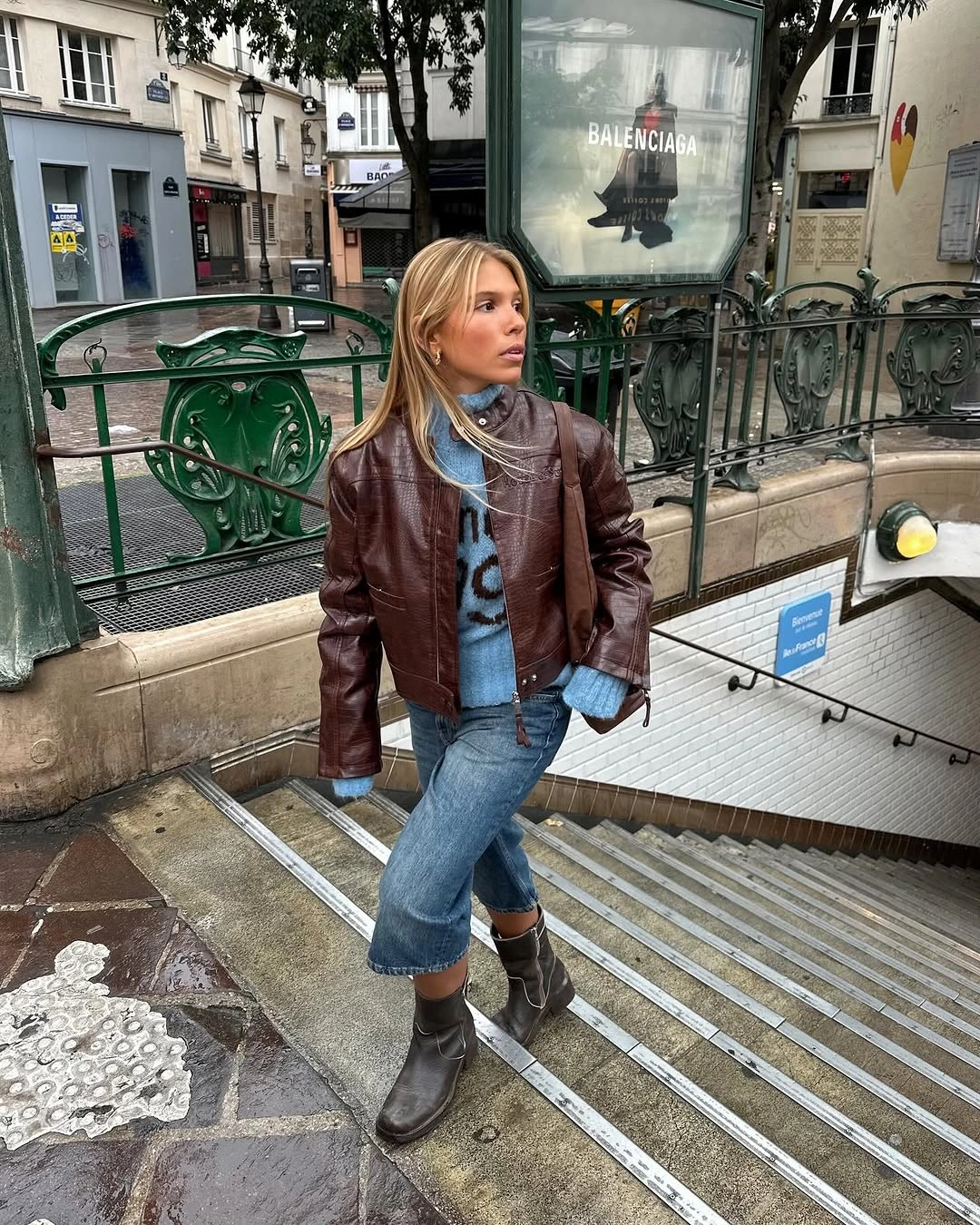
The scarf is the quiet hinge between the dark jacket and lighter face area. Worn loose, it lets the collar remain visible and keeps the upper half from becoming crowded; wrapped tightly, it would shorten that space and make the jacket feel heavier. The jeans stay intentionally simple so the shift from brown to gray can be read at once.
Choose a bag with a clean outline if you want the scarf to remain the main accessory. A softer slouchy bag could work for a relaxed day, but it would repeat the drape and remove the sharper edge that gives the jacket and denim combination its fresh finish. Let brown jacket, gray scarf, familiar denim keep the first pause, then use the quieter pieces to carry the practical part of the look.
Pink and Green Make Color Feel Deliberate
A bright pink-and-green sweater carries a busy graphic surface, while saturated magenta trousers repeat the warm pink family below. The small bag echoes the palette without adding another large shape, which lets the sweater remain the first thing to notice. The outfit is bold, but its color repetition gives the brightness a clear route through the silhouette.
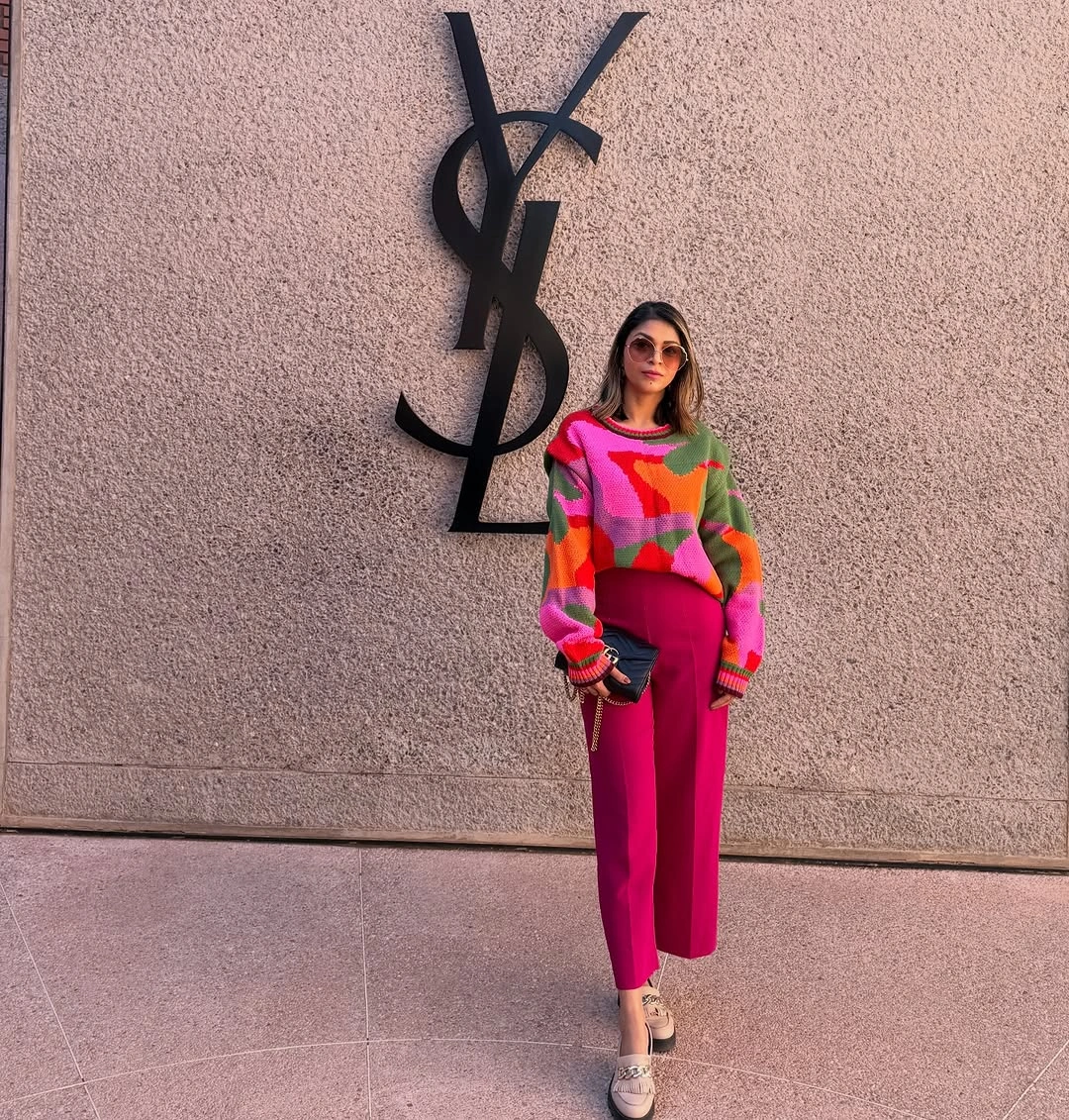
The green detail matters because it breaks the pink rhythm and keeps the outfit from becoming a single saturated block. The trousers then extend the warm value downward, so the color looks planned rather than accidental. Simple footwear is useful here: the palette already has enough information, and the lower edge benefits from visual quiet.
Swap in neutral shoes or a plain bag when you want a softer interpretation without losing the graphic sweater. If you keep every bright element, choose small accessories and let the trousers fall cleanly; added texture or another print would compete with the main color decision. The line of pink and green make color feel deliberate remains clearer when a new accent is kept away from its strongest edge.
Dark Texture Meets Pale Jeans
A voluminous dark brown sweater is paired with pale blue jeans, creating a clear difference in value and surface. Sunglasses and a small bag add a neat finishing note, but the outfit remains built around the contrast between a textured upper half and a lighter, quieter lower half. It feels open because the denim gives the deep color somewhere to expand.
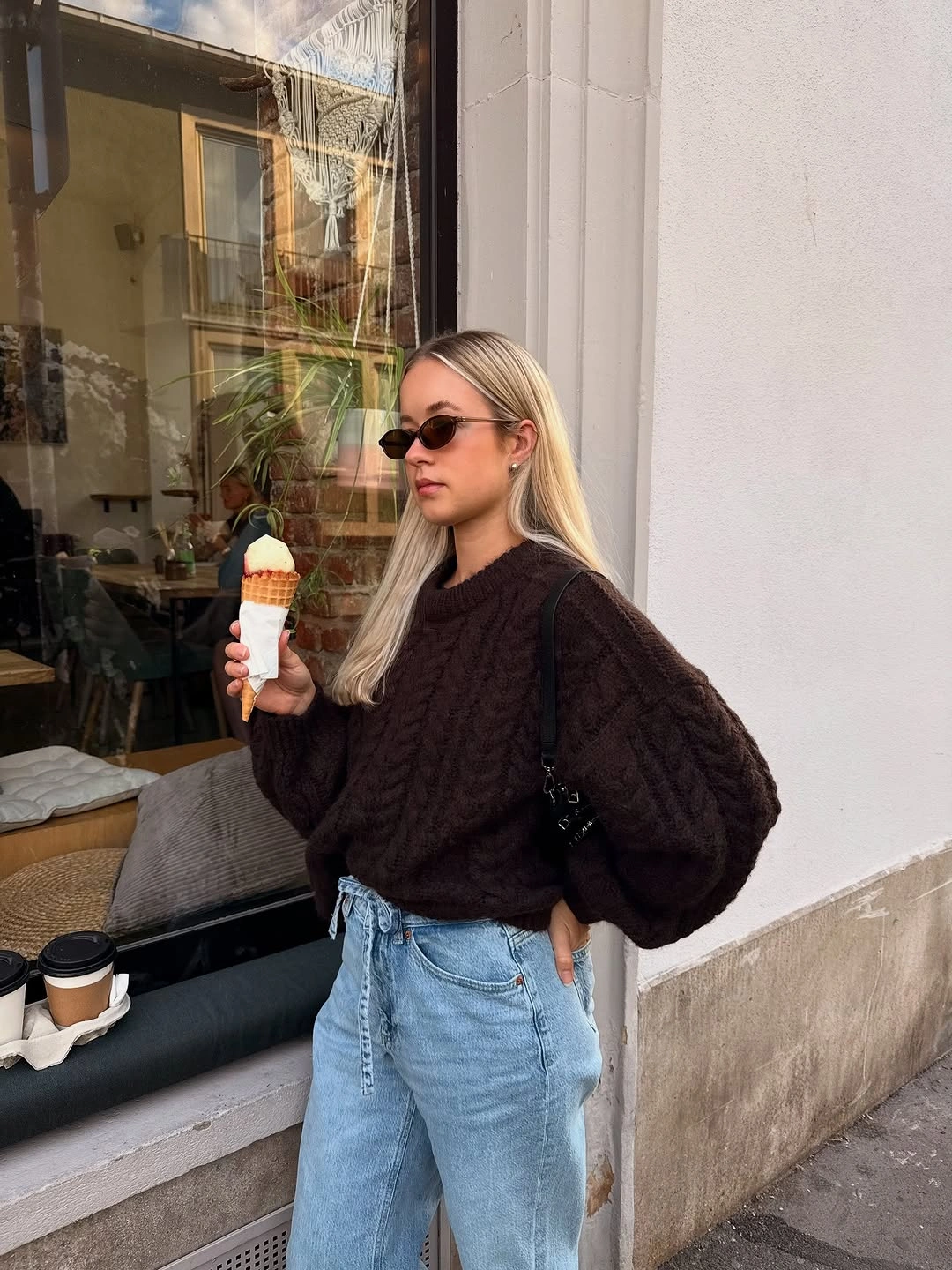
The sweater does not need to be tucked to feel intentional; its volume is balanced by the lighter jeans and the clean line below. That contrast is what keeps the dark knit from becoming visually dense. A small accessory near the face or shoulder is enough because the texture already provides the secondary detail.
A short front tuck can reveal a little more leg line when you want the shape to feel sharper. Leave the knit loose for a relaxed silhouette, but avoid a second oversized layer unless its edge sits clearly above or below the sweater rather than collapsing into the same width. Keep dark texture meets pale jeans in view as the outfit or hairstyle shifts, because its placement is doing the useful work.
Gray Wrap Creates Space Around Wide Trousers
A large gray wrap or scarf creates a soft upper silhouette above wide black trousers, while a structured shoulder bag gives the draped layers a firm point. The palette is restrained, so the scale of the wrap becomes the visual event. Nothing needs to be bright for the outfit to feel modern; the update comes from how much space the fabric occupies.
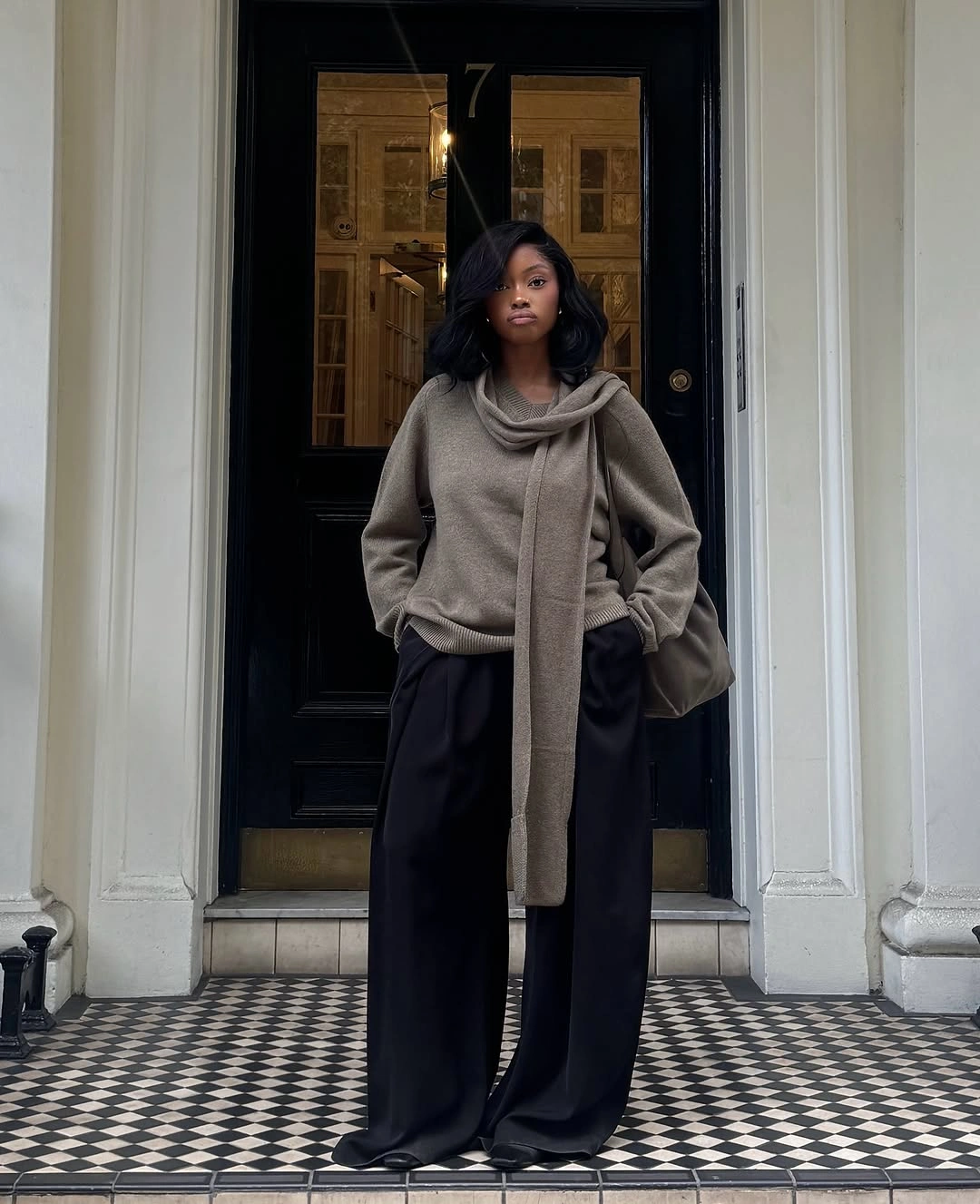
The wide trousers echo the wrap’s relaxed movement, but the firm bag prevents the outfit from becoming shapeless. That small contrast in structure is essential because both garments have generous volume. The dark lower half also gives the gray a clean background, keeping the wrap’s edge and drape easy to follow.
Choose a bag with a defined side or handle when the upper layers feel too soft, and keep the shoe simple so the trouser width stays long. If you want a lighter version, replace the black trousers with a pale neutral while keeping the wrap; the proportion will feel airier but less graphic. The simplest support for gray wrap creates space around wide trousers is enough here; another strong surface would blur the visible relationship.
Patterned Wide Legs Need a Quiet Top
A pale jacket frames a dark fitted top, while printed wide-leg trousers bring the strongest surface interest to the lower half. The open jacket exposes the darker center and prevents the light outer layer from washing out the silhouette. Simple shoes complete the line without competing with the pattern, making the outfit feel edited even though the trousers are expressive, a useful balance for September outfits with denim, layers, and soft color as well.
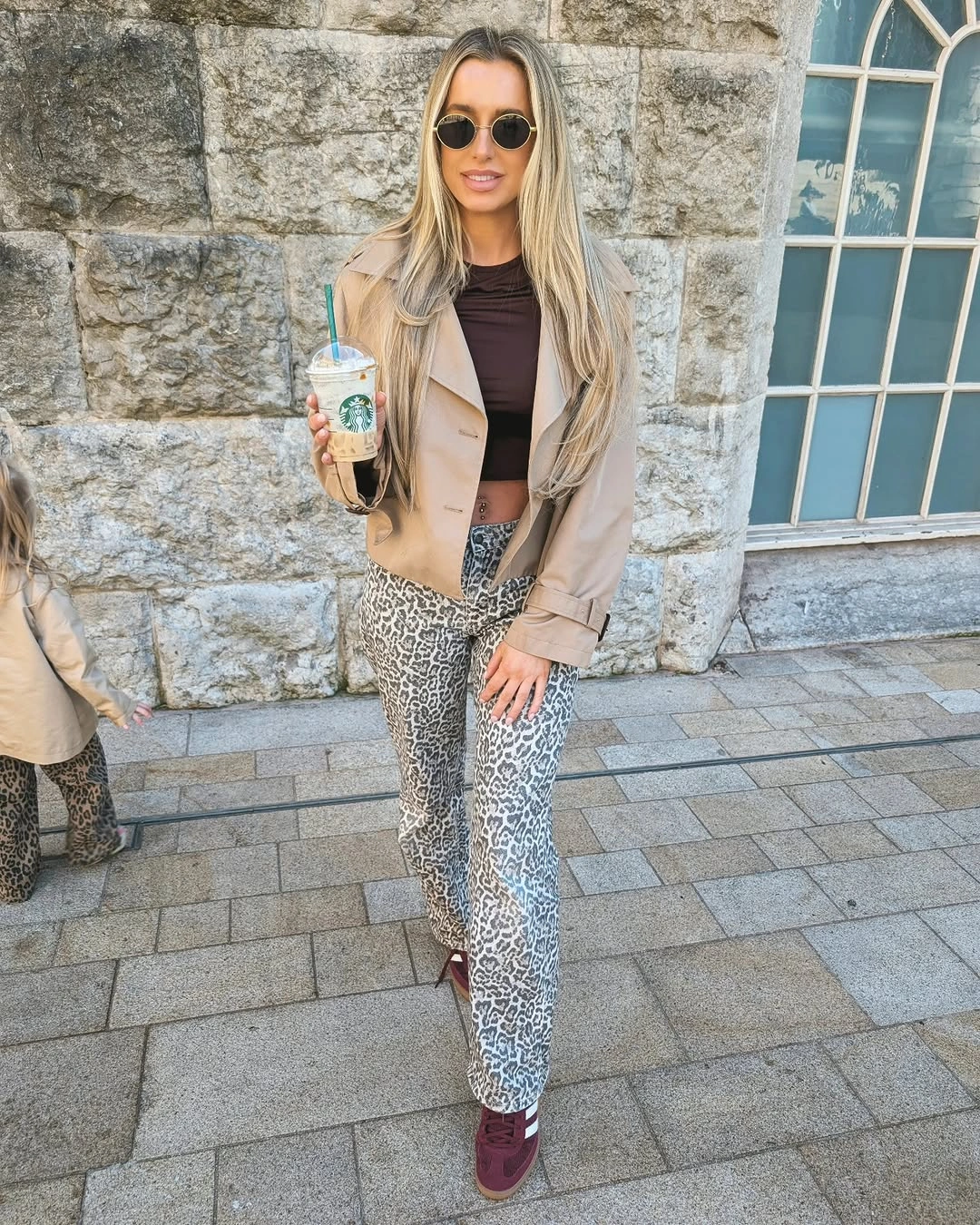
The dark center is doing important work between the pale jacket and patterned pants. It gives the eye a stable vertical point, so the print can spread below without making the whole outfit feel disconnected. The open jacket also creates spacing around the torso, which helps the wide trouser shape read as intentional rather than oversized.
Keep the jacket open when you want the contrast to show, and choose a plain bag if the trouser pattern already has several tones. Closing the jacket would make the outfit cleaner and more minimal, but it would also hide the layering decision that gives the look its fashion-forward edge. Because patterned wide legs need a quiet top already sets direction, the remaining details can stay smaller and easier to adapt.
Cobalt Color Anchors a Dark Skirt
A saturated cobalt sweater concentrates color near the face, while a dark skirt, black loafers and a large black bag keep the lower half composed. The bright top is allowed to lead because everything below it stays quiet and practical. The result feels polished through contrast rather than through extra decoration, with the blue providing the clearest seasonal reset.
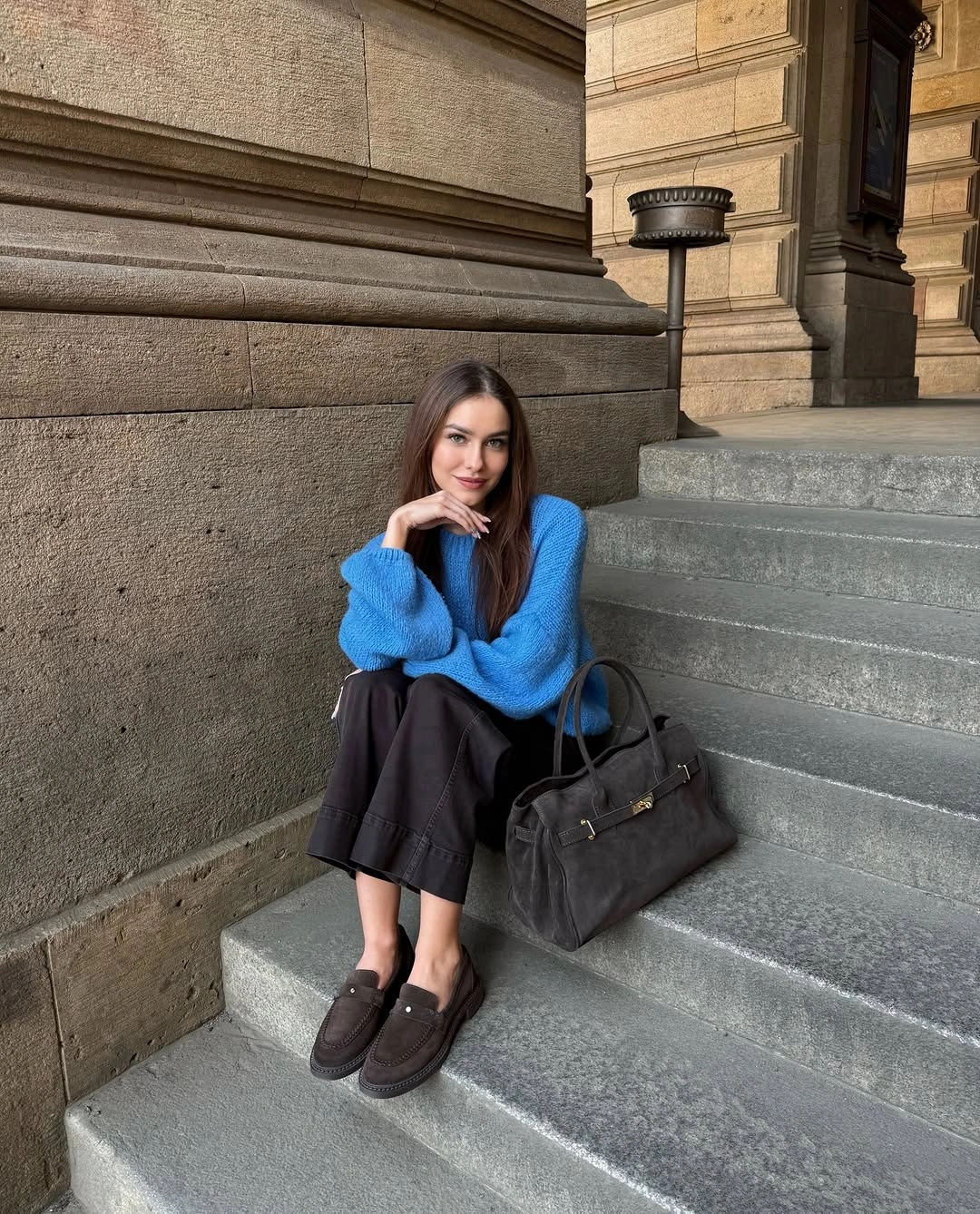
The strong blue works because the skirt and accessories absorb visual noise. Their dark values give the color room to appear crisp, and the broad sweater shape adds enough presence without requiring a print. The large bag is functional but also helps ground the bright upper half close to the body. A calm surrounding line gives cobalt color anchors a dark skirt more presence than an additional statement piece would provide.
A shorter skirt or neat tuck would reveal more of the leg line if you want a lighter proportion. Keep the bag if the outfit needs its practical feel, but choose a smaller version when you want the cobalt to read as a clean accent rather than part of a heavier workwear block. The eye can return to cobalt color anchors a dark skirt quickly when the neighboring shapes stay open and uncomplicated.
White Suit with a Black Center
A white blazer and wide trousers create a bright, continuous frame around a black base layer, sunglasses and a dark bag. The contrast is so clear that no printed surface is needed; the suit supplies the shape and the black center supplies the interruption. Pale shoes keep the lower edge from breaking the light column too sharply.
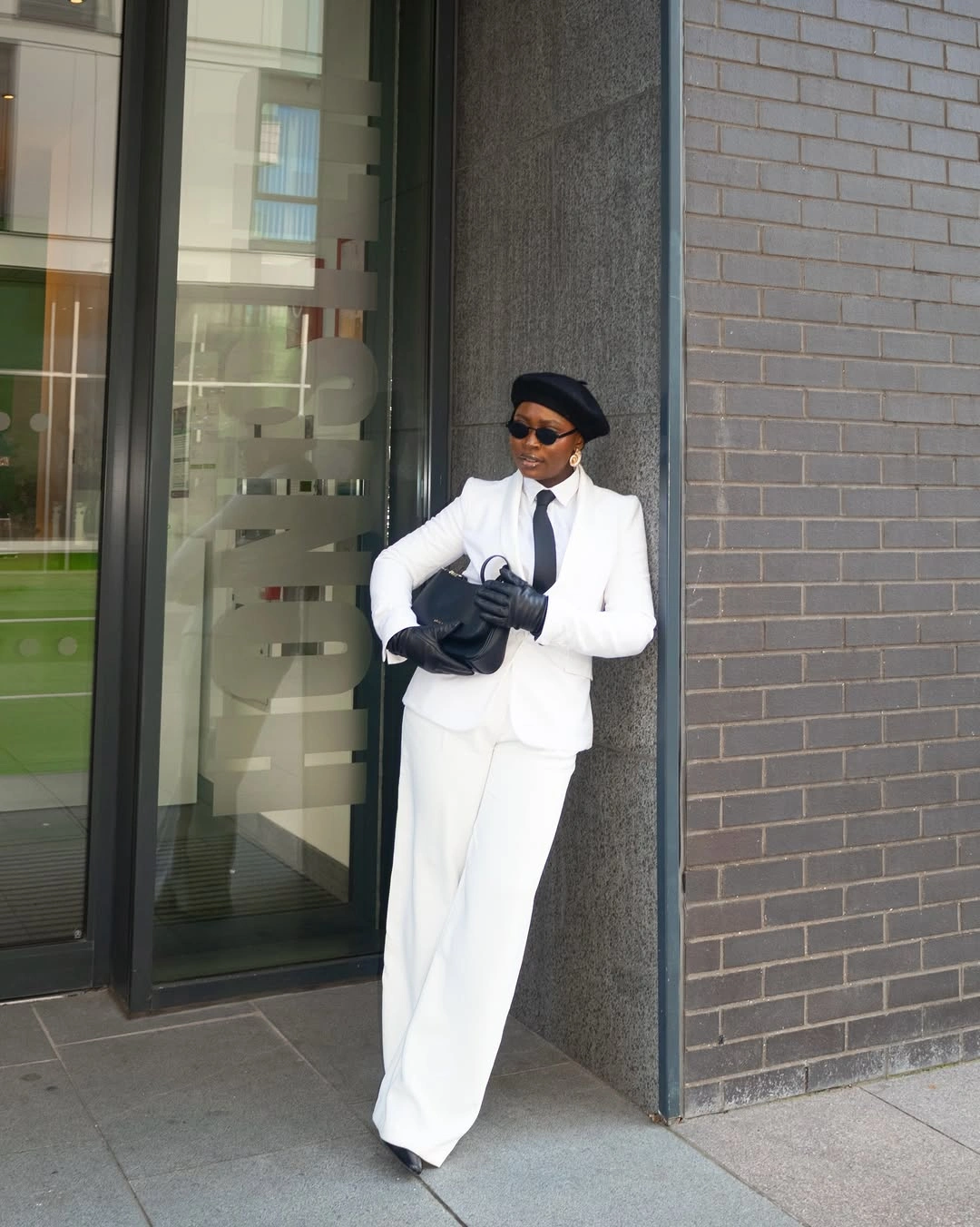
The outfit feels fresh because the white space is uninterrupted across the shoulders and legs, while the black top gives that brightness a focal center. The wide trouser shape reinforces the clean geometry, and the dark accessories repeat the base without adding new color. It is a strong example of selective detail doing more than decoration.
Use a compact dark bag when you want the black elements to stay concentrated, or choose a light bag for an even softer effect. Avoid adding a colorful shoe unless you want to change the outfit from crisp two-tone tailoring into a more expressive statement. Use the existing contrast around white suit with a black center rather than adding a second contrast that would divide attention.
Plaid Scarf Brings Color to Gray Layers
A neutral gray outfit becomes more specific through a large blue-and-pink plaid scarf, with blue sneakers and a pink bag repeating its accent colors. The clothing remains quiet enough for the scarf to set the mood, while the coordinated accessories create a visible path from neck to ground. This is a color update built from one strong pattern and two small echoes.
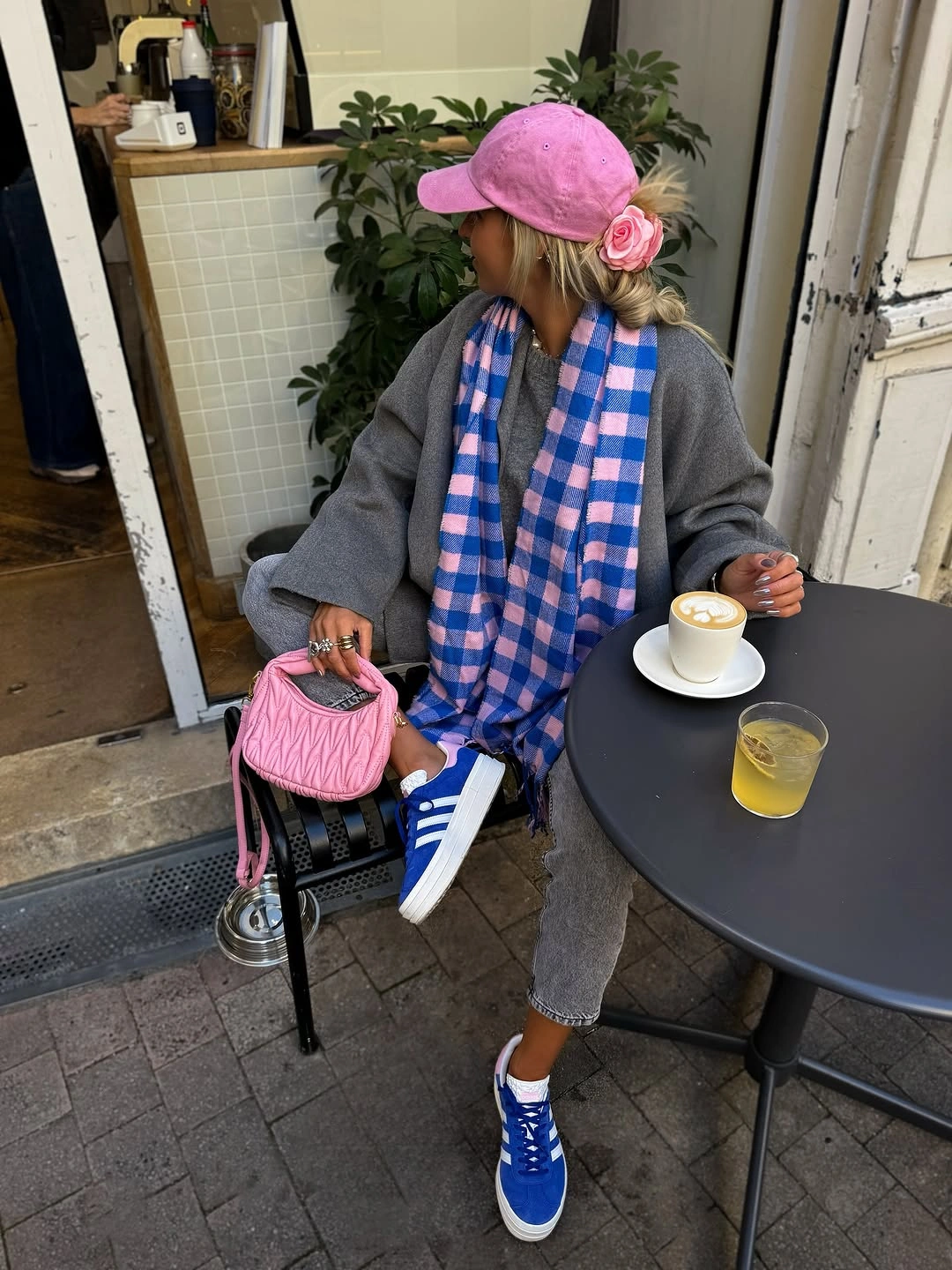
The scarf works because its colors do not float alone. The sneakers pick up the blue and the bag repeats the pink, leaving gray as the calm background that lets the plaid remain readable. Keeping the knit simple is important; another textured layer around the neck would compete with the scarf’s scale.
Wear the scarf loosely when you want more space around the face, or wrap it once for a denser accent on a cooler day. If the palette starts to feel too coordinated, remove the matching bag and keep the sneakers; one repeated color is enough to connect the outfit without making it look planned to the last detail.
White Sleeves Break a Charcoal Column
A dark sleeveless tailored layer sits over a white shirt and wide matching trousers, with pale shoes making the lower edge lighter. The white sleeves and collar interrupt the charcoal column, so the outfit keeps its strong shape without becoming one solid block. The construction is clean, but the contrast gives it enough movement to feel current.
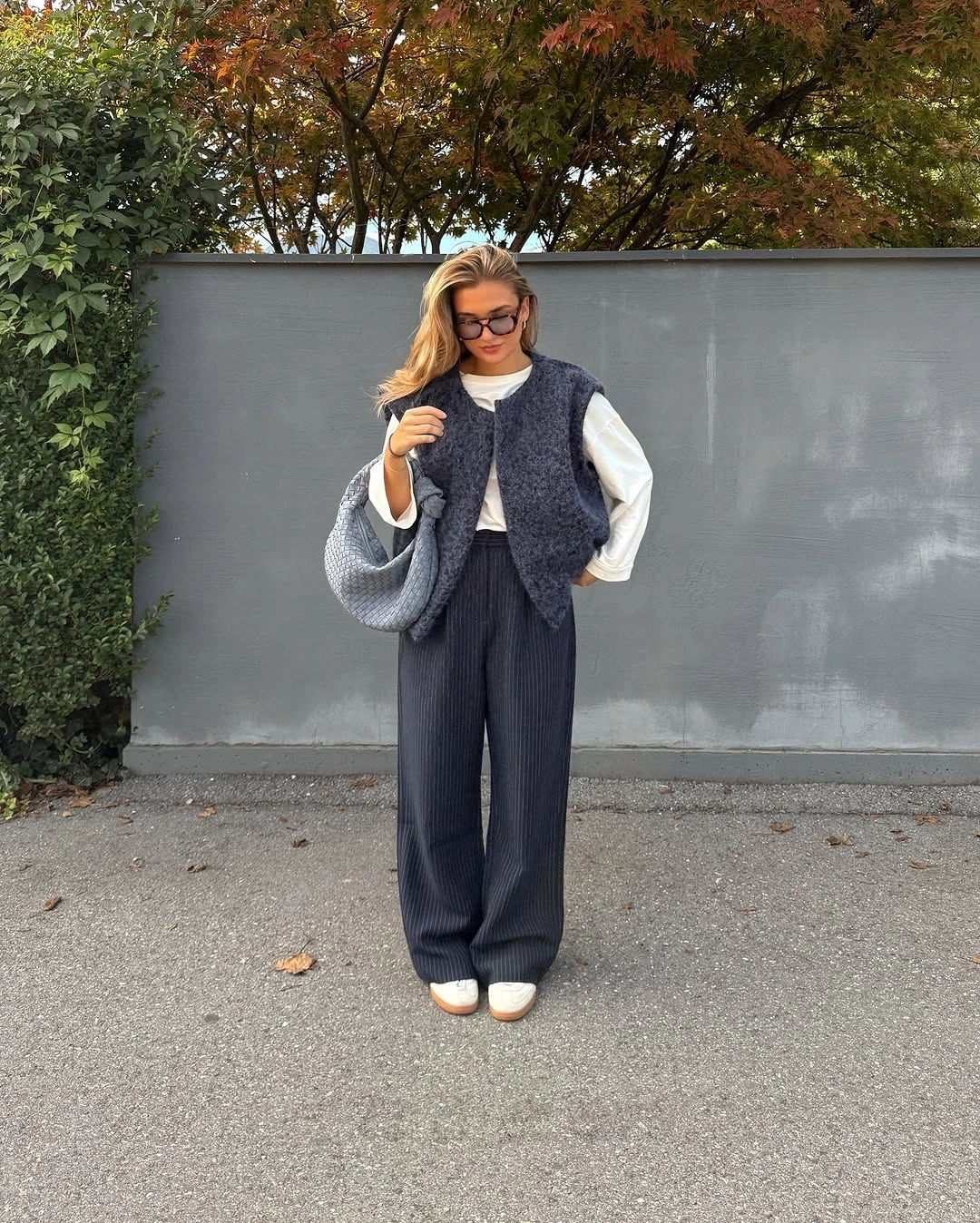
The layering is the trend detail here. White appears in the center and at the arms, giving the dark vest room to read as a distinct piece rather than a long jacket. The wide trousers continue the tailoring, while the light shoes prevent the lower half from feeling too formal or closed. The placement of white sleeves break a charcoal column is most convincing when the finish remains practical enough for ordinary movement.
A fitted cuff or narrow belt can sharpen the shape when the shirt feels too soft beneath the tailoring. Avoid a long loose outer layer that would hide the sleeveless proportion; the point is the space between the vest edge, white sleeves and matching trouser line. Leave a little breathing room around white sleeves break a charcoal column; that spacing is part of why the visible proportion works.
Denim Shorts Let the Setting Stay Secondary
A simple light top and denim shorts create a clear casual silhouette, while a warm tan bag adds the only strong accessory note. The saturated colors in the background make the clothing look even more restrained, but the outfit itself remains easy to read because its pieces are uncomplicated. The freshness comes from leaving room around a short, familiar base.
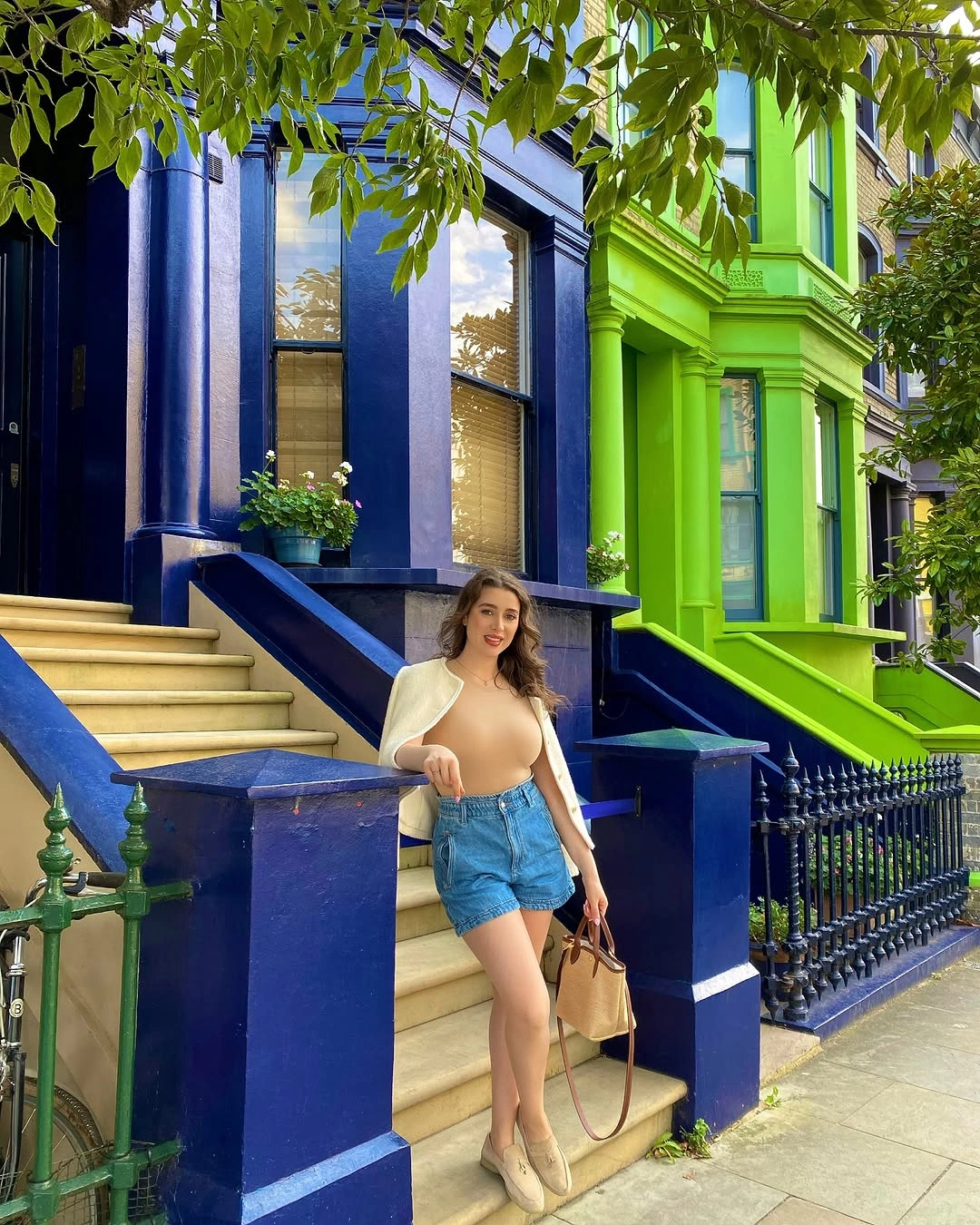
The shorts establish the main proportion, so the top stays close and unadorned rather than competing with them. The tan bag adds warmth near the hip and gives the short lower half a visual anchor. Keeping the clothing simple is what makes the setting supportive instead of letting it take over the styling story.
Add an open overshirt or light jacket when you want the same base to work through a cooler part of the day. Let the extra layer fall past the waistband or end clearly above it; a layer that stops at the same point as the top will make the middle look crowded. If the surrounding pieces become louder, denim shorts let the setting stay secondary loses definition, so restraint keeps the result more useful.
Orange Knit with a Clean Flare
A fitted orange sweater follows the torso above flared blue jeans, and a black belt creates a clear waist before the denim widens. The strong color gives the upper half energy, while the flare supplies movement without a second pattern. The outfit feels directional because its shape is simple enough for the proportion to remain visible.
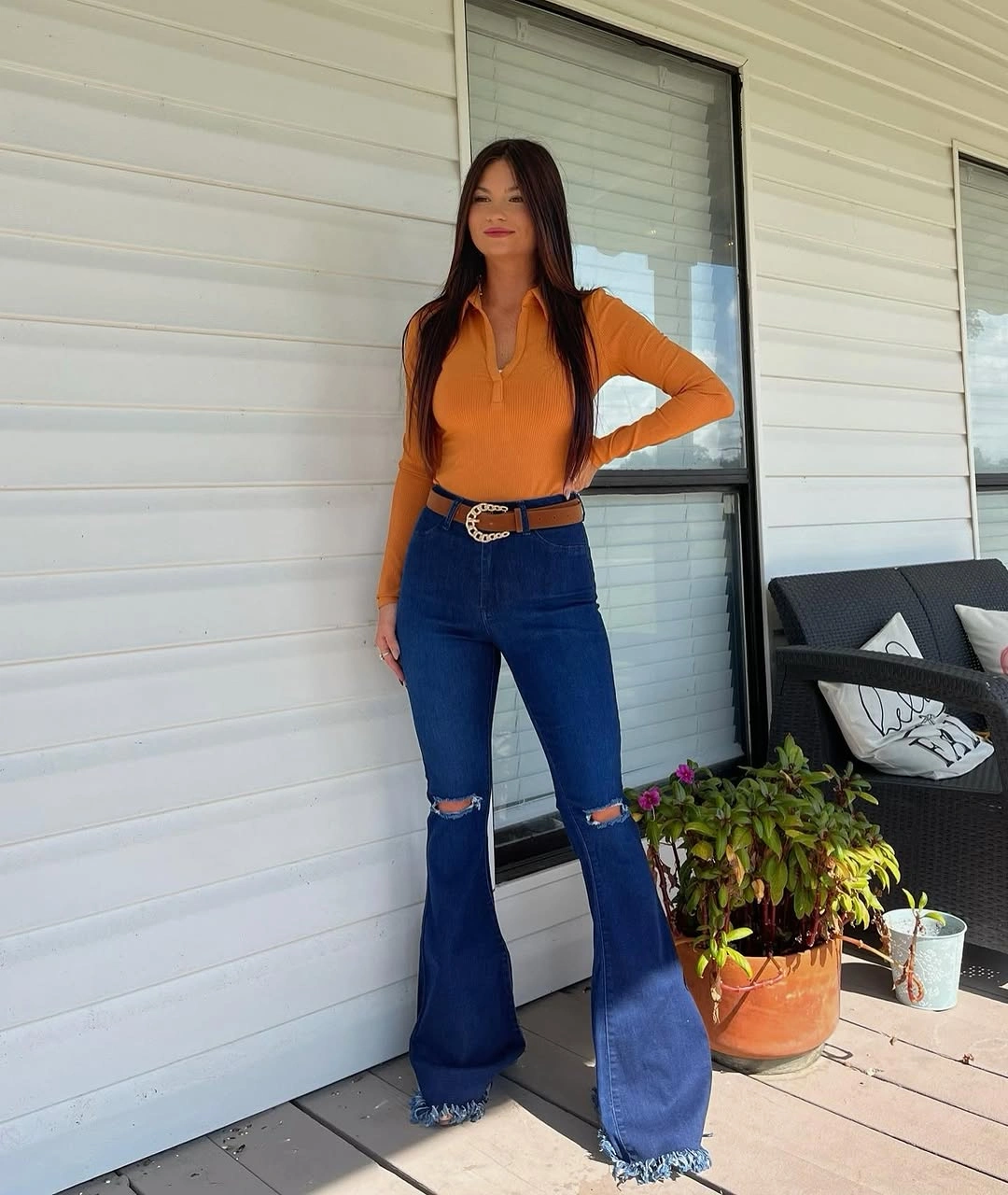
The belt is more than a practical detail: it separates the fitted knit from the widening leg and gives the outfit a crisp midpoint. That makes the flare look intentional rather than simply loose. The saturated orange also benefits from the blue denim because the cool lower value gives it a calm field.
Let the jeans fall close to the shoe so the leg line remains long, and avoid a cropped hem if you want the flare to feel fluid. A pale jacket would soften the contrast, while a dark jacket would sharpen it; either can work if the belt and waist break remain visible. The defining surface of orange knit with a clean flare has enough interest to carry the moment without another competing texture.
Herringbone Texture Under a Pale Hat
A light herringbone coat introduces quiet surface texture over a black skirt and dark tights, while the pale wide-brim hat extends the lighter value upward. The coat has enough length to make the short skirt feel composed, and the hat repeats its calm tone without adding another print. The outfit reads as an update through texture, not excess color.
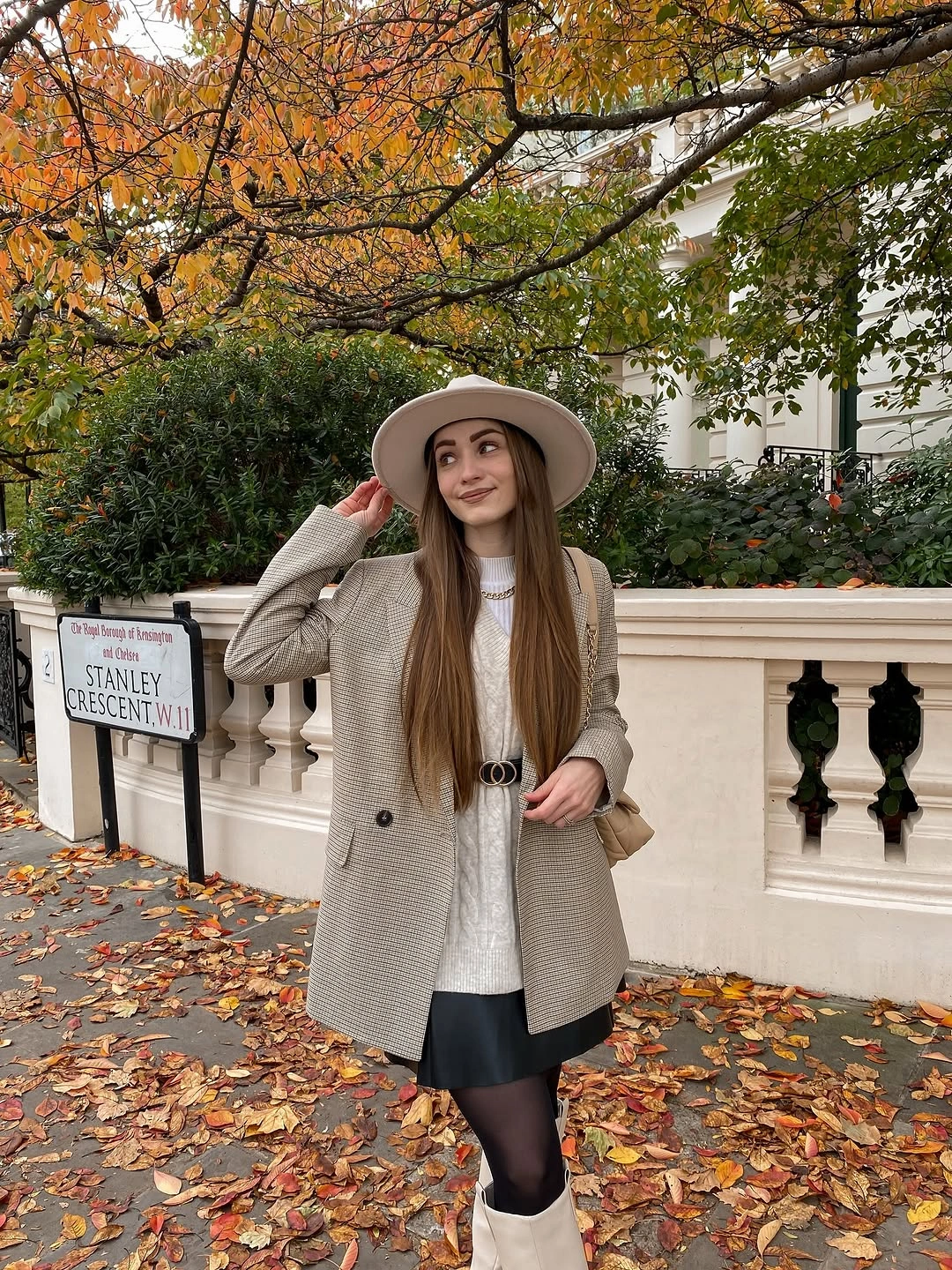
The subtle pattern of the coat is useful because it can be seen without taking over. It gives the simple black base a tactile layer, while the hat creates visual breathing room around the face. The longer coat also sets a clear vertical line, balancing the shorter hem underneath. Keep the supporting edge clean beside herringbone texture under a pale hat, and the whole silhouette will retain its intended rhythm.
A shorter jacket would make the outfit lighter and show more of the skirt, but it would lose some of the composed proportion. Keep the hat and coat in related pale values if you want the upper half to feel open, and let the black skirt remain the one deep interruption. A small change near herringbone texture under a pale hat can shift the balance, so the surrounding styling should stay deliberately measured.
Olive Knit Layers Form a Tonal Line
Muted olive knit layers, a matching beanie and a long dark skirt create a near-monochrome silhouette with a small crossbody bag. The outfit is not plain because the repeated green values give it a clear direction from head to hem. The long skirt keeps the shape relaxed, while the beanie makes the layered look feel intentional rather than simply warm.
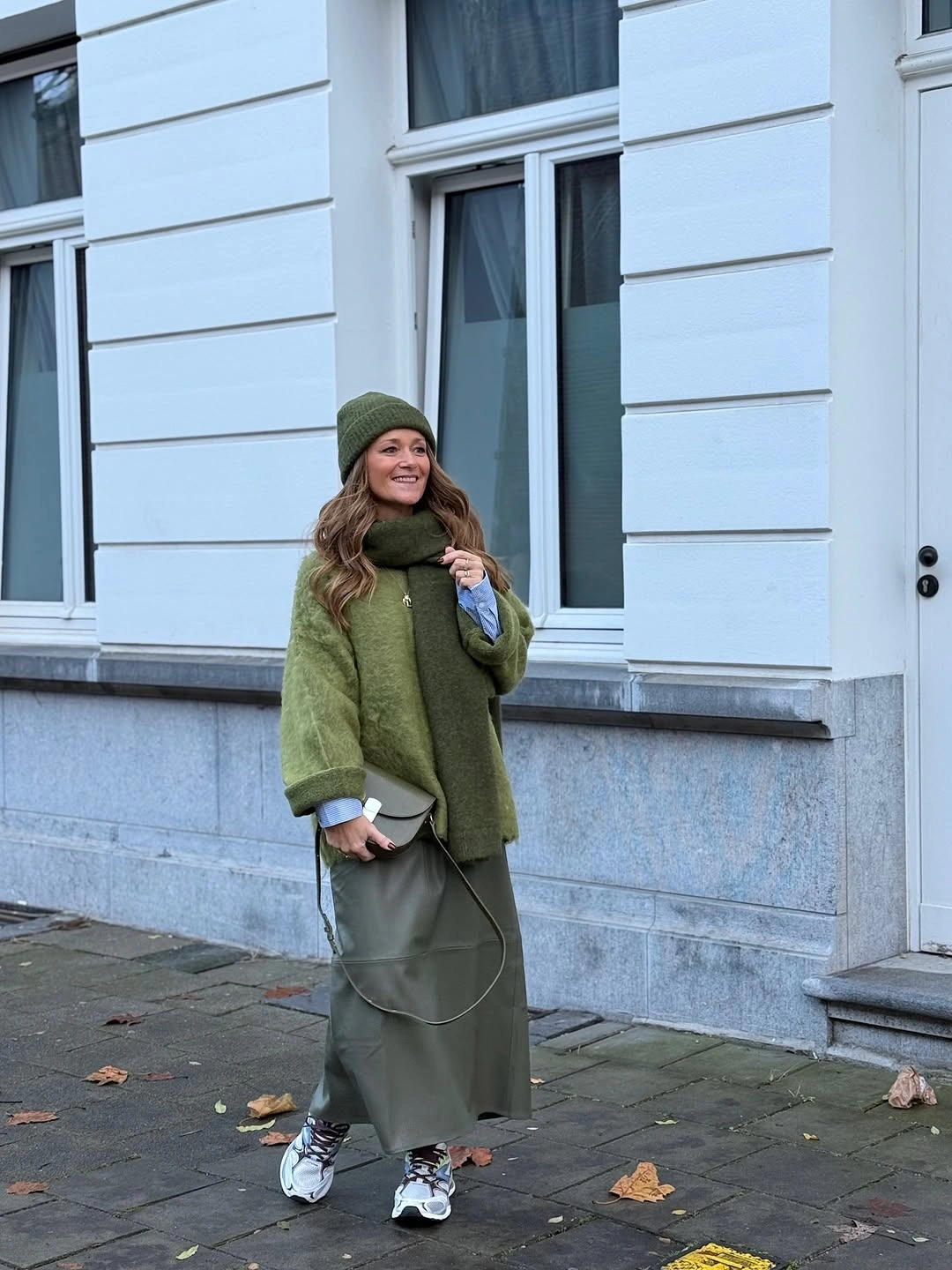
The tonal palette lets texture and length do the visual work. The beanie and upper knit sit close in value, while the skirt carries the color downward and gives the outfit a continuous base. The small bag interrupts that line just enough to clarify the waist and keep the layers from floating together.
Use a pale shoe or bag when you want a visible break in the green, or keep the values close for a quieter, more atmospheric result. Avoid adding another strong color near the face because the beanie already sets the upper focus. The result feels clearer when olive knit layers form a tonal line is treated as the anchor and not as one detail among many.
Orange Ribbing Makes a Midi Dress Enough
A fitted orange ribbed midi dress follows the body in one long line, letting color, texture and length carry the outfit without extra styling. The saturated shade is the first thing to notice, but the ribbed surface keeps it from looking flat. A simple finish suits the dress because adding too many layers would cover the quality that makes the shape feel current.
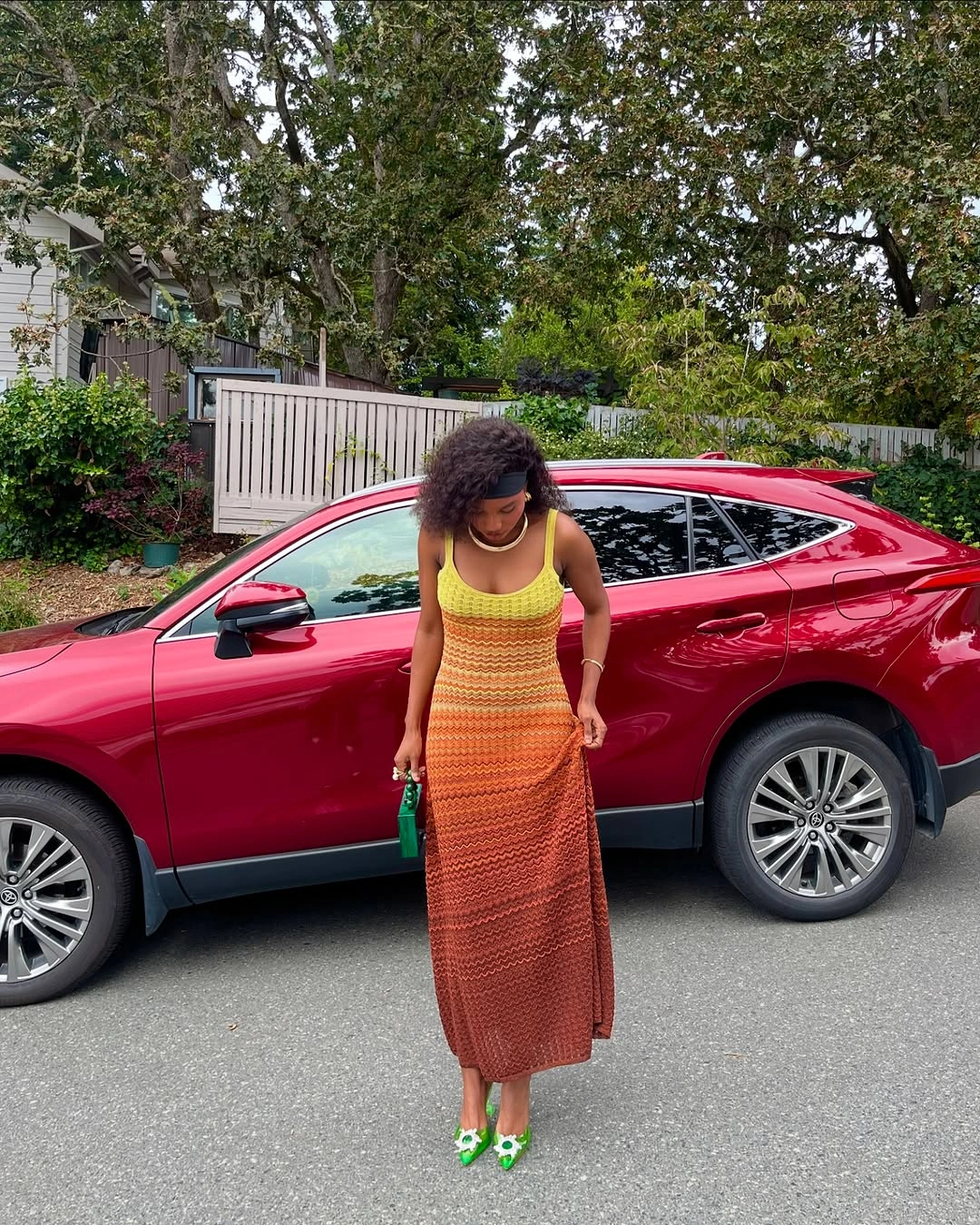
The dress works through concentration: one strong color, one visible texture and a continuous silhouette. The ribbing gives the surface direction, while the midi length keeps the saturated hue from feeling like a short burst of color. Because the base is already specific, accessories can remain small or neutral.
Add a cropped jacket when you need more coverage but want the dress line to stay visible. A long coat would make the outfit calmer and more layered, yet it would hide the ribbing and turn the clean column into a color glimpse rather than the main decision. Let orange ribbing makes a midi dress enough remain the visible reason for the choice, while the rest handles comfort and movement quietly.
Green and Cream Geometry Meets Denim
A bold green-and-cream geometric sweater supplies both pattern and color above straight blue jeans and light shoes. The denim stays quiet, giving the graphic knit a calm field where its blocks can remain legible. The outfit feels fresh because it edits the rest of the palette around one clear surface rather than adding more trend signals.
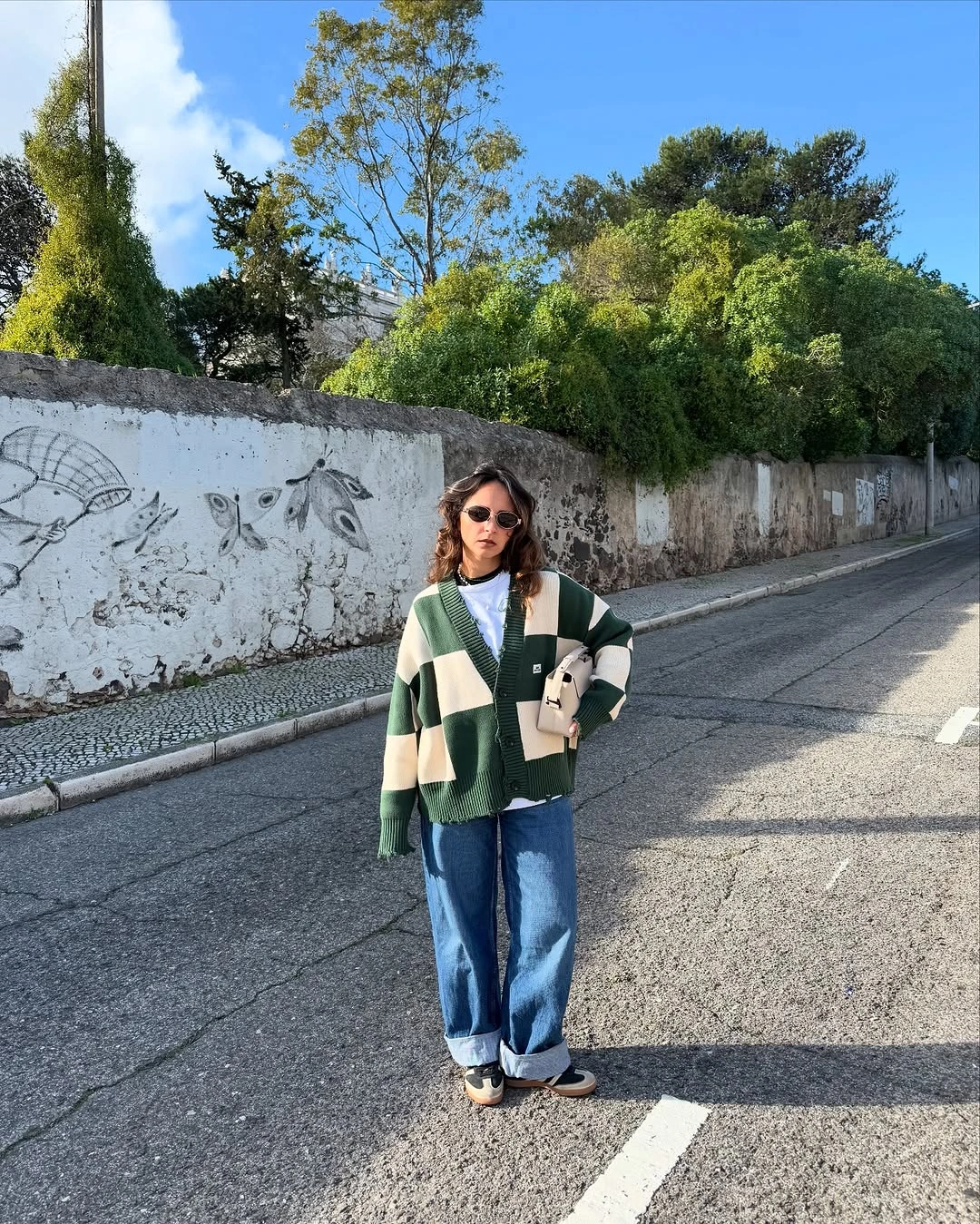
The sweater has enough internal contrast to create movement on its own. The blue jeans repeat neither color exactly, but their muted value prevents the green from becoming too sharp and keeps the proportion familiar. Light shoes finish the open palette without introducing a heavy dark point. The strongest version keeps green and cream geometry meets denim distinct from the nearby layers, colors, or texture changes.
Repeat only one green accent in a bag or shoe if you want to connect the outfit further. Adding several new colors would compete with the sweater’s geometry, while a plain neutral accessory would let the blocks remain the clear reason the outfit works. When green and cream geometry meets denim stays unobstructed, its scale and direction are easier to judge in a real wardrobe or routine.
Sporty Blue Jacket Meets a Checked Skirt
A bright blue track jacket is layered with a checked skirt, black boots and a warm brown bag, creating a clear conversation between sporty and traditional surfaces. The jacket provides saturated color and movement, while the skirt supplies pattern and a more measured rhythm. The boots ground both directions so the combination feels styled rather than mismatched.
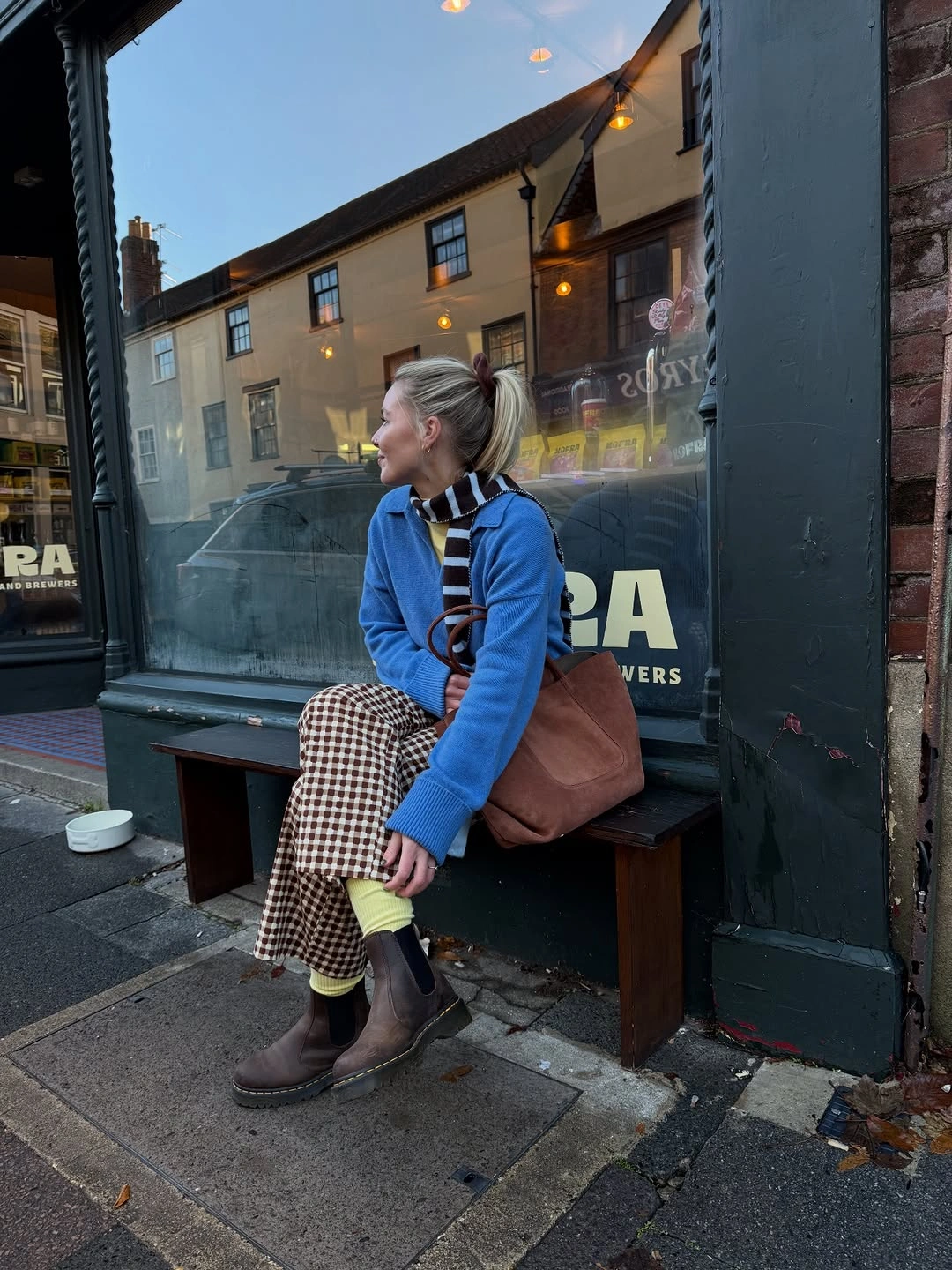
The contrast succeeds because the jacket is relatively simple and the skirt carries the pattern. Wearing the jacket open gives the check room to show and creates a clean vertical gap through the torso. The boots then provide a firm finish that keeps the midi proportion from looking too delicate beneath the sporty layer.
Close the jacket when you want a smoother, straighter shape, but expect the outfit to lose some of its strongest juxtaposition. Keep the bag warm and compact if the check already has several tones; a large colorful bag would make the balance less clear. Protect the visual edge of sporty blue jacket meets a checked skirt; that is what keeps the styling specific instead of generally decorative.
Pale Yellow Opens Up Gray Trousers
A pale yellow overshirt and gray wide-leg trousers create a gentle light-dark contrast, while a black tote gives the relaxed silhouette a practical anchor. The yellow prevents the gray base from becoming flat, and the open collar leaves breathing room around the face. The outfit feels current through softness and spacing rather than through a loud statement.
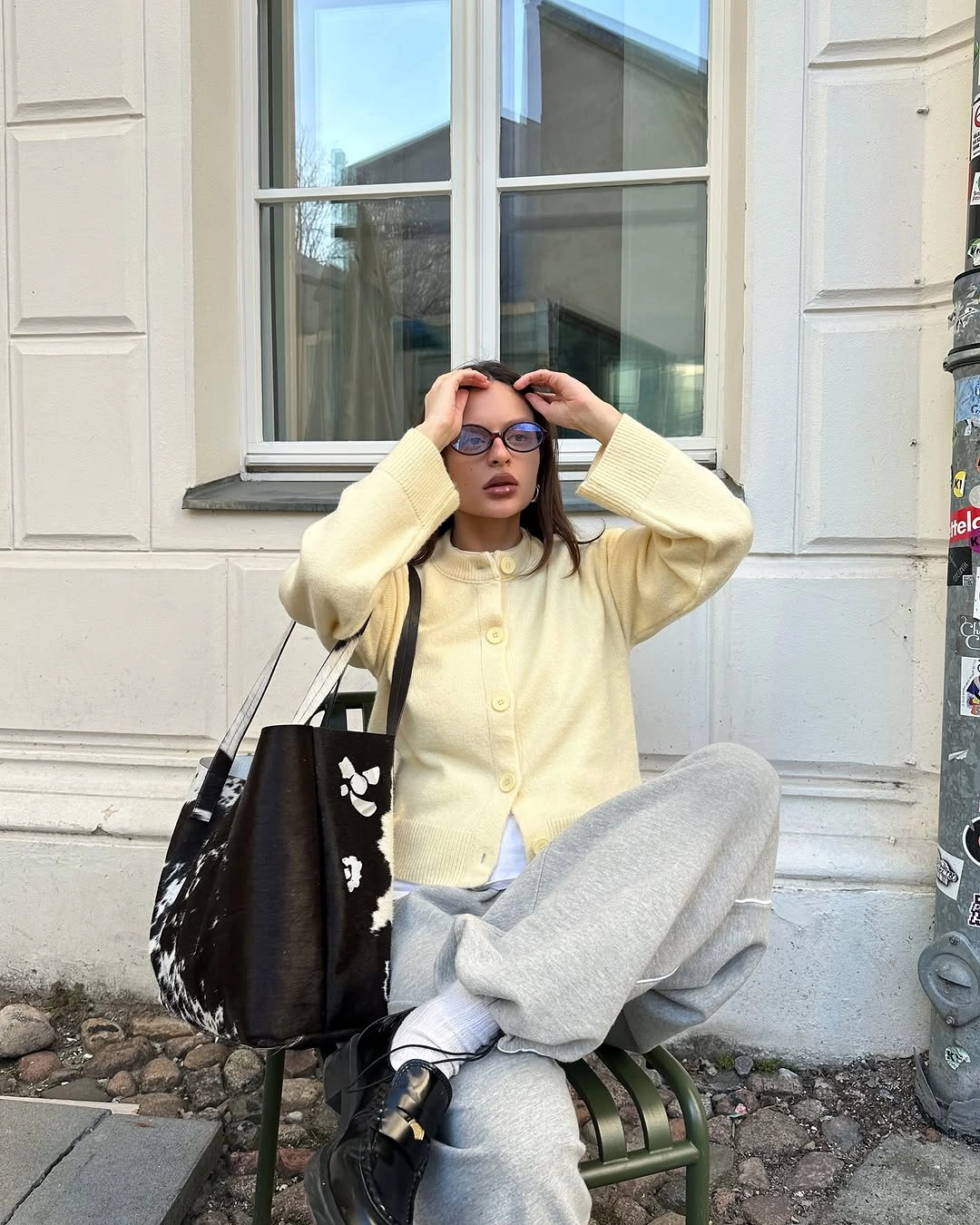
The loose shapes work because the colors are cleanly separated. The overshirt carries lightness above, the trousers create length below, and the tote gives the body one firm vertical point near the side. A simple white or pale top beneath would preserve the same open quality without adding another competing tone.
A tucked tank or narrow belt can make the waist more visible if the overshirt and trousers feel too loose together. Leave the shirt open for a relaxed day, but choose one clear closing point if you need more structure; several overlapping fastenings would make the center look busy. The surrounding pieces should echo the balance of pale yellow opens up gray trousers without copying its exact surface or proportion.
Checked Trousers Need a Shorter Brown Layer
A brown cropped jacket and checked trousers use related muted tones, but the shorter outer layer keeps the wide leg visible from the waist downward. The top beneath stays plain, which gives the check room to provide the outfit’s surface interest. The result feels considered because the pattern is supported by clear spacing instead of another competing print.
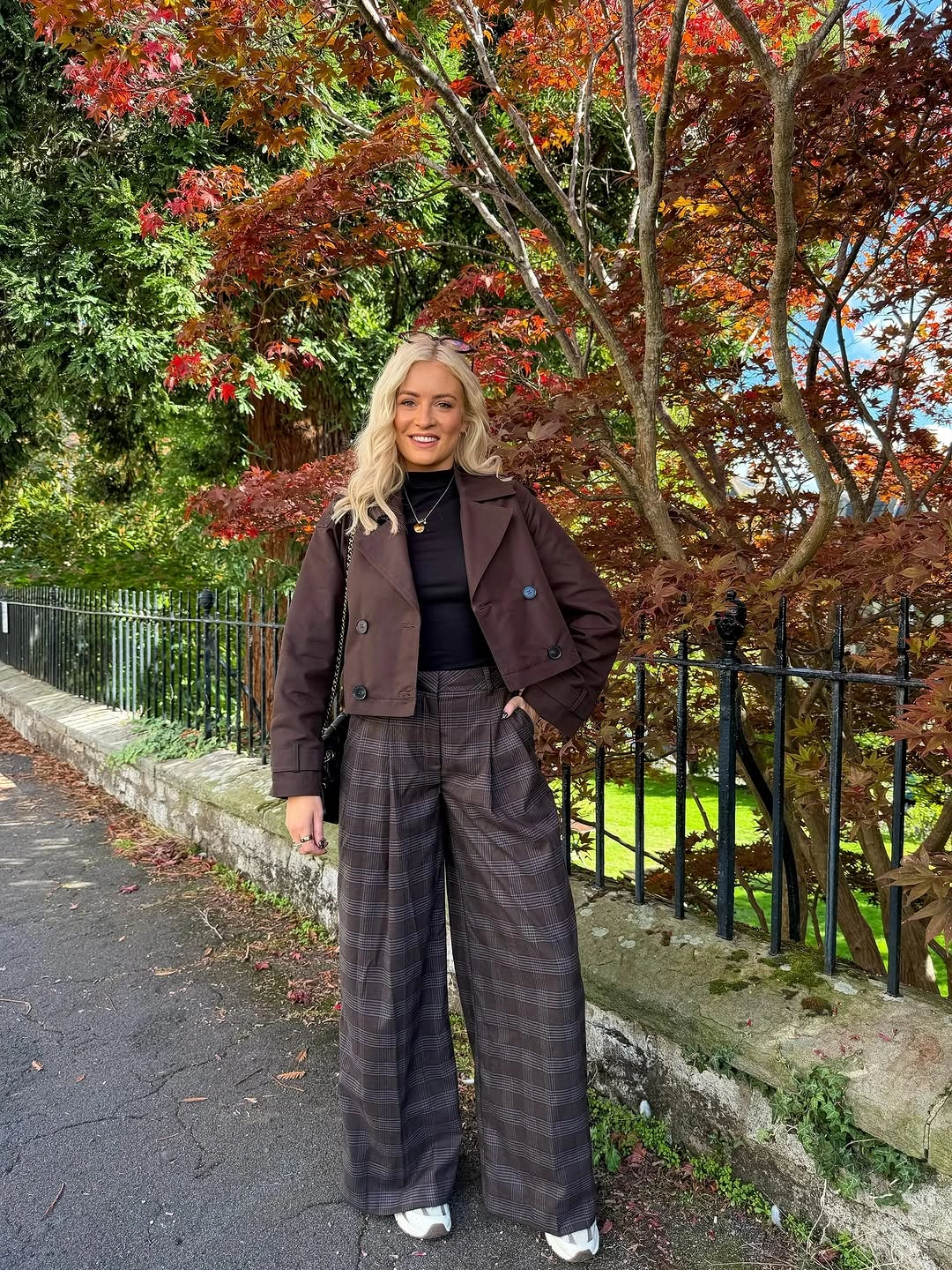
The cropped jacket creates a useful visual stop before the trousers widen, so the lower volume looks deliberate rather than oversized. Brown repeats the quieter tones in the check and keeps the palette connected without demanding an exact match. The simple underlayer leaves the upper line clean. Keeping checked trousers need a shorter brown layer simple to read makes the whole choice easier to repeat with different supporting pieces.
Keep the top plain when you want the trousers to remain the focal point, and choose a compact bag so the cropped proportion stays visible. A longer jacket would make the outfit more relaxed and covered, but it would also hide the edge that gives the wide leg its shape. The practical adjustment works because checked trousers need a shorter brown layer remains visible while the rest of the look stays flexible.
White Shirt Lightens an Oversized Blazer
A broad black blazer is worn over a white shirt and short black skirt, with sheer tights and dark red shoes adding a fine contrast near the ground. The white shirt opens a narrow light center inside the oversized tailoring, keeping the jacket from becoming a single block. The deep red shoes add a purposeful accent without changing the clean black-and-white structure.
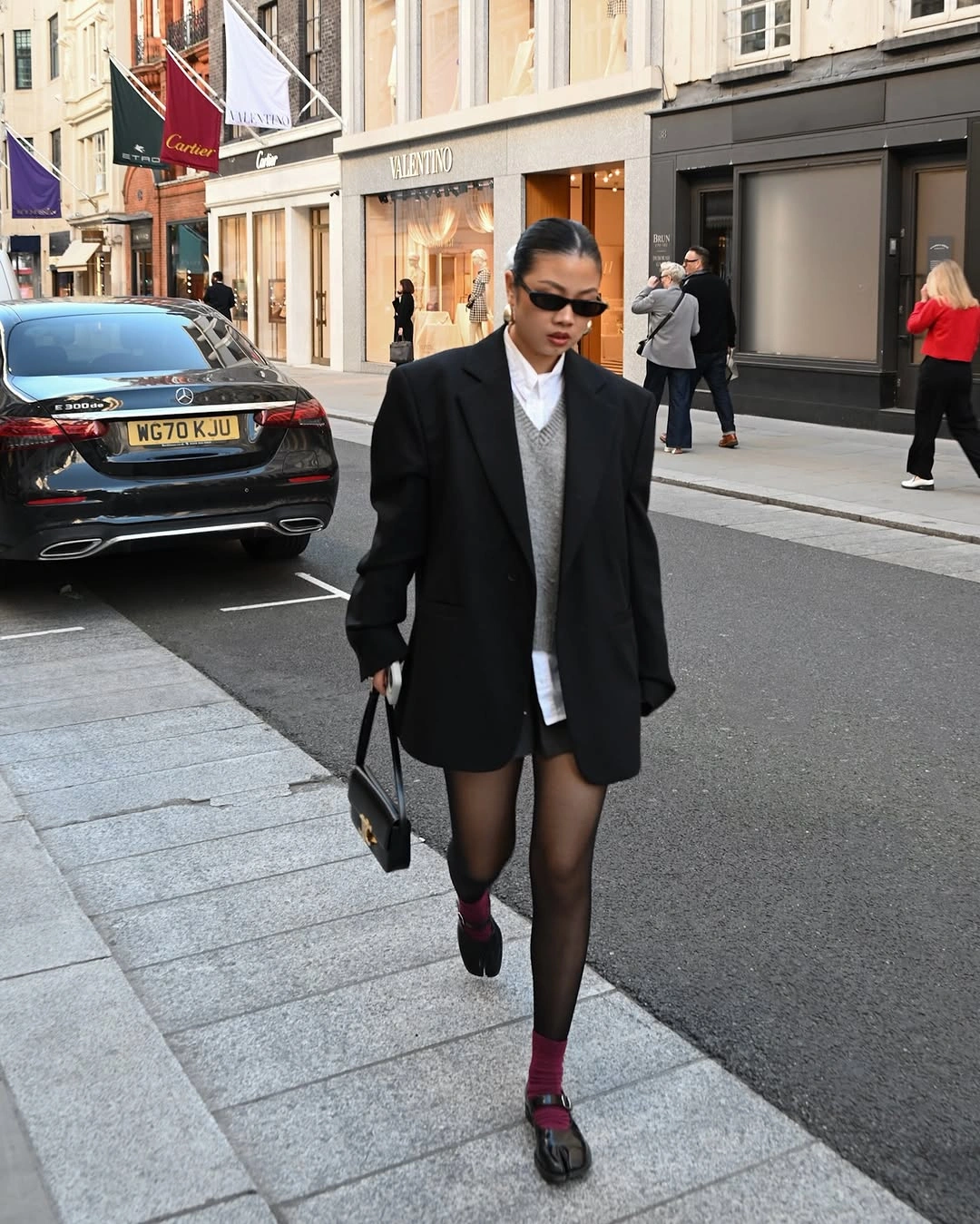
The outfit feels fresh because the strong dark shape has one clear interruption. The shirt collar and front create spacing around the torso, while the short skirt and sheer tights continue the leg line instead of stopping it abruptly. The red shoes are small enough to read as a detail, not a new theme.
Keep the blazer open to preserve the light center, or fasten it for a more severe, compact silhouette. If you add another bright accessory, make it small and deliberate; a large colorful bag would pull attention away from the white shirt that makes the proportions work. Give white shirt lightens an oversized blazer the clearest space in the silhouette, and the quieter details can do their job without clutter.
Camel Tailoring with Sporty Burgundy Sneakers
A camel blazer tops a pale high-neck layer and black mini skirt, while white socks and burgundy sneakers soften the tailoring. The jacket brings structure, the skirt keeps the lower half concise, and the sneakers make the look feel everyday rather than formal. The burgundy accent is strong but contained, so the outfit stays clear.
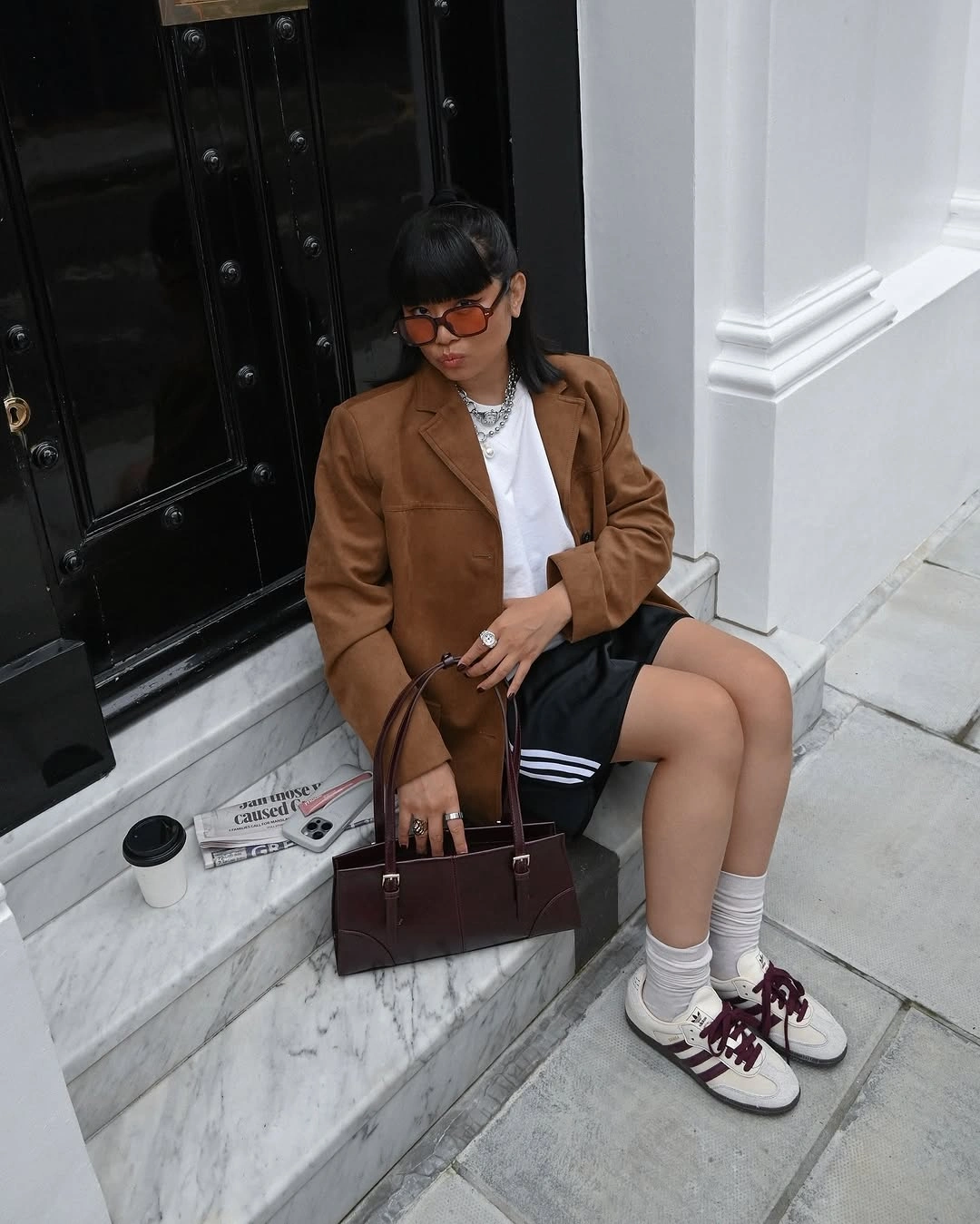
The contrast between jacket and footwear is the central update. Without the sneakers, the blazer and skirt could become a familiar polished pairing; with them, the proportion feels more relaxed and current. The pale socks create a small bridge that lets the shoes sit naturally beneath the short hem.
A compact structured bag will support the jacket, while a large tote could pull the shoulder line downward and crowd the open upper half. Keep the blazer unbuttoned if you want the pale layer to remain visible, because that light center balances the dark skirt. camel tailoring with sporty burgundy sneakers stays readable when the surrounding shape is allowed to move without extra visual noise.
Red Stripe Keeps Cream Trousers Bright
A red-and-cream striped sweater is paired with luminous cream wide-leg trousers and dark shoes, giving the bright top a pale field beneath it. The trousers feel fluid rather than heavy, and the dark footwear adds a small grounding point without interrupting their length. The outfit is simple in shape but specific in color and spacing.
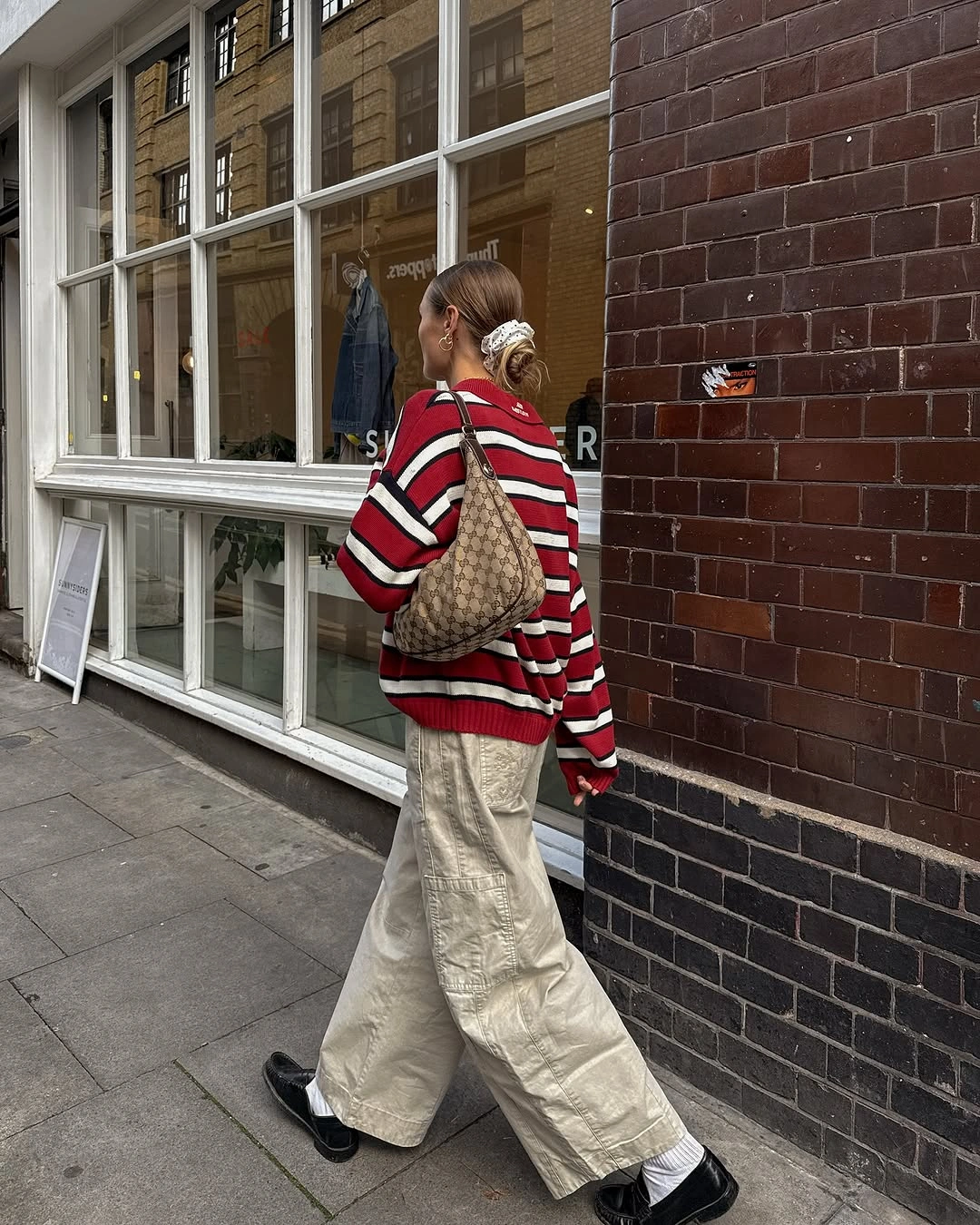
The stripe gives the quiet trousers a focal point, while the light lower half prevents the red from taking over the whole silhouette. This is why the outfit feels open even though the sweater has a strong pattern: the cream value expands the space around it and keeps the leg line visible. Let red stripe keeps cream trousers bright keep the first pause, then use the quieter pieces to carry the practical part of the look.
A small front tuck can clarify the waist when the sweater is roomy, but leave the trousers uninterrupted below it. If you want a gentler version, replace the dark shoe with a pale neutral; if you want more contrast, keep the dark shoe and let it remain the only deep note. The line of red stripe keeps cream trousers bright remains clearer when a new accent is kept away from its strongest edge.
Green Blazer and Yellow Trousers Go Full Color
A green blazer, patterned yellow-green top and bright yellow wide-leg trousers build a saturated color story from head to hem, with a matching hat and bag reinforcing the direction. The wide trousers give the brightness space to move, while the blazer adds a clear shoulder line. It is maximal, but the repeated green and yellow values keep the palette coherent.
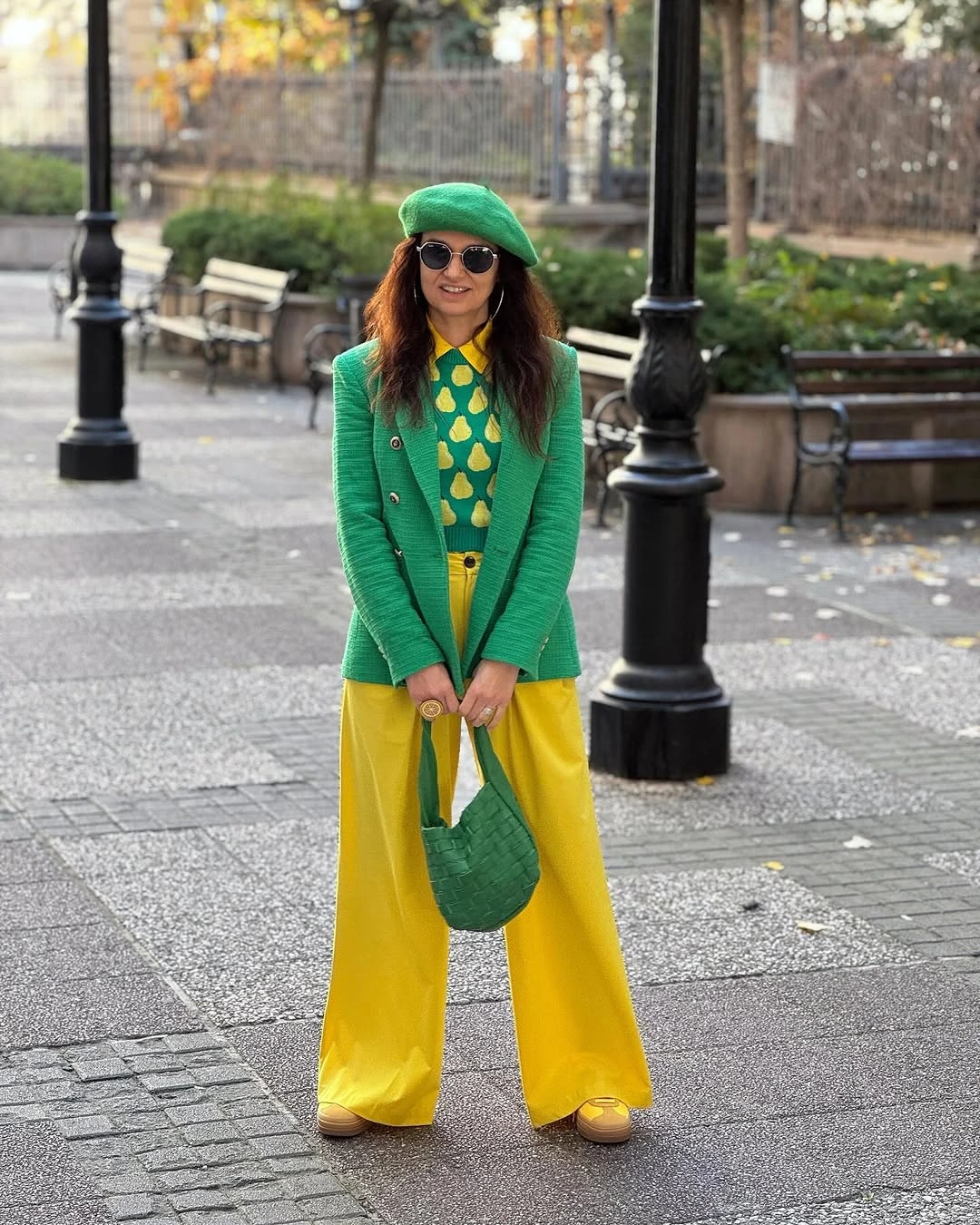
The outfit works because its colors repeat rather than scatter. Green appears in the jacket and accessories, yellow carries the lower half, and the patterned top connects them between the two. The silhouette stays easy to read because the pieces are wide but not layered over one another in competing lengths.
For a quieter interpretation, keep the green blazer and yellow trousers but replace the patterned top with a plain light layer. The shape will still carry the fashion idea, while the reduced surface detail gives the eye more room and makes the bright trousers easier to use beyond a statement moment.