19 Trendy Black Curly Hairstyles 2027 for Maximum Volume
Trendy Black Curly Hair 2027: 19 ideas including short pixie cuts with volume and shoulder-length afros. See the looks and save your favorite.

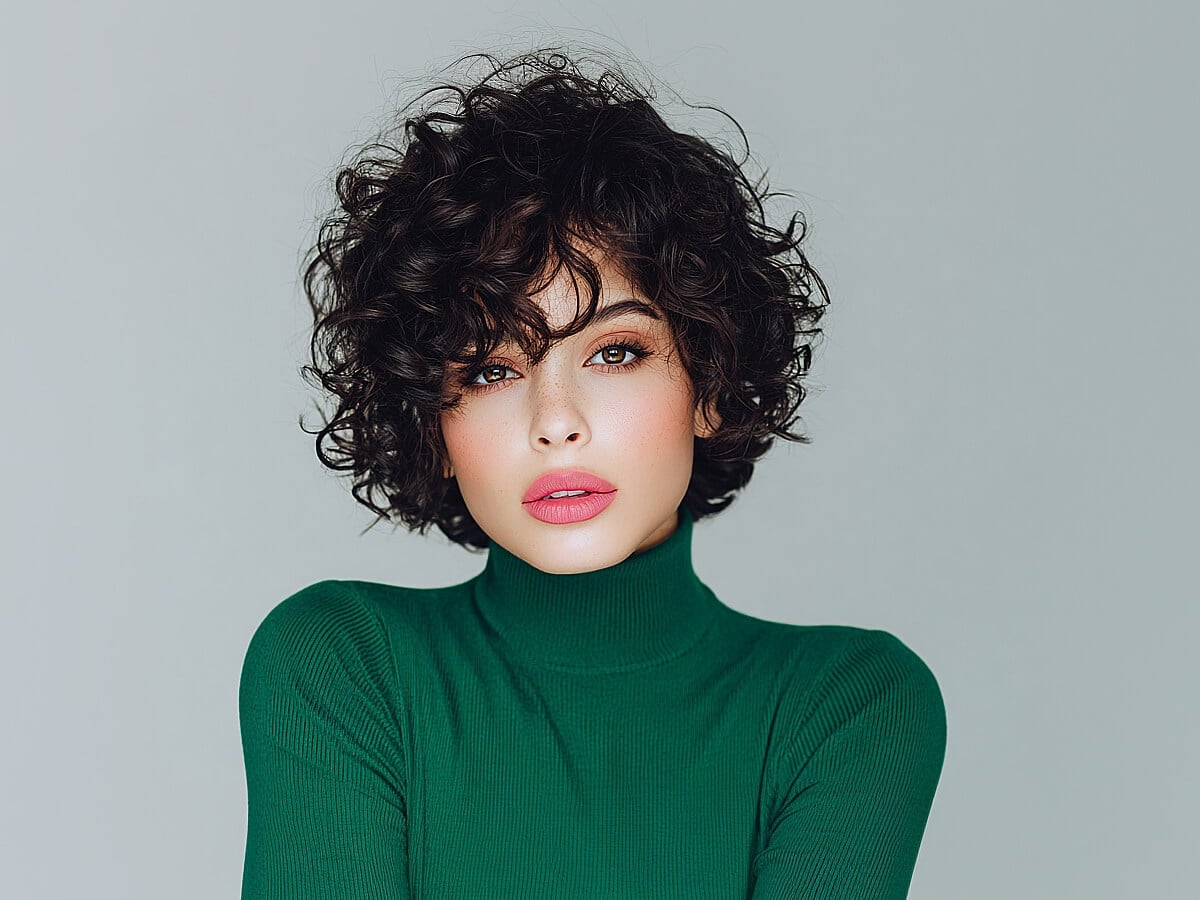
Black curly hair is a canvas of texture and volume, offering endless styling possibilities. As trends evolve, embracing your natural curl pattern with a fresh cut remains key, with soft face-framing layers and curtain bangs leading the way in 2027.
This collection of 19 haircuts covers the full spectrum, from short pixies to mid-back layers, designed for every curl type and density. Whether your fine curls need a shape that adds body or your thick texture requires strategic weight removal, these ideas for Trendy Black Curly Hair solve real problems like a fringe that won’t sit or a cut that falls flat by midday.
1. Short Black Pixie With Defined Curls
A short black pixie cut with a side parting relies on tightly defined curls that end at the ear, creating a rounded silhouette without bangs. Naturally curly hair that starts at least ear length benefits most from this shape, as the texture builds volume around the head rather than lying flat. Ask your stylist for: short pixie cut with defined curls, side part. Find someone experienced with curly hair for the cut; the difference between a good pixie and a great one is how the layers land on each curl.
2. Voluminous Ear Length Black Pixie
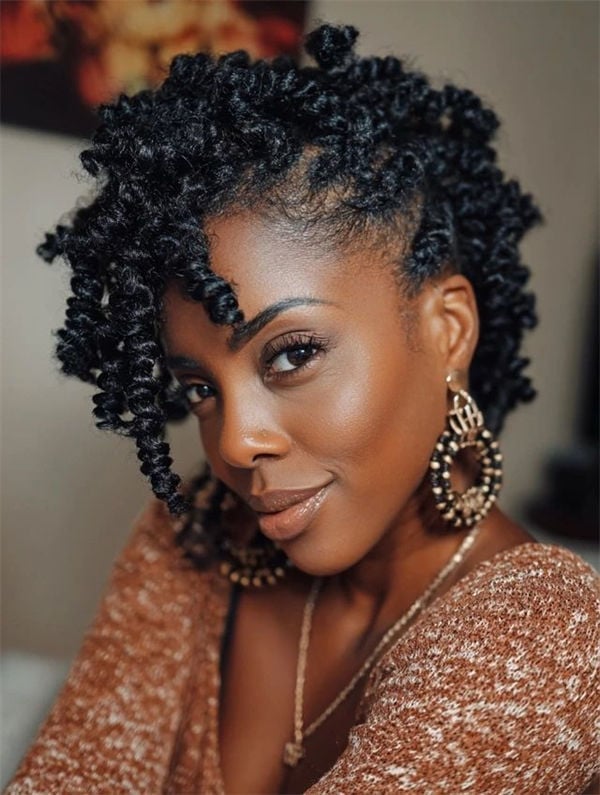
This ear-length pixie achieves its volume through dense curls and strategic layering rather than product. The side parting and air-dried finish let the natural texture do the work, with no bangs to complicate the shape. Dense, curly hair that starts at ear length takes best to this cut, as the weight of the hair supports the volume. Ask your stylist for: short pixie cut, ear length, dense curls, side part. A skilled stylist will carve layers to prevent the silhouette from looking top-heavy.
3. Shoulder Length Afro With Middle Part
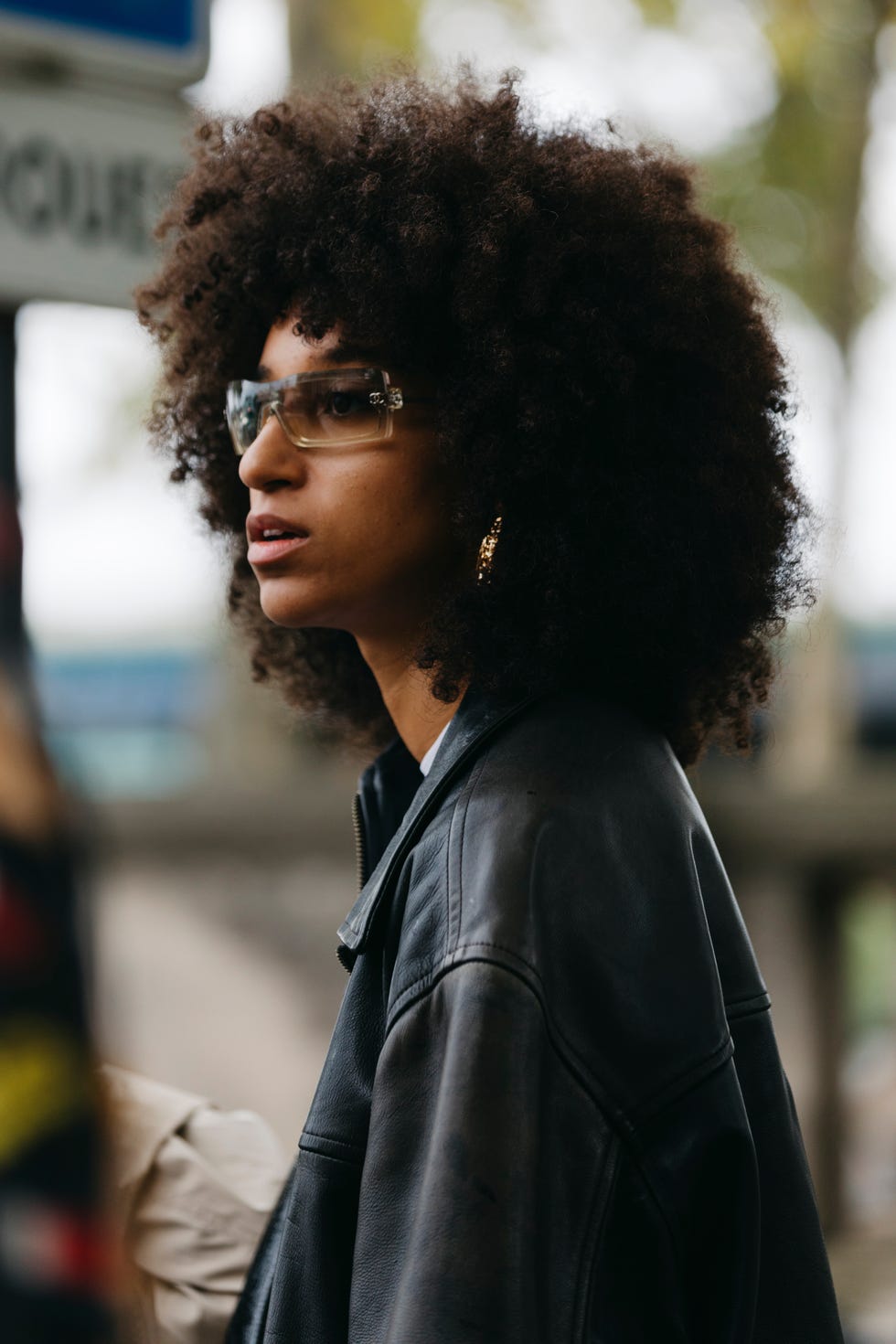
How do you ask for an afro that looks this intentional? The key is the middle parting and the shape that reaches shoulder length without falling into a tapered silhouette. This style works with thick, naturally curly hair of shoulder length or longer; the hair’s own weight creates the balanced, rounded form. Ask your stylist for: shoulder length afro, middle part. Specify that you want the density maintained, not thinned out, and expect to leave the salon with the shape set but not overly picked.
4. Short Afro-Inspired Cut For Curly Hair
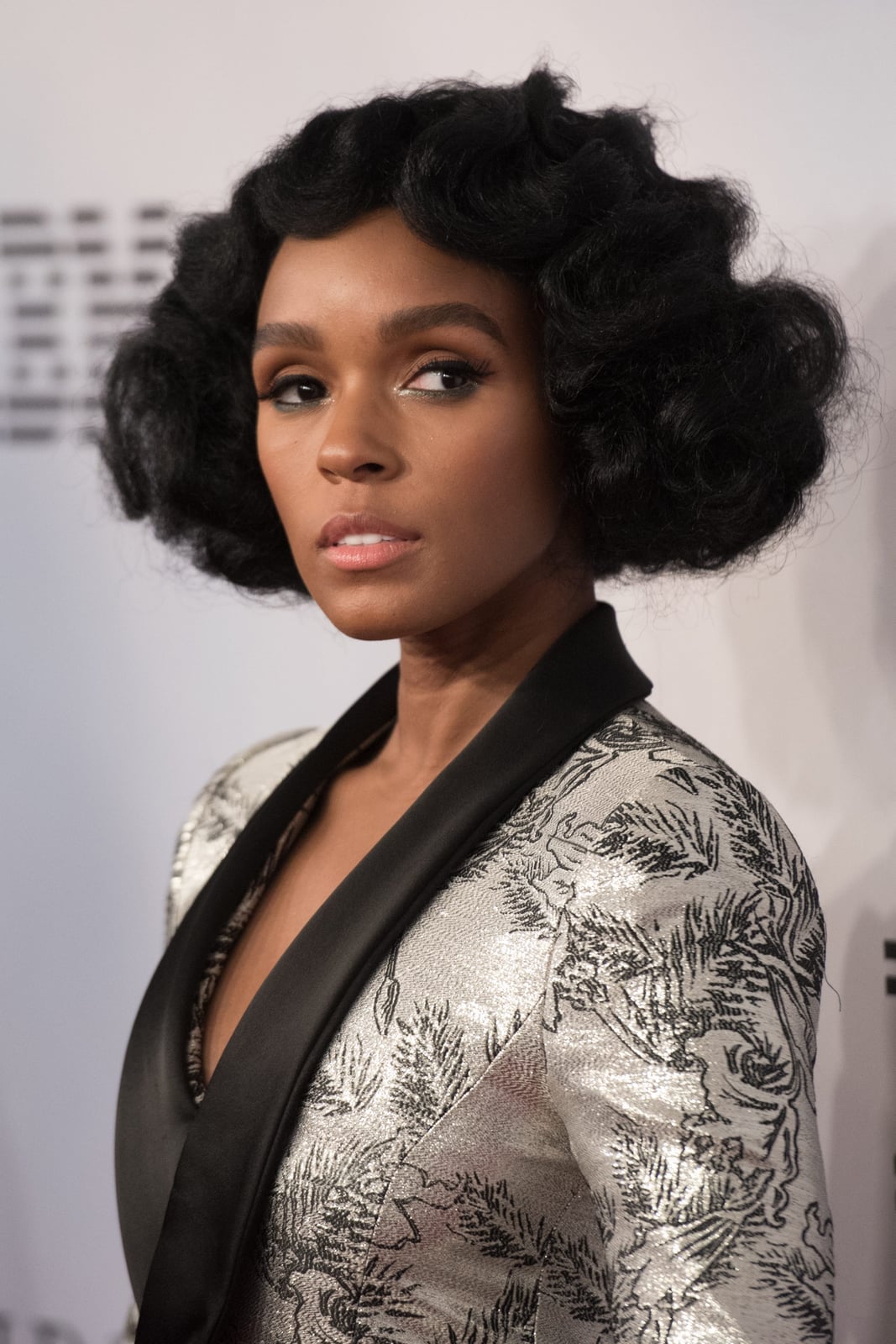
It is not a traditional afro and it is not a standard pixie; this short afro-inspired cut lands around the ear with thick curls that do most of the styling themselves. The natural texture creates a voluminous shape, but getting it right at home takes a routine. Ask your stylist for: short afro-inspired cut, ear length, middle part. Use a wide-tooth comb to shape it after washing, then apply a light oil to enhance shine and reduce frizz. A trim every six to eight weeks keeps the silhouette crisp.
5. Shoulder Length Bob With Curtain Bangs
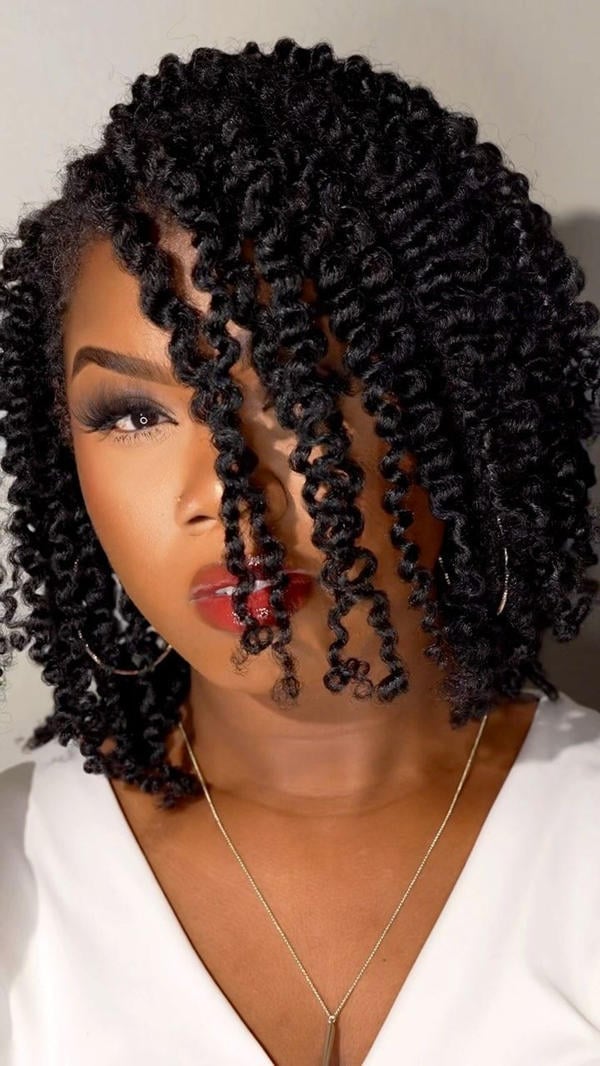
A shoulder-length bob with curtain bangs differs from a blunt bob in that the layers are softer, allowing the thick, defined curls to fall without a heavy line at the ends. The side parting and air-dried finish keep the look low-key rather than blown out. This cut suits thick, curly hair at collarbone length, and the curtain bangs soften round and square face shapes by breaking up the hairline.
Ask your stylist for: shoulder length bob, soft curtain bangs, side part. The bangs need a trim every four to six weeks to stay in that sweet spot between too long and too short.
6. Collarbone Layers With Side-Swept Bangs
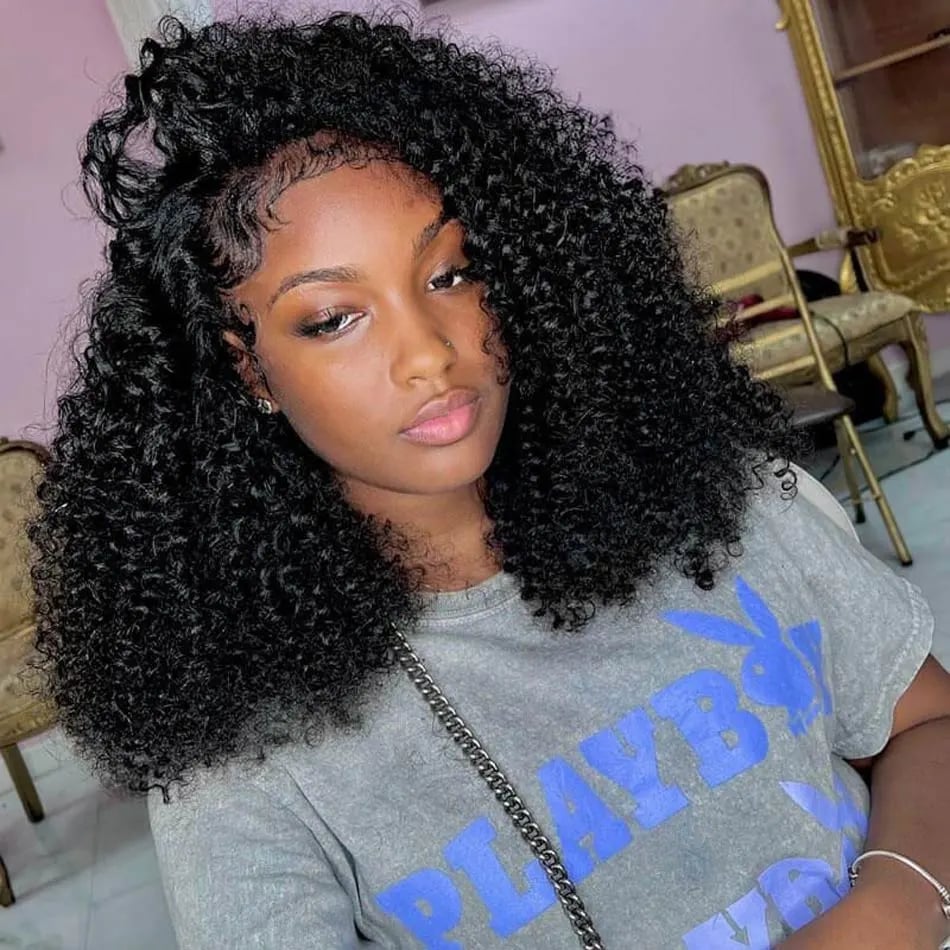
Layers are cut into the interior of the curl, not just the ends, so the shape holds volume without sacrificing length. This collarbone cut uses soft face-framing layers and side-swept curtain bangs that blend into the hair, with a slightly off-center parting creating a natural flow. It works well on thick, curly hair, and the face-framing pieces soften angular jawlines. Ask your stylist for: collarbone length layers, soft curtain bangs, slightly off-center part. The layers need a trim every 10 to 12 weeks to keep the shape from getting heavy.
7. Shoulder Length Layers With Defined Curls
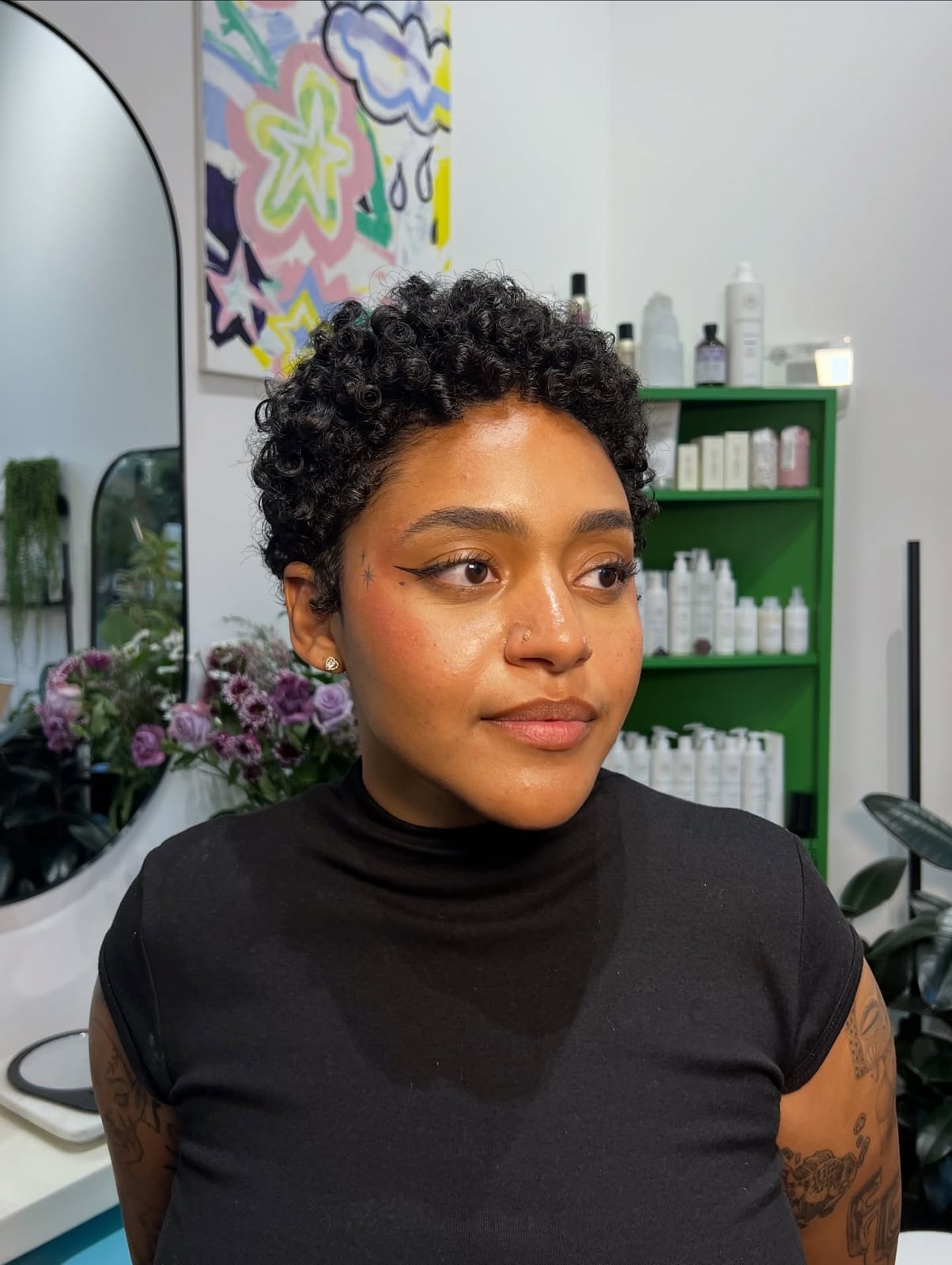
Wondering if a layered cut actually works on shoulder-length curls? It does, provided your hair has enough density to support the shape. This cut uses a side parting and layers cut through the body of the hair, so the defined curl pattern reads clearly and the ends don’t disappear into the length. Thick, curly hair at shoulder length benefits most from this approach, as the layers add movement without making the hair look thin. Ask your stylist for: shoulder length layered cut, defined curls, side part. A trim every 8 to 10 weeks keeps the layers crisp.
8. Collarbone Layers Styled In A Blowout
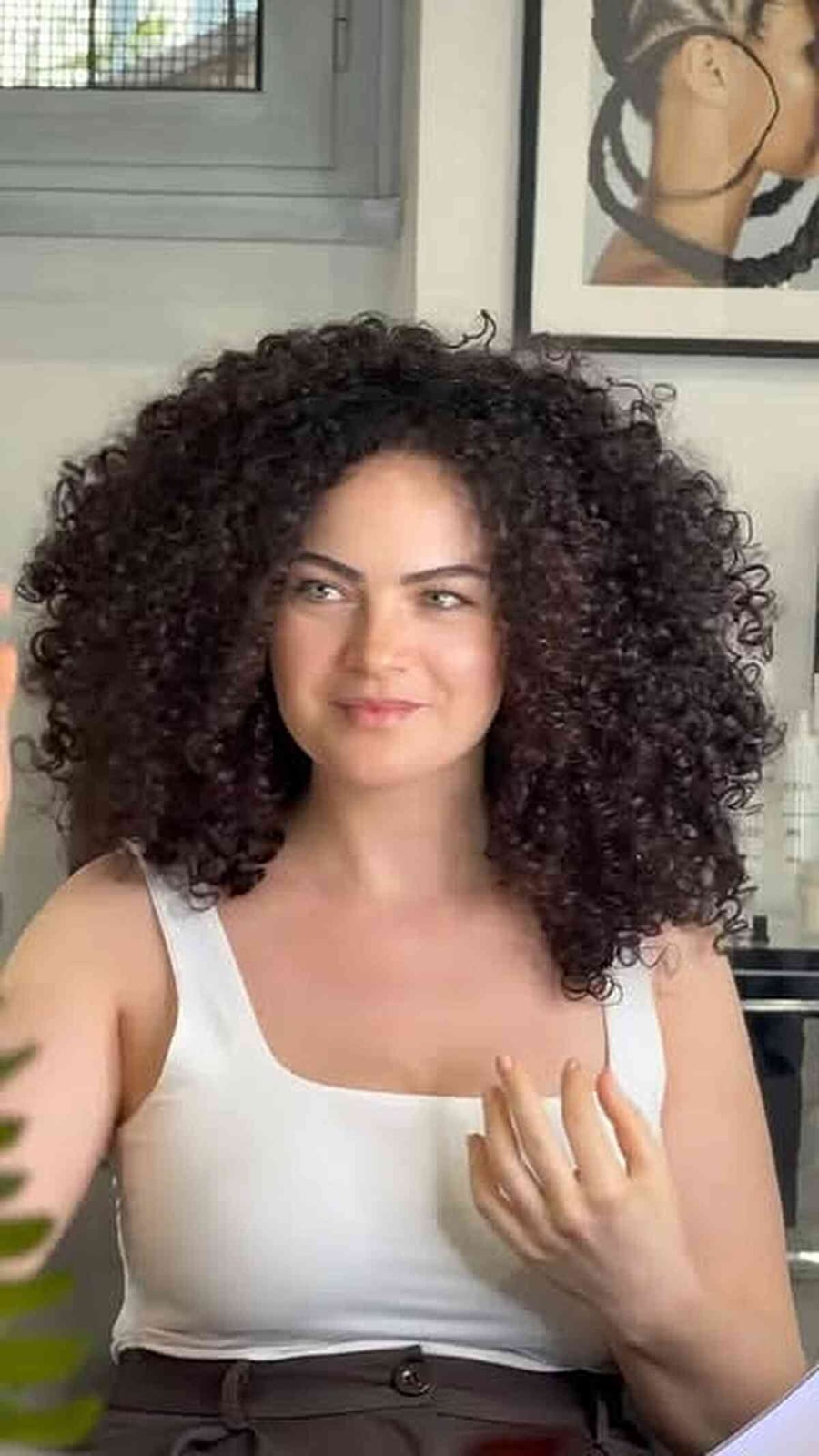
A blowout on curly hair takes more time than air-drying but gives a different finish entirely. The stylist uses a round brush and a heat protectant, stretching each section to smooth the cuticle while keeping the curl pattern defined. This collarbone-length cut with layers and a side parting holds the blowout for about two days before the natural texture starts to reassert itself.
The honest downside is that a blowout on thick, curly hair is not a five-minute routine. It requires skill with the brush and a willingness to spend the time. The layers still help, though, because they reduce the bulk that makes drying take forever. Ask your stylist for: collarbone length layers, blowout finish, side part. Plan for a trim every 10 to 12 weeks.
9. Shoulder Length Layers With Defined Curls, Close-Up Take
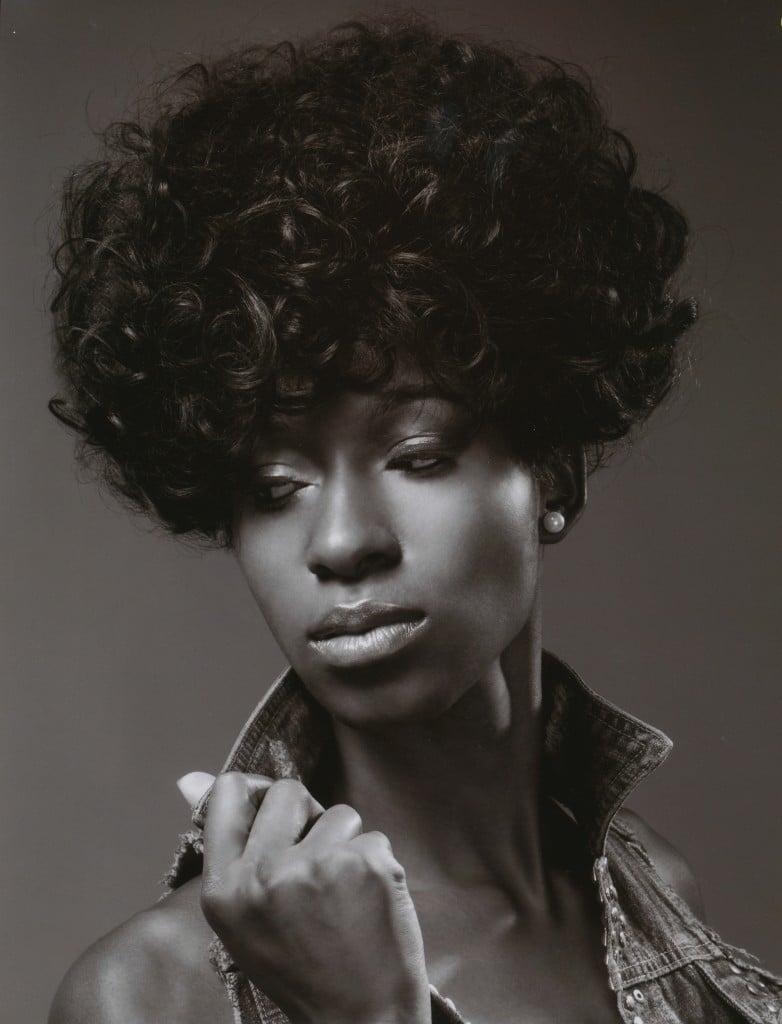
A middle parting on a shoulder length layered cut creates symmetry that lets the defined curls fall evenly on both sides. This cut is air dried, so the texture is the star here, not the styling. The layers are cut into the curl pattern itself, which means each curl sits on its own instead of stacking into a single heavy shape. Thick, curly hair provides the density needed to support the separation. Ask your stylist for: shoulder length layered cut, defined curls, middle part. A trim every 8 to 10 weeks keeps the layers from blending into one block of curl.
10. Shoulder Length Layers With Full Curtain Bangs
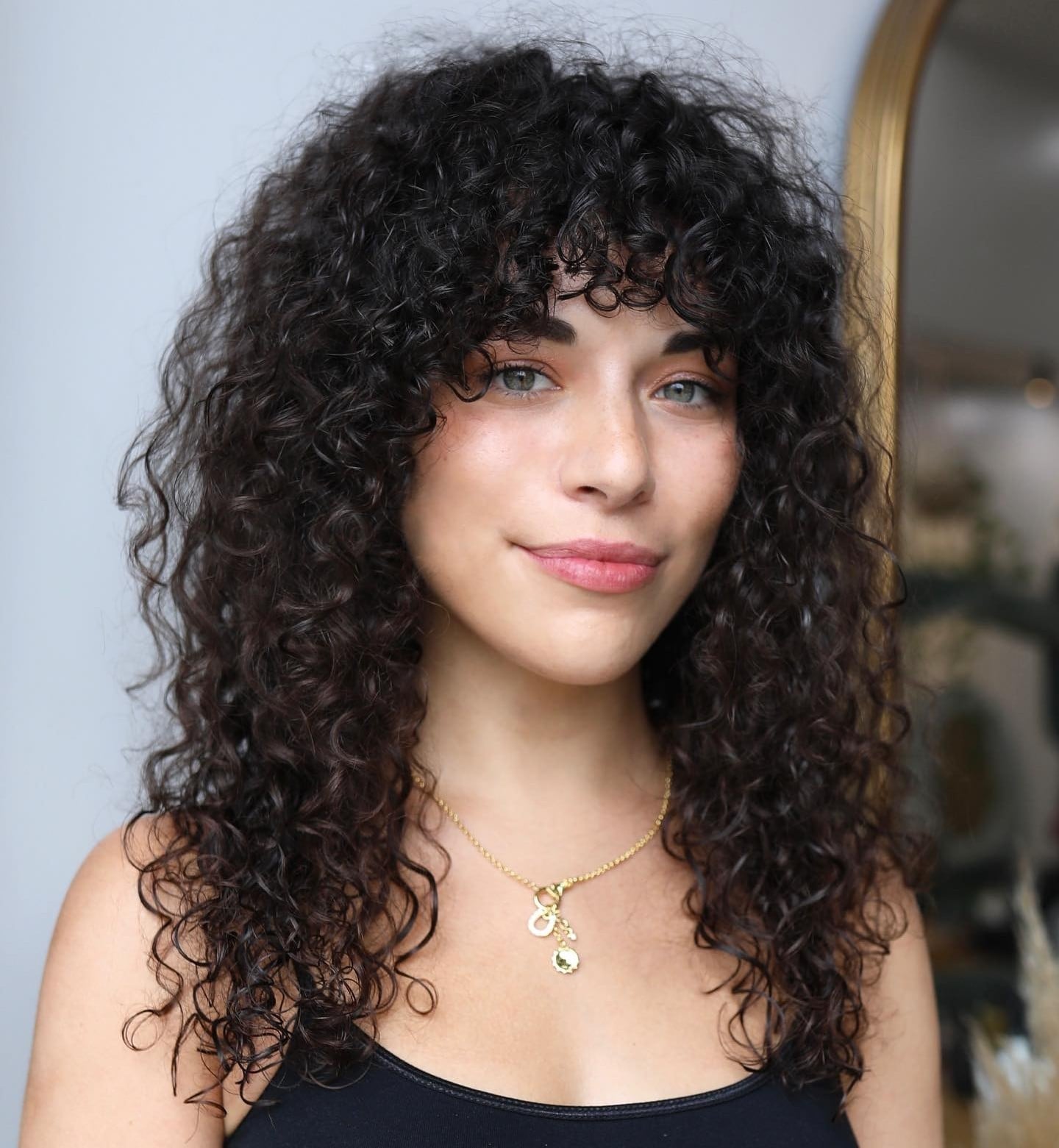
How do you ask for curtain bangs that actually work with curly hair? Start with the length. Full curtain bangs on a shoulder-length cut need to be cut dry, so the stylist can see where each curl lands. The middle parting helps the bangs fall open, framing the face without hiding the rest of the layers. This works well on thick, curly hair, where the fringe stays in place and does not bounce up too short. Ask your stylist for: shoulder length cut, full curtain bangs, middle part. The bangs will need a trim every 4 to 6 weeks to stay at the right length.
11. Polished Shoulder Length With Curtain Bangs, Middle
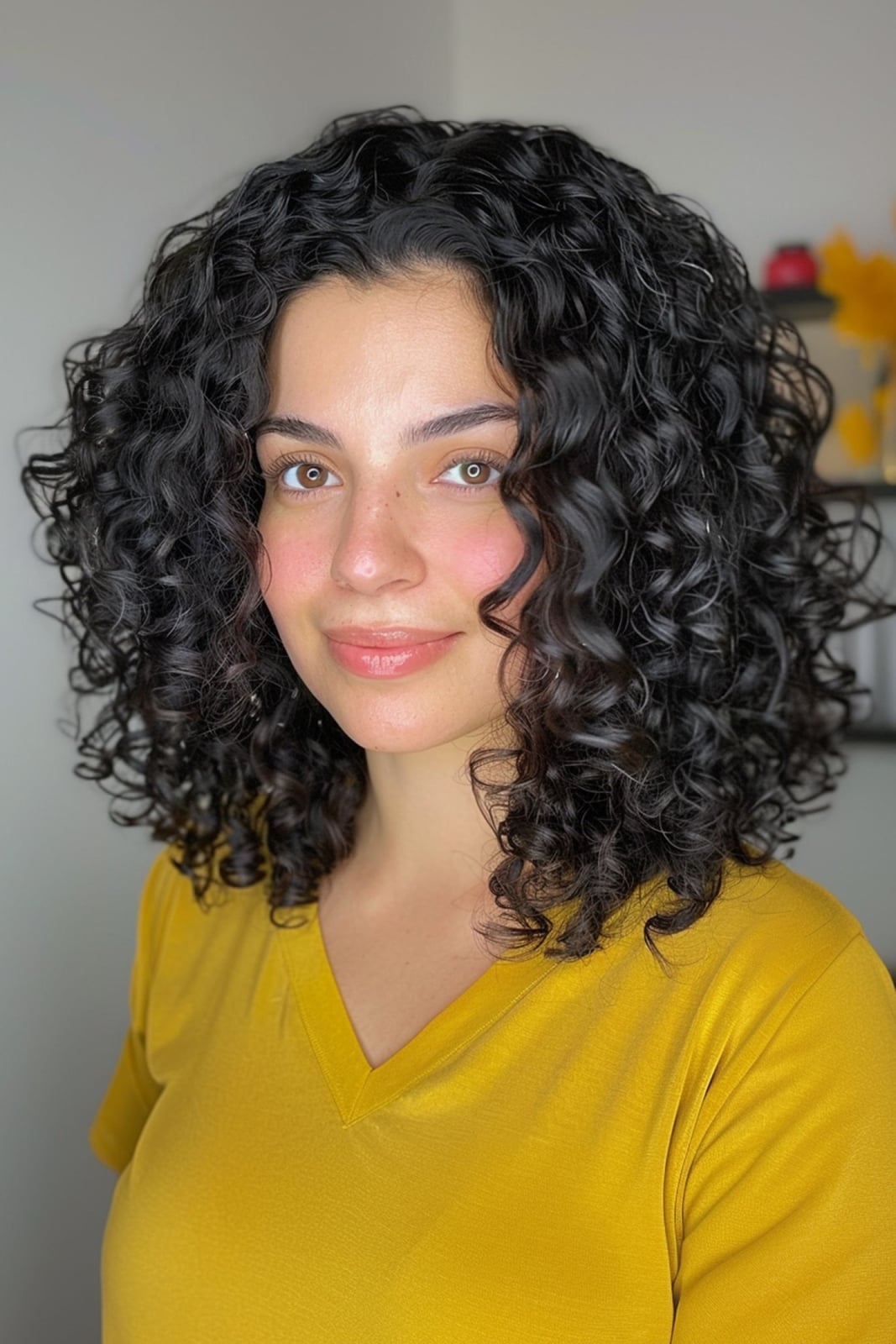
A blowout on curly hair is a deliberate act of coaxing texture into shape, not erasing it. The shoulder-length cut keeps enough weight to prevent the curls from shrinking into a bob, while the curtain bangs frame the face without committing to a full fringe. A middle part anchors the symmetry, and the glossy finish comes from a round brush worked through each section with a heat protectant.
Thick, curly hair at shoulder length holds this style best; finer textures may need a volumizing mousse to achieve the same lift. Ask your stylist for: shoulder-length cut, soft curtain bangs, middle-part blowout. Trim the bangs every four to six weeks to keep them landing exactly where they should, and book a trim on the length every eight to ten weeks to maintain the shape.
12. Layered Shag With Full Fringe
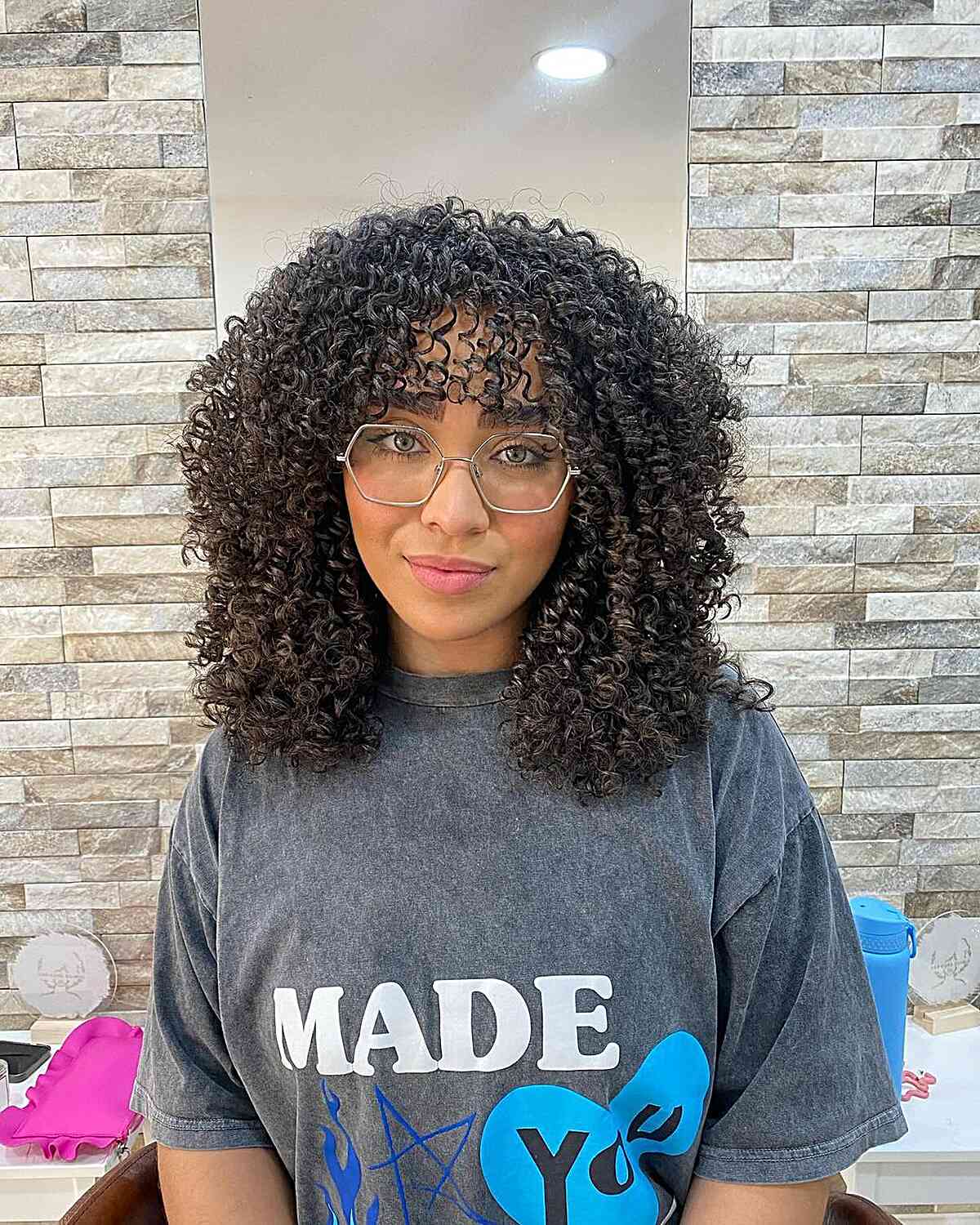
The shag is a cut built on deliberate mess, and on thick curly hair it reads as texture, not chaos. A collarbone length lets the layers stack visibly, while the full fringe shortens the forehead visually and draws attention to the eyes. The middle parting keeps the volume distributed evenly, so the weight stays balanced on both sides. Air-drying emphasizes the natural curl pattern, and the subtle lighter tones woven through the black base add depth without looking streaky. Thick, curly hair at collarbone length is the ideal candidate; finer textures may find the layers fall too flat. Ask your stylist for: collarbone-length layered shag, full fringe, middle part. A trim every eight to ten weeks keeps the shape from growing out into a shapeless triangle.
13. Collarbone Length With Defined Curls
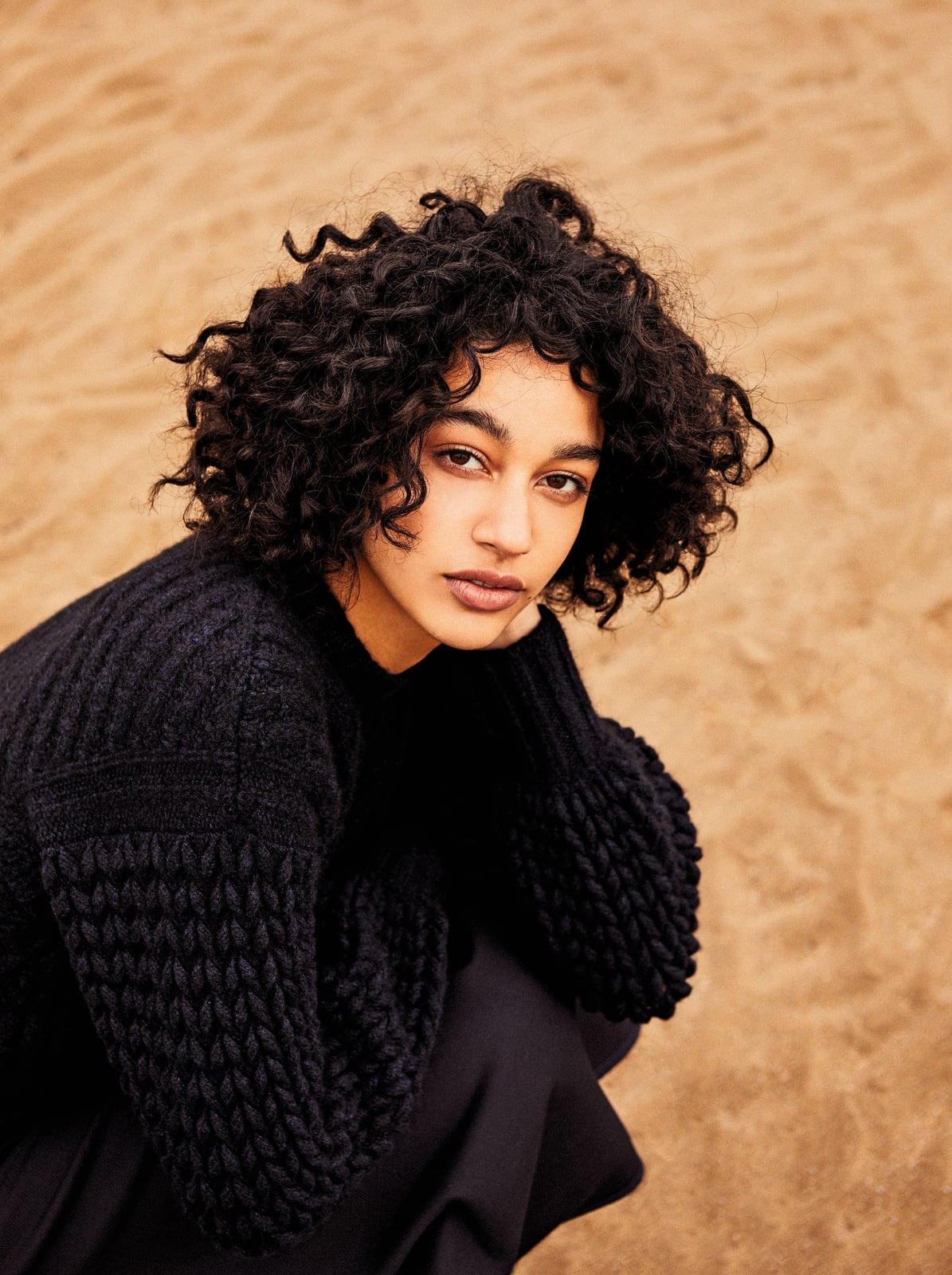
How do you keep defined curls from turning into a frizzy memory by lunch? The answer is a collarbone cut with enough weight to let each curl spring without being pulled down by length. The side parting breaks up symmetry and adds a little asymmetry, which helps the volume sit naturally around the jawline. A gloss finish comes from a curl-defining cream applied to wet hair and left to air-dry or diffused on low heat. Thick, curly hair at collarbone length suits most face shapes by adding width at the jaw. Ask your stylist for: collarbone-length cut, defined curls, side part. Trim every eight to ten weeks to keep the ends from going see-through.
14. Collarbone Layers With Subtle Highlights
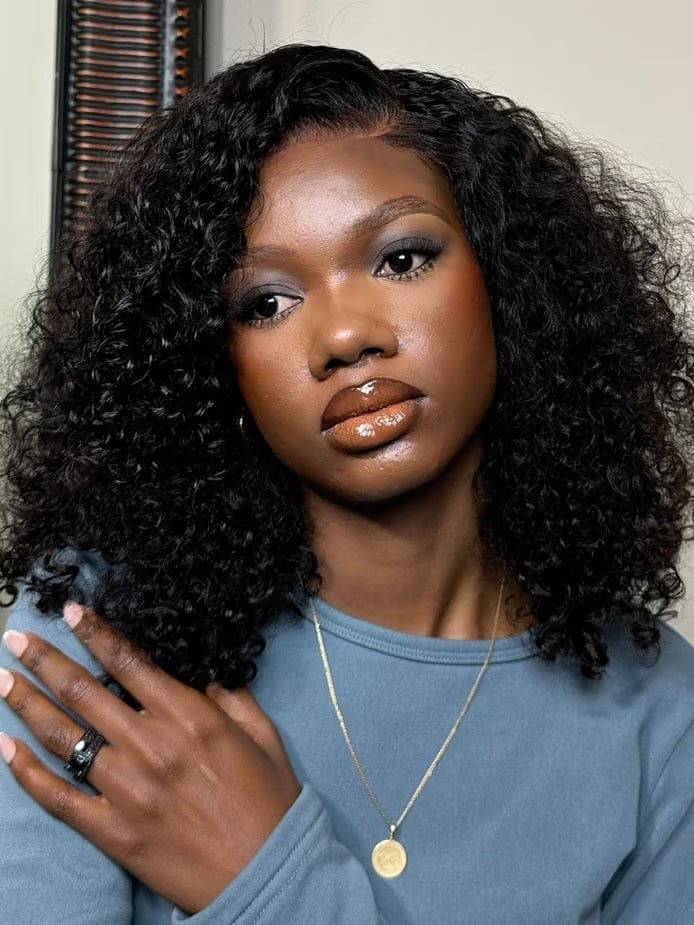
The trick with subtle highlights on dark curly hair is to keep them fine and spaced so they read as dimension rather than stripe. The collarbone length layers let the lighter pieces peek through the curl pattern without overwhelming the dark brown base. A side parting is a practical choice here: it allows the highlights to fall forward in a way that catches the eye naturally. Air-drying the hair keeps the texture soft and the color integration gentle, since heat styling can make highlights look brassy faster. Thick, curly hair at collarbone length benefits from the shape the layers provide. Ask your stylist for: collarbone-length layers, subtle lighter brown highlights, side part. Use a color-safe shampoo and conditioner to protect the tone, and book a trim every ten to twelve weeks to keep the layers defined.
15. Mid-Back Ponytail With Highlights
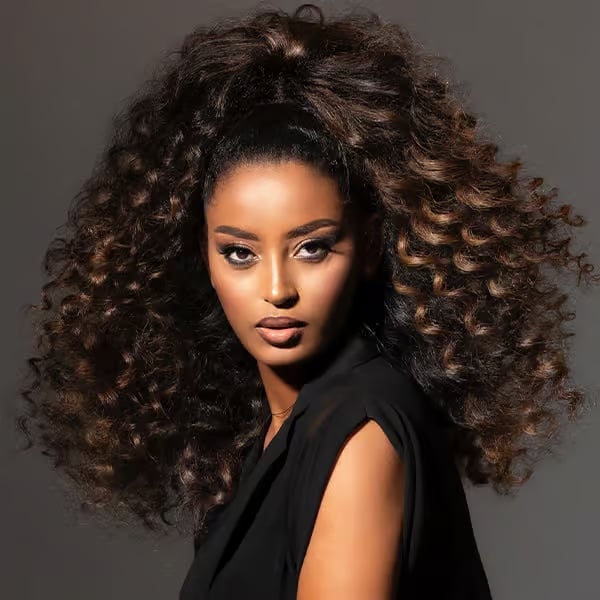
A high ponytail on thick curly hair is a test of tension and grip. The mid-back length gives enough weight to create a substantial tail, while the side parting adds a little visual interest at the crown. Subtle lighter highlights throughout the black base add dimension as the ponytail moves, preventing the texture from reading as a single dark mass. A strong hair tie is the foundation: wrap it snugly but not tight enough to dent the curl pattern at the root. For a polished finish, smooth any flyaways with a small amount of hairspray on a toothbrush and add a drop of hair oil along the length for shine. Thick, curly hair at mid-back length works well here; finer textures may need a texture spray for grip. Ask your stylist for: mid-back length, high ponytail, side part, subtle highlights. This style is a practical choice for active days or casual occasions when you need your hair out of the way but still want it to look deliberate.
16. Mid-Back Layers With Natural Volume
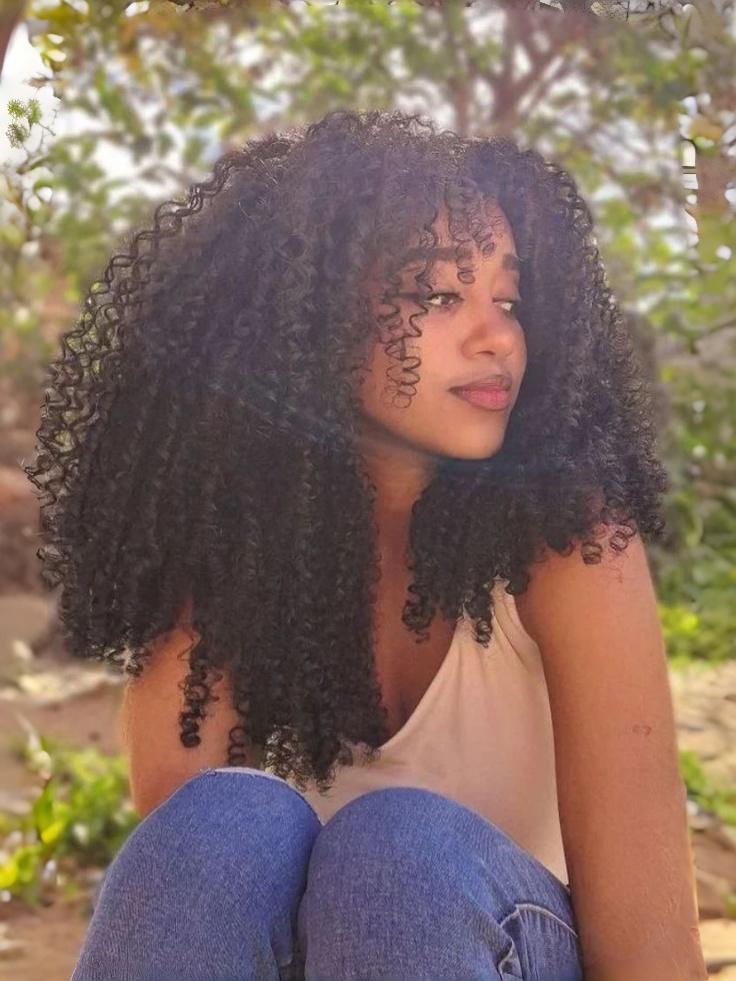
Can you get that air-dried volume at mid-back length without the hair looking weighed down? With the right layers, yes. This cut keeps the length but adds graduated layers throughout, so the curls stack instead of hang. The middle part lets the volume spread evenly on both sides. Ask your stylist for: mid-back length layers, middle part. Thick, curly hair is the obvious candidate; finer textures may find the length pulls the volume down. The layers shape the overall silhouette, giving the style a defined, polished look.
17. Side View Mid-Back Layers With Volume
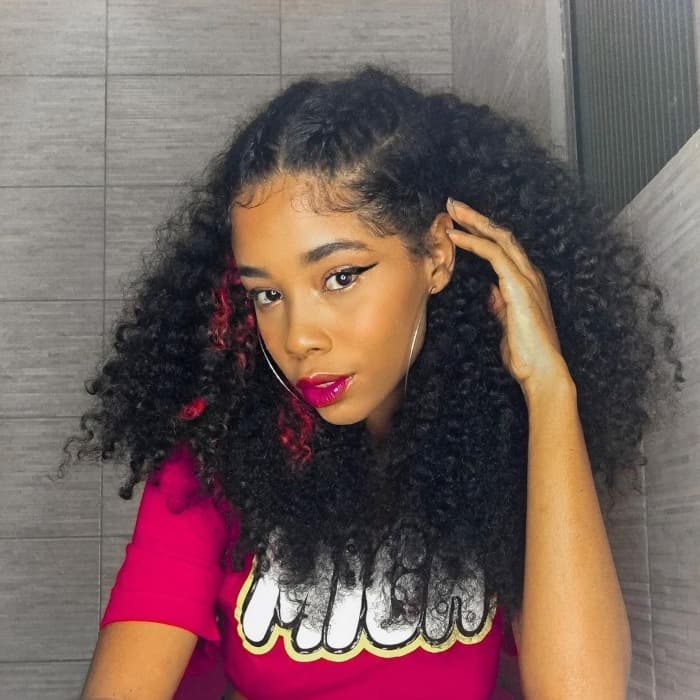
The side view tells you exactly how this cut works. The layers graduate from shorter at the crown to longer at the ends, which lifts the roots and lets the curls stack into a defined shape rather than a single heavy mass. The middle parting keeps the volume balanced left to right. Ask your stylist for: mid-back length layers, defined curls, middle part. Thick, curly hair holds this shape best; the layers prevent the sides from falling flat.
Upkeep is straightforward but not optional. A curl-defining cream on damp hair, scrunch, then air dry or diffuse for about twenty minutes. The trim schedule runs every ten to twelve weeks; skip it and the shape drifts into a triangle. The side profile is the test, if the stacking looks tidy, the cut is working.
18. Mid-Back Layers With Soft Face Framing
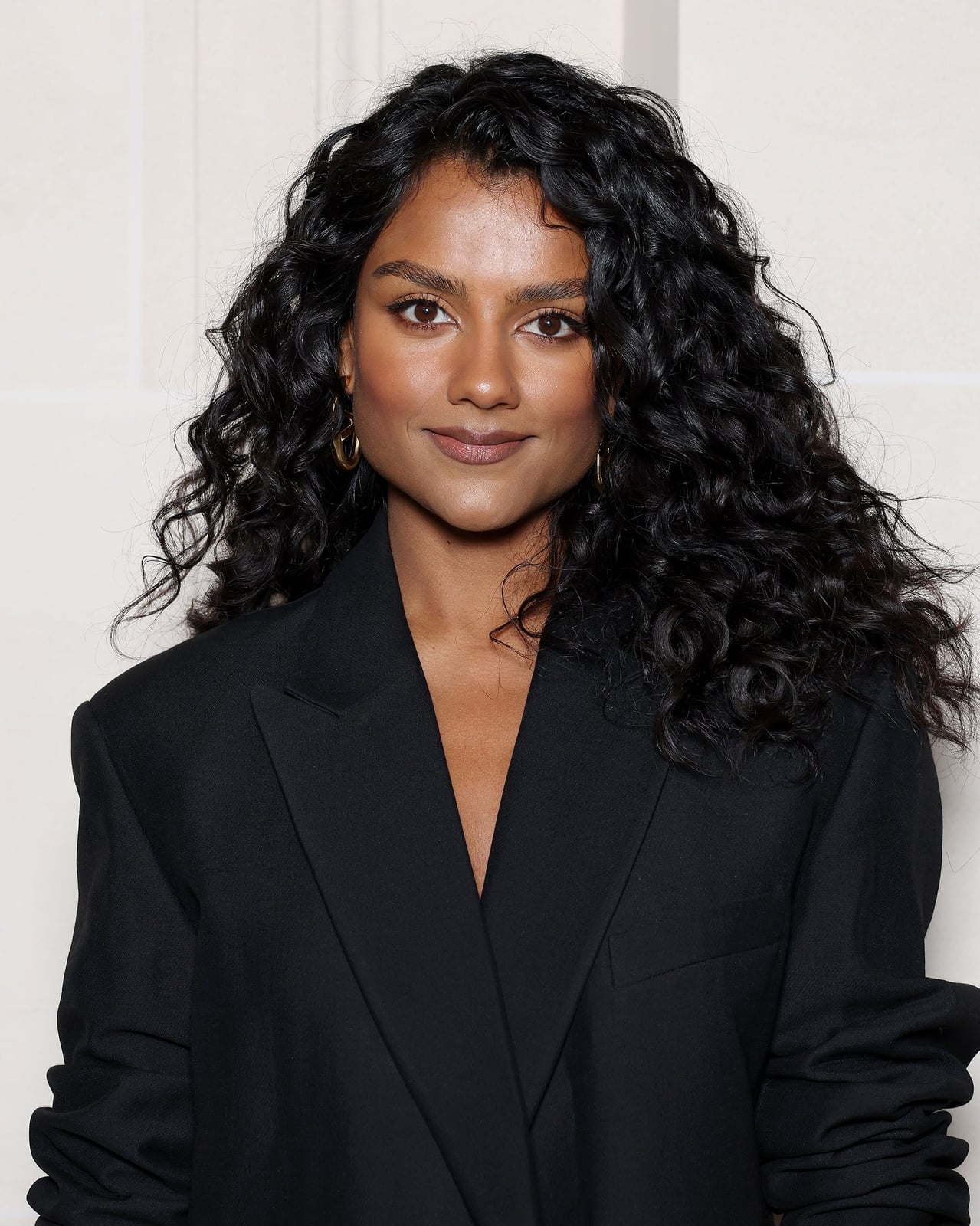
The longer layers here do something the shorter versions cannot: they frame the face without sacrificing length. Instead of cutting in at the jaw or chin, the front sections blend gradually into hair, so the face gets soft definition while the curls stay voluminous. The middle parting keeps the framing even. Ask your stylist for: mid-back length layers, face-framing, middle part. This suits thick, curly hair that wants shape without commitment.
Compared to a cut with short curtain bangs or a heavy fringe, this approach is lower maintenance. No separate bang trims, no awkward grow-out when the fringe hits the nose. If you want clear separation between the face-framing pieces and hair, ask for shorter front layers that start around the cheekbone.
19. Voluminous Updo With Curtain Bangs
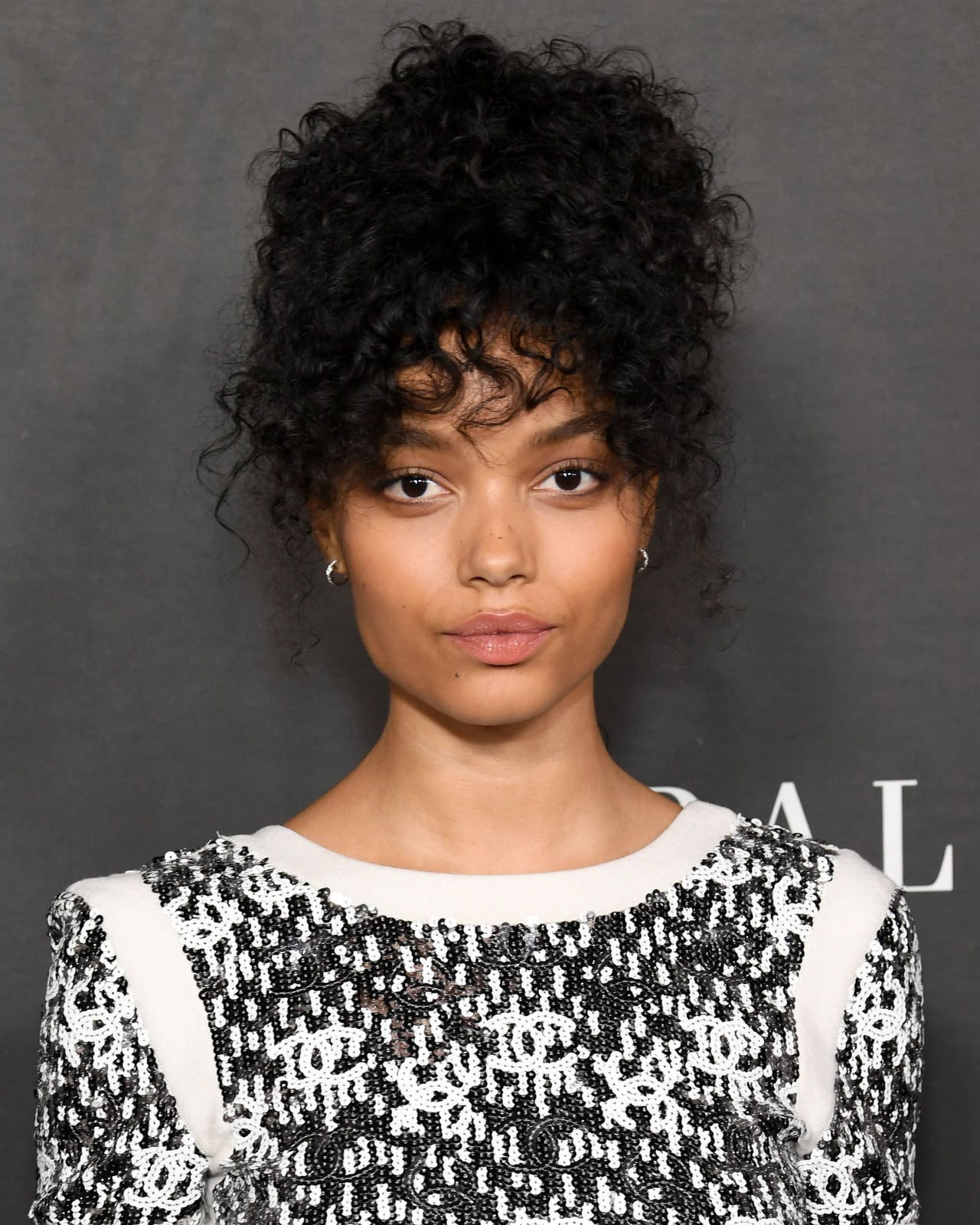
Can you get a voluminous updo with curly hair that actually stays up and looks polished? Yes, but it takes time. The hair is pulled up high from a middle part, with curtain bangs left out to soften the front. The thick, curly texture gives the updo natural lift without backcombing. Ask your stylist for: voluminous updo, curtain bangs, middle part. This is a salon situation for most people. Pinning curly hair into a smooth, high shape while keeping the bangs separate requires a second pair of hands and about an hour. Taking it down means detangling, and those curtain bangs will need a refresh. For a formal event, it works. For a casual Tuesday, probably not.
Final Thoughts
For maximum volume and bounce with thick curly hair, opt for layered cuts that remove weight and encourage curl definition. Shorter styles like pixies and afros naturally enhance volume, while longer styles benefit from strategic layering to prevent heaviness.
- Trim every 8-12 weeks to maintain shape and prevent split ends.
- Use a sulfate-free shampoo and conditioner designed for curly hair.
- Apply leave-in conditioner and curl-defining cream to damp hair.
- Air dry or use a diffuser on a low heat setting to preserve curl pattern.
- Refresh curls between washes with water or a curl refresher spray.
Embrace your curls with confidence.
More Curls & Waves ideas
- 18 Trendy Wavy Hair Hairstyles 2027 for Easy Style
- Bob Hairstyles for Black Women
- 22 Body Waves Hairstyles to Try in 2027
- 2027 Heatless Curls: 21 No-Heat Looks From Soft Waves to Bouncy Ringlets
- Babylights Hair Ideas for 2027
- Soft Summer Wavy Hairstyles for 2027
- Natural Spring Hairstyles 2027
- 20 Curly Hairstyles for 2027
- Short Hairstyles 2027: 20 Chic Bobs and Wavy Cuts for Your Next Look