20 Classy Natural Hair Braids 2027 with Natural Texture
Classy Natural Hair Braids 2027 featuring 20 styles for natural textured hair, from short box braids to thick shoulder length cornrows. See the looks.

Natural hair braids have become a go-to for a style that holds its own, offering structure and staying power that loose styles simply cannot match. Right now, the trend favors soft face-framing details and glossy natural textures, moving away from rigid, uniform looks.
This collection of 20 Classy Natural Hair Braids covers the full spectrum, from short bobs to flowing mid-back lengths, and from quick cornrows to intricate knotless styles with beads. Whether your hair is fine and needs volume or thick and requires weight distribution, there is a braid here that will hold its shape for weeks without looking tired by day two.
1. Short Chin Length Box Braids
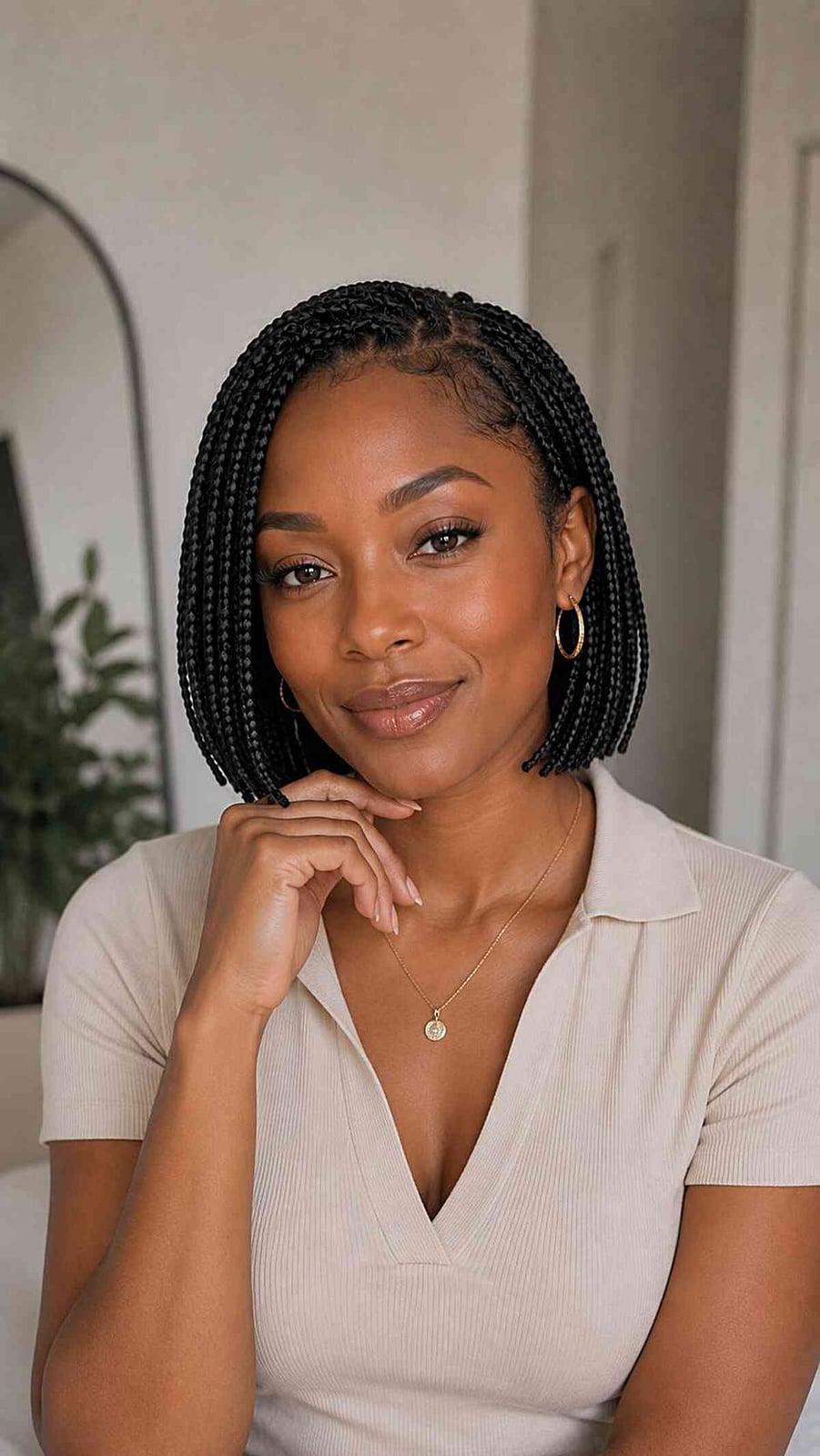
Can a bob braid actually work on short hair? Yes, when the braids land precisely at the chin, the effect is a clean, deliberate shape that holds its line all day. The straight, thick texture and black color keep the silhouette sharp rather than bulky. This cut suits oval and square face shapes particularly well, and it works best if you have naturally dense hair to start with; fine hair may look sparse at this length. Ask your stylist for: chin length bob box braids with side part. The bob holds its structure with minimal effort; just smooth down any flyaways with a dab of oil every few days.
2. Thick Black Cornrows Shoulder Length
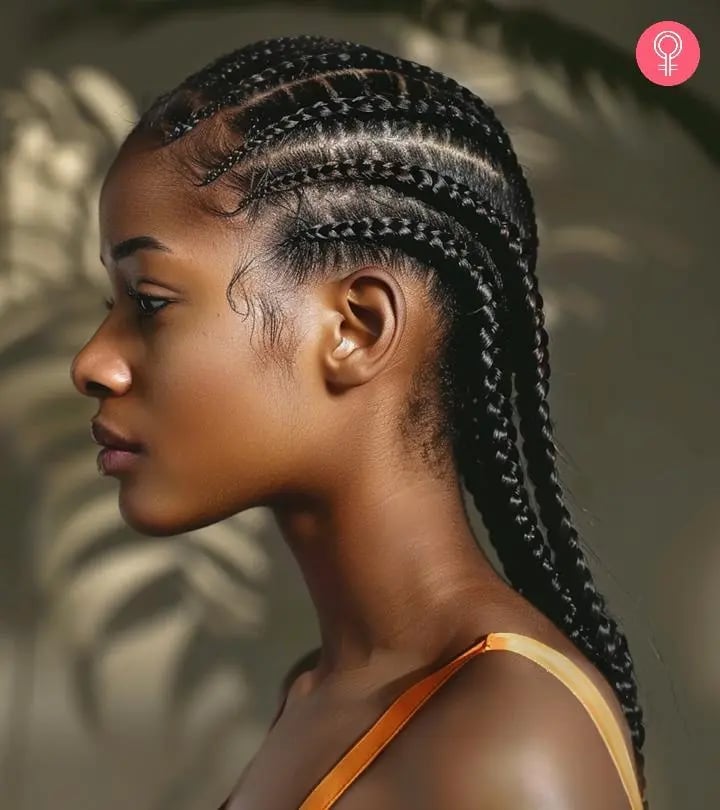
Notice how the scalp finish stays perfectly clean from front to back, with each cornrow feeding into a single middle parting. That precision is the entire point. These thick, black cornrows are built with consistent tension and a straight stitch that keeps the pattern uniform for weeks. The shoulder length gives enough weight to hold the rows flat against the scalp without pulling at the hairline. This technique works best on thick, straight hair that can hold a taut braid without frizzing. Ask your stylist for: thick shoulder length cornrows with middle part. The structure is the style. There is no curling, no product, just the geometry of the rows.
3. Textured Curly Shoulder Length Braids
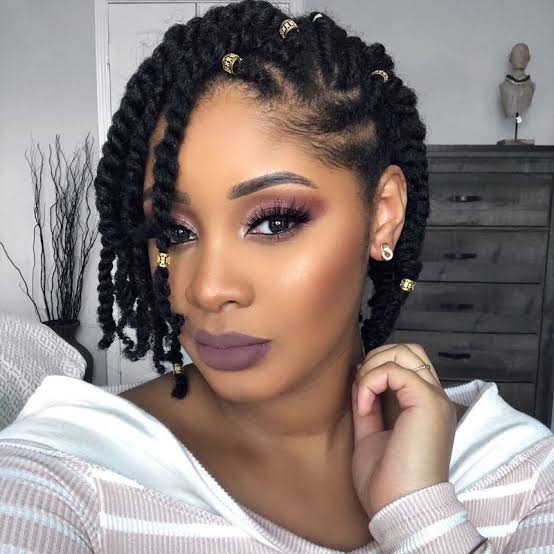
A curly braid is a different animal from a straight one because the texture creates its own volume. These shoulder-length braids use a naturally curly finish, parted down the middle and arranged neatly, so the body comes from the braid itself rather than added bulk. The black color keeps the texture readable, not muddy. The upkeep is about moisture and frizz control: a lightweight braid spray every second day keeps the curl definition intact, and a silk scarf at night prevents the ends from drying out. Ask your colorist for: shoulder length curly braids with middle part. The hold is reliable for about four weeks before the roots need attention.
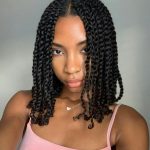
4. Natural Textured Shoulder Length Braids, Close-Up Take
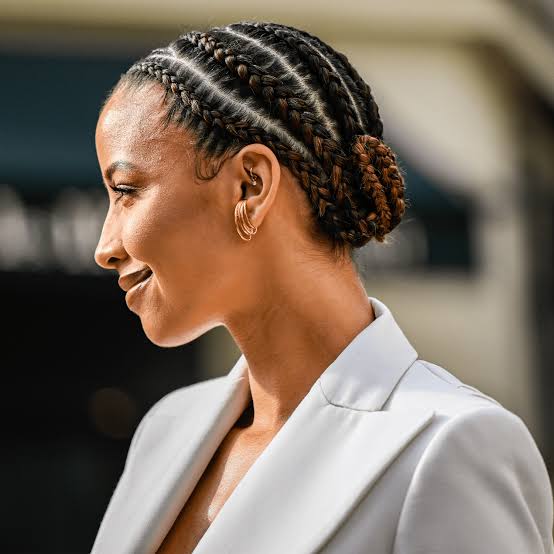
How do you describe this finish to a stylist so you get exactly this amount of texture? The key is asking for a natural, not uniform, braid, one where the hair has a slight curl pattern and the braid looks like it grew there rather than being assembled strand by strand. The middle parting keeps the arrangement symmetrical while the shoulder length allows the texture to move without looking messy. Ask your stylist for: shoulder length natural textured braids with middle part. This style suits fine to medium hair densities, because the texture adds the body that a smoother braid might not. The hold is soft but stable; braids this textured rarely slip out of place.
5. Wavy Shoulder Length Cornrows
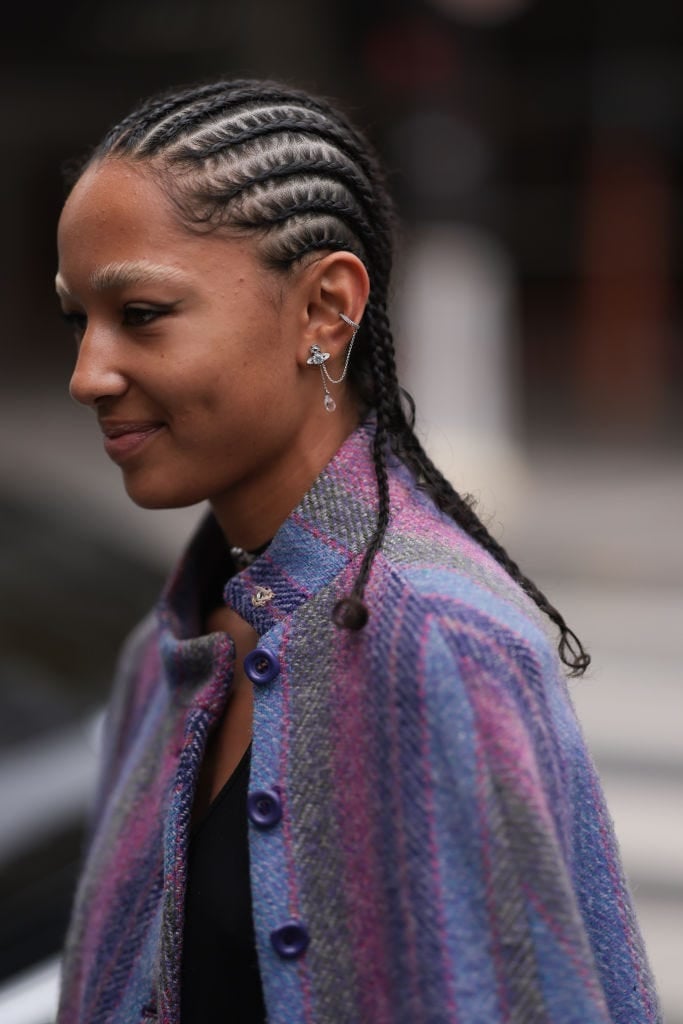
Straight cornrows give you geometry; wavy cornrows give you movement. The difference is in how the braid sits: a wavy texture softens the lines of the scalp pattern and makes the overall style feel less rigid. These shoulder-length cornrows use a middle parting and a subtle wave throughout the braid, with two thin, loose braids adding a deliberate detail near the nape. The wavy finish holds better on hair that already has some natural bend, stick-straight hair may require a styling product to maintain the wave. Ask your stylist for: wavy shoulder length cornrows with middle part.
Compared to straight cornrows, this version is more forgiving at the roots as they grow out, because the wave distracts from the new growth. It also works well on round and long face shapes, since the soft texture balances the face without adding width. The hold is solid for about five weeks before the wave starts to relax.
6. Chin Length Bob Box Braids, Mid-Back
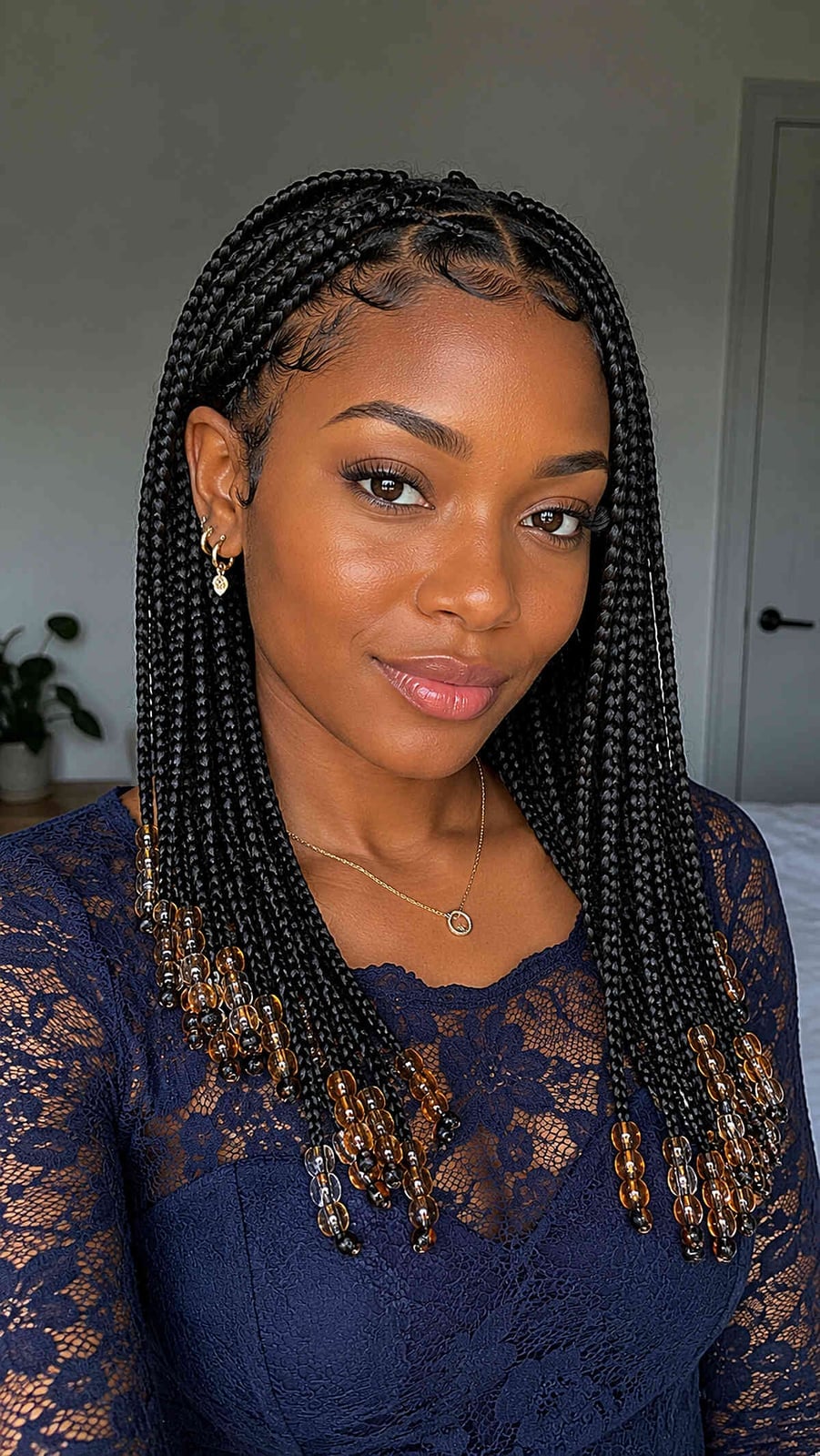
A chin-length bob built from knotless box braids lands somewhere between a classic short cut and the protective benefits of longer braids. The baby hairs are deliberately styled, so be prepared to maintain that swoop with a soft brush and a bit of gel each morning. The amber and clear beads threaded onto some strands are the real personality here, but they will catch on scarves and pillowcases if you are not careful.
This length works best if you have medium to thick hair and an oval or heart-shaped face. Ask your stylist for: chin length bob box braids with side part. You can get close at home if you are handy with a crochet hook, but a salon is faster for even parting and bead placement. The downside: those beads will rattle, and the baby hairs need a refresh every couple of days or they look like a forgotten detail.
7. Dense Mid-Back Micro Braids
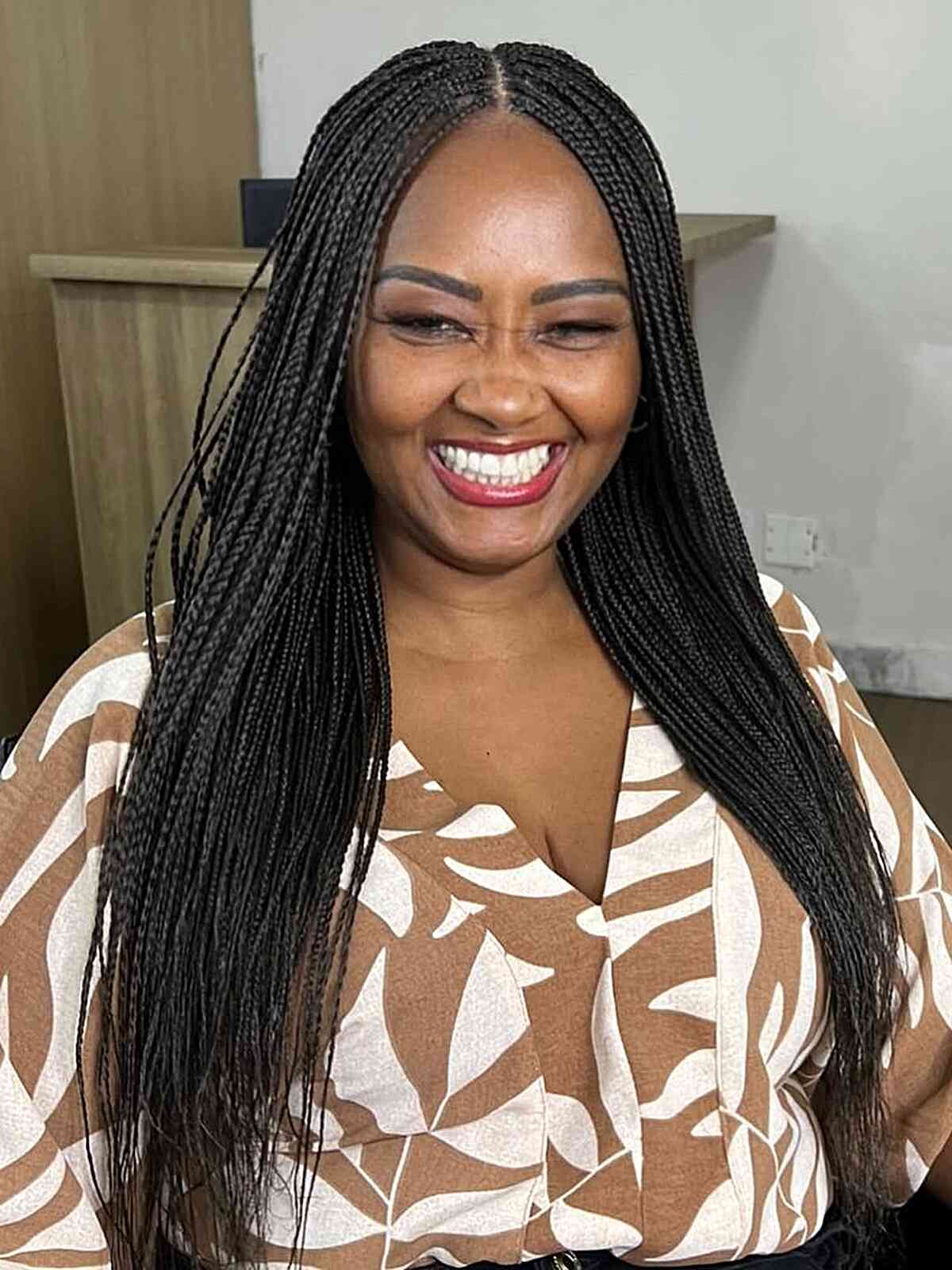
Dense micro braids running to mid-back rely on sheer quantity for their impact. The middle parting exposes the scalp, which means the braids need to be tight at the root to stay clean for more than a week. The weight of this many fine braids can pull at the temples, so a lightweight mousse on the scalp helps with comfort. Ask your stylist for: dense mid-back micro braids with middle part. A re-braid every six to eight weeks keeps the line sharp and prevents the ends from unraveling into a fuzzy mess. The color is a flat black, which makes any oil or product buildup obvious, so a dry shampoo at the roots between washes is non-negotiable.
8. Long Flowing Mid-Back Box Braids
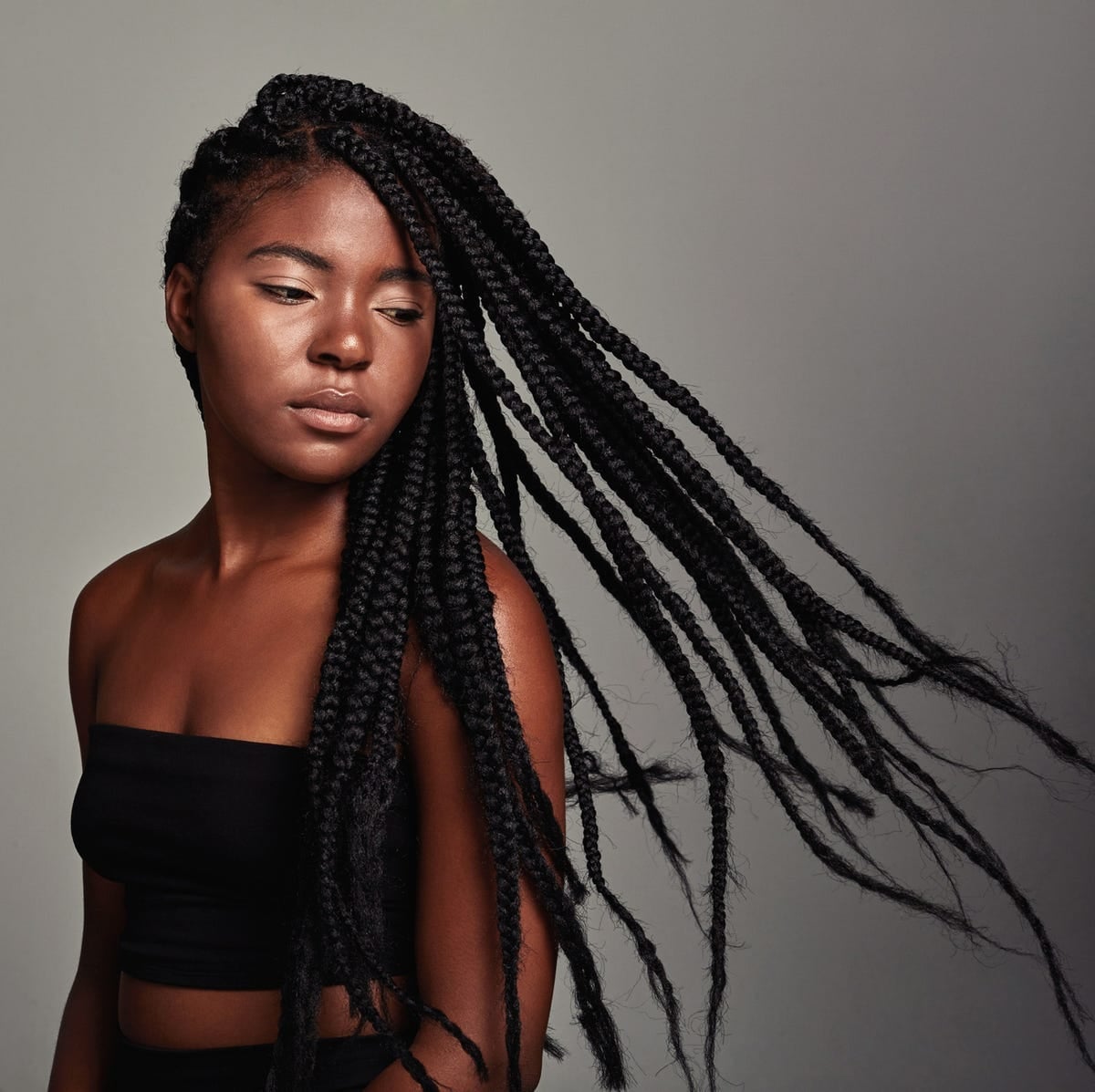
Can a protective style actually move like loose hair? These long box braids, falling to mid-back with a middle part, come close. The thickness of each braid and the straight texture let them swing rather than clump, which makes the style feel less static. A side view captures the weight and the way some strands drift forward. This suits oval and heart face shapes best. Rounder faces may find the middle part and vertical lines work if the braids are not too wide. Ask your stylist for: long thick box braids with middle part. The honest reality: the weight of mid-back braids can tire your neck by the end of a long day, and they take an age to dry after washing.
9. Neatly Sectioned Mid-Back Box Braids
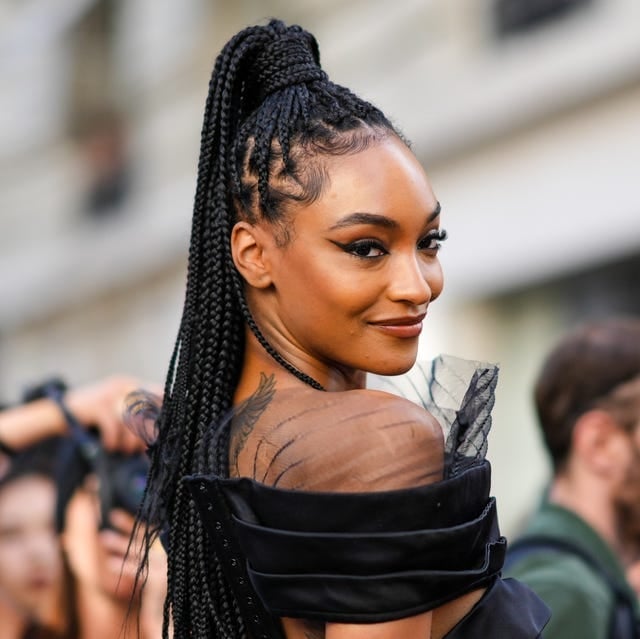
The precision here is the point. Each part is a clean, geometric line running from the middle part down to the nape, and every braid is the same width. The side view shows how the sections stay distinct without merging into one solid mass. This is a structured style that relies on the braider’s technique more than any product. Ask your stylist for: neatly sectioned mid-back box braids with middle part. The straight black color and uniform size mean any frizz or loose hair stands out immediately, so a braid balm smoothed over each section every few days keeps the polish. The trim rhythm is dictated by the ends fraying, usually around eight weeks.
10. Mid-Back Knotless Box Braids With Beads
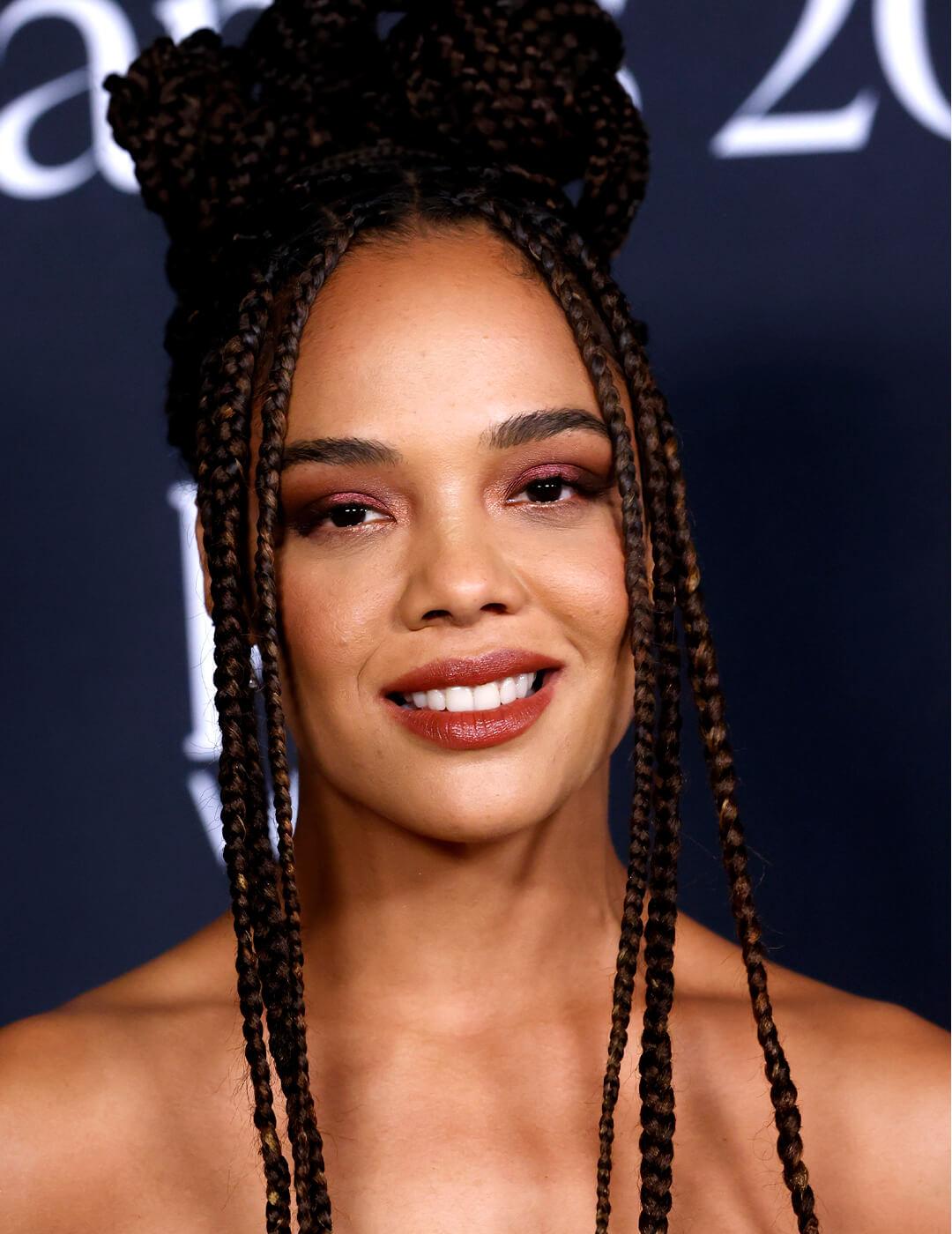
A high bun made from knotless box braids, with loose strands left to frame the face, works for occasions that call for something neat but not severe. The lighter streaks woven through the dark brown base add depth without looking like a separate color job. The middle part keeps the face framing balanced. Ask your stylist for: mid-back knotless box braids with beads. The beads are an extra step at installation and can slide off if not crimped properly, so check each one before you leave the salon. This style holds best for a day event, since sleeping on the bun can flatten the top section overnight. A silk scarf wrapped around the bun before bed preserves the shape.
11. Mid-Back Box Braids With Wooden Beads, Black
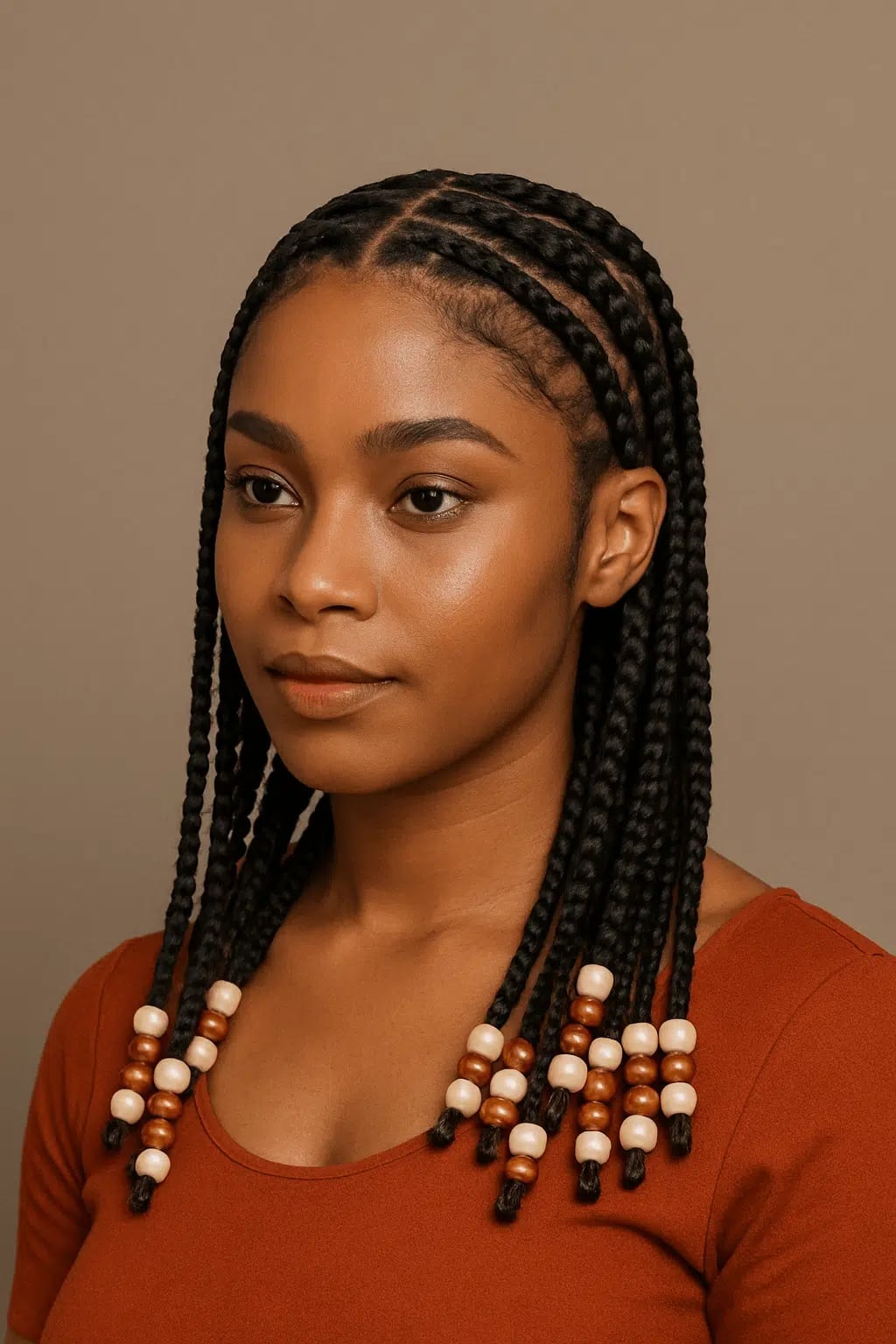
The wooden beads on these mid-back, straight black box braids are a deliberate detail that changes how the braids move and weigh. A middle parting keeps the look grounded, so the beads read as accents, not distractions.
Ask your stylist for: mid-back box braids with wooden beads. This style suits thick, straight hair and most face shapes, since the length and center part work neutrally. The braids themselves hold their shape for weeks, though the beads add a little weight. Gently oil the braid ends to keep both the hair and the wood finish in good condition. That is the whole maintenance routine.
12. Mid-Back Coily Box Braids With Accessories
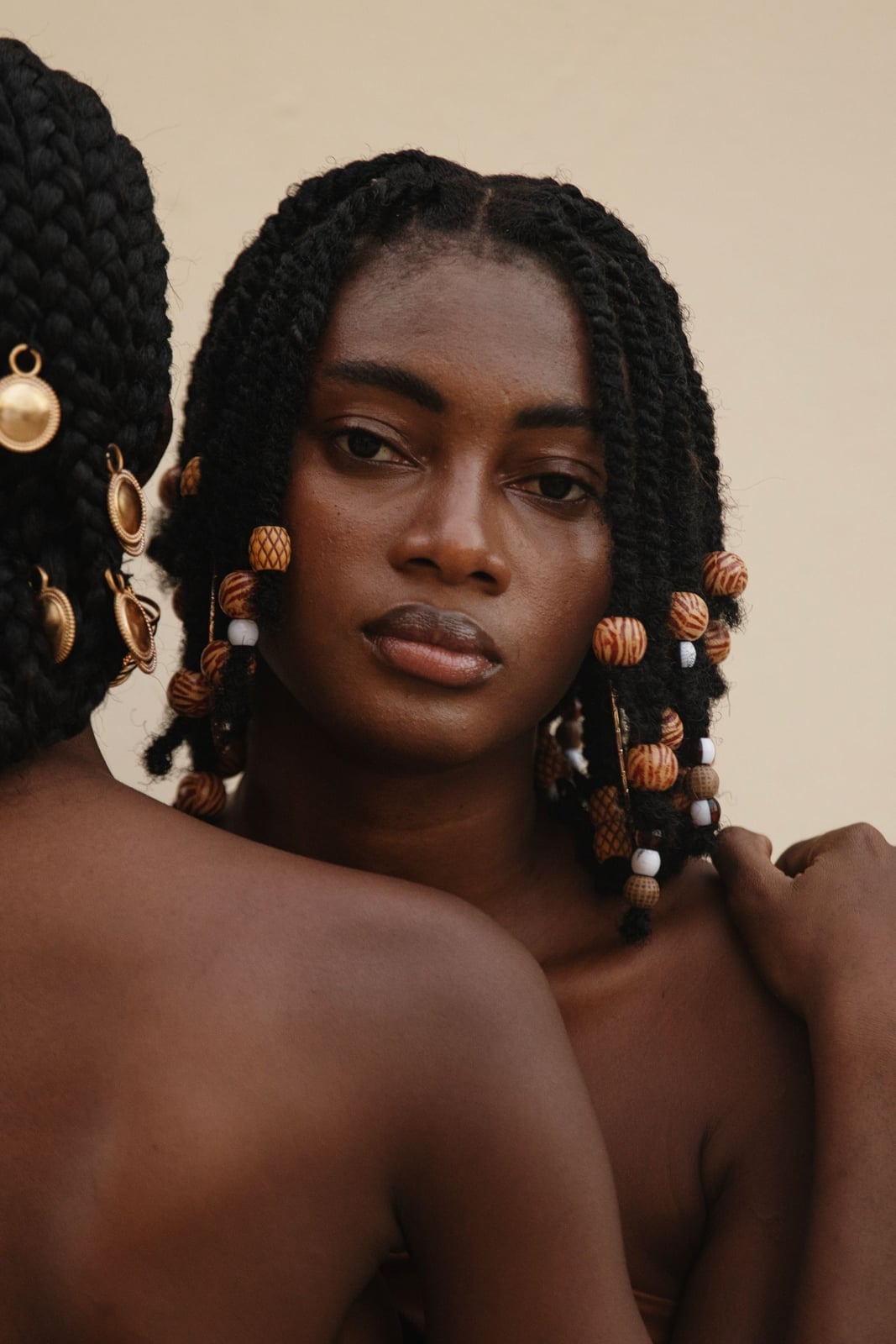
Coily box braids at mid-back length already have plenty of texture. Add wooden beads and gold circular accessories, and you are asking the hair to do more: each piece catches light differently, and the weight shifts the drape. The black base color keeps the look unified.
This style works best on naturally coily, thick hair, and the volume around the sides softens round and oval face shapes. Accessories snag if you rush. Place each bead and ring carefully during installation, then mist the braids lightly to refresh the coily texture between washes. The hold is long, but the setup requires patience.
13. Braided Bun With Face Framing Pieces
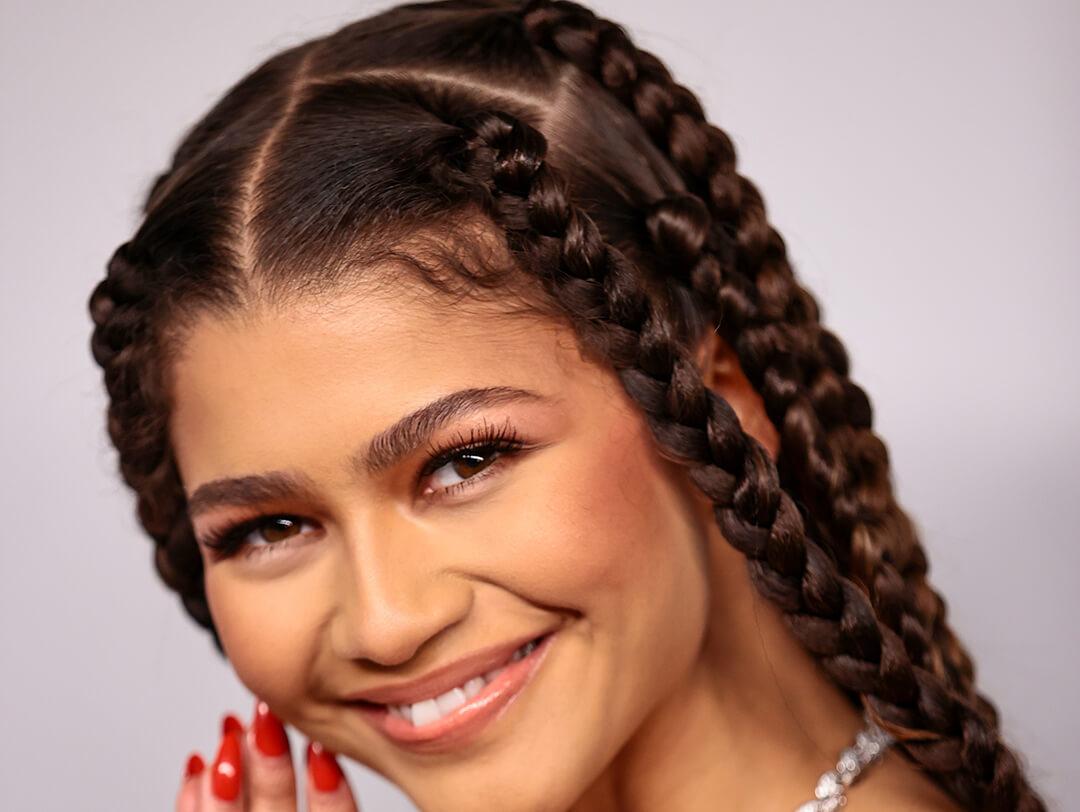
Dark brown, coily braids swept into a high bun with a clean middle parting. The bun sits at the crown, and several braids are left loose around the face. That is the whole construction: one secure shape with deliberate escapes. The neat scalp parting is the technical anchor. Ask your stylist for: mid-back braids in a bun with face-framing pieces. The style flatters oval, heart and long face shapes because the height lengthens and the loose pieces soften the edges. Pin the bun firmly so it holds all day; a light mist on the face-framing braids keeps them from frizzing out.
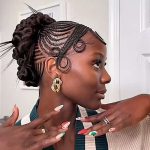
14. Cornrows To Braided Bun
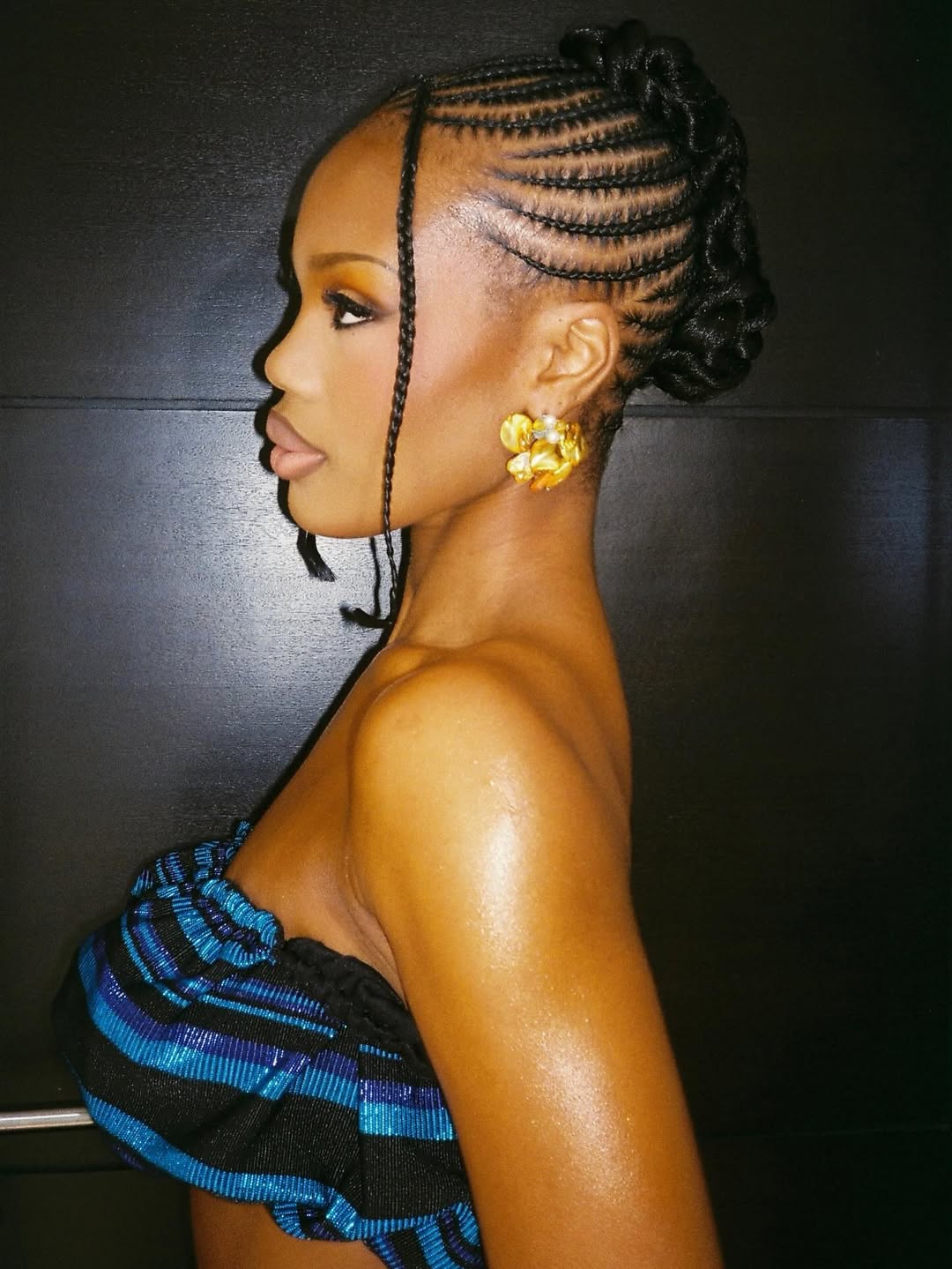
This is not loose cornrows that end in a tail. It is intricate cornrows that feed directly into a braided bun at the nape, with a few thin braids left loose around the face. The transition is the point: the scalp work is visible, then the bun gives the style a polished finish. The side view shows the full arc of the pattern. Ask your stylist for: cornrows to a braided bun with loose face-framing braids. This suits thick, straight hair and oval to square faces, since the bun adds height and the cornrows hug the head. A gel at the hairline keeps the edges sleek, and strong pins hold the bun in place. The hold is solid for a full workday or evening event.
15. Neatly Parted Mid-Back Coily Braids
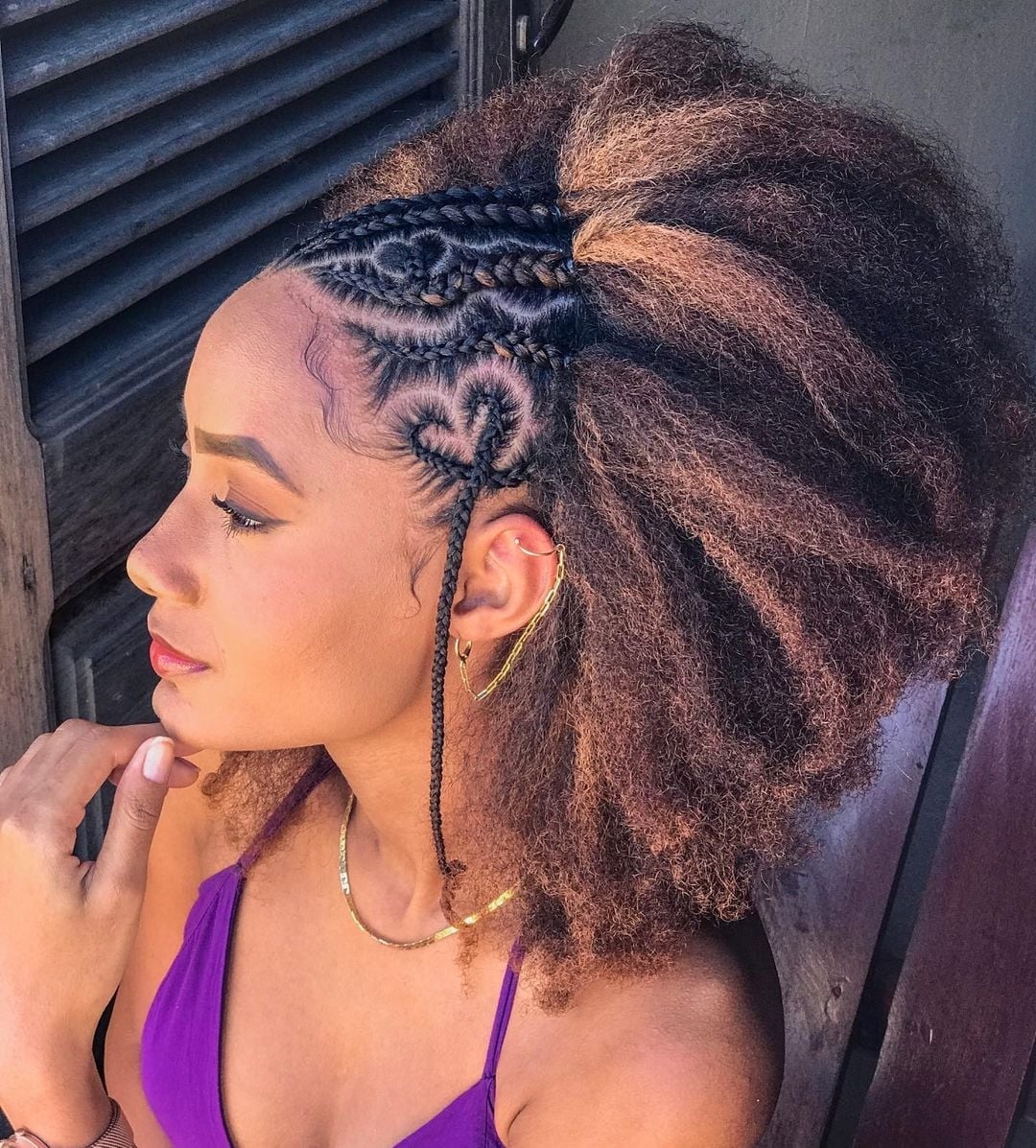
Can a heart-shaped cornrow detail read as polished and playful? Yes, when the style is cleanly parted coily braids at mid-back length. The black and brown mix adds depth, and the side-swept bang piece frames without covering. The side view shows the braid pattern clearly. Ask your stylist for: neatly parted mid-back coily braids with middle part. This style suits naturally coily, thick hair and most face shapes because the volume is distributed evenly. A daily hydrating braid refresher keeps the coily texture from drying out. The style typically holds its definition for about two weeks before the roots need attention.
16. Mid-Back Box Braids With Loose Face Framing
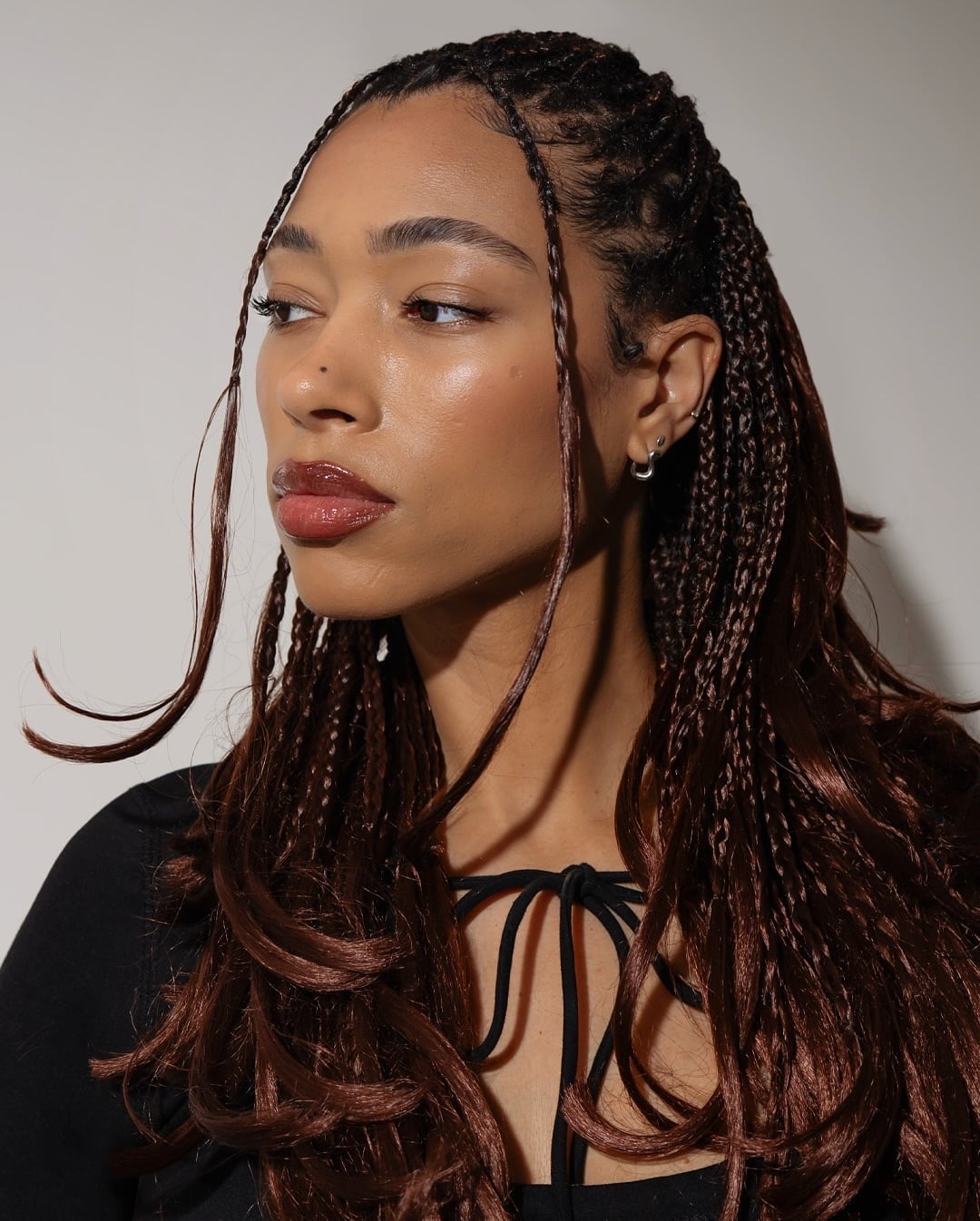
Several thin box braids are left out of the pattern at the front, falling loose against the cheeks while the rest sit in a neat dark brown curtain to mid-back. That contrast is the whole point, and it is also the catch.
Ask your stylist for: mid-back thin box braids with loose face-framing pieces. Medium to thick hair holds the weight of the braids best, and oval and heart faces get a soft break at the jawline. The loose strands will not stay where they are put. They frizz, they catch on collars, and they need retucking or a bobby pin most mornings. Starting from scratch at home is a long afternoon of parting and tension; this one belongs in a salon chair. Skip it if you want a style you never touch between washes.
17. Mid-Back Box Braids With Blonde Highlights
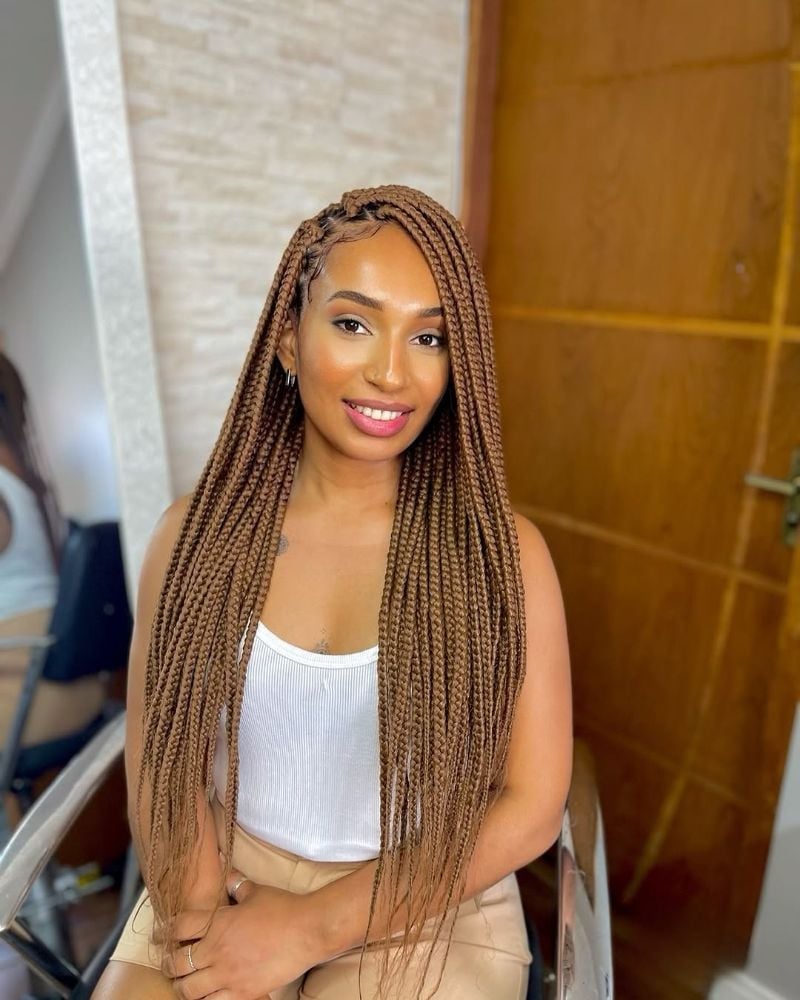
Blonde in box braids is usually not a dye job on your own hair. Most of the time the lighter pieces are braiding hair blended in strand by strand, which is why the dark brown base stays intact and the blonde sits in fine ribbons through the length.
Ask your stylist for: mid-back box braids with blonde highlights and wavy ends. Thick hair carries the added volume without the braids looking thin at the root, and oval and long faces get a clean line from the middle part. The technique matters more than the shade: pieces blended too thickly look like stripes, and a cool blonde next to a warm dark brown can turn brassy within a few weeks. A toning gloss every six to eight weeks keeps the blonde from going yellow, and a color-safe wash at home slows the color shift. Wavy ends finish the style, but they need a light mist and a scrunch to stay defined.
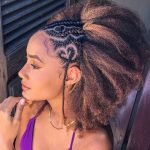
18. Heart Shaped Cornrows With Loose Braids
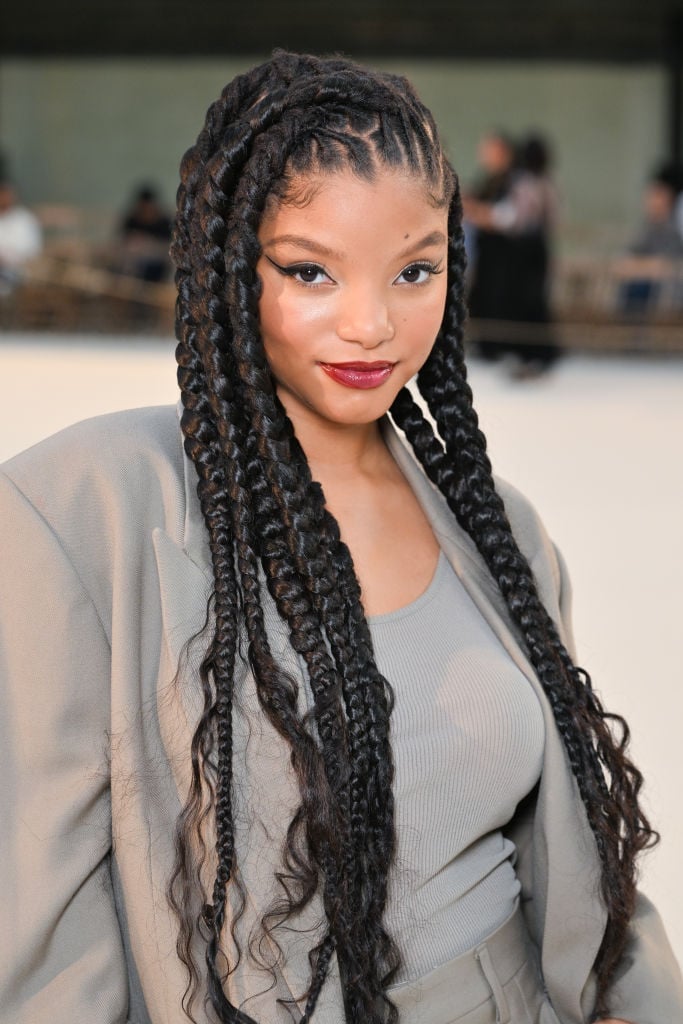
What happens to a heart shape once you sleep on it? The cornrows at the front hold their line for a week or two before the pattern starts to blur at the edges. The loose braids behind them are a different story.
Ask your stylist for: heart shaped cornrows with loose mid-back braids. Thick, coily hair gives the braided strands the volume the shape needs, and round and heart faces get a flattering break from the curved cornrow line. The front detail is the fragile part. A light hold gel pressed along the cornrows keeps the heart crisp, and a mist on the loose braids stops them from drying out and fuzzing. Expect a touch-up on the front edge around week three. The thick strands themselves unravel slowly, but any braid that starts to slip should be redone before it takes the neighboring sections with it.
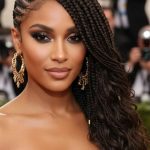
19. Elegant Mid-Back Wavy Box Braids
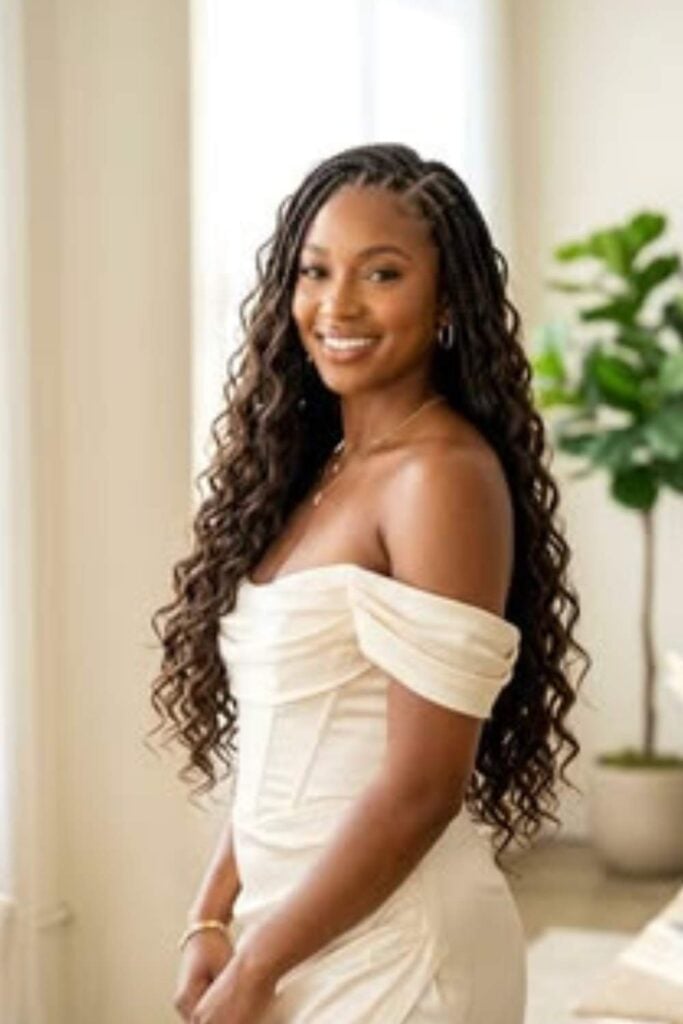
A side part does most of the work here, sending the dark brown braids across the forehead and letting the wavy texture fall in a soft diagonal to mid-back. It is the calmest version of a box braid, and it is not for everyone.
Ask your stylist for: mid-back wavy box braids with side part. Thick hair gives the waves enough body to hold their shape, and oval and long faces take the asymmetry without it pulling the features sideways. Fine or low-density hair can end up with braids that look sparse once the wave is set. A silk scarf at night protects the pattern, and a trim every six to eight weeks keeps the ends from looking rough. Round faces should think twice: the side sweep adds width right where they do not need it.
20. Coily Ponytail With Single Braid Detail
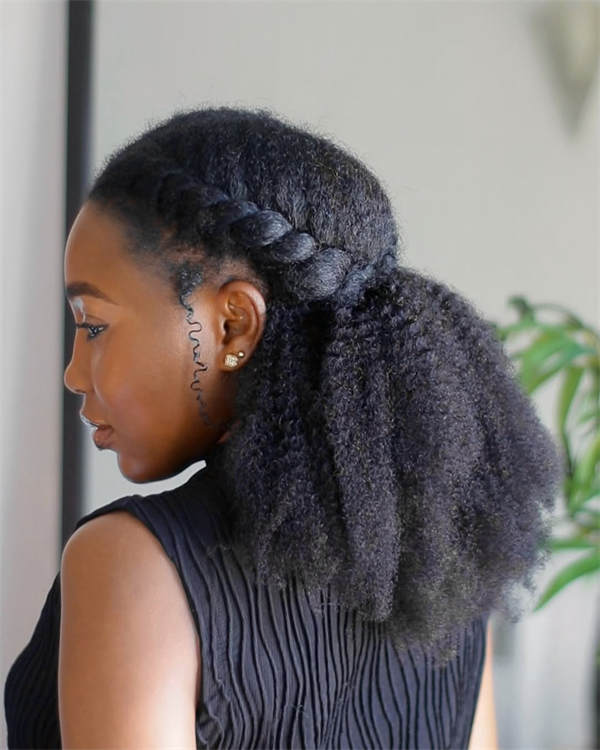
One braid sweeping across the hairline, gathered into a textured ponytail at mid-back: that single detail is what separates this from a plain pulled-back style, and it is the part you can rebuild at home.
Ask your stylist for: coily hair ponytail with a sweeping front braid. Thick, coily hair holds the height at the crown, and round and oval faces get a clean frame from the middle part. To get close on your own:
- Mist the hair with water and a light leave-in so the coils clump instead of frizzing.
- Section a strip along the front hairline and braid it flat toward one ear, then pin the tail under the rest.
- Gather everything at mid-back, smooth the ponytail with a light-hold pomade, and fluff the coils with your fingers.
It works for a casual week and holds up for a dinner or a wedding guest slot. Refresh the coils with water the next morning.
Final Thoughts
For a polished, everyday look, neat box braids or cornrows deliver reliable structure. When you want more flair, styles with beads, accessories, or shaped details like the heart cornrow add personality without sacrificing hold. Natural braids offer enduring style and protection.
- Maintain scalp moisture with a light oil or serum, applying directly to the scalp at least twice a week.
- Protect braids from friction by wearing a silk or satin scarf or bonnet at night.
- Avoid excessive manipulation to prevent frizz and maintain the braid’s integrity.
- Deep condition natural hair before braiding and use a leave-in conditioner for added moisture.
- Schedule professional re-braiding every 4-8 weeks, depending on hair growth and desired style longevity.
More Braids & Protective Styles ideas
- 18 Trendy Braiding Hair 2027
- 20 Simple Natural Hair Hairstyles 2027 with Braided Accents
- 15 Trendy Braided Styles 2027
- 19 Classy Two Strand Twists Hairstyles to Rock in 2027
- 20 Classy Passion Twists Hairstyles 2027 for a Polished Look
- 20 Classy Braids for Black Women 2027
- 16 Classy Jumbo Braids 2027
- 16 Aesthetic Purple Braids 2027 for a Bold Look
- 17 Classy Viking Braids 2027
- 19 Classy Rainy Days Hairstyles 2027 with Braids
- 17 Trendy Fulani Braids with Curls 2027 for Dramatic Length
- 17 Classy Peekaboo Braids 2027 with Two-Tone Blonde