18 Trendy Braiding Hair 2027: from Cornrows to Box Braids
Trendy Braiding Hair 2027 offers 18 styles like cornrows to wavy box braids and voluminous black box braids. See neat mid-back box braids too.

Braids are a protective style that keeps hair contained and looking deliberate, but the 2027 versions move past basic three-strand into textured, layered shapes. The shift is toward softer finishes: glossy natural texture and lived-in color that make the patterns pop without looking stiff.
These 18 Trendy Braiding Hair ideas cover the range from low-upkeep mid-back box braids to intricate micro patterns that need a skilled hand. Whether your hair is fine and falls flat or you are managing a visible grow-out line, there is a braid here that holds its shape and works with your texture.
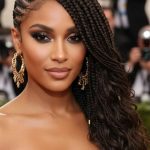
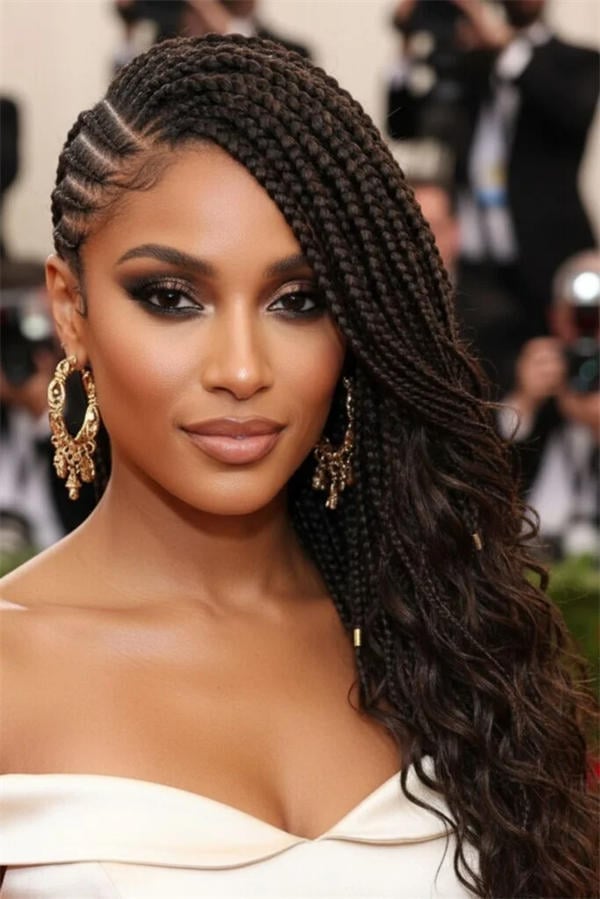
1. Cornrows Transitioning to Wavy Box Braids
The design relies on a careful shift: tight cornrows at the side give way to long, dark brown box braids that end in loose, wavy texture. A side parting keeps the weight off-center, and the mid-back length adds drama without being heavy. Ask your stylist for: cornrows on the side transitioning to long wavy box braids. The wavy ends need attention: a light oil patted on every few days keeps the curl definition visible and the shine even. Trim any frayed tips every six to eight weeks, and the style holds its shape for about a month before the roots need a touch-up.
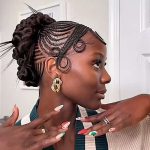
2. Precise Cornrows Into A Braided Bun With Side Braid
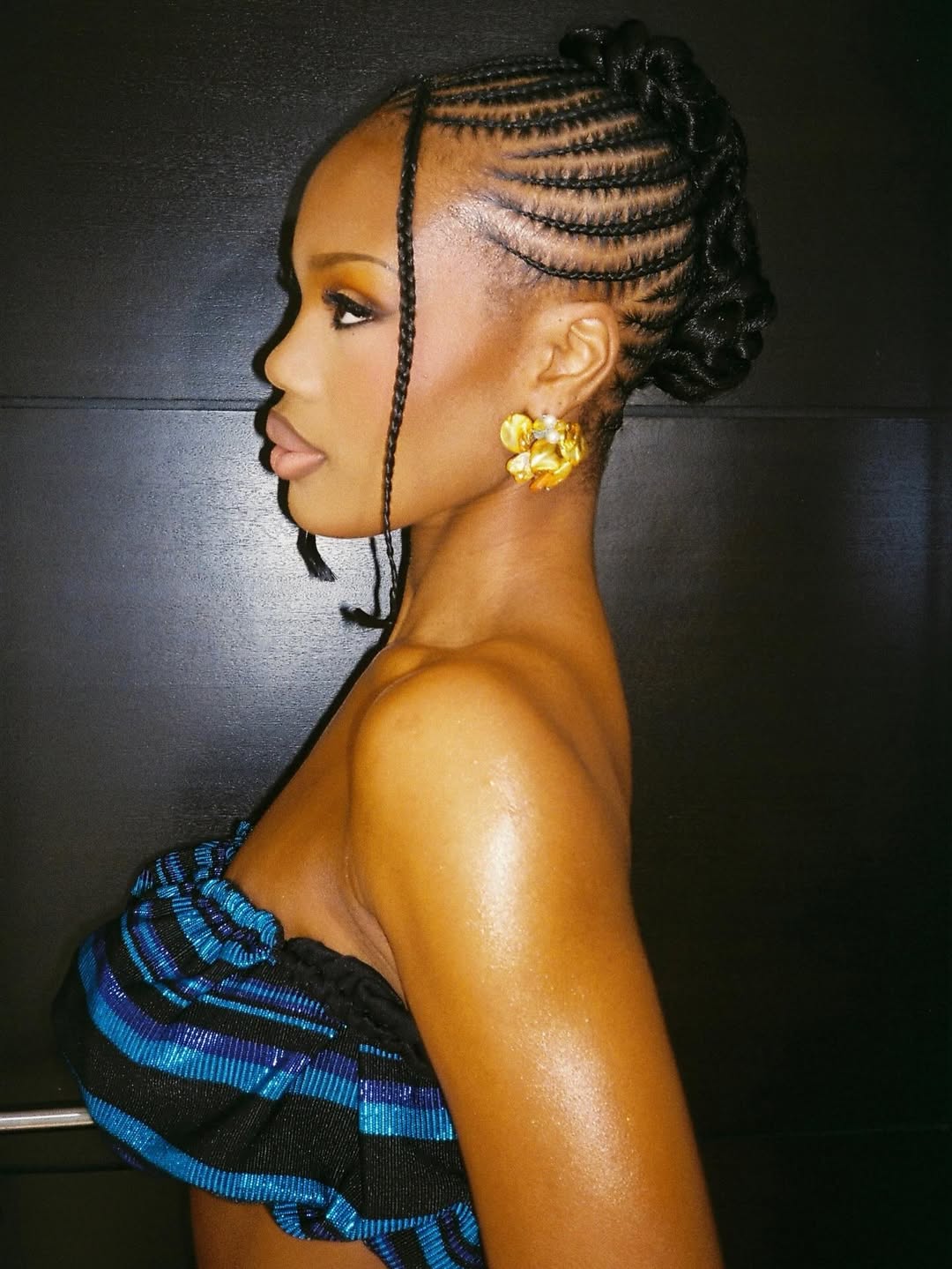
Geometric cornrow lines can look crisp when they are mapped from the front hairline straight into a braided bun at the back, with one slim braid pulled forward as a side-swept bang. The black, thick, straight texture makes the pattern pop. Ask your stylist for: cornrows into a bun with one side braid acting as a bang. This is a salon-only style: the parting precision and the bun’s tension take about two hours to install. A DIY attempt on the same hair density usually shifts within a day.
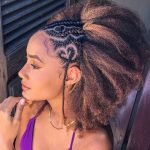
3. Voluminous Black Box Braids With Curly Ends
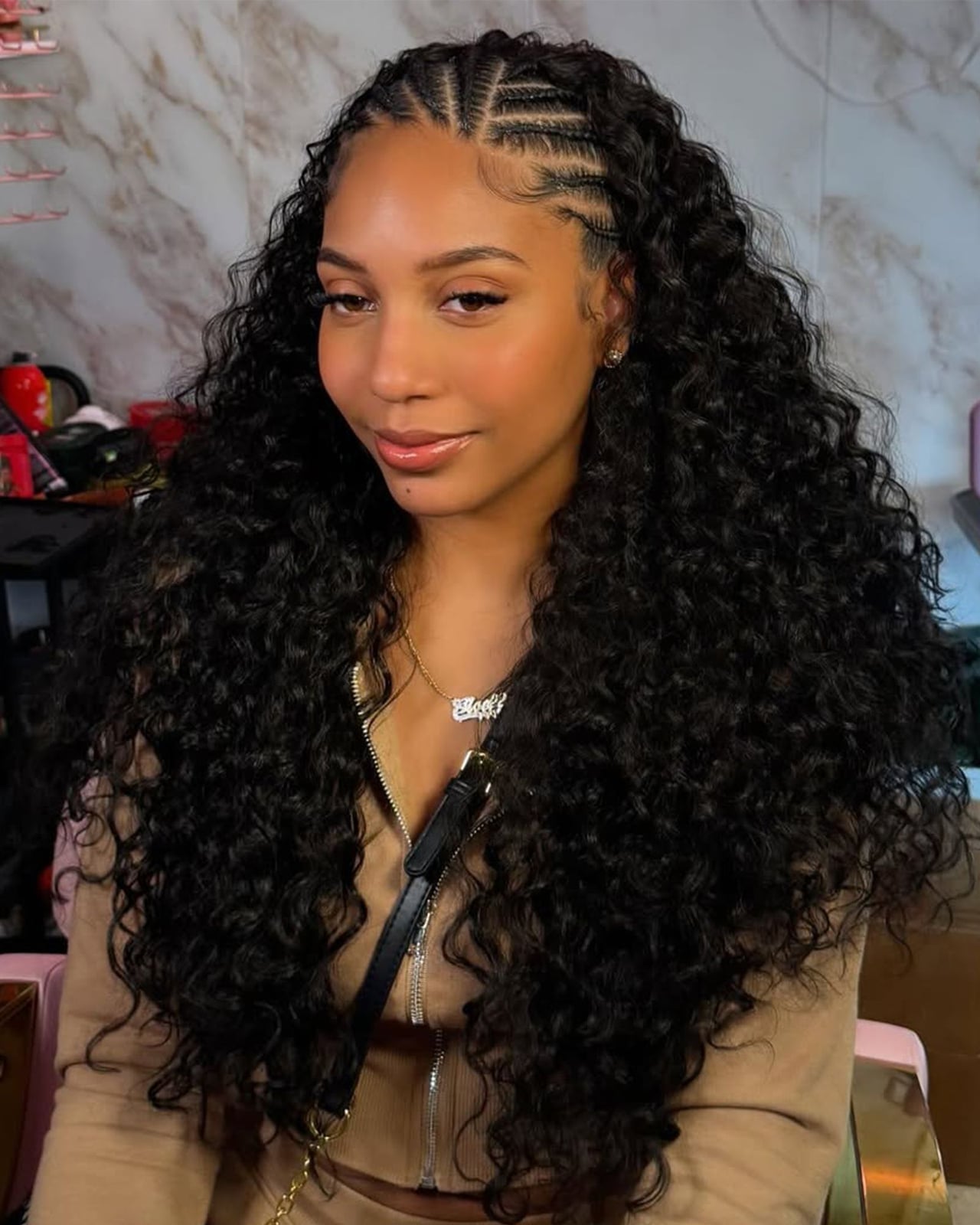
The sheer weight of the braids makes this a style for thick, curly hair that already has some length: shoulder-length or longer. Ask your stylist for: cornrows to long box braids with voluminous curly ends. The curly ends are the reason to choose this over a standard straight braid. For a casual day out, the volume looks deliberate; for a formal setting, tuck the ends into a low ponytail. A curl-defining cream on the ends keeps the shape visible between washes. Trim the ends every six weeks to avoid the curls looking ragged.
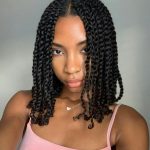
4. Cornrows Into A Black Curly Bob
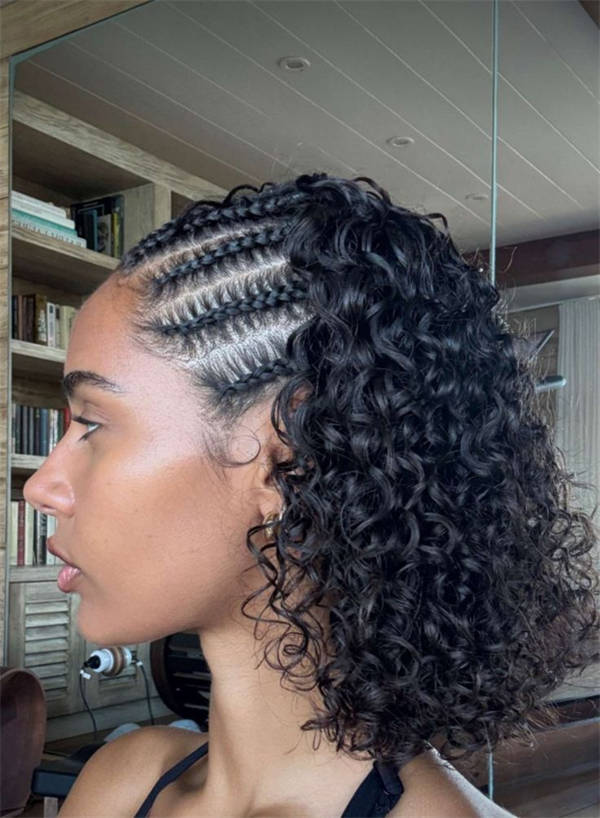
Contrast this with the long braided styles above: the cornrows here stop at the top and let the rest fall into loose, dark curls cut to a chin-length bob. The side view shows the precision of the cornrows against the volume of the curls. It is a shorter commitment in both length and install time, but the drawback is the bob line: curly ends at chin length can bush outward faster than a longer style, so a trim every six weeks keeps the silhouette. Ask your stylist for: cornrows transitioning into a curly bob.
5. Neatly Done Mid-Back Box Braids
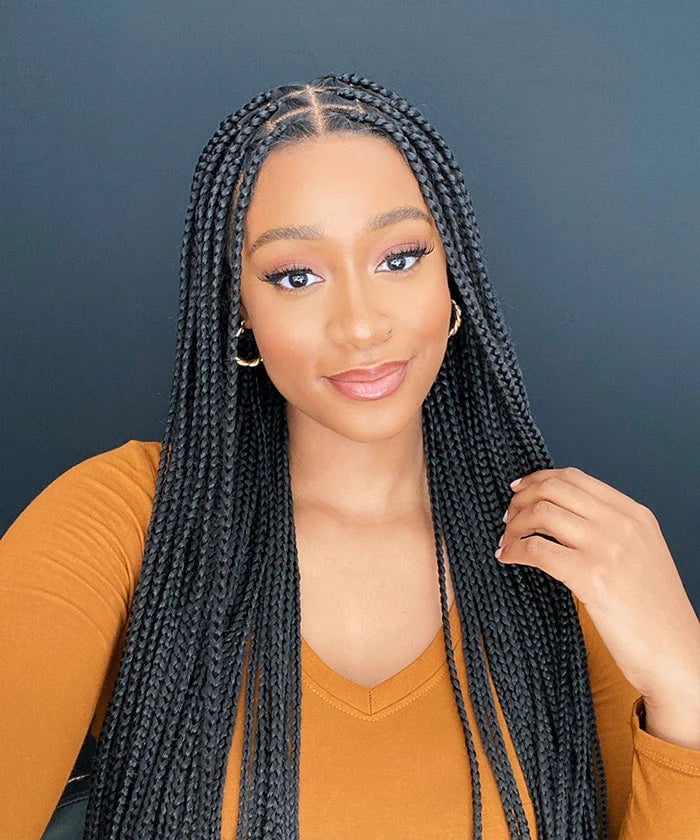
A uniform set of box braids that fall to mid-back keeps the look clean through one rule: the partings stay the same width from root to tip. The clear middle part and the even tension mean the braids lie flat against the scalp and do not puff up at the crown. Ask your stylist for: neat, uniform box braids to mid-back. Maintenance is straightforward: a light serum on the braids controls the flyaways that appear around week three, and a trim every eight weeks keeps the ends from fraying. The style holds for about four weeks before the new growth becomes visible at the part.
6. Mid-Back Box Braids With Beads
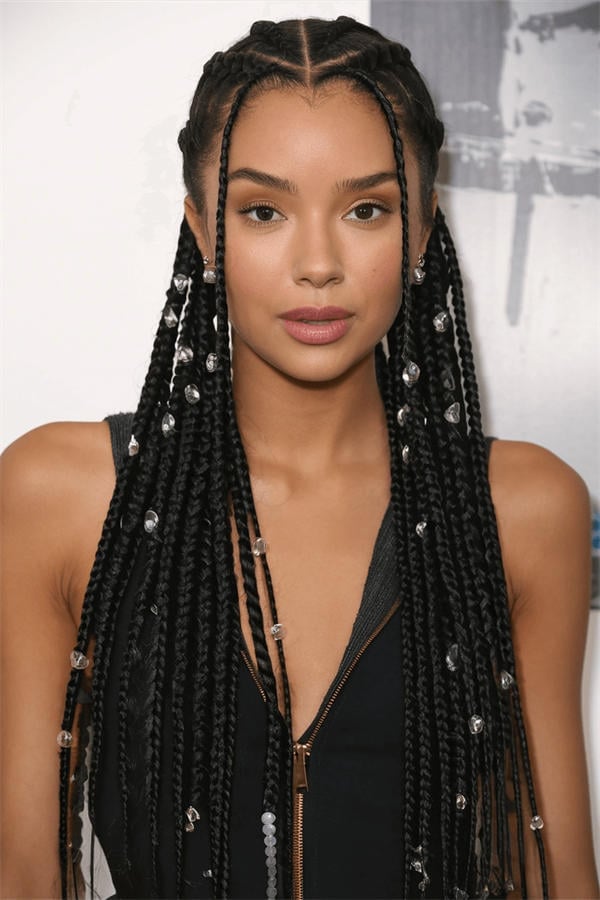
The clear and white beads spaced along each braid turn a classic protective style into something that feels more like an accessory. This works best on thick, coily hair starting at shoulder length, since the beads add weight and need enough hair to anchor them. Ask your stylist for: mid-back box braids with clear and white beads. A salon installation takes several hours, and you will want to check each bead is secure before you leave. Festivals and summer events are the natural occasion for this look, but it holds just as well for a birthday dinner or a night out.
7. Side-Swept Lemonade Braids
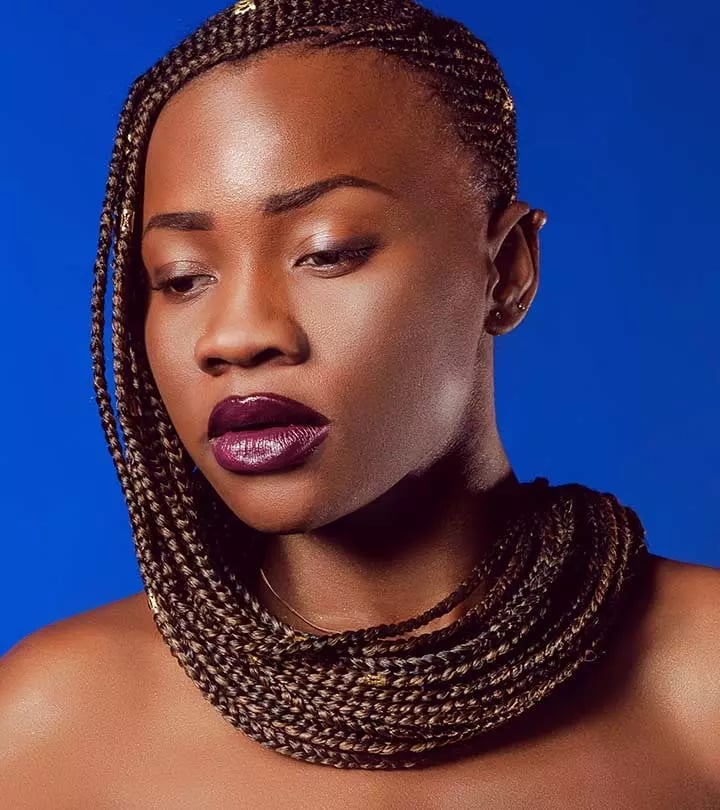
A deep side parting pushes all the braids to one side, creating a dense, swept-over shape that reads as deliberate rather than thrown together. Thick, coily hair at least shoulder length is the starting point here. Ask your stylist for: lemonade braids swept to one side. The honest drawback is that the asymmetry can make the braids feel heavier on one side, and you will need to re-braid the hairline more often to keep the part clean. A silk pillowcase helps reduce friction, but the side-swept arrangement does shift during sleep.
8. Fine Long Box Braids
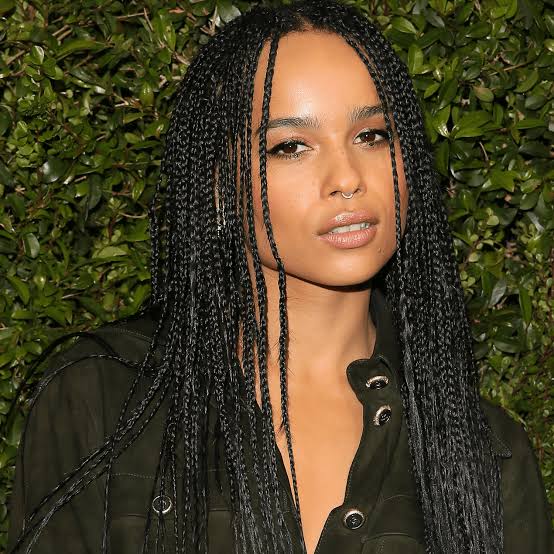
Can fine hair pull off long box braids? Yes, but only if the stylist keeps each braid narrow and consistent. The result here is a set of fine, mid-back-length braids parted down the middle and worn loose, so they fall forward naturally. Ask your stylist for: fine, long box braids. This approach works for anyone with fine or less dense hair who still wants length. A lightweight braid balm keeps the individual braids from looking dry or fuzzy. Trim any stray ends weekly to maintain a clean line, and expect to visit your stylist for a touch-up every four to six weeks as new growth appears.
9. Box Braids With Light and Dark Brown Wavy Ends
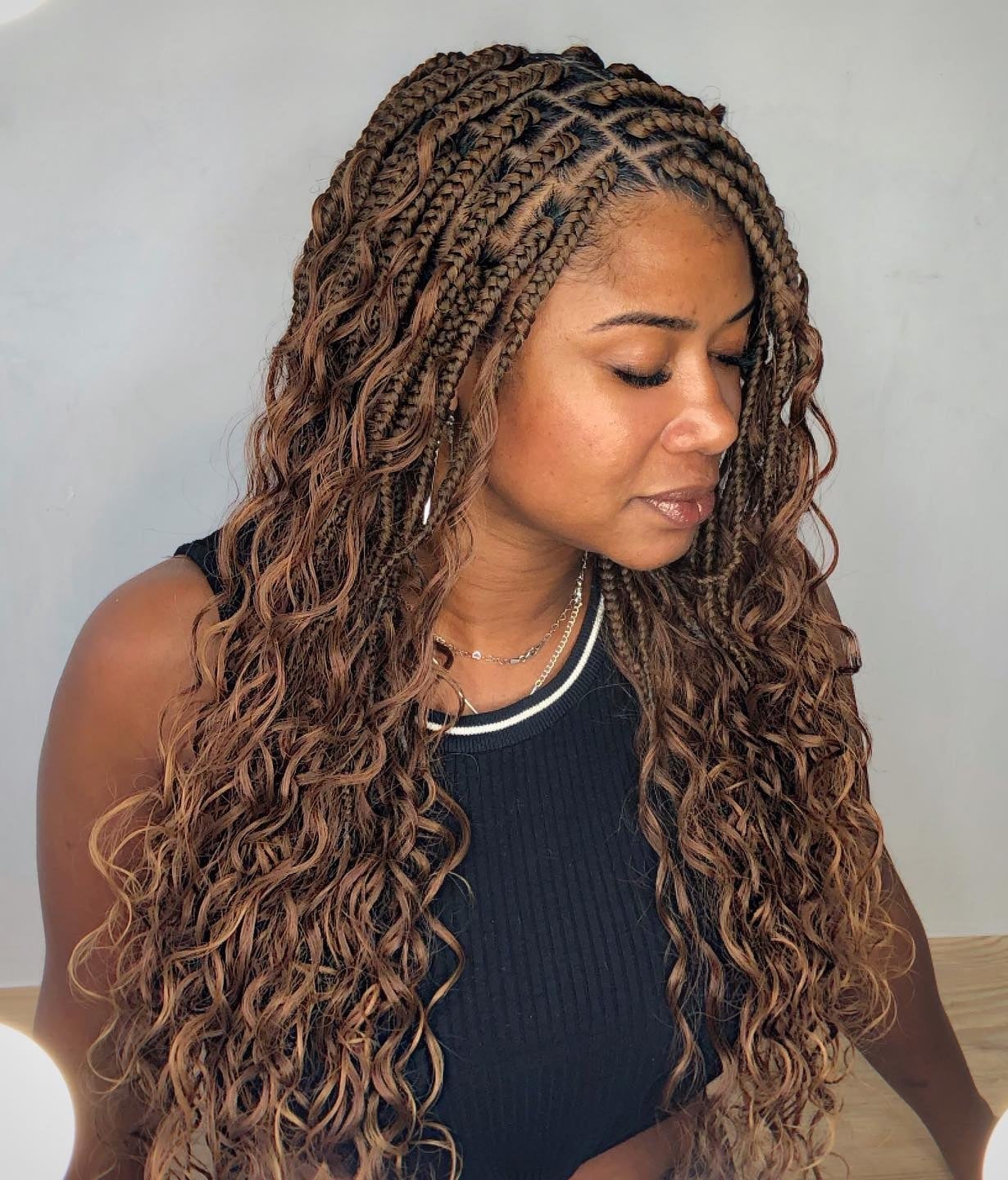
The trick here is the color work: alternating light and dark brown box braids that stay straight through most of the length, then loosen into soft waves at the ends. The middle parting keeps the two-tone effect balanced. Ask your stylist for: light and dark brown box braids with loose wavy ends. This is a salon-only technique, since the color placement and the wave set both require a steady hand. At home, you dip the ends in hot water to set the wave, then seal them with a lightweight leave-in conditioner. The result is a multidimensional look that moves more than a straight braid does.
10. Blonde Box Braids With Wavy Texture
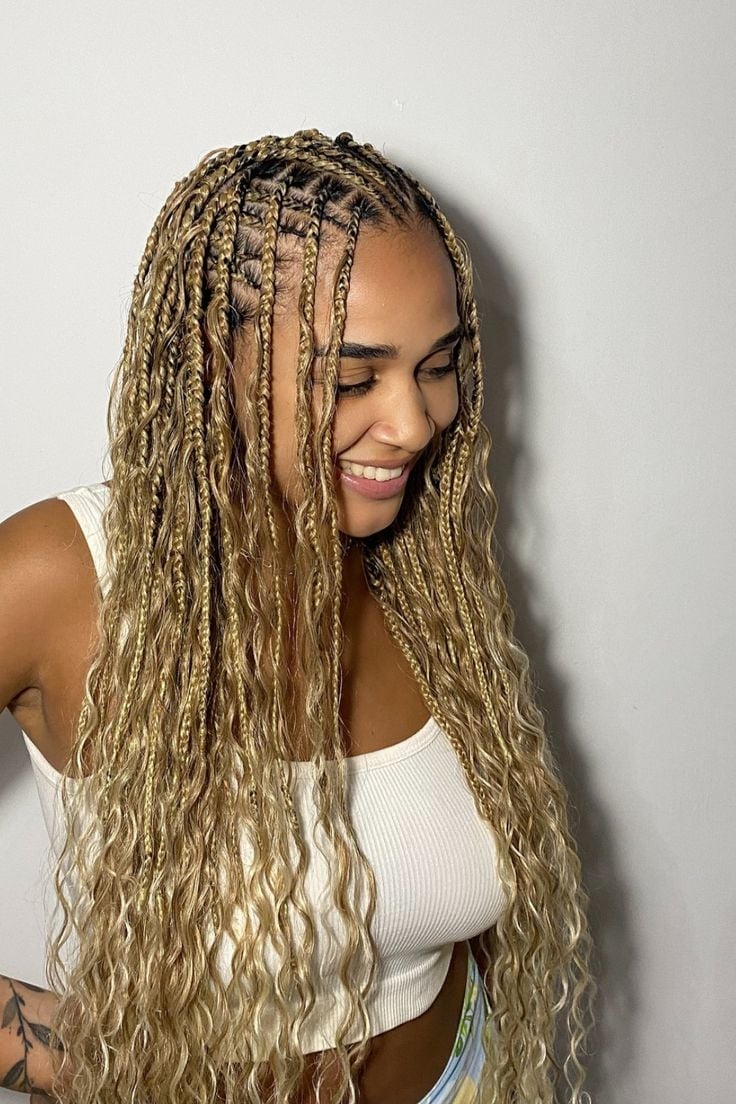
Blonde box braids with lighter highlights and a loose wavy body read differently than their straight counterparts: the wave gives the length a softer, more fluid line. This style sits at mid-back and works on medium to thick hair starting at shoulder length. Ask your stylist for: blonde box braids with loose wavy texture. The one real drawback is upkeep. Blonde braids show new growth faster than dark ones, and the tone can shift toward brassiness if you skip a purple shampoo. Re-curling the ends every few weeks helps the wave stay consistent, but the color demands more attention than a darker set of braids.
11. Long Dense Dark Brown Box Braids
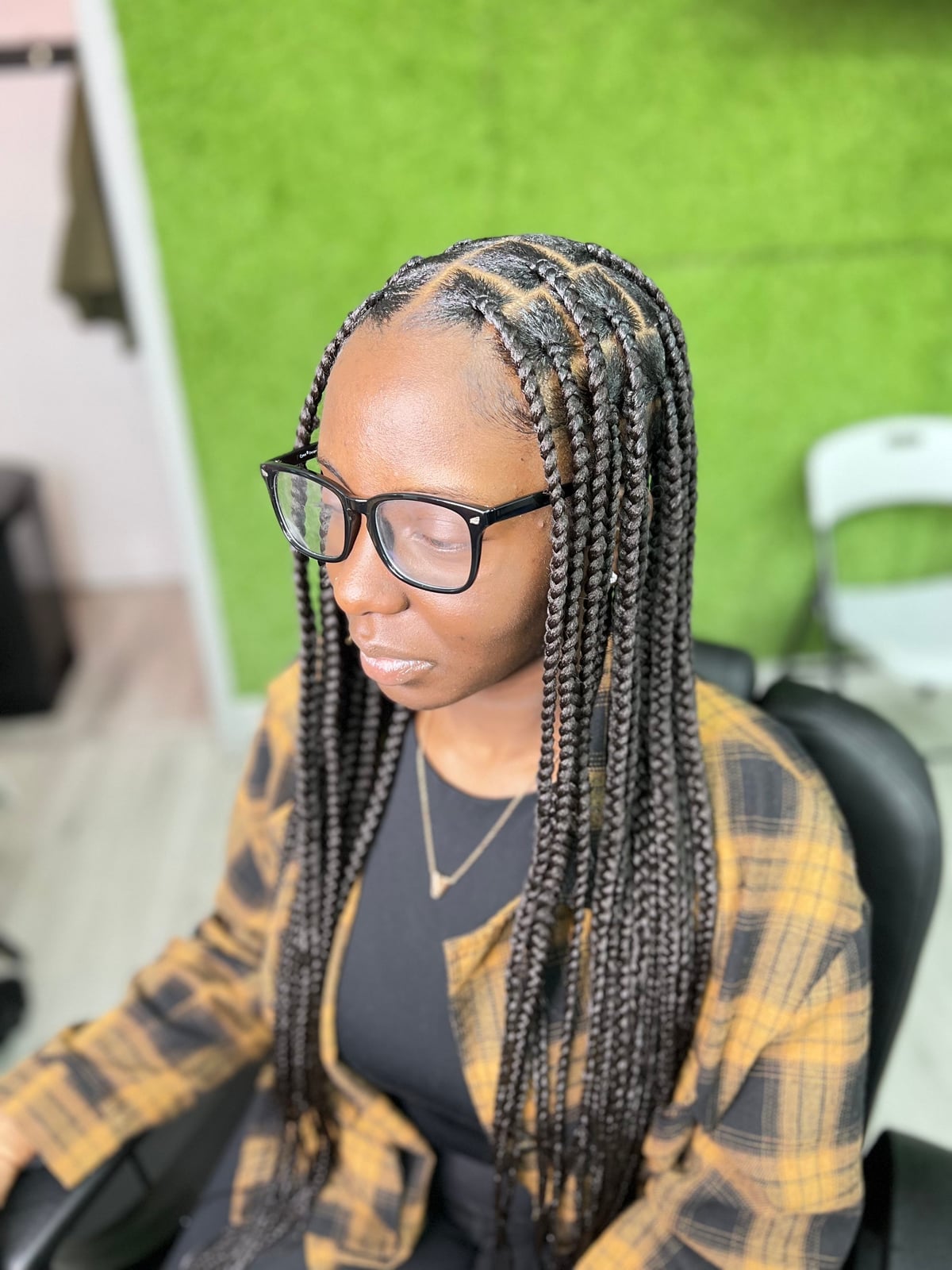
Can a braid actually have too much density? For this one, the answer is no. Long, dark brown box braids extend well past the shoulders, creating a full curtain of hair with a clean middle parting. The braids are straight and thick, so the overall effect is substantial. This suits anyone with naturally thick hair who wants to add significant length. Ask your stylist for: long, dense dark brown box braids. The weight is noticeable, so expect a heavier feel than standard box braids. A trim every four weeks keeps the ends neat, and a lightweight oil on the scalp prevents the tight parts from feeling dry.
The density means the style holds its shape for weeks without much fuss. Sleeping with a satin scarf reduces friction, which is the main risk here. The braids stay put through workouts and humid days, but the sheer volume can make ponytails feel bulky. This look needs a few hours to install, but the wear time between appointments is long. The middle parting stays crisp, and the dark brown color shows no visible growth for about six weeks. This is a set-it-and-forget-it style for those who like their hair to make an entrance.
12. High-Density Brown Box Braids
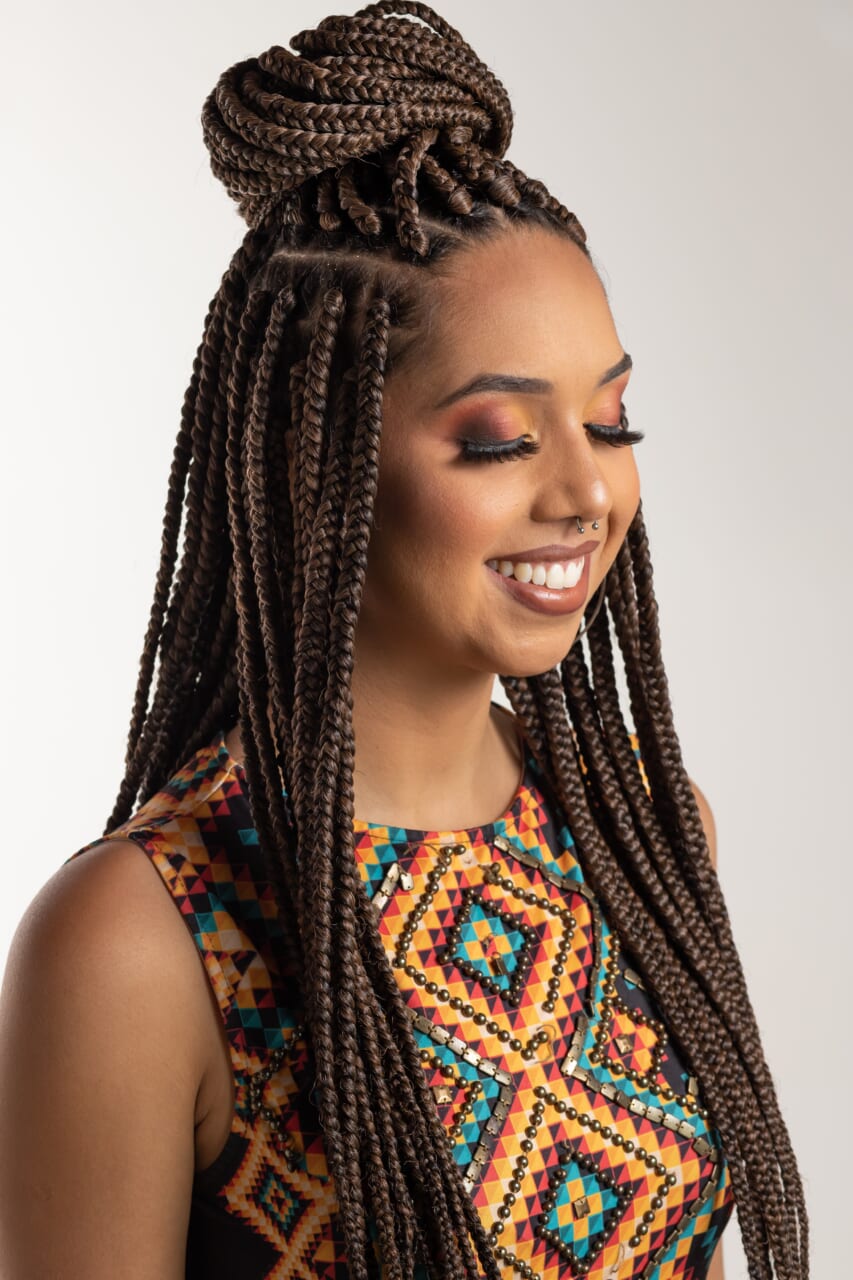
The precision here is the number of braids. Densely packed brown box braids cover the scalp with barely any space between them, creating a solid, uniform surface from root to tip. The hair reaches past the shoulders, and the middle parting divides the volume evenly. A full install takes about four hours, and the sheer number of braids means the head feels heavier than it looks. Ask your stylist for: high-density brown box braids. The weight can cause tension at the hairline, so communicate any discomfort during installation.
If you are considering a DIY approach, think again. The density requires even sectioning that is hard to achieve on yourself. The benefit of the salon session is that the braids last eight to ten weeks with careful handling. The brown color means no fading concerns, and the high-density look holds its shape through sleep and activity. The one real drawback is the weight. It is not uncomfortable once you get used to it, but the first few days are an adjustment. The payoff is a style that looks freshly done for two months.
13. Wavy Brown Braid With Blonde Highlights and Accessory
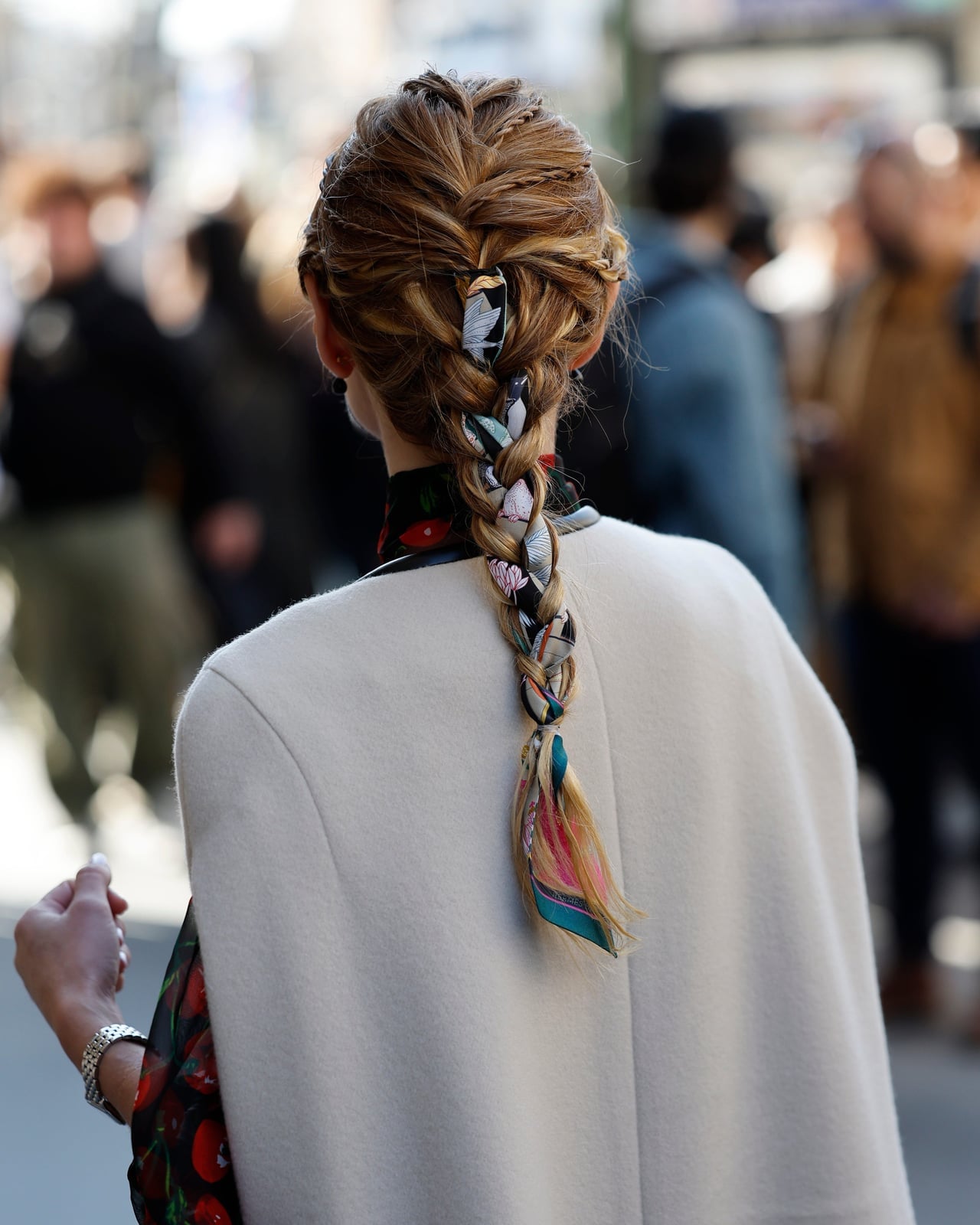
A complex braid does not need to look severe. Here, thick wavy brown hair with blonde highlights is woven into a single braid that reaches mid-back, and the texture keeps the style from appearing too rigid. Decorative fabric is threaded through the sections, and a gold accessory secures the end. The middle parting keeps the crown neat while the braid carries the visual interest. This is a look for special events or parties, not everyday wear. The accessory adds a focal point, but it can snag on clothing if placed too high. Ask your stylist for: complex braid with fabric and a gold accessory. The blond highlights add dimension that a single shade cannot. The one real drawback is upkeep: the fabric and accessory need careful removal before washing, and re-braiding every three to four weeks is necessary to keep the structure clean. The wavy texture helps the braid hold its volume for a full day, but expect some softness by evening.
14. Classic Three-Strand Braid With Pearls
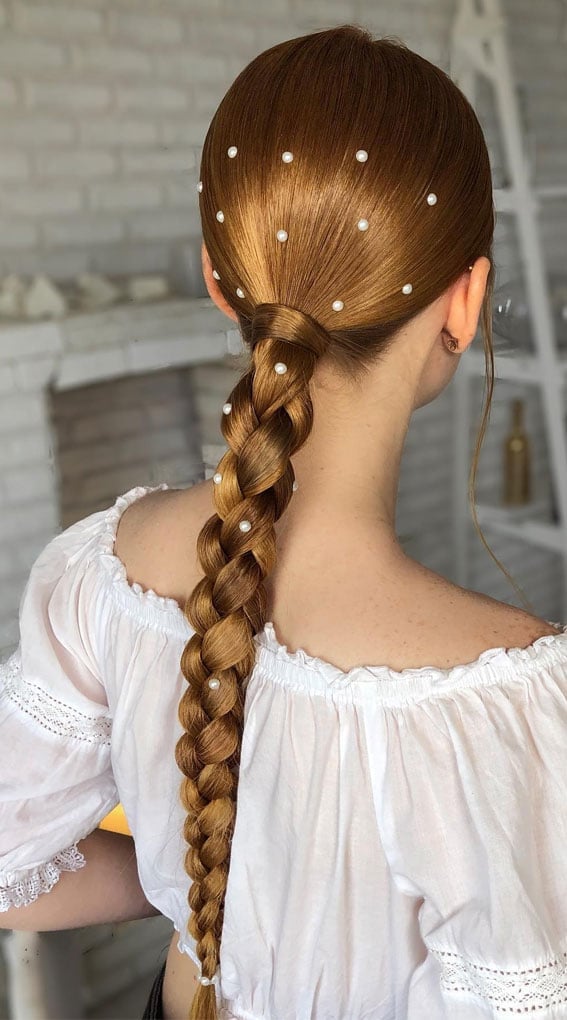
A basic three-strand braid can feel tired, but the pearls change the equation. The braid is medium brown with subtle warm undertones, falls to mid-back, and is straight and thick enough to hold the pearls in place without slipping. The technique is straightforward: each pearl is threaded onto a small elastic or sewn into the braid as it is formed. The spacing matters. Too many pearls and the braid looks cluttered; too few and they look accidental. Ask your stylist for: classic three-strand braid with pearls. This is a salon-only style because the pearl placement requires two hands and a steady eye. A DIY version using clip-in pearls is possible, but the result will not sit as evenly. The braid itself holds for four to six weeks if you sleep with a silk wrap. The straight texture keeps the braid smooth, and the pearls stay visible without tangling. The one thing to avoid is heavy conditioner on the pearls, which can cloud them over time.
15. Artistic Teal and Blue Micro Braids
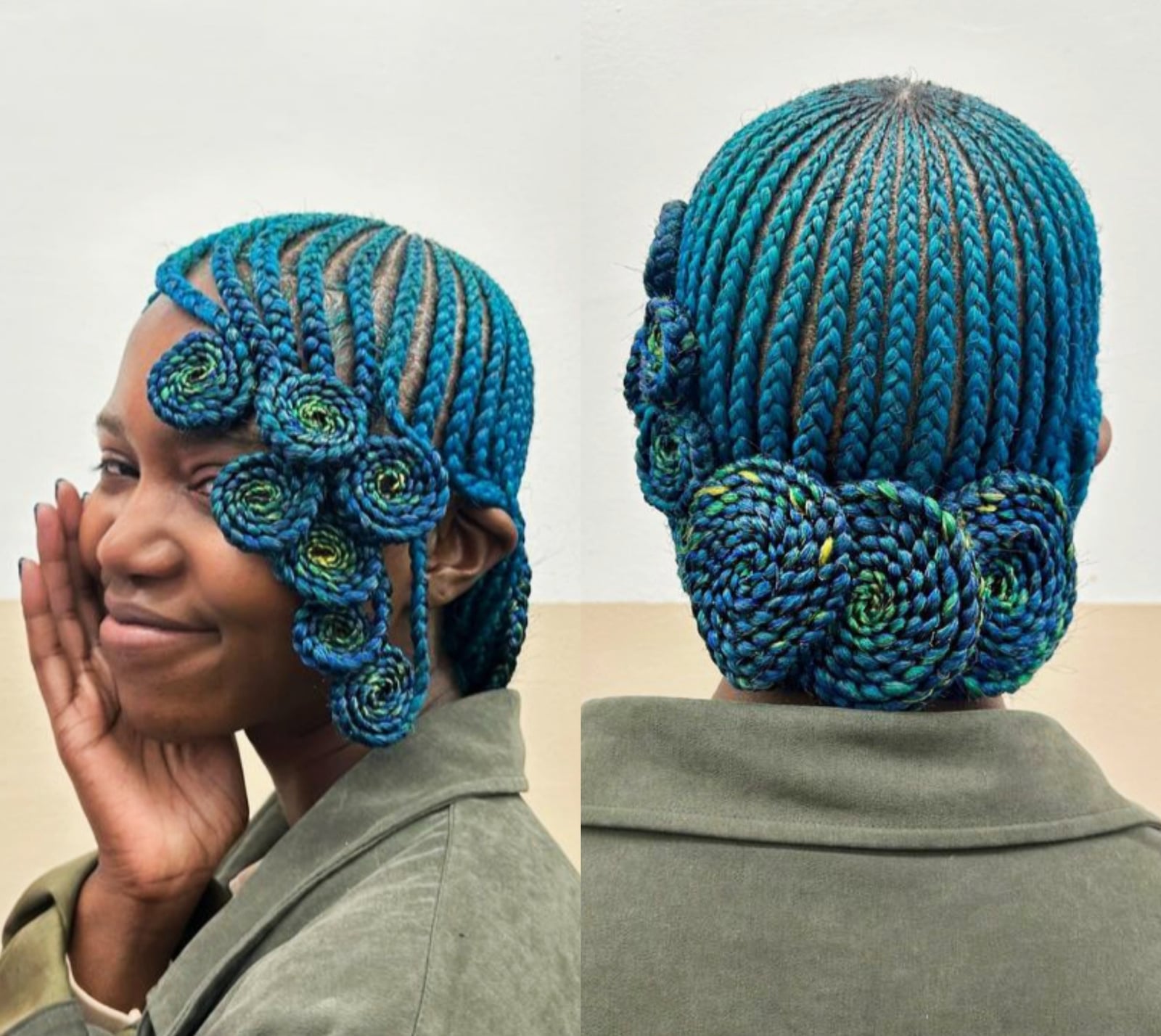
How do you ask for a hairstyle that looks like sculpture? Start with the colors. Teal and blue micro braids with green accents are shaped into rosettes and cascading elements that sit at shoulder length. The side parting gives the structure asymmetry, and the braids are small enough to bend into tight curves without bulk. This is not a subtle look. It is for fashion shows, artistic events, or anyone who treats their hair as a canvas. Ask your stylist for: sculptural micro braids in teal and blue with green accents. The one real drawback is that the intricate shapes will loosen within six to eight weeks, and re-braiding requires a stylist who specializes in this kind of work. The side-swept bangs soften the edge of the design, and the vibrant colors stay bright with a color-safe shampoo. The braids are lightweight because they are micro, so the artistic weight of the style does not come with scalp tension. It is a commitment, but it is also the kind of hair people remember.
16. Micro Braids With Loose Curls and Blonde Highlights
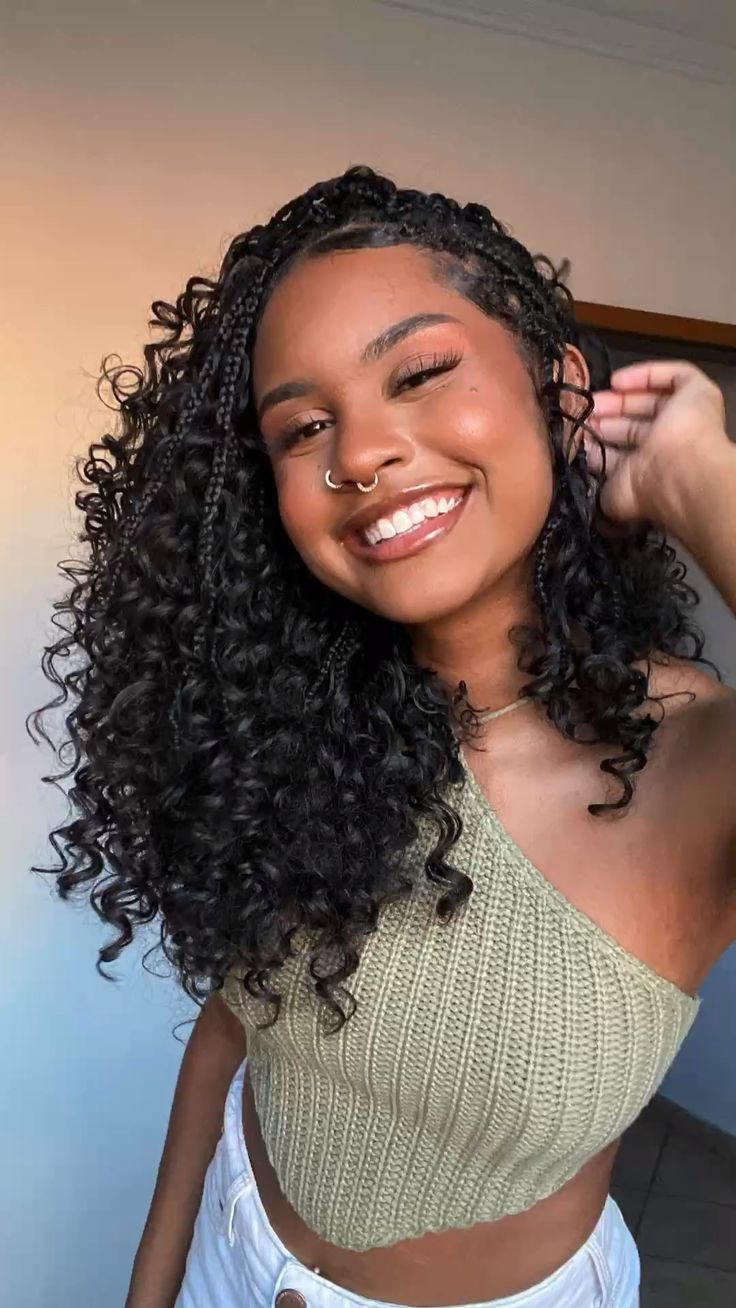
The contrast here does the work: tight micro braids concentrated along the top and sides meet loose, voluminous curls and wispy bangs for a shoulder-length style that is part sculpture, part movement. Subtle blonde highlights lift the black base without overpowering it. Ask your stylist for: micro braids with loose curls and blonde highlights, wispy bangs. The braid-and-curls combo requires a salon visit, and the loose sections need a curl cream plus a re-braid roughly every four to six weeks.
17. Micro Braids Twists Blonde Highlights Baby Hairs
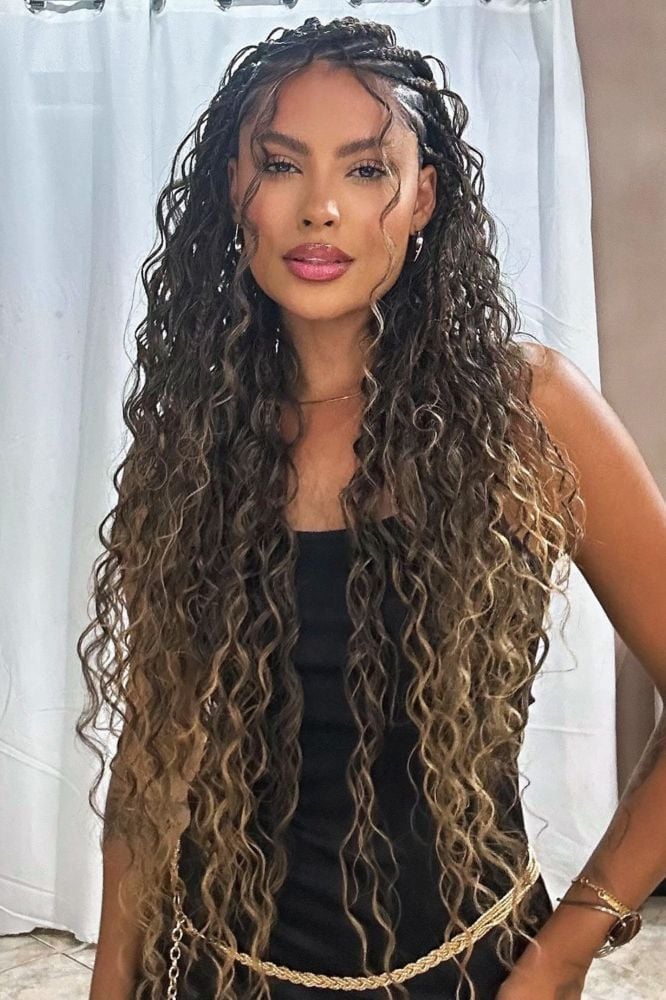
The design stacks three techniques: micro braids, twists and blonde highlights, all on a long, curly base with a side part. Loose curly tendrils frame the face, and the baby hairs along the hairline are deliberately styled, not left to do their own thing. Ask your stylist for: micro braids and twists with blonde highlights, loose curls and baby hairs. The honest drawback is time. That level of detail means a long salon session, and the baby hairs need a light gel and a brush every morning to keep the line clean.
This is a style that rewards patience. The texture is complex and the color dimension is real, but it asks for daily attention in a way simpler braids do not.
18. Neat Blonde French Braid Updo
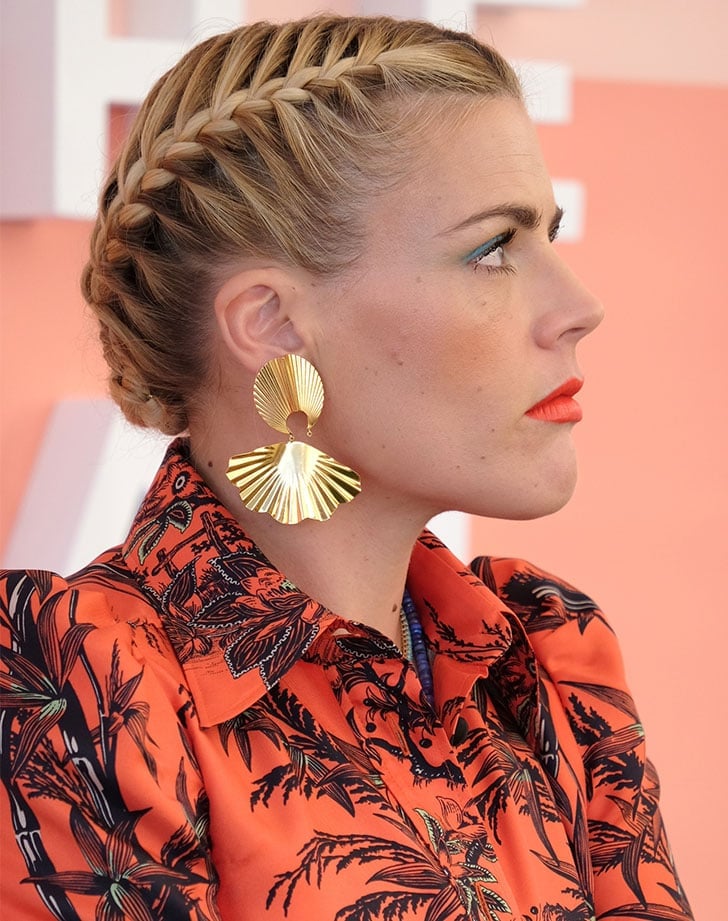
A single French braid starts at the middle part and wraps the head into a clean updo, with finely textured blonde hair at shoulder length holding every line in place. The polish is the point. Ask your stylist for: neat french braid updo. This is a salon skill, not a casual attempt: getting the tension even and the wrap smooth takes practice. Bobby pins keep the hold through a full evening, and the front section will need a re-braid about once a week to maintain the same precision.
Final Thoughts
Fine hair does well with classic box braids in a uniform size, while coarser textures can carry the weight of dense cornrows or micro braids. If you want a bolder statement, add beads or fabric. The maintenance commitment is the real deciding factor: intricate cornrows and micro braids need more frequent salon visits than a straightforward three-strand style.
- Refresh cornrow patterns weekly with a light spritz of braid spray.
- Deep condition braids every 2-3 weeks to maintain moisture.
- Avoid excessive heat styling to prolong the life of your braids.
- Trim loose ends or re-curl wavy tips every 4-6 weeks as needed.
Braids offer endless creative possibilities for style and protection.
More Braids & Protective Styles ideas
- 20 Classy Natural Hair Braids 2027 with Natural Texture
- 20 Simple Natural Hair Hairstyles 2027 with Braided Accents
- 15 Trendy Braided Styles 2027
- 19 Classy Two Strand Twists Hairstyles to Rock in 2027
- 20 Classy Passion Twists Hairstyles 2027 for a Polished Look
- 20 Classy Braids for Black Women 2027
- 16 Classy Jumbo Braids 2027
- 16 Aesthetic Purple Braids 2027 for a Bold Look
- 17 Classy Viking Braids 2027
- 19 Classy Rainy Days Hairstyles 2027 with Braids
- 17 Trendy Fulani Braids with Curls 2027 for Dramatic Length
- 17 Classy Peekaboo Braids 2027 with Two-Tone Blonde