Short saved references can make a seasonal shade look perfect and still feel wrong once it meets your own hands. The problem is often not the color itself, but the amount of attention it demands beside your skin, jewelry, clothes, and nail outline. A shade becomes useful when it gives the hand a clear mood without forcing every other choice to compete with it.
I start with the color’s relationship to the shape and the finish I can realistically maintain. Then I ask whether the surface needs extra decoration, whether the shade still looks balanced after growth, and whether it works with the clothes I actually reach for. That pause turns color selection into a practical decision instead of a chase for the loudest seasonal effect.
Speckled Mustard on a Long Almond
Long almond nails are covered in a bright mustard yellow with small dark speckles scattered across the surface. The color is warm and assertive, while the dots break up the solid field just enough to give it a handmade, autumn-market feeling without introducing another major motif. The pointed outline keeps the vivid shade looking elongated rather than blocky.
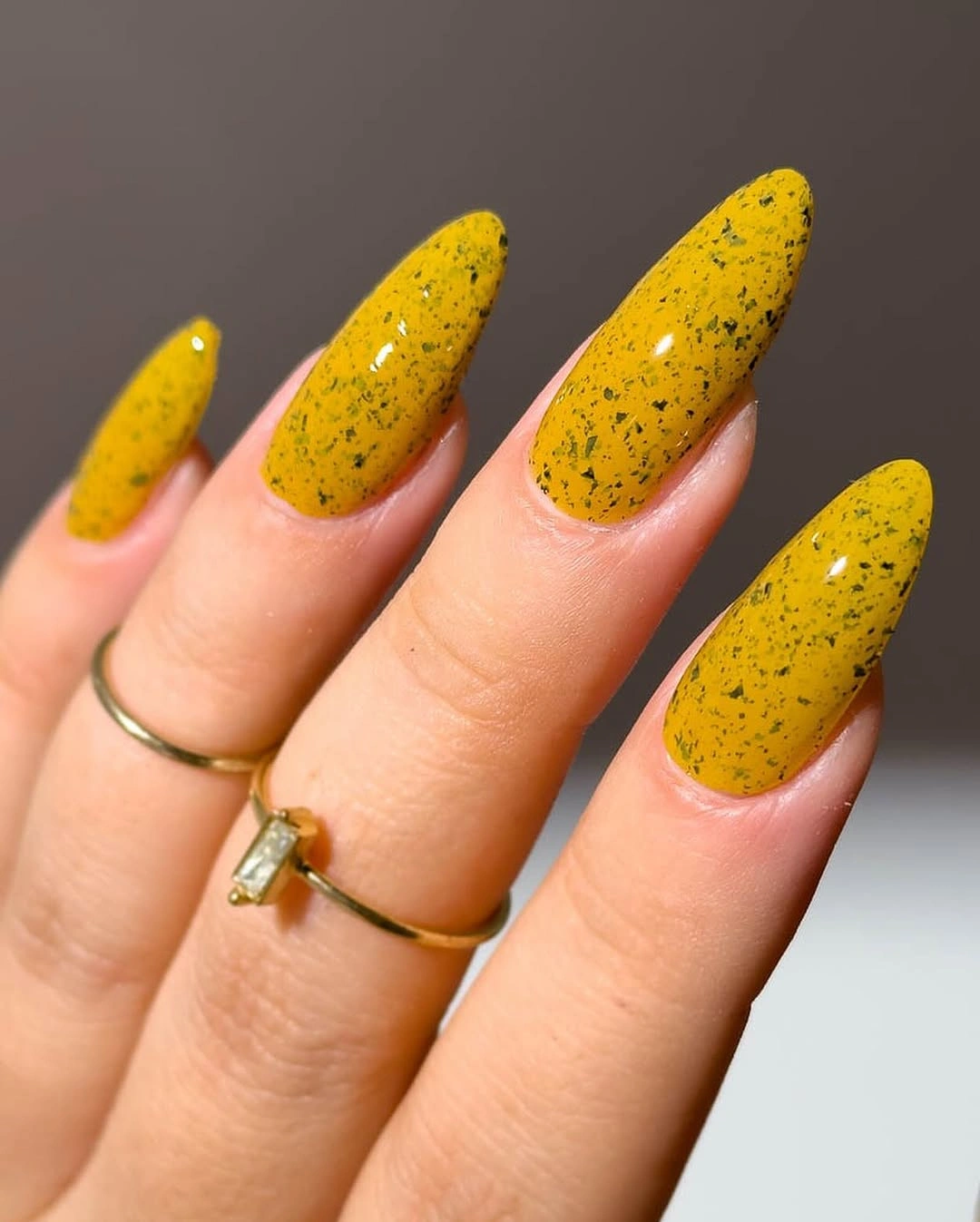
Mustard works best here when the shape stays clean and the speckles remain fine. On a medium or shorter almond, use fewer dots and keep the yellow broad so the color does not become visually broken; a deeper ochre would make the design feel more subdued. The ring is visible in the setting, but the manicure itself needs no extra ornament because the color already has enough personality.
This is a strong alternative to dark fall manicure colors for readers who want warmth with a brighter finish. It can lift a cream, denim, or brown outfit and still feel seasonal because the yellow leans earthy rather than neon. The limitation is that a bold yellow shows uneven edges quickly, so the simple surface needs careful shaping and tidy cuticle lines to stay intentional.
Burgundy, Blush, and a Glittered Accent
Long almond nails mix deep burgundy with blush-pink surfaces, a darker ridged-looking accent, and pale glitter near the tips. Burgundy provides depth, blush opens the palette, and the glitter adds a small reflective change rather than covering every nail. The pointed shape helps the dark red feel elegant while the lighter nails stop the set from becoming too heavy.
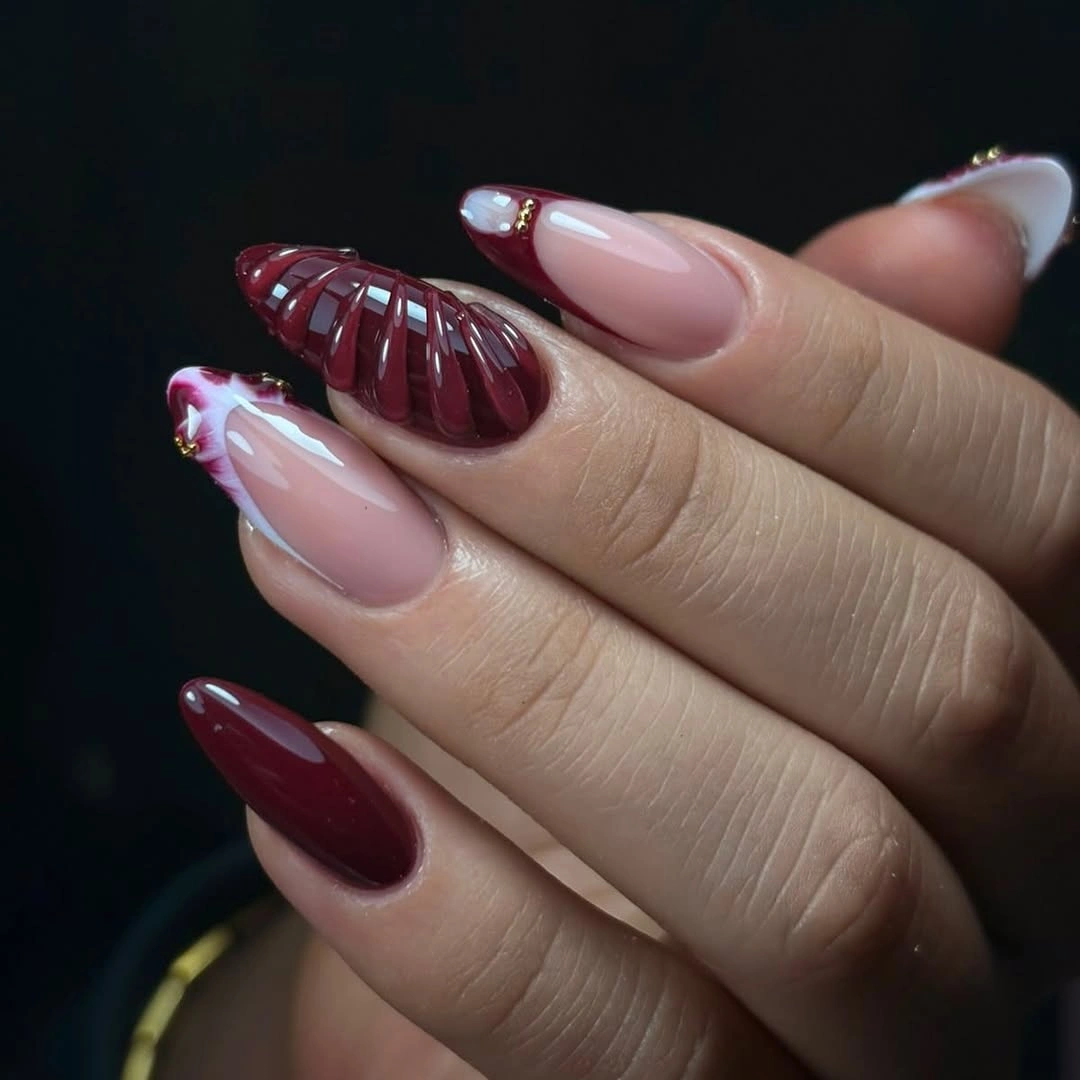
Choose burgundy as the anchor, then use blush on the nails that need visual relief. One glittered or textured-looking accent is enough for a medium length, especially if the burgundy is already glossy and saturated. A muted plum, rosewood, or wine tone can replace the deepest red, but keeping one pale surface nearby will preserve the contrast that makes the palette readable.
This is a practical answer to fall manicure colors for readers who want more than one shade without a fully mismatched set. It works with knitwear, denim, and gold jewelry because the palette is warm but not restricted to one exact tone. The realistic tradeoff is maintenance around the lighter and glittered nails, where small wear marks may be more visible than on the burgundy solids.
Alternating Dusty Rose and Soft Pink
Medium square nails alternate muted rose-red with pale pink, creating contrast through neighboring tones rather than through strong pattern. The two colors are close enough to look gentle, but the darker rose gives the hand a clear rhythm and keeps the pale nails from washing into the background. A floral sleeve surrounds the manicure, yet the alternating color blocks remain simple and easy to read.
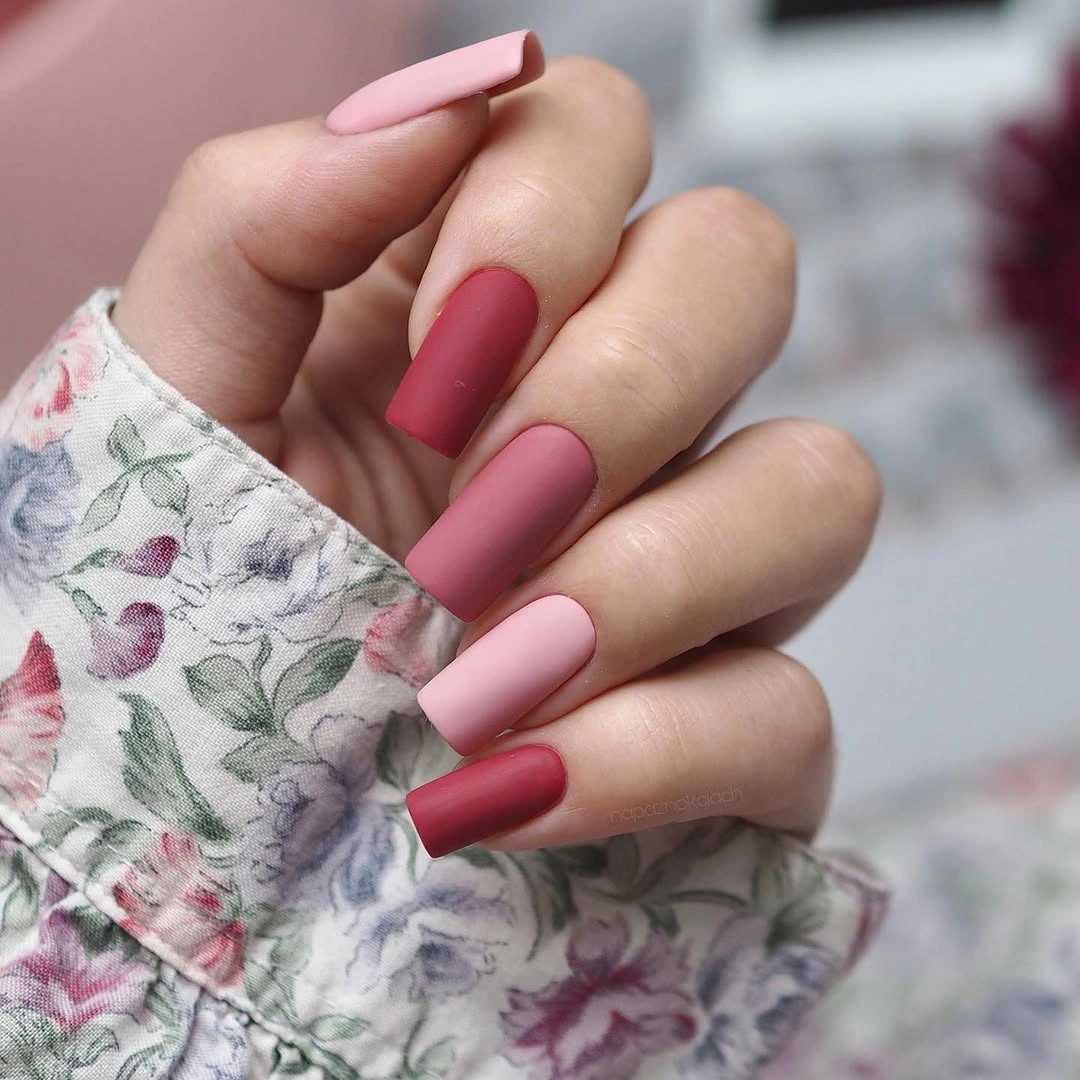
This pairing is useful when you want fall nail colors without leaving the pink family. Keep the darker rose on two or three nails and let the pale pink occupy the rest, or reverse the balance if your clothes already contain warm color. On a shorter square, the alternating pattern will stay clear as long as the edges are even and the two shades have enough value difference.
The design feels soft because it avoids extra shine, glitter, or line work, which makes it a calm choice for everyday wear. A mauve, berry, or muted raspberry can replace the rose while keeping the same low-detail structure. The limitation is subtle contrast: if the shades are too similar, the intended rhythm disappears, so one color should remain visibly deeper than the other.
Glossy Yellow-Green on Short Squares
Short square nails use one glossy yellow-green shade across the entire hand, allowing the color and compact outline to carry the design. The tone sits between fresh green and soft yellow, so it feels brighter than an olive but more grounded than a neon. A polish bottle appears in the setting, yet the visible manicure remains a clean field without labels or extra claims.
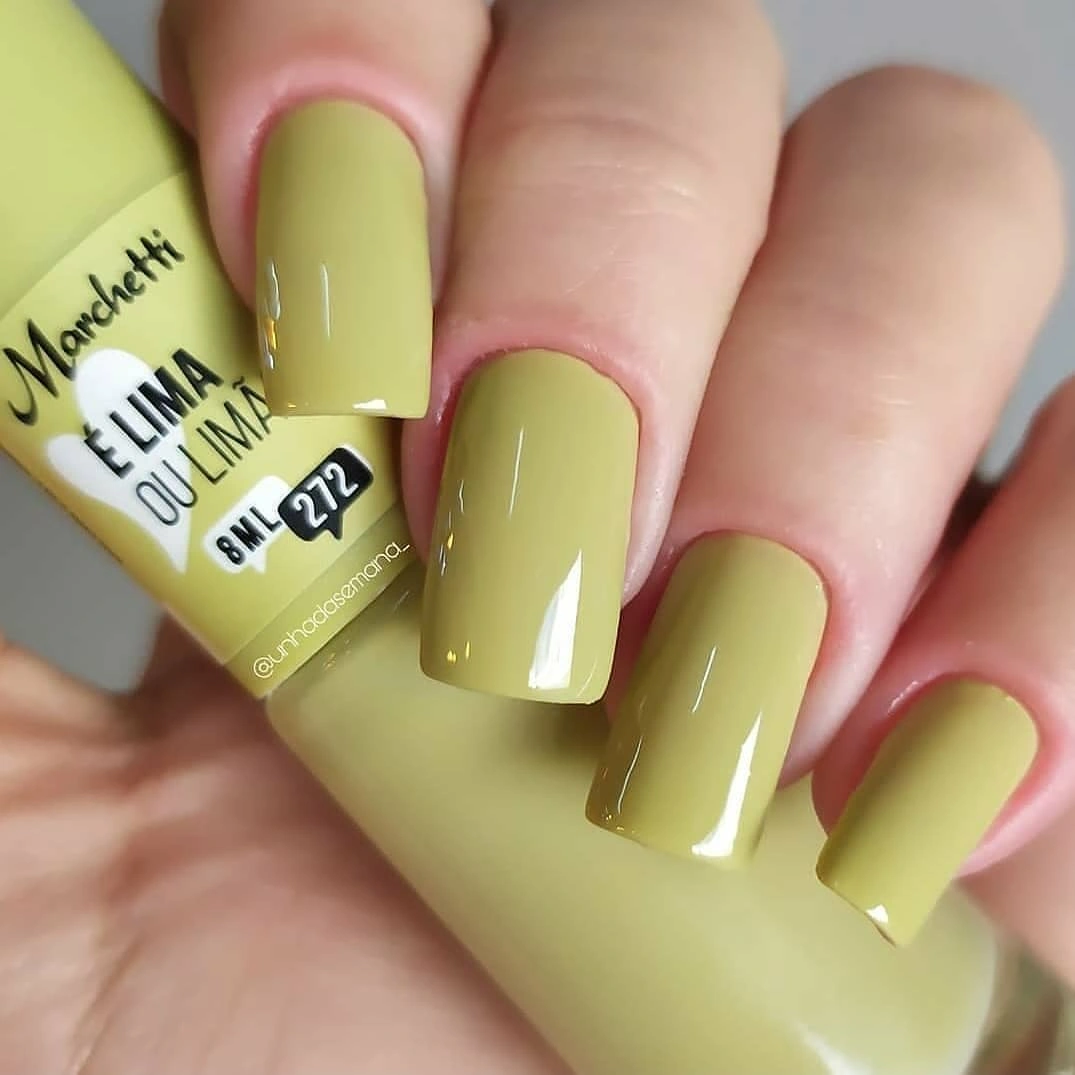
The short square shape is a good match for this color because the straight edge gives the unusual shade a neat frame. If you want a more autumnal version, move toward muted chartreuse, moss, or olive while keeping the finish glossy and the surface plain. Adding an accent nail would change the look quickly, so start with the single-color balance before introducing another shade.
This is one of the more unexpected fall manicure colors for short nails, especially for readers who are tired of repeating red and brown. It pairs nicely with denim, cream, black, or grey and gives a plain outfit one concentrated point of color. The tradeoff is that a bright yellow-green may feel less neutral in formal settings, so a deeper olive can provide an easier everyday compromise.
Mustard, Burgundy, Blush, and Gold
Short rounded nails combine mustard yellow, deep burgundy, pale blush, floral detail, and a gold-toned accent in one compact color story. The darker red grounds the bright yellow, while blush acts as a quiet middle and the floral nail adds a small change of scale. The gold detail catches light, but it remains secondary to the relationship between warm colors.
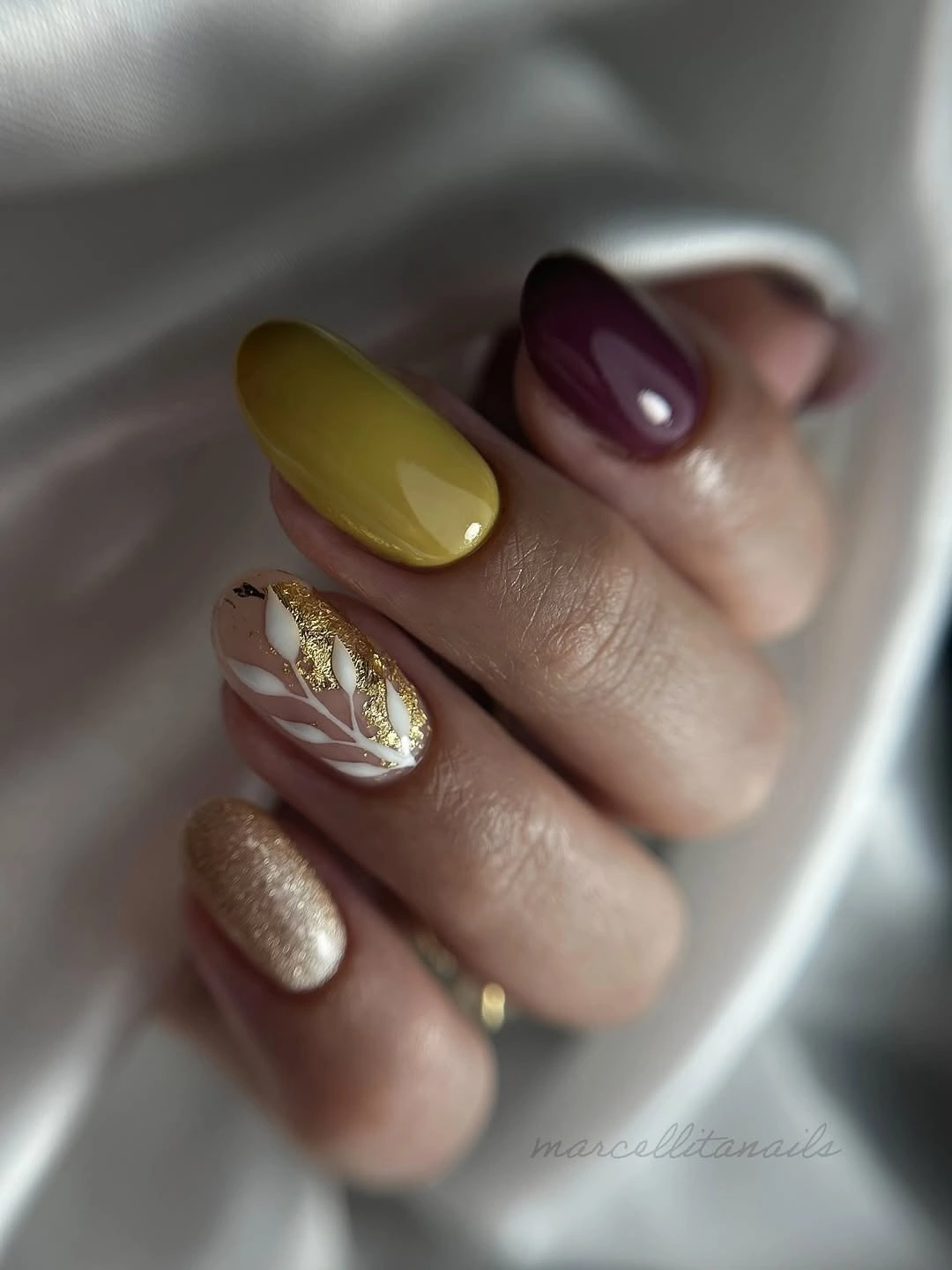
When adapting the palette, choose mustard and burgundy as the anchors, then use blush on the nail that needs the most breathing room. A shorter shape benefits from one floral accent rather than several, because the colors already create enough movement. If gold feels too dressy, a warm brown line can replace it and keep the same connection between the yellow and red tones.
This shows how fall manicure colors can be varied without becoming chaotic when every shade shares a warm undertone. It is a good reference for someone who likes several colors but still wants the manicure to feel coordinated with a sweater or scarf. The limitation is the amount of detail on a small surface, so the floral and metallic accents should remain smaller than the solid color fields.
Deep Burgundy with a Glossy Almond Shape
Medium almond nails use one uniform deep burgundy shade with a glossy surface and no added art. The color is rich enough to make the hand feel seasonal immediately, while the almond outline supplies the elegance that a pattern might otherwise provide. A knit sleeve frames the nails, but the clean red field remains the only visual decision that needs to be read.
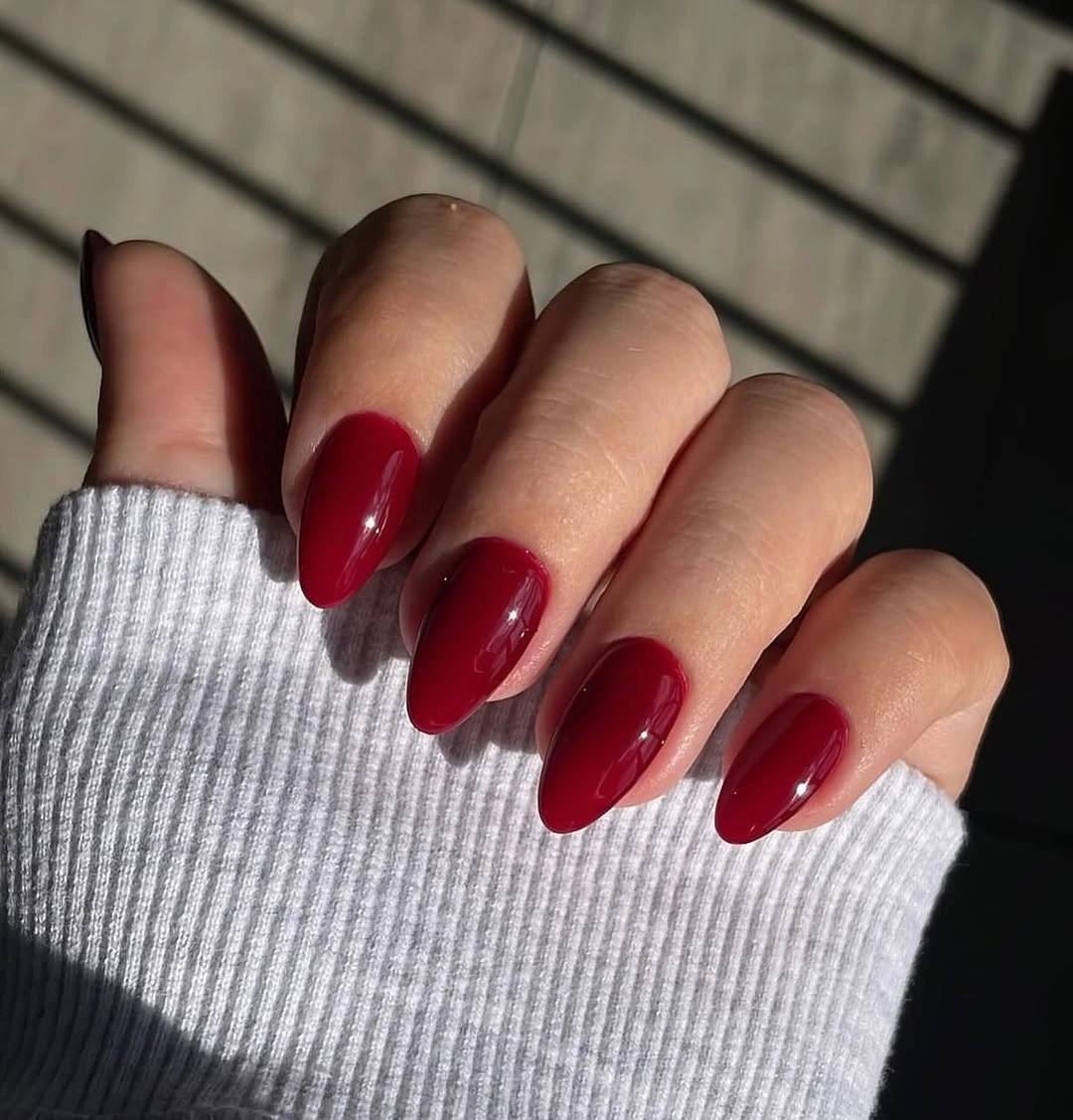
Deep red is most effective when the shape is balanced and the surface remains even from base to tip. A medium square can carry the same color with a more graphic effect, while a shorter rounded nail will make the shade feel softer and more casual. If burgundy feels too dark, shift toward cranberry or muted berry instead of adding glitter, because the uninterrupted color field is the strength here; the related fall red nails guide is useful for comparing how depth changes across shapes.
This is a reliable fall red manicure color for someone who wants a clear result with minimal design maintenance. It works beside cream, grey, denim, camel, and black, so the color can remain the main accessory without demanding a matching outfit. The realistic limitation is that deep pigment makes growth and edge wear noticeable, especially when the rest of the manicure is intentionally plain.
Nude Almonds with Metallic Brown Tips
Long pointed nails place reflective brown-gold tips over a sheer blush base, creating a French-like color contrast that follows the sharp silhouette. The pale center keeps the manicure open, while the metallic-looking edge gives the tip enough depth to stand out. The result feels decorative even though the palette uses only a soft base and one dark warm accent.
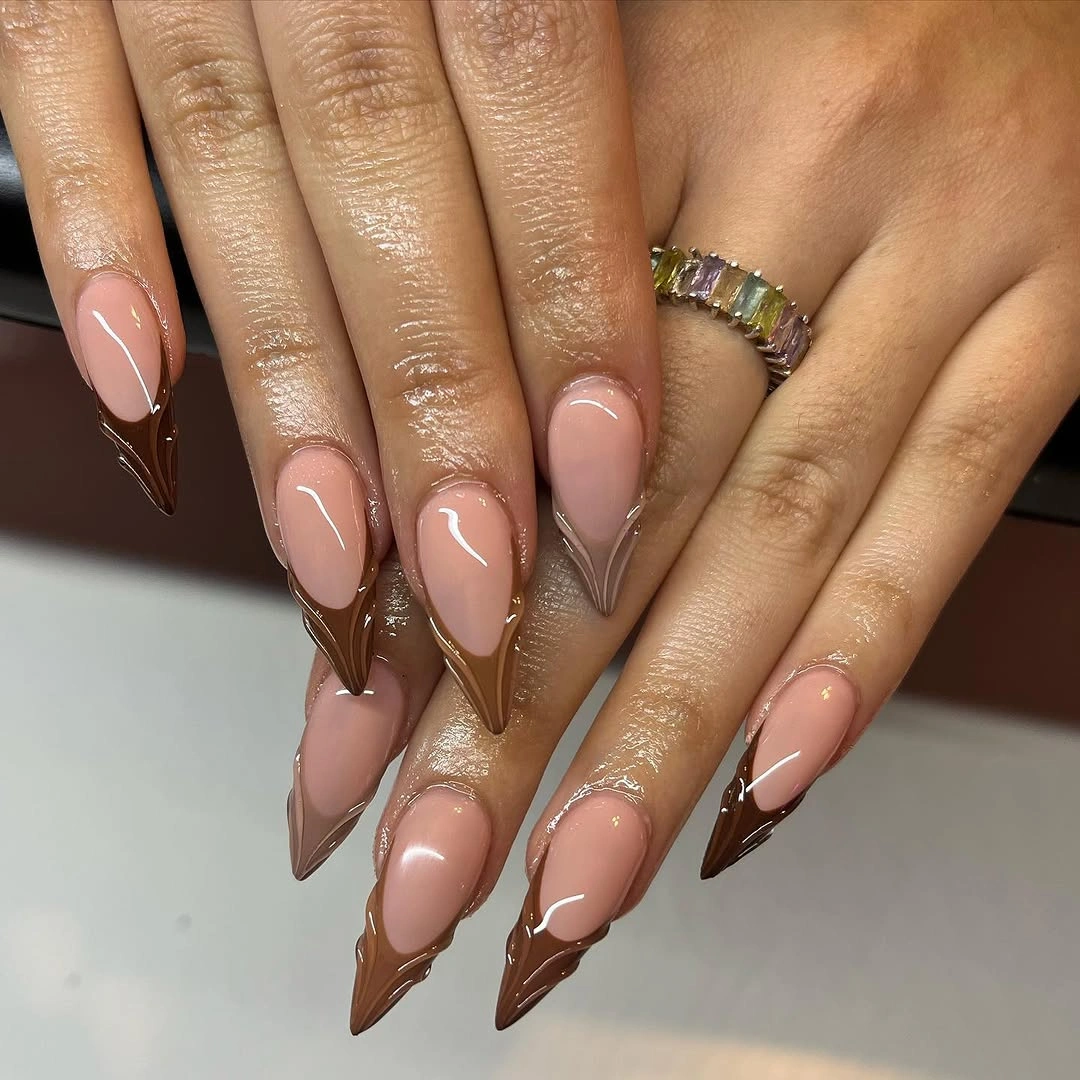
The tip should remain narrow enough to preserve the pale center, especially if the length is reduced. For a softer fall version, use bronze, chestnut, or muted copper instead of a bright reflective brown, and keep the edge slightly curved so it follows the nail rather than cutting across it. A short square can borrow the colors with a straighter tip, but the negative space still needs to stay visible.
This is a useful fall colors French manicure direction when you want a light base with more seasonal depth. The reflective edge can work with gold jewelry and warm knitwear, yet the open center keeps it from feeling overly formal. The tradeoff is precision at the tip, where uneven widths are easy to notice, so simplifying the edge is preferable to adding extra lines or glitter.
Reflective Copper as One Full Color
Medium almond nails use a uniform copper-brown reflective finish that changes with the light and lets the shape do the styling. The tone is warmer than plain brown and more dimensional than a flat neutral, while the absence of art keeps the hand polished rather than busy. Rings and a soft sleeve support the warmth, but the single shade stands independently.
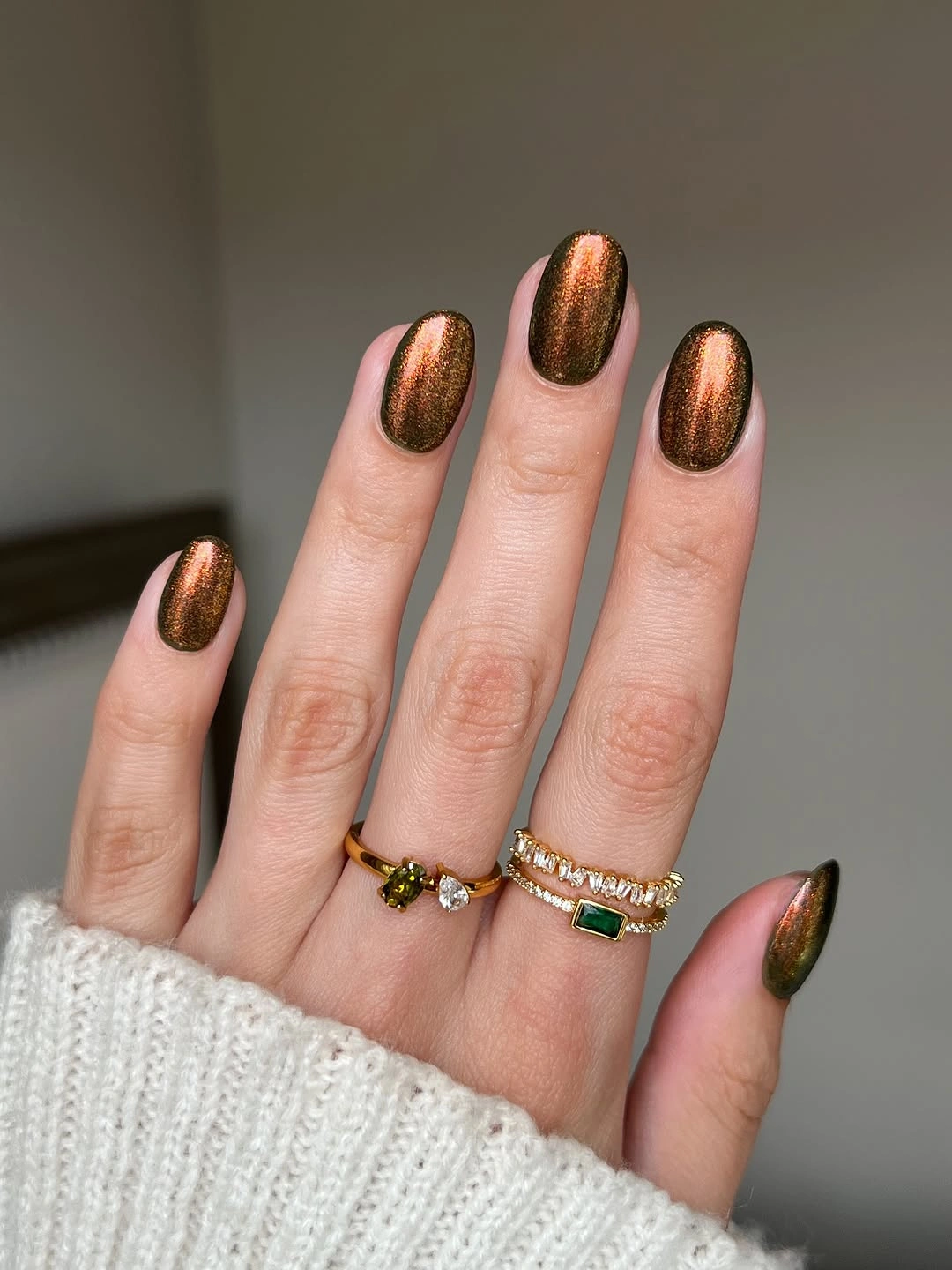
A full copper field works when the color stays even and the almond point remains clean. If you prefer a shorter nail, the same tone will feel more modern and compact, while a square shape will make the reflective surface look more architectural. Bronze or russet can replace copper, but the finish should remain the main source of interest so the design does not lose its clarity.
This is an easy answer to fall manicure colors 2026 when you want a seasonal color that can move between casual and dressed-up settings. It sits naturally with cream, black, denim, and warm metals, and it avoids the maintenance of tiny drawings or multiple accents. The honest limitation is that reflective surfaces reveal ridges and uneven edges more readily, so the quiet design still needs a clean base.
Chocolate Brown with a Pale Edge
Long almond nails use deep chocolate brown as the main field with a narrow pale or metallic-looking edge that outlines the pointed tips. The dark tone gives the hand autumn depth, while the light line prevents the silhouette from disappearing into one uninterrupted block. The background stays soft and neutral, leaving the contrast between brown and pale edge to carry the composition.
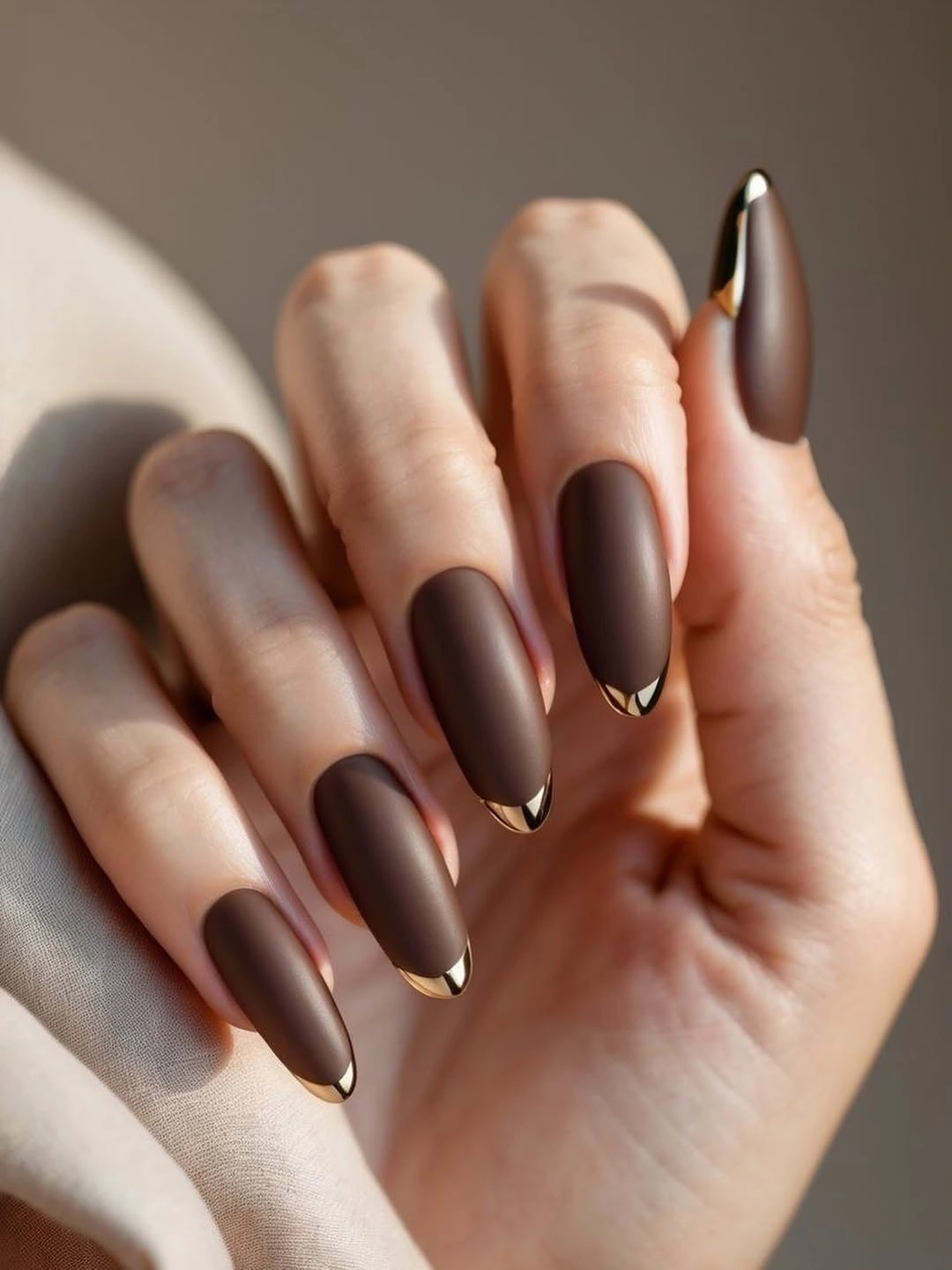
Keep the edge thin when adapting the look to medium length, because a wider band would change the balance from outlined to color-blocked. A warm cream can replace the pale metallic note for a softer contrast, while espresso, chestnut, or cocoa can adjust the depth of the brown. The most important part is the clean separation between the dark field and the slim light border.
This is a grounded fall manicure color for readers who like deep shades but want a small highlight around the shape. It works with a neutral wardrobe and does not rely on glitter or motifs to feel finished. The limitation is visual weight: on a very short nail, a full dark field may look compact, so a wider pale center or a shorter rounded shape could create more balance.
Pale Glitter with Deep Brown Tips
Medium almond nails place pale pink glitter across the main surface and use deep brown tips to create a warm seasonal edge. The glitter catches light across the nail bed, while the brown follows the almond point and gives the soft base enough contrast to remain defined. A tiny gold-toned ring echoes the warmth without becoming part of the manicure itself.
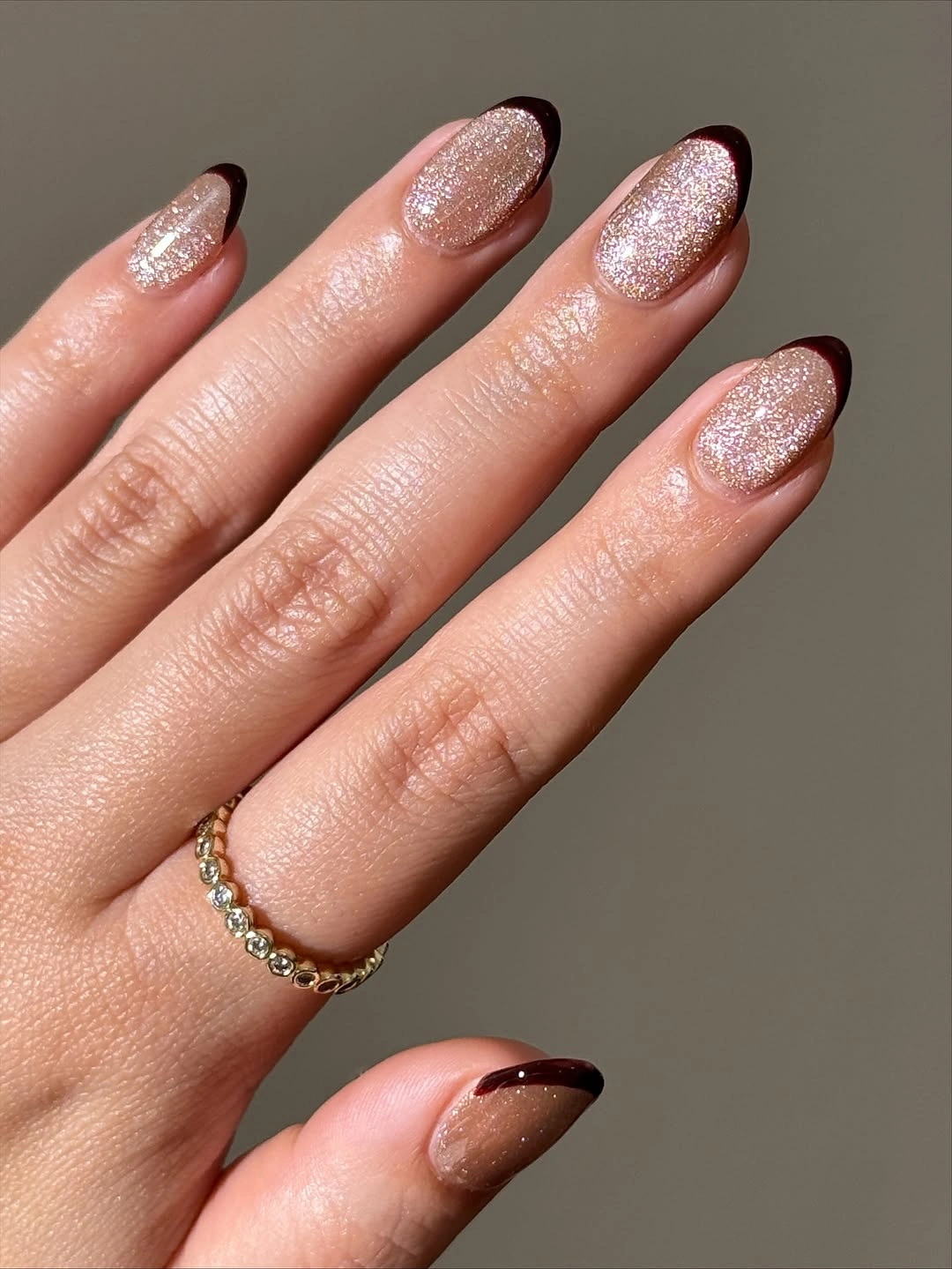
The design can be quieted by using glitter only on two nails and keeping the brown tip on the rest. On a shorter almond, make the tip slightly wider and keep the glitter particles fine so the surface does not look crowded. A blush shimmer or muted rose can replace the pale pink, but the deep brown edge should remain visibly darker than the base.
This is a gentle fall French palette for someone who wants sparkle without a full metallic manicure. It works beside cream knits and warm jewelry, yet the brown tip makes it feel more autumnal than plain pink glitter. The tradeoff is maintenance around the tip, where contrast makes small chips obvious, so a simpler glitter field may be easier to keep looking tidy.
Burgundy, Black, Blush, and Pale Points
Long almond nails mix burgundy, black, blush, and pale pointed tips across several hands, creating a color board rather than one repeated arrangement. Deep shades provide the seasonal weight, while blush and pale accents interrupt the row and prevent the palette from becoming uniformly dark. Gold jewelry adds a warm note in the setting, but the manicure remains organized by repeated color relationships.
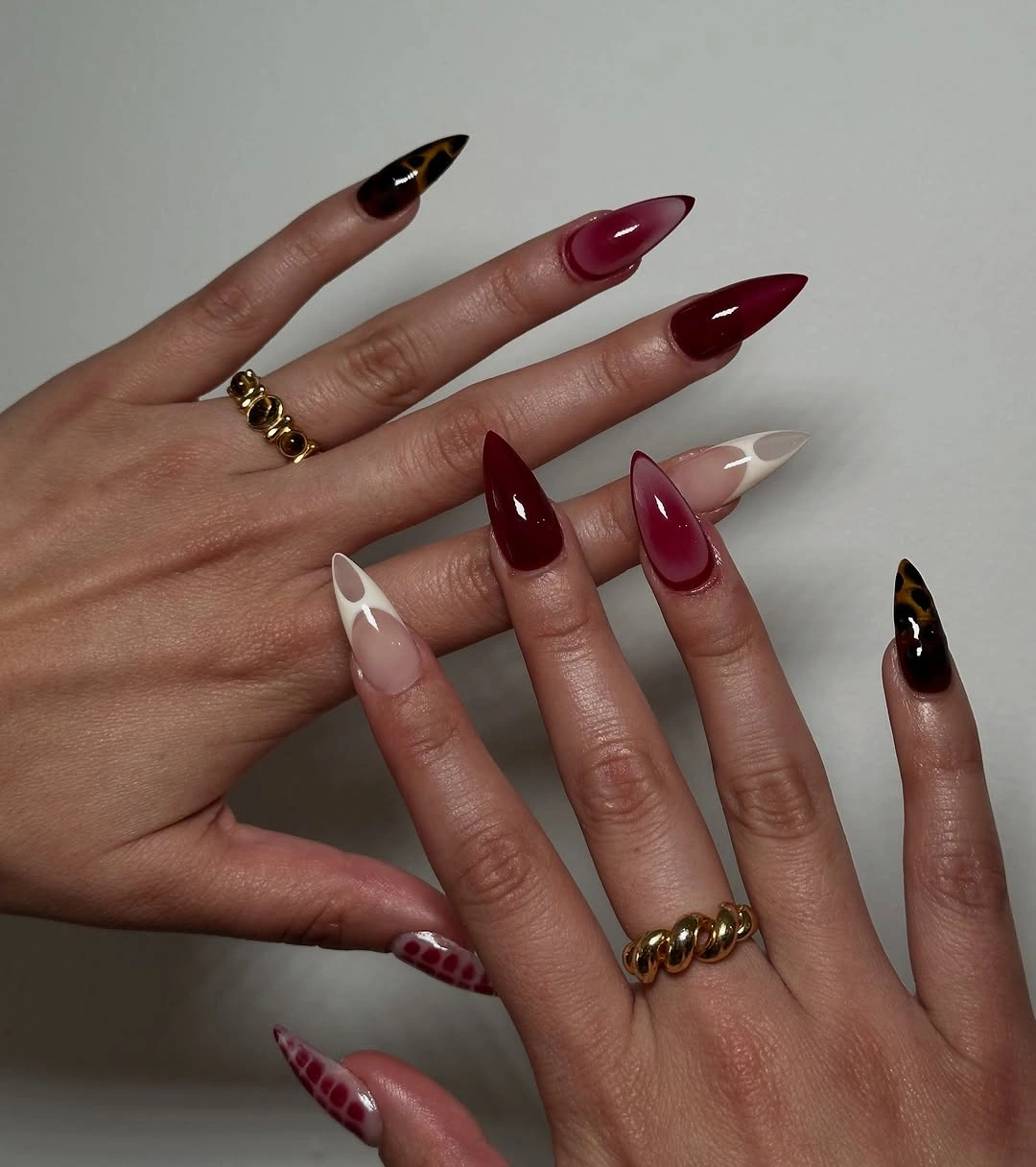
If you are choosing a set from this palette, select two anchor shades and one relief shade before deciding on placement. Burgundy and black can form the depth, while blush or pale pink creates a visual pause on one or two nails. On a shorter shape, larger color blocks will read better than many thin points, and the palette will stay coherent even with fewer fingers involved.
This is helpful when comparing fall manicure colors because it shows how the same season can feel dramatic, soft, or graphic depending on the ratio of dark to light. It suits a reader who wants options rather than a single exact formula and can be narrowed toward a simple burgundy set. The limitation is that many dark and pale colors can look disconnected if no shade repeats, so a small echo across the hand matters.
Glittering Amber on Long Almonds
Long almond nails use one dense amber-brown glitter color from base to tip, allowing the warmth and sparkle to create dimension without added motifs. The shade reads like a concentrated autumn light, while the pointed outline keeps the glitter from feeling too blocky. A white knit sleeve adds contrast around the hand, but the manicure itself remains a single-color statement.
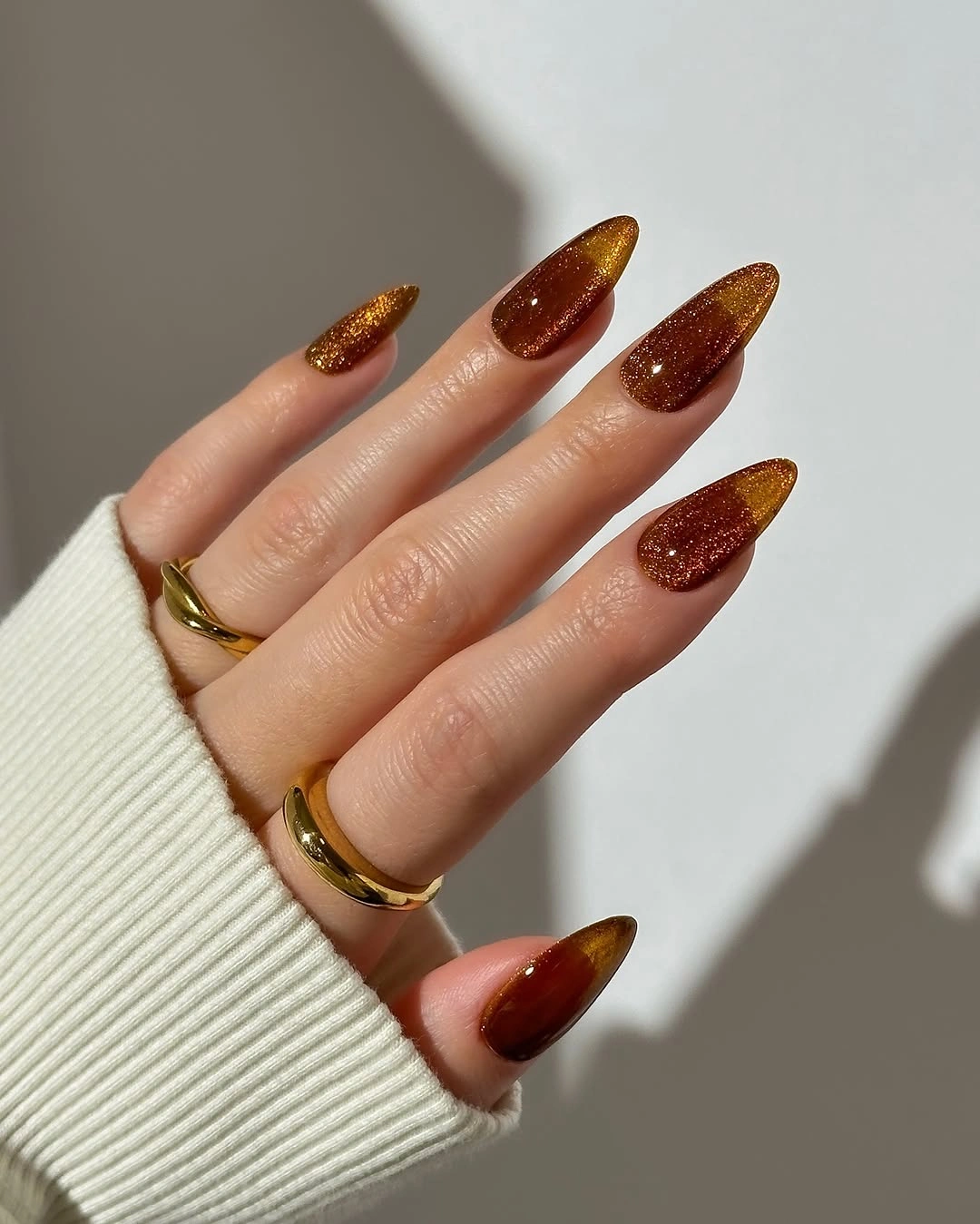
The color is easiest to wear when the glitter stays within one warm family. For a softer medium length, choose a less dense amber shimmer or apply the richer color to two accent nails and use a plain chestnut elsewhere. A muted bronze can replace the brighter amber, while a shorter square would make the same shade feel more graphic and less elongated.
This is a direct fall nail color for readers who want shine and warmth in one decision. It can carry a plain sweater, dark coat, or simple ring without needing additional decoration, which makes the design visually efficient. The realistic limitation is that glitter texture can draw attention to unevenness, so the surface and edges need to be kept smooth if the manicure is meant to look polished.
Nearly Bare Blush with a Fine Edge
Long almond nails use a very light blush base with only faint pale edging and tiny warm details, creating a seasonal manicure through restraint rather than saturation. The color is close to natural but still polished, and the pointed shape supplies the definition that a darker shade would normally provide. A black sleeve around the hand makes the pale color more visible, yet the manicure remains quiet.
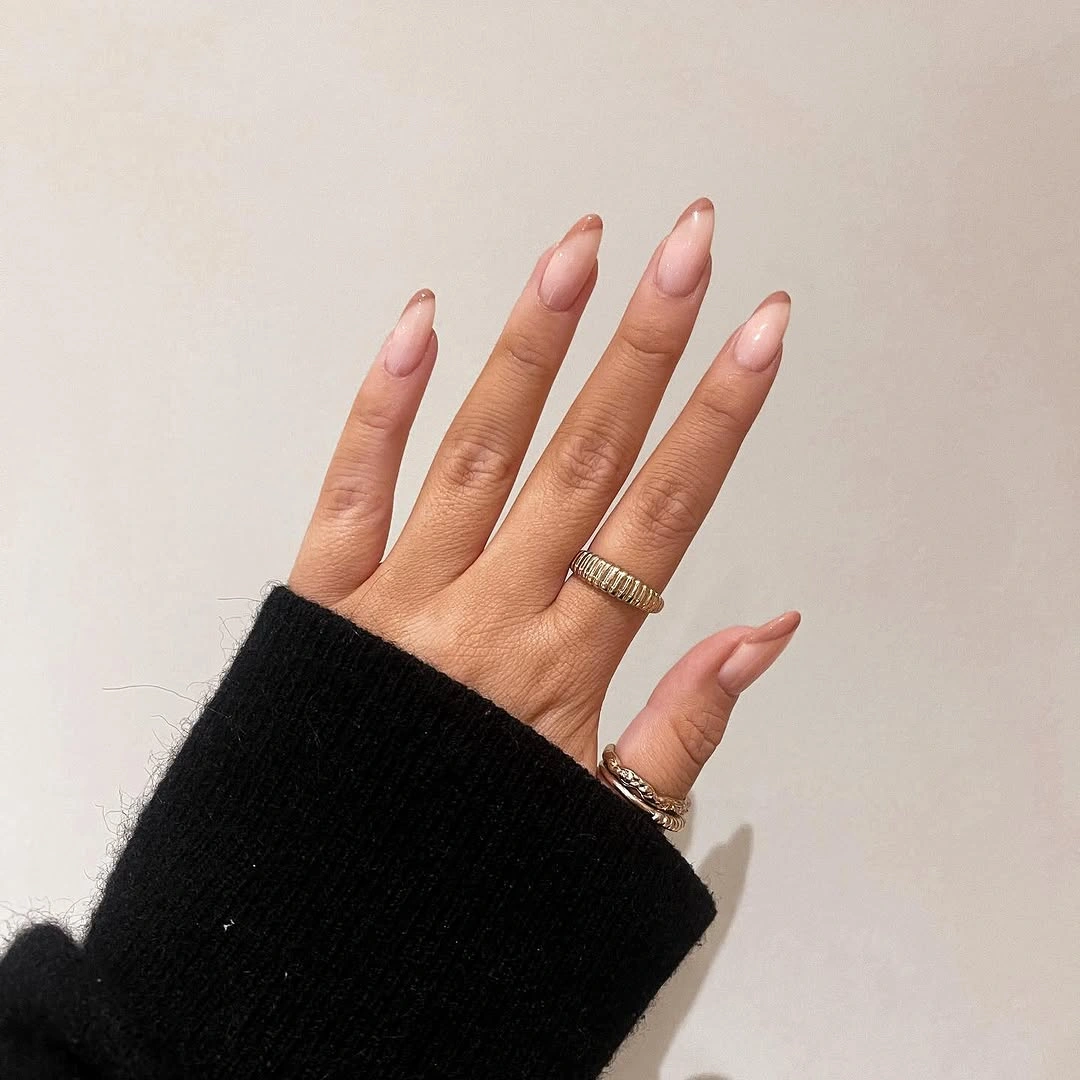
This palette works when the nail outline is carefully shaped and the edge detail stays fine. A shorter almond can use a slightly warmer blush or cream to keep the manicure from disappearing, while a medium square can turn the subtle edge into a neat straight French line. Avoid adding several small accents, because the charm of the design comes from the narrow gap between bare and decorated.
For readers searching fall manicure colors for a light, office-friendly result, this is an understated choice that can sit beside almost any clothing palette. It feels seasonal through warmth and proportion rather than through a literal autumn shade. The limitation is visibility: pale color will not create much contrast on every skin tone or in every light, so the edge must be clear enough to give the design a finished boundary.
Pink, Peach, and Amber with Gold Lines
Long almond nails combine pink, peach, and translucent amber-looking panels with fine gold edges that separate the warm colors. The palette stays light but gains depth through the amber sections, while the gold adds a narrow glint where the panels meet. The pointed shape gives the colors a refined direction and prevents the softer tones from looking flat.
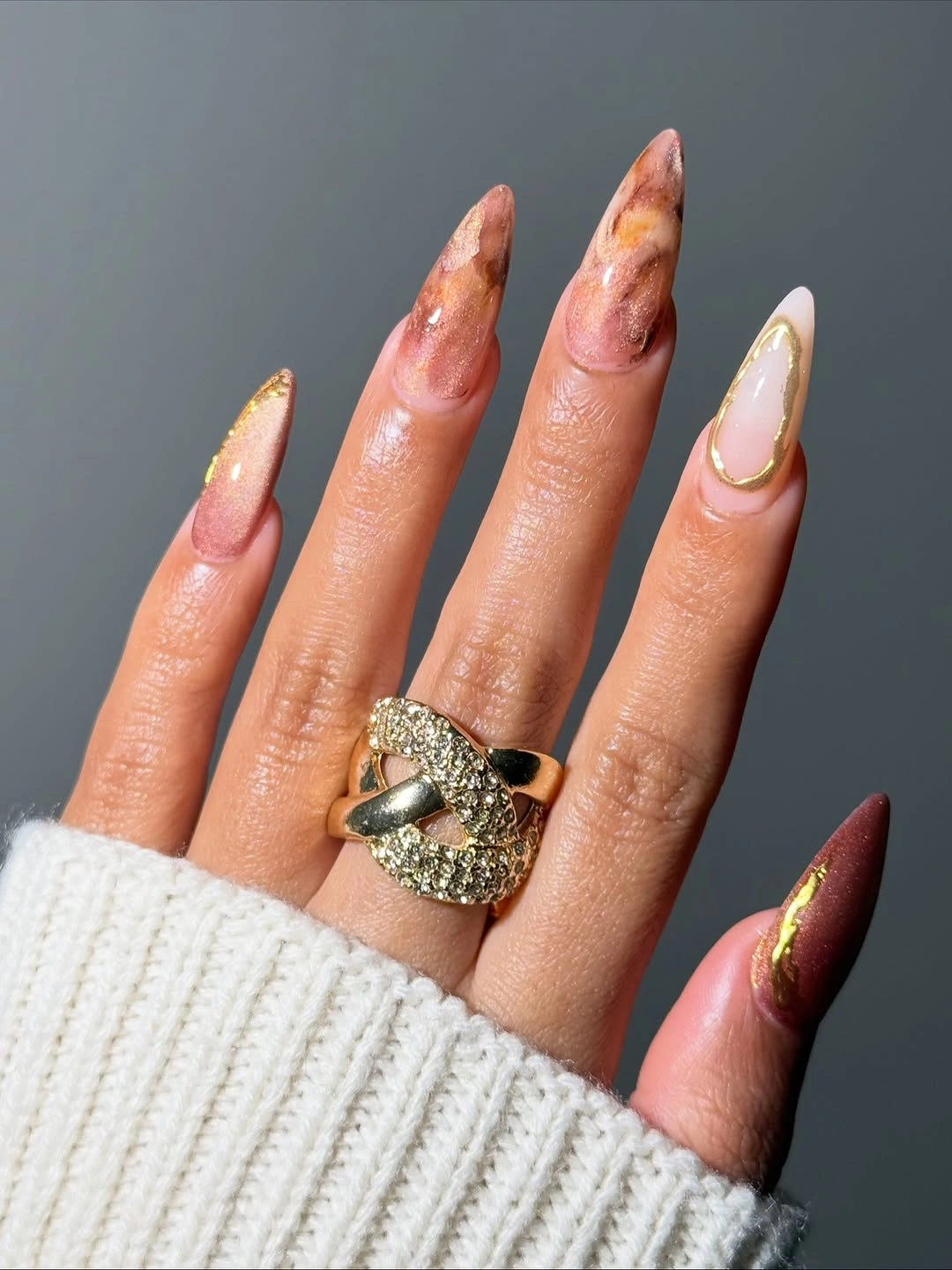
Keep the gold line only where two colors meet if you want to simplify the design. A medium almond can carry one peach panel and one amber accent beside a blush base, while a shorter square would need larger, cleaner blocks and fewer boundaries. Replace peach with muted rust for a stronger fall feeling, but keep pink or blush as the lightest point in the palette.
This is a useful answer to fall manicure colors when deep brown and burgundy feel too predictable. The warm mix works with cream, camel, and soft pink clothing, and the gold lines can be reduced for an everyday version. The tradeoff is that several warm shades may blur if their values are too close, so each panel needs enough contrast to remain visible without relying only on the outline.
A Five-Color Autumn Hand
Long almond nails place burgundy, brown, orange, nude, and black across one hand, showing how a broad autumn palette can still look connected when each color has a clear role. The dark shades provide the frame, orange supplies the bright point, and nude creates a break between the heavier tones. The result is varied but not random because the colors share warmth and repeat in small areas.
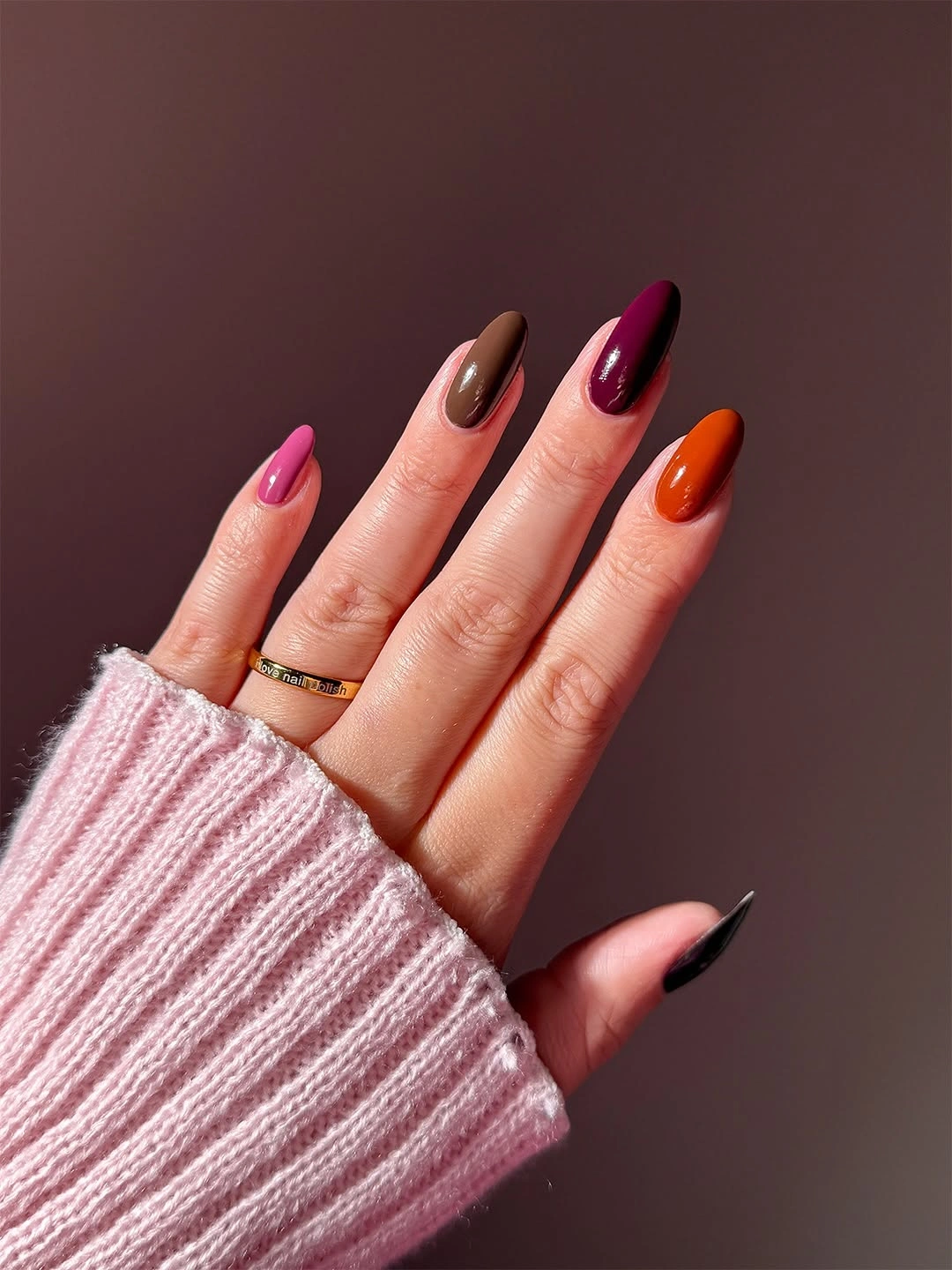
Start with two anchor colors before adding the bright note. Burgundy and brown can carry most of the hand, orange can stay on one accent nail, and nude can open the space around it; black is best used as a small edge or tip rather than another full competing field. On medium length nails, larger blocks and fewer transitions will keep the same palette readable.
This is a practical palette guide for someone deciding between several fall manicure colors instead of committing to one shade. It can be edited toward burgundy and nude for softness or brown, orange, and black for a stronger graphic effect. The limitation is styling complexity: because the hand already contains several colors, a plain outfit and simple jewelry will usually make the palette look more intentional.
Deep Forest Green on a Long Almond
Long almond nails use a uniform deep forest green with a glossy-looking surface, making the color and silhouette the complete design. The shade feels grounded and cool compared with burgundy or brown, yet it still carries a strong fall mood because of its depth. Rings and a black sleeve emphasize the dark contrast, but no additional motif is needed.
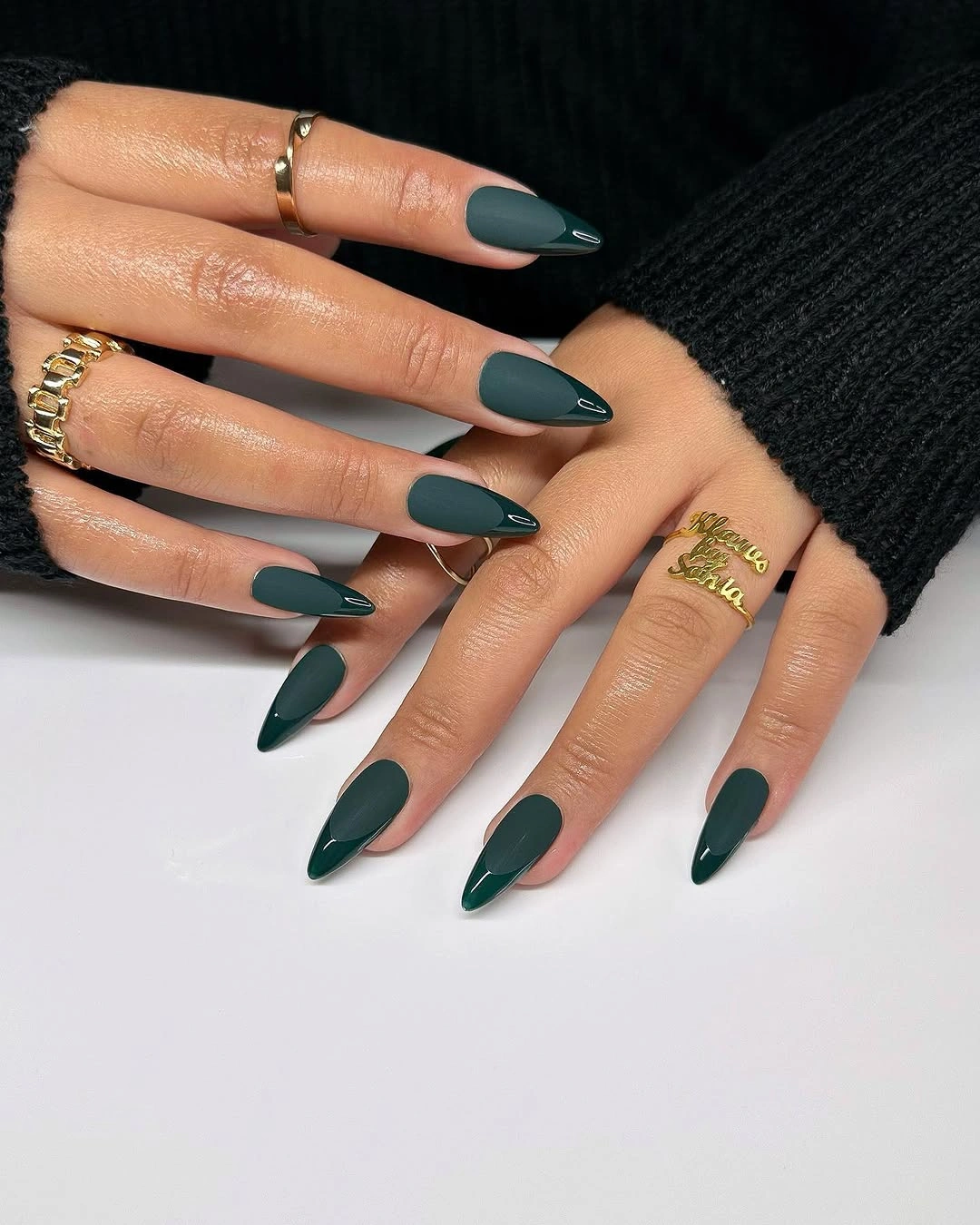
Forest green is easiest to adapt when the nail outline stays clean and the surface remains broad. A medium almond can carry the same shade with a slightly softer effect, while a shorter square will make it more modern and compact. If the color feels too dark, move toward olive or moss rather than adding a second shade, since the uninterrupted field is what gives it presence; for a finish-led alternative, compare it with the muted surfaces in fall matte nails.
This is a strong alternative to fall nail colors when red has become the default choice. It sits naturally beside cream, denim, camel, black, and gold, and it can look polished without any art maintenance. The tradeoff is visual weight on very short nails, where a deep full-coverage color may feel dense, so a lighter olive or a shorter rounded outline can provide relief.
Pink with Translucent Floral Panels
Long square nails use pink and pale mauve surfaces, then add translucent-looking floral and glitter panels with white and red striping. The solid pink gives the hand a clear base color, while the transparent-looking sections introduce detail only on selected nails. The square length supports the layered accents, but the repeated pink keeps the set from feeling like a collection of unrelated designs.
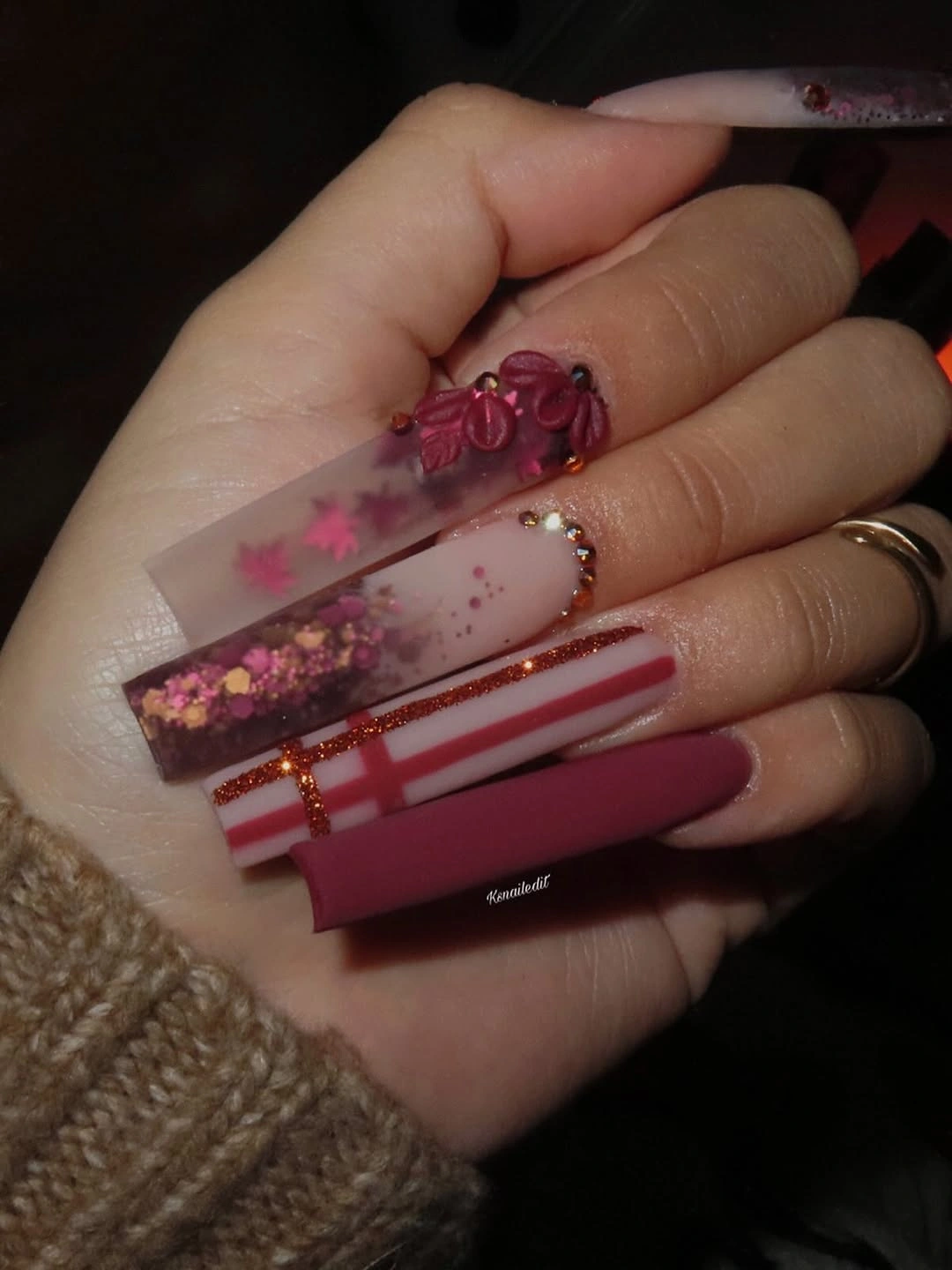
For a more wearable version, leave most nails pink and keep one accent panel with either flowers or glitter, not both. A medium square can use a pale blush base with a single translucent-looking section near the tip, while a shorter shape needs larger flowers and fewer stripes. Muted berry or dusty rose can replace the pink if you want the palette to feel more autumnal.
This direction shows how fall manicure colors can carry decoration without allowing the art to cover every surface. It suits someone who likes detail but wants one recognizable base shade to keep the hand cohesive. The limitation is visual layering: floral marks, glitter, and stripes need separate space, otherwise the accent panel becomes difficult to read and the square outline loses authority.
Glossy Deep Red on a Long Coffin
Long coffin nails use one glossy deep red color, creating a strong, clean surface that makes the straight tapered shape the main feature. The red is saturated and seasonal without needing glitter, French edges, or an accent nail. Denim and gold rings in the setting add contrast, yet the manicure remains effective when separated from those styling cues.
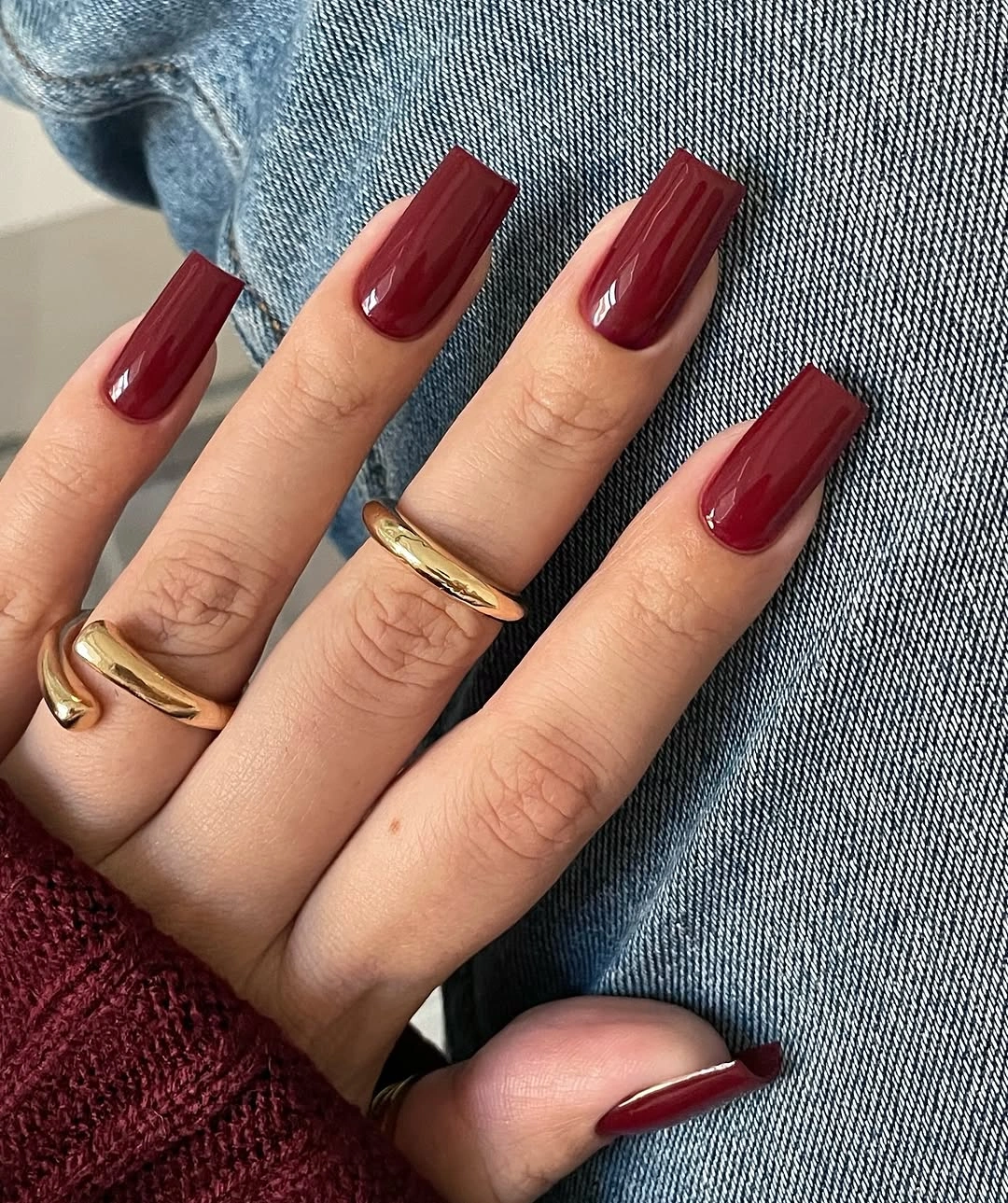
A long coffin silhouette can carry the depth, but a medium or shorter coffin may make the same red feel more practical and less dramatic. If you want a small variation, place the deep red on most nails and use one muted nude or brown accent rather than adding several colors. Keeping the surface plain will show the shape and color relationship more clearly than extra line work.
This is one of the most direct fall red manicure colors for someone who wants impact through pigment and length. It works with neutral clothing, leather, denim, and soft knits because the red supplies enough contrast by itself. The realistic limitation is upkeep around growth and edge wear, both of which become obvious against a saturated glossy field.
Mauve, White, and Metallic Brown Points
Long almond nails combine dusty mauve and blush bases with pale white panels and reflective dark brown tips. The palette stays soft in the center but becomes sharper at the pointed edge, where the brown and white create a graphic finish. The result avoids a full dark manicure while still giving the hand enough contrast to feel distinctly autumnal.
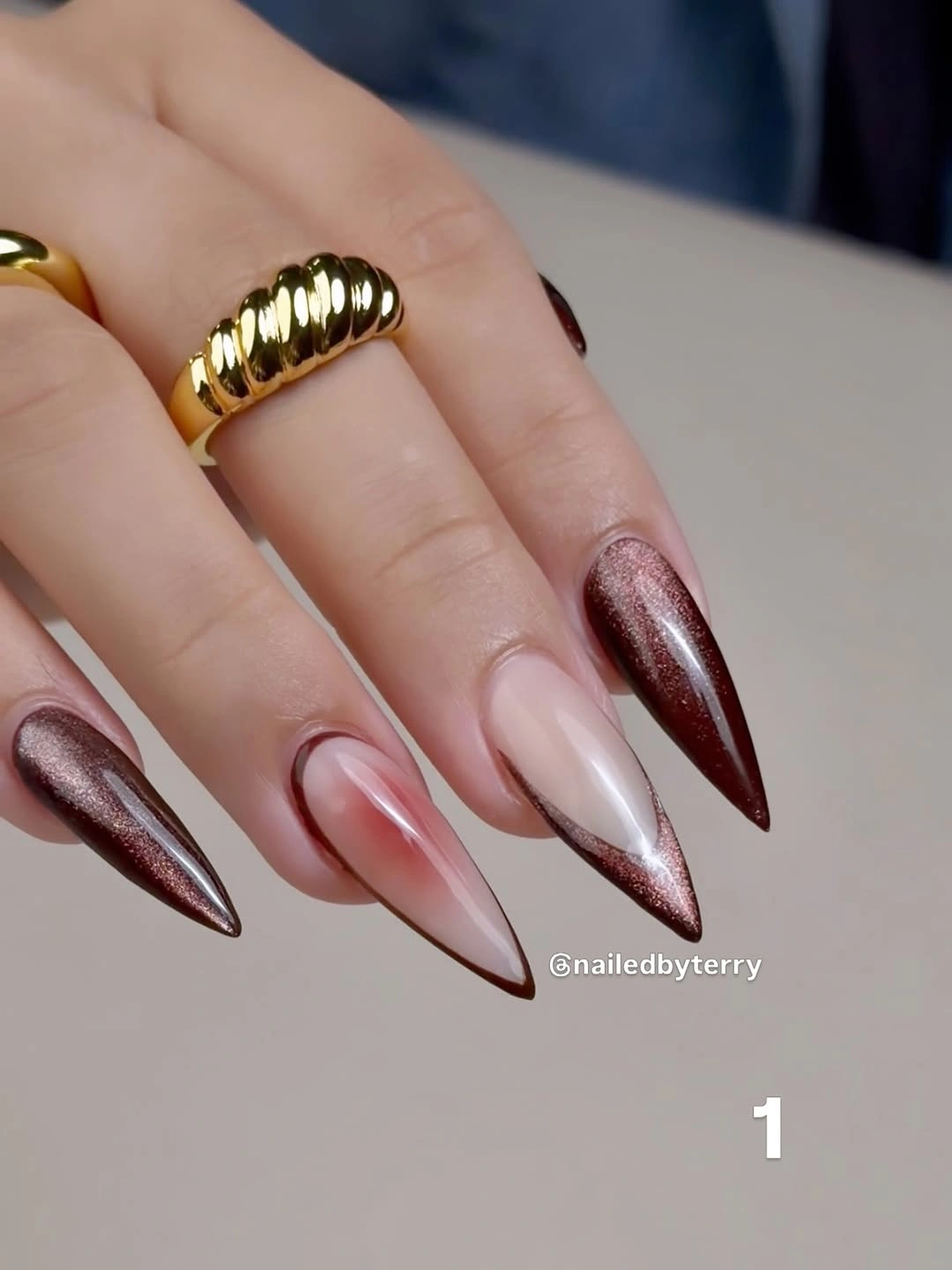
Keep mauve as the broad base and use the white panel on one or two nails if you want a calmer arrangement. A shorter almond can replace the reflective brown with matte-looking espresso or chestnut, while a square shape can translate the point into a straight divided tip. The design stays balanced when the pale center remains larger than the dark edge.
This is a polished mixed-color option for readers who want fall nail colors without relying on orange or burgundy. It works with silver or gold accessories because the palette already contains both warm and pale points, though simple jewelry will keep the nails in focus. The tradeoff is edge precision, since the contrast at the tip exposes uneven widths more quickly than a single solid shade.
Amber Brown with Darker Outlining
Medium almond nails use a warm amber-brown translucent-looking field with darker edging that follows the rounded tip. The base has more depth than a flat brown, while the dark outline gives the color a clear boundary without adding a separate pattern. Light reflections create interest across the surface, but the manicure remains controlled and tonal.
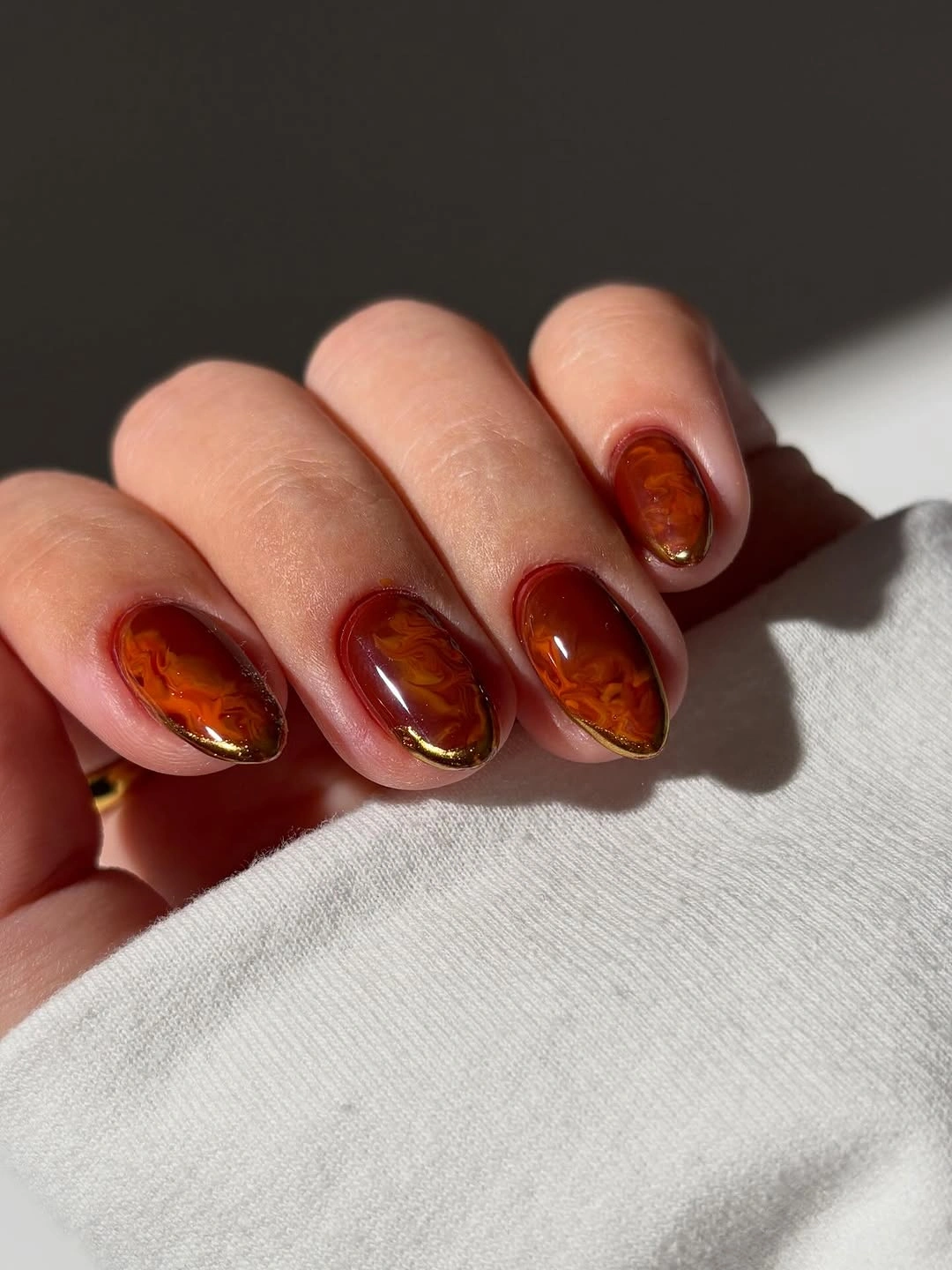
The outline should stay narrow enough that the amber remains the main color. On a shorter almond, keep the darker edge only at the tip; on a longer shape, a slim side line can emphasize the taper without closing the surface. Chestnut, caramel, or russet can replace the amber, but a visible difference between base and edge is what keeps the dimension readable.
This is a useful fall manicure color for readers who want a warm neutral with more visual depth than a plain brown. It pairs easily with denim, cream, tan, black, and gold, and it does not need a separate accent to look finished. The limitation is that a translucent-looking surface may reveal unevenness more readily, so a simpler outline and an even base will make the color feel cleaner.
Pale Mauve with Silver Dots
Long almond nails use a pale mauve base with silver-looking panels or edges and black dots placed as a repeated graphic detail. The soft mauve keeps the manicure light, while the silver sharpens the pointed shape and the black dots add a darker rhythm without introducing a large motif. The result is delicate but not blank because the three values remain distinct.
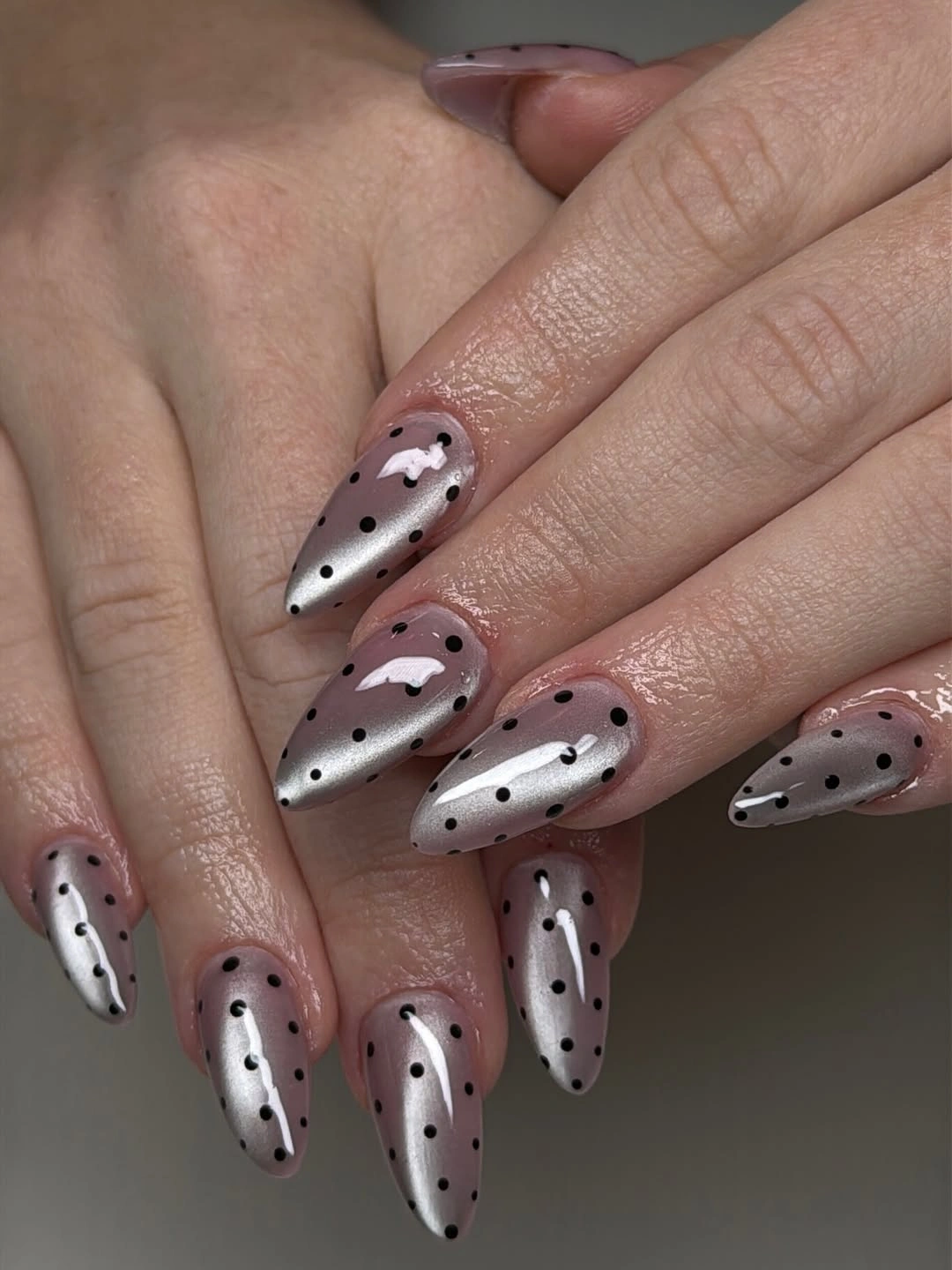
Use fewer dots on a medium length and place them in a loose line rather than covering the whole nail. A muted lavender or dusty rose can replace mauve, while pewter or soft taupe can stand in for the pale silver if you want less shine. The dark note should remain small, because the manicure depends on the light base staying visually dominant.
This offers a lighter route through fall manicure colors for someone who prefers pale shades but still wants a seasonal graphic detail. It can work with grey knitwear, denim, and simple rings because the palette is cool and edited. The tradeoff is subtle balance: too much silver or too many dots would make the look busier, while too little contrast would make the pattern vanish.
Brown and Blush on Long Squares
Long square nails combine brown tips and panels with blush negative space and fine glitter-looking accents. The brown gives the straight edge an autumn anchor, while the blush areas keep the hand lighter and prevent the color from spreading into one heavy block. Glitter is used as a small reflective note, so it adds depth without replacing the main color story.
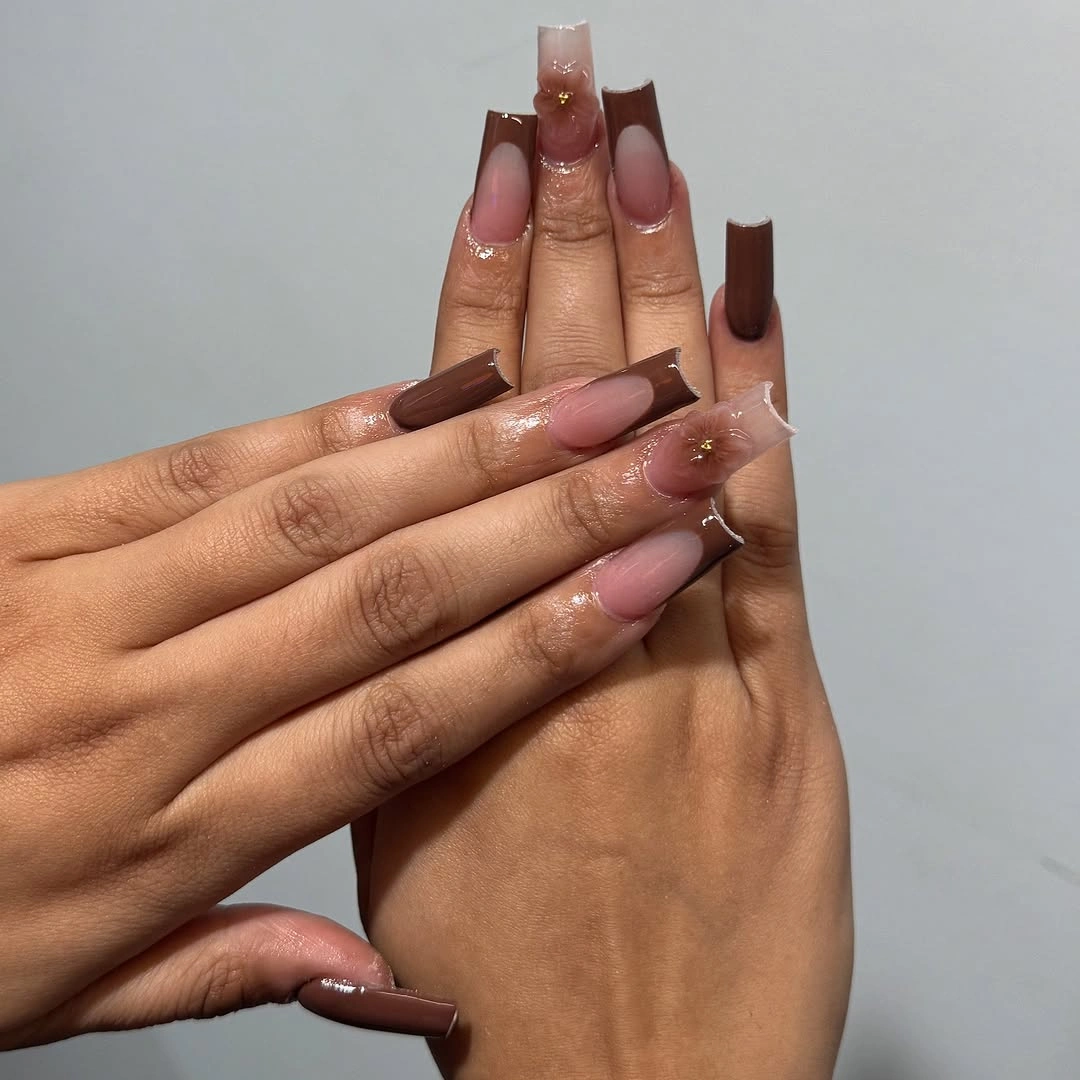
For a simpler version, keep the brown on the tips and use blush on the center, leaving the glitter on one accent nail. A medium square can carry wider brown edges, but the pale space should still be broad enough to show the shape. Replace the glitter with a warm gold line if you want a cleaner surface, or use a muted cocoa for a softer color contrast.
This is a practical mixed palette for readers comparing fall manicure colors and looking for warmth without a full dark set. It works well with cream, denim, burgundy, and camel because the brown and blush can echo several wardrobe tones. The limitation is that the long square already has strong geometry, so too many small accents can make the manicure feel overworked rather than deliberately layered.