When autumn color enters a manicure, the difficult part is knowing when to stop. Too much warmth can make the hand feel visually loud, while too little can leave the season reduced to a token accent. The most convincing transition happens when one choice carries the mood and the surrounding details give it enough quiet to feel intentional.
Short or long, begin with the amount of visual comfort you want to keep. A compact shape can hold a stronger color, a pale ground can carry more detail, and a longer silhouette may need fewer competing accents. Decide what should feel warm, what should feel restful, and what can be left plain; the result will look more considered than a manicure built by adding one seasonal idea after another.
Warm Orange Edges On A Quiet Nude Base
The opening design begins with a pale nude base and lets warm orange appear mainly along the edges. Small gold-looking details add a little light, but the hand remains gentle because most of the surface stays quiet. The long almond shape gives the accents a graceful direction, allowing the seasonal color to arrive as a border instead of a full statement.
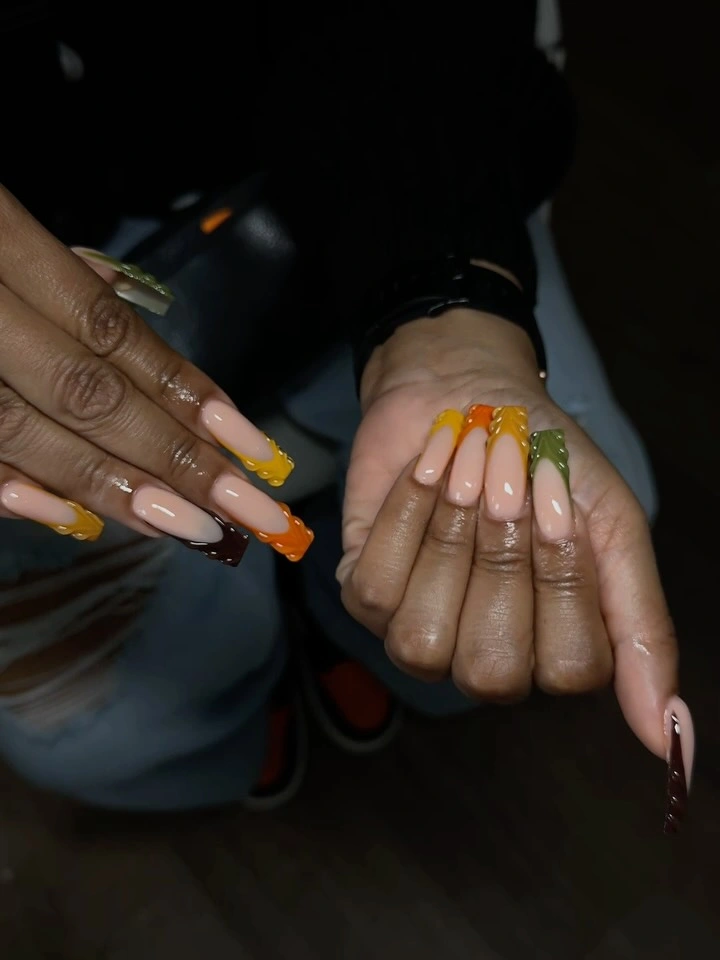
The comfort of this design comes from the amount of open space. Nude keeps the hand visually light, orange supplies a clear seasonal note, and the tiny warm details connect the two without filling the nail bed. In low light the accents may seem subtle, but that is part of the mood: the manicure reveals its warmth gradually rather than announcing it all at once.
For everyday wear, keep the orange on two or three tips and move the shape to a medium almond. A shorter version will feel more relaxed while preserving the gentle transition from pale base to warm edge. The tradeoff is that the long outline gives the original a dressier quality, so reducing the length will also make the design feel more casual and easier to pair with knitwear or simple jewelry.
Neutral Marble With Soft Reflective Waves
These long square nails carry a pale nude ground with flowing brown, taupe, and reflective-looking curves. The colors stay close to one another, so the design feels layered without becoming bright or busy. Rather than using a single autumn symbol, it lets the gentle movement of the lines create the seasonal richness.
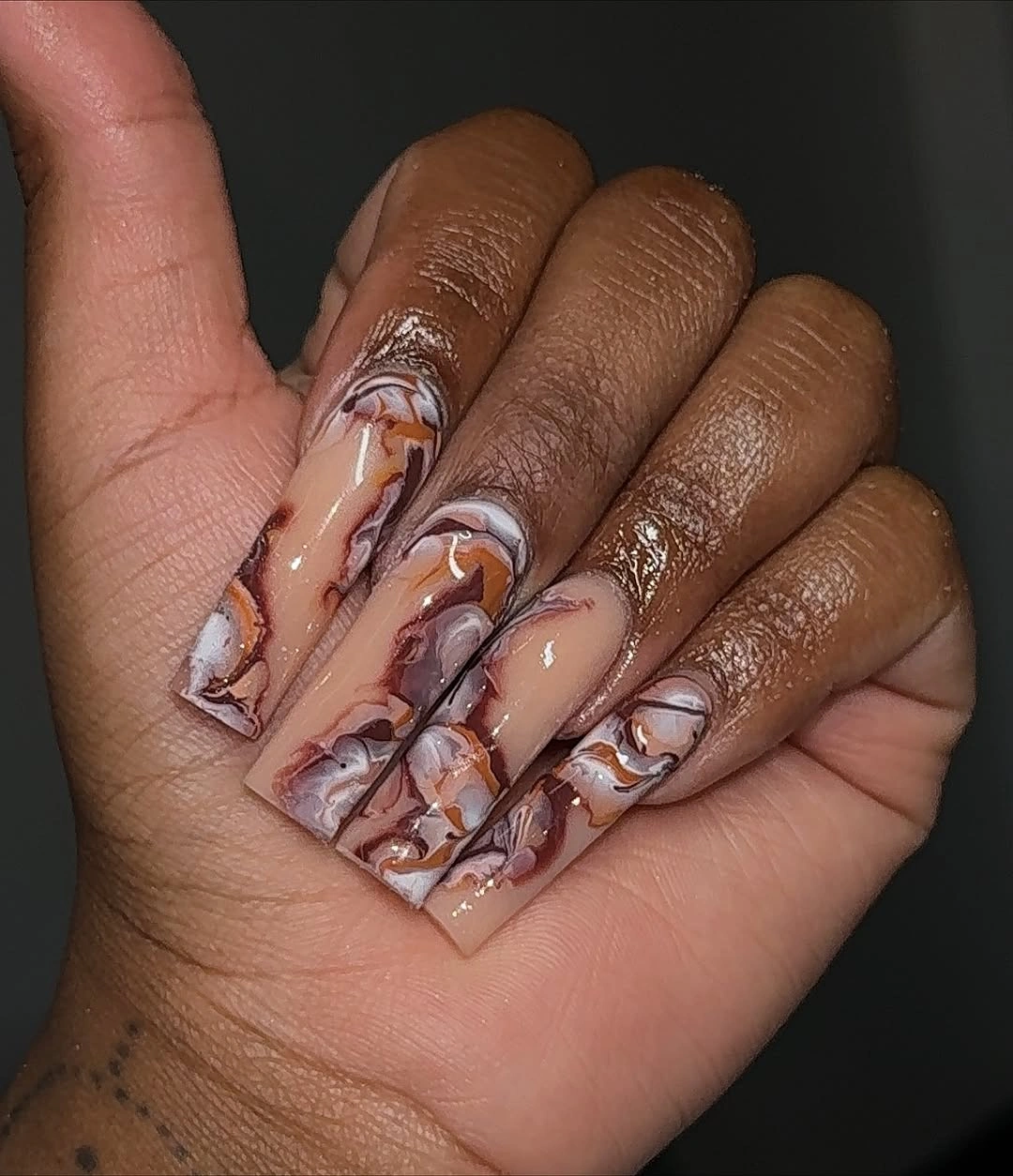
The warm feeling comes from the contrast between soft neutrals and the occasional brighter line. Brown gives the manicure depth, pale areas provide rest, and the curved panels keep the eye moving across the long surface. The result is cozy without relying on a literal fall reference, which makes it easier to wear with colors that are already in a wardrobe.
If the length feels too dramatic, use the same tonal idea on a short square or medium almond and keep one broad wave per nail. Too many narrow curves on a smaller surface would blur the calm rhythm. This is a design for someone who enjoys texture that looks considered up close, with the understanding that the neutral palette will feel quieter from a distance than a bright seasonal color would.
Pale Pink With One Concentrated Sparkle
A soft pink base keeps most of the hand light, while one long coffin nail gathers dense glitter and jewel-like reflections. The focal detail feels festive because it is surrounded by calm color rather than repeated across every finger. Even with the length, the set remains balanced because the sparkle has one clear home.
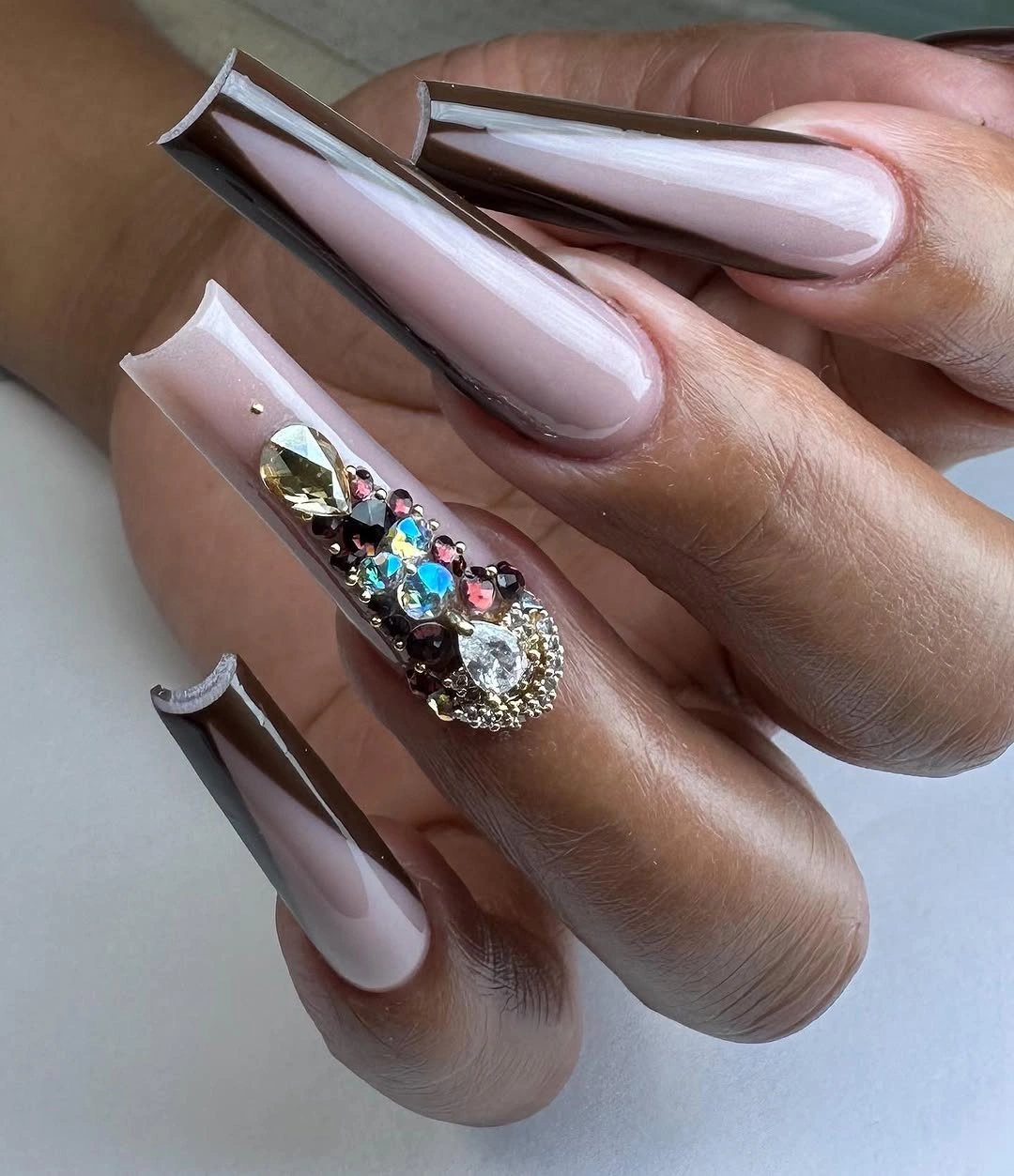
The contrast is comforting rather than harsh. Pale pink carries the softer side of the palette, and the concentrated accent introduces depth without asking the whole hand to become dark. When the fingers overlap, the reflective nail catches the eye first, then the surrounding smooth surfaces bring the composition back down to a quieter level.
For a more practical version, use a smaller sparkling patch on a short square accent nail and leave the others pale pink. That keeps the idea of one warm point of light while reducing the visual commitment of the long shape. The limitation is that dense sparkle can become the first thing people notice, so it suits an occasion or a confident focal detail more than a completely understated manicure.
Nude Stiletto Tips With Rose-Gold Warmth
Long pointed nails carry a pale nude base, rose-gold shimmer, and one small gold-looking accent near the center. The warm metallic details follow the narrow direction of the tips, so they feel connected to the shape rather than scattered across it. The overall mood is polished and delicate, with the color doing more work than the decoration.
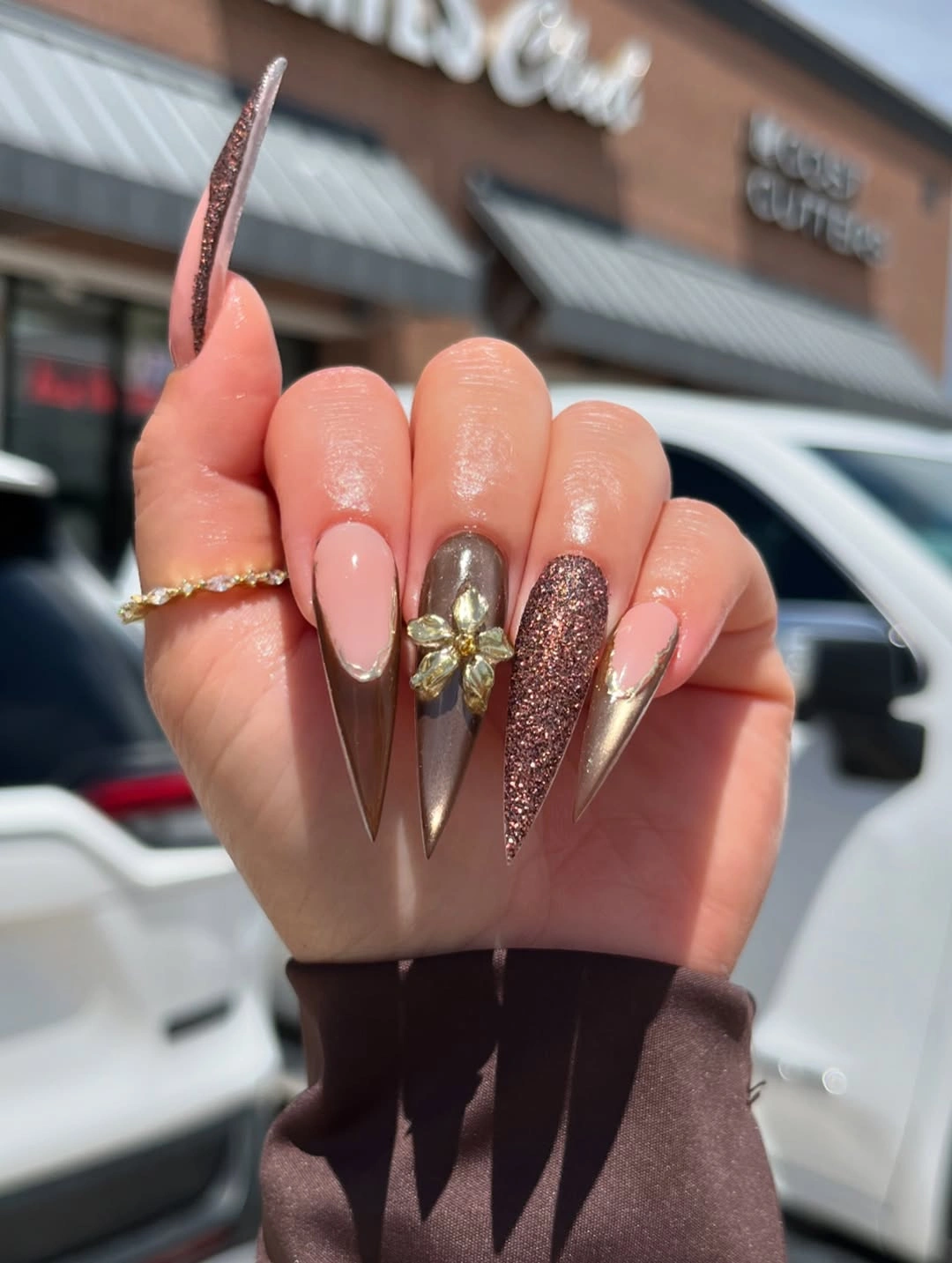
The design feels warm because the metallic notes sit close to the nude base instead of contrasting with a deep black or red. That creates a gradual change from pale surface to glowing edge, and the pointed silhouette makes the transition look longer and more refined. A small central accent becomes enough because the surrounding nails already carry a consistent sheen.
Use one warm line on a medium almond if you want a gentler version, or replace the long stiletto with a short oval and keep the base pale. The same colors will read softer when the shape is less sharp. A realistic limitation is handling: the narrow points and small ornament ask for more care, while a compact shape will be easier to live with even if it loses some ceremony.
Muted Taupe And Olive With Dark Abstract Marks
Short rounded nails move into taupe, olive, and gray metallic tones, with black smoky spots placed across a few surfaces. The colors feel earthy without becoming predictable, and the compact shape keeps the abstract marks from taking over. A small fine line adds another note, but the hand still reads as muted and grounded.
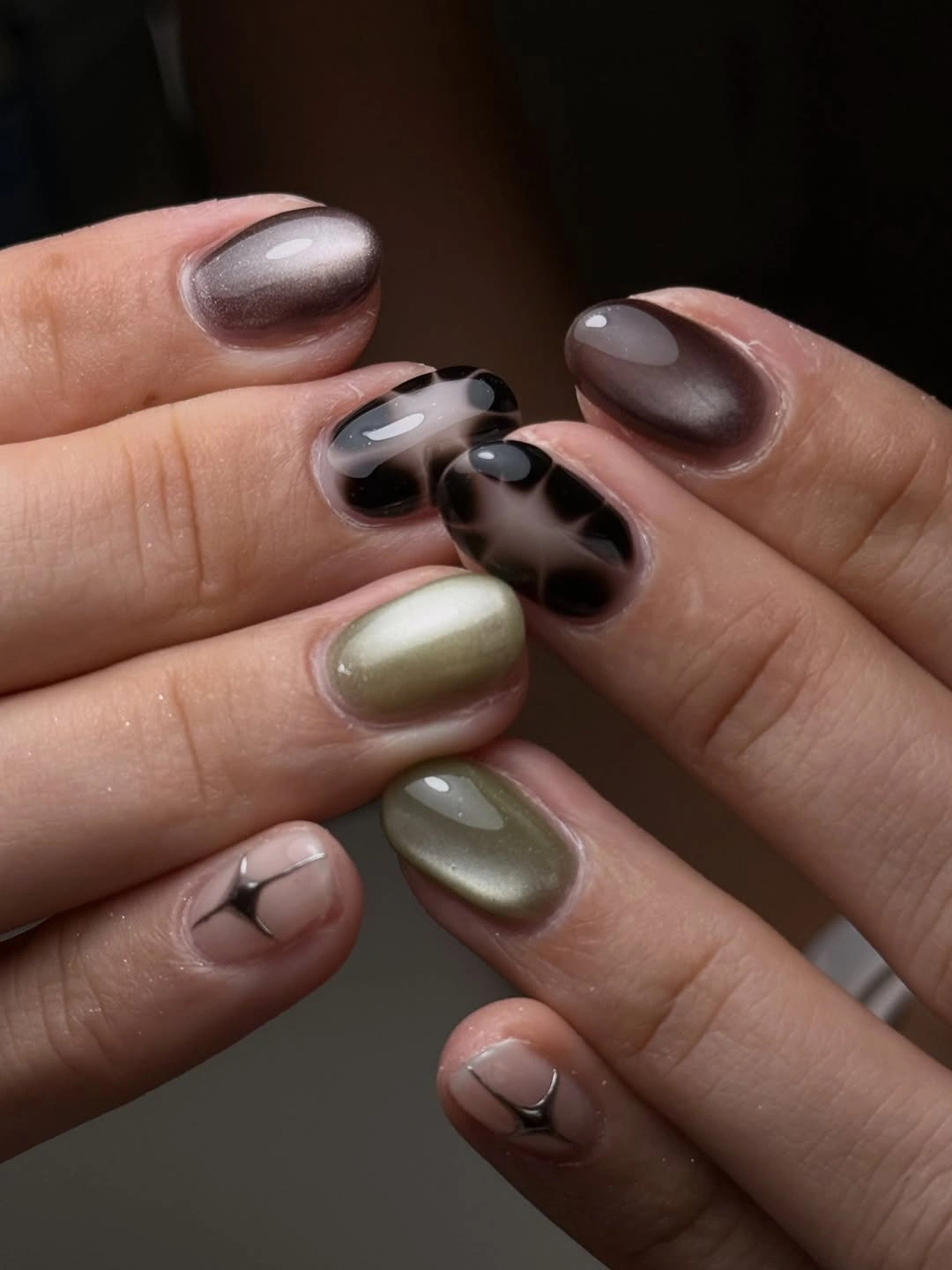
The charm lies in the way the darker marks sit inside a quiet palette. Taupe softens the contrast, olive brings a muted green warmth, and black gives the pattern enough definition to stay visible. Because the nails are short, each accent has to remain simple; the design feels collected precisely because it does not try to show every possible texture at once.
Keep one spotted nail on each hand and use plain taupe or olive on the rest for an easy adaptation. A short oval will preserve the soft impression, while a rounded square will make the blocks feel a little more graphic. The tradeoff is that the subdued colors may not provide immediate drama, but they offer a comfortable option for someone who wants seasonal depth without bright orange or heavy decoration.
Illustrated Orange With Layered Fall Details
Long square nails use a warm translucent-looking orange ground for leaves, dark marks, gold lines, and small text-like details. The surface feels like a tiny autumn illustration, with several elements sharing the same warm family. It is a richer choice than a single orange polish because the color becomes a setting for the details rather than the whole story.
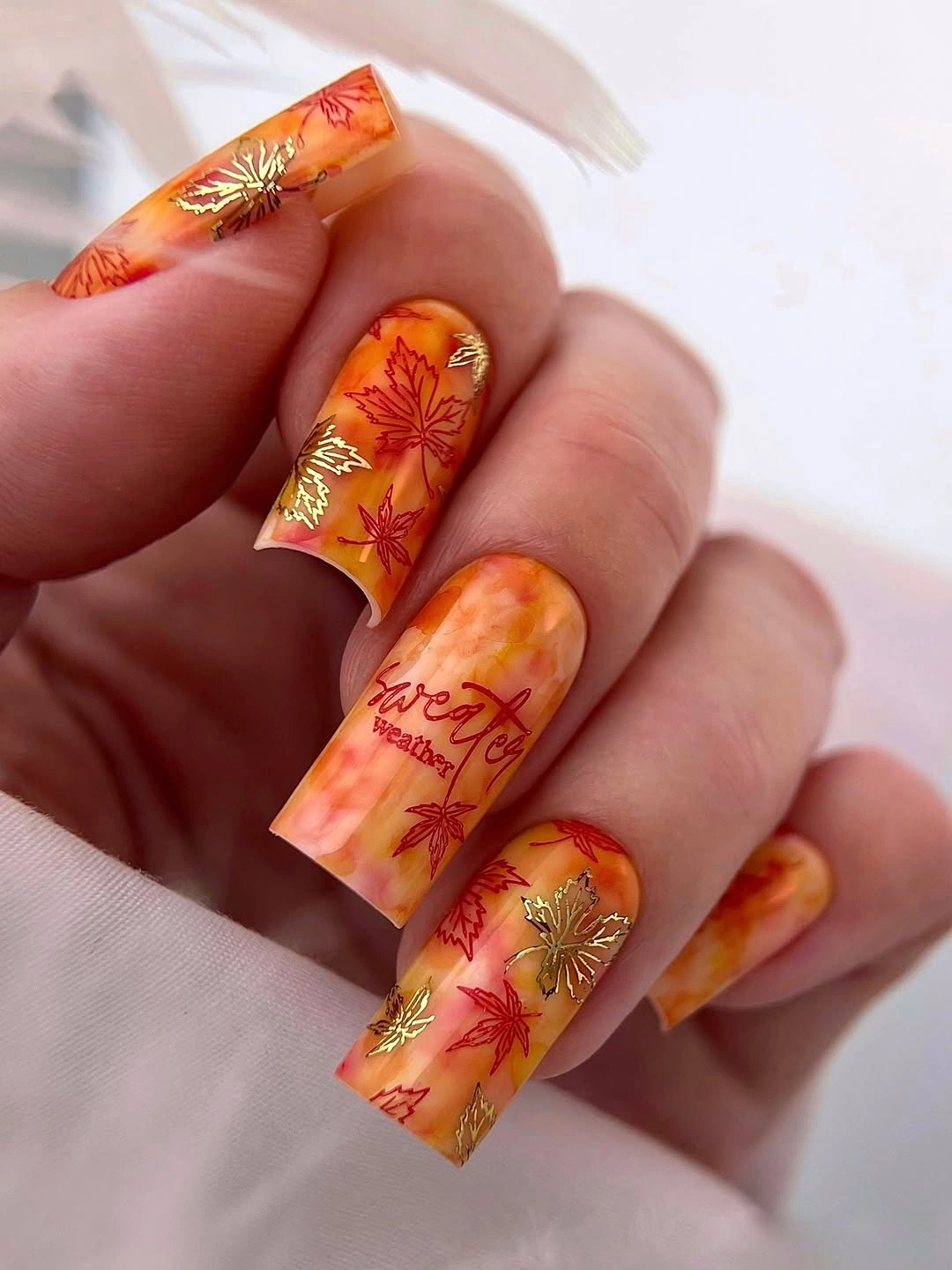
The pale gaps between the marks keep the illustrated surface from becoming too dense. Orange supplies a steady warmth, darker lines give the motifs definition, and gold-looking accents add small flashes without changing the overall tone. The long square shape acts like a frame, giving each cluster enough room to remain separate and readable.
For a shorter version, choose one large leaf or one warm line of detail and let the rest of the nail stay orange. Trying to fit every visible mark onto a small surface would reduce the quiet space that makes the set attractive. This design suits someone who enjoys a more expressive seasonal manicure, with the honest understanding that fine illustrations may need refreshing sooner than a plain solid color.
Pale Nude With Cool Lilac Floral Notes
Medium almond nails soften the season with a pale nude ground and small pink-lilac floral details. The colors are lighter and cooler than the orange and brown designs nearby, but the open surface still feels transitional rather than summery. The hand carries a gentle pause, as if the palette is moving slowly instead of turning rich all at once.
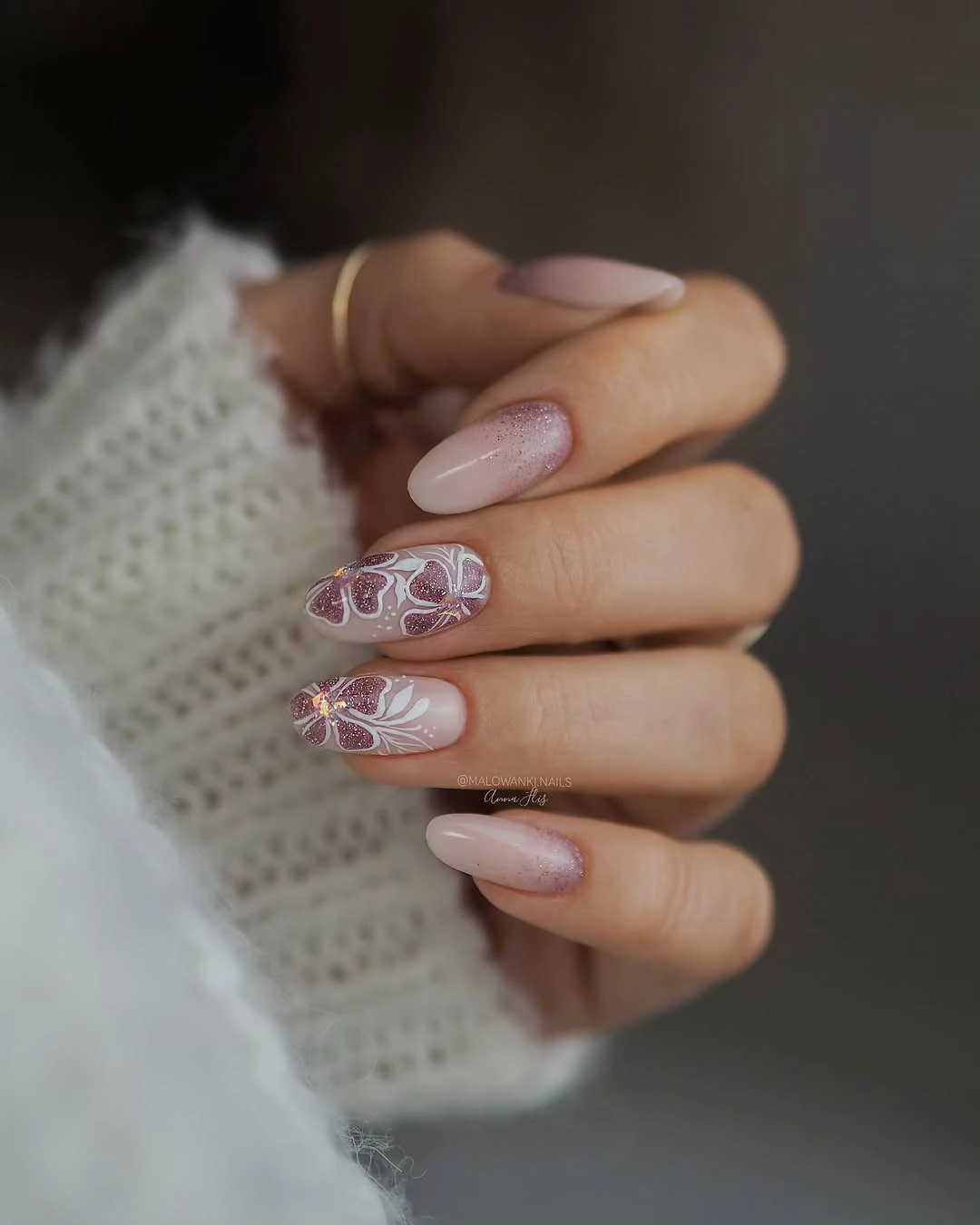
The visual comfort comes from the low contrast between base and motif. Pale pink keeps the flowers delicate, while lilac adds enough difference for the details to appear when the hand is close. The almond length helps the small marks breathe, but the design remains calm because it avoids dark outlines and large blocks of saturated color.
Use one lilac accent nail and keep the remaining nails nude if you want a quieter result. A short oval will make the manicure feel even softer, although the floral marks should become slightly broader to stay visible. The limitation is subtlety: this direction will not deliver the immediate warmth of pumpkin orange, but it gives a graceful option when you want autumn influence without a heavy palette.
Green Gray And Nude In A Clear Rhythm
Medium square nails alternate deep green, gray reflective-looking surfaces, and nude nails with small leaf details. Each color has a distinct job, so the mismatched arrangement feels organized instead of random. The green brings depth, the gray adds a cool pause, and the nude accents keep the hand open enough to feel comfortable.
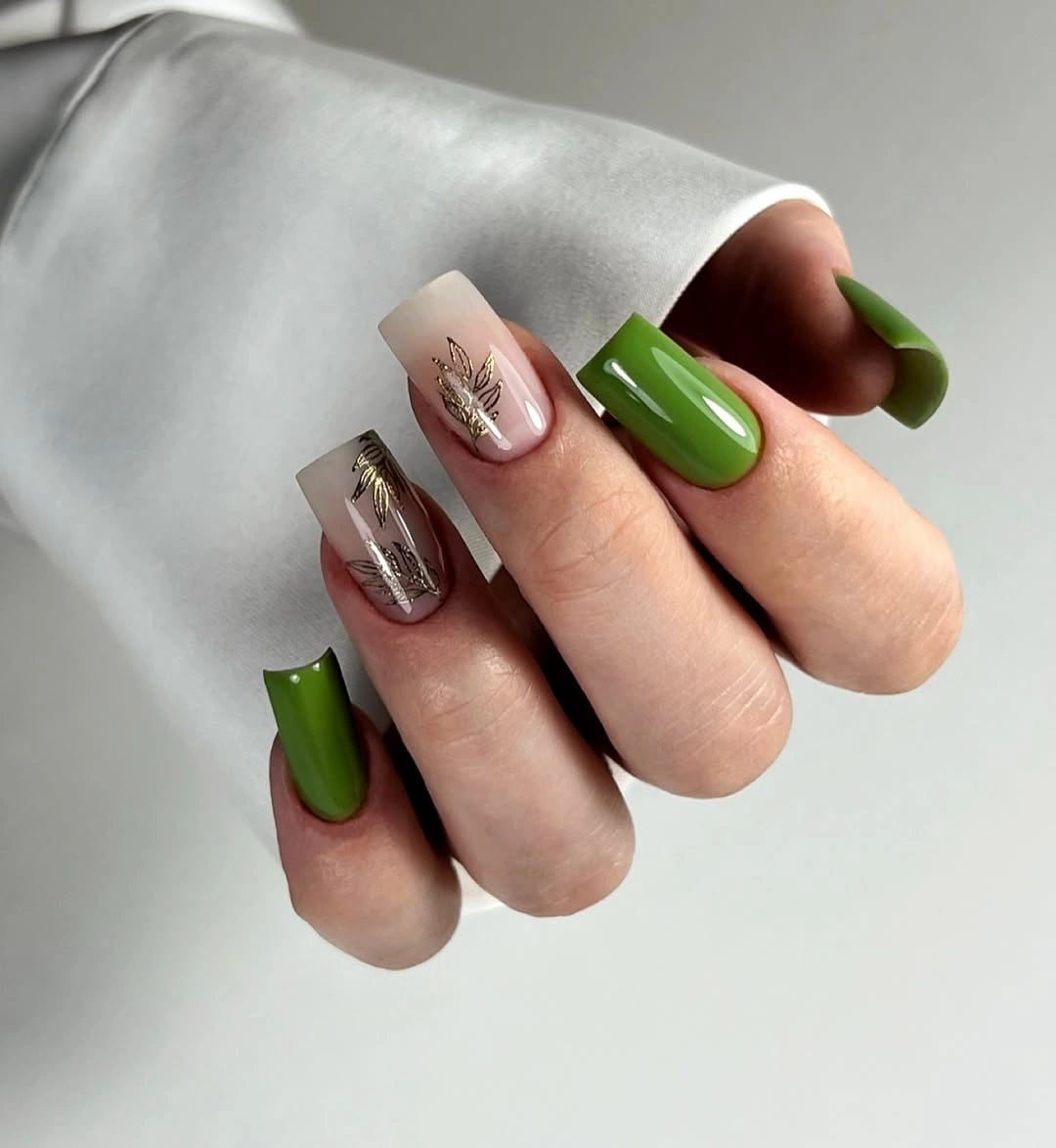
The rhythm depends on repetition rather than matching every nail. Solid green returns the eye to a deeper value, gray lightens the sequence through reflection, and the small botanical marks connect the neutral spaces to the seasonal idea. The square shape gives those changes clean boundaries, making the set feel tidy even though the surfaces are intentionally different.
For a simpler version, use green on two nails, gray on one, and keep one nude leaf accent. A short square will make the color blocks more casual, while a medium almond will soften the geometry. The tradeoff is that reducing the number of roles also reduces the playful variety, but the resulting set may be easier to coordinate with clothing and less demanding to maintain.
Amber With Crisp Graphic Linework
Warm amber and nude share the hand, while black-white lines, a grid-like accent, and a little gold-looking shimmer add structure. The amber nail gives the palette depth, but the graphic details keep the set from becoming purely earthy. There is a pleasing contrast between the soft warmth of the color and the clean precision of the lines.
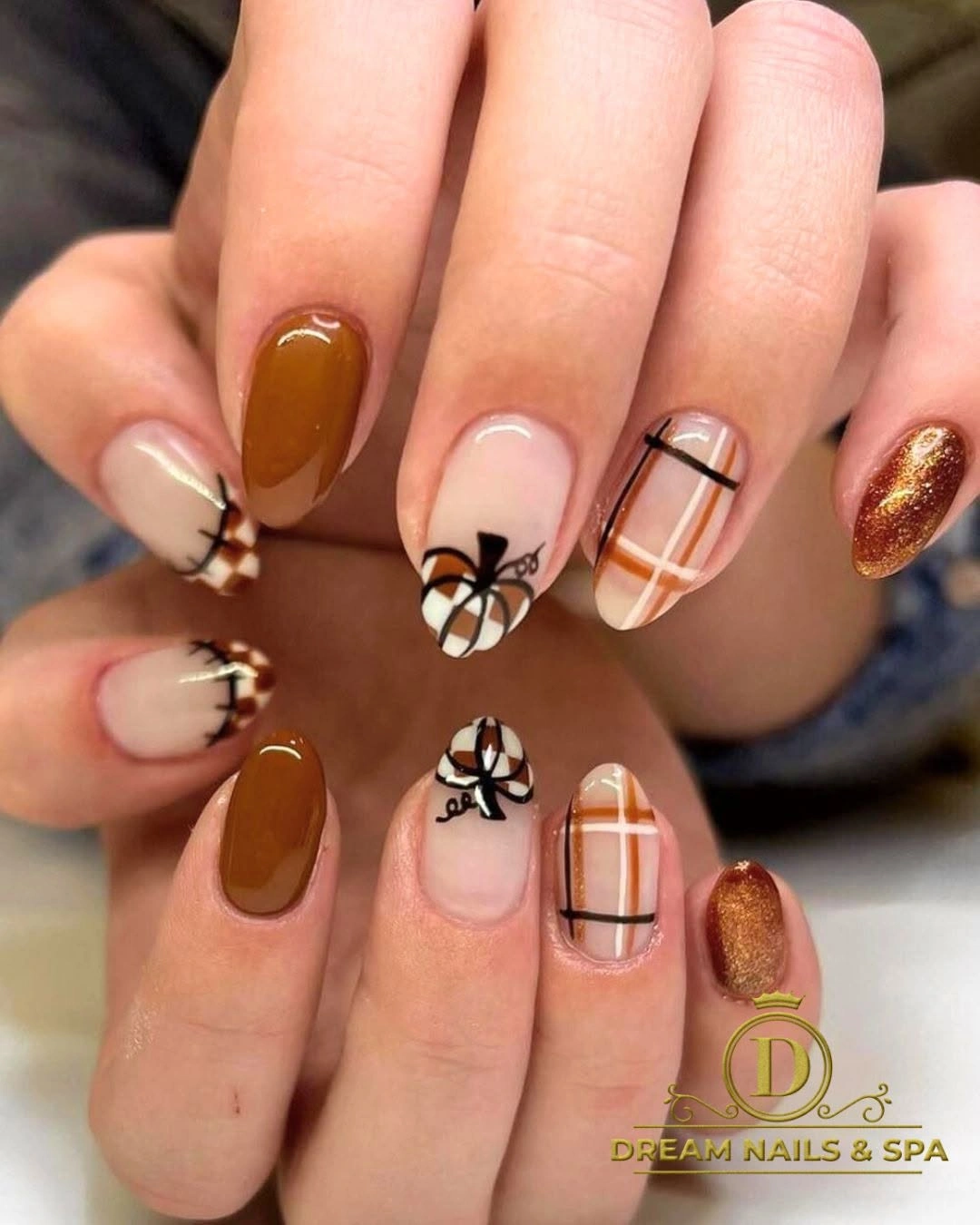
The design feels settled because the colors remain narrow even as the details change. Amber brings the seasonal association, pale nude creates a resting place, and black-white marks sharpen the balance. The small reflective accent is enough to catch light, but it does not compete with the grid or linework because the main contrast stays matte-looking and graphic in spirit.
Choose either the grid or the black linework for an edited version, then keep the amber nail solid. A short rounded shape will soften the geometry, while medium almond preserves the composed feel. The limitation is visual clarity: if too many lines are added, the warm palette may disappear beneath the pattern, so keeping the strongest detail is more valuable than adding another accent.
Dark Accent With A Pale Botanical Pause
Medium almond nails balance nude surfaces with a black accent and a small pale leaf-like mark. One dark textured-looking nail adds depth, while the light motif gives the hand a place to rest before the eye returns to the darker color. The mood is richer than a soft pink manicure but still open because the pale base remains visible.
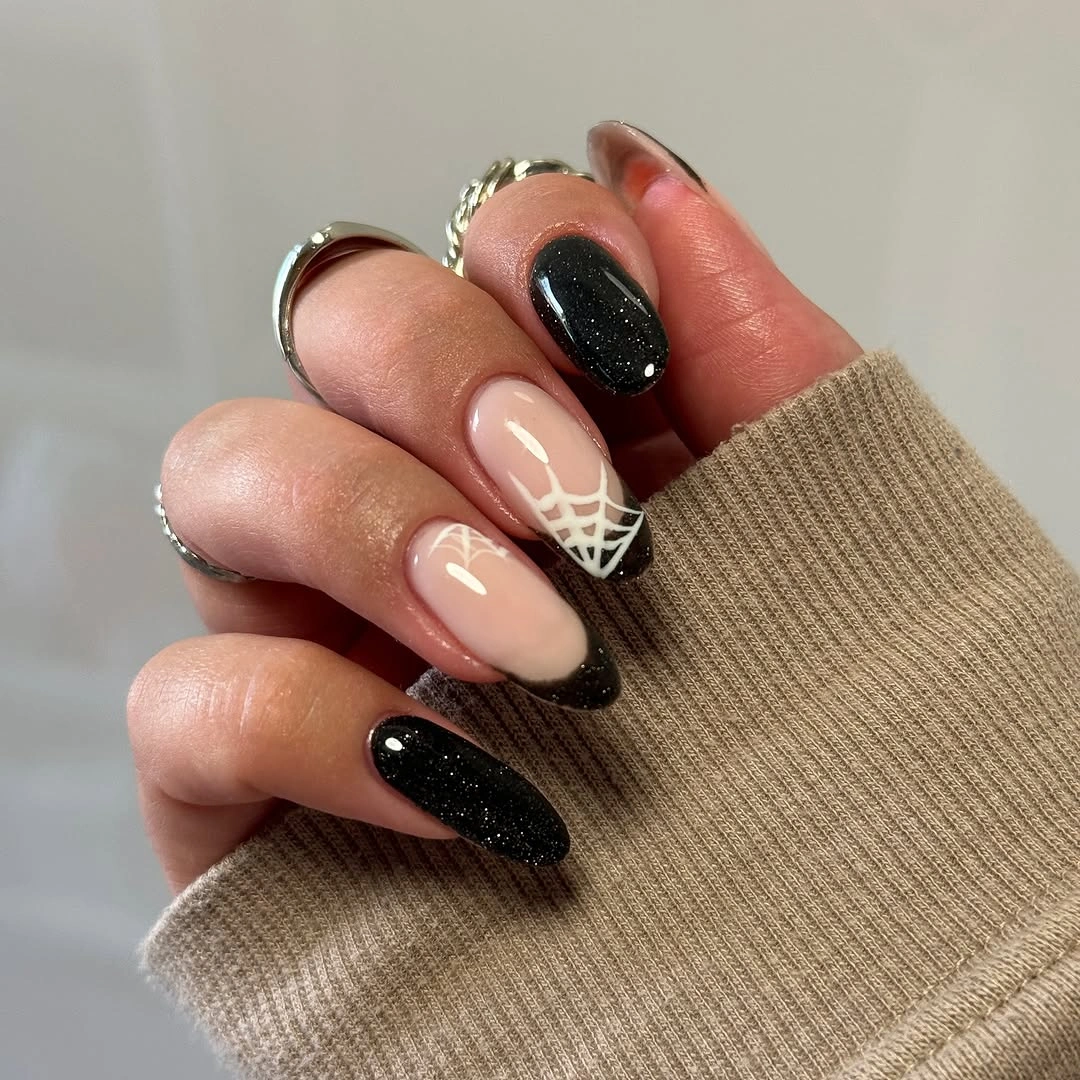
The pale detail matters because it interrupts the dark value without introducing a new bright color. Nude, black, and a small light mark form a simple conversation, and the almond shape gives the accent enough length to look deliberate. The surrounding solid nails also keep the design from depending on several tiny decorations to feel finished.
Use one black accent nail and keep the rest smooth charcoal or nude if you want less texture. A shorter almond will make the balance feel more everyday, while a longer shape will emphasize the contrast. This is a good direction when you like dark seasonal color but do not want the hand to become fully dramatic; the limitation is that the accent may need clean edges to keep the quiet tension intact.
Nude And Pink With Tiny Floral Points
Medium almond nails return to a pale base, this time with small pink and dark floral marks plus brighter pink at the tips. The color feels playful but not loud because the center of each nail stays soft and open. Warmth enters through the edge, while the tiny flowers keep the design connected to a gentle seasonal transition.
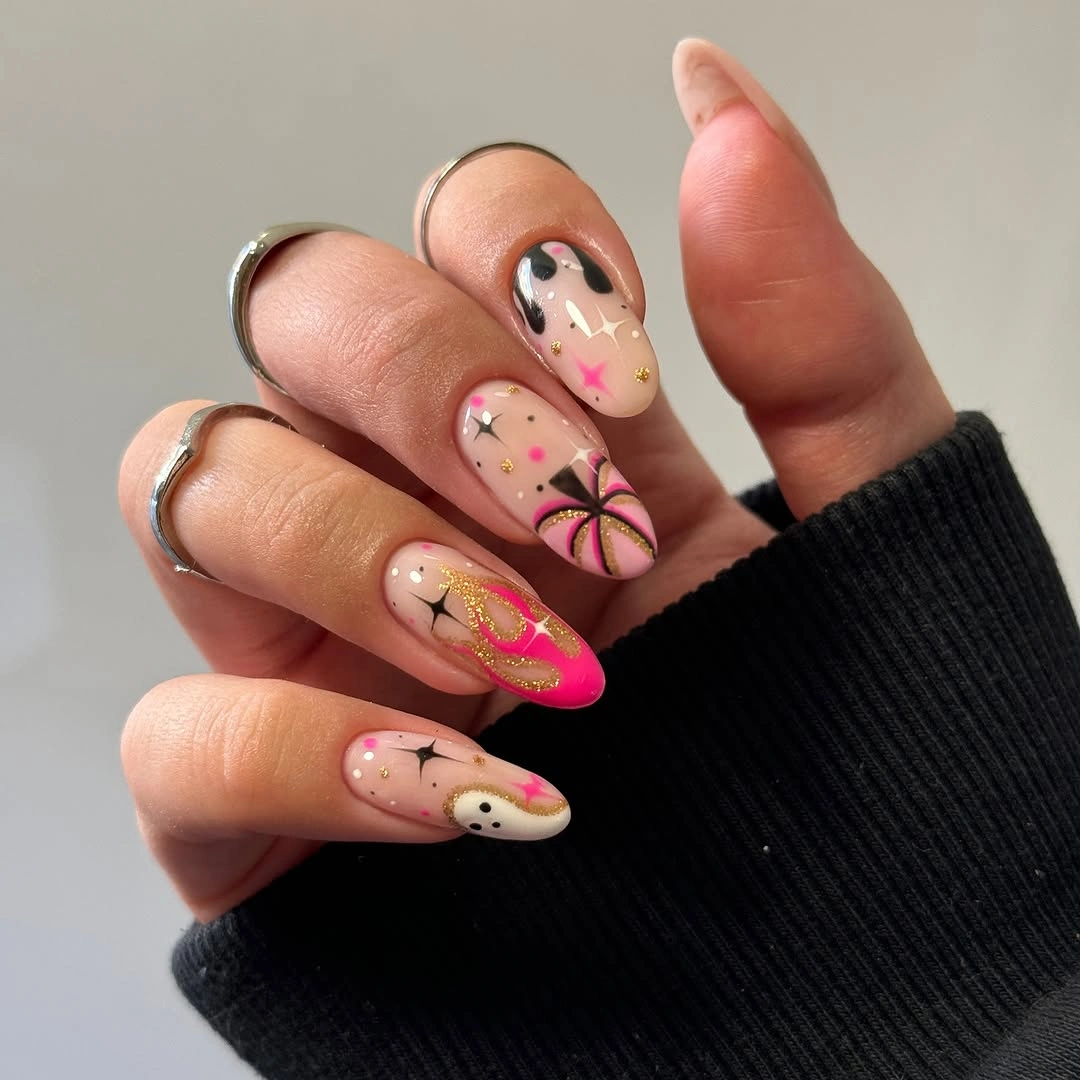
The placement gives the hand its easy rhythm. Pink appears where the eye naturally follows the almond point, and the small dark marks sit nearby without filling the surface. That keeps the manicure from looking like a full floral illustration and lets the base remain part of the visual story rather than a blank background.
For a calmer version, put the brighter pink on two tips and use one flower on a single accent nail. A short rounded shape will make the colors feel more casual, although the tip should remain broad enough to be visible. The tradeoff is that bright pink may lean less traditionally autumnal, but it can feel seasonal when paired with a warm nude and limited decorative placement.
Orange And Yellow Rounded Graphic Marks
These medium almond nails use a pale base for rounded orange, yellow, and white marks that feel cheerful without becoming a literal illustration. The accents vary in size and placement, creating a playful surface while the nude space keeps the hand light. The warmth comes from the color grouping and the soft curves rather than from a dark background.
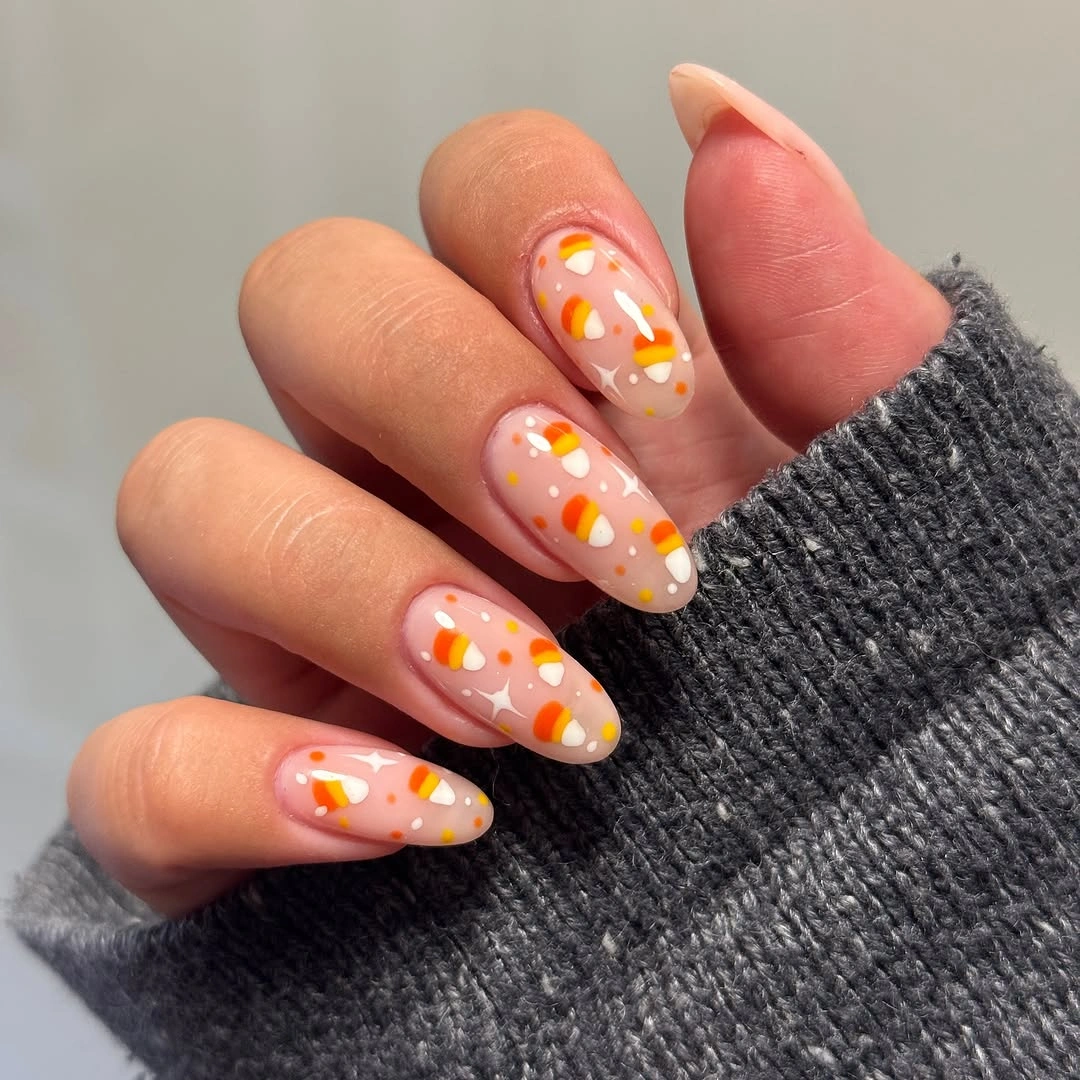
The rounded shapes suit the almond outline because they echo its gentle curve. Orange provides the strongest seasonal note, yellow lifts the palette, and white separates the marks so they do not merge into a single bright patch. The eye can move from one accent to the next without finding a heavy focal point, which makes the set feel friendly and relaxed.
Choose two accent nails and repeat only orange and white if you want a more edited version. On short nails, make the marks broader and reduce their number rather than shrinking them into tiny dots. The limitation is that the cheerful palette may feel less rich than brown or burgundy, so it suits someone who wants a lighter autumn direction instead of a deep, candlelit mood.
Solid Pumpkin Orange On A Short Shape
Short rounded nails in glossy pumpkin orange take a brief, confident pause from the layered designs. There is no visible art and no second color, so the entire seasonal impression depends on the warmth and clarity of the solid surface. The compact shape keeps the brightness close to the hand and makes the choice feel approachable rather than theatrical.
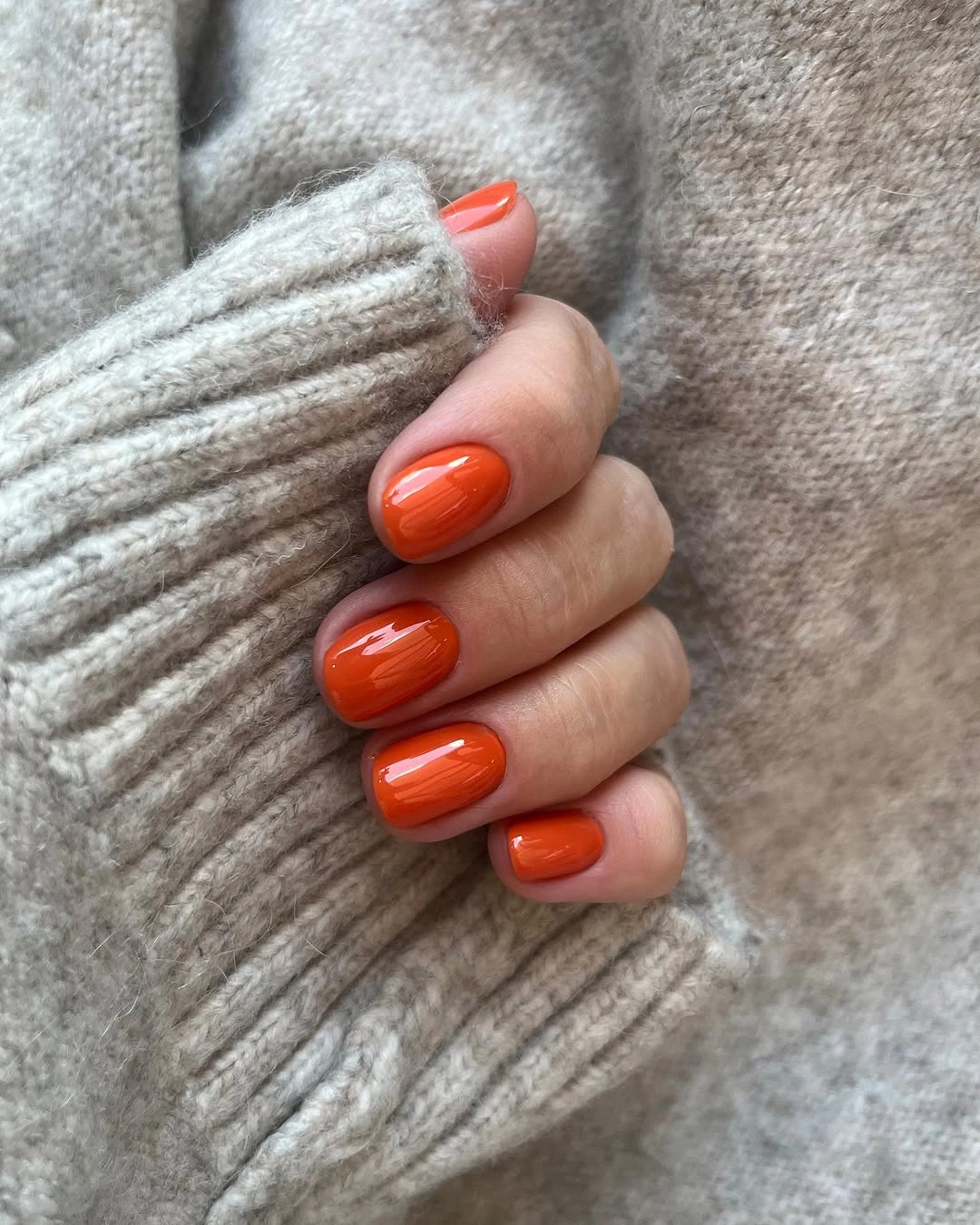
A single color can feel richly seasonal when its temperature is strong enough. The orange brings immediate warmth, while the short outline prevents it from becoming too expansive visually. Gloss adds a small change as the fingers move, but the main appeal remains the simple relationship between a bright autumn tone and a clean, practical shape.
Use the orange as a full set if you like direct color, or borrow the softer surface approach of fall matte nails when you want the same warmth with less glare. A short square will make the shade look more structured, while an oval will keep it softer. The limitation is upkeep: bright color can reveal chips quickly, so neat edges matter.
Bright Pink Tips With A Glossy Nude Base
Medium almond nails place vivid fuchsia-pink along the edge of a pale nude base. The contrast is clean and cheerful, with the bright color defining the tip while the center remains soft. It is not the expected brown-orange route to autumn, but the warm pink can still feel seasonal when the rest of the hand is quiet and polished.
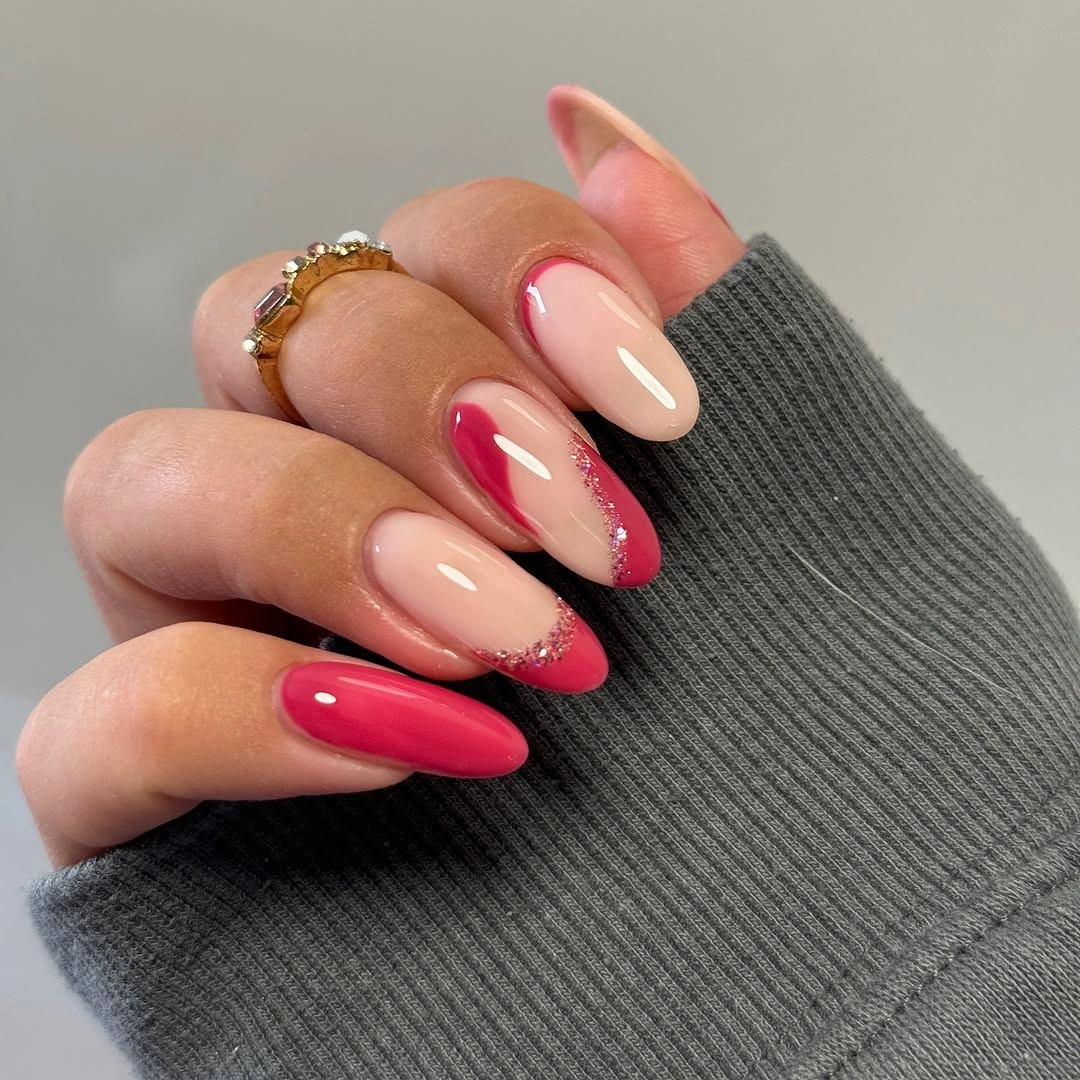
The tip placement gives the color a sense of proportion. Nude carries most of the visual area, so the saturated pink works as a border rather than an all-over block. That makes the manicure easy to read and keeps the almond shape visible, while the glossy surface joins the pale base and bright edge into one clean finish.
Choose a softer berry or muted coral if you want the same structure with a more autumnal temperature. A short oval will make the look relaxed, while a medium almond keeps the edge elegant. The tradeoff is that a vivid pink tip attracts attention quickly, so it suits a reader who wants a bright seasonal twist rather than a subdued neutral manicure.
Warm Borders And A Small White Flower
Long pointed nails combine a clear nude base with orange-brown borders, gold-looking lines, and one small white flower. The warm edges echo the length, while the pale flower interrupts the metallic feeling and keeps the design from becoming too formal. Several details coexist, but they share a narrow palette that makes the hand feel cohesive.
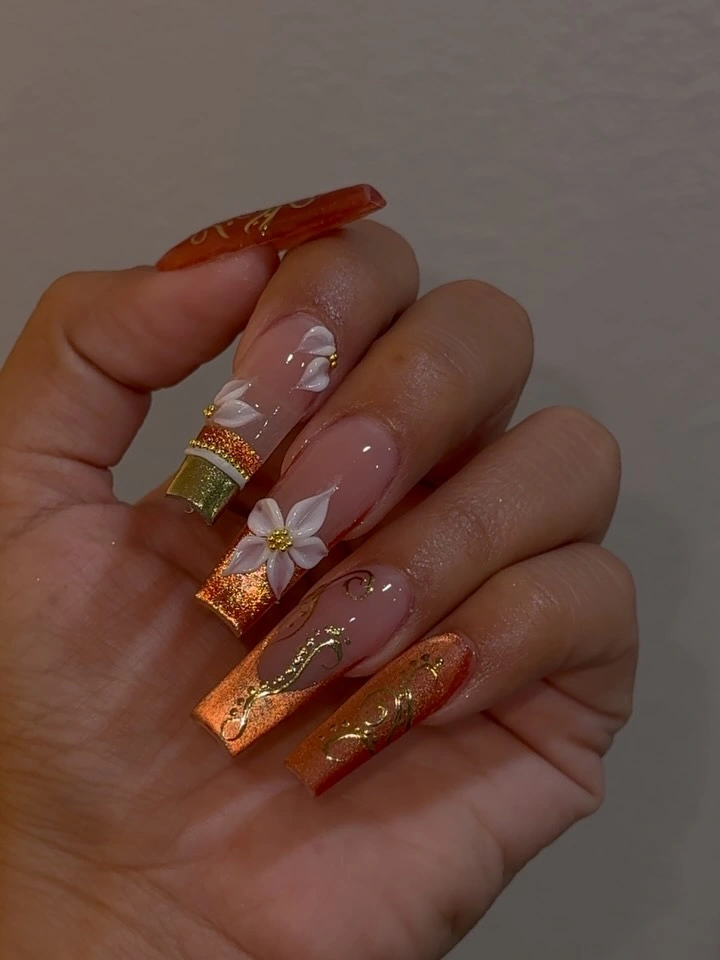
The flower is most effective because it appears once. The eye notices the repeated warm borders first, then finds the pale accent as a softer change in texture and value. That progression gives the set a seasonal richness without forcing every nail to carry the same decorative weight, and the nude ground keeps the long silhouette from feeling visually packed.
For daily wear, keep the flower on one shorter almond accent nail and reduce the borders to one brown or orange edge. The same palette will feel less ornate when there are fewer layers, although the original long points will always look more ceremonial. The limitation is density: if the lines, flower, and warm borders are all repeated on a small nail, their roles can blur together.
Small Red Orange Flowers On Glossy Nude
Medium almond nails use a glossy nude base and place small red-orange floral marks near the edge. The design feels almost bare at first, then the warm details appear as the hand moves closer. That delayed discovery creates a cozy quality, because the seasonal note is present without taking over the clean pale surface.
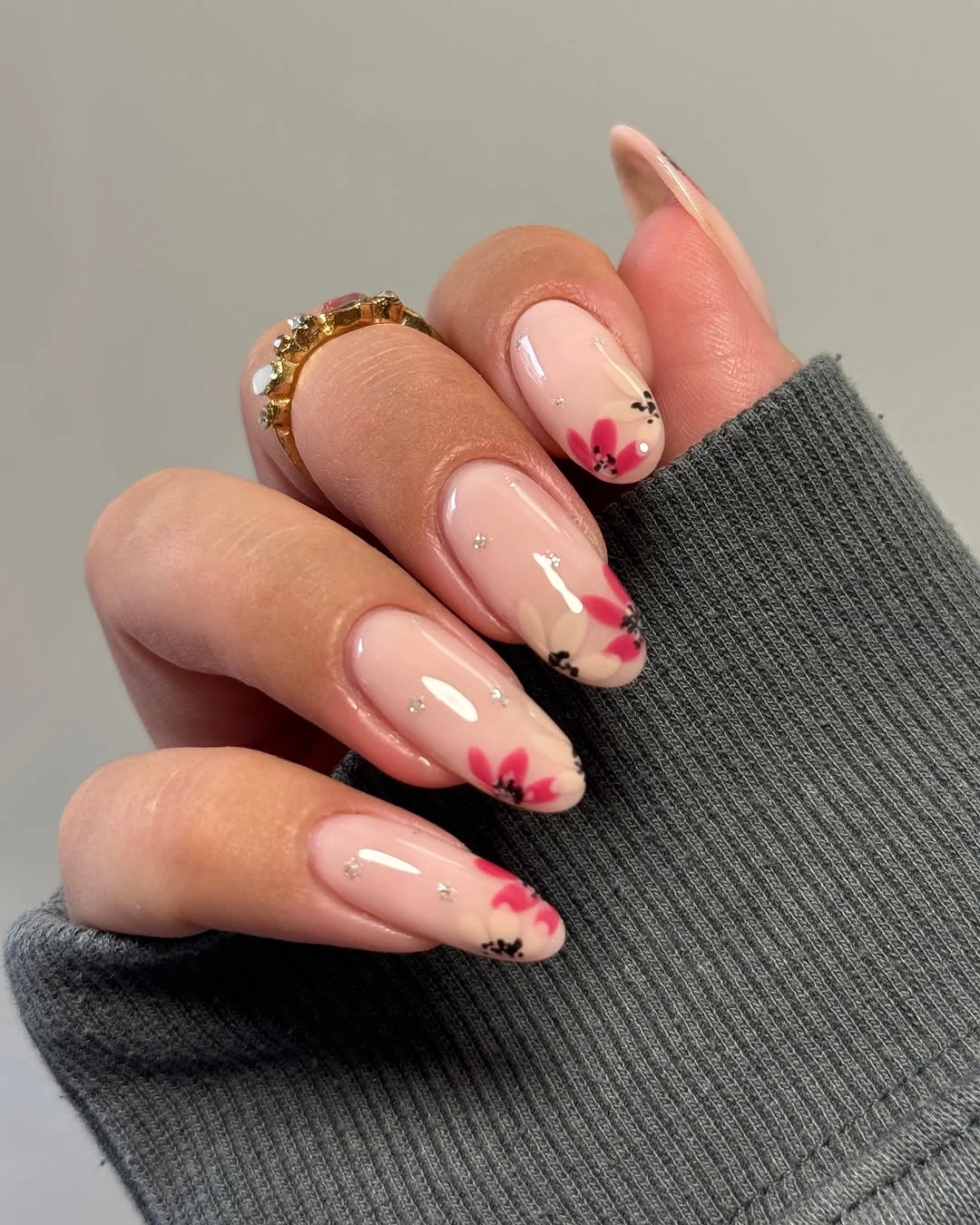
The quiet center gives the tiny marks their importance. Nude sets the calm background, red adds depth, and orange keeps the accents warm rather than heavy. Because the details stay near the edge, they echo the almond direction and make the hand look lightly finished instead of fully illustrated, with a small seasonal signal that appears naturally rather than as a loud centerpiece.
Keep one flower on each hand and leave the remaining nails plain nude for a very soft version. A short oval will preserve the gentle character, though the marks should become slightly larger so they do not vanish. The tradeoff is that the manicure will not create a dramatic first impression, but it offers an easy seasonal adjustment for someone who prefers delicate color and low visual density.
Dark Brown And Orange With Layered Spots
Long stiletto nails turn deeper, mixing dark brown, amber-orange panels, irregular spots, and thin pale curves. The warm center keeps the dark silhouette from feeling flat, while the spots add a more graphic, animal-like rhythm without needing to identify a specific print. The result is bold and layered, with the pointed shape carrying much of the drama.
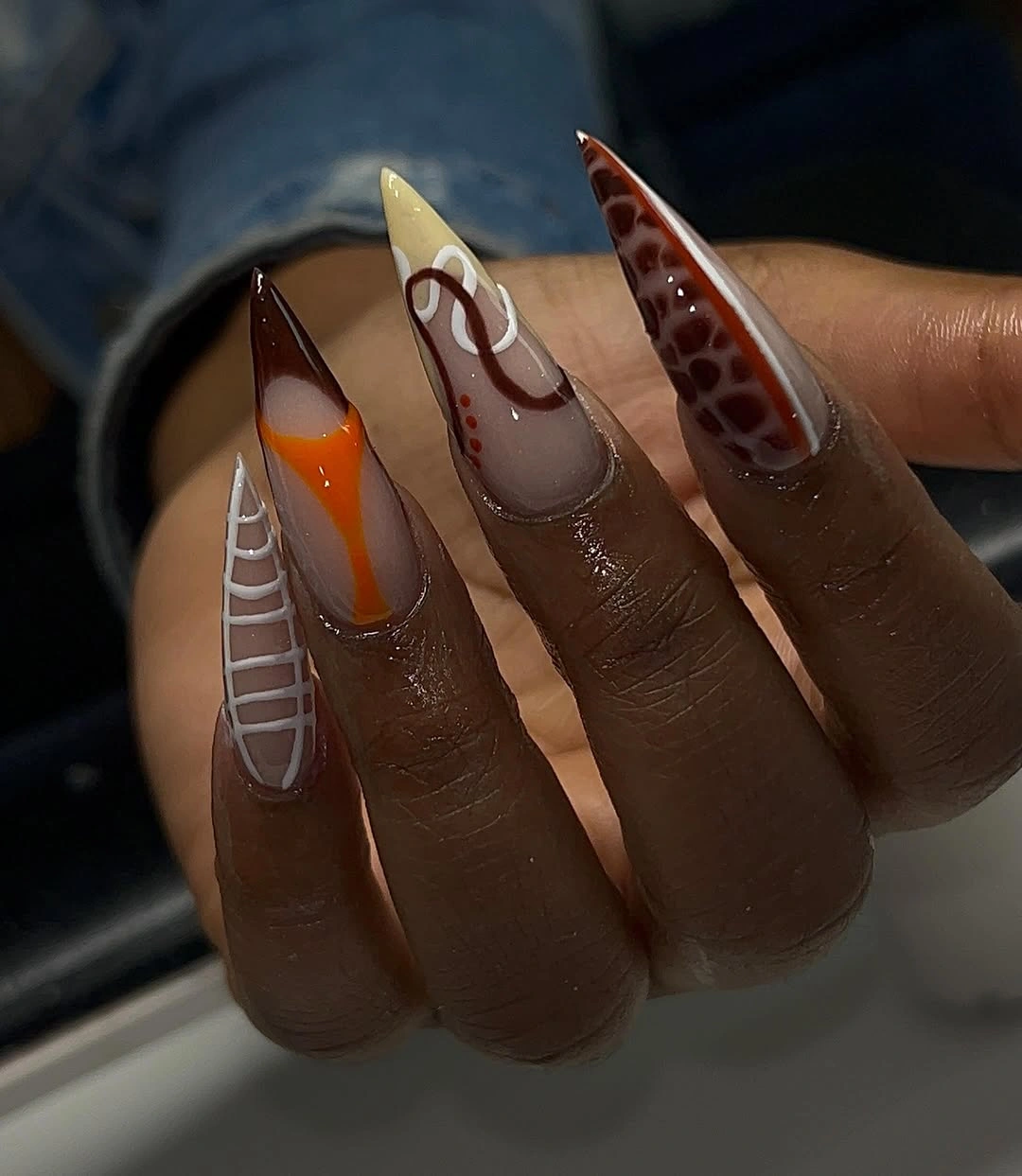
The color transition is what makes the set feel warm. Brown provides depth, orange brings the center forward, and pale lines give the eye a route through the darker areas. The spots add texture to the sequence, but they work because they are contained by the larger brown-orange relationship rather than floating as unrelated decoration.
Use the gradient on two medium almond nails and keep the spots to one accent if you want a more wearable interpretation. A shorter shape will reduce the pointed drama but make the warm center easier to coordinate. The limitation is visual density: several patterns can look crowded when compressed, so simplifying the marks is more effective than merely shortening the tip.
Orange And Green Mini Florals On Pale Nails
Medium almond nails carry a pale base with small orange, green, and dark floral or daisy-like details. The colors feel lively after the deeper brown set, but the light ground keeps them approachable. Warm orange supplies the clearest focus, while green adds a botanical note that makes the palette feel connected to the season.
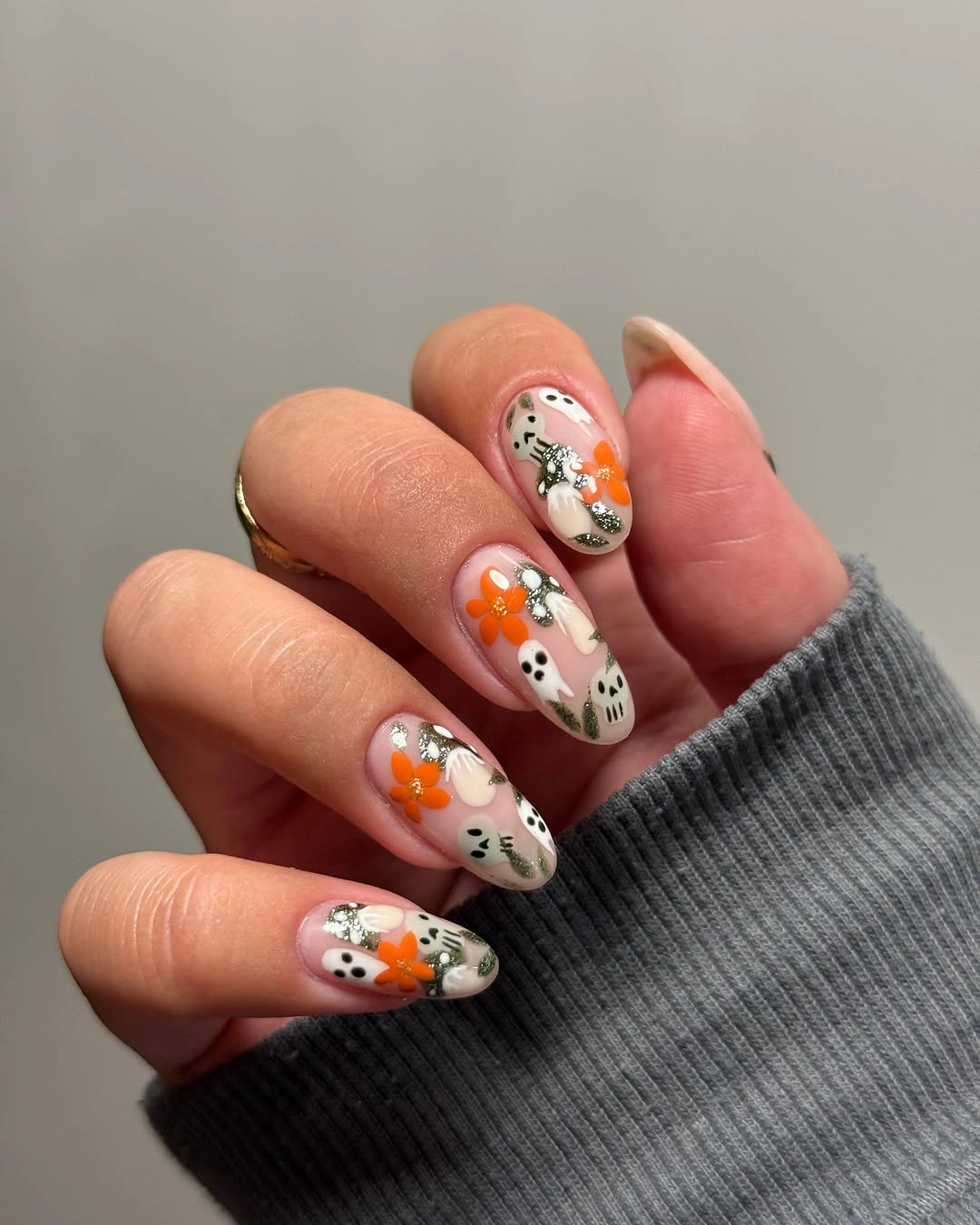
The hand feels balanced because the motifs arrive in small clusters rather than broad fields. Pale space separates orange from green, and the dark outlines give the tiny marks enough definition to remain visible. The almond silhouette supports the gentle rhythm, but the design would still work on a shorter shape if the clusters were reduced to one or two marks.
Keep orange as the main accent and use green only as a supporting detail for a cleaner version. A short oval will make the florals feel sweet and casual, while a medium almond keeps them more editorial. The tradeoff is that a light floral set may read more transitional than deeply autumnal, so it suits a reader who prefers the season to arrive through color rather than darkness.
Fine Brown Grid With One Autumn Leaf
Short-to-medium rounded nails use a pale cream base, fine brown crossing lines, and one small warm leaf accent. The grid feels delicate, almost like a quiet textile reference, while the leaf gives the hand a single unmistakable seasonal note. Because the pattern remains thin and sparse, the nails keep a soft, open appearance.
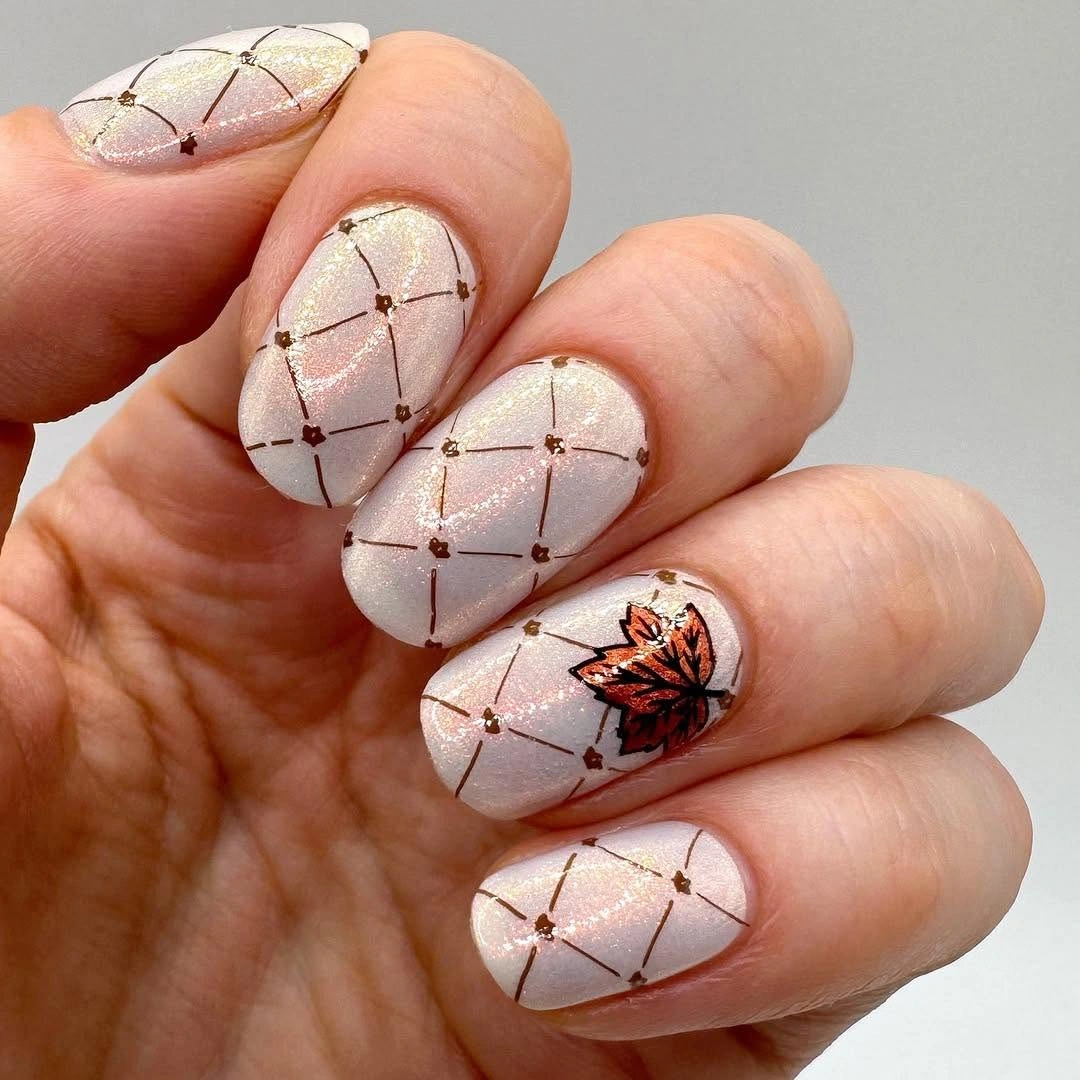
The spacing between the lines is the detail to protect. When the grid has enough room, it adds structure without turning the light base into a dark mesh. The single leaf then becomes a gentle focal point, and its warmer tone connects the linear pattern to the richer colors elsewhere without making the manicure feel crowded.
Use the grid on two nails and replace the leaf with one warm dot if the nail bed is very small. A short rounded shape will keep the design practical, although the lines should remain slightly wider and fewer. The limitation is that fine intersections can merge as the surface shrinks, so a simplified pattern will look more intentional than a miniature copy of every crossing.
Soft Lilac With A Single Plaid Detail
Short square nails in lilac, lavender, and pale pink coordinate with a nearby purple accessory, while one nail carries a small grid-like accent. The colors feel gentle and collected, and the accessory context reinforces the palette without needing the manicure to copy every surrounding shade. The strongest seasonal quality comes from softness and coordination rather than dark contrast.
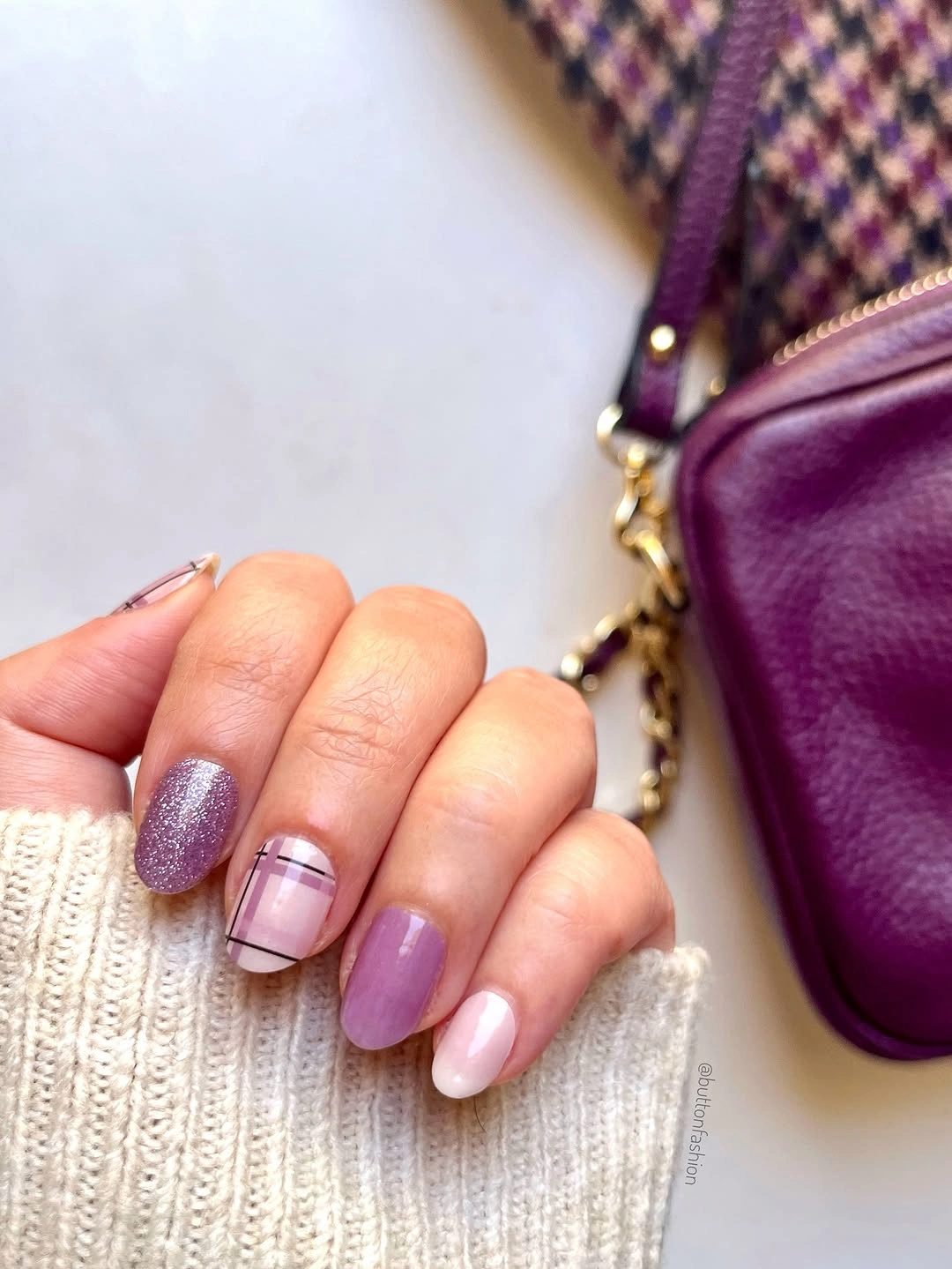
The small grid works as a quiet interruption between the solid colors. Lilac carries the cool mood, pale pink warms the hand slightly, and the patterned nail gives the eye one place to pause. Because the rest of the set is simple, even a modest line detail feels considered and keeps the short shape from looking plain.
Choose one lavender, one pale pink, and one grid accent for an edited version that does not depend on matching an accessory. A short oval will make the palette softer, while the square shape keeps the pattern crisp. The tradeoff is that the gentle colors will never feel as dramatic as brown or orange, but they offer a welcoming choice for someone who wants a quiet seasonal transition.
Sage Green In A Calm Monochrome Set
Long almond nails stay within a sage green palette, using a consistent surface with only subtle darker tonal lines or curves. The nearby mint-green pumpkin echoes the color, but the manicure itself remains nearly monochrome and therefore more restrained than the illustrated designs. Shape and soft tonal movement provide the interest.
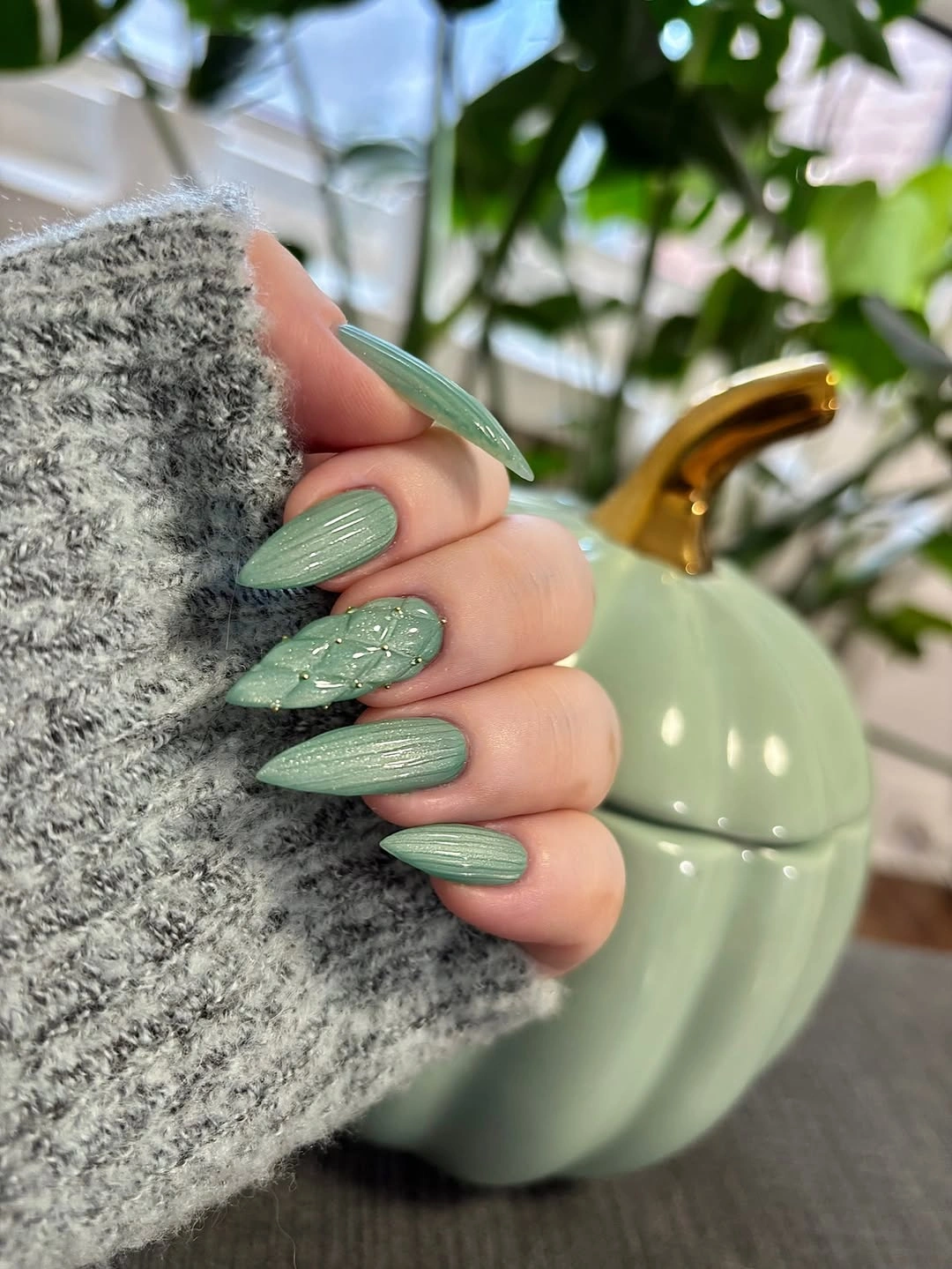
The quietness of the color is what makes the set feel seasonal without relying on a symbol. Sage sits between a cool green and a muted neutral, so it can bring freshness while still feeling softened and grounded. The long almond outline gives the single color an elegant sweep, and the small tonal changes prevent the surface from looking entirely flat.
Use the same sage on a short oval and keep one darker curve on an accent nail if you want an easier version. The shape will become more practical, while the monochrome palette stays intact. The limitation is that subtle tonal detail can disappear under low light, so choose this direction for calm coordination and close-up texture rather than bold contrast from across a room.
White Orange And One Spotted Accent
The final manicure brings together white, bright orange, yellow, and one black-orange spotted accent on a medium almond shape. The patterned nail leads, while the solid colors support it and keep the hand playful instead of chaotic. The palette is vivid, but the distribution remains edited because the busiest detail has one clear location.
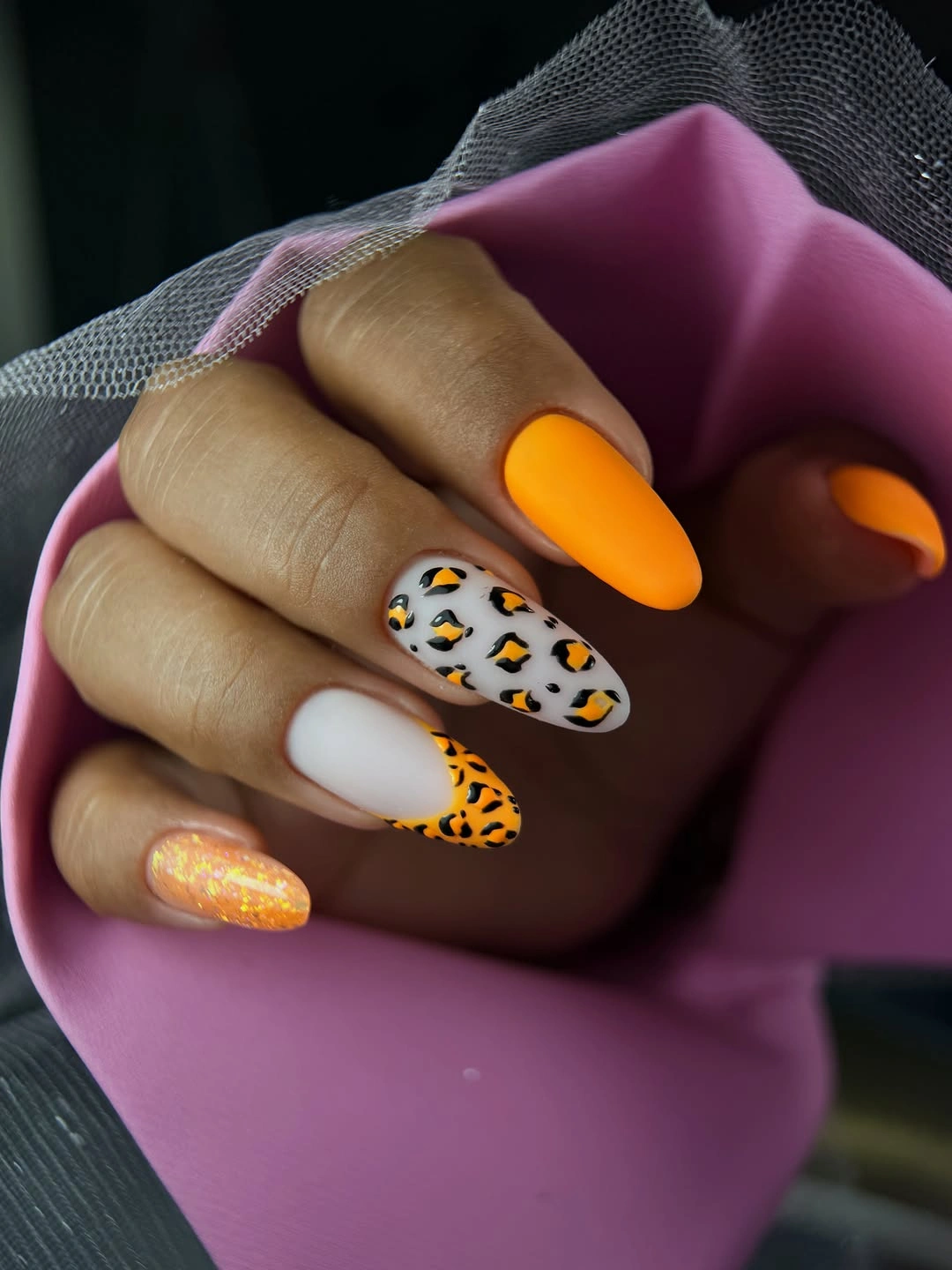
The balance comes from giving each color a different role. White opens the composition, orange supplies the strongest warmth, yellow adds a small lift, and the spotted accent gathers the darker contrast. That hierarchy makes the set feel cheerful and seasonal without requiring every nail to carry an illustration or a repeated pattern.
For a calmer result, keep the white and orange solids, then choose either the spotted accent or the yellow reflective-looking nail. A shorter almond will retain the color rhythm, while a rounded shape will make the set feel more casual. The one-focal-detail logic used in fall nails with accent nail explains the tradeoff: editing removes abundance, but makes the chosen detail clearer and easier to coordinate.