October hair colour ideas can feel more considered when the focus shifts from a single shade name to visible placement, depth, and texture. This collection moves through polished copper, red-brown dimension, soft blonde variation, dark cool tones, and high-contrast panels, but every entry begins with what the eye can actually trace: a deeper root, a lighter ribbon, a compact bob, a layered wave, or a clear field of color. That makes the inspiration easier to adapt without inventing a formula or treating every warm tone as interchangeable.
The 22 references below range from subtle brunette dimension to bolder color stories, with each one showing a different way for color to travel through length and movement. They include warm reds, quieter brown depth, soft blondes, dark cool tones, and high-contrast panels, but the useful detail is always the visible relationship between base, accent, texture, and shape. Use the details as visual prompts, then keep only the contrasts that match the effect you want to preserve.
Glossy Copper With a Blunt Shoulder-Length Edge
Smooth shoulder-length hair falls in a near-straight curtain with a blunt rounded edge, moving from a deeper auburn area near the crown into clearer copper through the lengths. The color reads especially clearly because the surface is smooth and the cut has very little visible layering to interrupt the vertical lines. The visual interest comes from placement, depth, and texture working together rather than from a label alone for glossy copper with a blunt shoulder-length edge. Reading those relationships first makes it easier to decide which part of the reference is essential and which part can change for glossy copper with a blunt shoulder-length edge.
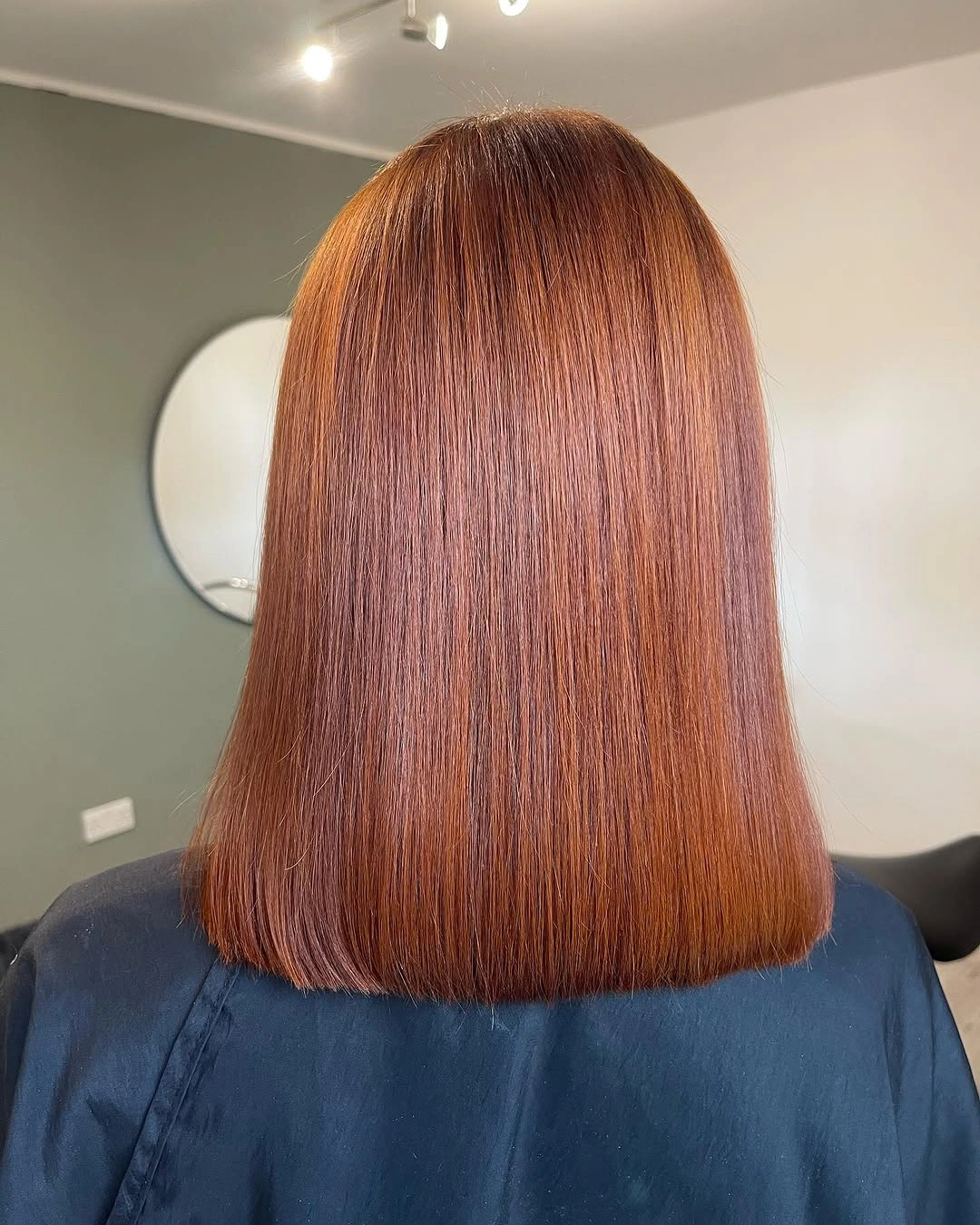
A reader drawn to this direction can keep the overall length clean and let the copper variation remain subtle rather than adding scattered high-contrast pieces. The deeper crown gives the warmer lower area a visible starting point, while the compact ends keep the color field controlled. When adapting the idea, preserve the difference in value before chasing a precise tone for smooth copper shoulder-length hair with blunt rounded ends. The overall reading comes from how light and dark are spaced, which is usually more important than naming a color exactly for smooth copper shoulder-length hair with blunt rounded ends. For more warm-toned inspiration, see red hair colour ideas.
This is a polished October hair colour idea for someone who wants warm color to be the main feature of a simple cut. On a very layered or strongly waved shape, the same tonal shifts would appear more broken up, which changes the quiet, continuous effect. The lasting takeaway is a readable color map rather than a fixed recipe in color reference 1. Once the relationship between base, accent, and texture is understood, the idea can be scaled up or down without losing its point in color reference 1.
Honey Waves With a Deep Beige Root
Long loose waves carry a honey-beige blonde through the middle and ends, while the root area appears noticeably deeper and the front pieces are lighter around the face. The root-to-length contrast creates dimension without turning every strand into a separate stripe, and the waves make the light areas appear in soft bends. A useful color observation is the way the lightest and darkest areas are separated for honey waves with a deep beige root. That spacing gives the style a clear hierarchy and prevents the visible tones from blending into an indistinct overall shade for honey waves with a deep beige root.
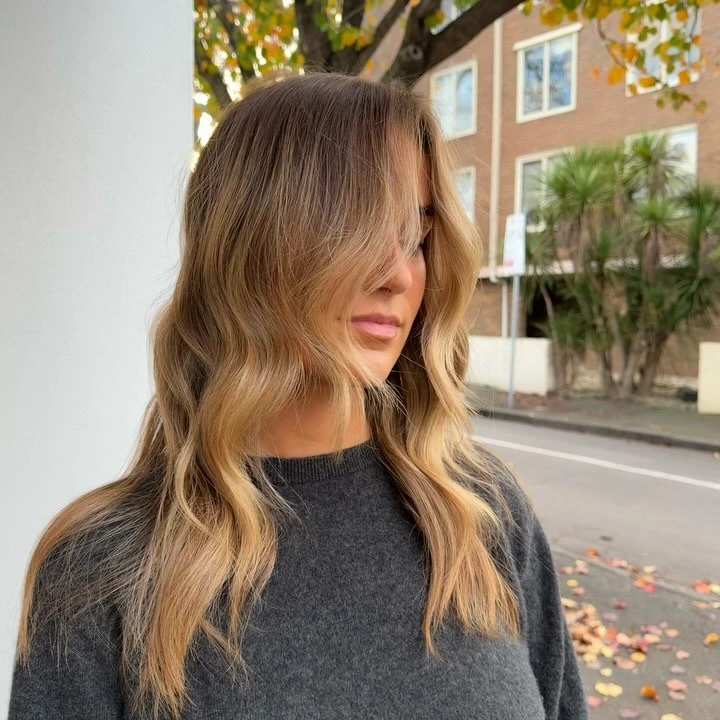
Keep a deeper neutral root area with blended warm blonde sections if a gradual rather than graphic color change is the goal. The brighter face-framing pieces are separated by softer beige length, so the eye lands near the front before following the waves downward. Texture changes the story considerably for long honey blonde waves with darker beige root area. Straight styling can make the color look more continuous, while loose movement divides it into small flashes that appear and disappear with the hair for long honey blonde waves with darker beige root area.
It gives a practical reference for blonde hair ideas that still retain visible depth near the scalp. The effect depends on restrained brightness in the interior, so adding equally pale pieces everywhere would reduce the sense of movement. The point to carry forward is the hierarchy of visible tones in color reference 2. If the base stays recognizable, the accent can become brighter, softer, warmer, or cooler without losing the original balance in color reference 2.
Soft Auburn Shag With Full Fringe
A medium-length auburn cut combines a full fringe, soft face-framing layers, and loose bends through the ends, with warm red-brown tones visible across the whole shape. The fringe makes the color feel more concentrated near the face, while the textured layers break the auburn into smaller, softer surfaces toward the shoulders. The cut is not secondary here because it changes how color is revealed for soft auburn shag with full fringe. Smooth lengths, bends, fringes, and layers each expose a different amount of tonal variation across the same head of hair for soft auburn shag with full fringe.
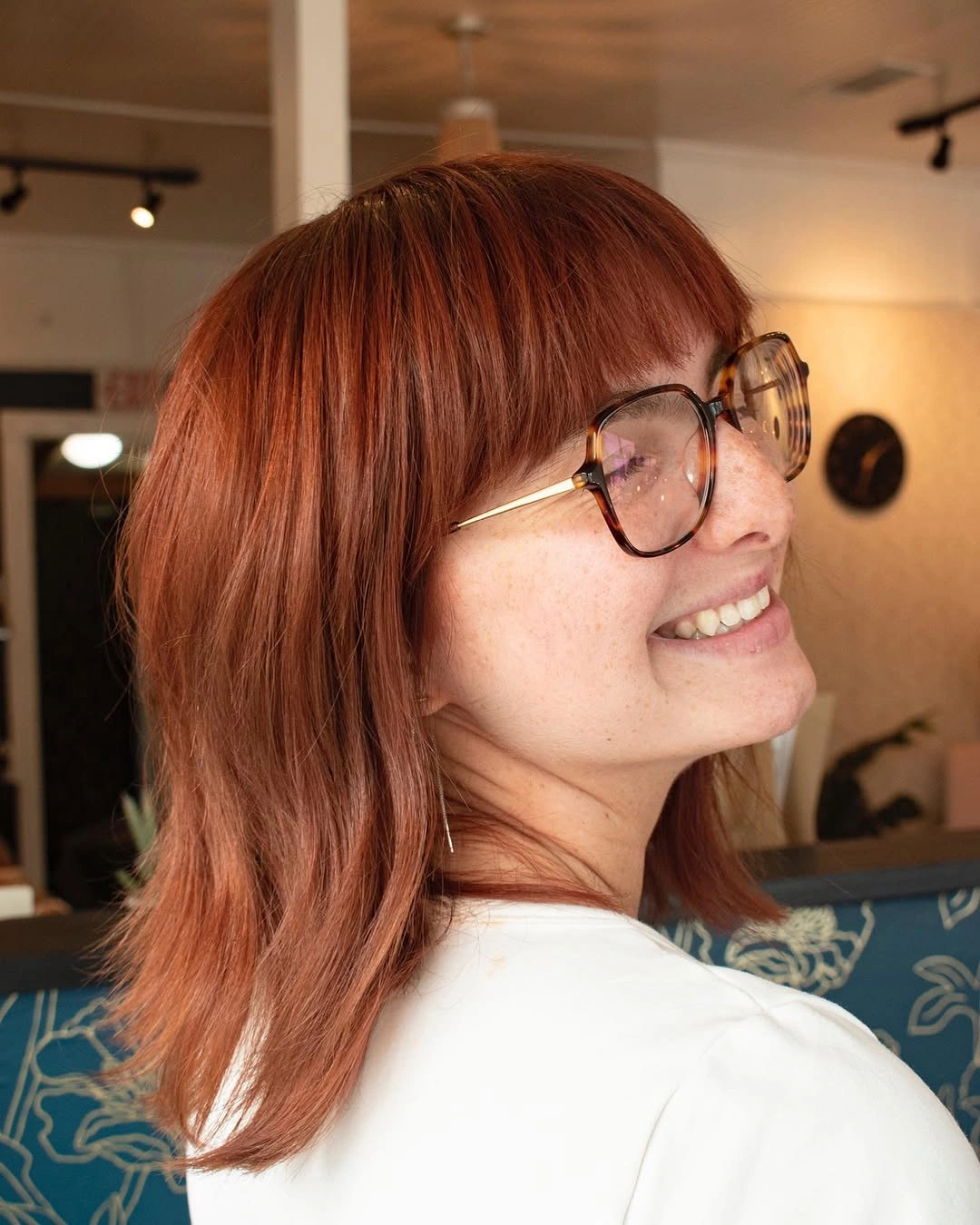
To echo the idea, pair a warm brown-red overall shade with a layered cut and keep the fringe slightly airy rather than sharply geometric. The volume is distributed at the crown and around the cheek area, so the ends can stay lighter in movement without looking thin. A controlled palette gives even bold color a cleaner outcome for soft auburn layered hair with full fringe and waves. Leave some quieter hair visible around the active section so the contrast has room to register for soft auburn layered hair with full fringe and waves.
Among fall hair colours, this one shows how a warm brunette-red can feel lively through cut and texture rather than bright contrast alone. A full fringe changes the visible outline considerably, so the color effect will read differently when the front is pinned back or grown longer. The reference offers a visual decision that can be tested in many degrees in color reference 3. Its value lies in the placement logic, the readable silhouette, and the fact that those two ideas support each other in color reference 3.
Burnished Copper Waves on a Long Bob
A side-parted long bob has loose rounded waves and a vivid burnished copper finish, with a slightly deeper red-brown note visible closer to the root area. The rich copper becomes the focal point because the wave pattern is broad and uncluttered, allowing reflected light to travel across the larger bends. What holds the idea together is not maximum brightness but a deliberate map of where color is allowed to appear for burnished copper waves on a long bob. That is why the direction remains readable even when several tones are visible for burnished copper waves on a long bob.
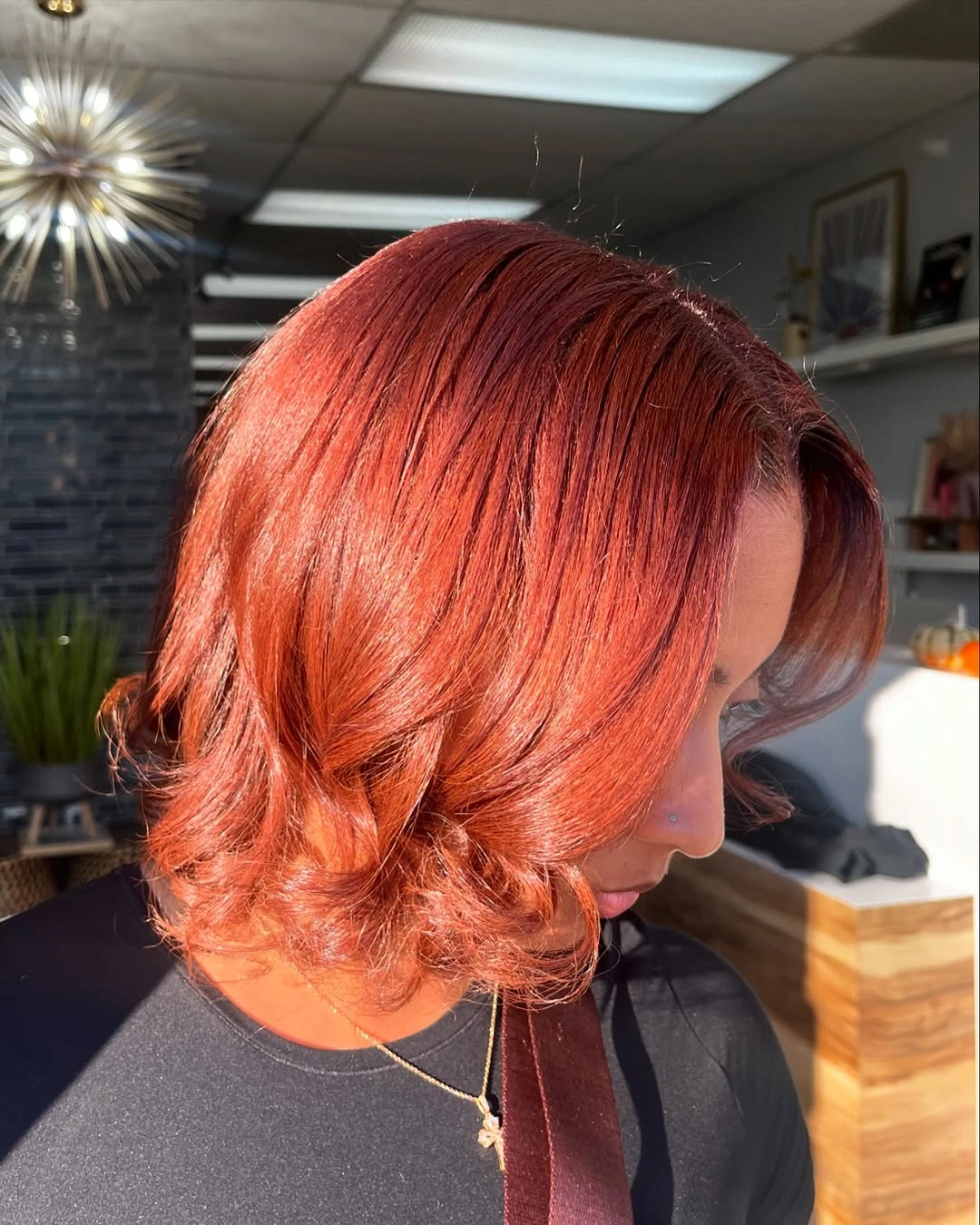
For a lower-key version, retain the warm copper family but keep the cut smoother or choose a softer wave rather than adding extra color placement. The side part gives one side more volume, which stops the saturated color from reading as a flat helmet-like shape. Use the visible parting and front shape as a guide for placement for burnished copper long bob with soft side waves. Those features determine which sections meet the face first and which tones remain more background-oriented for burnished copper long bob with soft side waves.
This is a direct hair colour inspiration option when a bold warm tone needs a cut that remains easy to recognize. The more texture added to a short-to-medium length, the more broken the color may appear, so the desired surface matters as much as the shade. What makes the direction memorable is the measured use of difference in color reference 4. Darker space, lighter space, and texture are each allowed to do a separate job instead of being forced into one uniform effect in color reference 4.
Deep Plum Brown Through Extra-Long Length
Extra-long straight hair shows a deep plum-brown or wine-brown tone, with a smooth reflective surface and a mostly even fall down the back. At this length, the dark color has enough uninterrupted space to register as dimensional rather than simply black-brown, especially where the light catches the center panels. The most informative detail is the relationship between the root area and the lengths for deep plum brown through extra-long length. A darker, lighter, or more neutral starting point changes the way every later ribbon or reflection is perceived for deep plum brown through extra-long length.
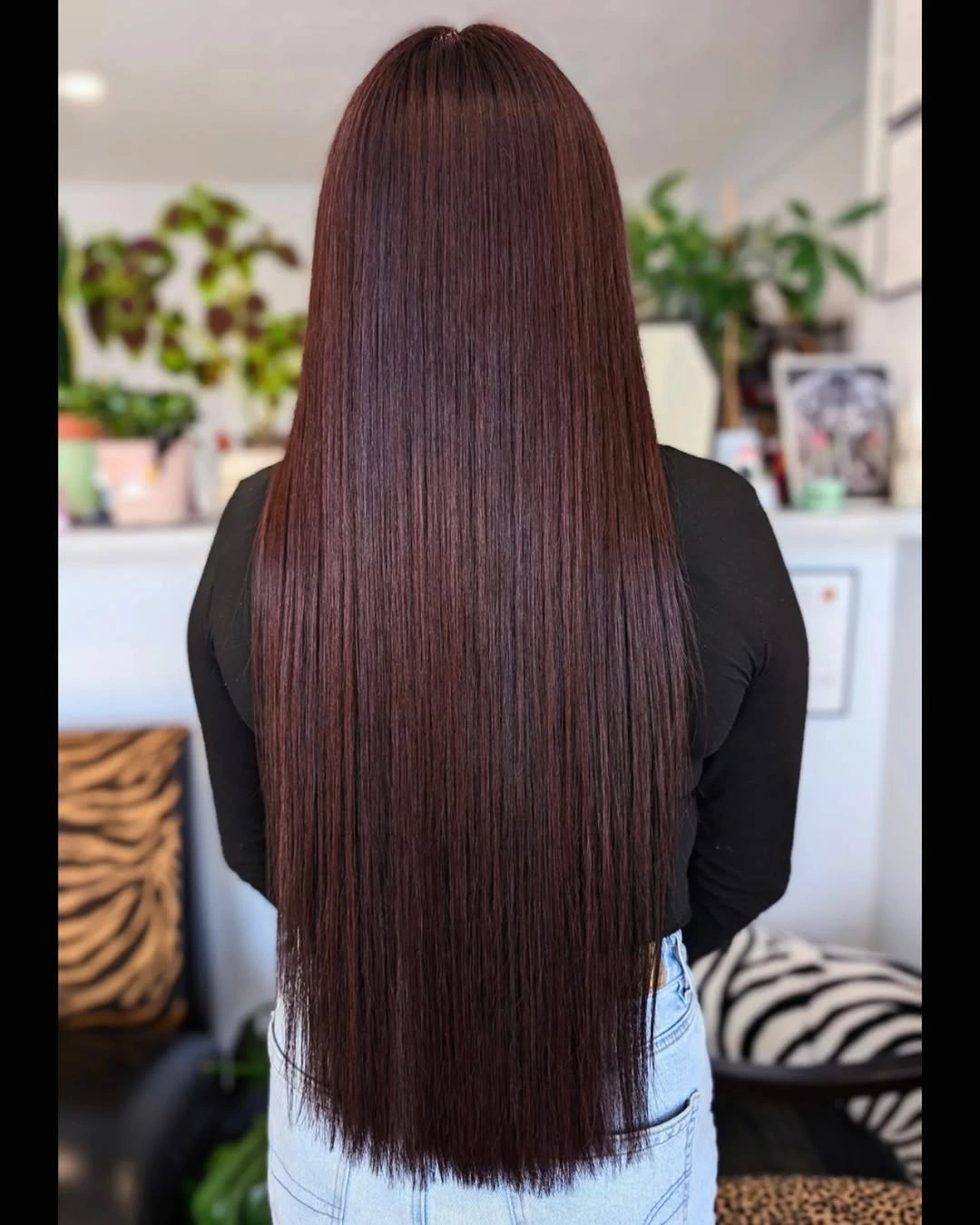
A comparable approach is to preserve a dark overall base and choose a subtle red-violet cast instead of placing pale highlights through every length. The simple straight finish makes the slight changes in brown and plum visible without asking the eye to decode a complex cut. A simpler version should keep one visible color relationship and remove the rest for extra-long straight deep plum brown hair from the back. That approach makes the reference easier to translate while allowing the main shape and focal area to stay intact for extra-long straight deep plum brown hair from the back.
It offers a deeper alternative within October hair colour ideas for readers who prefer low-contrast color with a distinct undertone. Because the visual story is subtle, heavy curl or multiple bright accents would take attention away from the wine-brown depth. The balance here depends on leaving some areas quiet in color reference 5. That restraint is what lets the warmer, lighter, deeper, or more unusual notes appear considered rather than accidental in color reference 5.
Soft Chestnut Layers With Wispy Fringe
Medium chestnut hair is arranged with a soft wispy fringe, face-framing layers, and loose ends that turn outward around the shoulders. The brown is not presented as a single heavy block: the fringe and face layers split the surface into smaller areas where warm and cooler notes can be noticed. Color becomes more useful when it is tied to the silhouette that carries it for soft chestnut layers with wispy fringe. The visible line of the cut explains whether the result feels compact, flowing, textured, or intentionally graphic for soft chestnut layers with wispy fringe.
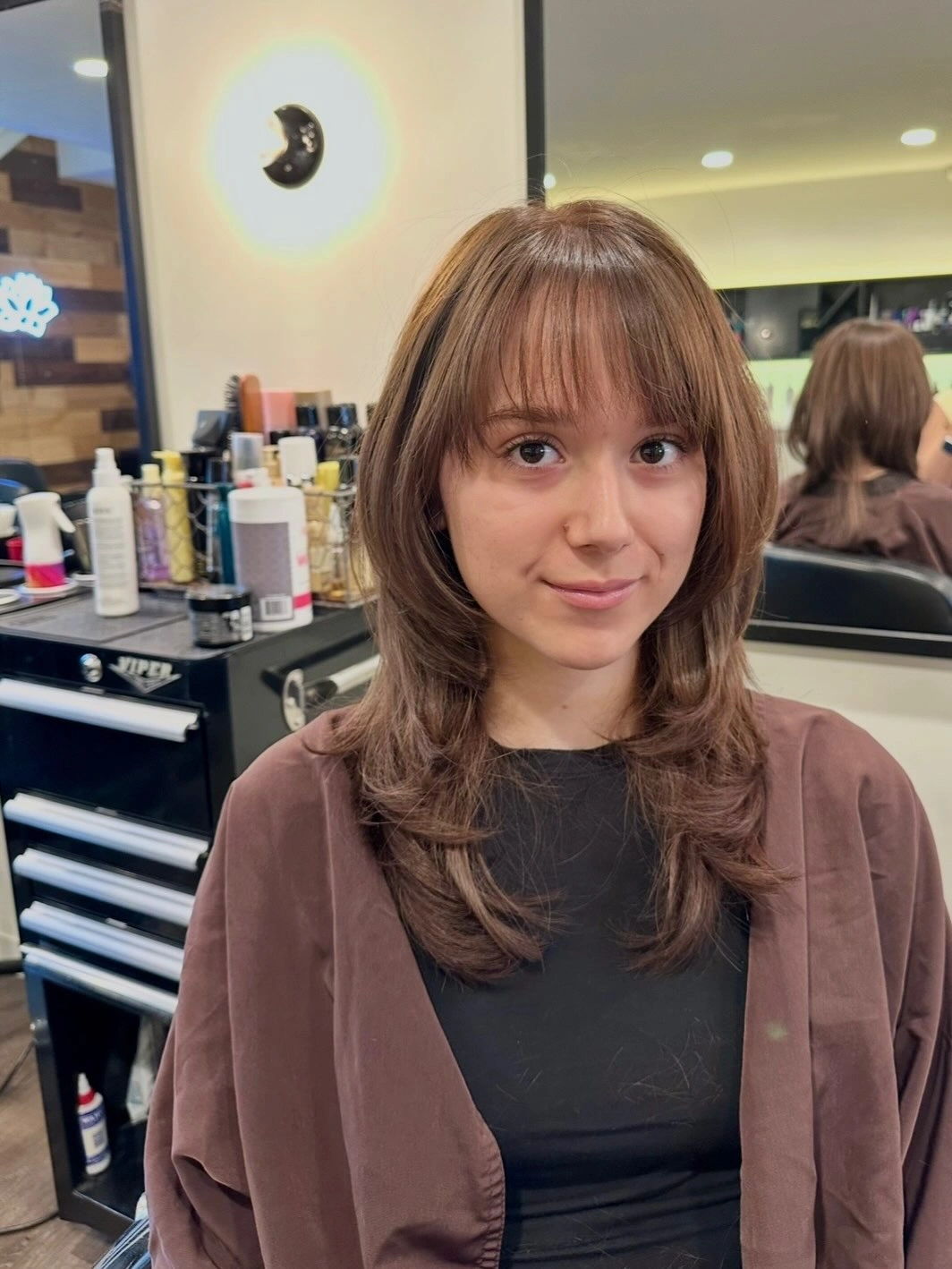
Keep the chestnut base close to the natural-looking depth and use a layered finish to bring movement forward instead of relying on obvious light pieces. The curved ends widen the lower shape slightly, while the light fringe keeps the crown from looking overly dense. Start by deciding whether the reader response should be root depth, a front accent, interior panels, or warm ends for medium chestnut layered hair with wispy fringe and turned ends. Choosing one main effect prevents a multi-tone idea from becoming visually crowded for medium chestnut layered hair with wispy fringe and turned ends. For a quieter tonal direction, explore fall brown hair colour ideas.
This is a useful fall brown hair colour reference when the desired change is more about softness and movement than a dramatic color contrast. A blunt, one-length cut would make the same brown appear more uniform, so the layered shape is part of what gives this direction its character. The mood comes from the interaction of tone and shape, not from a claim about a particular process in color reference 6. That keeps the inspiration useful for different lengths and personal styling preferences in color reference 6.
Caramel Ribbons Through a Brunette Shag
Long dark brunette hair is cut in a layered shag with wispy bangs, loose waves, and clearly visible caramel-to-peachy ribbons around the front and through the lengths. The lighter sections are separated by dark negative space, making them read as intentional accents rather than a solid blonde overlay. There is enough contrast to make the style memorable, but not every strand is asked to perform the same role for caramel ribbons through a brunette shag. The calmer areas are what allow the more active tones to make sense for caramel ribbons through a brunette shag.
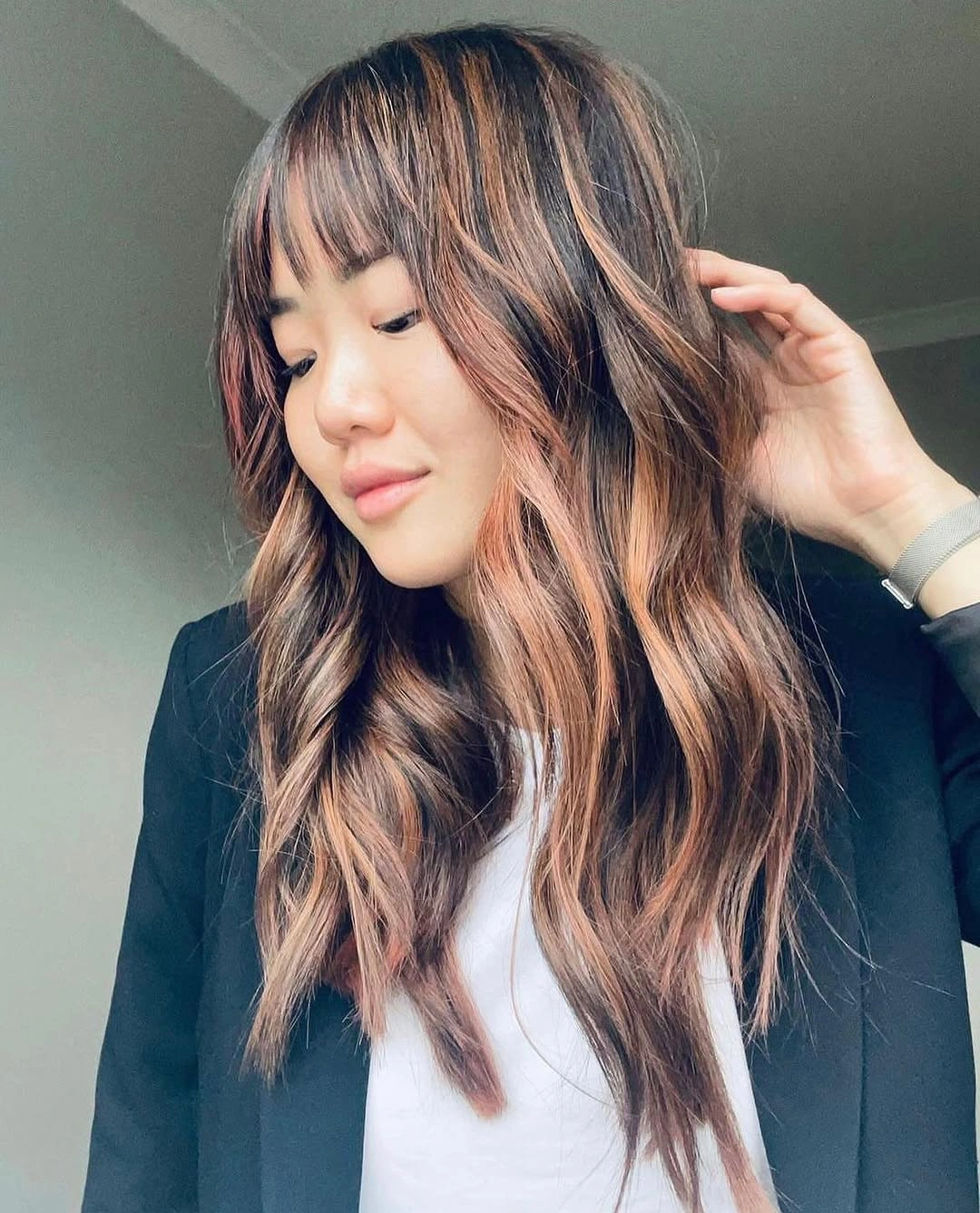
For a related result, keep the base visibly brunette and concentrate the lighter pieces near the fringe and front layers before extending them through the waves. The airy bangs and irregular wave pattern stop the brighter ribbons from forming hard horizontal bands across the hair. The best visual adjustment is often a matter of scale for dark brunette shag with caramel ribbons and wispy bangs. A wider panel reads as a statement, while narrow ribbons can provide movement without replacing the underlying depth for dark brunette shag with caramel ribbons and wispy bangs.
It is a strong example of brunette hair colour with visible contrast that still leaves the darker base in charge. High-contrast ribbons are easiest to notice when the hair has movement, while a very smooth finish would make their placement appear more graphic. A good adaptation would keep the clearest contrast and simplify the rest in color reference 7. The result should still look intentional, but it does not need to repeat every bend, layer, or visible section exactly in color reference 7.
Beige Blonde Ribbons on Soft Waves
Shoulder-to-mid-back waves combine a medium brown base with beige and golden blonde ribbons that become more visible through the lower bends and ends. The color is distributed in vertical fragments instead of a single light panel, so the waves reveal and conceal brightness as they move. This reference shows how texture can act like a filter for color for beige blonde ribbons on soft waves. A bend catches brightness in fragments, while a sleek section displays the same tones in a much more continuous way for beige blonde ribbons on soft waves.
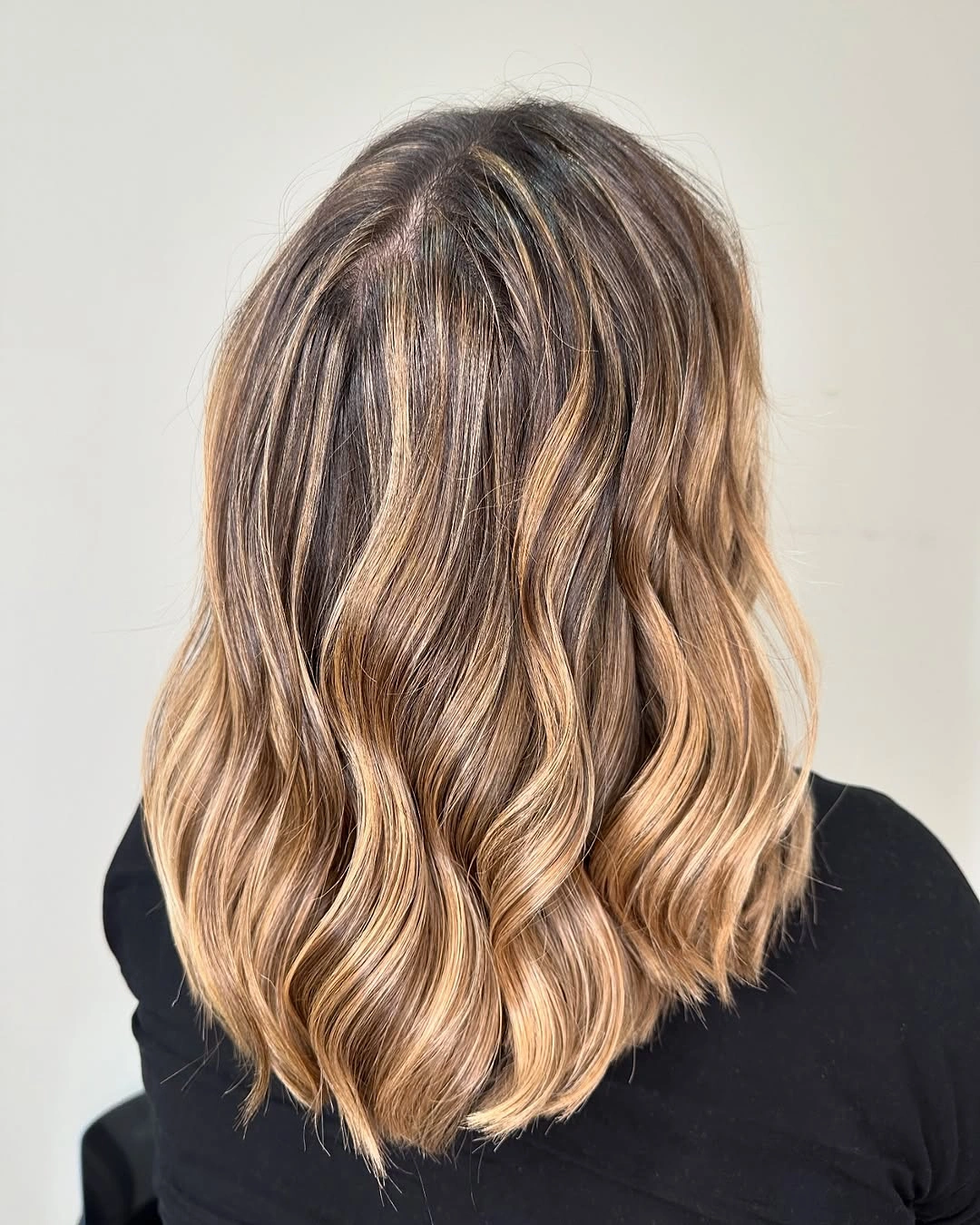
A soft beige blonde can be paired with a medium brown base when the goal is dimension that remains visible without a sharply outlined front streak. The root area stays deeper, while the lower half carries more light, giving the waves a gradual sense of lift. This direction becomes more adaptable when its color story is separated from its most dramatic styling detail for medium brown wavy hair with beige blonde ribbons. Keep the former, then simplify the latter if a quieter result is preferred for medium brown wavy hair with beige blonde ribbons.
This fits naturally among blonde hair ideas for readers who want brightness but still want brown to remain part of the overall picture. The many fine ribbons already create activity, so an equally busy cut or accessory would make the color field harder to read. A practical result should leave room for the hair to move naturally in color reference 8. When the placement already tells a story, adding more competing contrast is rarely necessary in color reference 8.
Golden Front Panels Against a Dark Base
A dark brown to auburn layered cut is interrupted by bright golden front panels and smaller light streaks near the top, with feathered ends turning away from the face. The strongest contrast is placed at the front, which immediately changes the read of the dark base and gives the shorter layers a clear direction. The visible tone changes have a clear direction rather than appearing at random for golden front panels against a dark base. That organization is more practical to borrow than an exact shade name because it survives small changes in personal preference for golden front panels against a dark base.
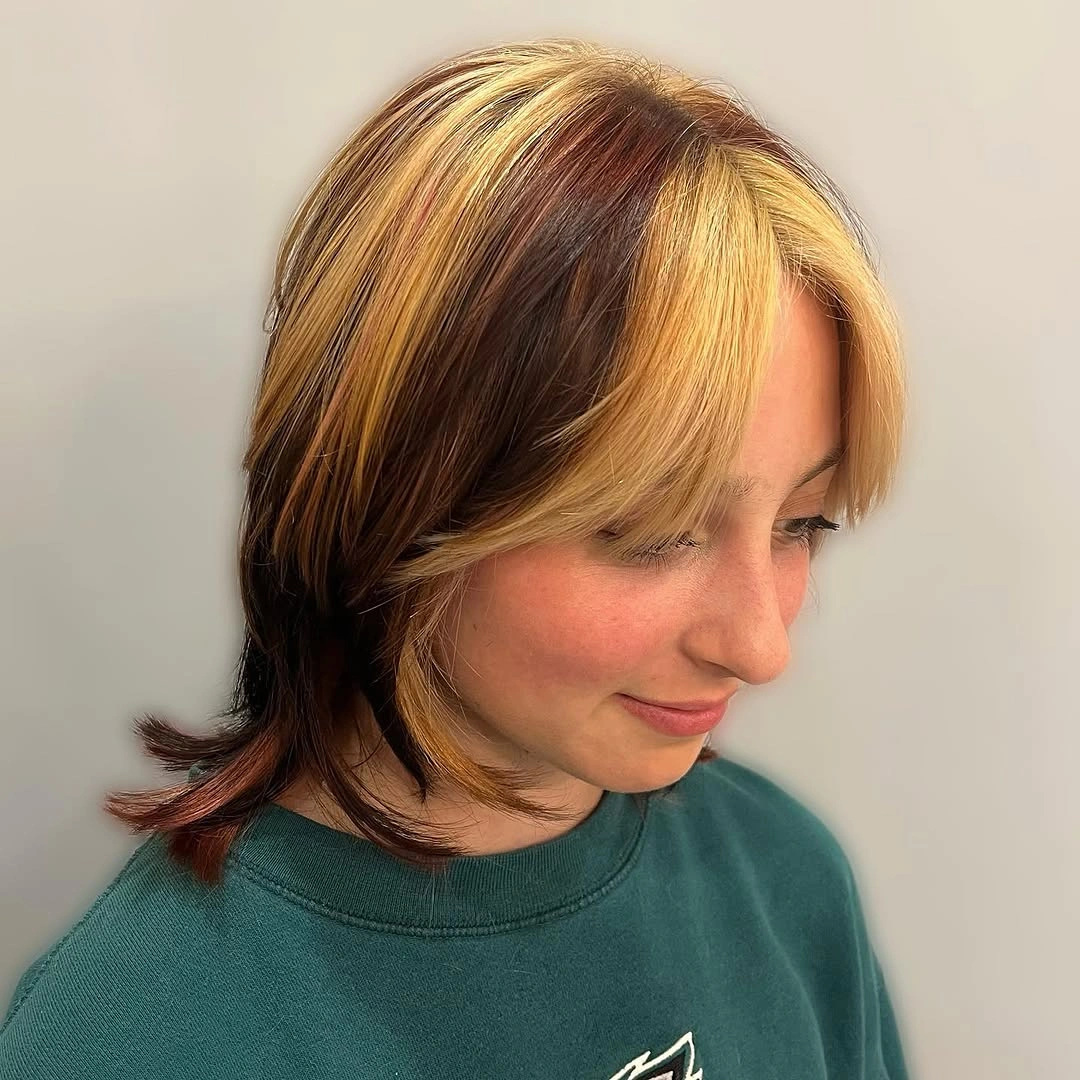
Keep the darker background visible and choose one or two golden face pieces if the appeal is the contrast rather than all-over lightness. The feathered ends repeat the outward sweep of the front panels, so the color and cut point in the same direction. The placement can be softened or strengthened depending on how much contrast is wanted for dark layered bob with bright golden front panels. Keeping a visible base between the accent sections is the clearest way to retain dimension for dark layered bob with bright golden front panels.
This is a more graphic fall hair colour choice for anyone who wants the color placement to be noticeable at first glance. Because the panels are bright and near the face, they will dominate the impression even when the rest of the hair remains deep and quiet. The color story remains useful because it explains why the reference reads as it does in color reference 9. That explanation is more durable than a trend label and easier to adapt across different hair textures in color reference 9.
Yellow Length With Orange Face Framing
Long textured hair is predominantly vivid yellow, while orange-red pieces frame the face and travel through one side beneath a sweeping fringe. The yellow works as the large field of color, then the warmer orange-red accent creates a second focal path rather than disappearing into the overall brightness. The strongest effect is created by editing the palette, not by making every possible shade equally visible for yellow length with orange face framing. A defined base gives the accent areas a purpose and keeps the whole result legible for yellow length with orange face framing.
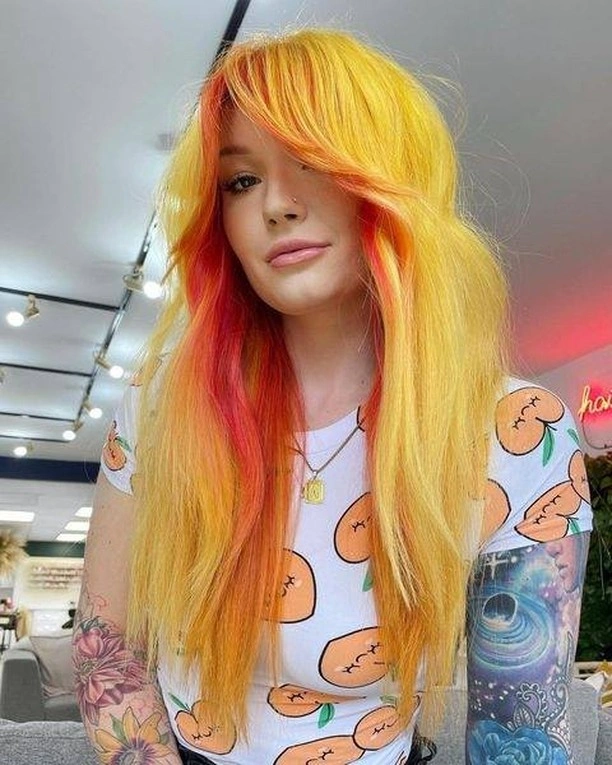
A color-led version can preserve one dominant bright shade and restrict the contrasting accent to a defined front area for clearer visual hierarchy. The deep side sweep sends the eye diagonally across the face, then the long yellow lengths extend that movement downward. The practical version does not need every feature from the reference for bright yellow long hair with orange and red face framing. Retain the key placement and let the remaining length, fringe, or wave pattern be adjusted to fit the desired level of detail for bright yellow long hair with orange and red face framing.
For readers seeking bold hair colour inspiration, this is an example of two saturated hues being organized by placement rather than mixed everywhere. Multiple intense colors have little room for competing accessories, so a simple neckline lets the hair remain the central visual decision. It earns attention because one visual decision remains clear even after the smaller details are removed in color reference 10. That clarity is what makes a reference worth saving for a later color conversation or styling choice in color reference 10.
Berry Red Bob With a Blunt Fringe
A smooth chin-to-shoulder bob carries a dark berry red tone with a slightly brighter magenta-red sheen, completed by a short blunt fringe across the forehead. The compact cut makes the color feel concentrated and deliberate, while the straight surface gives the berry variation a clean, reflective read. A reader can learn from the contrast without treating the reference as a formula for berry red bob with a blunt fringe. The most transferable point is where the depth begins, where brightness enters, and how the cut carries both for berry red bob with a blunt fringe.
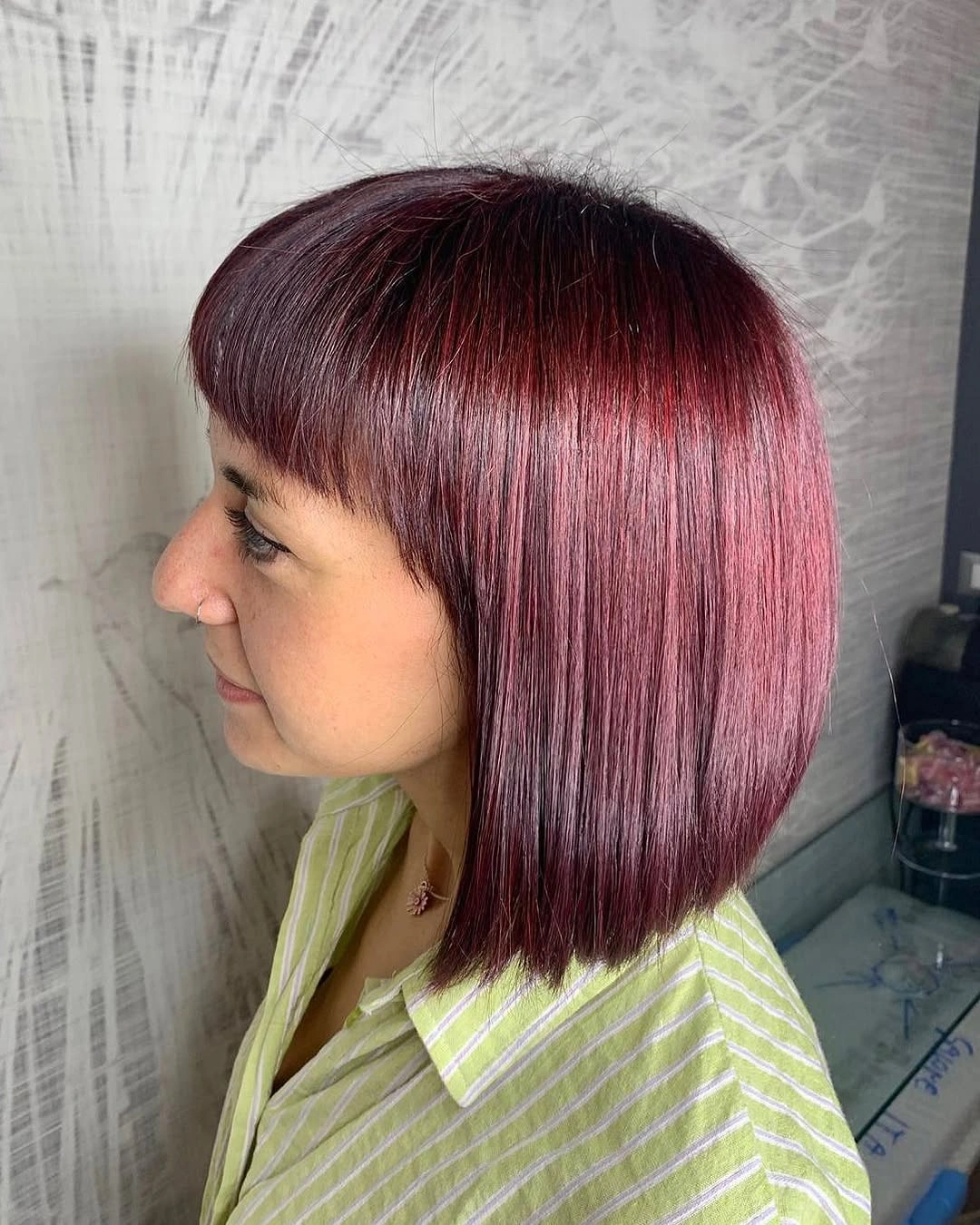
A similar direction could keep the red-violet family but choose the depth that fits the desired contrast, then let a simple bob shape display it clearly. The fringe creates a firm top edge, and the gently rounded length brings that strong line back into a softer perimeter at the ends. There is no need to reproduce the exact styling for the color logic to hold for smooth berry red bob with straight blunt fringe. The important part is the distribution of bright, deep, warm, or cool areas across the visible silhouette for smooth berry red bob with straight blunt fringe.
This red hair colour idea is especially helpful when the aim is a single saturated statement instead of many separate highlights. Because the color and fringe both read strongly, changing either one will noticeably shift the overall character of the result. This is a reminder that not every seasonal color idea needs a major overall shift in color reference 11. A carefully placed undertone, ribbon, or panel can change the impression while the main depth remains familiar in color reference 11.
Airy Neutral Blonde With a Soft Root
Long blonde hair has a deeper neutral root area, pale beige-blonde lengths, loose irregular waves, and a soft curtain of hair falling across the face. The darker root creates a grounded starting point, while the light lengths stay varied enough in tone to avoid appearing like one uniform pale sheet. The visual interest comes from placement, depth, and texture working together rather than from a label alone for airy neutral blonde with a soft root. Reading those relationships first makes it easier to decide which part of the reference is essential and which part can change for airy neutral blonde with a soft root.
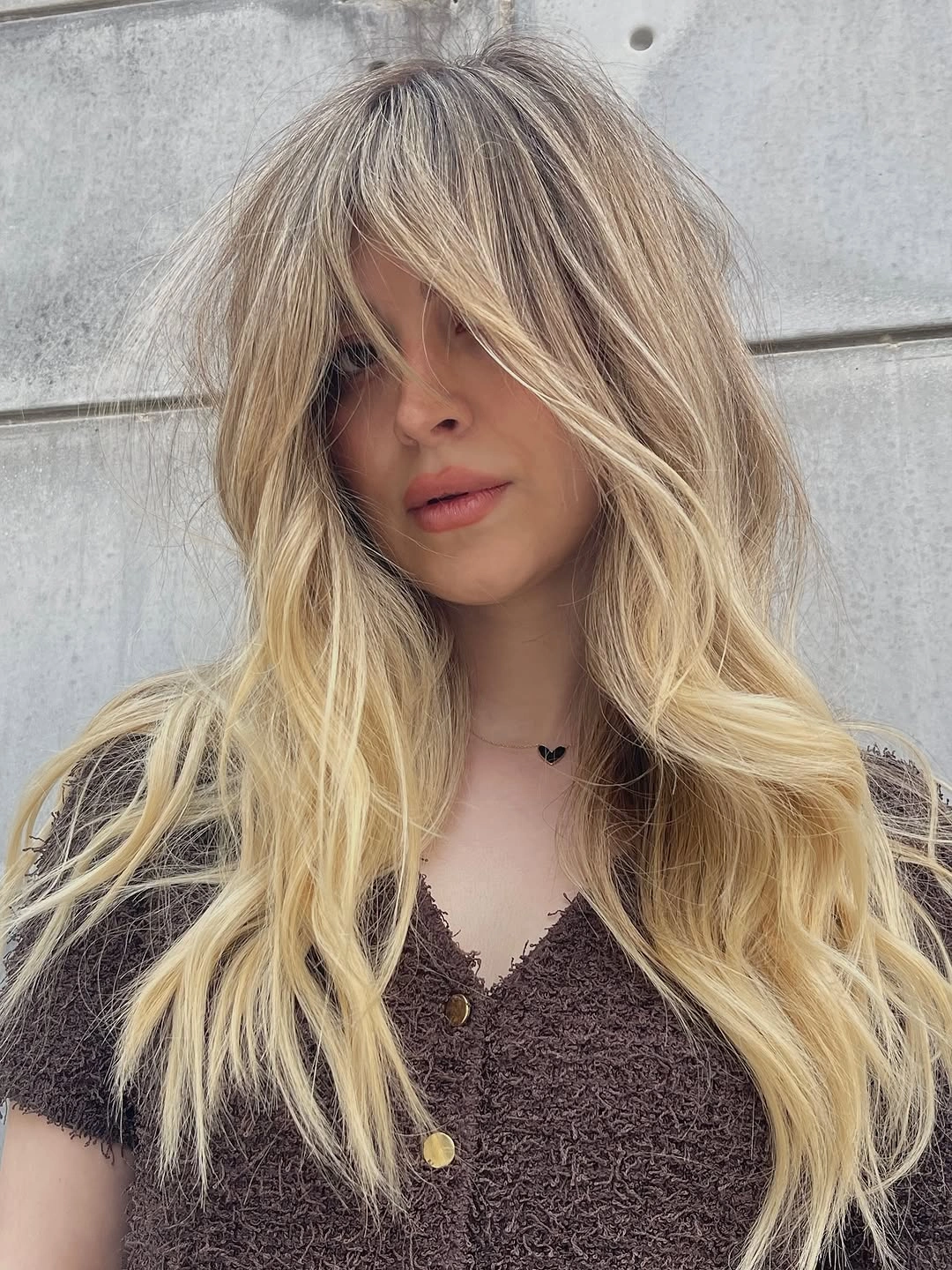
For this mood, use a neutral blonde range with a visible but soft root transition and let loose texture reveal the differences between strands. The long face-framing pieces connect the root area to the bright ends, making the shift look continuous rather than divided into bands. When adapting the idea, preserve the difference in value before chasing a precise tone for long airy neutral blonde hair with darker root area. The overall reading comes from how light and dark are spaced, which is usually more important than naming a color exactly for long airy neutral blonde hair with darker root area.
It is a gentle blonde hair idea for a fall palette that wants lightness without eliminating all depth near the top. The airy finish is part of the appeal, so a very rigid curl pattern would create a different and more formal color presentation. The lasting takeaway is a readable color map rather than a fixed recipe in color reference 12. Once the relationship between base, accent, and texture is understood, the idea can be scaled up or down without losing its point in color reference 12.
Copper Ribbons Through Deep Burgundy Waves
Long center-parted waves show a deep burgundy base with rich copper-red ribbons that appear more clearly through the front lengths and curled lower sections. The dark wine base creates enough contrast for the copper ribbons to read as separate lines, yet both colors stay within a warm red family. A useful color observation is the way the lightest and darkest areas are separated for copper ribbons through deep burgundy waves. That spacing gives the style a clear hierarchy and prevents the visible tones from blending into an indistinct overall shade for copper ribbons through deep burgundy waves.
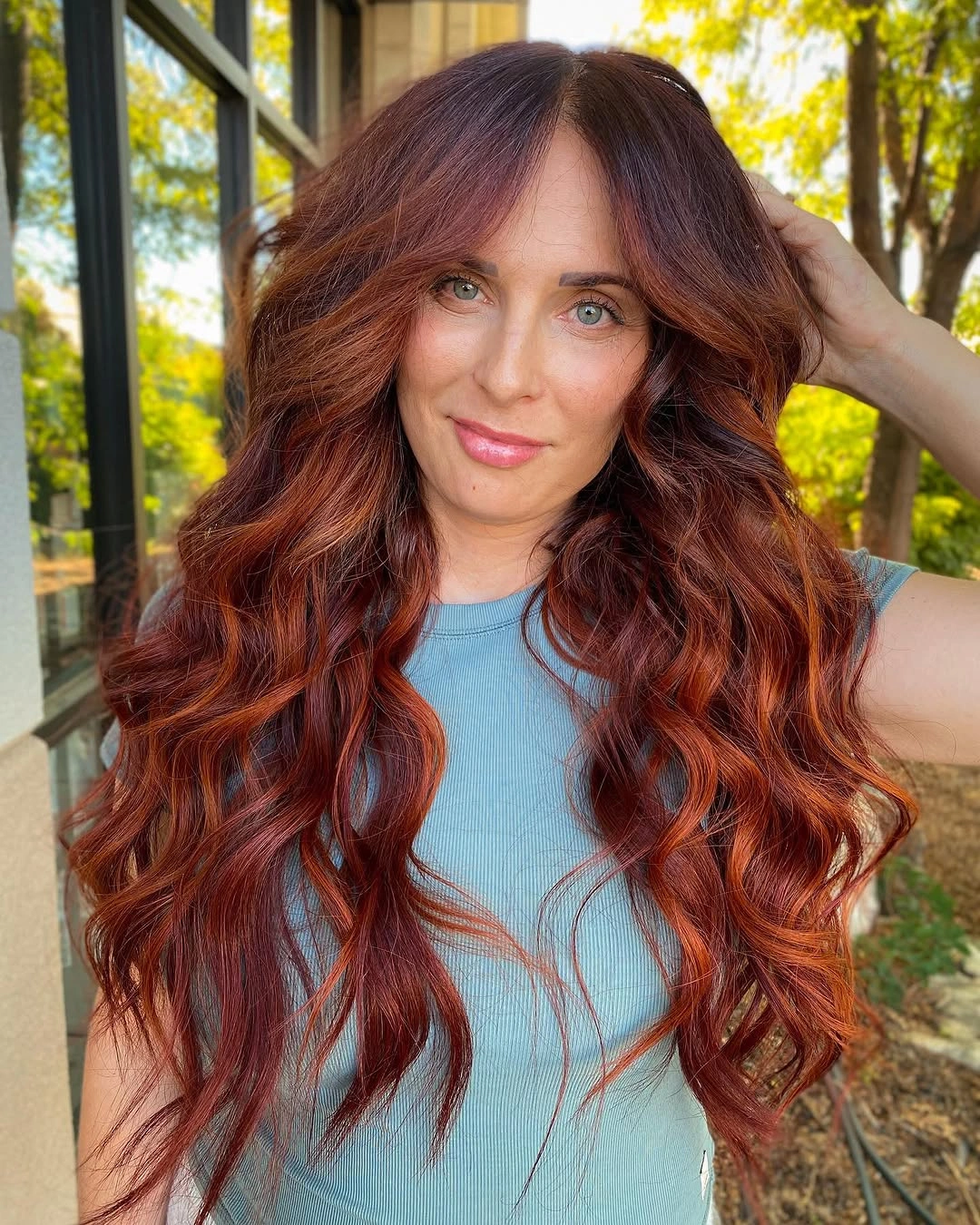
Keep the base in a deep red-brown range and add a limited number of copper sections if the desired effect is dimension rather than a full orange result. The waves distribute the brighter pieces through different depths of the hair, which prevents them from appearing as one solid stripe. Texture changes the story considerably for long burgundy wavy hair with bright copper ribbons. Straight styling can make the color look more continuous, while loose movement divides it into small flashes that appear and disappear with the hair for long burgundy wavy hair with bright copper ribbons.
This is a useful red hair colour option for readers who want both darkness and warmth in the same color story. When copper accents are layered over a deep base, their visibility will change with the parting and movement, which is part of the design rather than a flaw. The point to carry forward is the hierarchy of visible tones in color reference 13. If the base stays recognizable, the accent can become brighter, softer, warmer, or cooler without losing the original balance in color reference 13.
Hidden Copper and Blonde Underlayers
Long dark brown hair is lifted to reveal concealed vertical underlayers in copper, orange-red, and pale blonde, while the top layer remains mostly natural-looking brown. The color contrast is strongest only where the top section is moved aside, creating a clear difference between the dark surface and the brighter interior panels. The cut is not secondary here because it changes how color is revealed for hidden copper and blonde underlayers. Smooth lengths, bends, fringes, and layers each expose a different amount of tonal variation across the same head of hair for hidden copper and blonde underlayers.
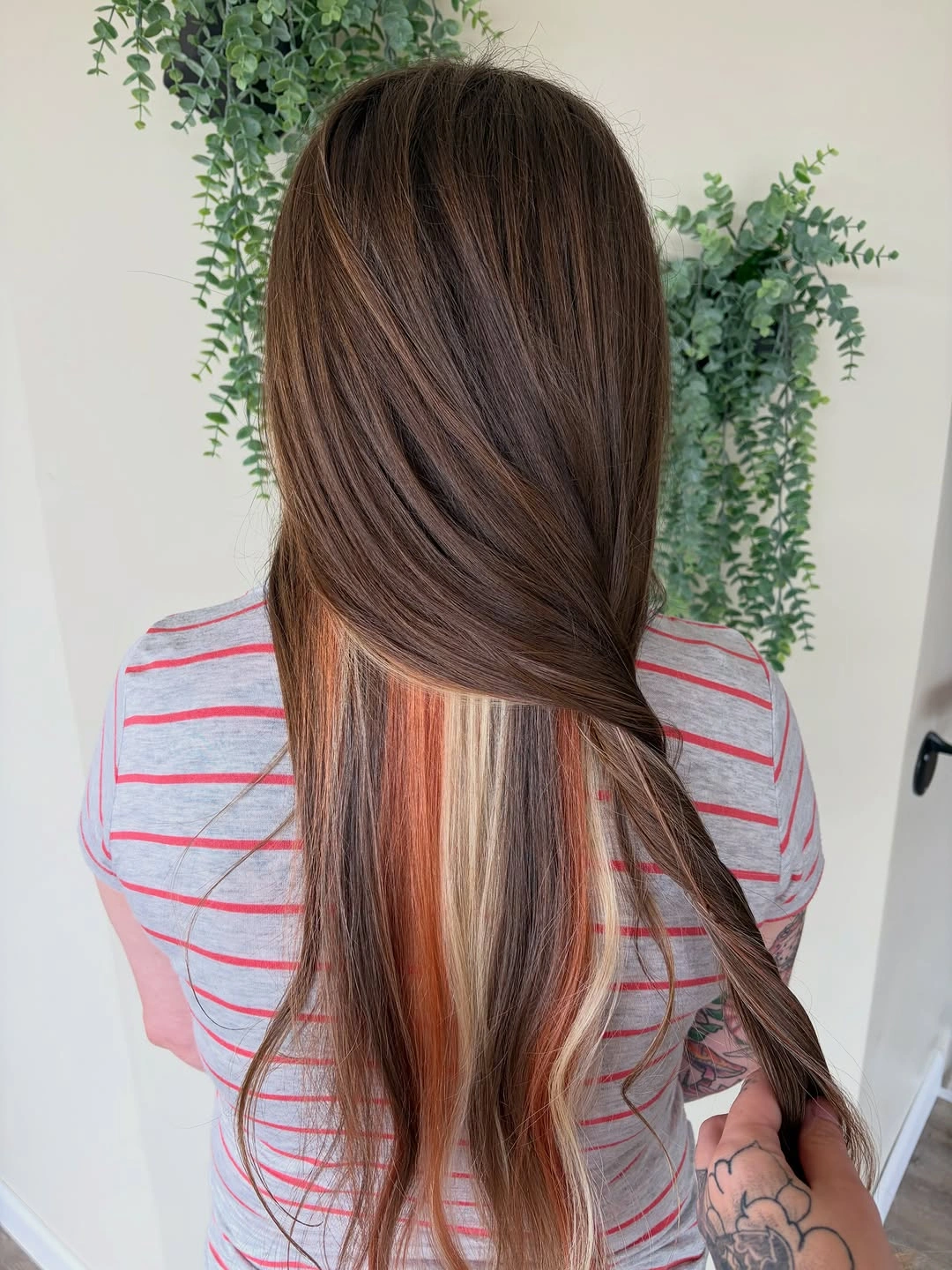
For a more discreet approach to color, retain a deeper top layer and reserve the lighter or warmer tones for a lower section that appears with movement. The brown surface acts as a frame, so the multitone interior reads as a deliberate reveal rather than an all-over mixture. A controlled palette gives even bold color a cleaner outcome for long dark brown hair revealing copper and blonde underlayers. Leave some quieter hair visible around the active section so the contrast has room to register for long dark brown hair revealing copper and blonde underlayers. For more placement-led references, see September hair colour trends.
It offers hair colour inspiration for someone who wants a vivid surprise without making every visible strand equally bright. The hidden placement changes depending on how the hair is worn, so the effect is inherently less constant than a face-framing or surface highlight. The reference offers a visual decision that can be tested in many degrees in color reference 14. Its value lies in the placement logic, the readable silhouette, and the fact that those two ideas support each other in color reference 14.
Golden Copper With Smooth Long Layers
Long smooth hair is colored a bright golden copper with a subtly deeper root area and clean, lightly layered ends that sit around the upper back. The warm tone remains dominant from crown to ends, while the darker root gives the otherwise luminous length a little visual depth at the top. What holds the idea together is not maximum brightness but a deliberate map of where color is allowed to appear for golden copper with smooth long layers. That is why the direction remains readable even when several tones are visible for golden copper with smooth long layers.
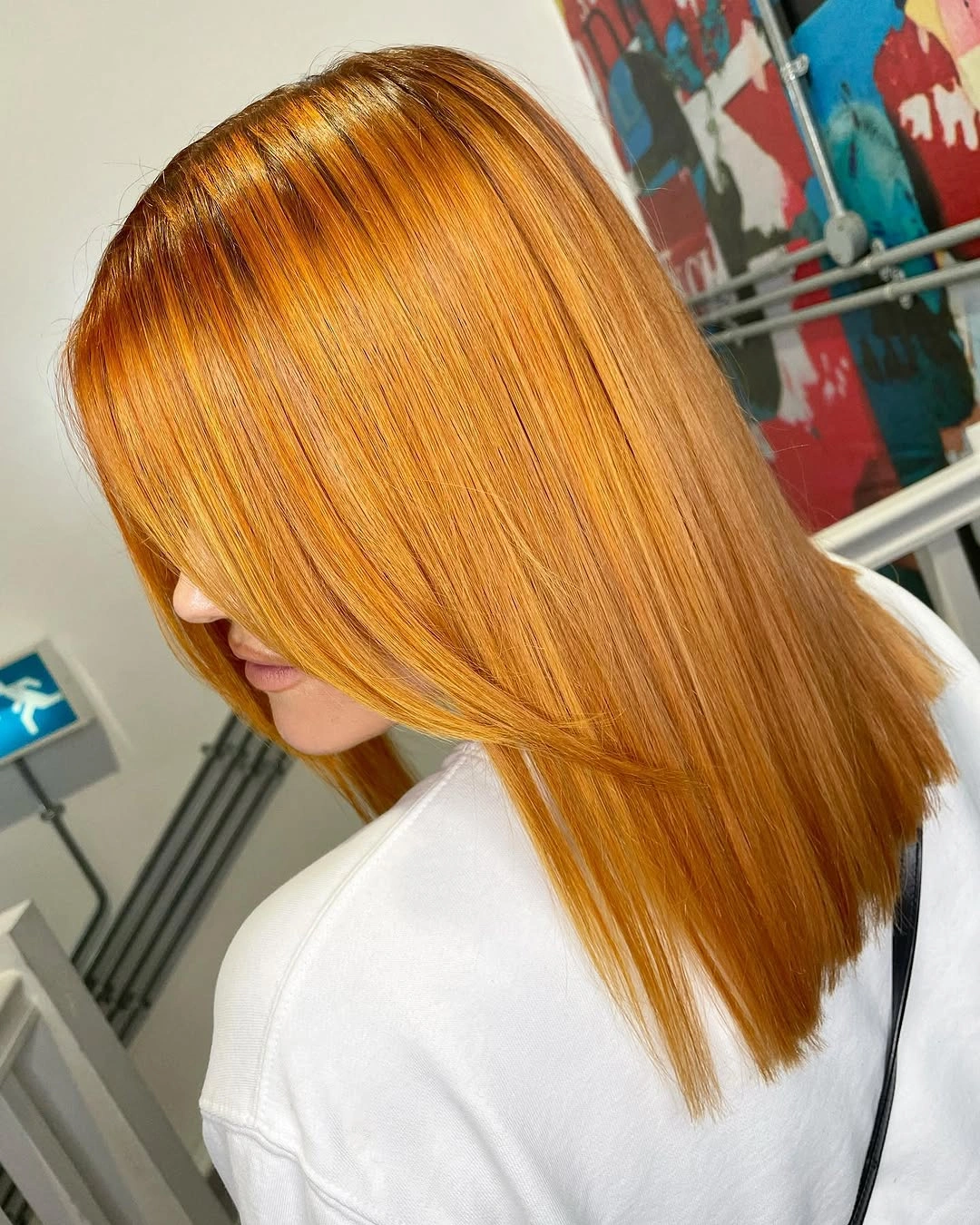
A reader can focus on one golden copper family and keep the finish sleek if the purpose is to show the glow of the color rather than a complicated cut. The long face-framing front section leads into the smoother back length, so the color has a continuous line across the profile. Use the visible parting and front shape as a guide for placement for smooth golden copper long hair with darker root depth. Those features determine which sections meet the face first and which tones remain more background-oriented for smooth golden copper long hair with darker root depth.
This copper hair colour direction is clear, warm, and expressive without needing secondary contrasting panels. The smoother the finish becomes, the more any tonal variation is exposed, so the visual result depends heavily on how uniform or varied the color is meant to appear. What makes the direction memorable is the measured use of difference in color reference 15. Darker space, lighter space, and texture are each allowed to do a separate job instead of being forced into one uniform effect in color reference 15.
Red Accent Lines on a Brown Bob
A sleek chin-length brown bob features fine red and copper accent lines through the lower layers, with a blunt fringe and a rounded undercurve at the nape. The red is used sparingly against the darker brown, which lets the small lines register as detail rather than replacing the base color altogether. The most informative detail is the relationship between the root area and the lengths for red accent lines on a brown bob. A darker, lighter, or more neutral starting point changes the way every later ribbon or reflection is perceived for red accent lines on a brown bob.
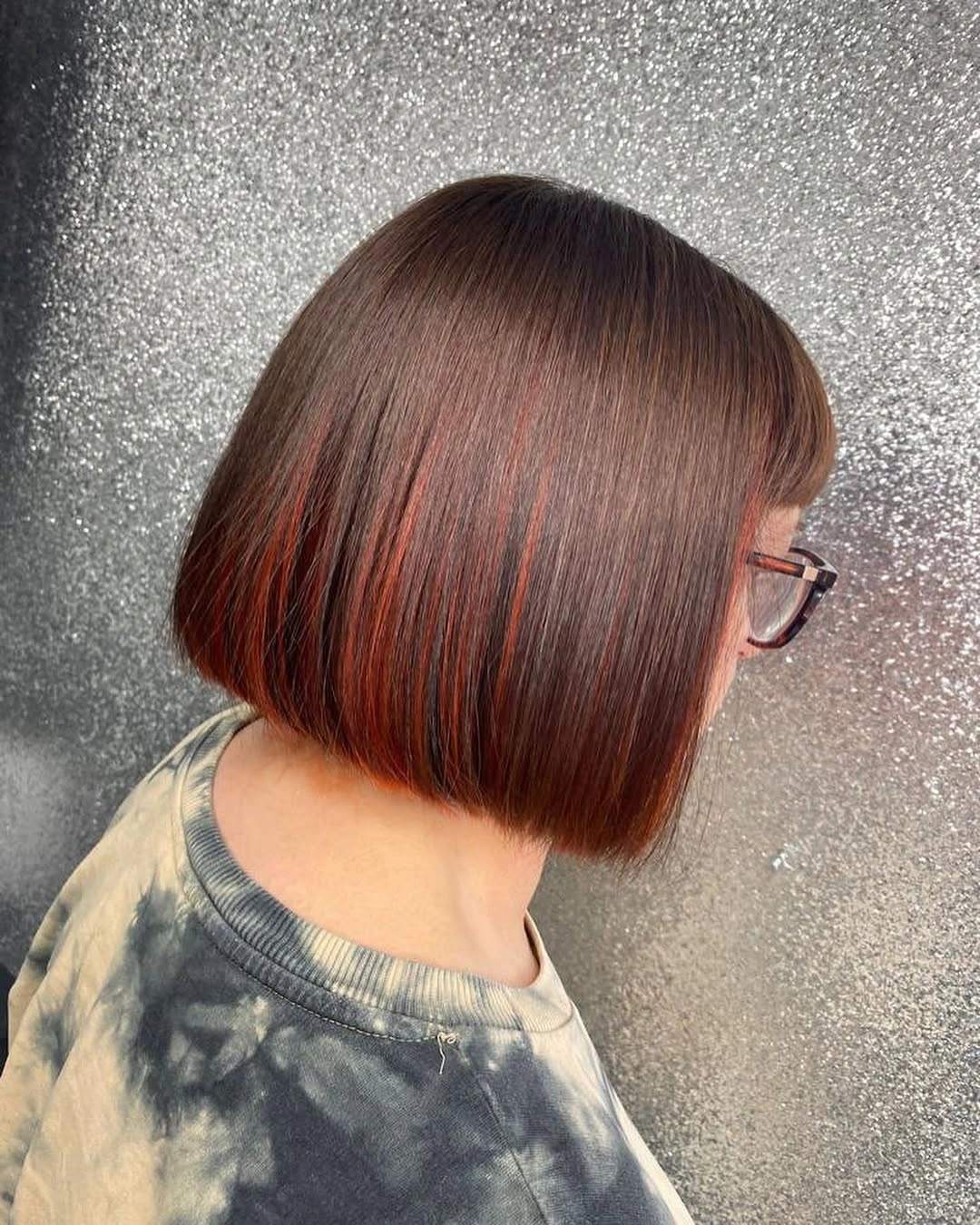
A dark bob can carry a few warm accent lines when the goal is a change that remains close to brunette but gains a sharper visual edge. The smooth cut and solid fringe keep the color accents from appearing chaotic, because the silhouette itself is simple and compact. A simpler version should keep one visible color relationship and remove the rest for dark brown bob with fine red accent lines. That approach makes the reference easier to translate while allowing the main shape and focal area to stay intact for dark brown bob with fine red accent lines.
This is a focused brunette hair colour idea for readers who prefer small, visible shifts over a major full-head color change. Fine accents need the hair to lie in a readable direction; more tousled texture would hide some lines and emphasize others unpredictably. The balance here depends on leaving some areas quiet in color reference 16. That restraint is what lets the warmer, lighter, deeper, or more unusual notes appear considered rather than accidental in color reference 16.
Cool Blue Black Through Long Sleek Lengths
Long straight hair appears blue-black with a cool steel sheen across the surface, falling in a smooth, gently tapered line below the shoulders. The cool cast becomes visible where the light reaches the top and side panels, while the otherwise dark length keeps the result restrained and continuous. Color becomes more useful when it is tied to the silhouette that carries it for cool blue black through long sleek lengths. The visible line of the cut explains whether the result feels compact, flowing, textured, or intentionally graphic for cool blue black through long sleek lengths.
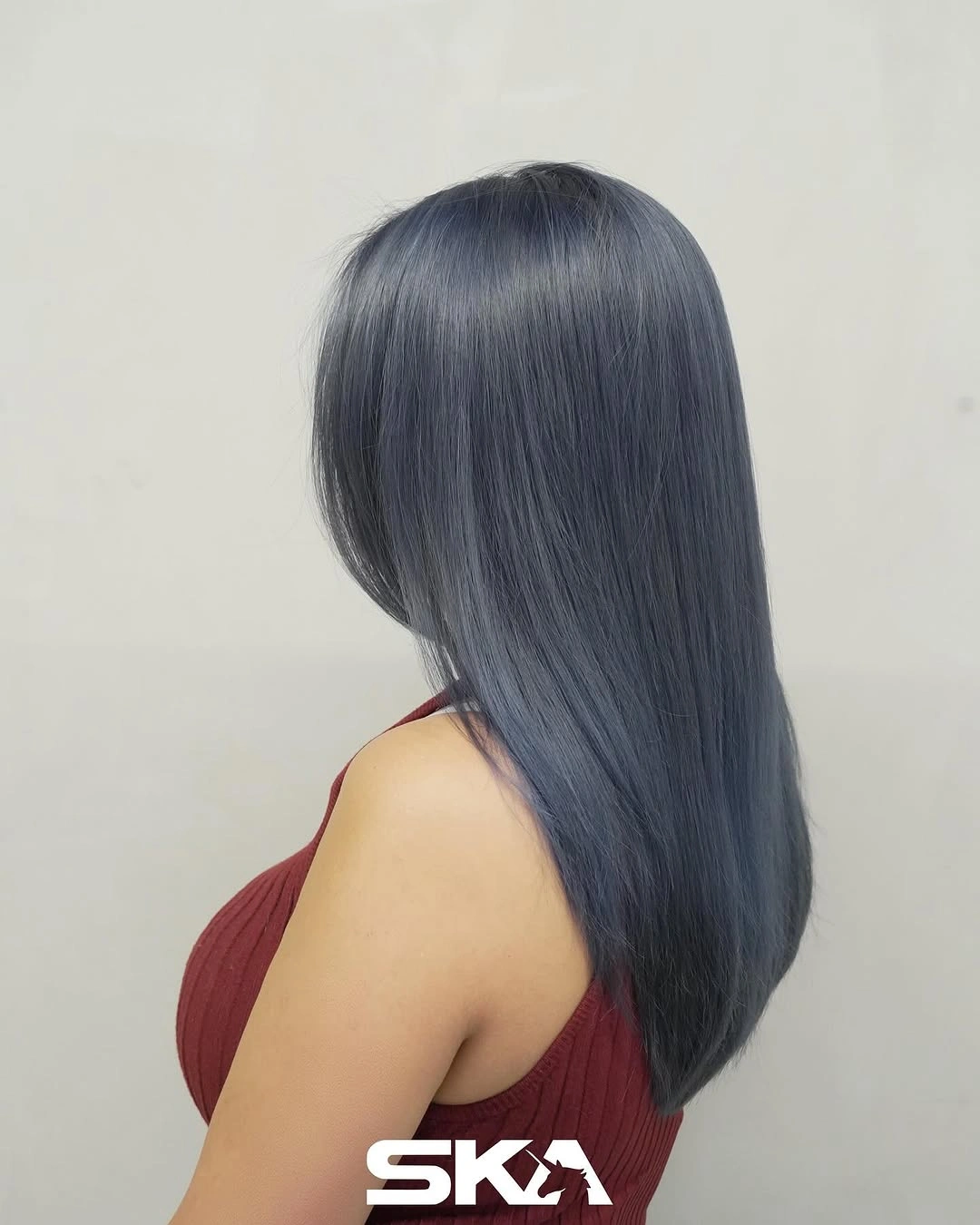
A deep cool shade works best as a single overall statement when the goal is subtle reflection rather than numerous contrasting highlights. The lack of strong layers lets the cool sheen travel uninterrupted from crown to ends, making the color shift easier to notice. Start by deciding whether the reader response should be root depth, a front accent, interior panels, or warm ends for long sleek blue black hair with cool reflective sheen. Choosing one main effect prevents a multi-tone idea from becoming visually crowded for long sleek blue black hair with cool reflective sheen.
This is a quieter entry among October hair colour ideas for anyone drawn to dark color with a visible change in temperature. The blue undertone is light-dependent in appearance, so it may read closer to black in shadow and cooler in brighter conditions. The mood comes from the interaction of tone and shape, not from a claim about a particular process in color reference 17. That keeps the inspiration useful for different lengths and personal styling preferences in color reference 17.
Jewel Tone Ribbons on a Dark Wave
Long wavy dark hair combines visible ribbons of teal green, violet, red, orange, and gold, with the saturated sections appearing at different depths through the bends. The dark base keeps the jewel tones separated, while the waves reveal each color in segments rather than presenting them as one flat rainbow surface. There is enough contrast to make the style memorable, but not every strand is asked to perform the same role for jewel tone ribbons on a dark wave. The calmer areas are what allow the more active tones to make sense for jewel tone ribbons on a dark wave.
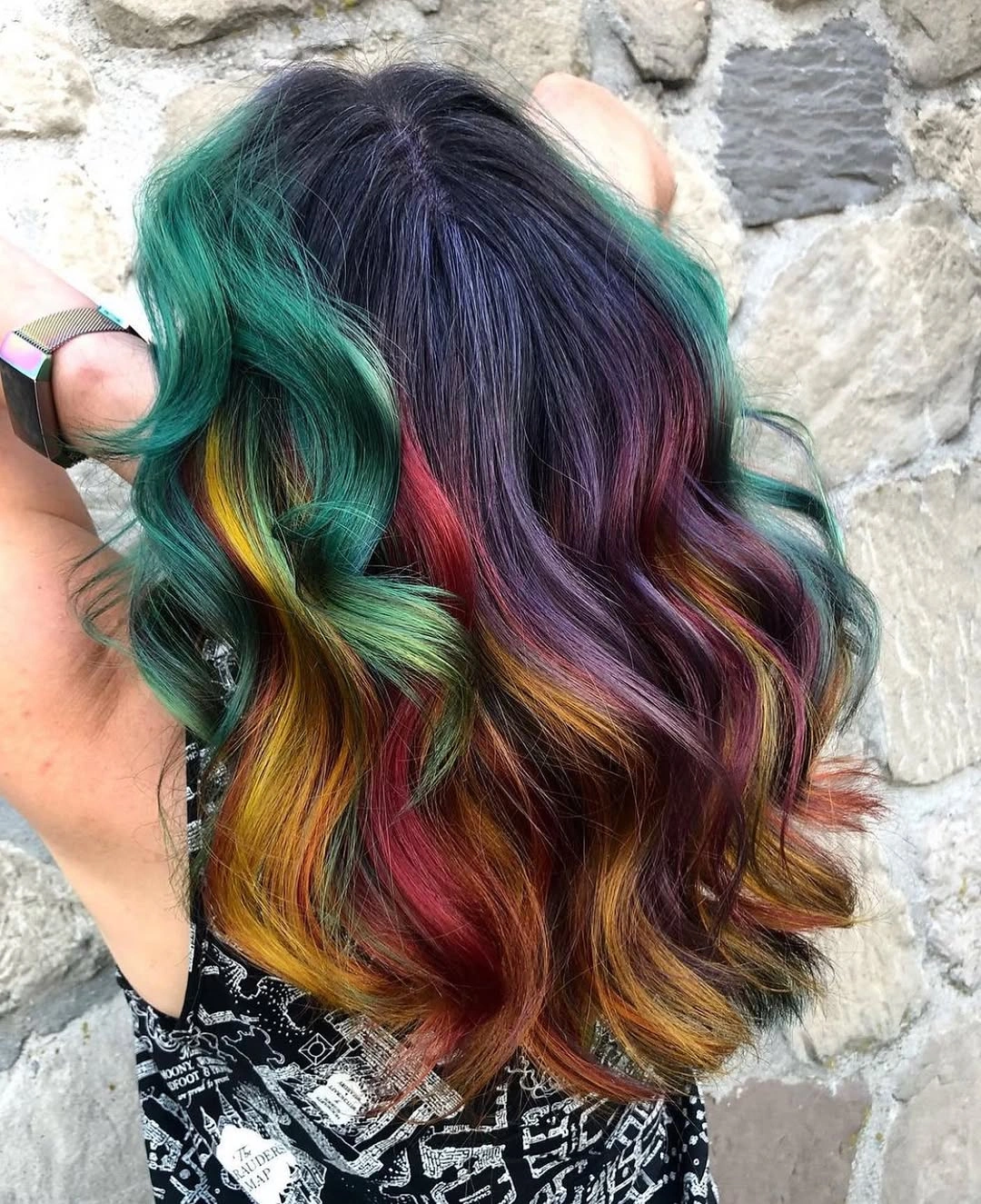
A multi-color idea remains clearer when a dark base is retained and each bright tone has enough space around it to be seen independently. The color concentration shifts across the waves, so the eye travels through the hair instead of stopping at one oversized block. The best visual adjustment is often a matter of scale for dark wavy hair with teal purple red and gold ribbons. A wider panel reads as a statement, while narrow ribbons can provide movement without replacing the underlying depth for dark wavy hair with teal purple red and gold ribbons.
This is an expressive hair colour inspiration reference for readers who want several tones but still want the overall shape to stay readable. With so many hues present, controlling placement is more important than adding more shades; the dark sections are doing essential visual work. A good adaptation would keep the clearest contrast and simplify the rest in color reference 18. The result should still look intentional, but it does not need to repeat every bend, layer, or visible section exactly in color reference 18.
Red Wine Dimension Across Loose Waves
Shoulder-length loose waves hold a dark base with red wine, berry, and cherry-toned ribbons that become visible through the middle and lower sections. The color has depth because the red notes vary from near-black wine to clearer cherry, and the waves keep those differences moving across the surface. This reference shows how texture can act like a filter for color for red wine dimension across loose waves. A bend catches brightness in fragments, while a sleek section displays the same tones in a much more continuous way for red wine dimension across loose waves.
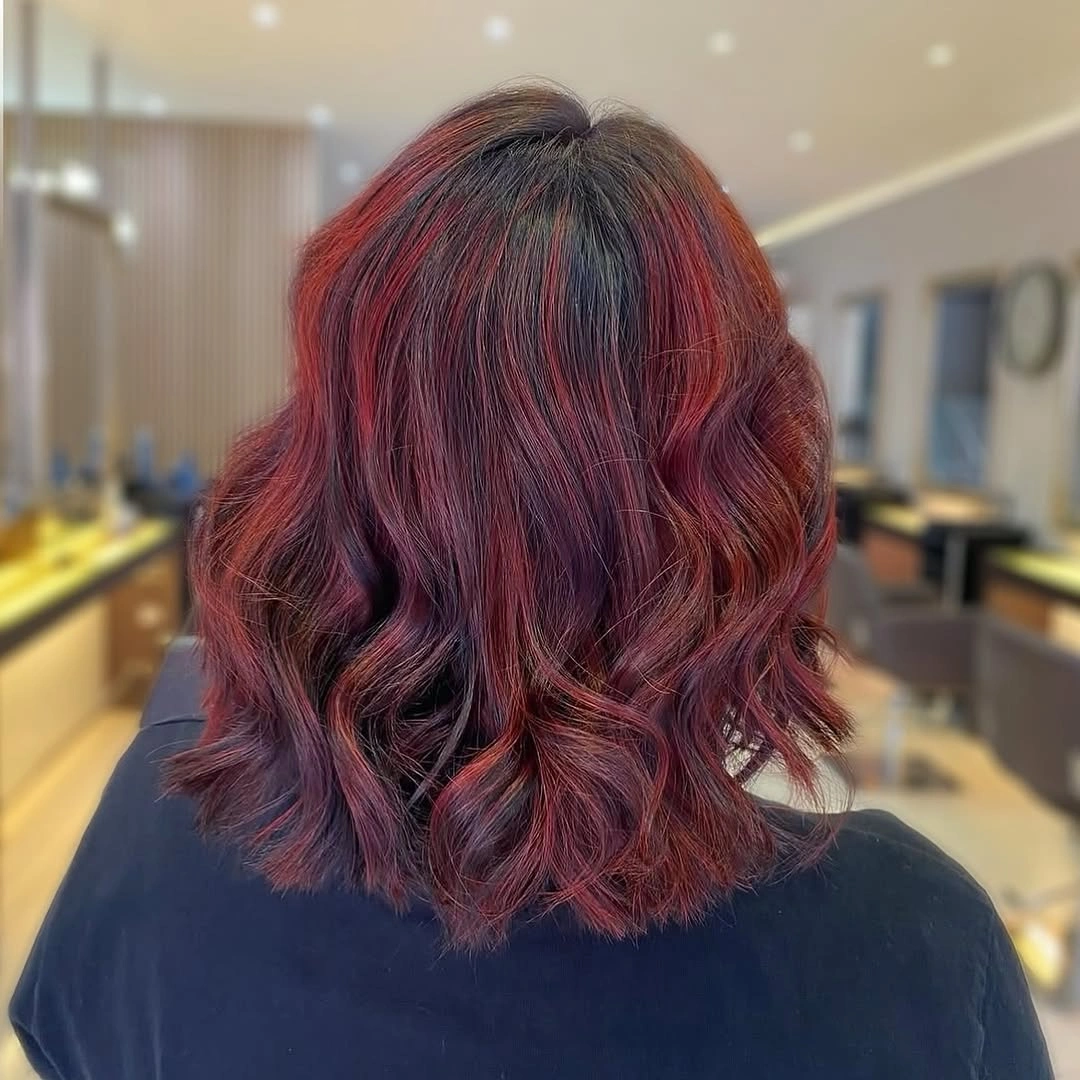
To capture the direction, choose a dark red family with a few lighter ribbon-like areas instead of a single uniform red from root to end. The darker sections remain visible between the red accents, which gives the waves a layered appearance without relying on blonde contrast. This direction becomes more adaptable when its color story is separated from its most dramatic styling detail for loose dark waves with red wine and cherry ribbons. Keep the former, then simplify the latter if a quieter result is preferred for loose dark waves with red wine and cherry ribbons.
It is a rich fall hair colour direction when a reader wants red that still carries some shadow and dimension. The result is more nuanced than a flat bright red, but its small tonal differences will show most clearly where the hair has bend and light. A practical result should leave room for the hair to move naturally in color reference 19. When the placement already tells a story, adding more competing contrast is rarely necessary in color reference 19.
Soft Blonde Length With Root Depth
Very long smooth blonde hair has visible beige-brown root depth, fine vertical tonal variation through the length, and softly turned ends that create a gentle curve. The darker root makes the pale lengths feel more dimensional, while the fine low-contrast variation keeps the blonde from becoming a single blank field. The visible tone changes have a clear direction rather than appearing at random for soft blonde length with root depth. That organization is more practical to borrow than an exact shade name because it survives small changes in personal preference for soft blonde length with root depth.
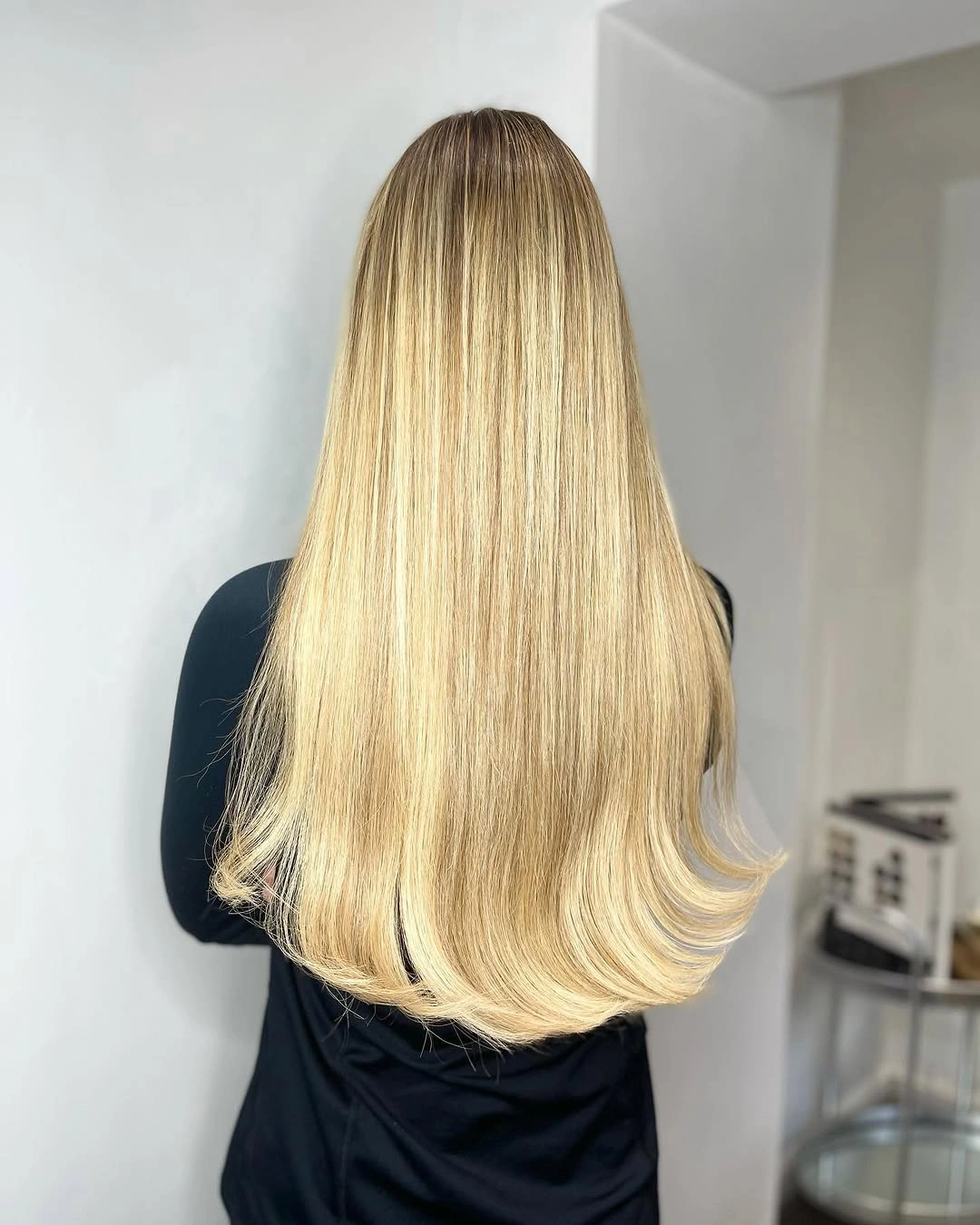
A soft blonde direction can retain a neutral deeper root and several close blonde tones through the length when an all-over bright effect feels too stark. The smooth finish displays the vertical color shifts clearly, and the curved ends stop the extreme length from looking entirely rigid. The placement can be softened or strengthened depending on how much contrast is wanted for very long soft blonde hair with darker root depth. Keeping a visible base between the accent sections is the clearest way to retain dimension for very long soft blonde hair with darker root depth.
This is a polished blonde hair idea for readers who want lightness paired with a visible sense of depth at the scalp. Because the contrast is refined rather than dramatic, strong textured styling would change the way the fine tonal variation is perceived. The color story remains useful because it explains why the reference reads as it does in color reference 20. That explanation is more durable than a trend label and easier to adapt across different hair textures in color reference 20.
Muted Red Brown With Turned Ends
A shoulder-length red-brown style is center parted and softly blown out, with subtle face framing, rounded ends that turn outward, and a muted wine-cinnamon tone. The medium red-brown sits between vivid copper and dark burgundy, so the color supports the smooth shape instead of overpowering it. The strongest effect is created by editing the palette, not by making every possible shade equally visible for muted red brown with turned ends. A defined base gives the accent areas a purpose and keeps the whole result legible for muted red brown with turned ends.
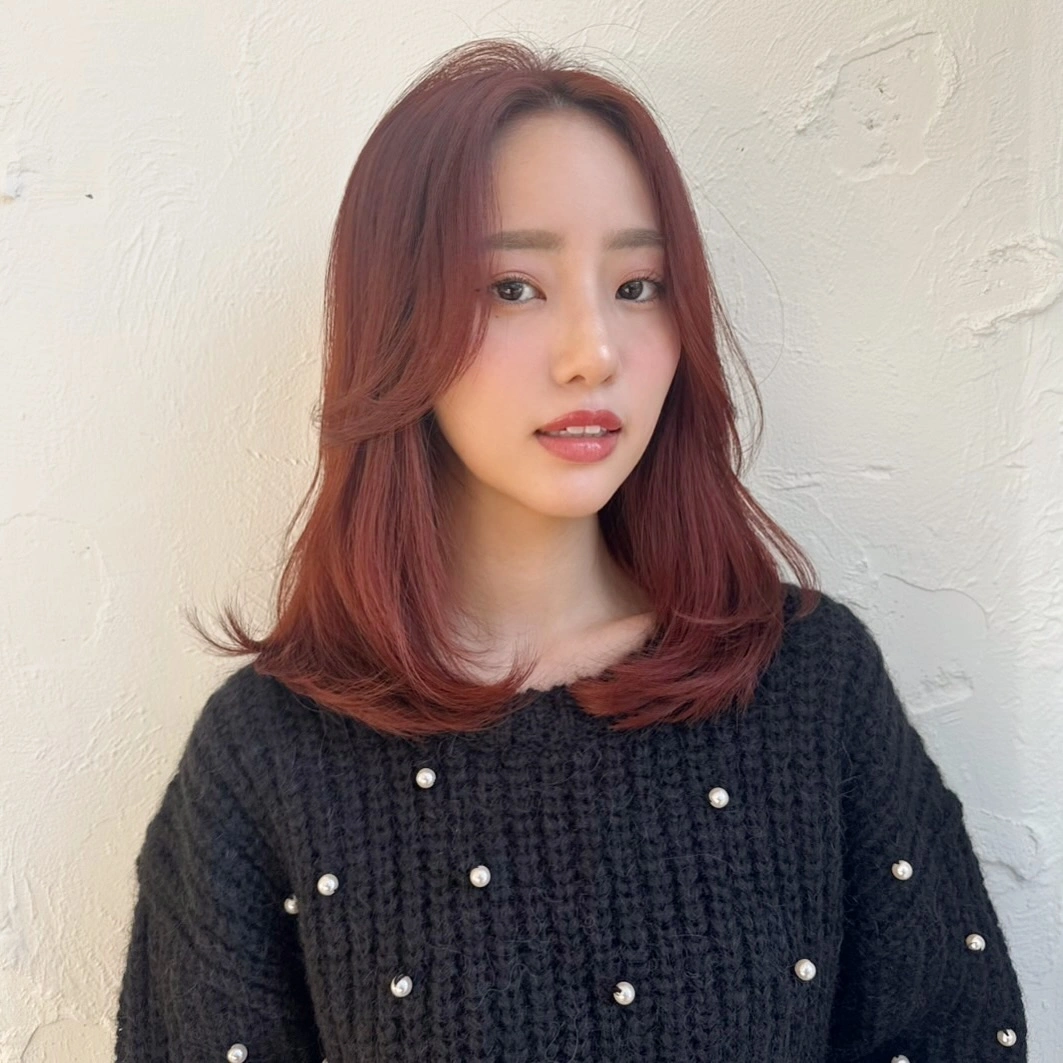
For a wearable warm update, keep the red tone muted and let the cut provide the movement through gentle face framing and outward ends. The center part divides the volume evenly, while the curved lower edge gives the color a softer finish around the shoulders. The practical version does not need every feature from the reference for shoulder length muted red brown hair with turned ends. Retain the key placement and let the remaining length, fringe, or wave pattern be adjusted to fit the desired level of detail for shoulder length muted red brown hair with turned ends.
This is a restrained fall hair colour idea for someone who wants warmth without committing to highly saturated red or orange. The subtlety is its advantage, so very strong makeup, accessories, or color contrasts may pull attention away from the quiet red-brown nuance. It earns attention because one visual decision remains clear even after the smaller details are removed in color reference 21. That clarity is what makes a reference worth saving for a later color conversation or styling choice in color reference 21.
Caramel Ribbons Through a Braided Wave
Long dark wavy hair is threaded with caramel and golden ribbons, then styled with a loose braid through the crown that exposes the contrast between darker and lighter sections. The braid makes the placement particularly legible because each crossing alternates darker base strands with warmer illuminated pieces. A reader can learn from the contrast without treating the reference as a formula for caramel ribbons through a braided wave. The most transferable point is where the depth begins, where brightness enters, and how the cut carries both for caramel ribbons through a braided wave.
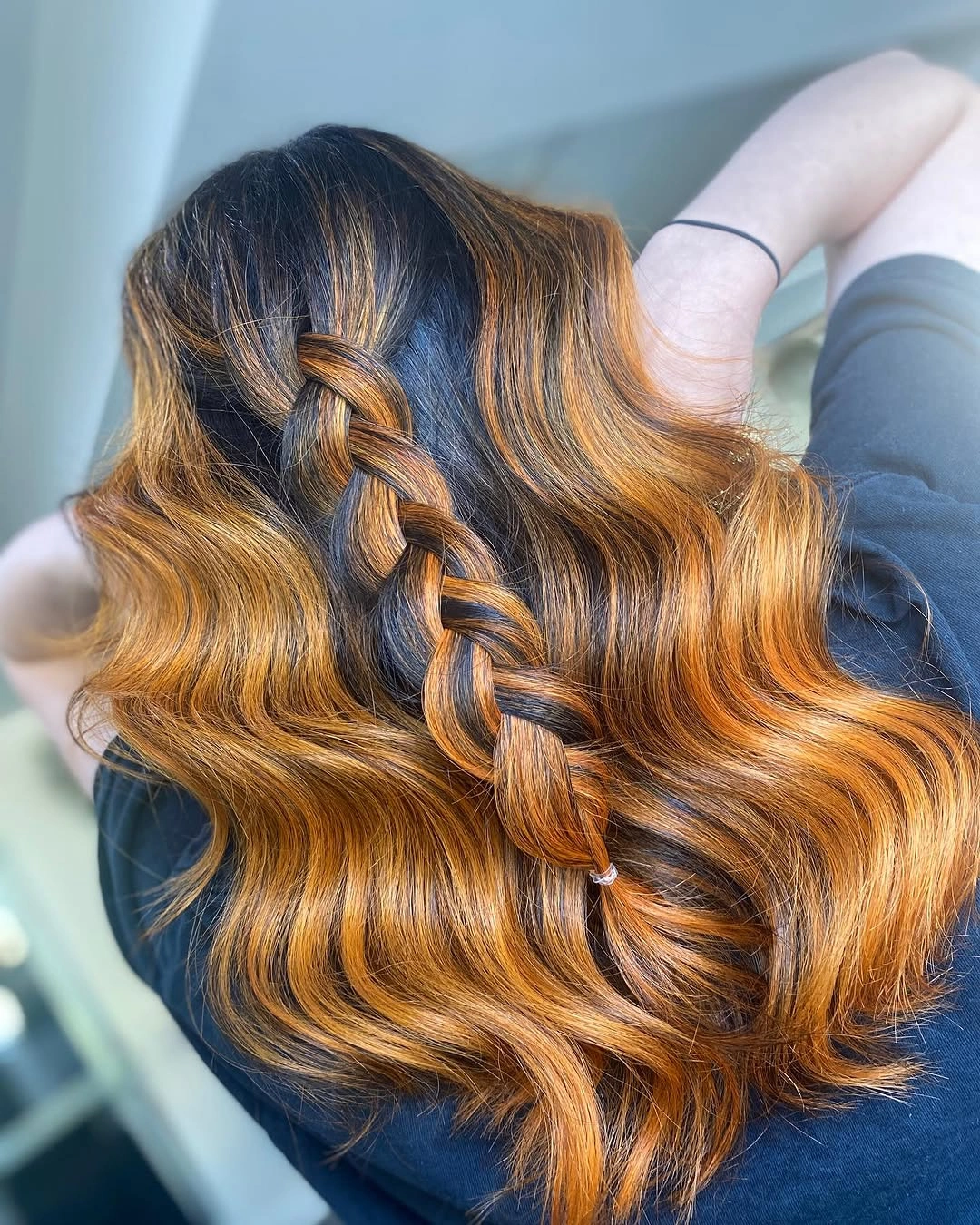
A dark base with caramel ribbons can be shown to full advantage by a loose braid or twist, but the color still reads clearly when the hair is worn in open waves. The warm pieces are distributed through the middle and ends rather than isolated at the front, which keeps the whole length connected to the braid. There is no need to reproduce the exact styling for the color logic to hold for dark wavy hair with caramel ribbons and loose crown braid. The important part is the distribution of bright, deep, warm, or cool areas across the visible silhouette for dark wavy hair with caramel ribbons and loose crown braid.
It is an adaptable brunette hair colour reference when the desired result needs both everyday waves and a more detailed styling option. Braiding changes how each ribbon appears, so the color will look more patterned in a braid and softer when the hair is left loose. This is a reminder that not every seasonal color idea needs a major overall shift in color reference 22. A carefully placed undertone, ribbon, or panel can change the impression while the main depth remains familiar in color reference 22.