18 Trendy Ombre Hair Color Ideas for 2027
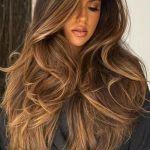
Trendy Ombre Hair Color 2027 featuring rich brown warm blonde highlights and dark caramel blonde ombre. See the looks and save your favorite.

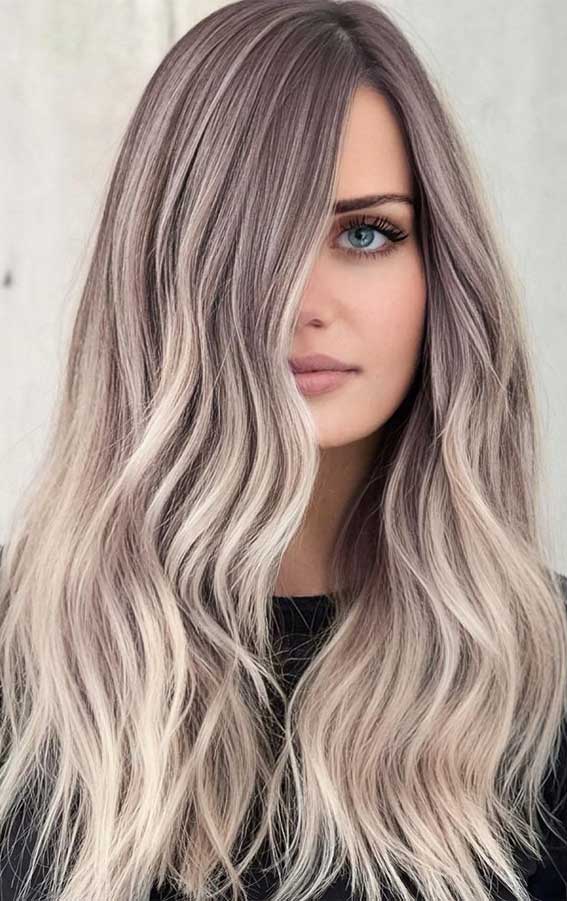
Ombre hair color works a gradient from a darker root to lighter ends, and the 2027 versions lean into softer, more lived-in transitions. The heavy contrast line is out; a smoky root melt and dimensional blonde ombre are in, making the grow-out period your friend rather than your enemy.
These 18 ideas for Trendy Ombre Hair Color cover the spectrum from subtle brunette-to-blonde blends to bold blue and purple ends, with lengths from chin-grazing bobs to mid-back waves. Whether your hair is fine and needs volume or thick and needs shaping, there is an ombre here that handles the grow-out line without a weekly salon visit.
1. Dark Blonde To Golden Blonde Ombre With Waves
The golden blonde ends reflect light before the darker roots do, an effect central to an ombre that starts dark blonde and finishes warm. Thick, wavy hair at mid-back length holds this gradient best, especially when the side-swept bangs get their own slice of the lighter tone. Ask your colorist for: dark blonde to golden blonde ombre, side swept bangs. The blowout with a large round brush gives the waves volume, and a texturizing spray on the ends keeps the lighter pieces from blending into one flat sheet.
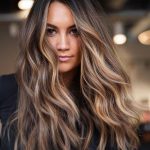
2. Dark Brown To Blonde Ombre With Natural Waves
This is the ombre that does not pretend to be a subtle balayage. The dark brown base drops into a noticeably lighter blonde, and the contrast is the feature, not a mistake. It works best on thick, wavy hair at mid-back length where the transition has room to stretch out. Ask your colorist for: dark brown to blonde ombre, natural waves. Air-dry with a curl-defining cream for the texture you see here, then refresh a few pieces with a curling wand when the waves lose their shape by midday.
The upkeep is straightforward. A toning gloss every six to eight weeks prevents brassiness, and the dark roots grow in without a harsh line for about two months.
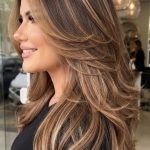
3. Dark Brown To Blonde Ombre With Curtain Bangs
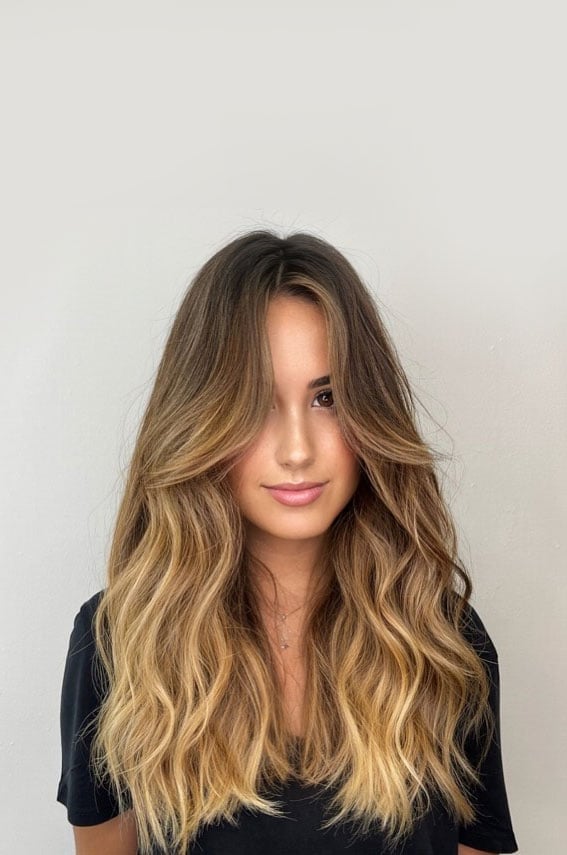
To keep the lighter color in the curtain bangs without turning the whole front section blonde, the placement is key. Ask your colorist for: dark brown to blonde ombre, curtain bangs, face framing layers. The bangs are cut to sweep outward, and the lighter pieces are painted onto the front sections just below the brow bone. That way the ombre gradient follows the hairline instead of fighting it. A round brush blowout on the bangs is all the styling this needs.
4. Rich Brown With Warm Blonde Highlights
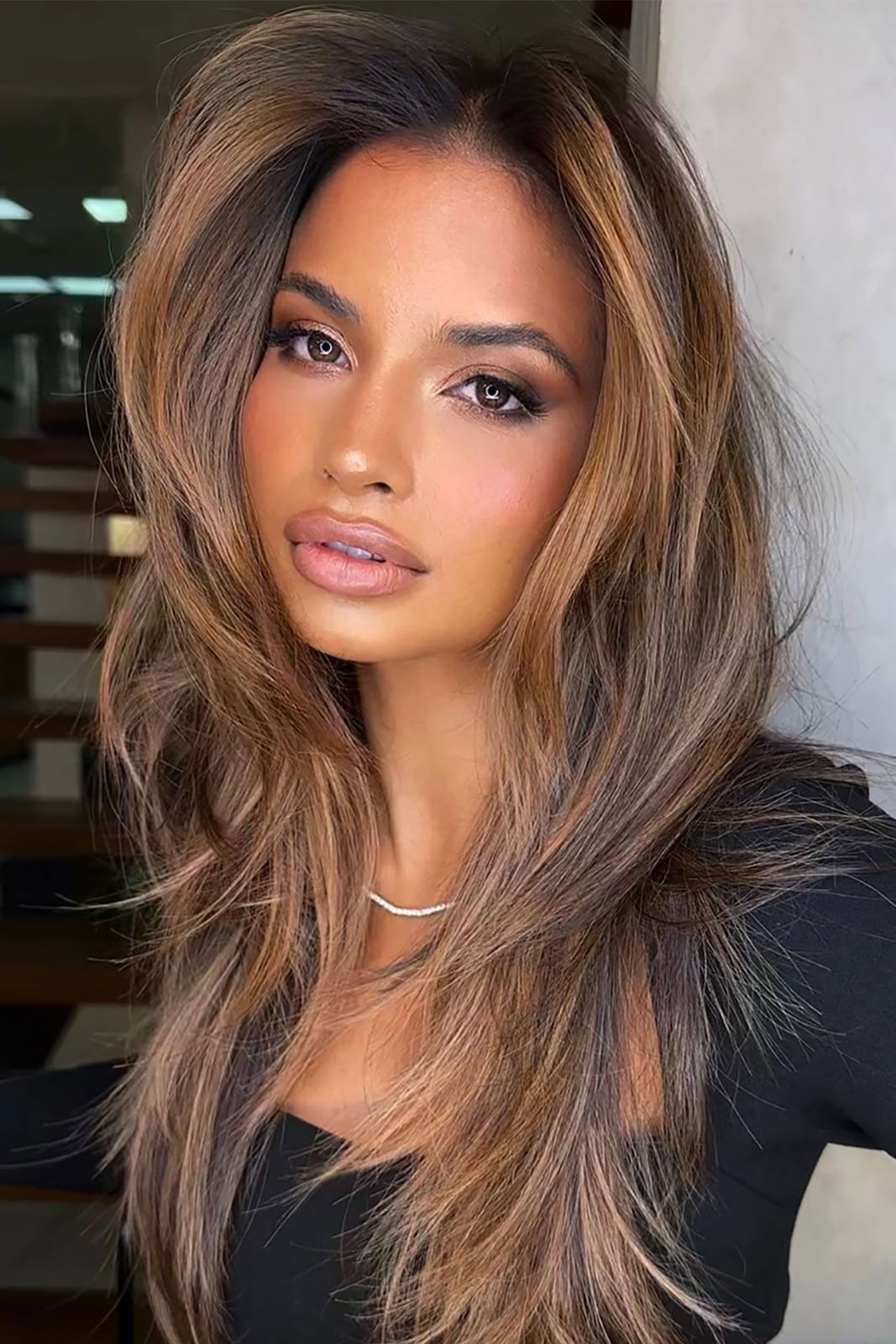
The technique here is a babylight placement: fine sections of warm blonde woven through the rich brown base, concentrated around the face and the curtain bangs. It creates dimension without the obvious stripe of a traditional highlight. Long, thick, wavy hair carries this look well because the waves scatter the lighter pieces so they read as natural brightness rather than a deliberate row of color.
Ask your colorist for: rich brown base, warm blonde face-framing highlights, curtain bangs. Use a volumizing mousse at the roots before the blowout, and a texturizing spray on the waves to keep the separation visible. The curtain bangs need a trim every four to six weeks, and a gloss every eight weeks keeps the warm tone from fading into a brassy yellow.
5. Dark Brown To Caramel Blonde Ombre
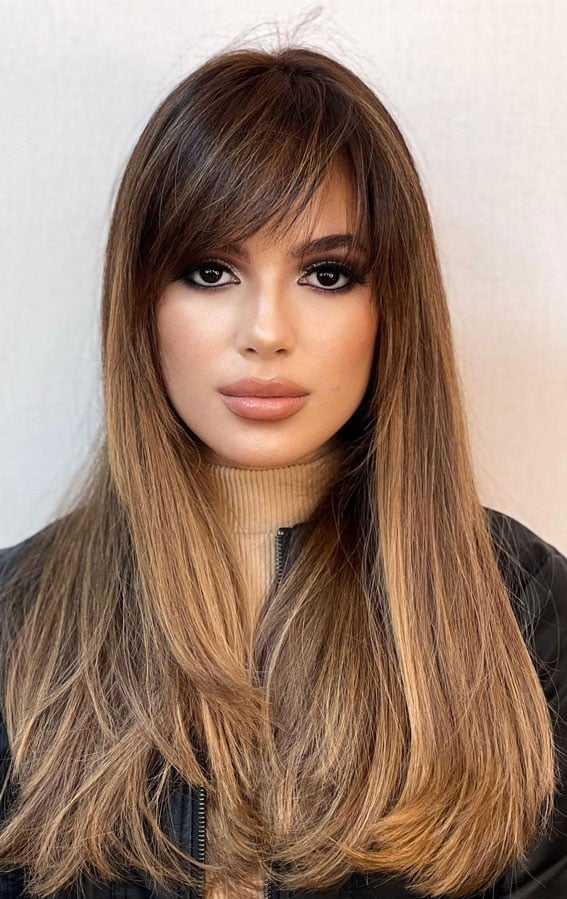
The caramel blonde ends land somewhere between honey and copper, which makes the transition from dark brown look like a natural sun fade rather than a salon appointment. Thick, straight hair at mid-back length shows the blend without the interruption of waves. Ask your colorist for: dark brown to caramel blonde ombre, side swept bangs. This is a salon-only job because the gradient needs to be painted in sections to avoid a blunt line. The styling is simple: a blowout for smoothness, then a flat iron on the caramel ends to seal the shine.
6. Dark Blonde To Light Blonde Seamless Ombre
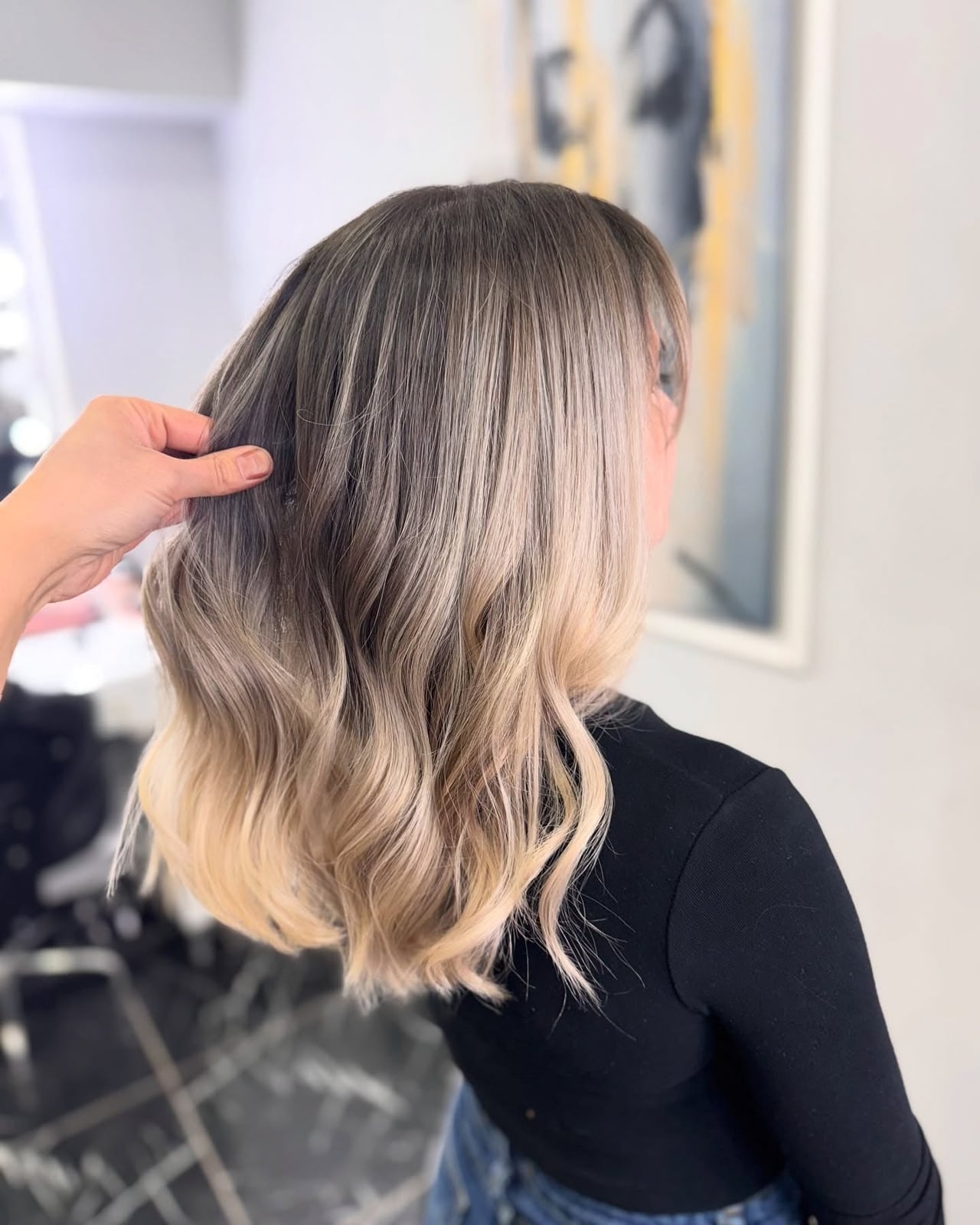
The trick to this one is in the name: a seamless color melt that erases any visible line between the dark blonde root and the light blonde ends. Medium-density, wavy hair at mid-back length gives the gradient enough canvas to read as a natural shadow, not a stripe. Curtain bangs pull the softness forward, so the transition feels diffused.
Ask your colorist for: dark blonde to light blonde seamless ombre, curtain bangs, mid-back length. A texturizing spray will keep those loose waves from looking too polished. Plan to trim the curtain bangs every four to six weeks; the length itself can go a solid ten to twelve before the ends start feeling thin.
7. Dimensional Dark Brown With Lighter Ends
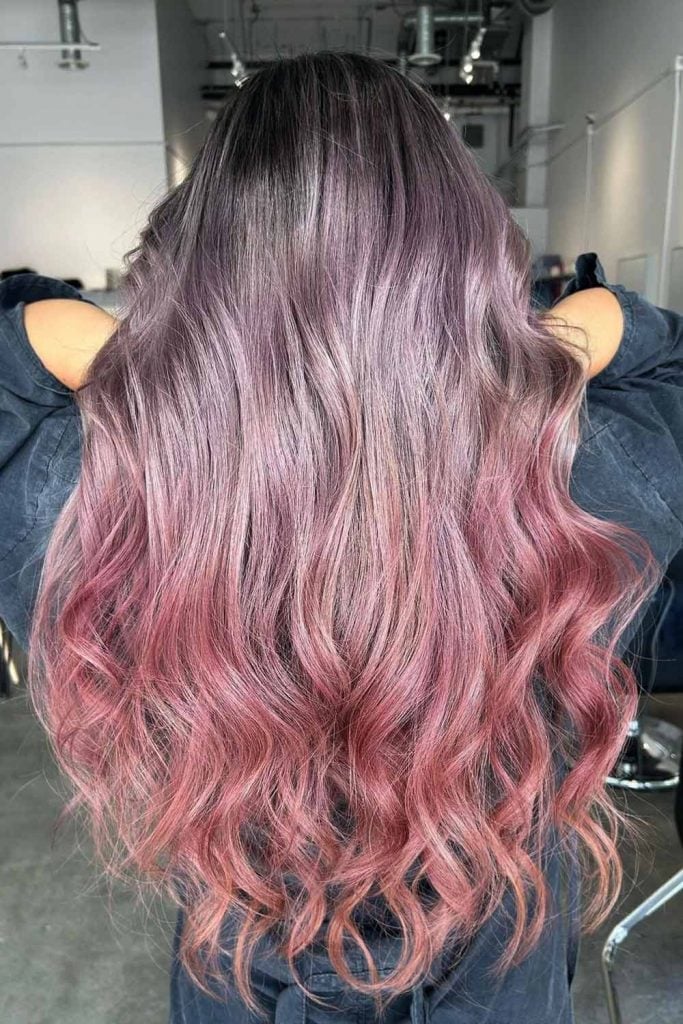
This is the ombre that wants to be a balayage. Thick, wavy hair at mid-back length carries a dark brown base that lifts into lighter brown and blonde tones toward the ends, and the middle part shows off the dimensional shift. It is a salon look, no question, but the honest trade-off is that the lighter ends can drift brassy between appointments. A purple shampoo used once a week keeps the blonde from turning too warm, and a leave-in conditioner stops the ends from feeling dry. Ask your colorist for: dimensional dark brown to lighter brown and blonde ombre, mid-back length.
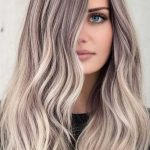
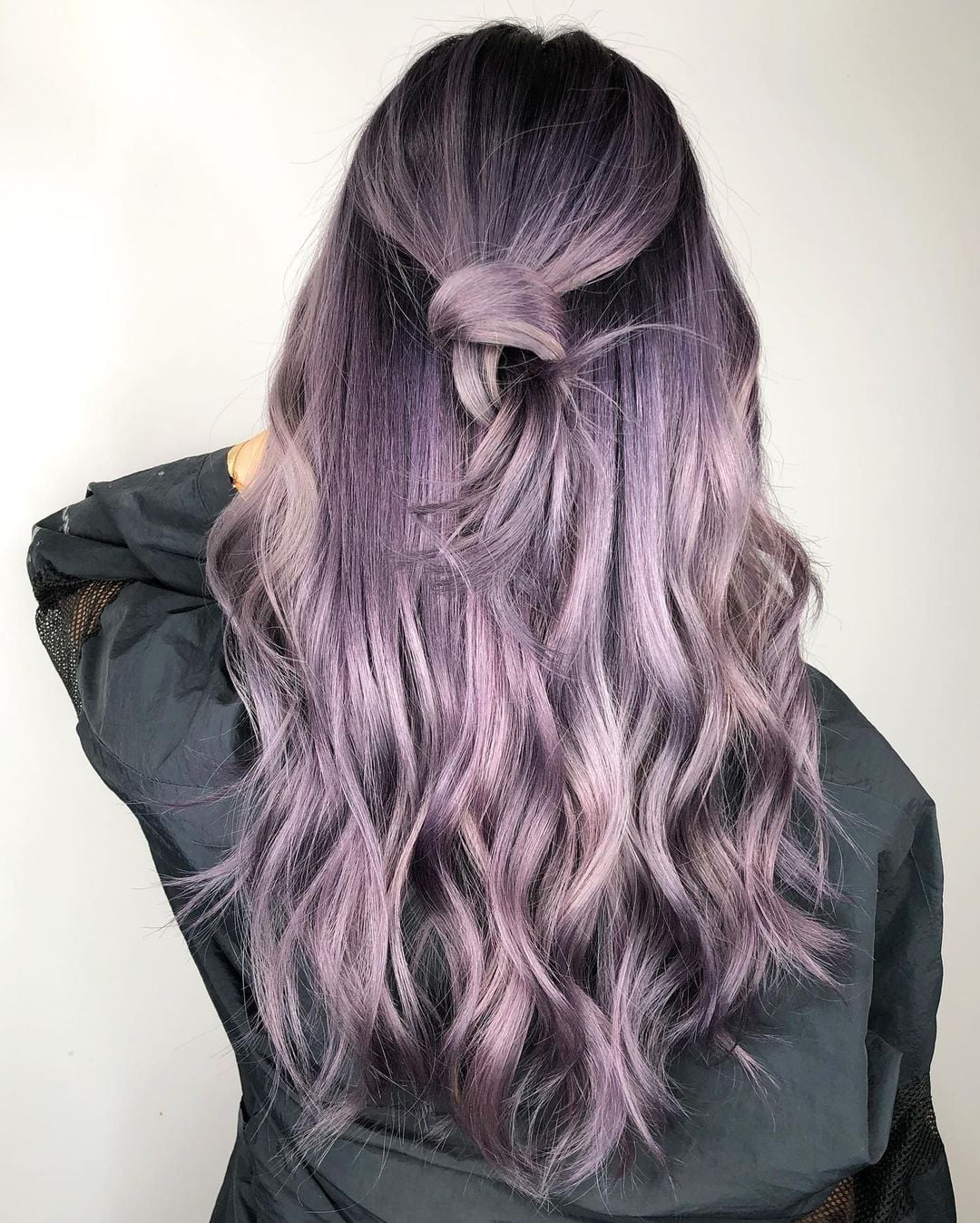
8. Ash Blonde To Dark Blonde Subtle Ombre
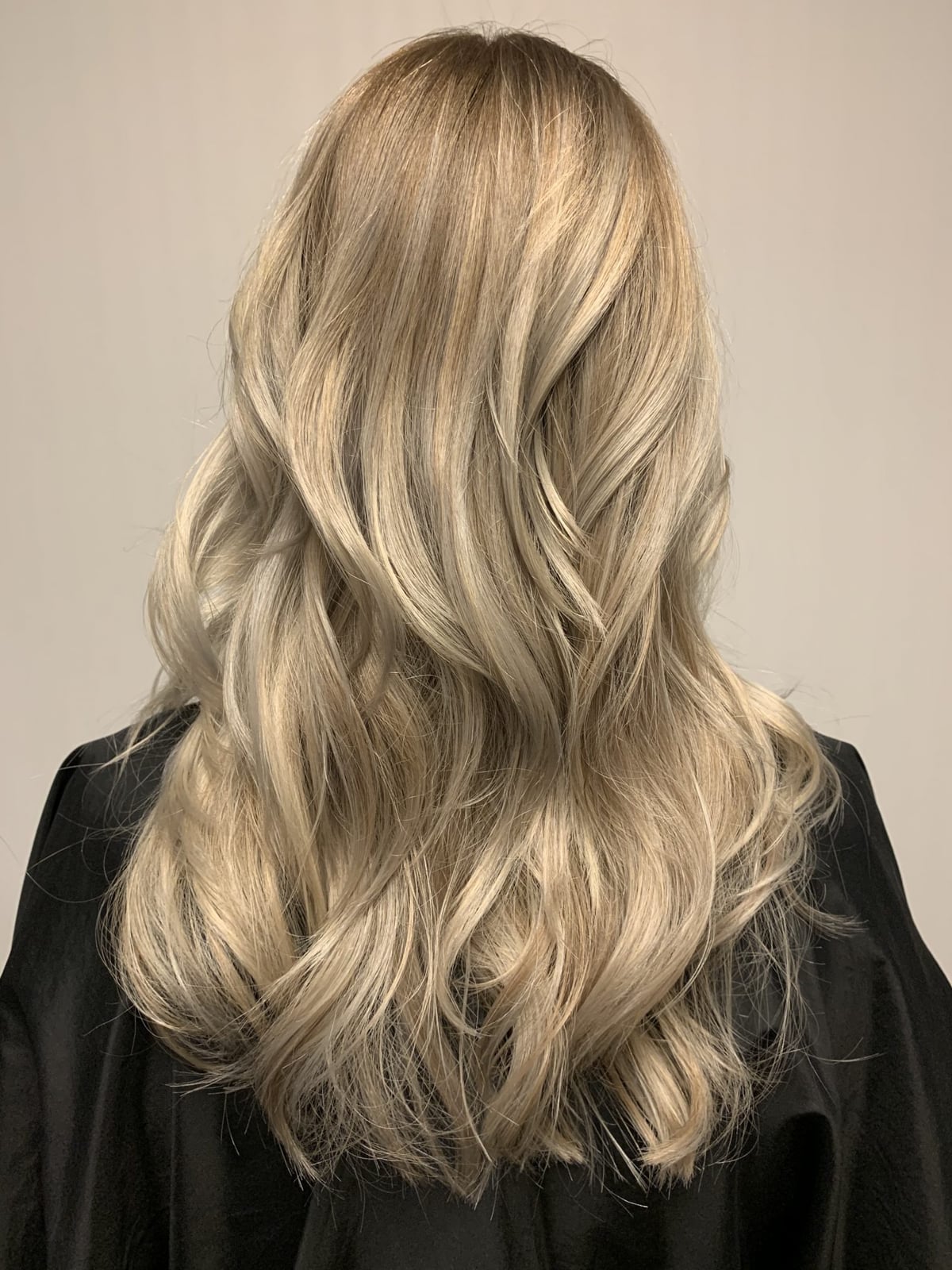
Looking for a color that works with the cooler months and still feels like you spent time on it? This subtle ombre takes a dark blonde root and melts into a lighter ash blonde at the ends, all on thick, wavy hair at mid-back length. The back view here is the tell: the transition is smooth enough that you cannot pinpoint where the dark stops and the light starts, which is exactly the point for a low-contrast season.
Ask your colorist for: dark blonde to ash blonde subtle ombre, mid-back length. An occasional purple shampoo will keep the ash tone from dulling, and a heat protectant is required if you plan to blow it out. The whole look appears planned, not like you forgot to book a touch-up.
9. Chin Length Bob With Dark Brown To Blonde Ombre
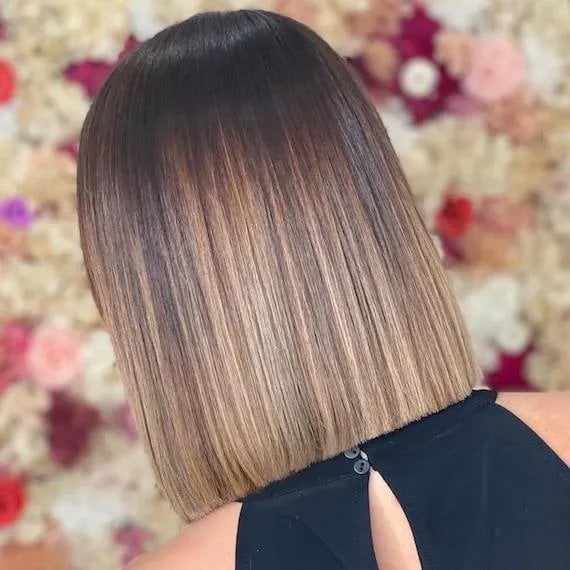
A chin-length bob with a straight finish and a dark brown to blonde ombre is a geometry lesson. The sharp line of the cut and the gradient from root to end create a clean visual structure that works best on thick, straight hair. Thinner textures can get lost in the bob silhouette, and the ombre needs enough density to hold the contrast. Ask your colorist for: chin length bob, dark brown to blonde ombre. A flat iron will give you that sleek finish, and a root blend touch-up every ten to twelve weeks keeps the line from looking too stark.
10. Mid-Back Wavy Ombre With Blended Transition
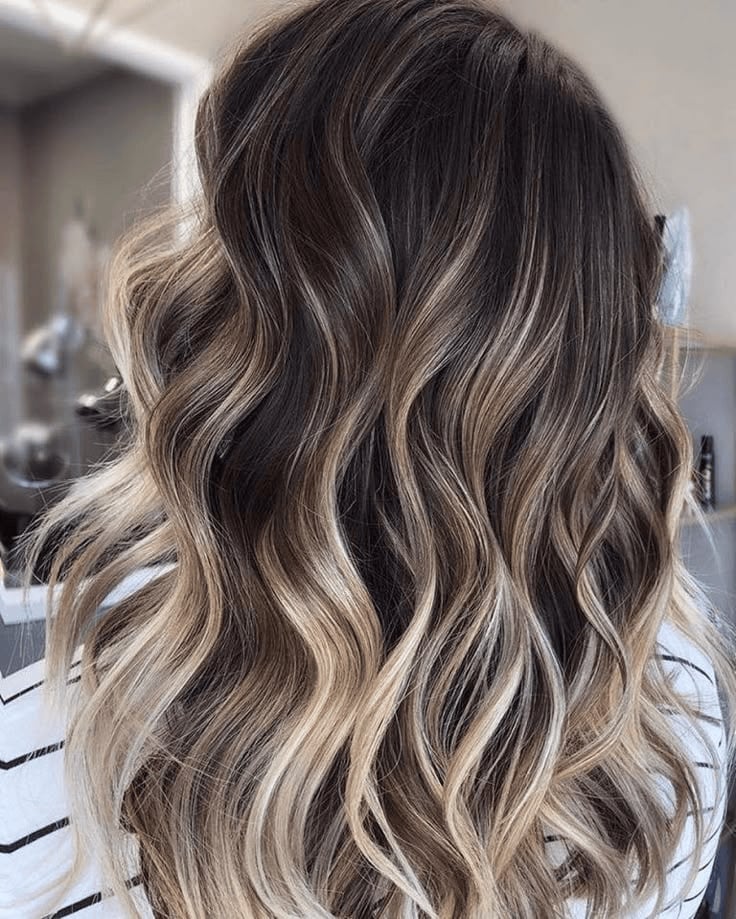
The blended transition here is the kind of ombre that grows out without announcing itself. Mid-back length, thick wavy hair starts at a dark brown base and graduates to a lighter blonde at the ends, and the back view shows a gradient that is present but never harsh. The real upkeep is at the root: a toning gloss every eight weeks keeps the dark base from looking flat against the lighter ends. Ask your colorist for: dark brown to blonde ombre, blended transition, mid-back length. A diffuser attachment on a hairdryer will define the waves, and a shine serum on the ends adds the finish that makes the whole thing look intentional.
11. Wavy Chin Length Bob Ombre
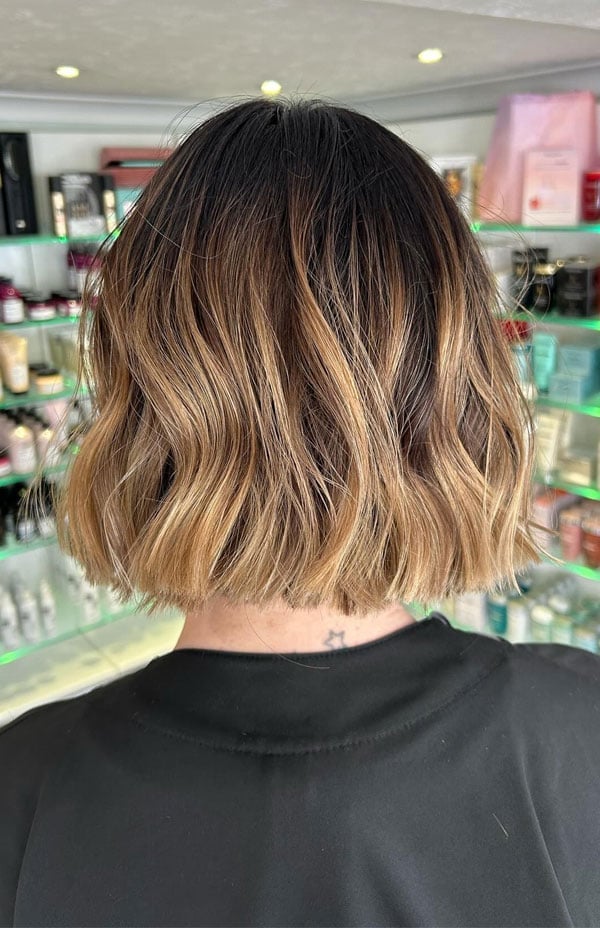
A wavy bob that stops at the chin sounds simple until you factor in the ombre transition from dark brown roots to lighter blonde ends. The contrast works here because the waves diffuse the shift, making it look lived-in rather than sharp. Medium density hair that holds a curl is the sweet spot, anything finer risks falling flat at the ends. Ask your colorist for: chin length wavy bob, dark brown to blonde ombre. This is a salon-only situation; the lift from dark brown to blonde requires precision, and the bob shape demands a clean cut to keep the ombre from pooling awkwardly at the jaw.
12. Long Layered Ombre With Medium Brown Base
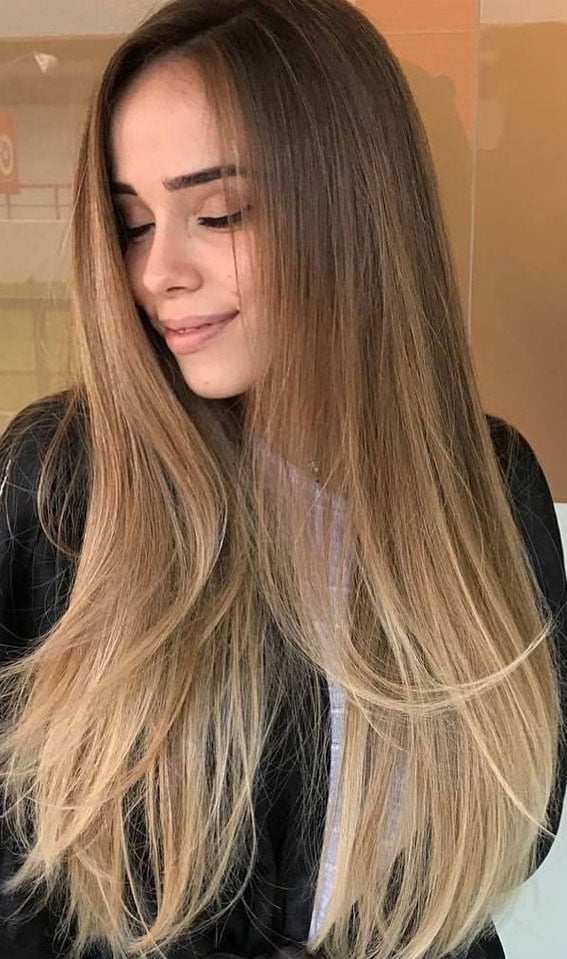
Ever wonder why some ombre looks expensive while others read as accidental dip-dye? The difference is often the base and the cut. Here, a medium brown base melts into light blonde ends on long, thick, straight hair with a layered cut that adds movement without sacrificing density. The middle part lets the gradient do its work symmetrically, and the subtle waves keep the transition from feeling too polished. If your hair is fine or lacks volume, the length and layers might weigh it down rather than lift it. Ask your colorist for: medium brown to light blonde ombre, long layered cut.
Thick hair handles the bleach better, it can take the lift without turning brittle, and the layers prevent the ombre from sitting in a solid block at the ends. A smoothing serum and heat protectant keep the lengths sleek, and occasional toning every four to six weeks stops the blonde from warming up too much.
13. Shoulder Length Dark Brown To Copper Ombre
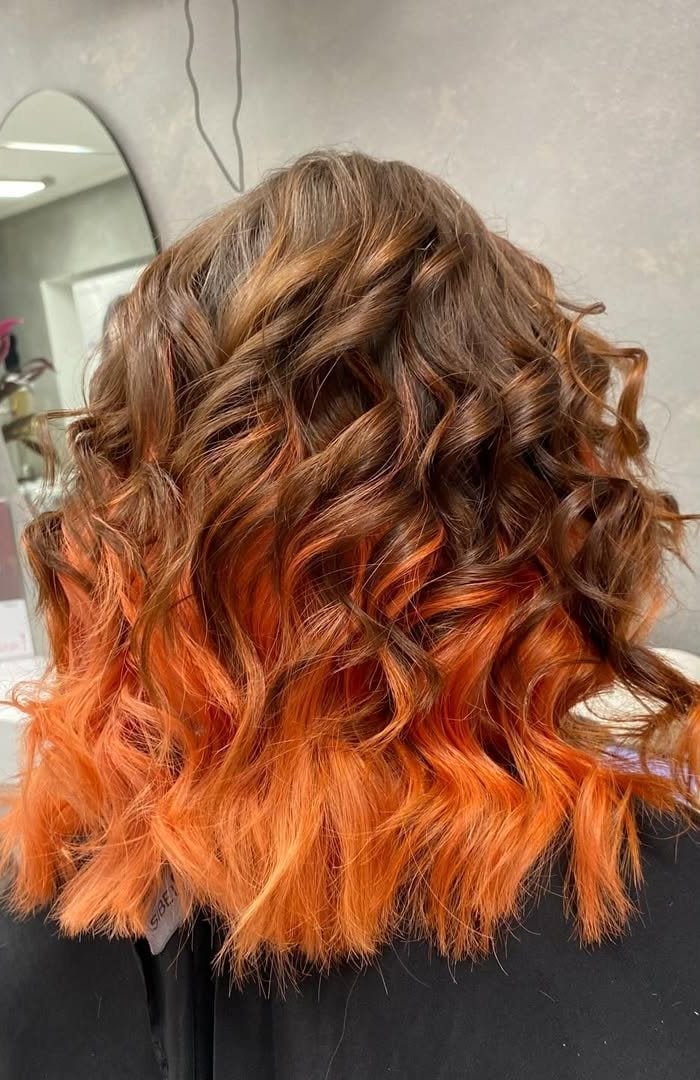
Dark brown roots meeting burnt copper ends gives this ombre a clear transition, and the loose curls allow the color to show at different angles. Shoulder length is a practical middle ground, long enough for the ombre to stretch out, short enough that the copper does not fade into a muddy tone before your next appointment. This color fits autumn territory, where warm tones feel like the natural response to shorter days. Ask your colorist for: dark brown to burnt copper ombre, shoulder length. The copper will demand a refresh every four weeks if you want to keep the fire alive, but that is the price of a color that actually shows up.
14. Mid-Back Dark Base With Vibrant Blue Ombre
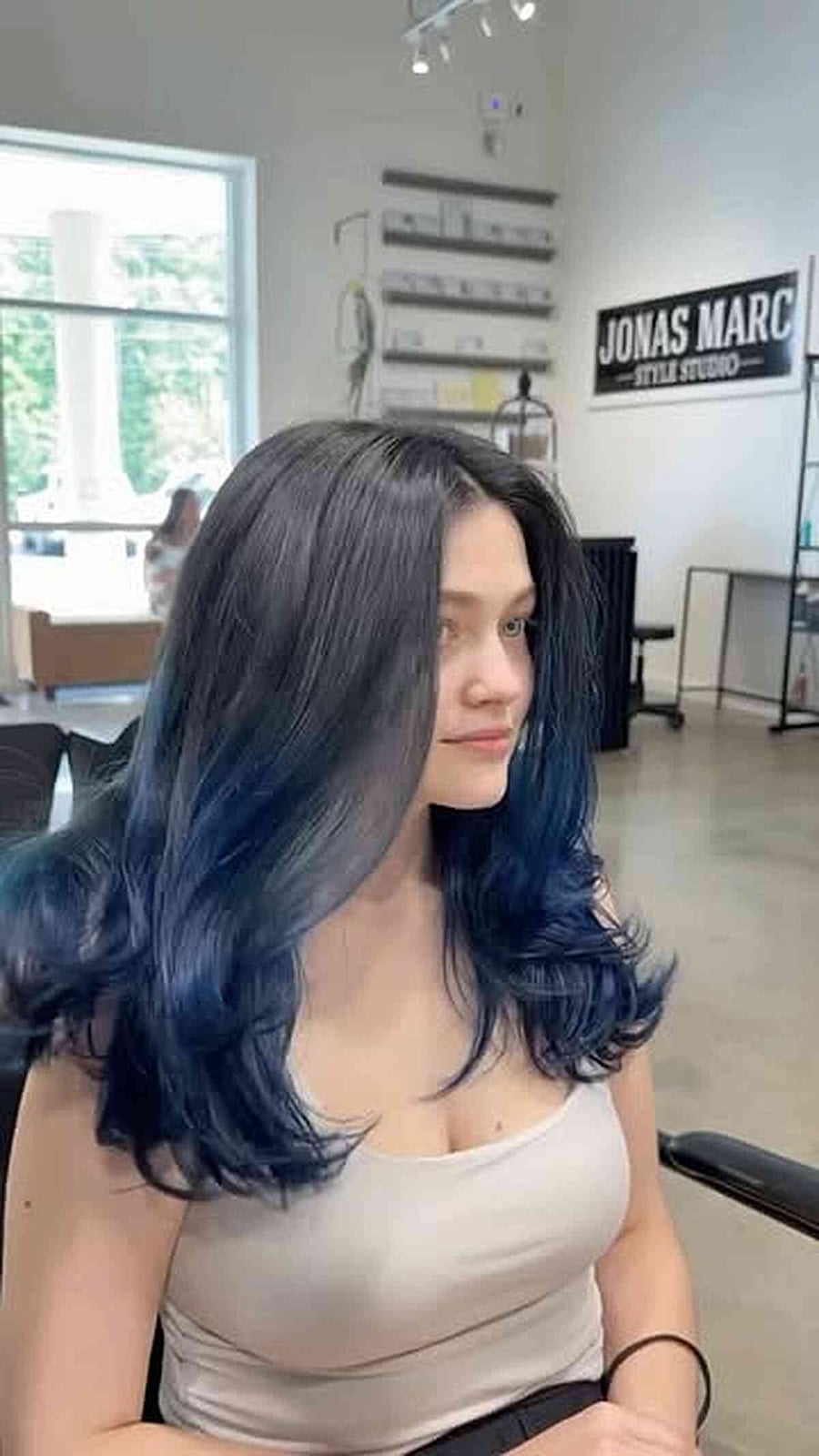
The technique here is a two-step process: lift the dark base enough to deposit a vibrant blue, then maintain the saturation with regular refreshes. Thick, wavy hair at mid-back length provides enough canvas for the blue to graduate from a whisper at the mid-length to a full statement at the ends. The loose waves help the color read as dimensional rather than flat. Ask your colorist for: dark base with vibrant blue ombre, mid-back length.
Because blue is a direct dye, it sits on top of the hair rather than penetrating deeply, which means it fades faster than a permanent tone. Cool water and color-safe products are the bare minimum. A semi-permanent color refresh every three to four weeks keeps the ends from turning a muddy green-blue.
15. Black Base With Blue Ombre
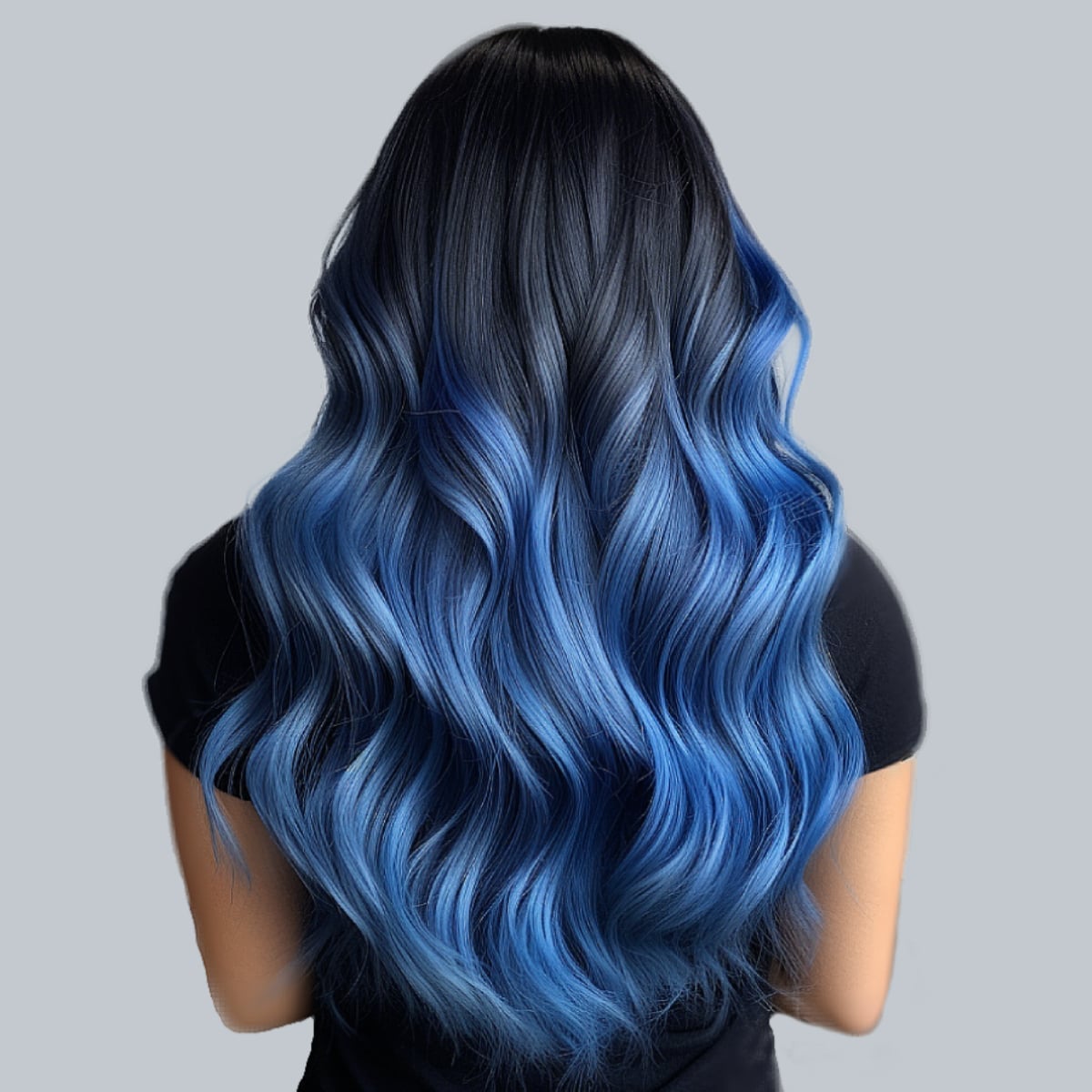
Where a dark brown base softens the blue into something wearable, a black base pushes it into full contrast territory. The black root gives the blue a sharper starting point, and the thick, wavy texture at mid-back length keeps the transition from looking like a costume. This is not a subtle look. The blue hits the eye before the cut does. Ask your colorist for: black base with vibrant blue ombre, mid-back length. The black base needs no bleaching at the root, which spares the scalp some stress, but the blue ends will need a color-depositing shampoo to stay bright. Heat styling speeds up the fade, so air-drying the waves is the smarter move if you want the blue to last more than three weeks.
16. Dark Brown With Dimensional Blonde Highlights
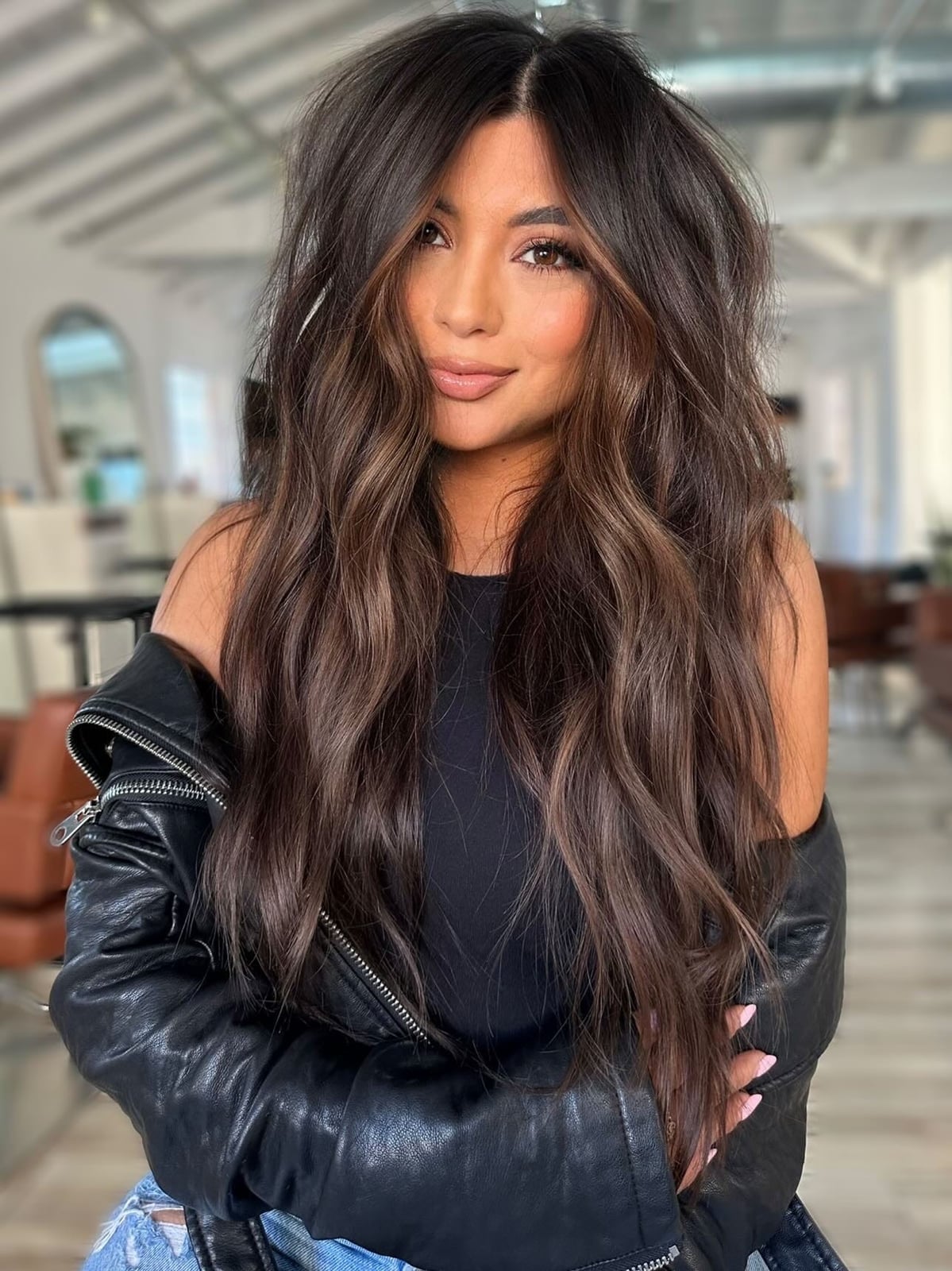
Can a dark brown base still feel bright? Yes, when dimensional blonde highlights are woven through the hair instead of painted on top. This long, thick, wavy hair keeps the natural depth at the roots while the lighter pieces become visible as the hair moves. The side-swept bangs and side parting soften the overall effect, making it a solid choice for most face shapes.
Ask your colorist for: dark brown base with dimensional blonde highlights, side swept bangs. The technique relies on varying highlight widths and placement so the transition looks like a sunlit lift. A toner every six to eight weeks keeps the blonde from drifting brassy against the dark brown.
17. Collarbone Length Blue Ombre With Full Bangs
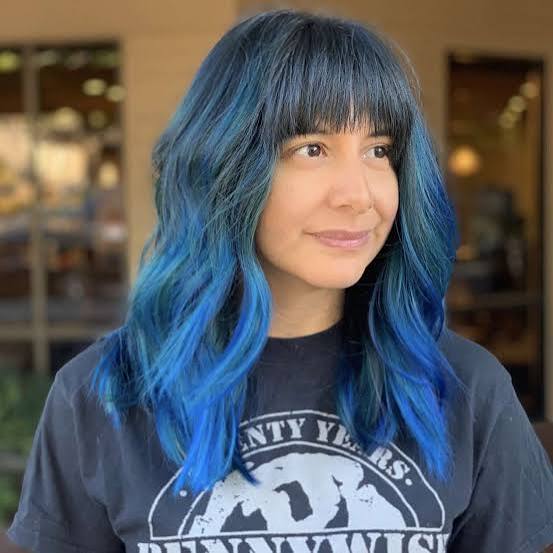
A collarbone cut with full bangs is a design that asks for commitment, and this blue ombre delivers. The color moves from a dark navy at the roots into a vivid electric blue at the ends, with the loose waves showing off the gradient. Full bangs anchor the look and work well if you have a longer forehead, but they do mean a trim every three weeks. The collarbone length keeps the weight manageable for medium wavy texture, and the middle parting lets the blue ombre show a deliberate transition.
18. Black Base With Vibrant Purple Ombre Curls
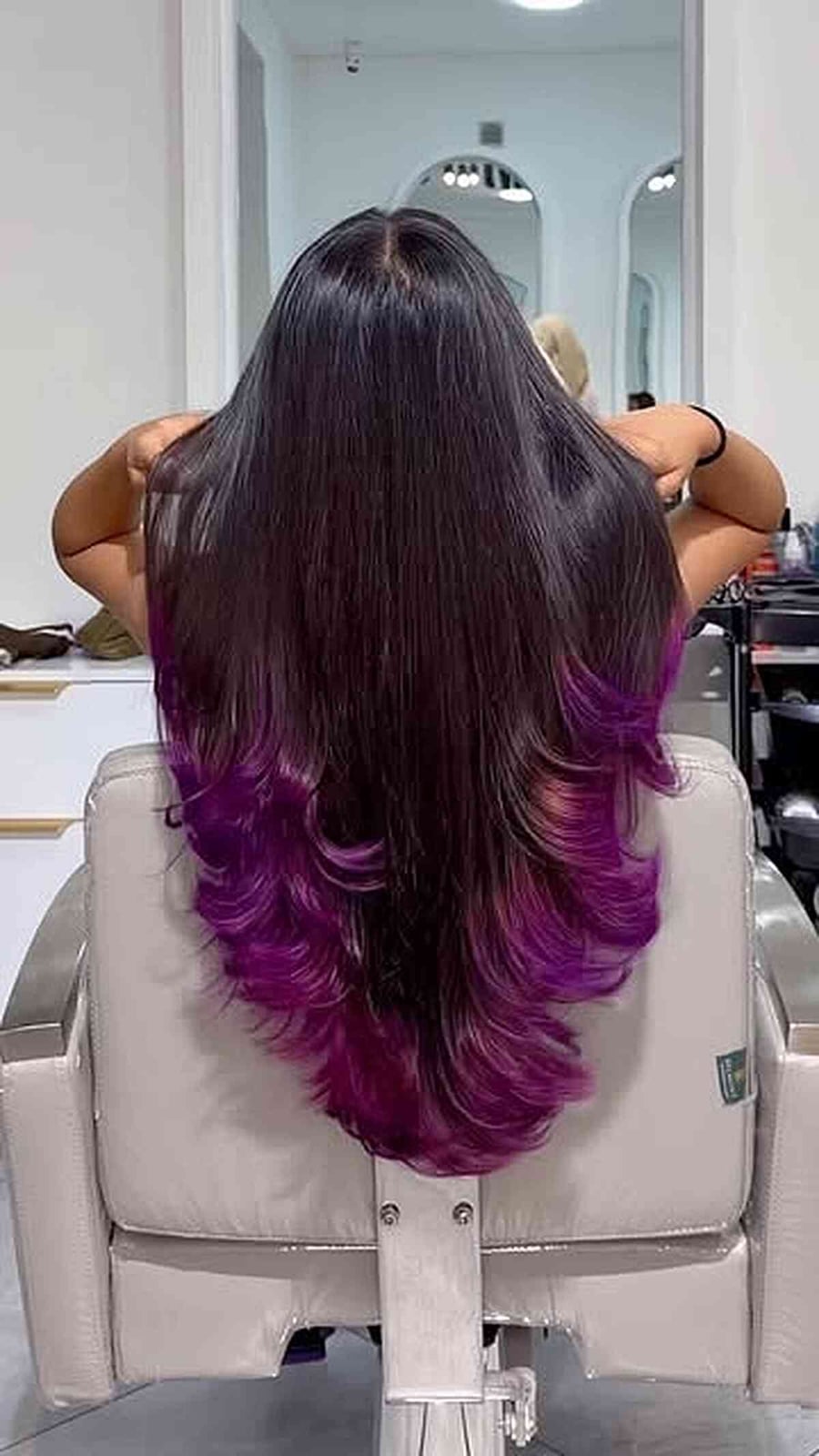
The black-to-vibrant-purple gradient here relies on the contrast being sharp enough to read even in the back view, and the loose curls help the color travel down the length. Thick, wavy hair of mid-back length gives the ombre room to stretch, so the purple ends feel like a destination. Upkeep requires a color-depositing conditioner every other wash to keep the shade a true violet instead of a washed-out lavender. This is a salon project, and you will be back for a refresh within four to six weeks.
Final Thoughts
Pick an ombre that works with your natural base color for easier grow-out, or go for a vivid fashion shade if you are ready for a bold change. Fine hair benefits from a softer gradient that starts higher on the shaft; thicker textures can carry more contrast at the ends. Ombre offers endless possibilities for color transformation.
- Maintain ombre tones with a color-depositing conditioner every 2-4 weeks.
- Use sulfate-free shampoos to preserve color vibrancy.
- Deep condition hair weekly to combat dryness from lightening.
- Trim ends every 8-10 weeks to keep the gradient sharp.
More Seasonal Hair Color Trends ideas
- 20 Trendy Pink Hair Color 2027
- 20 Caramel Hair Color Ideas 2027
- 19 Trendy Balayage Hair Color Ideas for 2027
- 20 Trendy Balayage Highlights in 2027
- 20 Classy Honey Brown Highlights 2027 for Hair
- Cozy Winter Hair Color Ideas for Brunettes With Soft Contrast
- Winter Blonde Hair Color Ideas With Soft Dimension
- Blonde Winter Hair Color Ideas With Visible Depth
- Winter Hair Color for Black Women With Depth and Shine
- Winter Hair Colors With Depth, Shine and Contrast
- Trendy Winter Hair Color Ideas From Auburn to Ash
- October Hair Colour Ideas 2026