How to Calculate Your Macros Step by Step
Learn how to calculate your macros (protein, carbs, fats) step by step for your fitness goals, whether it's weight loss, muscle gain, or maintenance.


You already know that calories matter, but have you looked at where those calories come from? That’s where macros come in. Figuring out your ideal balance of protein, carbs, and fats can take your results to the next level, whether you want to lose fat, build muscle, or just feel more energetic. This article walks you through the exact steps to calculate your macros, what tools you need, and how to adjust them over time for real, lasting progress.
Key Takeaways
- Calculate your BMR using the Mifflin-St Jeor equation, then multiply by an activity factor to find your TDEE.
- Set protein at 0.7-1.0 grams per pound of body weight if you are active or want to preserve muscle.
- Allocate 20-35% of your daily calories to fat for hormone health and nutrient absorption.
- Fill remaining calories with carbohydrates after protein and fat targets are set.
- Adjust your macros gradually as your weight, activity level, or goals change over time.
Why Calculating Macros Matters for Your Goals
Calculating your macros means finding the exact balance of protein, carbohydrates, and fats that works for your body and your goals. It starts with figuring out your total daily energy expenditure (TDEE), which is the number of calories you burn in a day. From there, you allocate percentages or gram amounts to each macronutrient based on whether you want to lose weight, gain muscle, or maintain, and you adjust for your activity level and dietary preferences. This precision is what makes macro tracking more effective than just counting calories.
Tools You’ll Need to Calculate and Track Macros
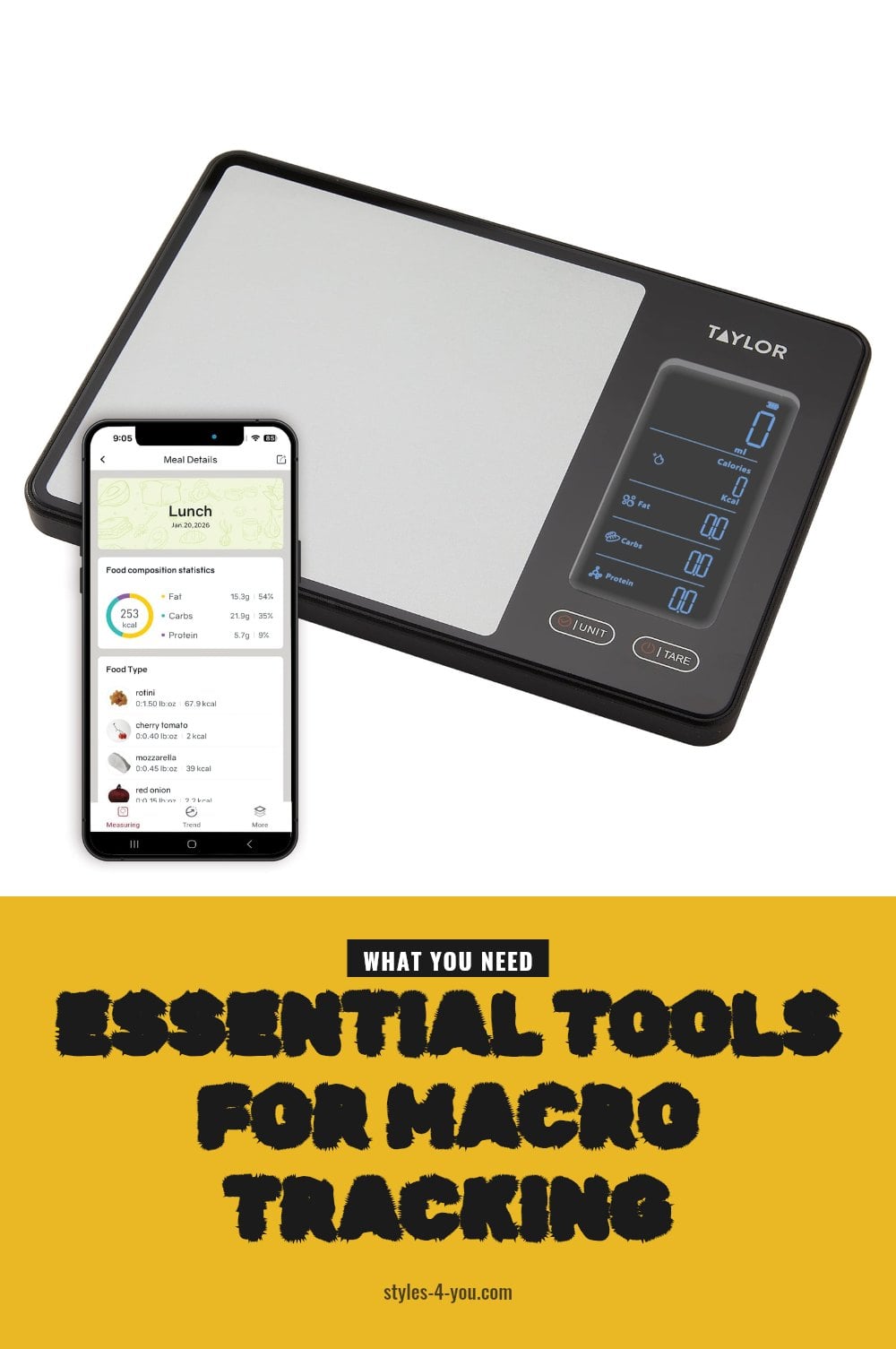
You don’t need much to get started, but a few tools make a big difference.
- Food scale: For accurate portioning, especially calorie-dense foods like nuts and cheese.
- Measuring cups and spoons: Handy for liquids and smaller amounts like oil or peanut butter.
- Online macro calculator or app: Simplifies the math and gives you a starting point in minutes.
- Food tracking journal or app: For logging what you eat and seeing how close you are to your targets.
- Basic calculator: Useful if you prefer to do the manual calculations yourself.
Step-by-Step Guide to Calculating Your Macros

- Calculate your BMR: Your Basal Metabolic Rate is the calories your body needs at rest. Use the Mifflin-St Jeor equation: for women, (10 x weight in kg) + (6.25 x height in cm), (5 x age), 161. For men, (10 x weight in kg) + (6.25 x height in cm), (5 x age) + 5.
- Determine your TDEE: Multiply your BMR by an activity multiplier. Sedentary (little exercise) = 1.2, lightly active (1-3 days/week) = 1.375, moderately active (3-5 days) = 1.55, very active (6-7 days) = 1.725, extra active (hard daily) = 1.9.
- Adjust for your goal: For weight loss, subtract 300-500 calories from TDEE. For muscle gain, add 200-300 calories. For maintenance, keep it as is.
- Set protein: If you’re active, aim for 0.7-1.0 grams per pound of body weight. Protein has 4 calories per gram.
- Set fat: Allocate 20-35% of your total daily calories to fat. Fat has 9 calories per gram.
- Fill with carbs: Subtract the calories from protein and fat from your total. The remainder goes to carbs (4 calories per gram). This completes your macro profile.
Common Macro Tracking Mistakes and How to Avoid Them
- Underestimating activity level: This inflates your TDEE and makes weight loss harder. Be honest about how much you actually move.
- Inaccurate portion tracking: A food scale is your best friend here, especially for calorie-dense foods. Don’t eyeball.
- Unrealistic macro targets: If your goals are too restrictive, you’ll burn out. Set something you can stick with long term.
- Ignoring micronutrients: Macros are important, but whole foods give you vitamins and minerals. Don’t fill your day with processed items just to hit numbers.
- Not adjusting over time: Your weight and activity change, so your macros should too. Re-evaluate every 2-4 weeks.
- Forgetting ‘hidden’ macros: Sauces, dressings, and processed foods add calories. Log everything.
Practical Tips for Successful Macro Tracking

Prioritize protein: If you’re active or aiming for muscle preservation, make hitting your protein target a daily habit. Aim for 0.7-1.0 grams per pound of body weight.
Ensure adequate fat intake: Don’t cut fats too low. They’re crucial for hormone production and absorbing fat-soluble vitamins like A, D, E, and K.
Focus on whole foods: Nutrient-dense sources like lean meats, vegetables, and whole grains support overall health better than processed options that fit your macros.
Track consistently: The more days you log, the more reliable your data will be for making adjustments. Even a few weeks of consistent tracking reveals patterns.
Listen to your body: Pay attention to hunger and satiety cues. Don’t force food to hit an exact number if you’re genuinely full, or ignore hunger just to stay under a limit.
Adjust gradually: If results stall, make small changes, add or subtract 100-200 calories, rather than overhauling your plan. Drastic shifts are harder to sustain.
When to Consult a Professional for Macro Guidance
If you have pre-existing medical conditions like diabetes or kidney disease, always consult a healthcare professional or registered dietitian before tracking macros. They can help you set safe targets.
If you experience persistent fatigue, irritability, poor performance, or other concerning symptoms, it may indicate an imbalance in your macro intake. Seek professional advice to rule out underlying issues.
For highly individualized plans or competitive goals, a registered dietitian or certified nutritionist can provide tailored guidance that general calculators cannot.
Before making any significant dietary changes, especially rapid or extreme ones, talk to your doctor to ensure it’s safe for your health.
Timeline and Expected Investment for Macro Tracking
Initial Calculation: Expect to spend about 15-30 minutes for your first macro calculation. That includes finding your BMR, applying an activity multiplier, and setting your protein, fat, and carb targets.
Consistent Tracking: This is an ongoing process. Plan to track for weeks or months to see significant results and understand how your body responds to different ratios.
Adjustments: Re-evaluate your macros every 2-4 weeks, or whenever your weight, activity level, or goals change. Small tweaks keep you moving toward your target.
Cost: Minimal. A food scale is a one-time purchase (typically $15-$40). Many tracking apps offer free versions, with premium subscriptions usually costing $5-$15 per month.
Frequently Asked Questions
How often should I adjust my macros?
Revisit your macros every few weeks or whenever your weight changes significantly, your activity level shifts, or your progress stalls. A good rule is to adjust gradually, changing calories by 100-200 or grams of a macro at a time, and give your body at least two weeks to respond before making another change.
Is it bad to have too much protein?
For most healthy people, a high protein intake is safe, but extremely high levels can be a concern for those with kidney issues. If you have a pre-existing kidney condition, consult a doctor or dietitian before increasing protein. Otherwise, staying within 0.7-1.0 grams per pound of body weight is a reasonable range for active individuals.
What if I don’t hit my macro targets every day?
Don’t stress. Consistency over time matters more than hitting exact numbers daily. Aim to be within 5-10 grams of each macro most days, and focus on the weekly average. If you miss a day, just get back on track the next day without overcompensating.
Can I lose weight by just counting calories?
Yes, you can lose weight by creating a calorie deficit, but tracking macros gives you more control over body composition. With macros, you ensure adequate protein to preserve muscle and enough fat for hormone health, which can lead to better results than calorie counting alone.
What are macronutrients?
Macronutrients are the nutrients your body needs in large amounts: protein, carbohydrates, and fats. Protein and carbs each provide 4 calories per gram, while fat provides 9 calories per gram. They are the building blocks of your diet and directly impact your energy, muscle, and overall health.
Final Thoughts
Start with a solid BMR and TDEE calculation, then set your protein and fat targets first. Expect to spend about 15-30 minutes on your initial setup, then track consistently for several weeks before making small adjustments. Your body will give you feedback, so listen to it and tweak as needed. That’s the real secret to making macros work for you.
This article is for informational purposes only and is not a substitute for professional medical or dietary advice. Always consult a healthcare provider or registered dietitian before making significant changes to your diet, especially if you have a medical condition such as diabetes or kidney disease.
More Blog ideas
- Your Essential Guide to a Healthy Feminine Hygiene Routine
- Best High Protein Foods to Eat Daily for Health and Energy
- Feeling Stuck: 12 Small Steps to Get Unstuck
- Winter Skin Survival Tips
- How to Get a Flat Stomach
- How to Fix Damaged Hair and Restore Its Health
- Full-Body Kettlebell Workout
- Dry Scalp vs. Dandruff
- Full Body Workout for Beginners
- 21 Easy Beauty Tips Every Woman Should Know
- Feminine Energy: 15 Daily Habits to Feel More Radiant
- Upper Body Workout for Women at Home