Your Daily Stretching Routine for Improved Flexibility and Health
Learn how to create a daily stretching routine to improve flexibility, reduce stiffness, and enhance overall physical well-being. Avoid common mistakes.

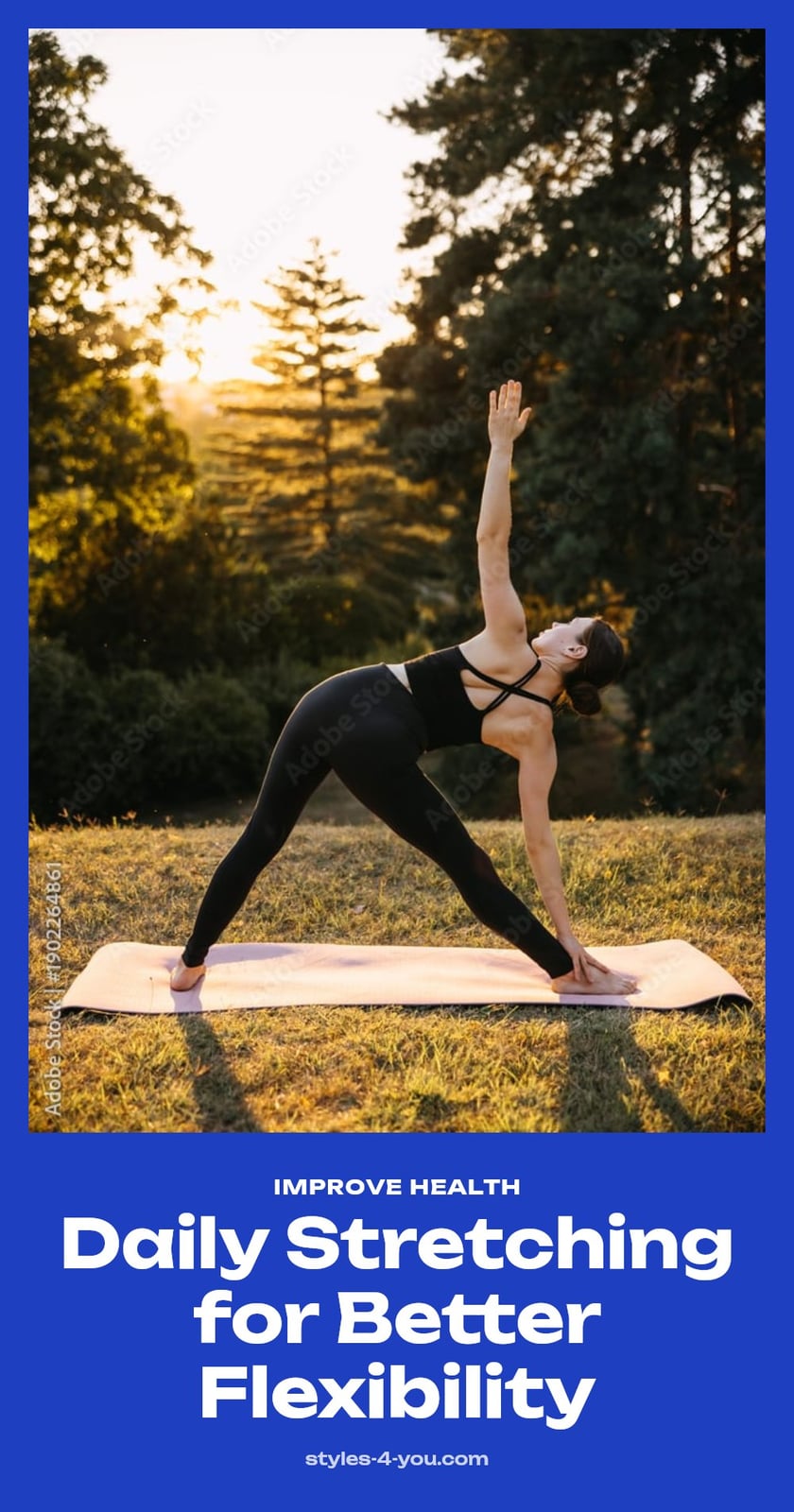
If you spend most of your day at a desk or just want to feel less stiff, a daily stretching routine can make a real difference. It helps improve flexibility, ease muscle tightness, and support better posture, all in just 10 to 15 minutes. In this article, I walk you through 12 simple full-body stretches you can do every day, along with tips on how to do them safely and effectively.
Key Takeaways
- Hold each static stretch for 15-30 seconds and repeat 2-4 times.
- Warm up with 5-10 minutes of light cardio before stretching.
- Stretch both sides of your body equally for balance.
- Stop if you feel sharp pain; a gentle pull is normal.
- Aim for daily sessions of 10-15 minutes for best results.
Why Stretching Should Be Part of Your Daily Routine
Adding a short stretching session to your day is one of the simplest ways to support your body. Regular stretching improves your flexibility and range of motion, which makes everyday movements, reaching for something on a high shelf or bending to tie your shoes, feel easier. It can also help reduce muscle stiffness and soreness, especially if you sit at a desk for hours or work out regularly. Over time, consistent stretching may contribute to better posture by lengthening tight muscles that pull you out of alignment, and it may lower your risk of injury by keeping your joints and muscles more pliable. My tip: keep a yoga mat near your desk as a visual reminder to stretch for a few minutes each day.
1. Neck Tilt

Gently tilt your head to one side, bringing your ear toward your shoulder. Keep your opposite shoulder relaxed and down, don’t let it hike up. Hold for 15-30 seconds, then switch sides.
- Time: 15-30 seconds per side
- Form cue: Keep shoulders relaxed and down
- Make it easier or harder: Use your hand to apply light pressure on the side of your head for a deeper stretch
2. Shoulder Rolls
Stand or sit tall with your arms at your sides. Roll your shoulders forward in a smooth circular motion for 5-10 repetitions, then reverse the direction and roll them backward for another 5-10 reps. Focus on controlled, steady movement rather than speed.
- Sets and reps: 5-10 rolls each direction
- Form cue: Keep your neck long and your core engaged
- Make it easier or harder: Increase the size of the circles for a wider range of motion
3. Chest Opener
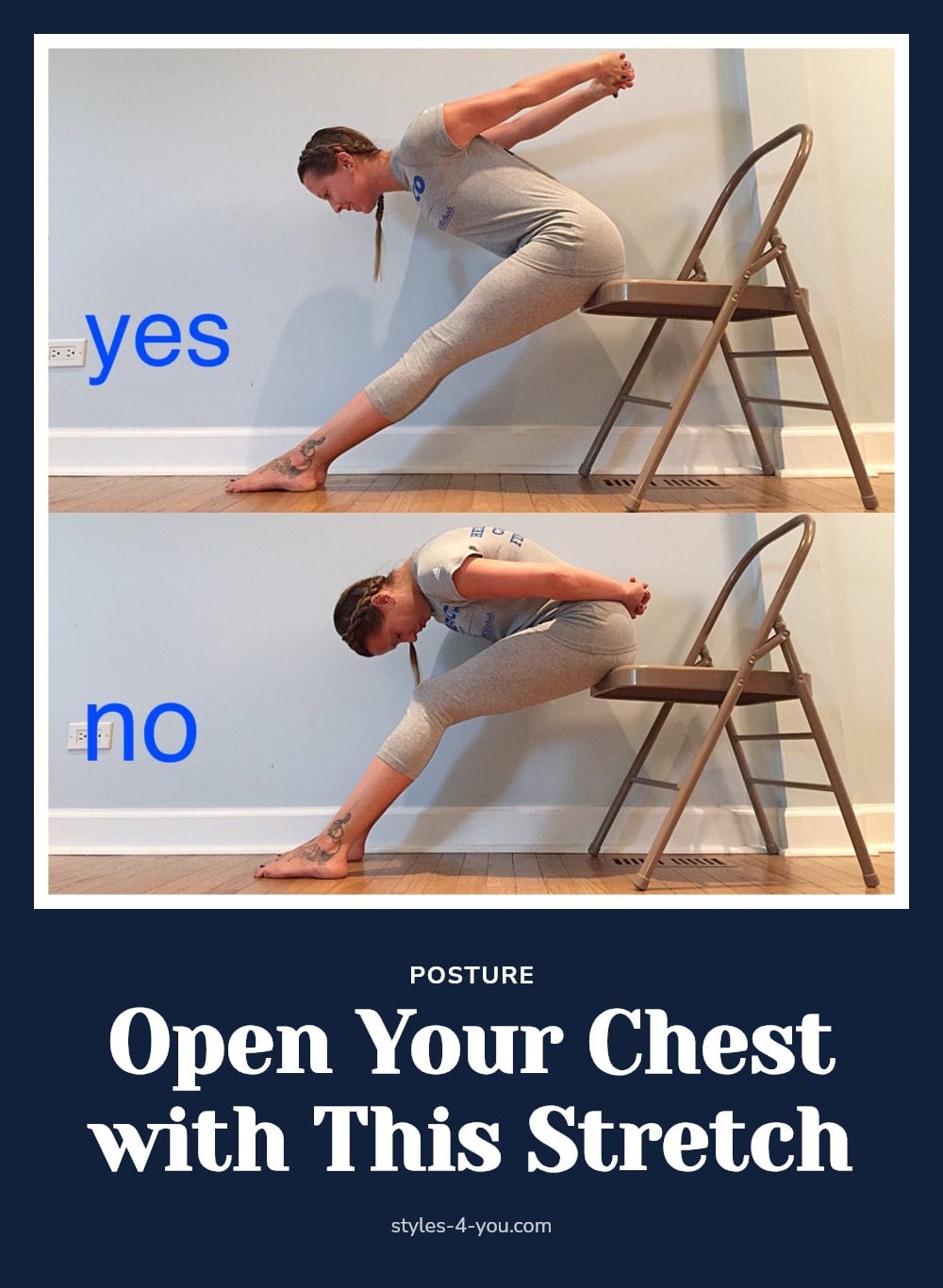
Stand tall and interlace your fingers behind your back. Gently lift your arms away from your body, keeping your elbows straight, until you feel a stretch across your chest and front of your shoulders. Keep your spine neutral, avoid arching your lower back.
- Time: 15-30 seconds
- Form cue: Keep your spine neutral, don’t arch your lower back
- Make it easier or harder: Bend your knees slightly if you feel tightness in your lower back
4. Cat-Cow Stretch
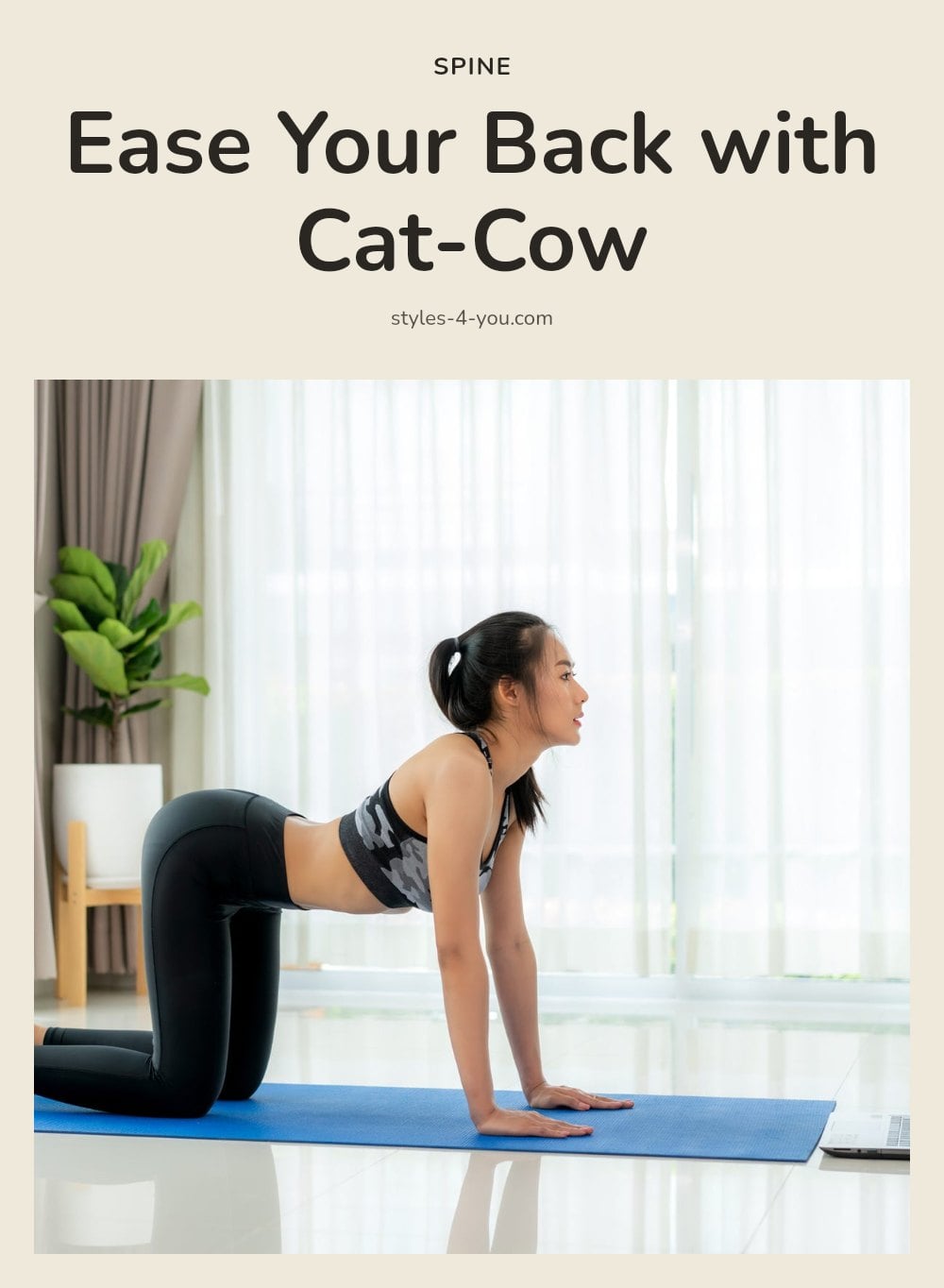
Start on all fours with your hands directly under your shoulders and your knees under your hips. As you inhale, drop your belly toward the mat, lift your head and tailbone, letting your spine sink into a gentle curve (Cow). As you exhale, round your spine toward the ceiling, tuck your chin to your chest and your tailbone under, like a cat stretching (Cat).
- Sets and reps: 5-10 slow, controlled rounds of Cat-Cow.
- Form cue: Move only as far as your spine allows without straining your neck.
- Make it easier or harder: Keep your knees on a folded towel for comfort, or pause at the top of each position for one breath.
5. Triceps Stretch
Reach one arm straight overhead, then bend your elbow so your hand drops toward your upper back, palm facing in. Use your opposite hand to gently press down on the bent elbow, deepening the stretch along the back of your arm. Hold for 15-30 seconds, then switch sides.
- Time: 15-30 seconds per arm.
- Form cue: Keep your head upright and shoulders level; don’t let your torso tilt to the side.
- Make it easier or harder: If you can’t reach your upper back, hold a small towel in the bent hand and let it dangle behind you.
6. Side Bend
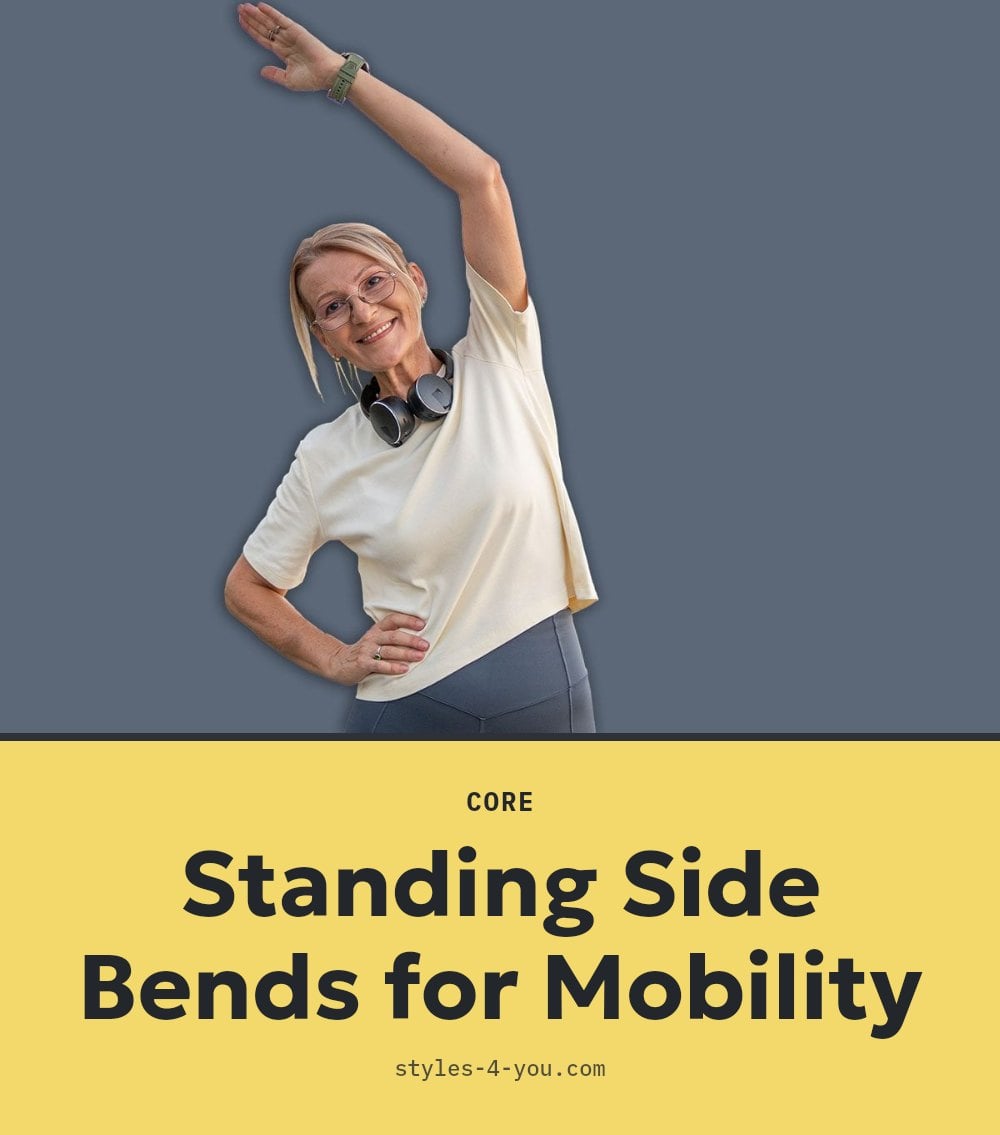
Stand with your feet hip-width apart and your arms at your sides. Raise one arm straight overhead, palm facing in, then gently bend your torso to the opposite side, keeping both hips facing forward. You should feel a lengthening along your side body from your hip to your raised hand. Hold for 15-30 seconds, then switch sides.
- Time: 15-30 seconds per side.
- Form cue: Keep your hips stable and square; avoid leaning forward or backward.
- Make it easier or harder: Slide your lower hand down your thigh for a milder stretch, or reach your overhead arm slightly behind your ear for a deeper one.
7. Hip Flexor Stretch
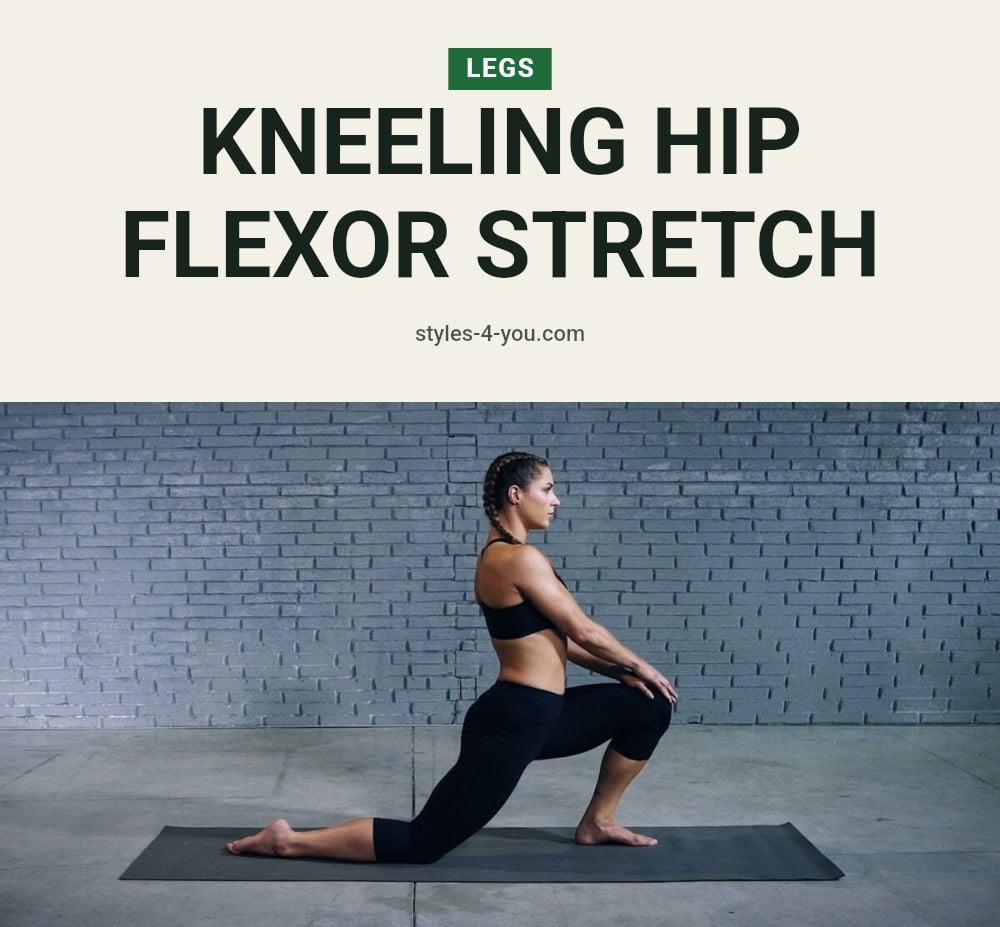
Kneel on one knee with your other foot flat on the floor in front of you, knee bent at a 90-degree angle. Gently push your hips forward until you feel a stretch in the front of your hip and thigh of the back leg. Keep your core engaged and avoid arching your lower back as you hold the position. Hold for 15-30 seconds, then switch sides.
- Time: 15-30 seconds per side.
- Form cue: Squeeze your glute on the back leg to help stabilize your pelvis and prevent overarching.
- Make it easier or harder: Place a folded towel under your back knee for cushioning, or raise your front foot onto a low step for a deeper hip opener.
8. Hamstring Stretch (Standing or Seated)
Stand with one heel on the floor, toes pointing up, and hinge at your hips to reach toward your toes. Keep your back straight, not rounded, so the stretch lands in the back of your thigh. If balance is tricky, sit on the floor with both legs extended and reach for your toes instead. Hold 15-30 seconds per leg.
- Time: Hold 15-30 seconds per leg, repeat 2-3 times
- Form cue: Keep your spine long, hinge from the hips, not the waist
- Make it easier or harder: Bend your standing knee slightly to reduce intensity, or flex your foot more to deepen the stretch
9. Quadriceps Stretch
Stand next to a wall or hold onto a sturdy chair for balance. Bend your right knee, bringing your heel toward your glutes, and grab your right ankle with your right hand. Gently pull your heel closer until you feel a stretch along the front of your thigh.
- Time: Hold for 15-30 seconds per leg, then switch sides.
- Form cue: Keep your knees together and your hips level; don’t let the bent knee drift forward.
- Make it easier: Loop a towel or strap around your ankle and pull with both hands if you can’t reach your foot comfortably.
10. Calf Stretch (Wall Assisted)
Face a wall and place both palms flat against it at shoulder height. Step one foot back about two feet, keeping that heel pressed down and the leg straight. Bend your front knee and lean your body toward the wall until you feel a pulling sensation along your back calf.
- Time: Hold for 15-30 seconds per leg, then switch.
- Form cue: Keep your back heel flat on the floor the whole time, no lifting.
- Make it easier or harder: Move your back foot closer to the wall to reduce the stretch, or step it farther back for a deeper pull.
11. Figure-Four Stretch (Glutes)
Lie on your back with both knees bent and feet flat on the floor. Cross your right ankle over your left knee, letting the right knee fall open to the side. Gently pull your left thigh toward your chest until you feel a stretch deep in your right glute. Keep your head and shoulders relaxed against the mat.
- Time: Hold for 15-30 seconds per side, then switch legs.
- Form cue: Keep your hips level and your lower back pressed gently into the mat.
- Make it easier or harder: For a deeper stretch, pull the bottom thigh closer to your chest. For less intensity, keep the bottom foot farther from your body.
12. Child’s Pose
Kneel on your mat with your big toes touching and your knees spread wide apart. Sink your hips back toward your heels, then extend your arms forward on the mat, or rest them alongside your body. Breathe deeply and let your spine lengthen with each exhale.
- Time: Hold for 15-30 seconds, breathing steadily.
- Form cue: Keep your neck relaxed by letting your head rest naturally between your arms.
- Make it easier or harder: For a deeper hip release, bring your knees closer together; for less intensity, place a folded towel under your hips.
Your Weekly Stretching Schedule
Consistency matters more than how long you stretch each time. Aim for daily sessions of 10-15 minutes, or at least 3-5 times per week. Below is a flexible schedule you can adapt to your week.
| Day | Focus | Duration |
|---|---|---|
| Monday | Full body (all 11 stretches plus Child’s Pose) | 15 minutes |
| Tuesday | Upper body (neck, shoulders, chest, arms, side) | 10 minutes |
| Wednesday | Lower body (hips, hamstrings, quads, calves, glutes) | 10 minutes |
| Thursday | Full body (all 11 stretches plus Child’s Pose) | 15 minutes |
| Friday | Upper body (neck, shoulders, chest, arms, side) | 10 minutes |
| Saturday | Lower body (hips, hamstrings, quads, calves, glutes) | 10 minutes |
| Sunday | Rest or gentle full-body | 10-15 minutes |
Adjust the split to fit your schedule. Even a 5-minute session is better than skipping.
Common Stretching Mistakes to Avoid
Even a good routine can fall short if you make these common missteps. Here is what to avoid and why.
- Stretching cold muscles: Always warm up with 5-10 minutes of light cardio, like walking or marching in place, before static stretching. Cold muscles are more prone to strain.
- Bouncing during stretches: Ballistic movements trigger the stretch reflex, causing muscles to contract instead of relax. Hold each stretch gently and steadily.
- Ignoring pain: Stretching should feel like a gentle pull, never sharp or stabbing pain. Stop immediately if it hurts and ease back.
- Holding your breath: Tense muscles resist lengthening. Breathe deeply and evenly throughout each stretch to help your muscles release.
Frequently Asked Questions
How long should I hold each stretch?
Hold each static stretch for 15 to 30 seconds. That’s enough time for the muscle to relax and lengthen without overdoing it. If you’re aiming to improve flexibility, you can repeat each stretch 2 to 4 times per session, but keep the hold within that range.
Can stretching help with back pain?
Stretching may help ease mild back discomfort by lengthening tight muscles that pull on your spine, like the hamstrings or hip flexors. However, if you have chronic or severe back pain, it’s important to talk to a doctor or physical therapist before starting a routine. They can guide you on which stretches are safe for your situation.
Is it okay to stretch every day?
Yes, daily stretching is generally safe and often recommended for improving flexibility. Just keep sessions gentle and avoid pushing into pain. If you feel sore from a previous workout, light stretching can help, but don’t stretch a recently injured muscle without professional advice.
What’s the difference between static and dynamic stretching?
Dynamic stretching involves moving a body part through its full range of motion, like arm circles or leg swings, and is best done before activity to warm up. Static stretching means holding a position still, like a hamstring stretch, and is ideal after exercise or during a dedicated flexibility session.
Final Thoughts
My tip: pick a time that works for you, whether it’s morning or before bed, and stick with it. Consistency is what brings results, so even a short daily session beats a long one once a week. Expect to notice gradual improvements in flexibility over a few weeks, but don’t rush it. Listen to your body, breathe deeply, and enjoy the process.
This article is for general information only and is not a substitute for professional medical advice. If you have an injury, chronic pain, or a medical condition, consult a doctor or physical therapist before starting any stretching routine. Stop immediately if you feel sharp pain and seek professional guidance for persistent issues.
More Blog ideas
- Your Essential Guide to a Healthy Feminine Hygiene Routine
- Best High Protein Foods to Eat Daily for Health and Energy
- Feeling Stuck: 12 Small Steps to Get Unstuck
- Winter Skin Survival Tips
- How to Get a Flat Stomach
- How to Fix Damaged Hair and Restore Its Health
- Full-Body Kettlebell Workout
- Dry Scalp vs. Dandruff
- Full Body Workout for Beginners
- 21 Easy Beauty Tips Every Woman Should Know
- Feminine Energy: 15 Daily Habits to Feel More Radiant
- Upper Body Workout for Women at Home