Detangling Hair: 8 Easy Tips to Stop Knots and Breakage
Learn 8 easy and effective tips for detangling hair to prevent knots, reduce breakage, and keep your hair healthy and smooth. Say goodbye to painful snags!

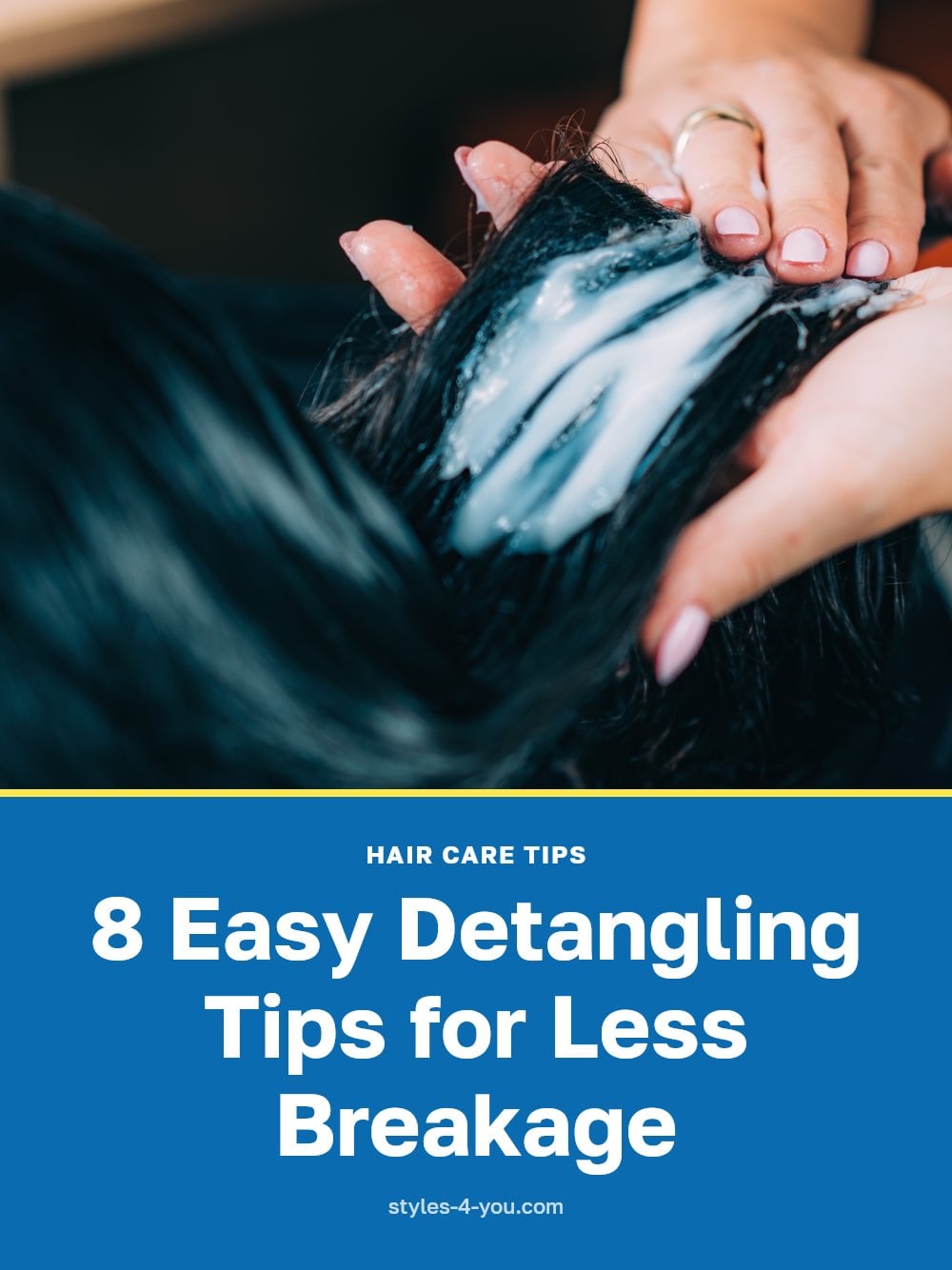
Knots and tangles can turn a simple hair care routine into a battle, especially if you have long, curly, or fine hair. The good news is that detangling doesn’t have to be painful or damaging. With the right technique and a few simple habits, you can keep your hair smooth, strong, and tangle-free.
In this article, I’ll walk you through eight easy tips that make detangling a breeze, from the best way to handle wet hair to the tools that really work. You’ll learn how to prevent breakage and keep your hair looking its best.
Key Takeaways
- Always detangle hair when it is wet or damp and saturated with conditioner or a detangling product.
- Start detangling from the ends and work upward to avoid pushing knots down.
- Use a wide-tooth comb or a detangling brush, never a fine-tooth comb on tangles.
- Section your hair into smaller parts to make detangling easier and reduce pulling.
- Sleep on a silk or satin pillowcase to minimize overnight tangles.
The Secret to Pain-Free Detangling
The secret to pain-free detangling is to be gentle and methodical. Always detangle hair when it’s wet or damp and saturated with conditioner or a detangling product. Start from the ends and work your way up using a wide-tooth comb or detangling brush to carefully separate knots. This approach minimizes breakage and makes the process smoother and quicker.
1. Always Detangle Wet Hair
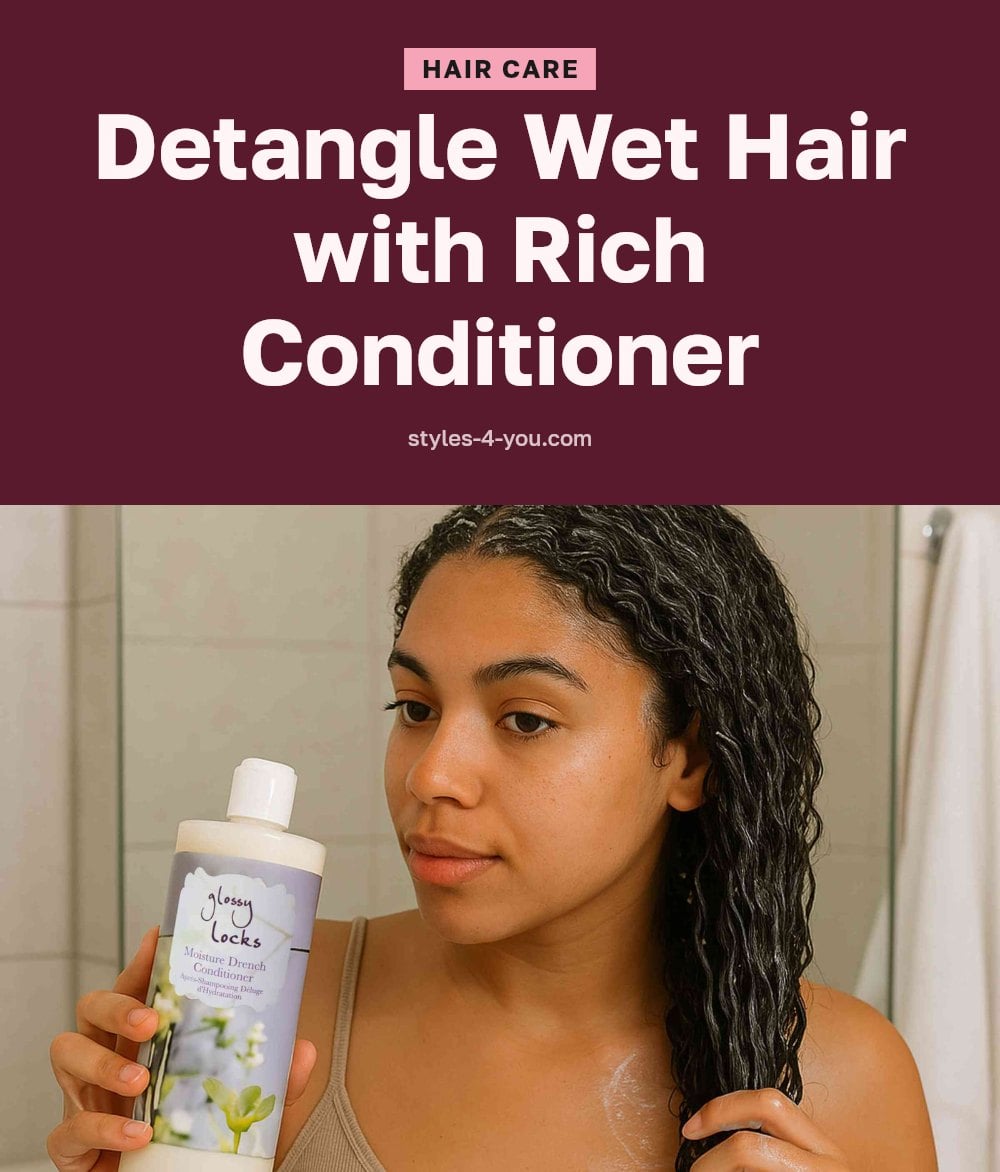
Always detangle hair when it’s thoroughly wet or damp, not just slightly moist. Hair is most fragile when wet, but with the right lubrication, it’s also more elastic and easier to detangle.
My tip: Never detangle dry hair. It’s a recipe for breakage and pain. Dry hair lacks the flexibility needed to stretch around knots without snapping.
- Wet hair under running water or use a spray bottle to dampen it evenly.
- Work in small sections to keep the hair saturated while you detangle.
2. Saturate with Conditioner or Product
Apply a generous amount of conditioner, leave-in, or detangling spray to provide the slip needed to glide through knots. This lubrication reduces friction and allows tangles to separate without force, so you never have to pull or yank.
Look for formulas that coat each strand and make it feel slippery. My tip: apply product from mid-length to ends, where tangles are most common, and add more if you feel resistance while combing.
- Work in small sections to keep the product evenly distributed.
- Reapply on stubborn areas rather than forcing the comb through.
3. Start from the Ends, Work Up
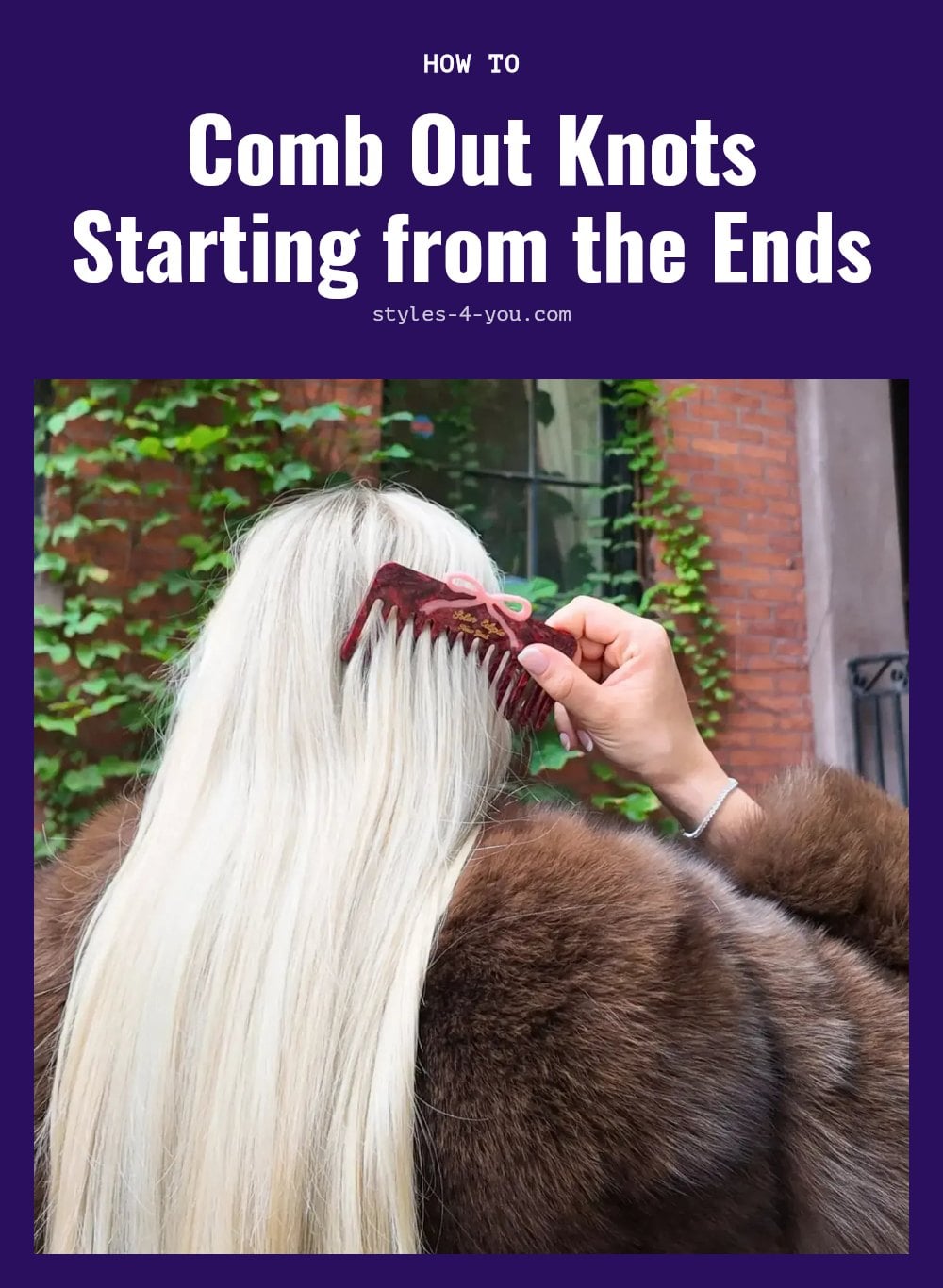
Start from the ends and work your way up. This is the golden rule. Beginning at the ends prevents pushing knots further down and creating bigger tangles.
Gradually work your way up towards the roots, tackling small sections of tangles at a time.
My tip: Hold the section you’re working on to minimize pulling at the scalp. This keeps the tension off your roots and makes the process more comfortable.
4. Use the Right Tools
A wide-tooth comb or a brush specifically designed for detangling is essential. Fine-tooth combs can snag and break hair, especially when wet. Look for tools with smooth, flexible bristles that glide through knots without pulling.
For very curly or coily hair, finger detangling can be incredibly effective and gentle. Use your fingers to gently separate strands, working in small sections. This method gives you more control and reduces breakage.
5. Section Your Hair
Dividing your hair into smaller, manageable sections makes the detangling process less overwhelming and more efficient. Use hair clips or ties to keep sections separate. This prevents you from trying to tackle too much hair at once, which can lead to pulling and breakage.
Start at the nape of your neck and work forward, or split your hair into quadrants. Work through each section completely before moving to the next. This method ensures every part of your hair gets the attention it needs.
6. Be Patient and Gentle
Never yank or force your comb or brush through knots. This is a primary cause of breakage and damage. Gently work through each tangle, using small, downward strokes. Patience is key.
If you encounter a stubborn knot, apply more product and try to gently loosen it with your fingers first. Hold the section of hair above the knot to minimize pulling at the scalp. This extra care prevents pain and preserves your hair’s health.
7. Prevent Tangles Before They Start
Regular, gentle brushing can prevent small tangles from becoming big problems. Use a soft brush or wide-tooth comb to distribute natural oils and keep hair smooth. This daily habit reduces the chance of knots forming.
Sleeping on a silk or satin pillowcase reduces friction, minimizing tangles overnight. Consider protective hairstyles like braids or a loose bun to keep hair contained and less prone to knotting. These simple steps make detangling easier and faster.
8. Rinse with Cool Water
After you finish conditioning, do a final rinse with cool water. The cooler temperature helps flatten and seal the hair cuticle, which locks in moisture and leaves the strand smoother.
A sealed cuticle means less friction between strands, so your hair stays tangle-free for longer. This simple habit adds an extra layer of protection against future knots, especially if you have fine or easily tangled hair.
Tip: Keep the water lukewarm rather than ice cold. You want the sealing effect without shocking your scalp. Use this rinse as the last step in your shower, then move on to detangling while your hair is still damp and conditioned.
Common Detangling Mistakes to Avoid
Detangling dry hair: This is the biggest no-no. Dry strands lack the slip they need, so knots grab and snap. Always wet or dampen your hair and add a conditioner or detangling spray before you start.
Starting from the roots: Combing from the top pushes knots downward, making them tighter and harder to remove. Begin at the ends and inch upward in small strokes, holding the section you are working on to reduce scalp pull.
Using the wrong tools: Fine-tooth combs and regular brushes snag on tangles and break strands, especially when hair is wet. Reach for a wide-tooth comb or a detangling brush with flexible bristles instead. For very curly or coily hair, finger detangling is often the gentlest route.
Aggressive pulling: Forcing your way through a knot damages the hair shaft and leads to split ends and breakage. If you hit a stubborn tangle, apply more product and loosen it with your fingers first. Small, patient strokes beat one hard yank every time.
Frequently Asked Questions
Can I detangle my hair when it’s dry?
It is best to avoid detangling completely dry hair. Dry strands lack the slip they need, so knots can grab and snap, leading to breakage. Instead, dampen your hair with water or a spray bottle and apply a conditioner or detangling product before you start. This adds lubrication and makes the process safer and easier.
What’s the best detangling tool for curly hair?
For very curly or coily hair, finger detangling is often the most gentle and effective method. Use your fingers to gently work through knots while your hair is saturated with conditioner. If you prefer a tool, a wide-tooth comb or a detangling brush with flexible bristles can also work well. Always start from the ends and work upward.
How often should I detangle my hair?
Detangle your hair as needed, typically after washing. For many people, that means every few days or once a week, depending on your hair type and styling routine. If you wear your hair down daily, a quick gentle brush can help prevent tangles, but always use a soft brush or wide-tooth comb and never force through knots.
Does detangling cause hair loss?
Detangling itself does not cause hair loss if done gently. However, excessive pulling or yanking can damage hair follicles and lead to breakage, which may look like hair loss. If you experience significant pain or unusual shedding during detangling, reassess your technique or consult a hair professional. Being patient and using the right products will protect your hair.
What if my hair is still tangled after washing?
If your hair is still tangled after washing, you may not be using enough conditioner or detangling product, or you might be starting from the wrong spot. Reapply a leave-in conditioner or detangling spray, and work through small sections from the ends upward. If tangles persist, consider a deep conditioning treatment or check for damage like split ends.
Final Thoughts
Mastering detangling is about being gentle and consistent. Start by always working on wet or damp hair with plenty of slip, and use the right tools to guide knots apart without force. Make it a habit to section your hair and work from the ends up, and you will notice less breakage and fewer tangles over time.
Expect detangling to take a few minutes if your hair is short or loose, and longer if it is long, curly, or prone to knots. With patience and the tips above, you can keep your hair healthy and tangle-free. Give it a try tonight, and your hair will thank you.
More Blog ideas
- Your Essential Guide to a Healthy Feminine Hygiene Routine
- Best High Protein Foods to Eat Daily for Health and Energy
- Feeling Stuck: 12 Small Steps to Get Unstuck
- Winter Skin Survival Tips
- How to Get a Flat Stomach
- How to Fix Damaged Hair and Restore Its Health
- Full-Body Kettlebell Workout
- Dry Scalp vs. Dandruff
- Full Body Workout for Beginners
- 21 Easy Beauty Tips Every Woman Should Know
- Feminine Energy: 15 Daily Habits to Feel More Radiant
- Upper Body Workout for Women at Home






