DIY Rosemary Oil for Hair Growth: Your Recipe Guide
Learn how to make your own rosemary oil at home to promote hair growth and scalp health. This guide includes a simple recipe and application tips.


If you’re looking for a natural way to support hair growth and improve scalp health, rosemary oil is a popular choice. This DIY guide walks you through making your own rosemary oil at home, using either essential oil or fresh herbs, so you can avoid additives and tailor the recipe to your needs.
Key Takeaways
- Dilute rosemary essential oil with a carrier oil at 2-3 drops per teaspoon to prevent irritation.
- Use rosemary oil 2-3 times per week, and expect results after 3-6 months of consistent use.
- Always perform a patch test before applying rosemary oil to your whole scalp.
- For a gentler option, make infused rosemary oil by steeping fresh or dried leaves in a carrier oil.
- Store homemade rosemary oil in a cool, dark place to keep it fresh for about 6 months.
Why Make Your Own Rosemary Oil for Hair?
Rosemary oil is believed to stimulate blood circulation in the scalp, which can help promote hair growth. Making your own oil at home gives you full control over what goes into it, so you avoid unnecessary additives or preservatives. A 2015 study even suggested that rosemary oil may be as effective as minoxidil 2% for androgenetic alopecia after six months of use.
Rosemary Oil for Hair Growth: The Simple Recipe
This infused oil is the gentlest way to use rosemary on your scalp, and it takes about 10 minutes of hands-on time plus a week of waiting. You will need 1 cup of carrier oil (jojoba, coconut, or olive oil all work well) and 1/2 cup of fresh rosemary leaves, or 1/4 cup if using dried. Place the herbs in a clean glass jar and pour the oil over them until fully covered. The yield is about 1 cup of infused oil, which lasts 4 to 6 weeks when stored properly.
- Prep time: 10 minutes
- Infusion time: 2 weeks for sun method, 2 to 3 hours for heat method
- Yield: 1 cup
Step-by-Step: Infusing Rosemary Oil at Home
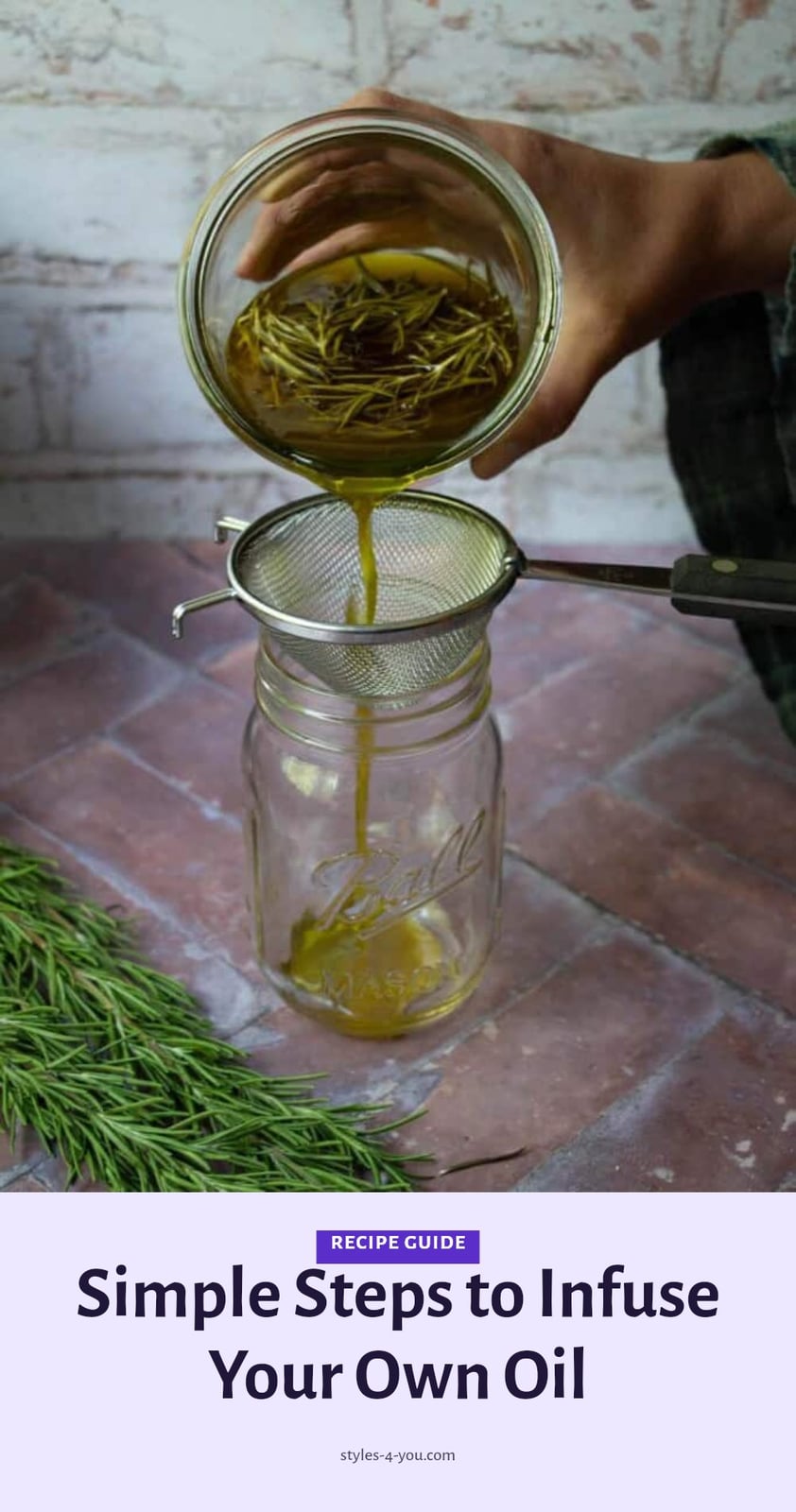
- Clean and dry the rosemary: Rinse fresh rosemary sprigs under cool water, then pat them completely dry. Any moisture can cause mold during infusion.
- Combine rosemary and carrier oil: Place the rosemary in a clean glass jar and pour the carrier oil over it, making sure the leaves are fully submerged.
- Choose your infusion method: For a faster result, use the heat method: set the jar in a saucepan filled with water on low heat for 2 to 3 hours, keeping the water from boiling. For a slower, cooler option, set the jar in a sunny spot for 2 to 4 weeks, shaking it gently every few days.
- Strain the oil: Pour the infused oil through a fine-mesh strainer or cheesecloth into a clean container, discarding the rosemary leaves.
- Store properly: Transfer the strained oil to an airtight glass bottle and keep it in a cool, dark place. Label it with the date so you know when it was made.
Best Practices for Using Rosemary Oil on Your Hair

Always perform a patch test on a small area of skin before applying rosemary oil to your whole scalp. If you are using rosemary essential oil instead of an infused oil, dilute it with a carrier oil at a ratio of 2 to 3 drops per teaspoon of carrier oil. When applying, massage the oil into your scalp gently with your fingertips for 2 to 3 minutes to encourage circulation. Leave the oil on for at least 30 minutes, or overnight if your scalp tolerates it well. Use the oil consistently 2 to 3 times per week for at least 3 to 6 months to see noticeable results.
Variations: Rosemary Essential Oil vs. Hydrosol

Rosemary essential oil is highly concentrated and must be diluted with a carrier oil before any scalp application. The standard ratio is 2-3 drops of essential oil per teaspoon of carrier oil like jojoba or coconut. Mix a small batch fresh each time, massage into your scalp, and leave on for at least 30 minutes before washing.
Rosemary hydrosol is a much gentler option. It is the water left over after steam-distilling rosemary leaves, so it contains trace amounts of the plant’s compounds without the potency of the essential oil. Use it as a scalp rinse after shampooing: spray or pour it over your scalp, let it sit for a few minutes, then rinse or leave it in. Because it is mild, you can use it daily without irritation.
Tip: If you have a sensitive scalp or want a low-commitment routine, start with the hydrosol. It gives a light rosemary boost without the risk of overdoing concentration.
Common Mistakes When Using Rosemary Oil
Not diluting rosemary essential oil properly is the most common mistake. Essential oil is highly concentrated, and applying it undiluted can cause burning, redness, or a rash. Stick to 2-3 drops per teaspoon of carrier oil.
Expecting immediate results leads to frustration. Hair growth cycles are slow, and noticeable changes typically take 3-6 months of consistent use. Do not give up after a few applications.
Skipping the patch test is a risk you do not need to take. Apply a small amount of diluted oil behind your ear or on your inner arm and wait 24 hours before using it on your scalp. If redness or itching appears, do not use the oil.
Using rosemary oil as the sole treatment for serious conditions like sudden or patchy hair loss is not advisable. It can support scalp health, but it is not a substitute for professional medical advice. If your hair loss is severe or unexplained, see a dermatologist.
Storing Your Homemade Rosemary Oil
Store your homemade rosemary oil in a cool, dark place, like a cabinet away from the stove or direct sunlight. Use an airtight glass container to prevent oxidation and keep out moisture. Because homemade oil lacks commercial preservatives, it typically stays fresh for about 6 months. Discard it if you notice any off smell, cloudiness, or mold.
When to Consult a Professional About Hair Concerns
If you experience persistent scalp irritation, redness, or itching after using rosemary oil, stop use and consult a dermatologist. No improvement after 3-6 months of consistent application may indicate a different underlying cause. Sudden or severe hair loss, especially in patches or clumps, warrants a medical evaluation promptly. Underlying health conditions like thyroid disorders, hormonal imbalances, or nutritional deficiencies can affect hair growth and require professional diagnosis.
Frequently Asked Questions
Can I leave rosemary oil in my hair overnight?
Yes, many people leave diluted rosemary oil on their scalp overnight for deeper absorption. Just make sure you’ve performed a patch test first and that the oil is properly diluted, 2-3 drops of essential oil per teaspoon of carrier oil. If you have a sensitive scalp, start with 30 minutes to see how it feels.
Is rosemary oil safe for color-treated hair?
Rosemary oil is generally safe for color-treated hair, as it’s a natural oil that doesn’t contain harsh chemicals. However, it’s always wise to do a patch test on a small section of colored hair first to check for any unexpected fading or reaction. The carrier oil you choose (like jojoba or coconut) can also help condition color-treated strands.
What’s the difference between rosemary essential oil and infused oil?
Rosemary essential oil is a highly concentrated extract made through steam distillation, so it must be diluted with a carrier oil before use. Infused oil is made by steeping fresh or dried rosemary leaves in a carrier oil over time, resulting in a milder product that can sometimes be used without further dilution. Infused oil takes longer to make but is gentler on the scalp.
How long does homemade rosemary oil last?
Homemade rosemary oil stored in an airtight glass container in a cool, dark place typically stays fresh for about 6 months. Because it lacks commercial preservatives, check for any off smells or mold before each use. If you notice changes in color or odor, it’s best to make a fresh batch.
How do you make rosemary oil for hair growth?
To make infused rosemary oil, combine 1/2 cup of fresh or dried rosemary leaves with 1 cup of a carrier oil like jojoba, coconut, or olive oil in a glass jar. Let it sit in a warm spot (or use a gentle heat method) for about a week, then strain through a fine-mesh strainer or cheesecloth. For a quicker option, mix 2-3 drops of rosemary essential oil with a teaspoon of carrier oil and use immediately.
Final Thoughts
For the best results, stick to a consistent routine of applying diluted rosemary oil 2-3 times per week. Realistic expectations are key: noticeable changes in hair growth typically take at least 3 to 6 months of regular use. If you don’t see improvement or experience irritation, it’s a good idea to check in with a dermatologist to rule out other causes.
This information is for general informational purposes only and is not a substitute for professional medical advice. If you have persistent scalp issues, sudden hair loss, or any concerns about using rosemary oil, consult a dermatologist or healthcare provider.
More Blog ideas
- Your Essential Guide to a Healthy Feminine Hygiene Routine
- Best High Protein Foods to Eat Daily for Health and Energy
- Feeling Stuck: 12 Small Steps to Get Unstuck
- Winter Skin Survival Tips
- How to Get a Flat Stomach
- How to Fix Damaged Hair and Restore Its Health
- Full-Body Kettlebell Workout
- Dry Scalp vs. Dandruff
- Full Body Workout for Beginners
- 21 Easy Beauty Tips Every Woman Should Know
- Feminine Energy: 15 Daily Habits to Feel More Radiant
- Upper Body Workout for Women at Home






